-
-
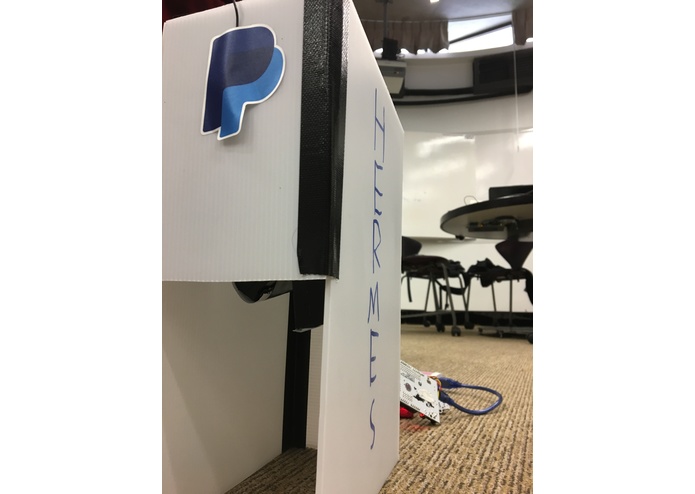
The vending machine
-
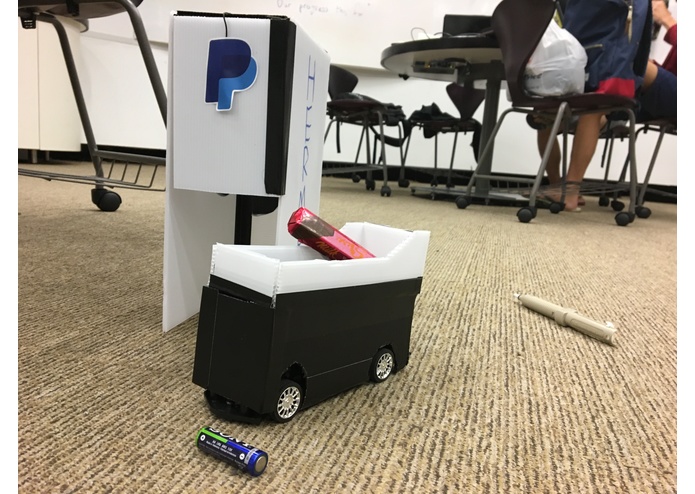
The products
-
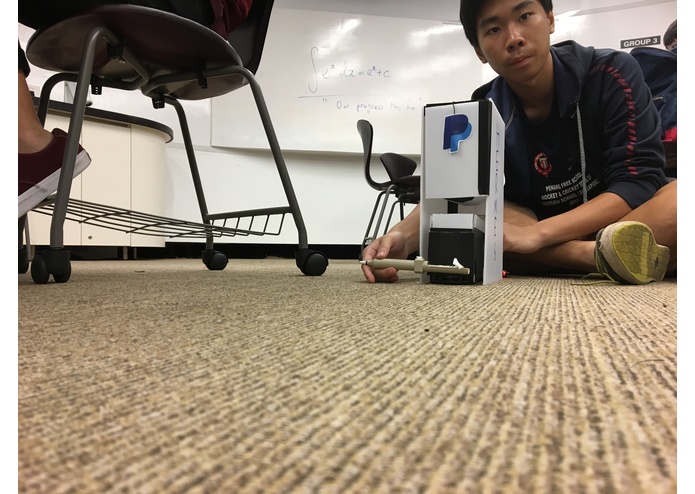
And it takes off!
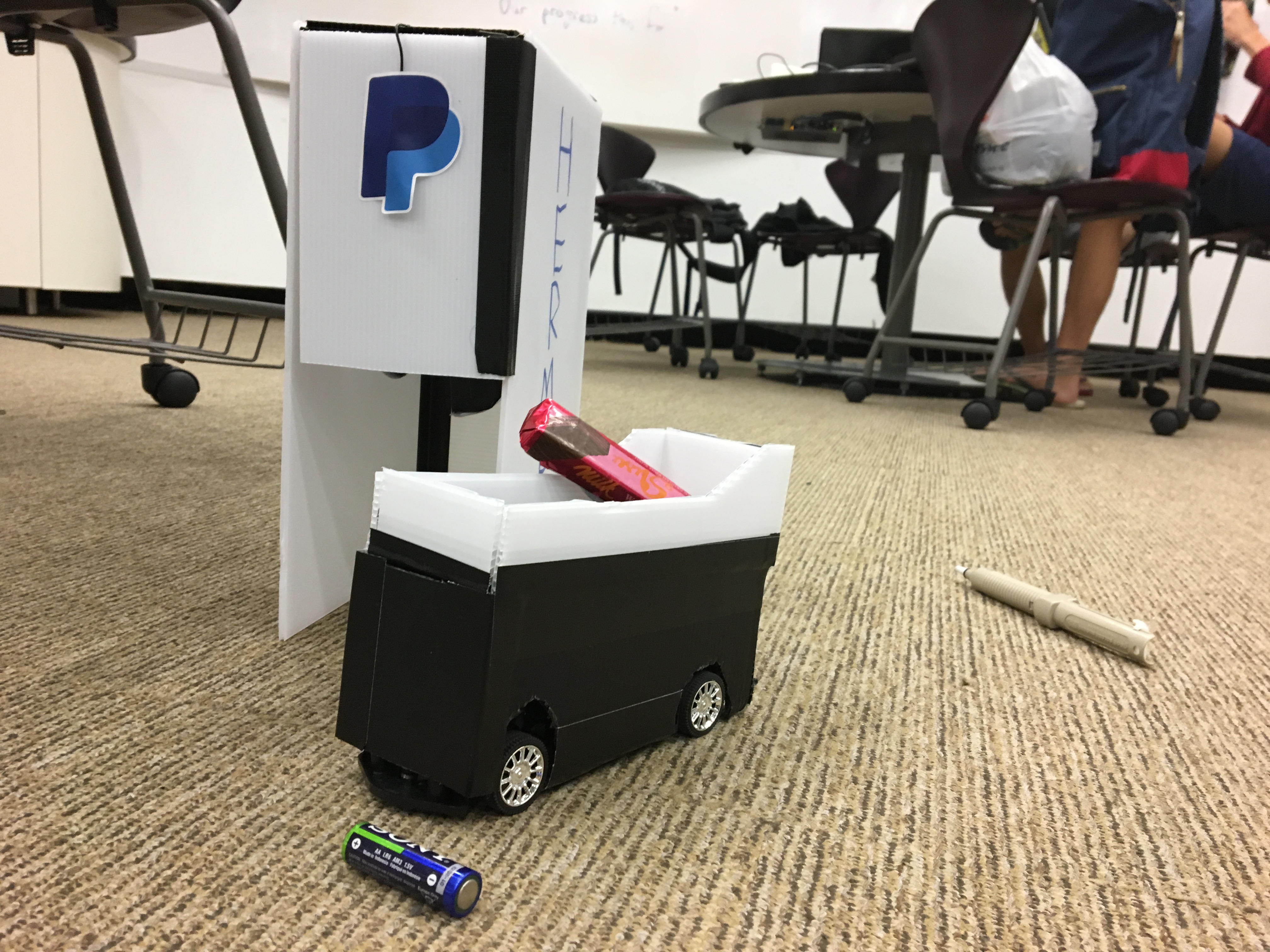
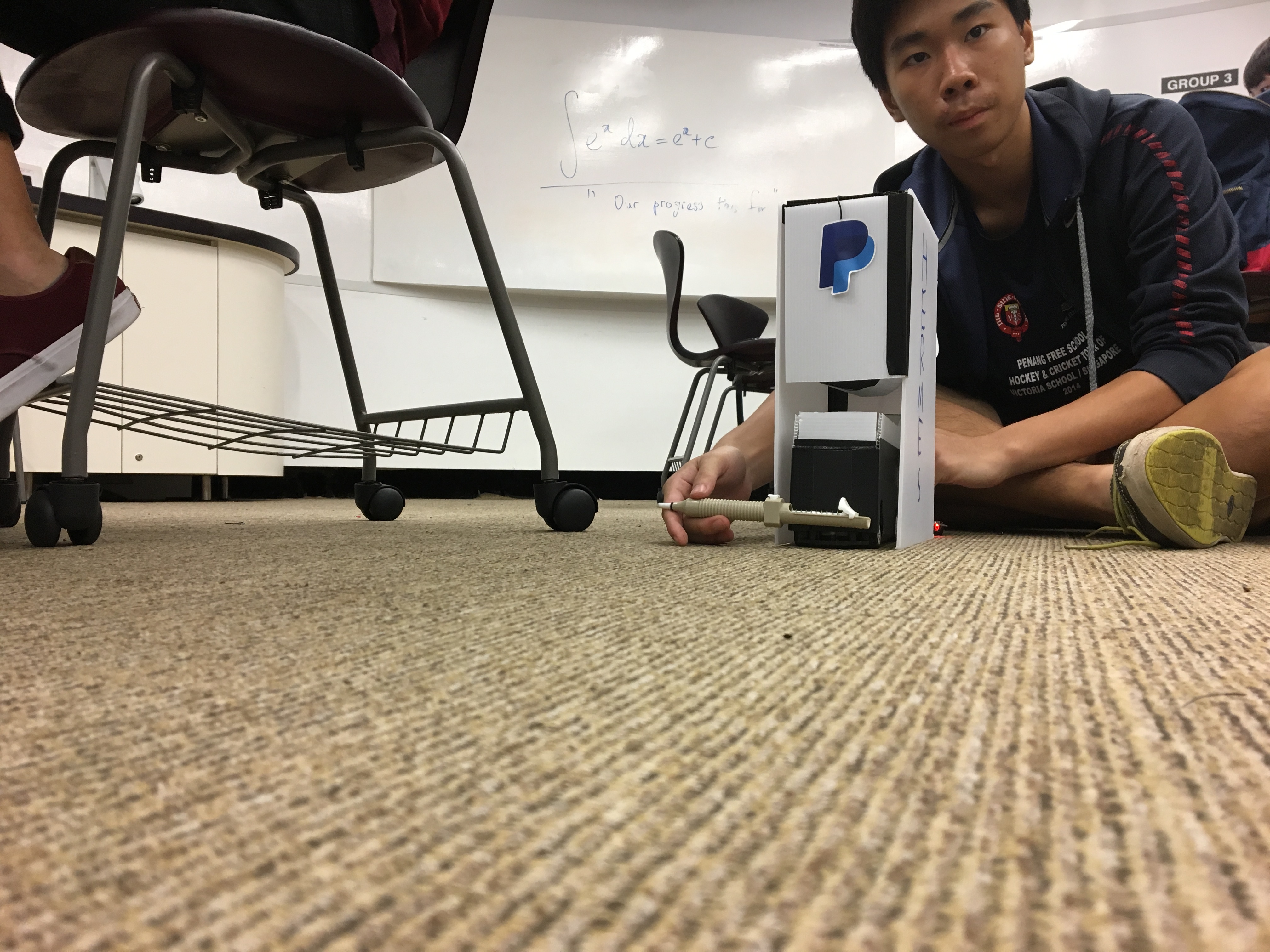
Inspiration
We were really hungry Well, where do we start? Hmm, it all started on a sleepless night with piles of undone work procrastinated on, (business as usual). One of us became really hungry, and as they say, "A hungry man, is an angry man." But with such huge piles of work to smoke through and only 2hrs left to the 12:00a.m. deadline, it was simply not possible for him to make the arduous and long trip to the pantry. Hence, the idea of a self-dispensing vending machine is born, capable of taking orders and payments online, with delivery. Through this, the teammate of ours managed to fulfill his needs at the convenience and the comfort of his desk.
Project Hermes is named after the Greek messenger god, representing an emphasis on swift delivery, without losing out on personal productivity and concentration.
What it does
A really nice threeway The simple process first starts with going to the web page https://fishnsotong.github.io/straightflash/ to order one's desired food and drinks from the office pantry, with payment via PayPal. The vending machine receives the connection from the web server and dispenses the desired foods onto the rover. The rover moves after a set amount of time, with the food on its tray, to the cubicle of the user and delivers the food to him/her.
How we built it
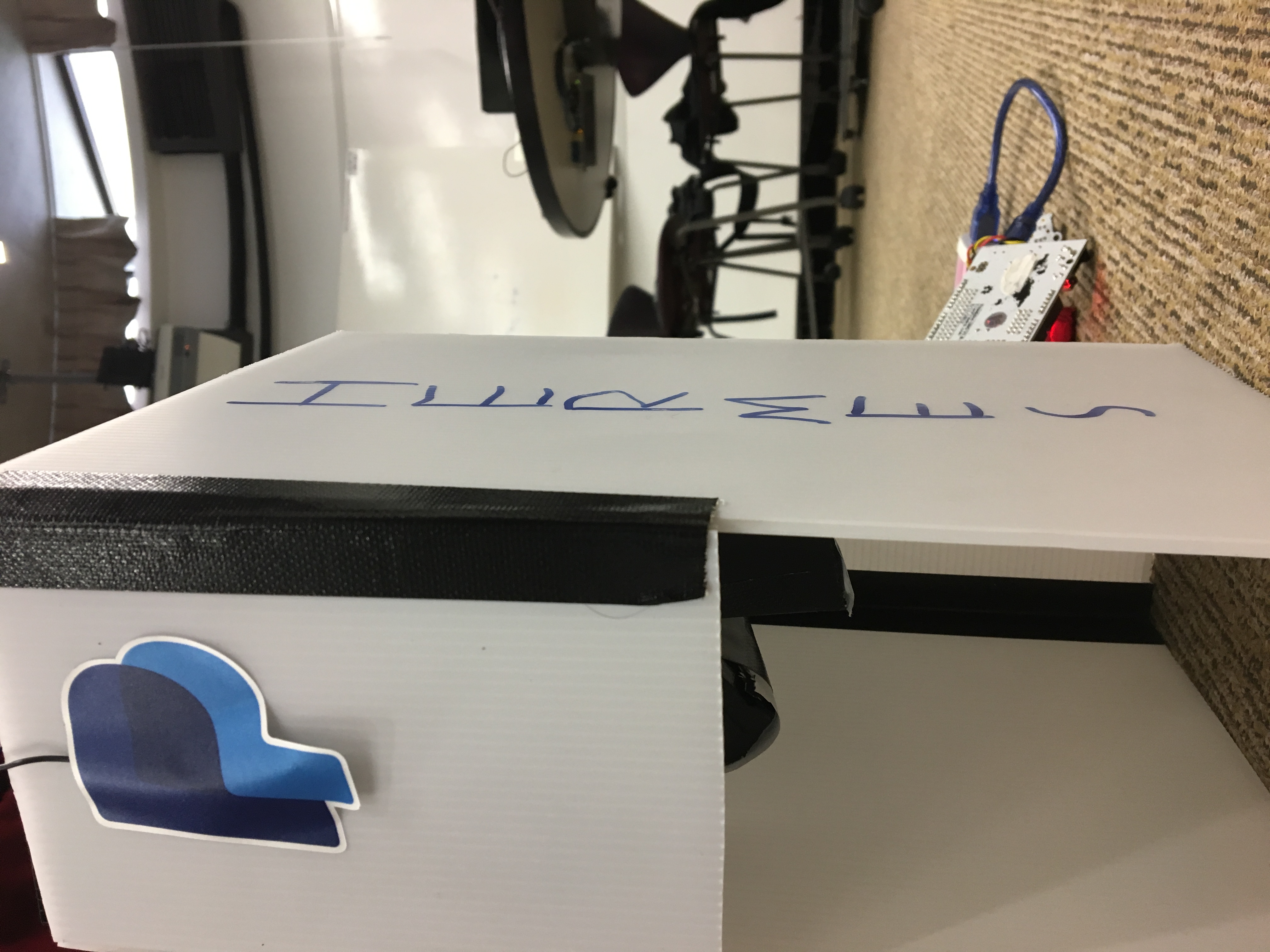
Actually long hours Our prototype rover was made with a simple toy car dismantled from its case, fitted with an Arduino. A tray structure is fitted on top of the rover to facilitate delivery. The vending machine is made of some corrugated board with a turnstile mechanism via a servo motor to dispense the pantry items onto the rover. An Arduino was used in our prototype to configure the specific direction in which the car will move, with another Arduino used to configure the angles for the turnstile mechanism in the vending machine. The web server is shown as a menu with PayPal payment options for monetary transactions of the snacks.
Challenges we ran into
Raspberry Pi rage We initially thought of using Raspberry Pis to configure a wireless connection between the web server, the vending machine and the rover to more effectively. But without a reliable internet connection, monitor, and keyboard to configure the Raspberry Pis, we could not effectively use the Raspberry Pis to program the hardware. We had a hard time hacking the hardware as well, as it was hard to manipulate the circuit boards in the given toy car and its remote control to program its controls.
Accomplishments that we're proud of
It actually moves Not only were able to make a good turnstile system for the vending machine, but we could also effectively make a rover that was able to deliver reliably and serve a useful purpose to workaholics everywhere; that, in essence, was an achievement. We also drank a total of 10 cans of Red Bull to work through the night so we managed to see into the 5th dimension.
What we learned
An idea of what we were doing Many here have helped us learn more about our Raspberry Pis and in the hacking of electronic parts. But more importantly, there were bonds we shared as teammates that were strengthened through these arduous times together. (Aww) It was an ambitious task for us first-time hackathoners, and an experience like this really broadened our minds as to what we could really achieve as our next project.
What's next for Project Hermes
A more seamless experience If you thought having food delivered by a rover directly from an office pantry couldn't be any more seamless, it could. The need to go more wireless is greater than ever before, and we really would like to see the plan for the usage of Raspberry Pis in our prototype to materialize. With more time and resources, we are sure that the use of more complex resources such as robot autonomy is very much possible. And who knows, we might very soon see Hermes as a staple in our workplaces.

Log in or sign up for Devpost to join the conversation.