-
-
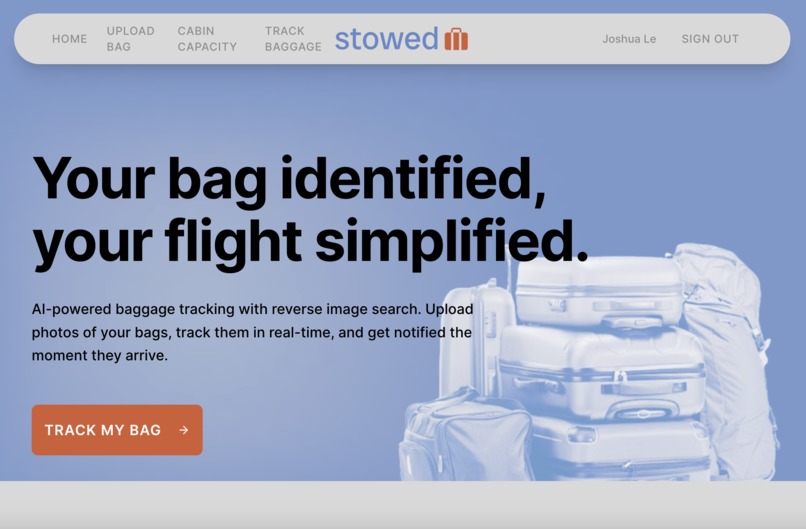
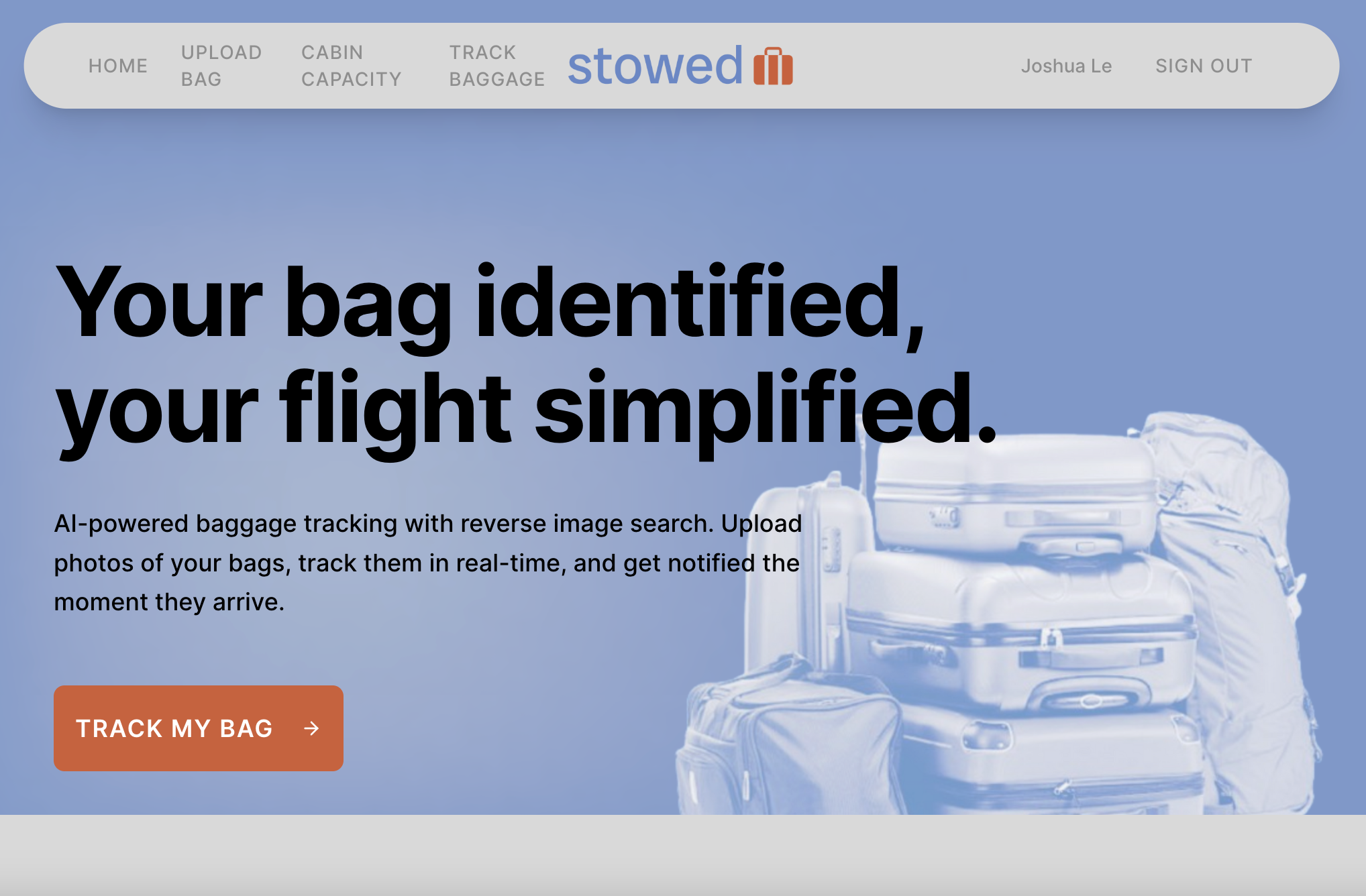
Welcome to Stowed!
-
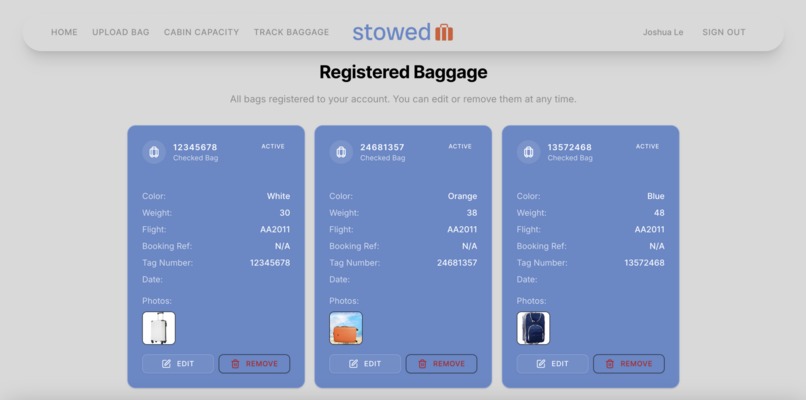
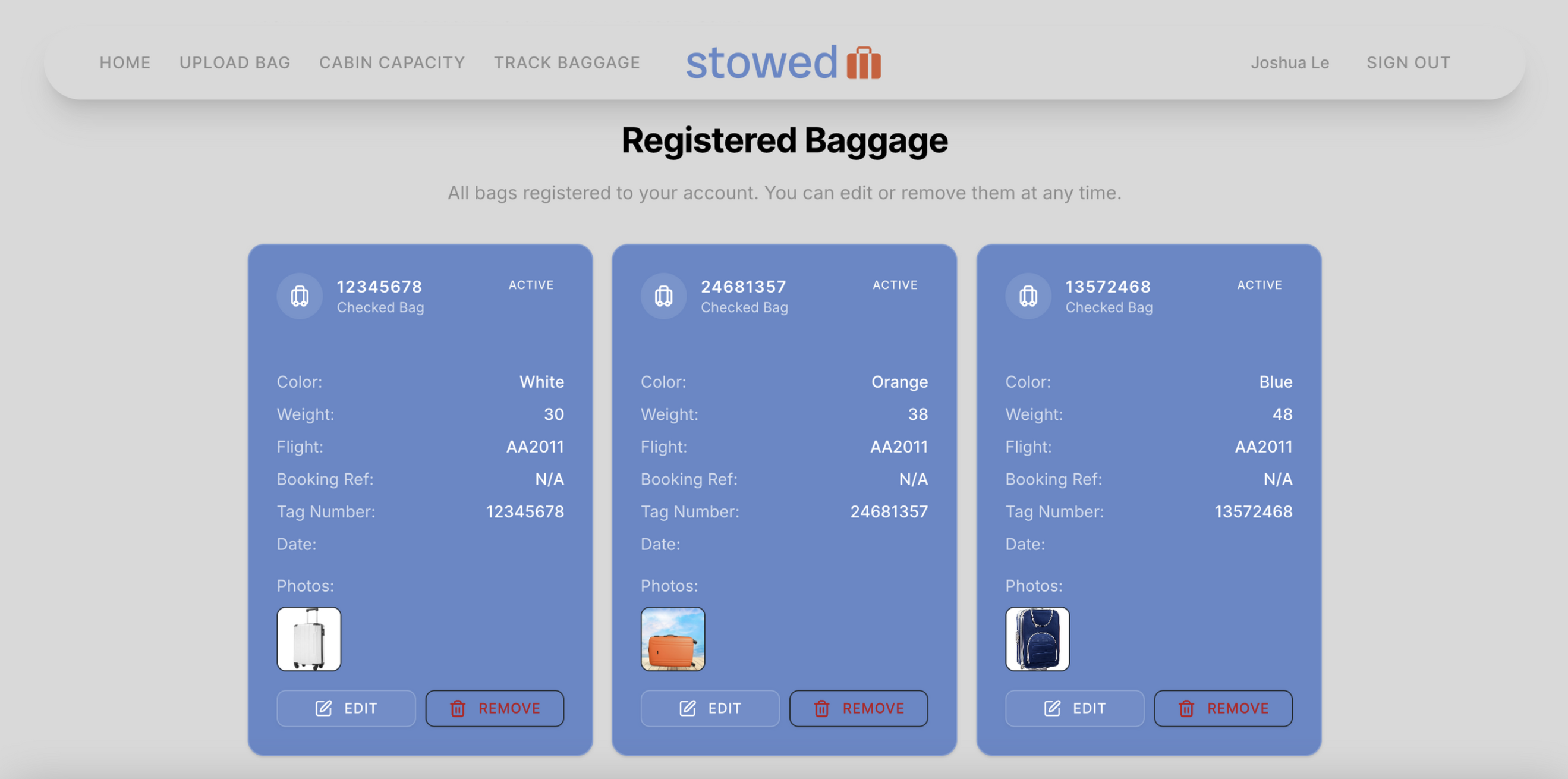
Register your baggage in our database
-
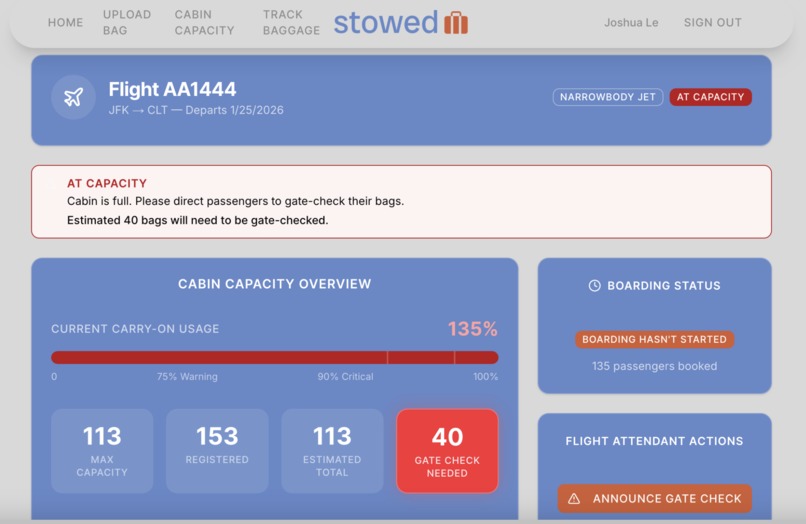
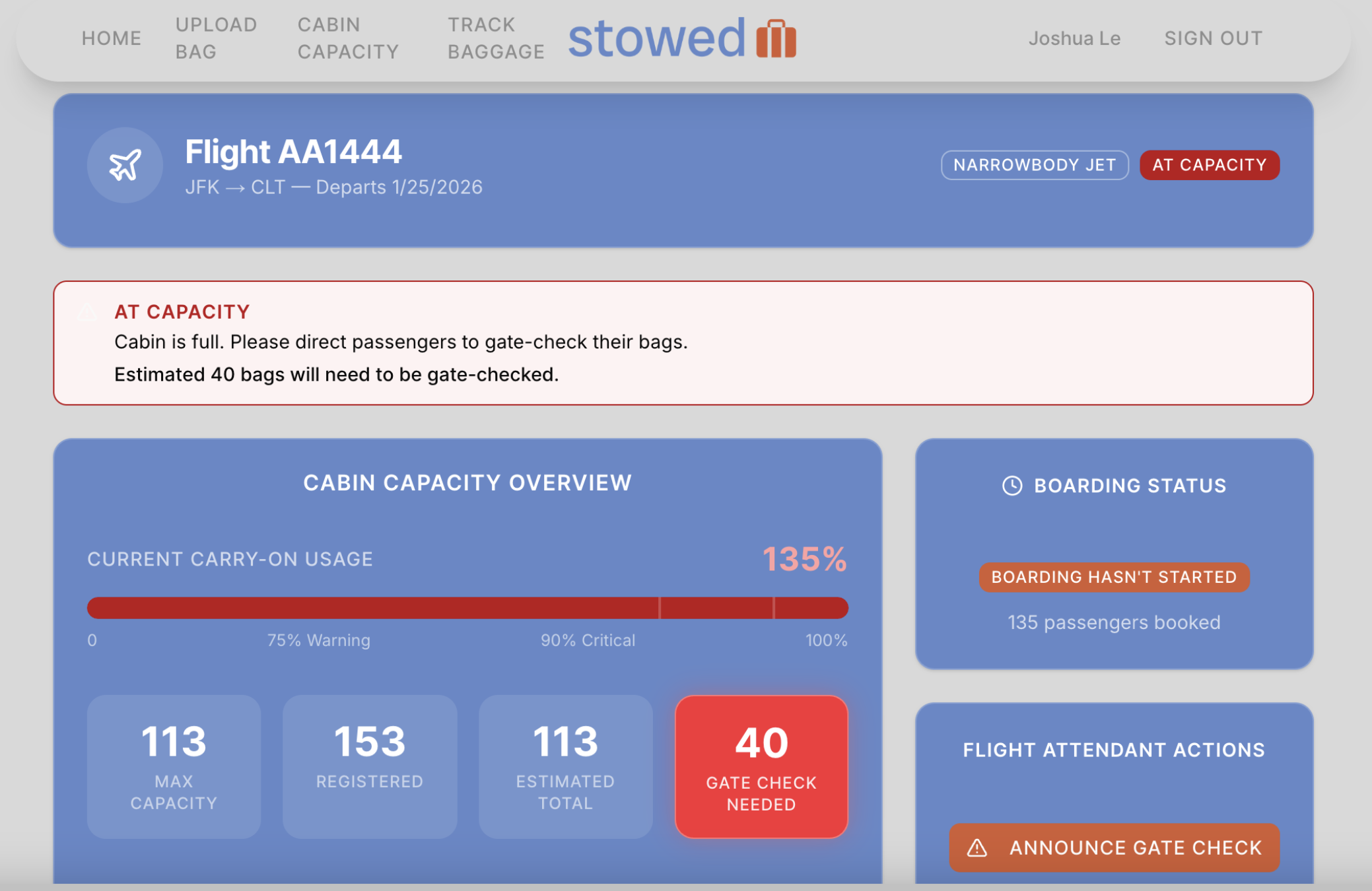
See when cabin capacity is full on your flight
-
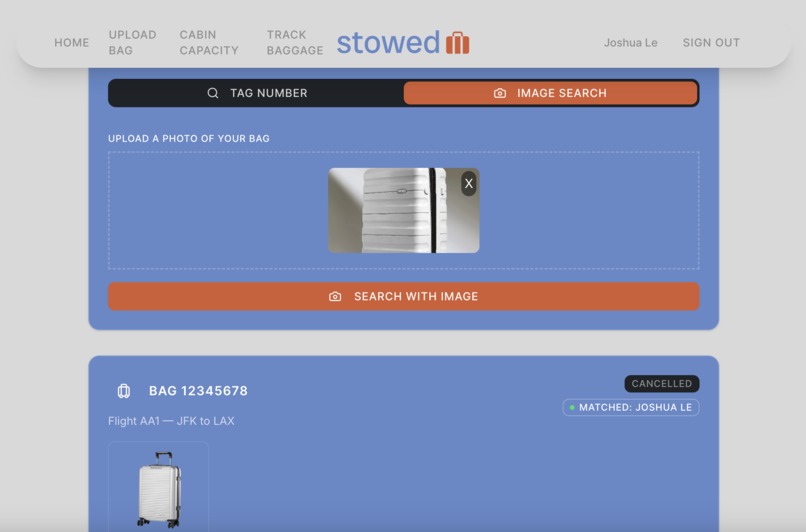
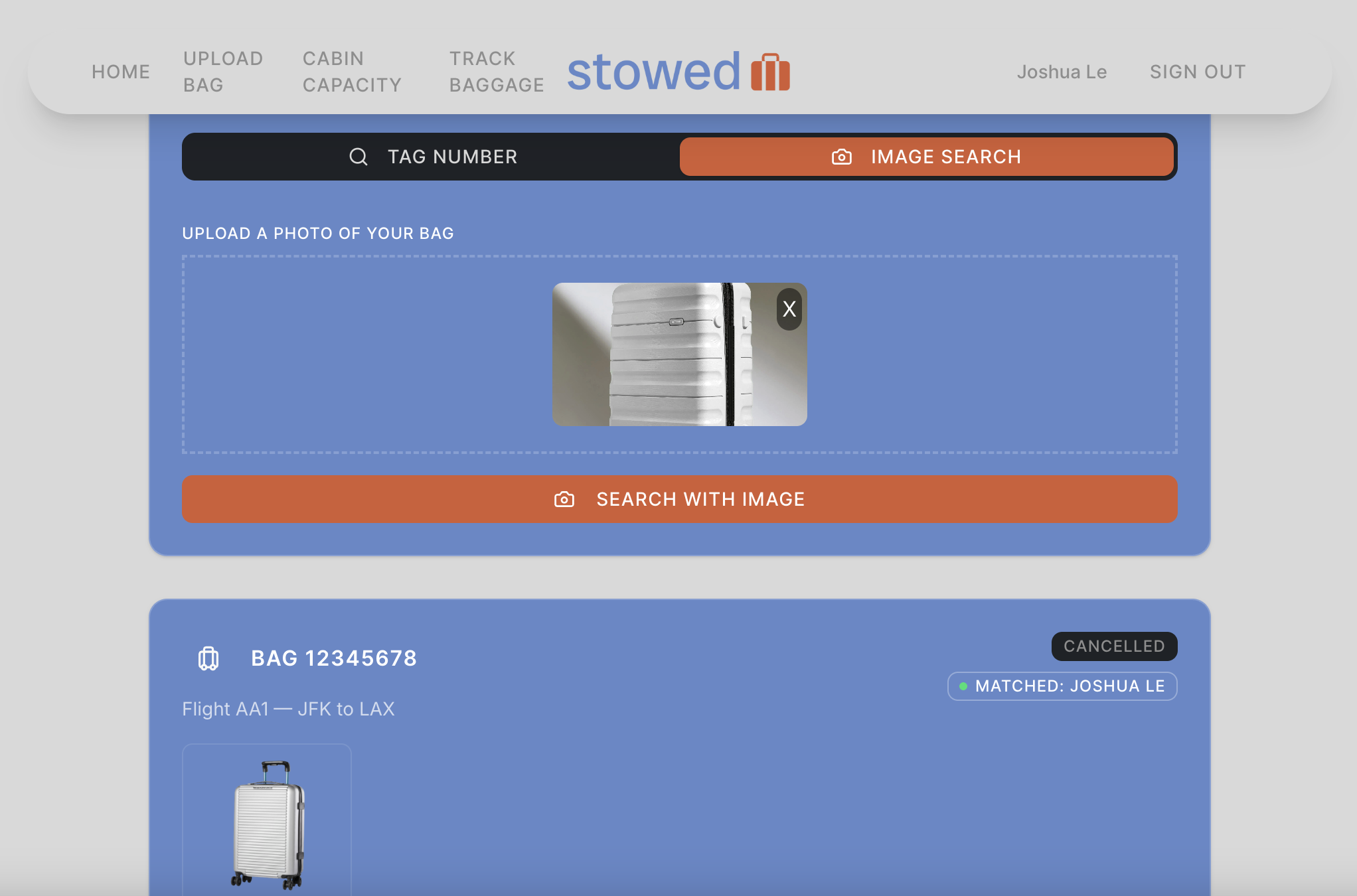
Find your lost luggage through our online lost-and-found
Inspiration
When Anika flew to Switzerland, her trip didn't start with a view of the Alps; it started with a luggage nightmare! First, the overhead bins were full, forcing her to check in her carry on. Then, upon landing, the carousel went round and round, but her suitcase never arrived.
We’ve all been there: that sinking feeling of standing in a foreign airport with nothing but your backpack. That’s why we built Stowed. We’re using AI-powered tracking to provide a seamless, transparent experience, ensuring your bags are always exactly where they should be.
What it does
Stowed is a multi-layered solution for modern travel. First, it eliminates the problem of lost luggage through AI image-matching, essentially working as an online lost-and-found for your baggage.. If a tag falls off, your bag's unique visual footprint allows us to identify it instantly. Second, we take the stress out of boarding with our Smart-Cabin feature. By logging carry-ons during check-in, our platform calculates baggage cabin capacity and predicts when cabin capacity will be full in advance, ensuring you never have to worry about an unexpected gate-check again.
Key Features
- Sign up and log in to a personalized account
- Register all of your luggage in our database
- Estimate the carry-on capacity of your flight and alert if overhead bins are filled
- Track your baggage through the flight process
- Find lost baggage through our AI reverse image search
How we built it
We engineered the application using a modern full-stack architecture, leveraging Next.js and TypeScript to ensure type safety and rapid development. For the frontend, we built responsive, accessible components with React and Tailwind CSS, deploying the final client-side application via Vercel for seamless hosting. On the backend, we utilized Prisma as our ORM to manage database schemas efficiently. The core functionality was powered by integrating a specialized aviation API for real-time flight tracking and OpenAI API for image search, while Antigravity AI was utilized to implement complex backend logic and data processing. Finally, we utilized Canva to design some of the interface assets and layout, ensuring a seamless translation from visual concept to responsive code.
Challenges we ran into
The biggest hurdle we ran into was building a working visual fingerprint system. Most luggage looks similar, so we had to train our model into being able to detect features like zippers, scratches, and stains. Integrating the aviation API presented a significant technical hurdle; particularly the retrieval and accurate rendering of real-time flight paths on the client side.
Accomplishments that we're proud of
We've successfully integrated a visual ID system into our website for luggage, even without tags, solving a huge problem in the airline company. We are also proud of our bin-capacity system, which provides real time data for passengers and attendents, reducing boarding time stress.
What we learned
As this was the first hackathon for everyone on the team, we came in with no prior experience in web development or API integration. Despite this, we were able to learn a lot about the software lifecycle, moving from a rough concept to a functioning web app in just a weekend. We also learned how to use GitHub to encourage collaborative coding between our group members
What's next for Stowed
With the limited time we had, our visual ID system isn't as accurate as we wished it to be. The next steps would be to train our product into detecting luggage even better, and being able to identify tiny differences between similar luggage in order to correctly match the user with their bag.
Built With
- antigravity
- aviationapi
- canva
- openaiapi
- prisma
- react
- tailwind

Log in or sign up for Devpost to join the conversation.