StoryWorld Architect
AI Worldbuilding & Counterfactual Simulation Laboratory
Inspiration
Great fictional worlds are more than collections of characters and places. They are interconnected systems shaped by rules, resources, power, culture, and difficult choices. I wanted to build a creative tool that helps people explore these connections rather than simply generate another story.
StoryWorld Architect grew from one question: What if you could change a single rule in a fictional world and explore how that change transforms everything around it?
What It Does
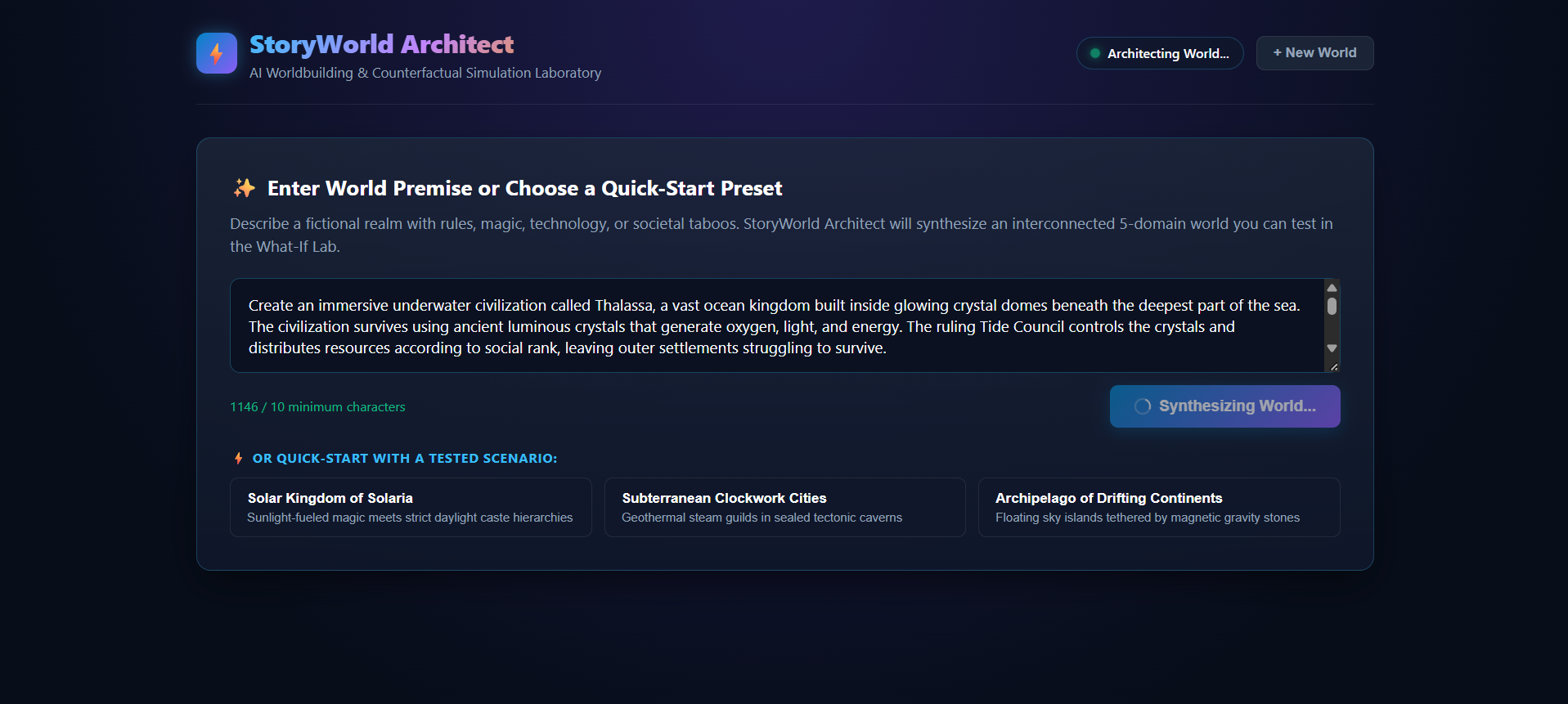
StoryWorld Architect transforms a creative premise into an interconnected fictional world using AI.
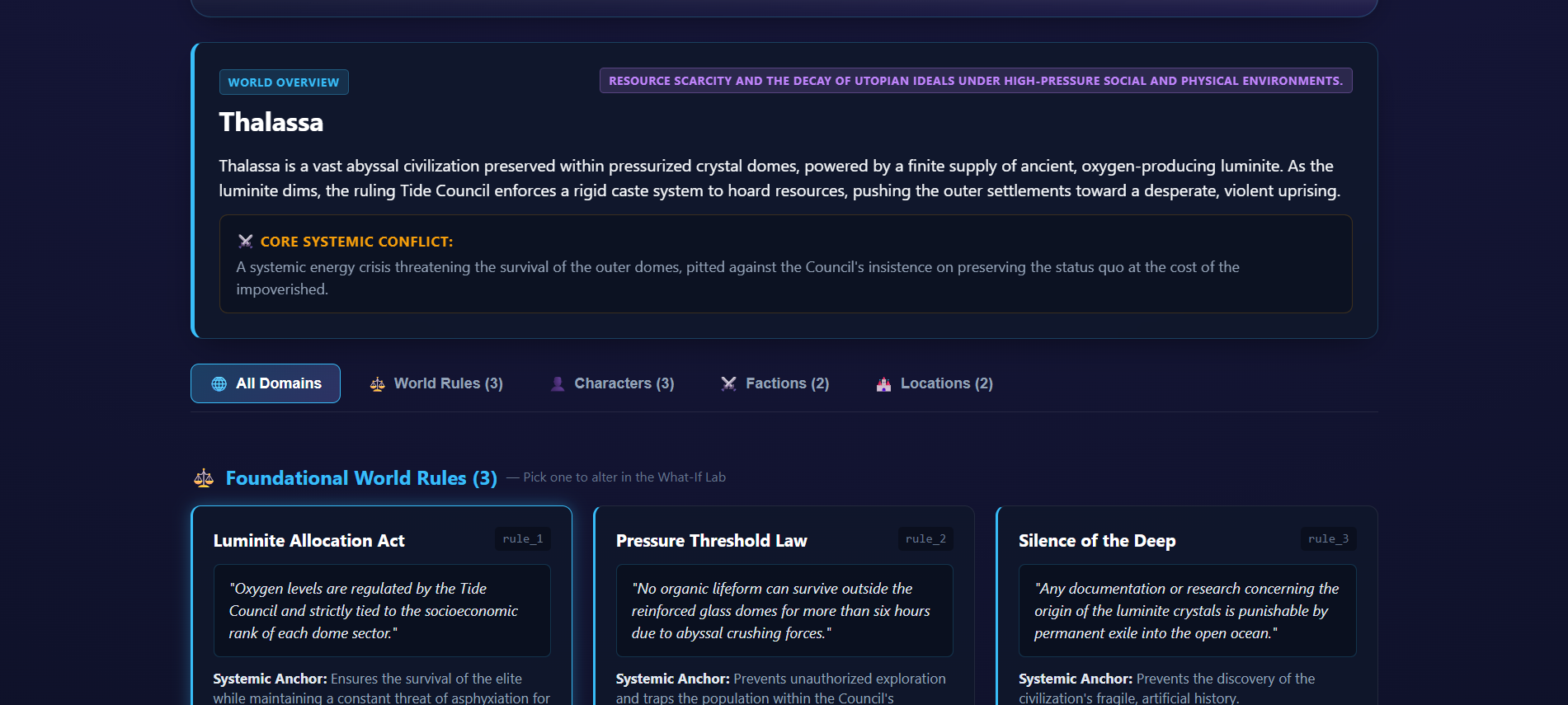
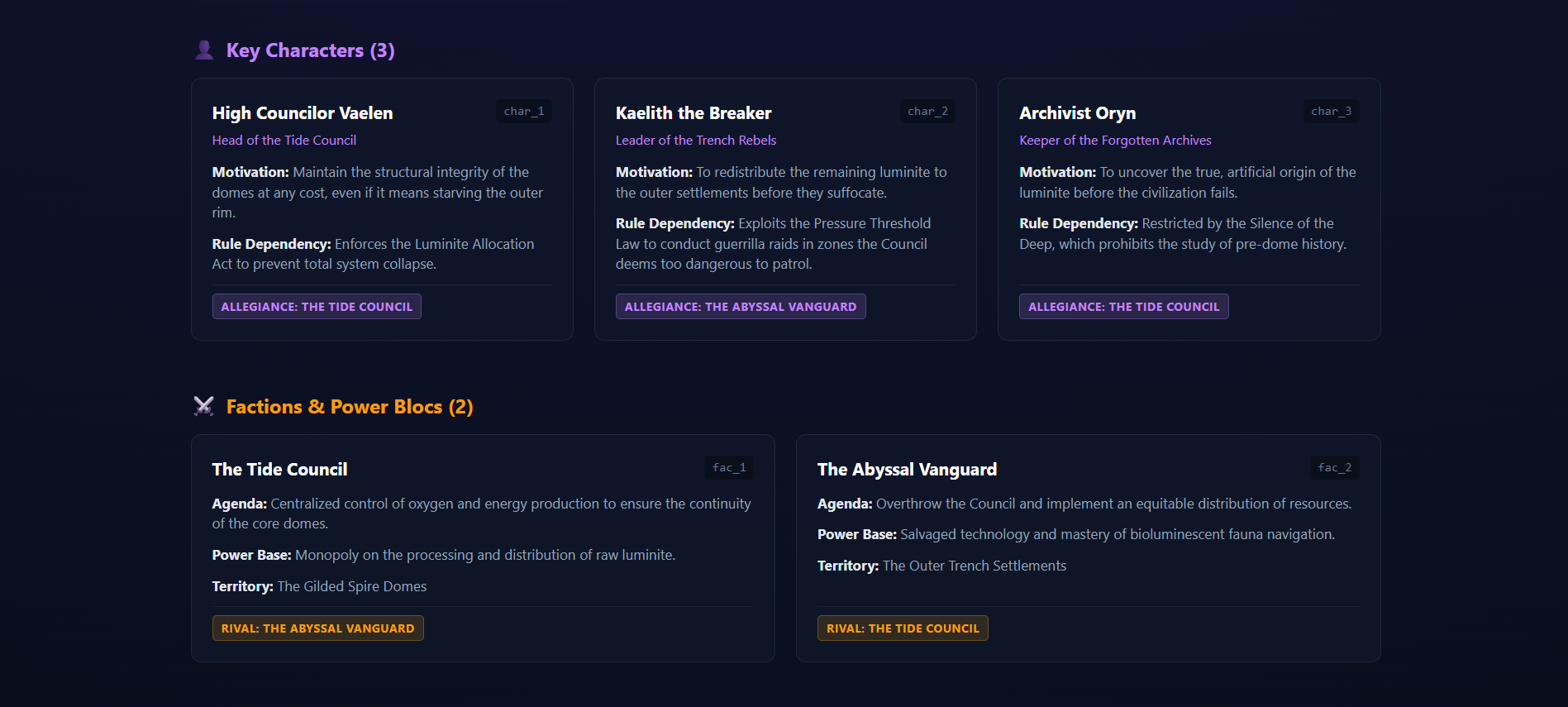
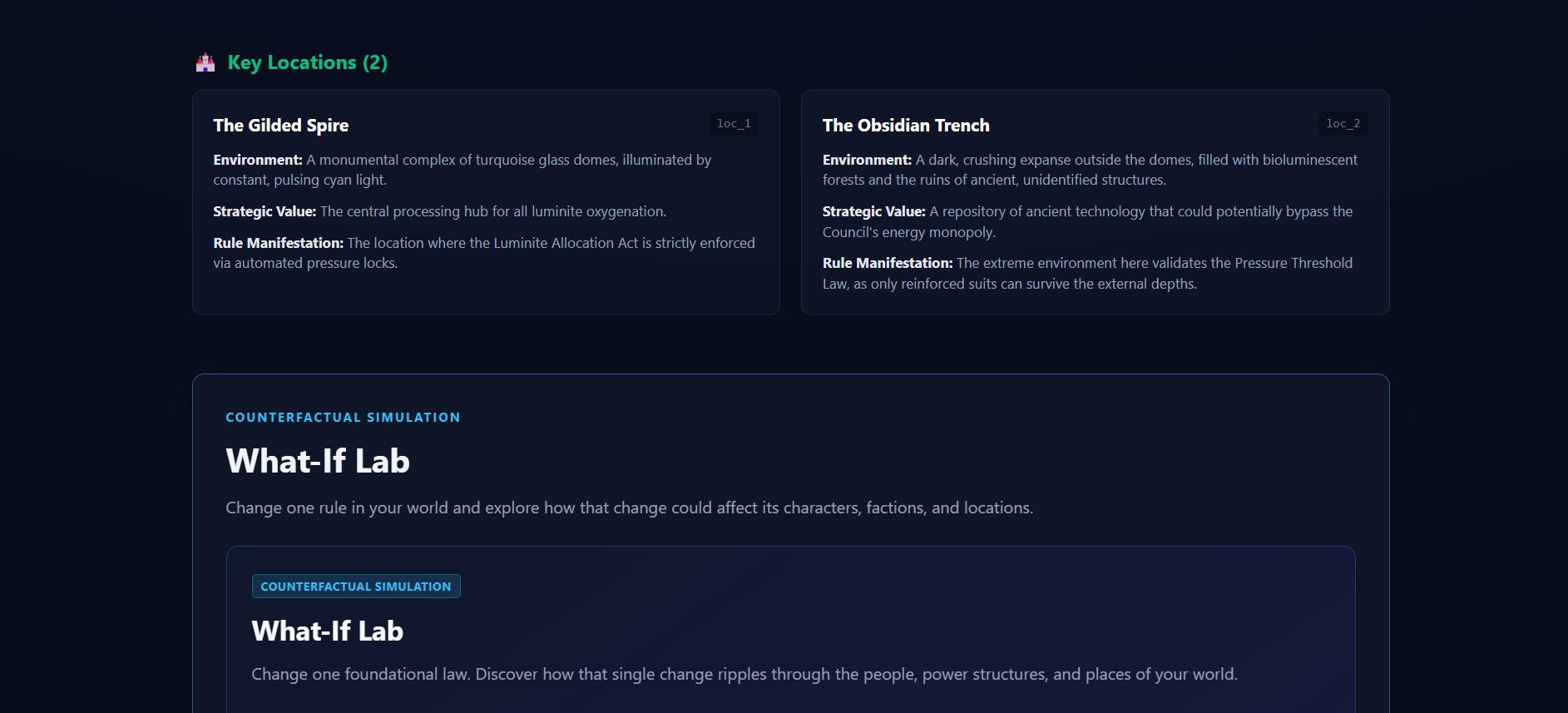
- World Generation: Turn an initial idea into a structured world with an overview, characters, factions, locations, and governing rules.
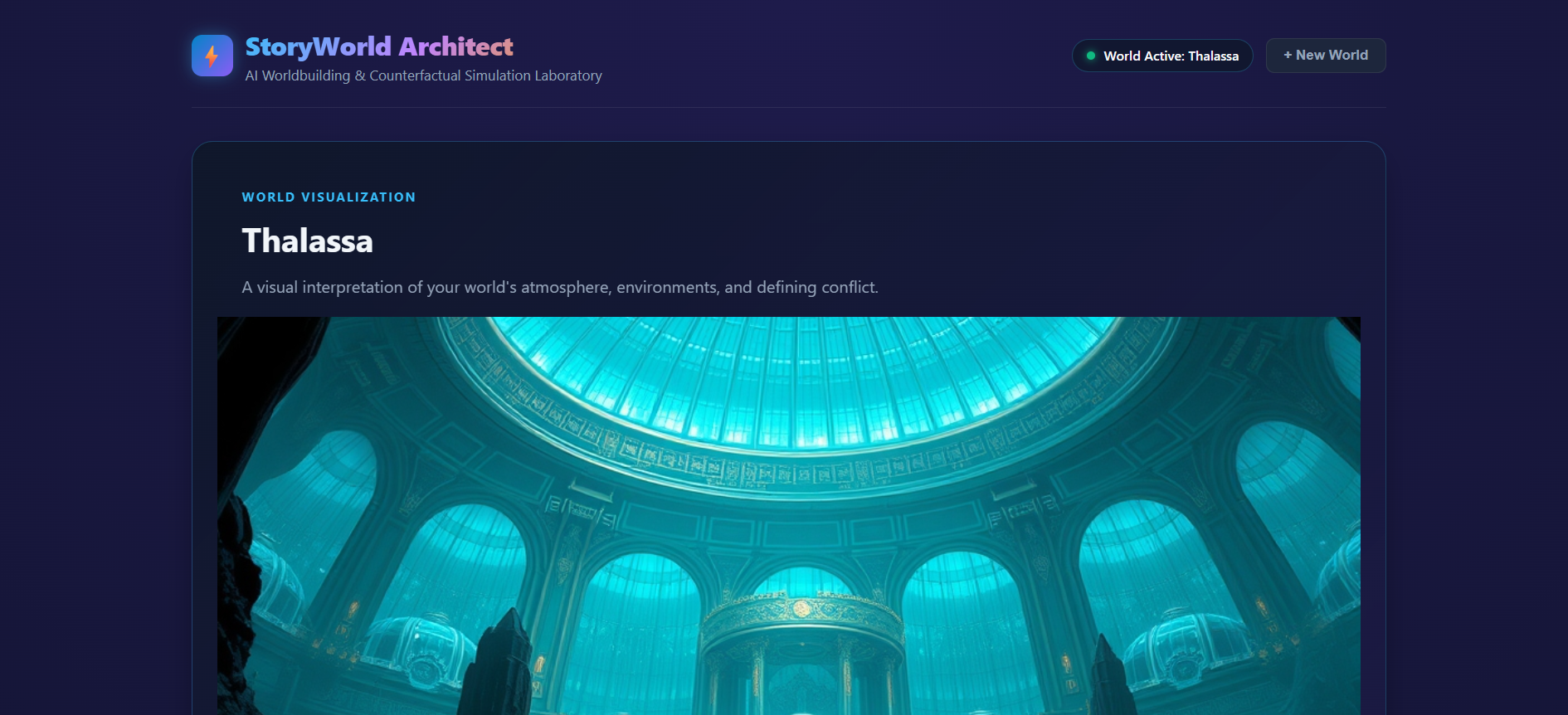
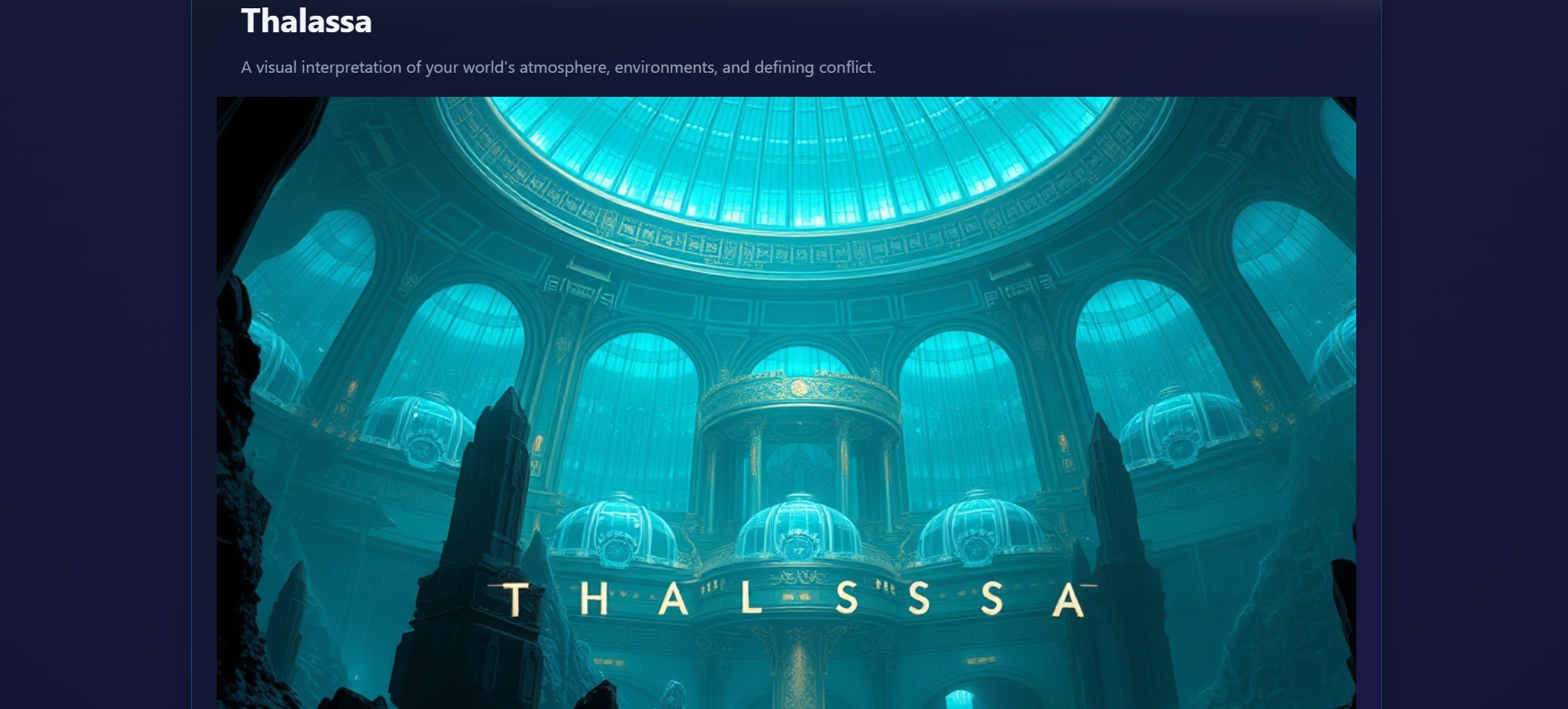
- Visual Worldbuilding: Generate AI artwork that gives the imagined world a visual identity.
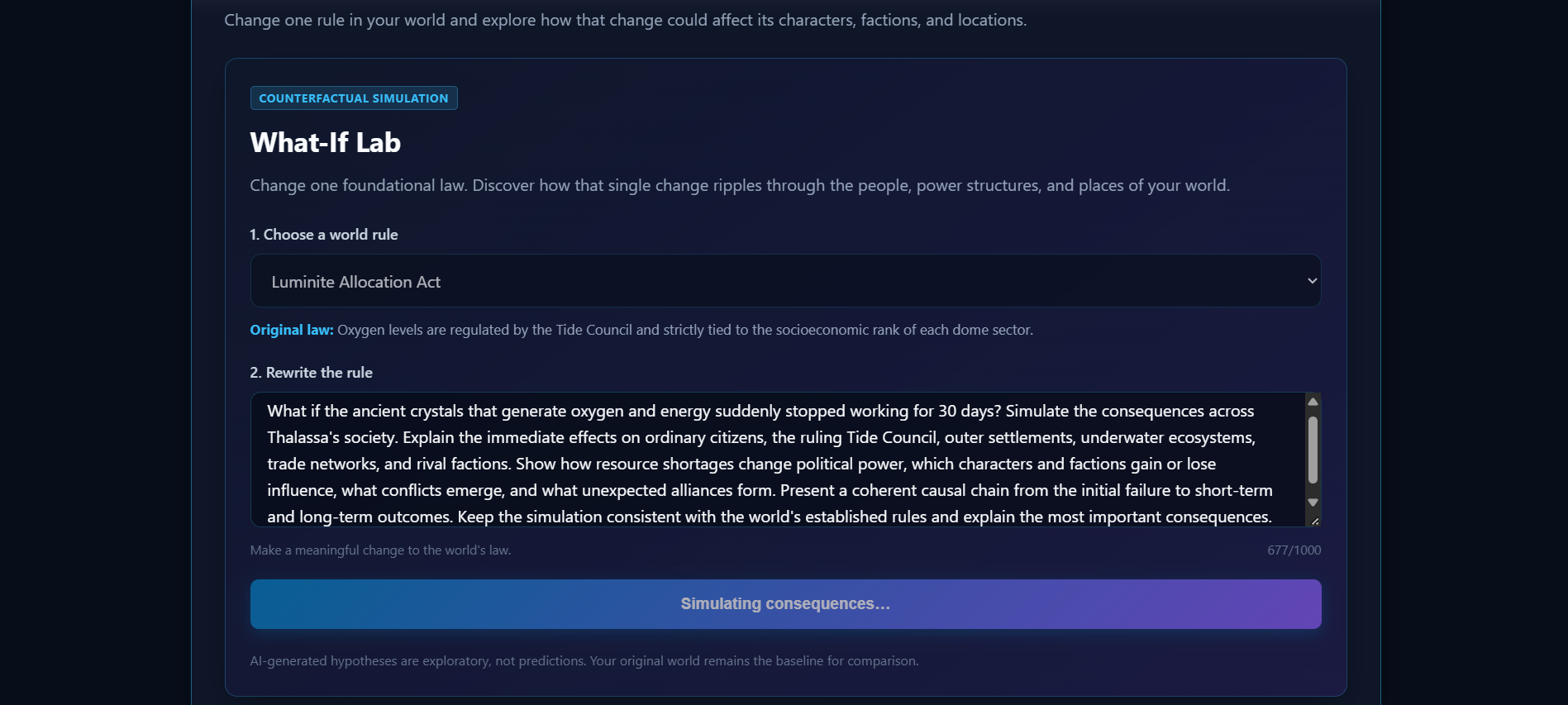
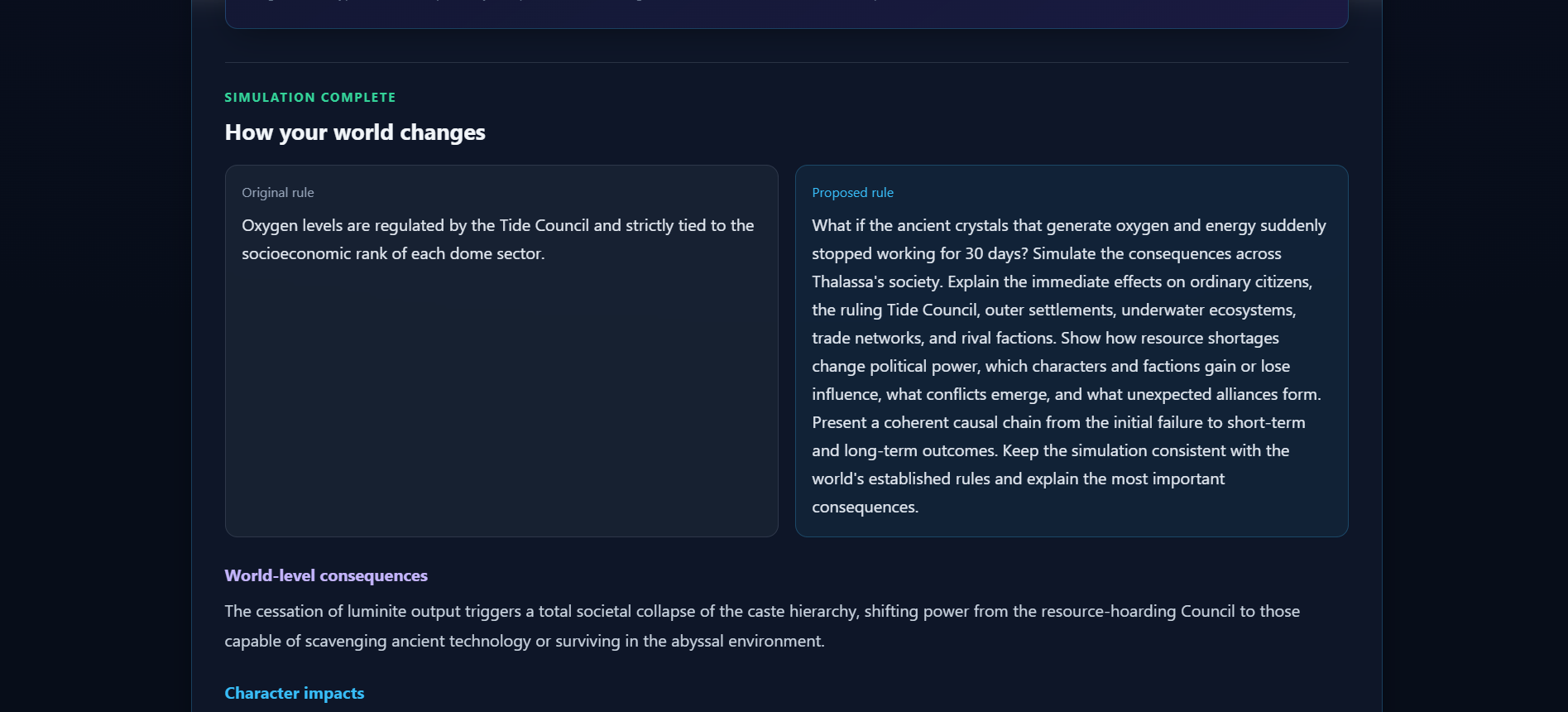
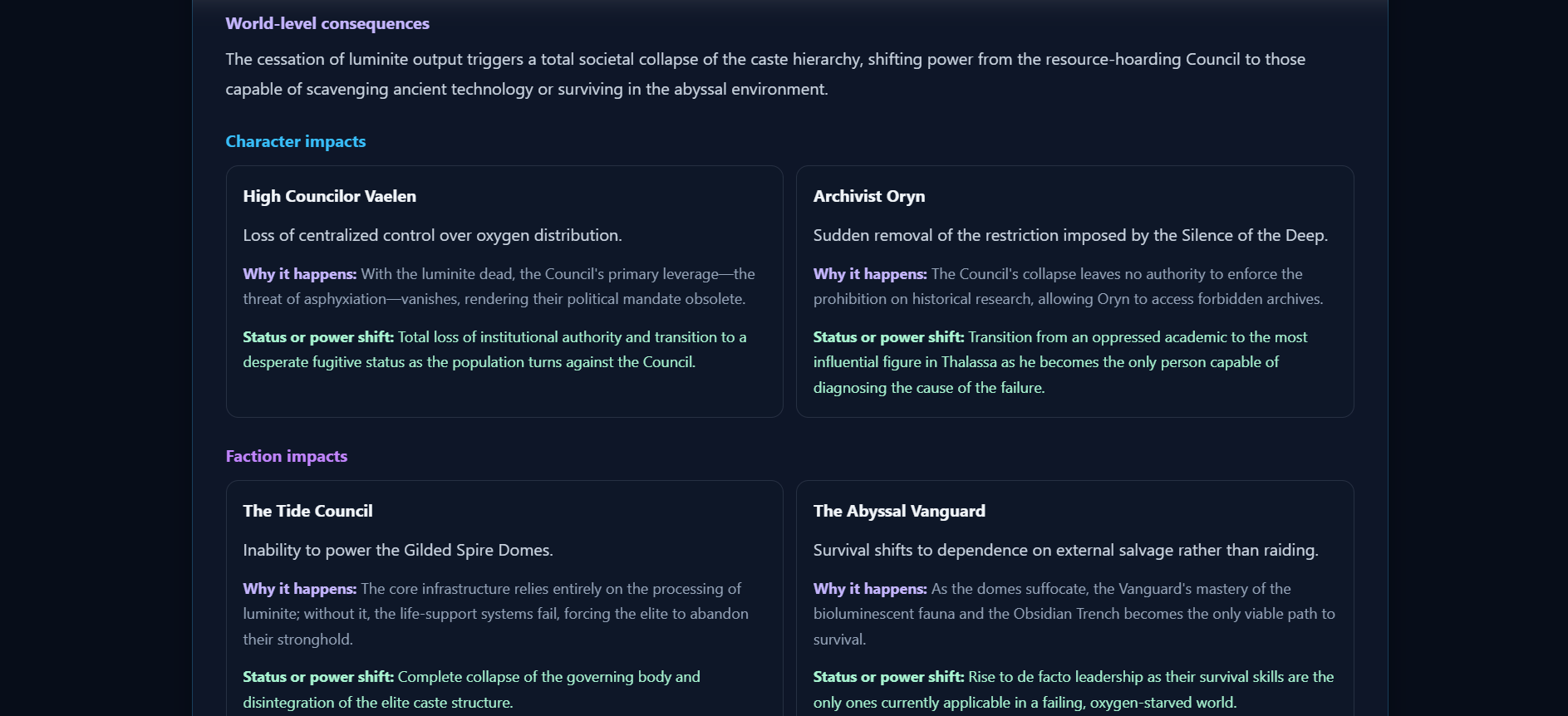
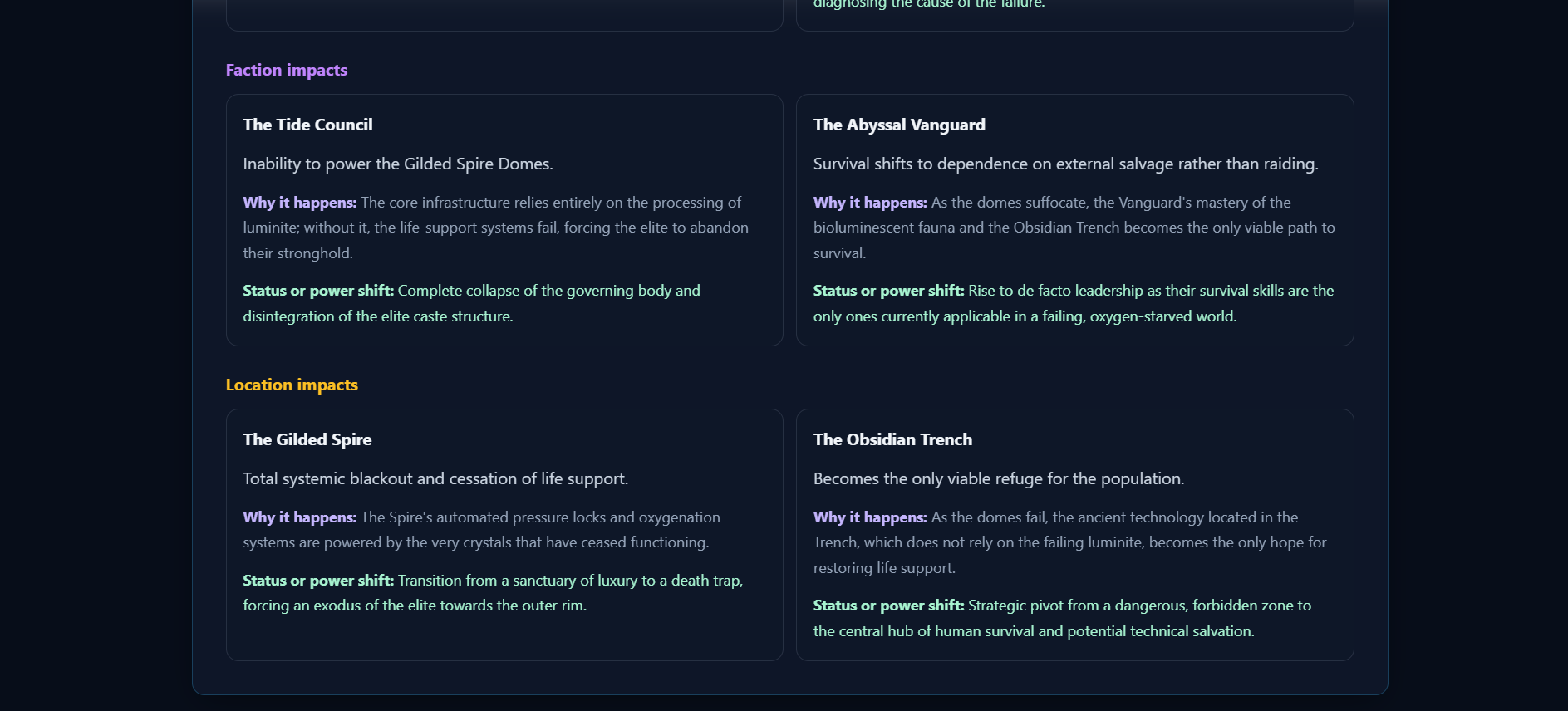
- What-If Lab: Change a world rule or introduce a hypothesis and explore the resulting consequences through AI-powered counterfactual simulation.
- Connected Thinking: Examine how changes to one part of a world can affect its people, institutions, resources, and environment.
For example, imagine an underwater civilization where memories power its cities. What happens if memories can no longer be traded? StoryWorld Architect helps explore the consequences across the world.
How I Built It
I built StoryWorld Architect as a web application using Next.js, React, and TypeScript. I used Google's Gemini API to generate structured fictional worlds and reason about counterfactual scenarios. Cloudflare Workers AI powers the world-artwork generation workflow.
The application connects world creation, visual generation, and consequence simulation through dedicated API routes. I also created planning documents covering the project scope, product requirements, and technical specification before completing the implementation.
Challenges I Faced
One challenge was making generated worlds feel interconnected rather than like unrelated lists of characters, factions, and locations. Another was designing the What-If Lab so that changing a rule leads to a coherent simulation instead of a generic response.
I also worked through AI service availability, model selection, image-generation integration, environment configuration, and production-build issues. These challenges reinforced the importance of validating AI outputs, handling errors gracefully, and testing the complete application rather than relying on individual features alone.
What I Learned
I learned how to combine multiple AI capabilities into a single creative workflow, structure a full-stack application, integrate text and image generation, and turn an initial idea into a documented and deployable product.
Most importantly, I learned that AI can be used not only to create fictional content but also to explore systems, test hypotheses, and reason about the consequences of change.
Who It's For
StoryWorld Architect is designed for writers, game designers, tabletop role-playing creators, speculative-fiction enthusiasts, and anyone who wants to build imaginative worlds with deeper internal logic.
What's Next
Future improvements could include persistent worlds, editable relationships between world entities, branching simulation histories, and richer visual maps of how consequences spread through a fictional world.
StoryWorld Architect — Imagine a world. Change its rules. Discover what happens next.
Built With
- ai
- artificial
- cloudflare
- gemini
- generative
- intelligence
- next.js
- react
- typescript
- workers
- worldbuilding


Log in or sign up for Devpost to join the conversation.