StorySign: The AI Physical Therapist
Inspiration
Physical therapy is often expensive, inaccessible, or simply boring. Patients recovering from strokes or injuries need immediate, continuous feedback, not just a weekly appointment. We realized that while large language models are great at text, they lacked the "eyes" to guide physical movement in real-time. With the release of Gemini 3.0 ** and Multimodal Live API, we saw an opportunity to build **Reconnect—a "digital therapist" that doesn't just watch but understands user intent, biomechanics, and safety—bridging the gap between clinical care and daily life.
What it does
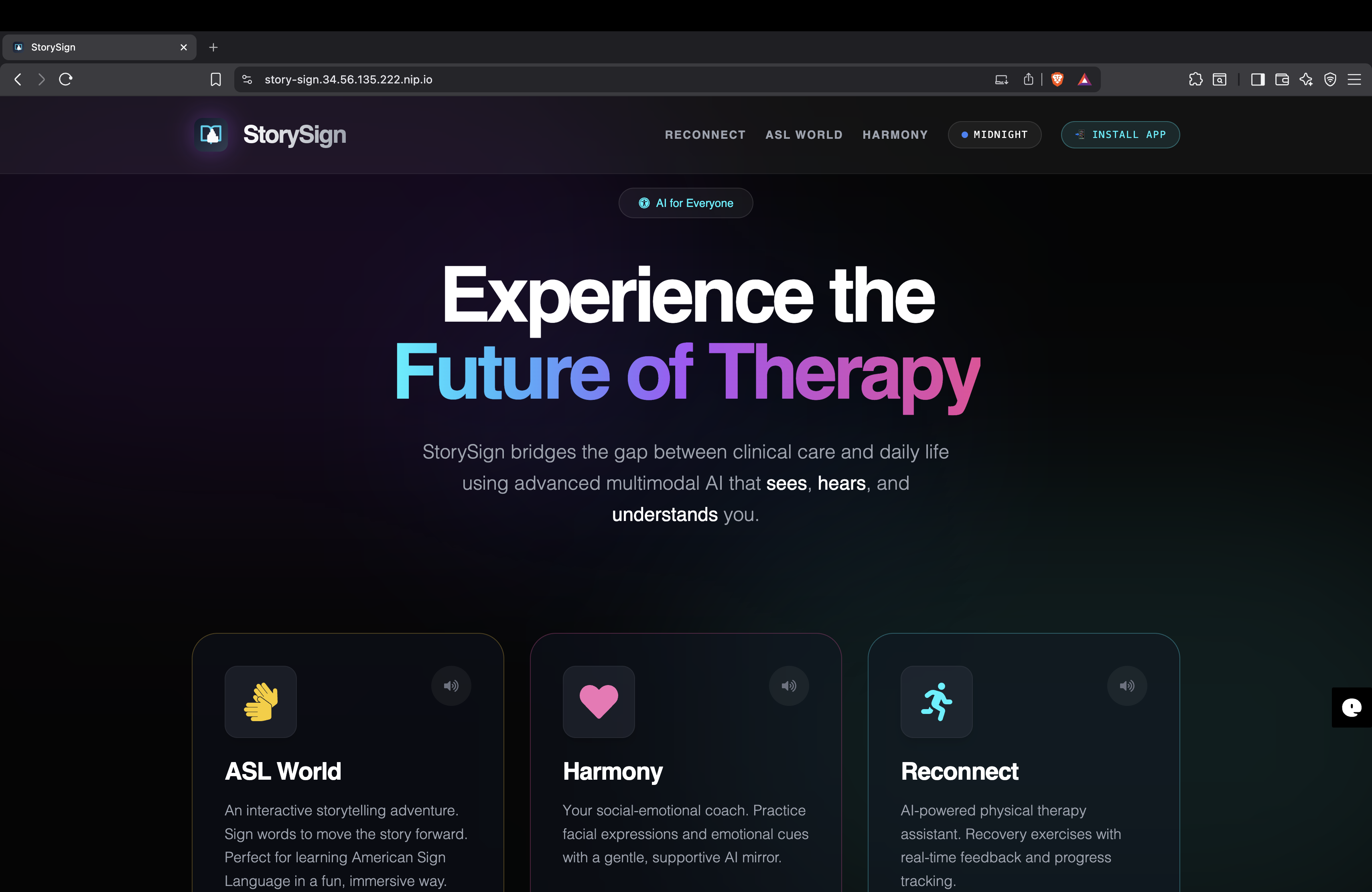
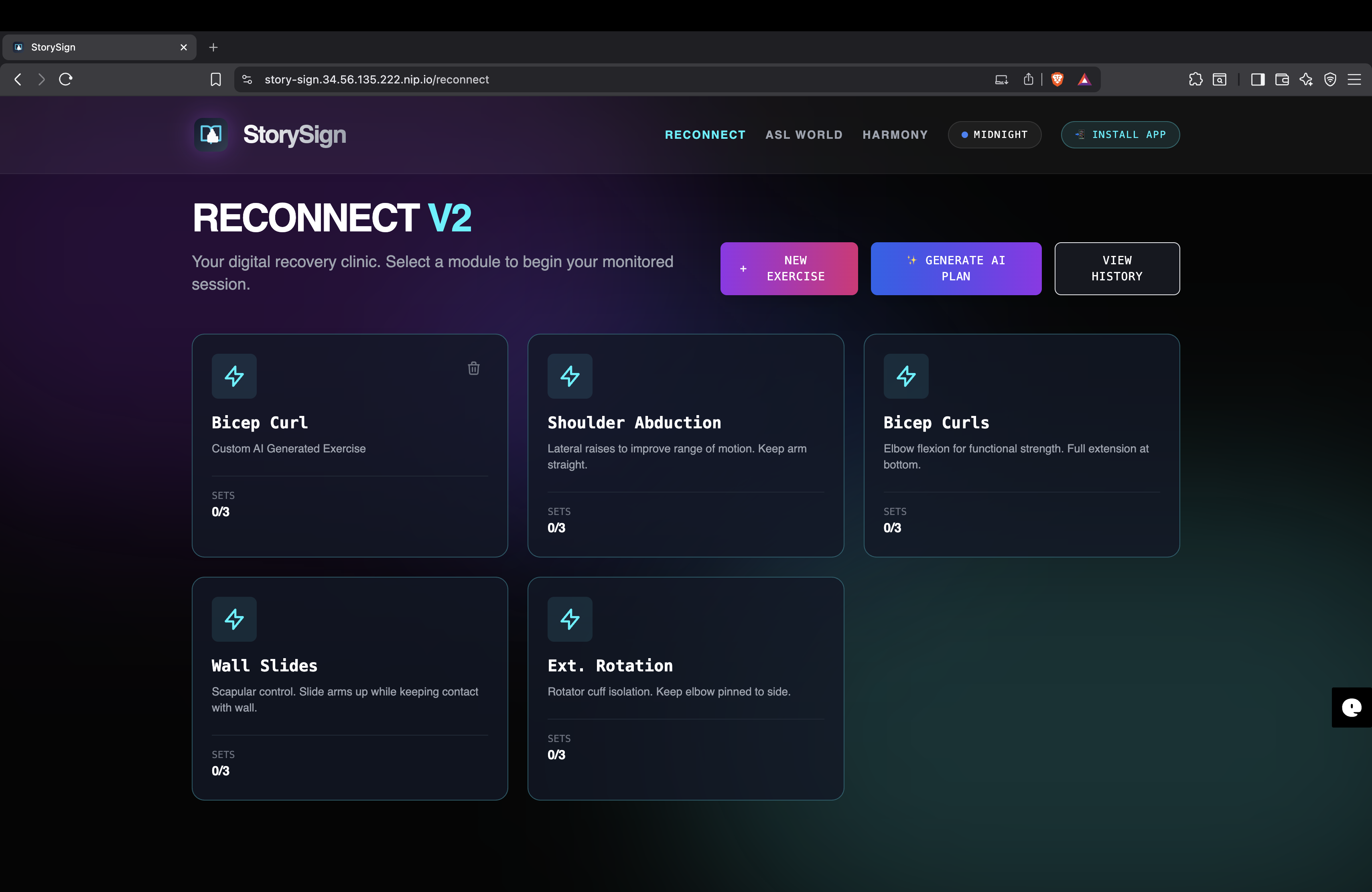
StorySign is a real-time multimodal AI platform. Our flagship module, Reconnect, is a fully functional AI Physical Therapist that serves as a:
- Real-Time Biomechanics Coach: Uses computer vision to track skeletal landmarks at 60 FPS.
- Active Counter & Form Corrector: Automatically counts repetitions (e.g., "Five!") and detects specific form errors (e.g., "Keep your back straight") using a deterministic physics engine.
- Safety Monitor: Integreates a sophisticated
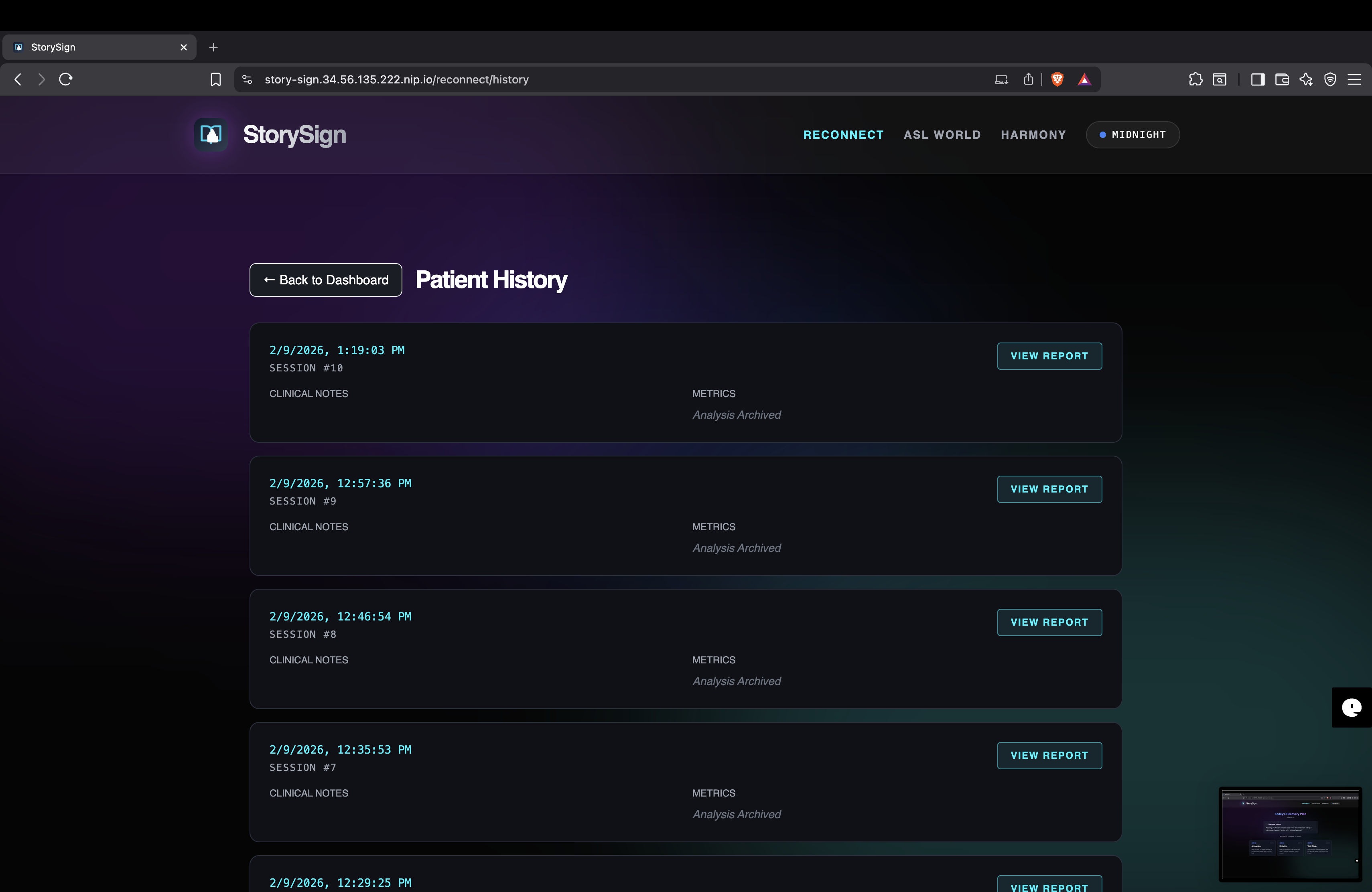
[SAFETY_STOP]system. If it detects high-velocity spasms or dangerous ranges of motion, it interrupts immediately before the AI even finishes its sentence. - Clinical Reporter: Uses Gemini 3.0 ("Deep Think") to analyze the session's telemetry and generate a professional progress report for human therapists.
Platform Vision (Beta Modules)
We are also expanding StorySign to include:
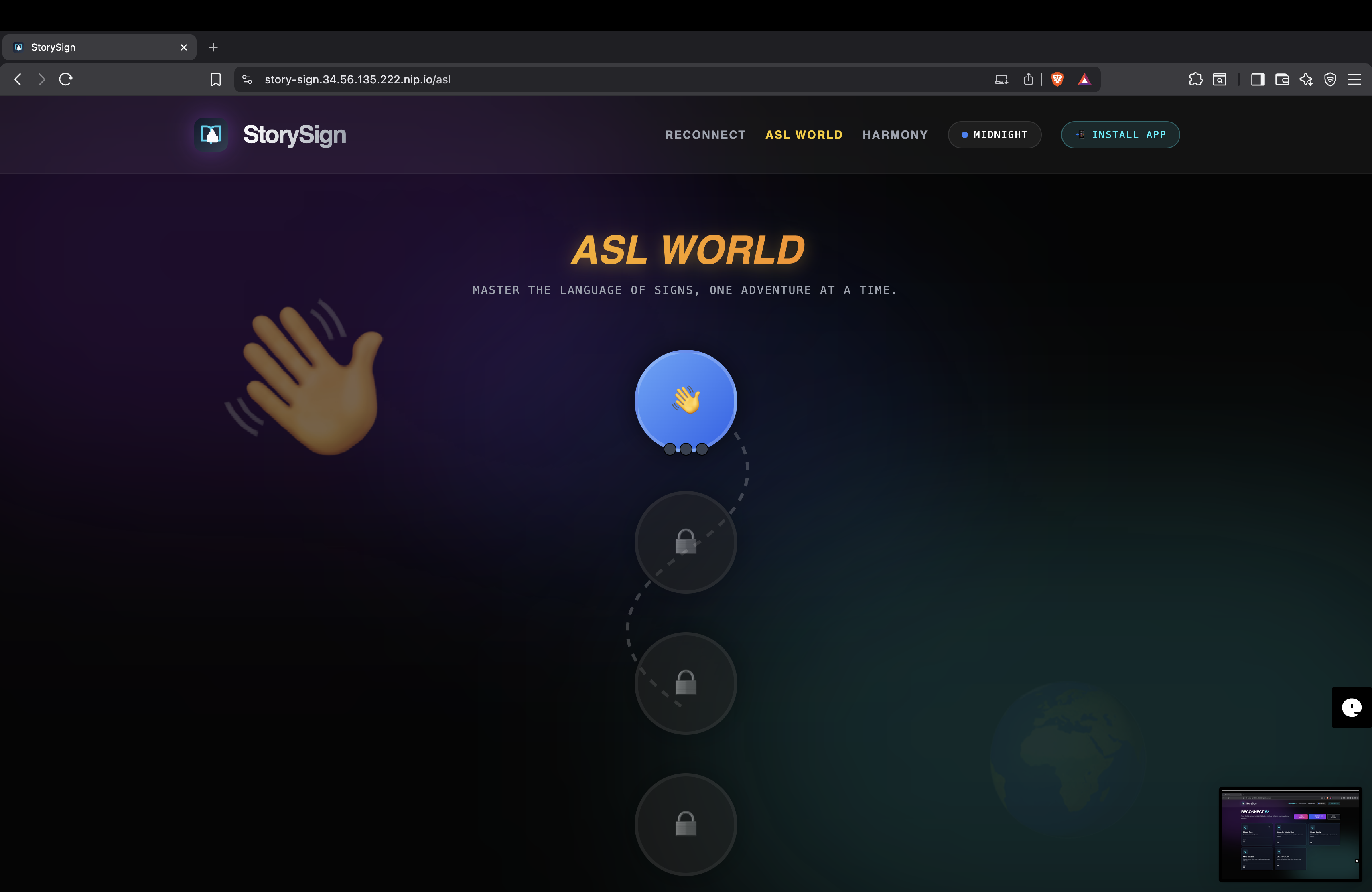
- ASL World: An interactive storyteller for deaf children.
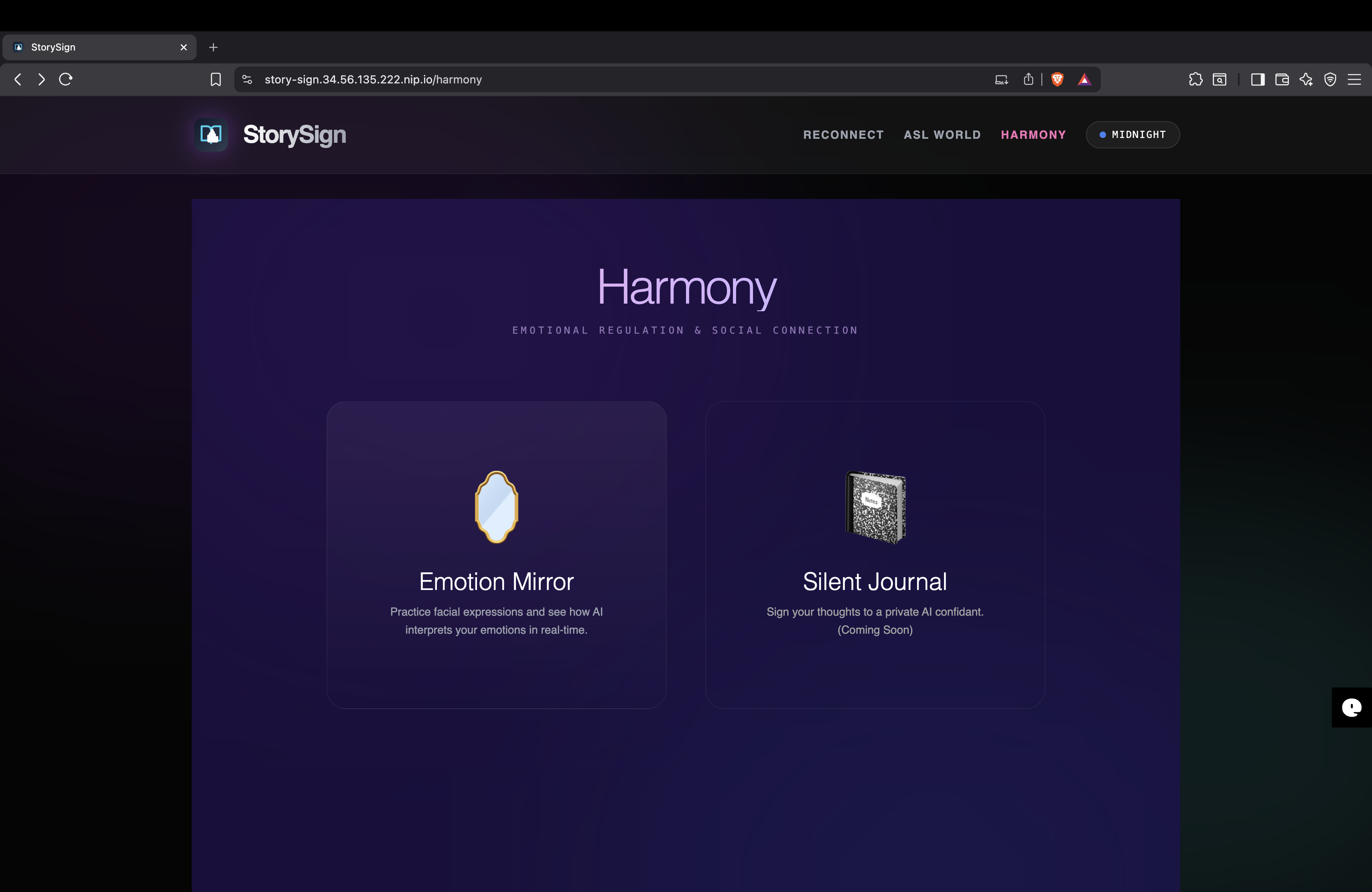
- Harmony: A social-emotional learning coach for neurodivergent users.
How we built it
We adopted a "Stream-First" Hybrid Architecture to balance ultra-low latency with high intelligence.
1. The "Reflex" Layer (React 19 + Physics)
We use client-side computer vision (Mediapipe) to run 60 FPS physics checks. The core innovation is our Universal Physics Engine, which calculates biomechanical angles in real-time using vector math.
For example, to detect if a patient is "cheating" during a shoulder exercise by leaning their torso, we calculate the vector angle $\theta$ between the Torso Vector $\vec{v}{torso}$ and the Vertical Axis $\vec{v}{up}$ using the dot product formula:
$$ \theta = \arccos \left( \frac{\vec{v}{torso} \cdot \vec{v}{up}}{|\vec{v}{torso}| |\vec{v}{up}|} \right) $$
If $\theta > 15^\circ$, the system triggers a [SAFETY_STOP] event before the AI even speaks.
2. The "Brain" Layer (Gemini Tunnel)
When a significant event works, we tunnel it through a FastAPI WebSocket directly to Gemini. We devised a "Clinical Scribe" protocol to prevent the model from hallucinating or talking over the user.
# The System Prompt enforces a "Scribe" persona
RECONNECT_SYSTEM_INSTRUCTION = """
You are a Clinical Scribe and Therapist.
- TRIGGER: If you see [EVENT] Rep 5, say "Five!".
- CONSTRAINT: NEVER read the JSON headers aloud.
- SAFETY: If [SAFETY_STOP] is received, interrupt immediately.
"""
3. The "Reasoning" Layer (Gemini 3.0)
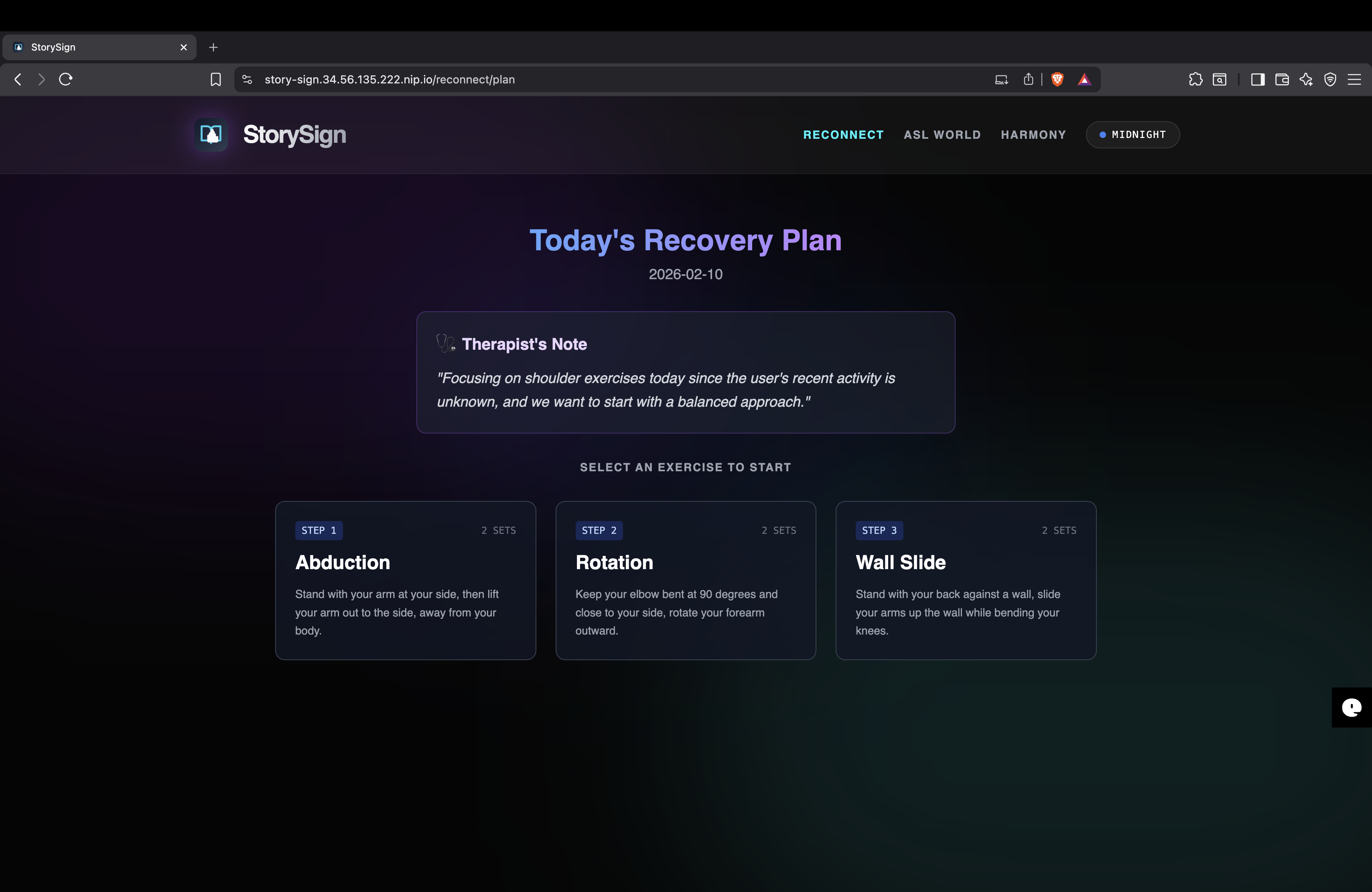
After the session, we use Gemini 3.0 Flash Preview ("Thinking Mode") to analyze the raw telemetry logs. It synthesizes thousands of data points into a human-readable progress report.
Challenges we ran into
- The "Silence" Problem: Early versions of the model were too chatty. We had to implement a specific protocol that keeps the model silent until a relevant event is triggered.
- Race Conditions: Coordinating the WebSocket stream with the async Gemini API caused message ordering issues. We solved this by implementing an
asyncio.Queueworker pattern. - Prompt Engineering for Biomechanics: Teaching a text model to understand 3D space was difficult. We switched to a hybrid approach where the frontend sends Semantic Tags (e.g.,
[EVENT] TORSO_LEAN) instead of raw coordinates.
Accomplishments that we're proud of
- Sub-100ms Latency: The system feels truly conversational.
- Evidence-Based UI: Our "Deep Think" reports provide actual medical value, not just generic advice.
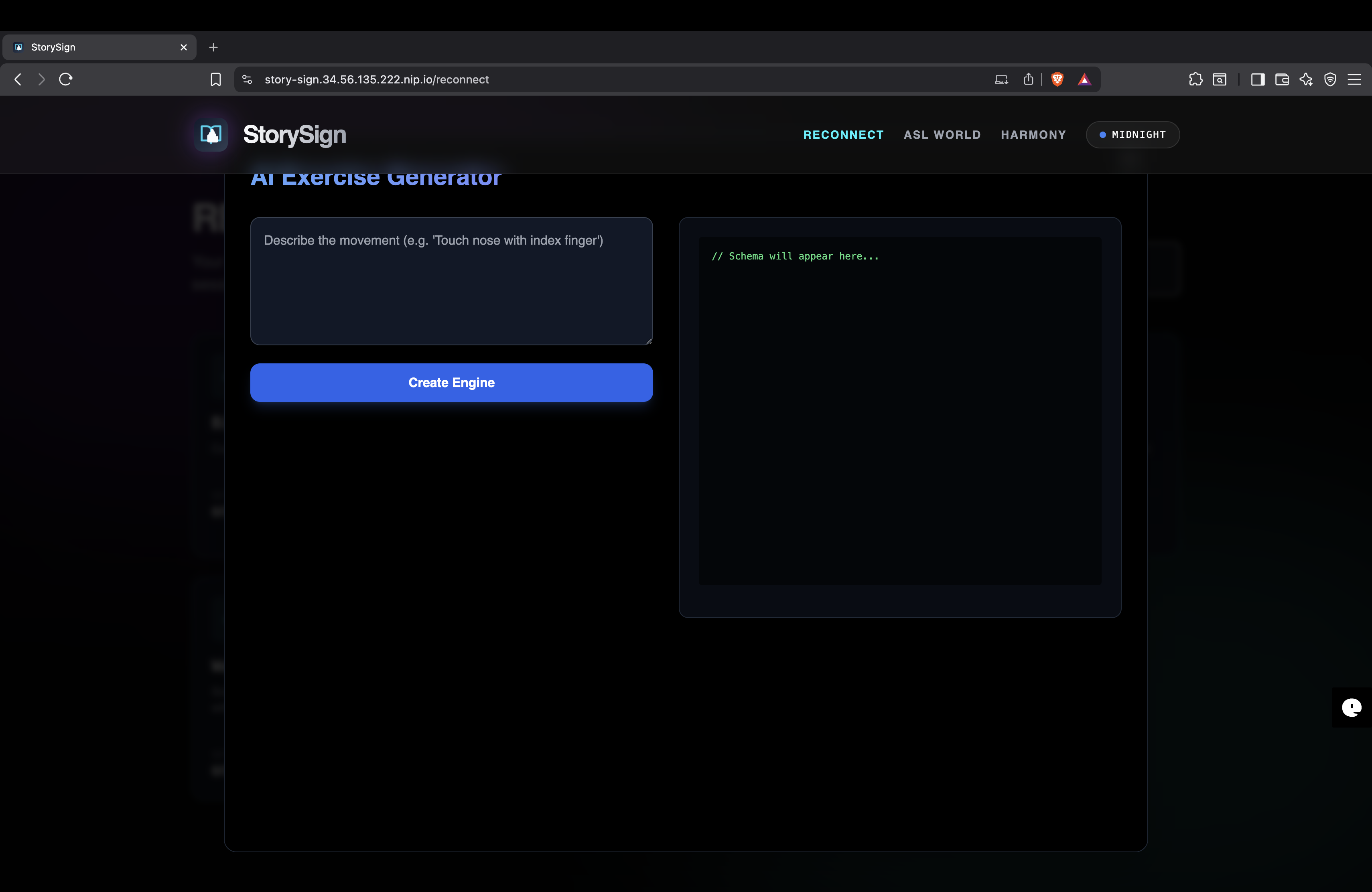
- Universal Physics Engine: We can generate new physical therapy exercises on the fly just by describing them in plain English.
What we learned
We learned that Hybrid AI is the future of real-time apps. You cannot delegate everything to the LLM; you need deterministic code for safety components (like the physics engine), combined with the LLM's reasoning for context and empathy.
What's next for StorySign
- [ ] Clinical Validation: Partnering with local PT clinics.
- [ ] Avatar Integration: Replacing voice-only feedback with a 3D avatar.
- [ ] Wearable Support: Integrating Apple Watch heart-rate data.
Built With
- caddy
- css
- docker
- docker-compose
- fastapi
- framermotion
- gemini-2.5-flash-native-audio-preview-12-2025
- gemini-3
- google-genai-sdk
- html5
- mediapipe
- postgresql
- pydantic
- python
- react-19
- sqlalchemy
- tailwindcss
- typescript
- uvicorn
- vite

Log in or sign up for Devpost to join the conversation.