-
-
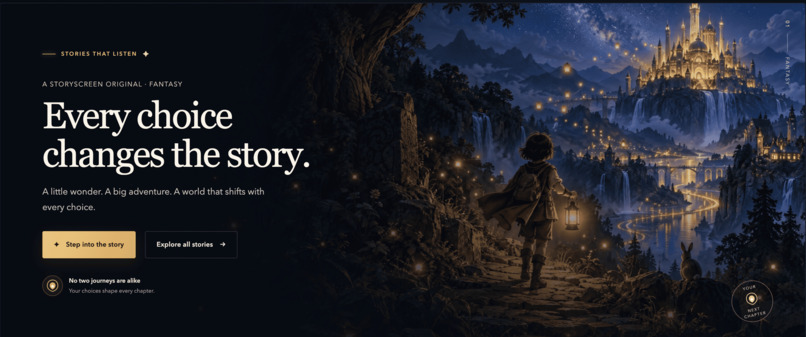
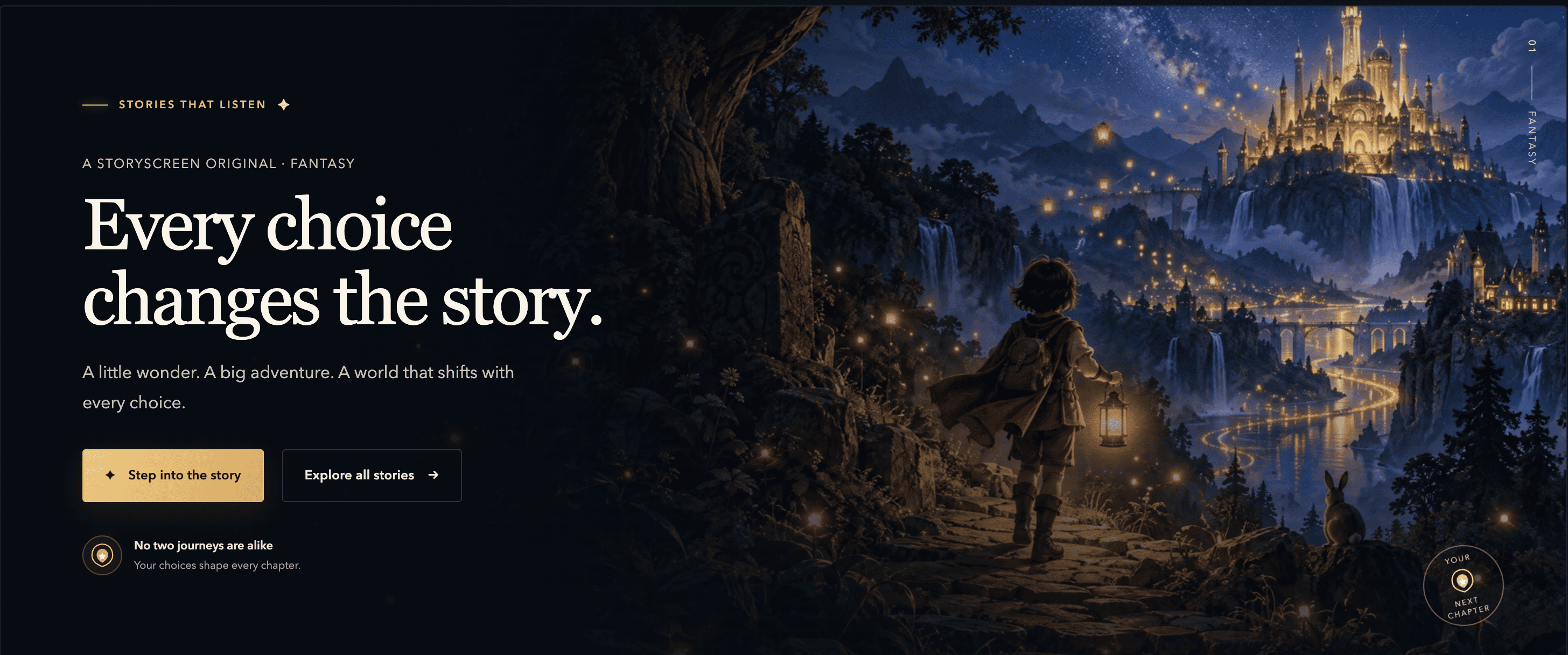
The Home Page
Inspiration
I got the idea for StoryScreen because I wanted to make watching stories more fun and interactive. Usually, we just watch a movie or a story and follow what happens. I thought, what if we could actually make choices that change the story? What if every person could experience a different ending based on their decisions?
That is how StoryScreen started. My goal is to combine AI and storytelling to create an experience where people don't just watch stories but become a part of them.
What it does
StoryScreen is an interactive storytelling platform designed for TV screens, especially Amazon Fire TV. Users can explore different genres like fantasy, mystery, science fiction, comedy, adventure, mythology, bedtime stories, and inspirational stories.
Users can make choices throughout a story, and those choices affect what happens next. The platform aims to support multiple endings, custom adventures, saving and resuming stories, character customization, and narration. The idea is to make every adventure feel different and give families a fun way to experience stories together.
How we built it
I planned StoryScreen as a web application using React, TypeScript, and Vite. I focused on creating a modern streaming-style interface with large story cards, simple navigation, and controls suitable for a TV remote.
The main idea is to maintain the story's progress, characters, relationships, and previous choices so that the story stays consistent. I also planned a fallback storytelling system so the basic experience can work without depending entirely on a paid AI API.
I kept the project focused on the most important features first, with the goal of adding more AI-powered features as the application develops.
Challenges we ran into
One of the biggest challenges was deciding how to build an AI storytelling experience with limited time and budget.
Making a story interesting is one thing, but making sure that characters remember previous events and that choices actually affect what happens next is much harder. I also had to consider how the application would work on a television, where navigation and readability are different from a mobile app.
Another challenge was balancing advanced features with the need to make the basic application reliable and usable.
Accomplishments that we're proud of
I'm proud of the idea of turning storytelling into an interactive experience where users can influence the plot instead of simply watching it unfold.
I'm also proud of the focus on making StoryScreen family-friendly and suitable for a bigger screen. Features like multiple endings, custom adventures, and the ability to revisit a story can make the experience more engaging and encourage users to explore different possibilities.
What we learned
This project helped me understand that building an AI-powered application involves much more than generating text. It also requires good planning, managing data, maintaining consistency, handling errors, and designing an interface that people can use easily.
I also learned the importance of starting with the core features and making them work properly before adding more advanced features. Having a fallback plan is important when working with external AI services.
What's next for StoryScreen
I want to improve StoryScreen by adding better AI-generated stories, more interactive choices, additional genres, and more personalized adventures.
I also want to explore family voting, improved narration, AI-generated illustrations, and a smoother Amazon Fire TV experience.
My long-term vision is to make StoryScreen a platform where every story feels personal, every choice matters, and people can return to the same adventure and discover something completely different.
Built With
- artificialintelligence
- css3
- generativeai
- html5
- javascript
- react
- typescript
- vite

Log in or sign up for Devpost to join the conversation.