Inspiration
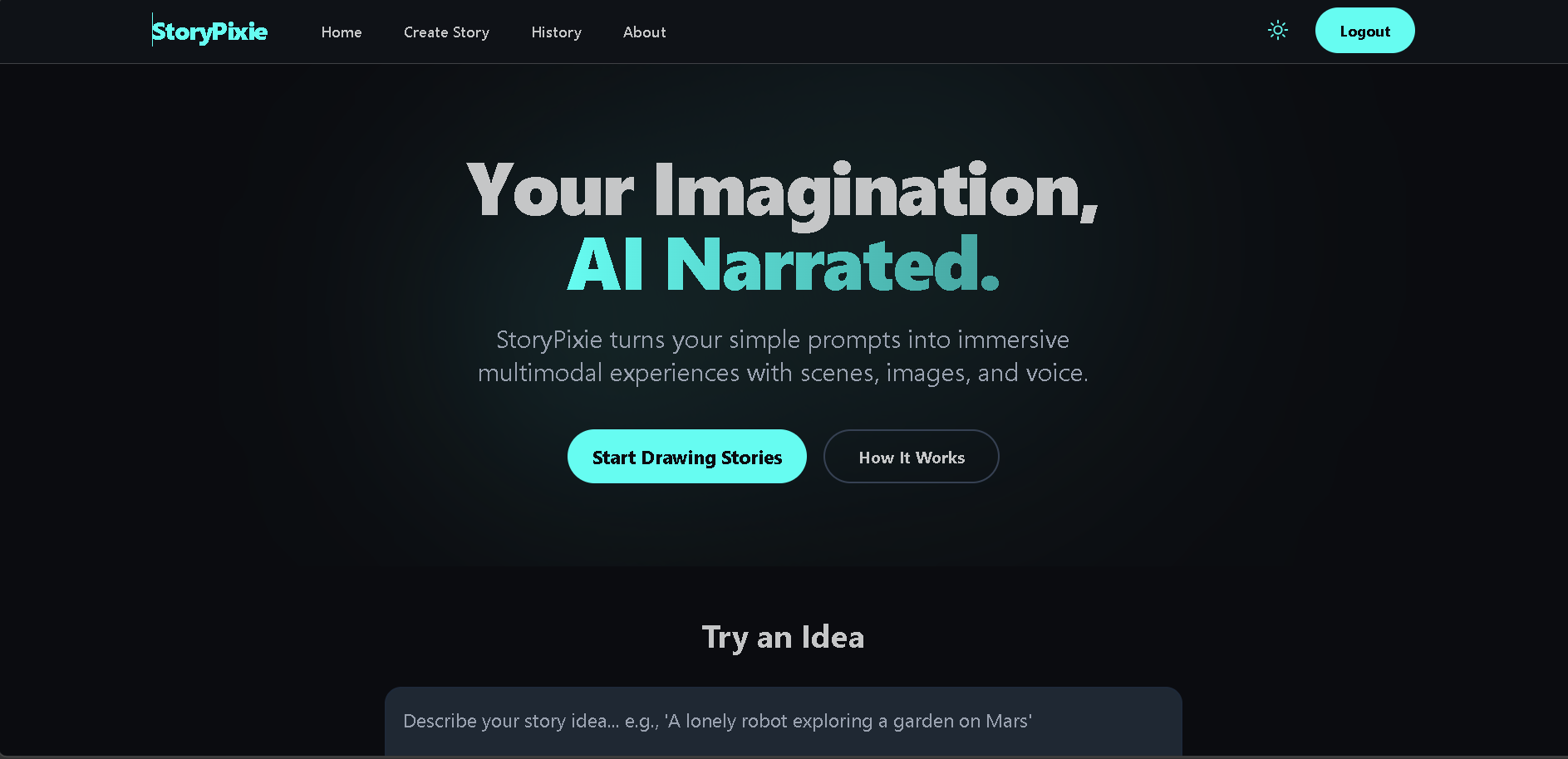
StoryPixie was inspired by the idea of making storytelling more interactive and accessible using artificial intelligence. Many people have creative ideas for stories but lack the tools to turn them into engaging visual experiences. I wanted to build a system where a simple prompt could automatically become a complete story with images, narration, and video. The goal was to combine creativity and technology to make storytelling more fun for children, educators, and content creators.
What it does
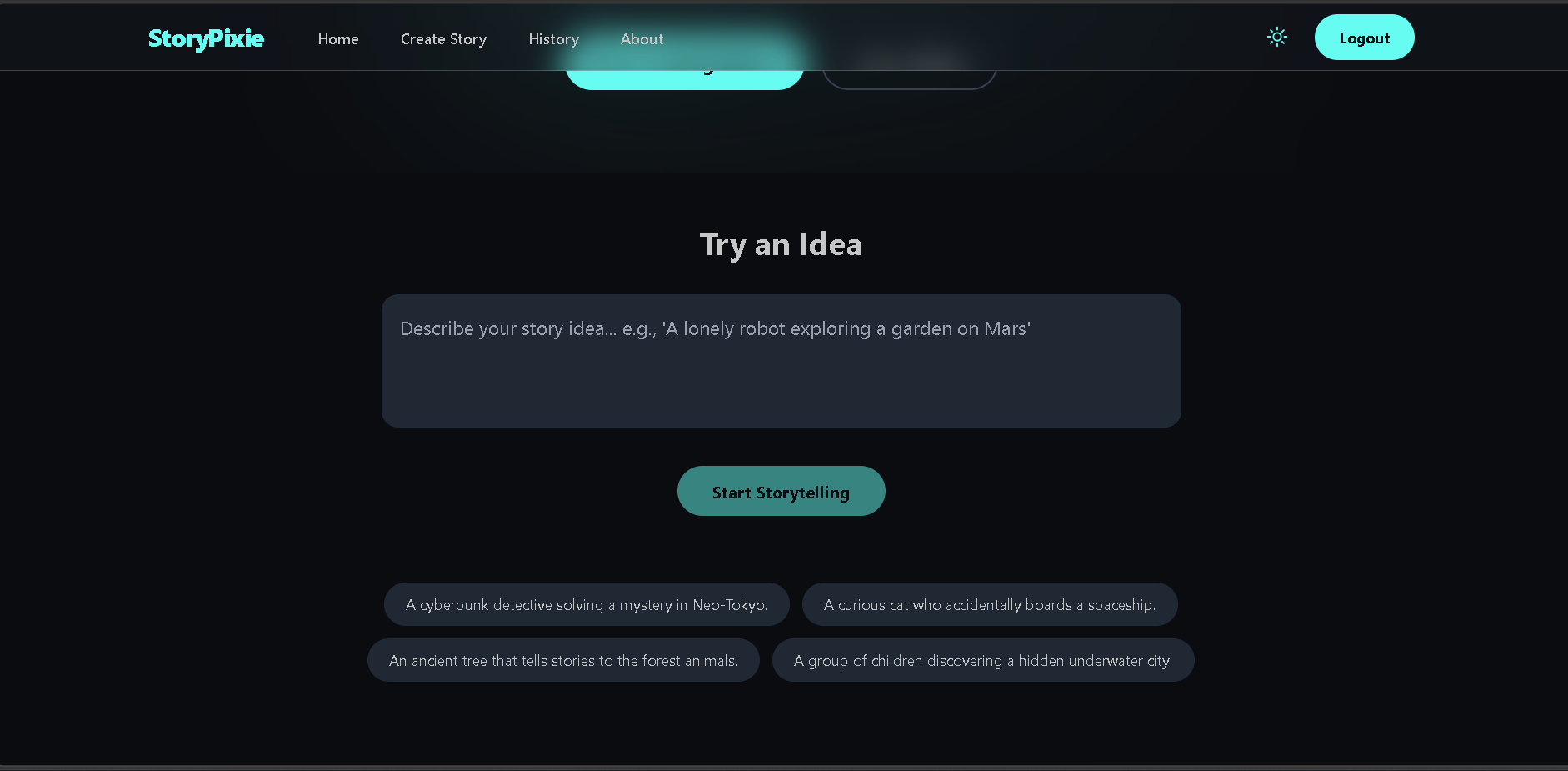
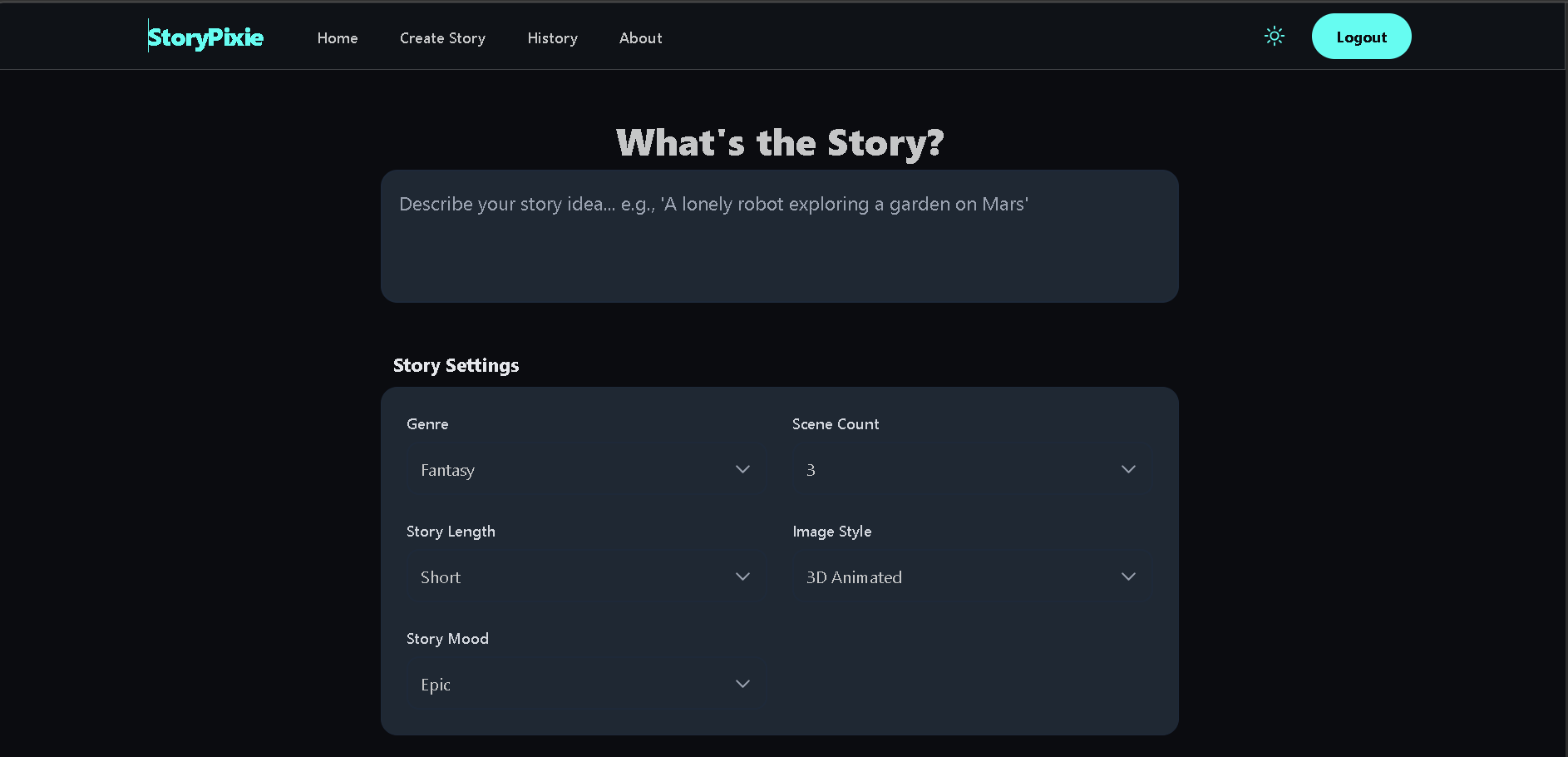
StoryPixie is an AI-powered storytelling platform that transforms a simple prompt into a complete multimedia story experience.
The system:
- Generates a structured story using AI
- Breaks the story into multiple scenes
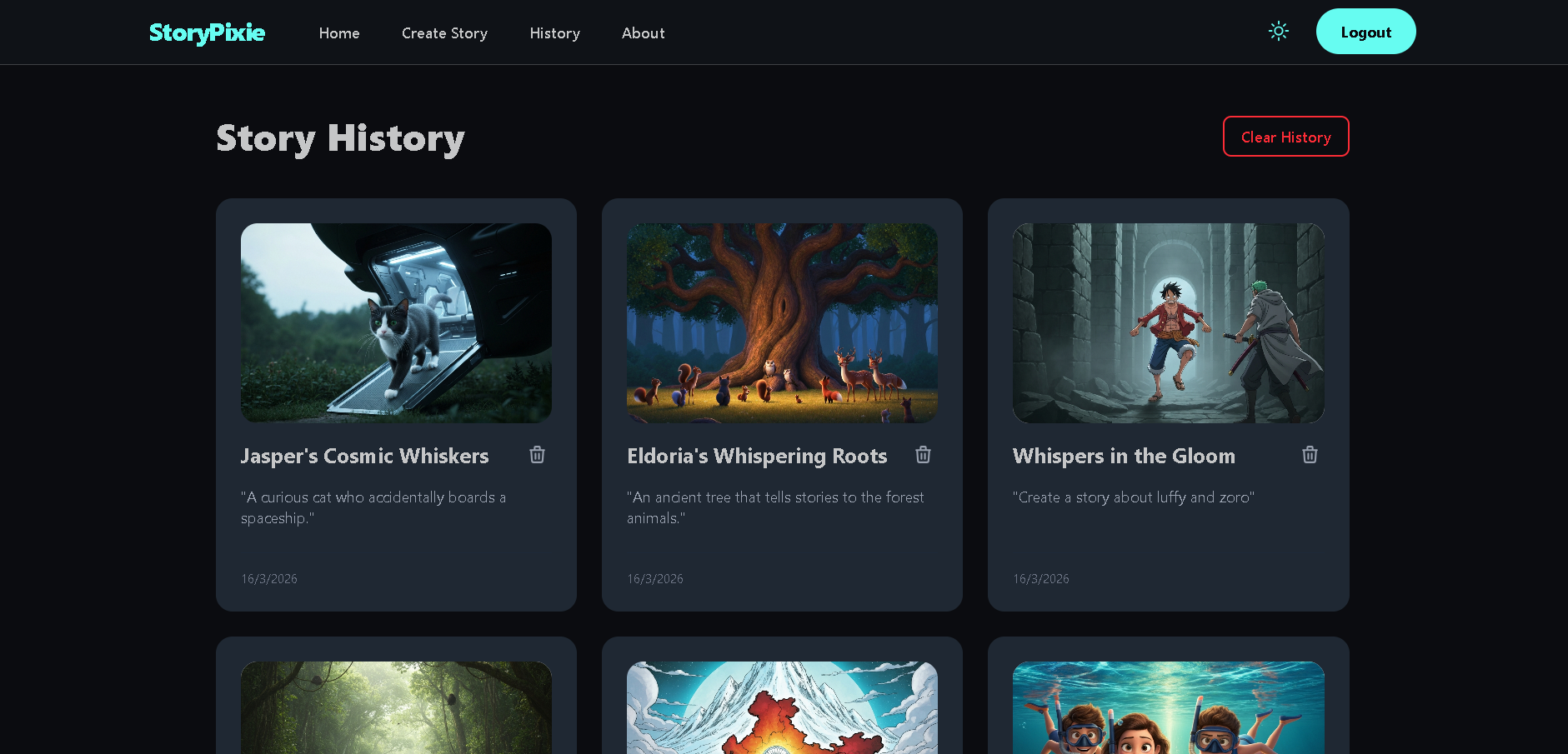
- Creates illustrations for each scene
- Generates voice narration using text-to-speech
- Combines images and narration into a short video
With just one prompt, users can create a mini animated story with visuals and audio.
How we built it
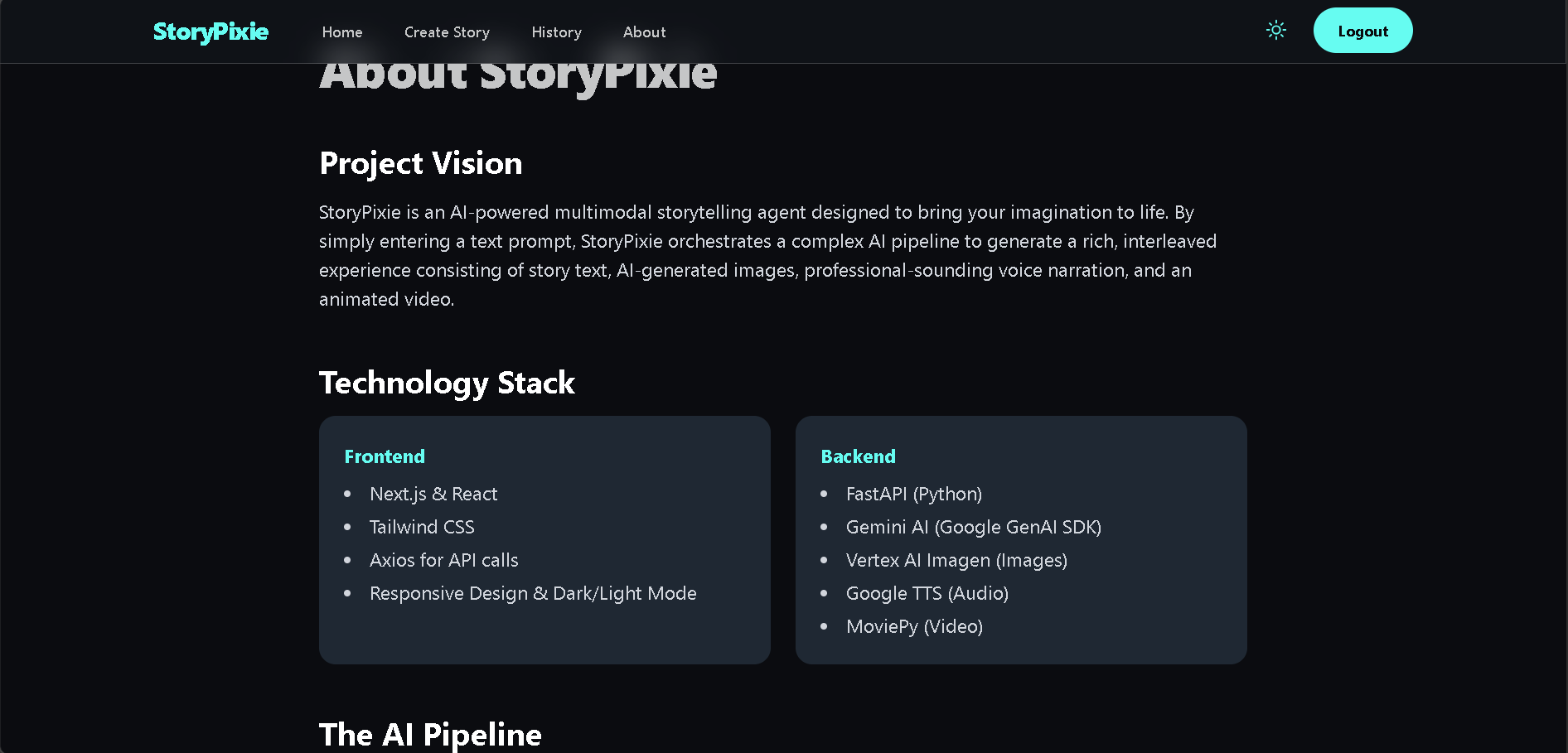
StoryPixie was built using a full-stack architecture.
- Frontend: React.js for the user interface
- Backend: FastAPI (Python) to manage APIs and the AI pipeline
- AI Models: Gemini API for story generation and text-to-speech
- Image Generation: AI image model to generate scene illustrations
- Video Creation: FFmpeg to combine images and audio into a final video
The backend orchestrates the entire pipeline: generating the story, creating scene images, producing narration, and compiling everything into a video.
Challenges we ran into
One of the main challenges was integrating multiple AI services into a single workflow. Each component—story generation, image generation, text-to-speech, and video creation—had different response times and limitations.
Another challenge was handling API rate limits and free-tier restrictions. This required implementing fallback mechanisms when certain services were unavailable.
Setting up FFmpeg for automatic video generation and synchronizing narration with scene images also required careful debugging and experimentation.
Accomplishments that we're proud of
We successfully built an end-to-end AI storytelling pipeline that transforms a single prompt into a multimedia story.
Some key achievements include:
- Automating the entire storytelling workflow
- Generating scene-based visual stories
- Creating narrated audio for each scene
- Producing a final video using generated content
Seeing a simple text idea turn into a narrated visual story was a very rewarding milestone.
What we learned
Through this project we learned a lot about building AI-powered applications.
Key learnings include:
- Designing AI pipelines that combine multiple services
- Backend development with FastAPI
- Handling asynchronous tasks and API rate limits
- Generating media programmatically using FFmpeg
- Building full-stack applications that integrate AI tools
This project also helped us understand the challenges of building reliable systems around generative AI.
What's next for StoryPixie
There are many exciting improvements planned for StoryPixie.
Future features include:
- Better character consistency across scenes
- More voice styles and narration options
- Customizable art styles
- Subtitle generation for videos
- Exporting stories for social media platforms
The long-term vision is to turn StoryPixie into a creative platform where anyone can generate animated stories, educational content, or short AI-generated videos from a simple idea.
Built With
- css3
- fastapi
- gemini-api
- html5
- javascript
- python
- react.js
- rest-apis

Log in or sign up for Devpost to join the conversation.