Inspiration
Every child loves hearing a story where they are the hero. But personalized, educational storybooks are often expensive, hard to find, or time-consuming to create.
Teachers and parents also struggle to explain complex topics—like how digestion works or why we feel angry—in a way that is engaging for a young child.
We asked ourselves: what if any parent could create a fully personalized, illustrated, narrated storybook in under 60 seconds?
That question became StoryPal.
What It Does
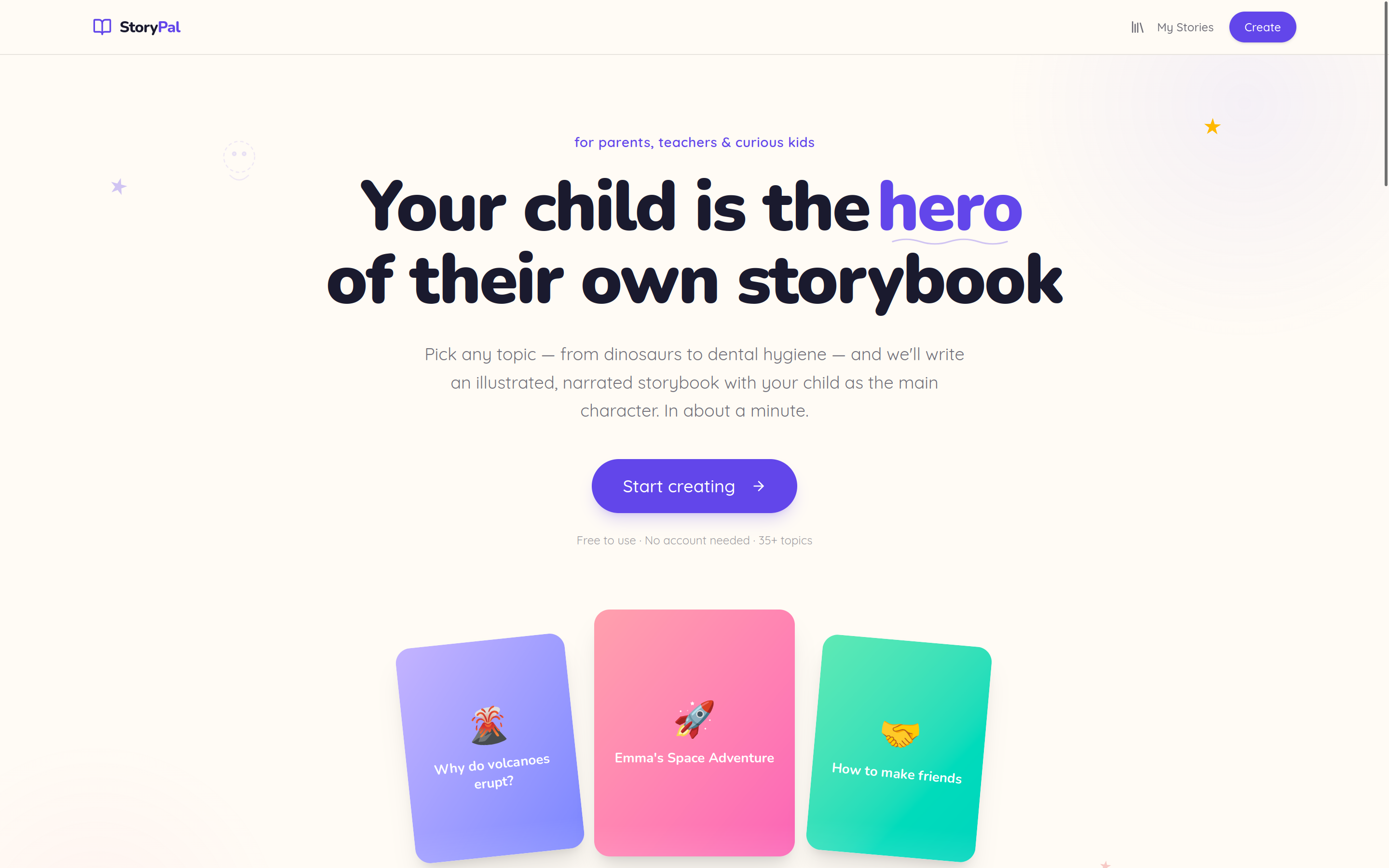
StoryPal is an AI-powered web app that generates personalized educational storybooks for children aged 3–12.
You enter your child's name, age, appearance, and choose a topic. Within a minute, you get:
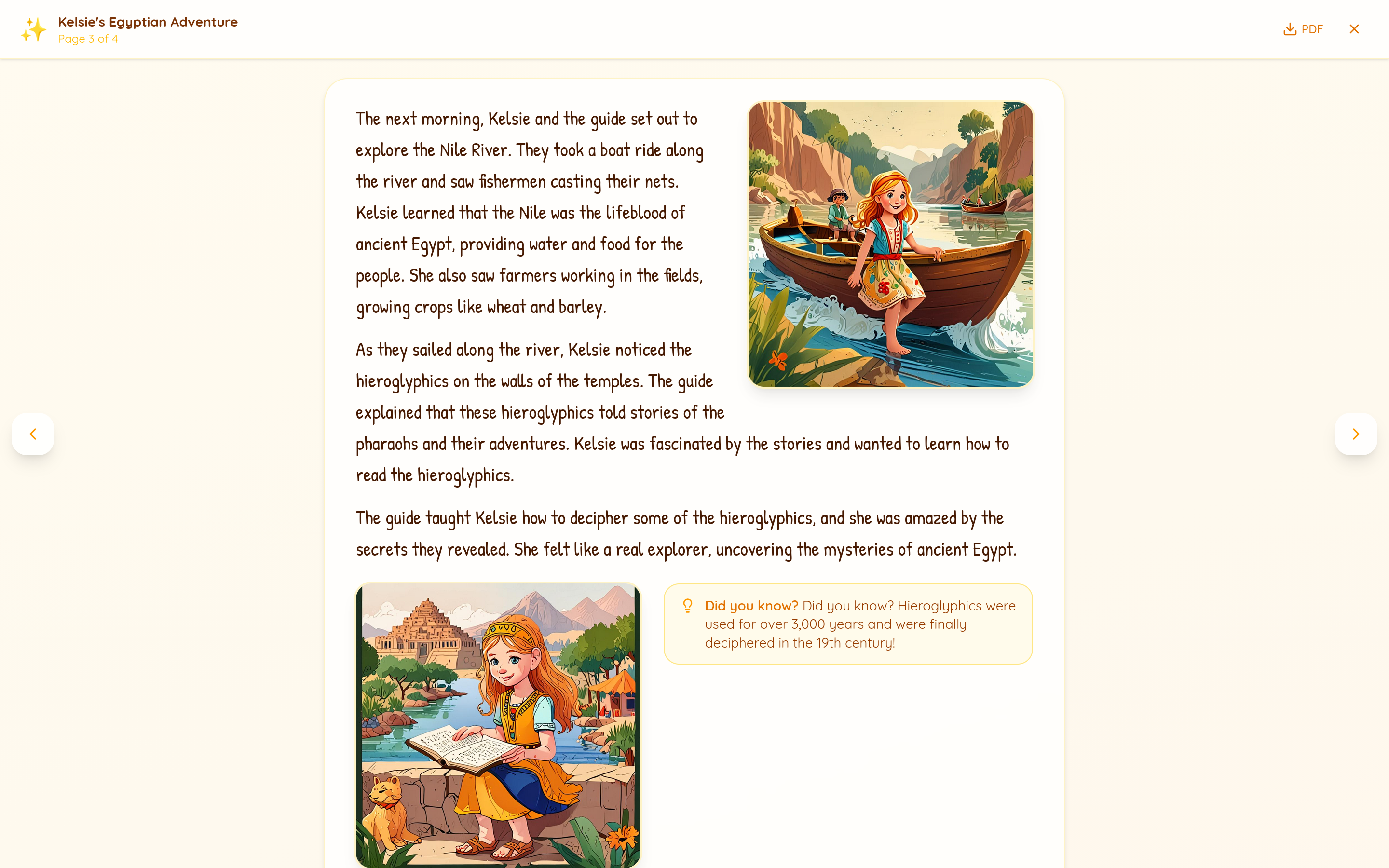
- A multi-page story where your child is the main character
- Unique watercolor-style illustrations for every page
- Voice narration read aloud page by page
- "Did you know?" fun fact boxes
- An interactive quiz to reinforce learning
- A downloadable PDF to print and keep
Topics span 35+ curated subjects including Science, Health, Emotions, Life Skills, and History—plus unlimited custom topics.
How We Built It
StoryPal uses a three-stage AI pipeline:
1. Story Generation We use Groq (LLaMA 3.3 70B) to generate a structured JSON story (title, pages, facts, quiz) in ~3 seconds. Prompts dynamically inject the child’s details into the narrative.
2. Image Generation Each page is converted into an image prompt and sent to Cloudflare Workers AI (SDXL Lightning), optimized for a consistent watercolor children's book style.
3. Voice Narration
We integrated Kokoro-82M (ONNX) using kokoro-js. Text is chunked into sentence-level segments, converted to audio, and merged into seamless page narration.
Frontend: React + Vite + Tailwind CSS UI/UX: Framer Motion + shadcn/ui Storage: IndexedDB PDF Export: jsPDF
Challenges We Faced
TTS Chunking: Kokoro has strict input limits. We implemented sentence-aware chunking and precise WAV concatenation without audible gaps.
Consistent Image Style: SDXL initially produced inconsistent outputs. We refined prompts heavily to maintain a uniform watercolor aesthetic.
JSON Reliability: LLM responses were sometimes malformed. We added schema validation and retry logic.
No Backend Storage: We used Base64 encoding + IndexedDB to persist full stories (text, image, audio) while avoiding quota issues.
What We Learned
- Groq’s inference speed enables real-time storytelling UX.
- TTS architecture decisions depend on latency vs. model size tradeoffs.
- Accessibility (WCAG, touch targets, keyboard nav) is essential in children’s apps from day one.
What's Next
- Multi-language support (story + narration)
- Shareable story links
- Teacher dashboard for classrooms
- Persistent character memory across stories
Built With
- 70b
- ai
- api
- cloudflare
- css
- express.js
- framer
- groq
- html2canvas
- indexed
- jspdf
- kokoro
- kokoro-js
- lightning
- llama
- motion
- node.js
- onnx
- react
- runtime
- sdxl
- shadcn/ui
- tailwind
- tts
- vite
- workers

Log in or sign up for Devpost to join the conversation.