-
-
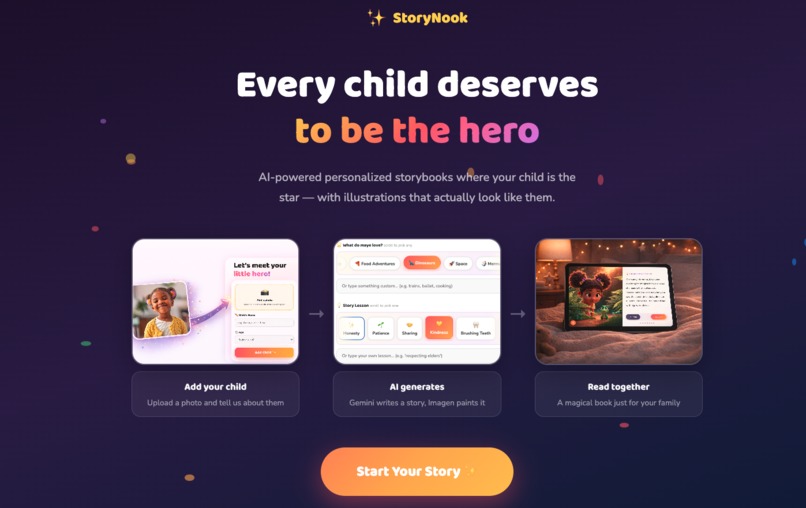
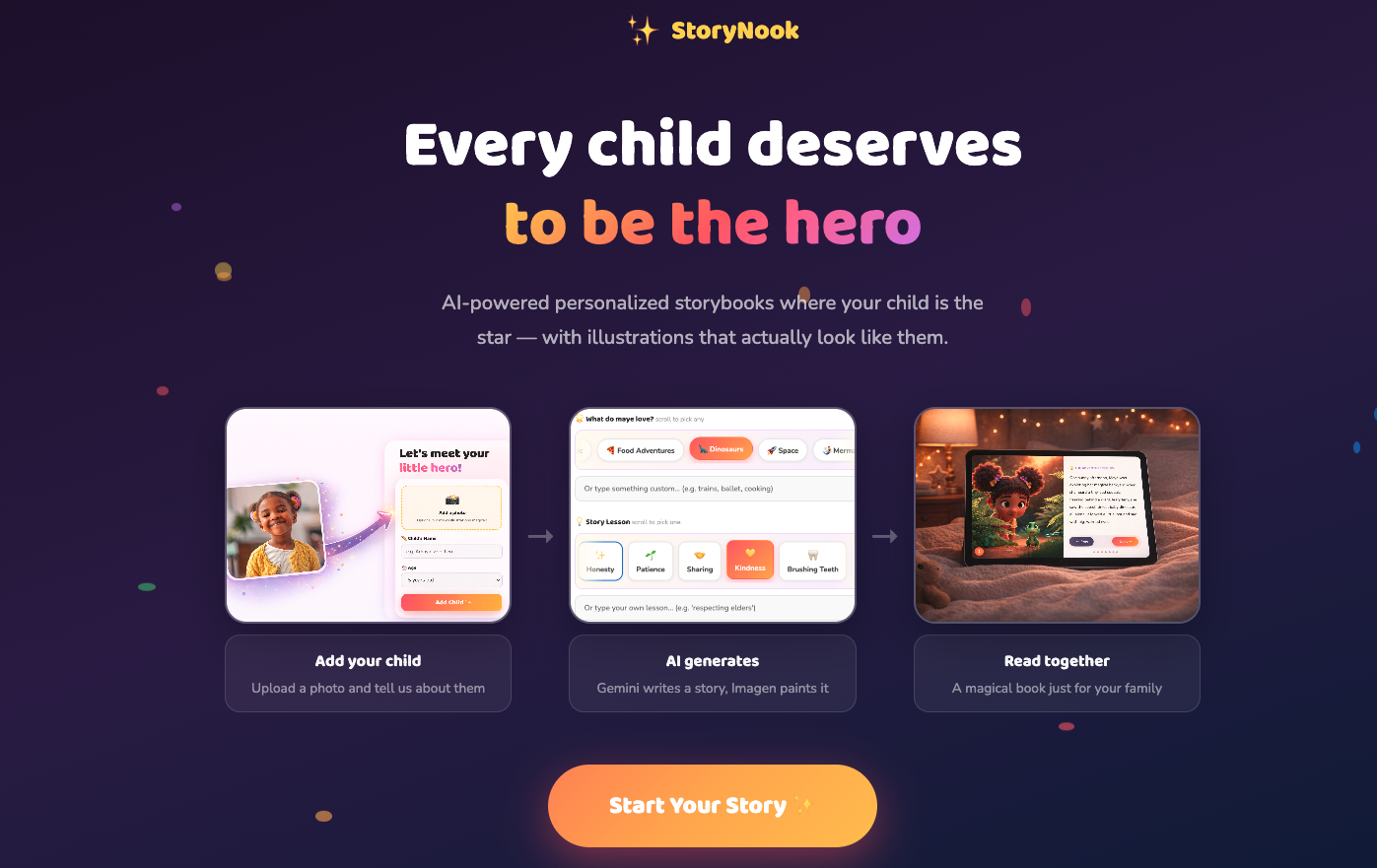
Welcome Page
-
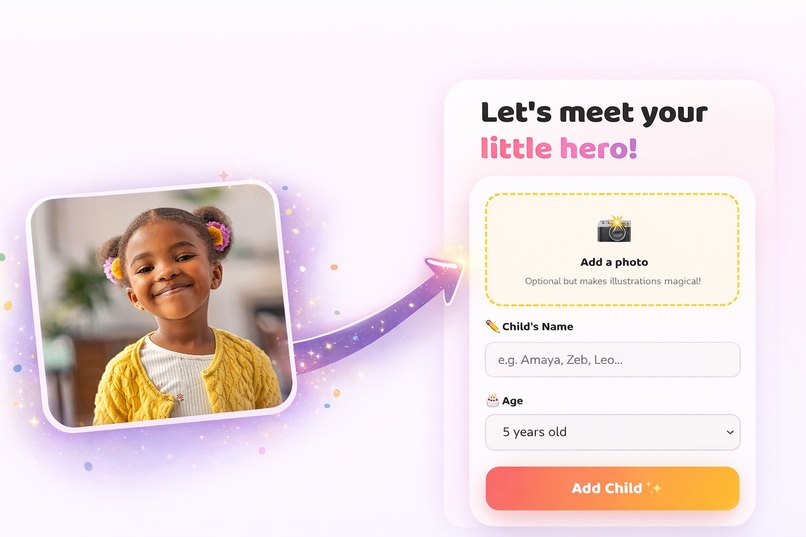
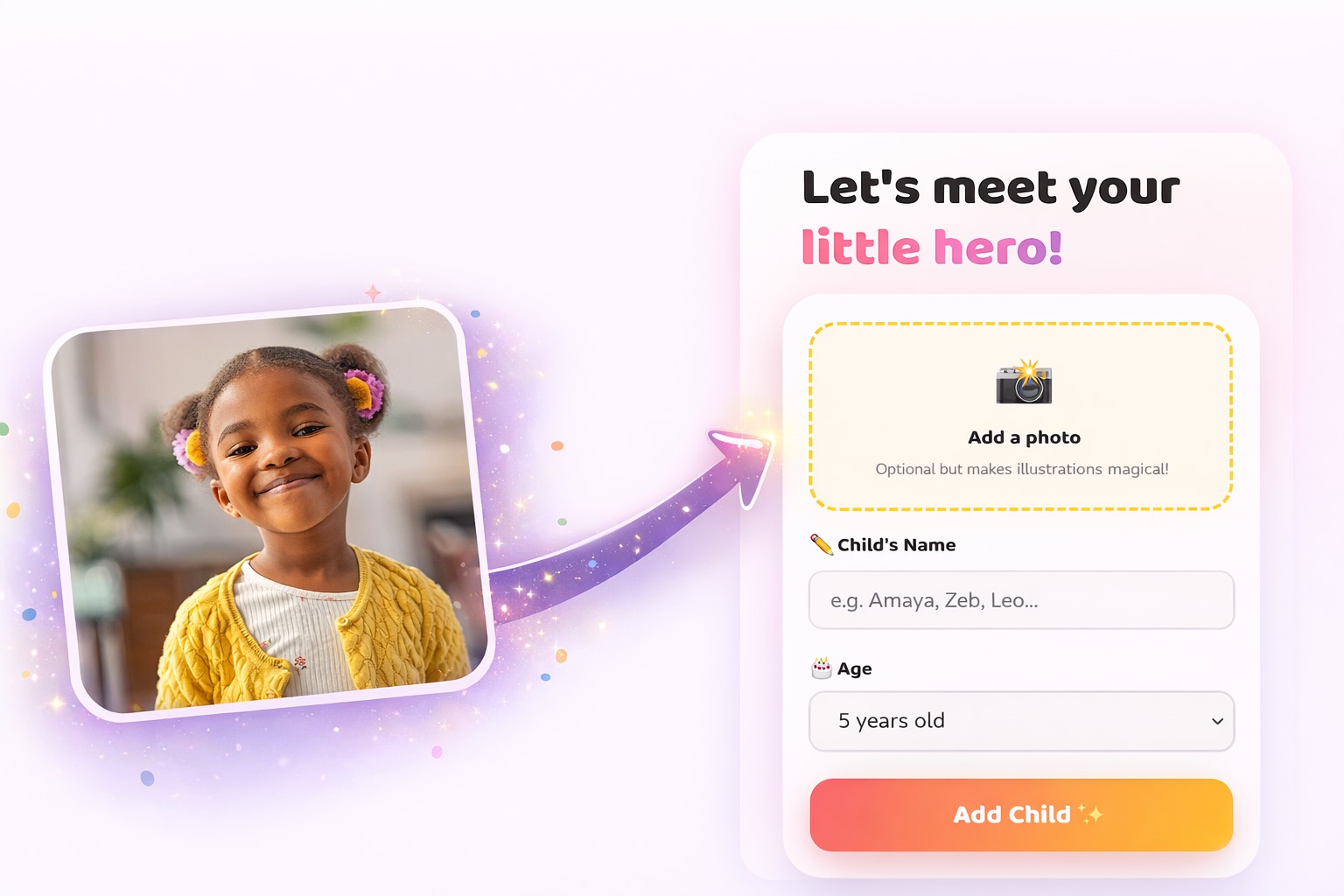
Add a photo of your child
-
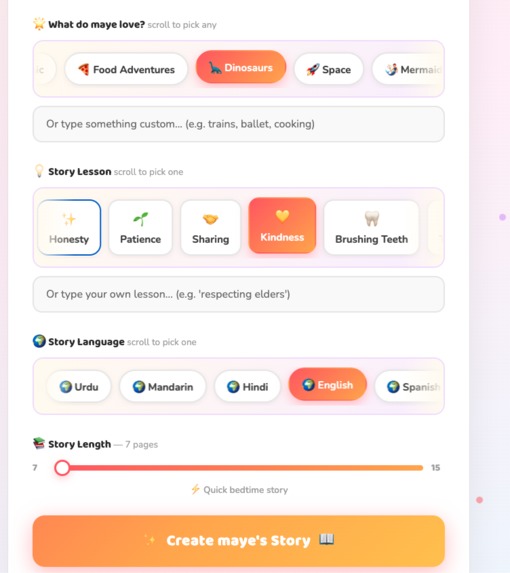
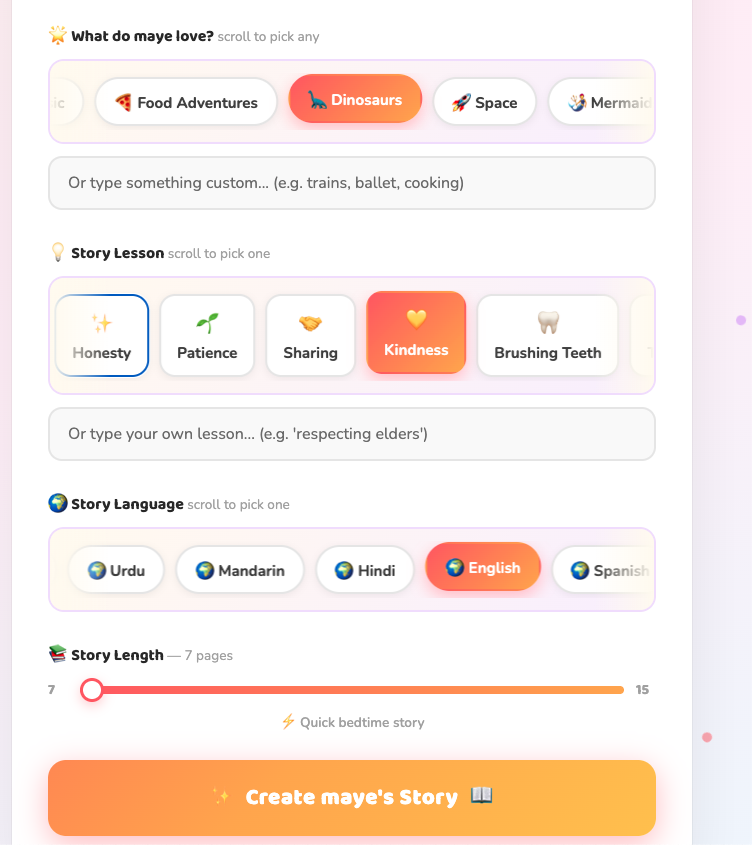
Add what they like and a lesson
-
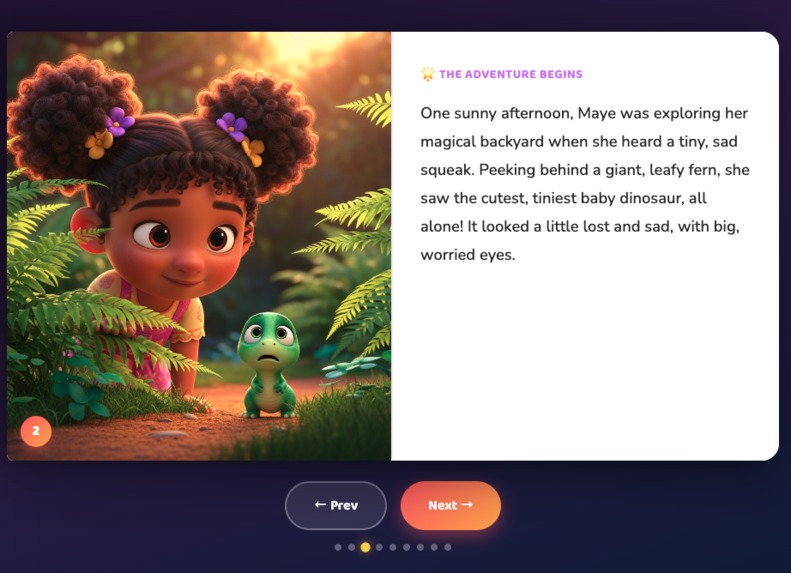
Let it generate
-
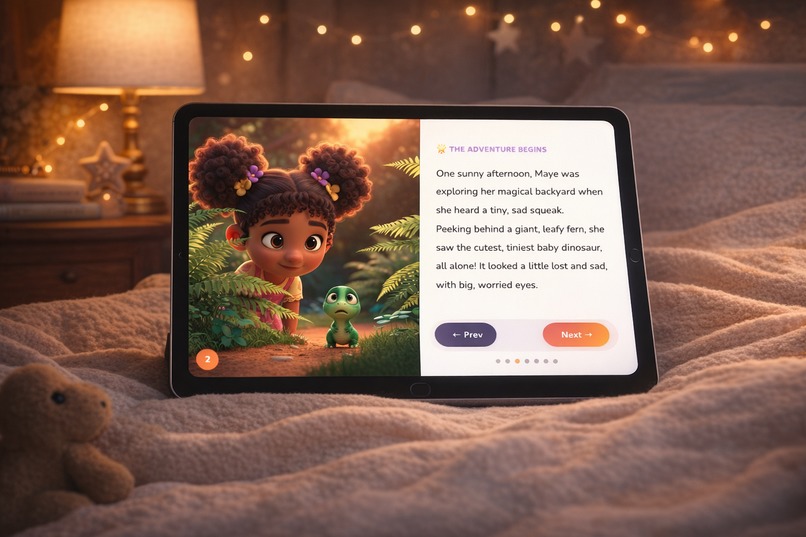
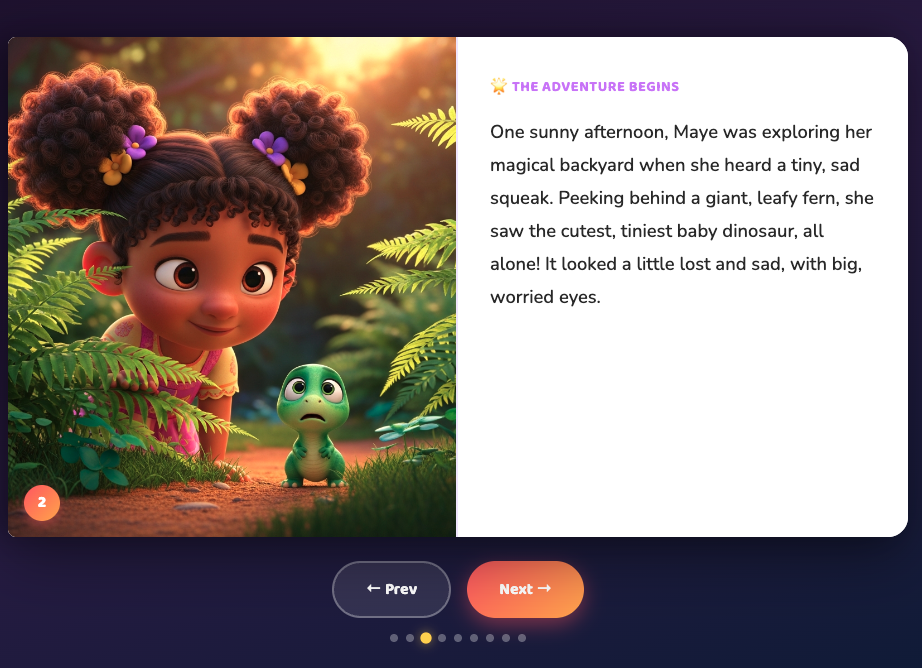
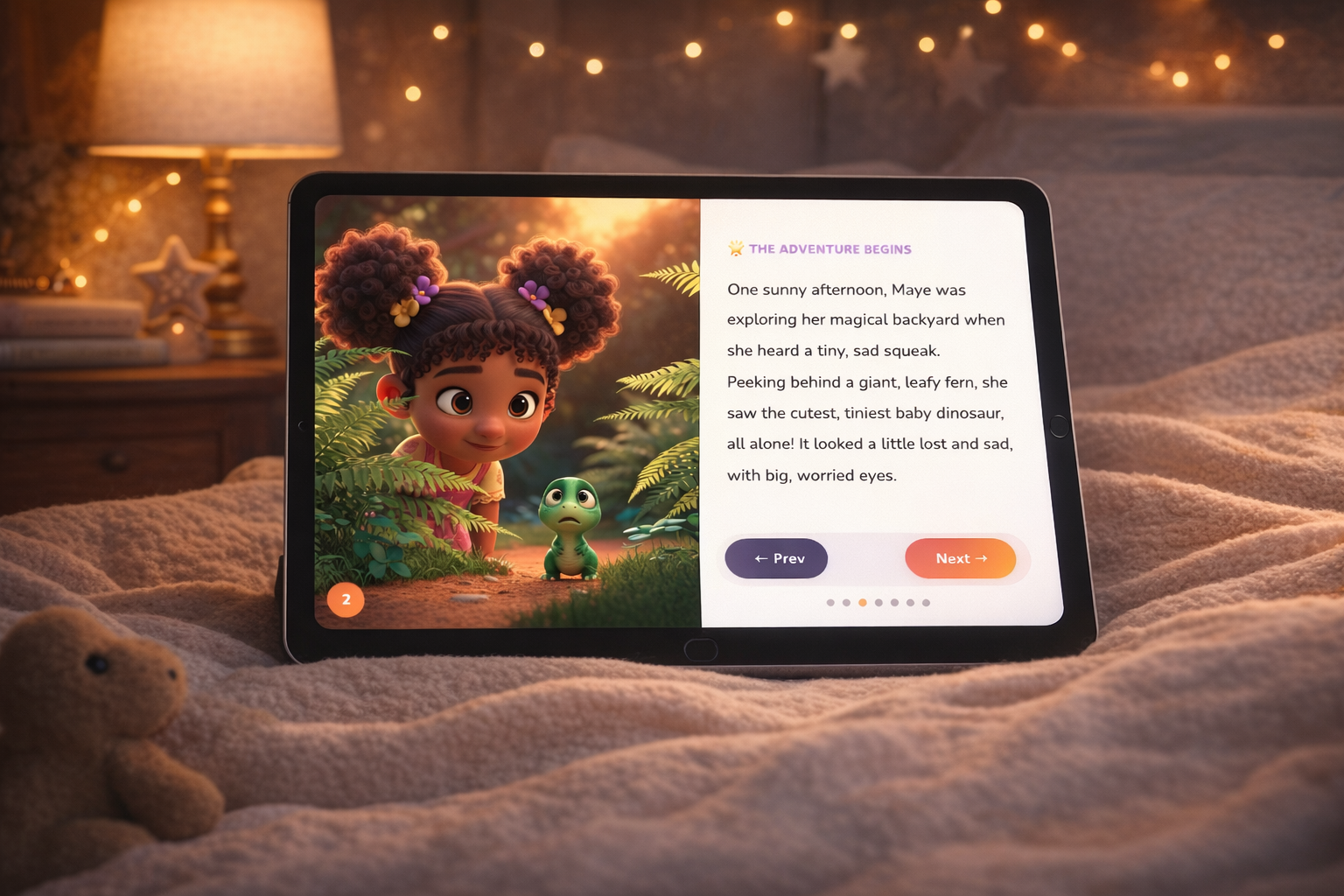
Read together!
-
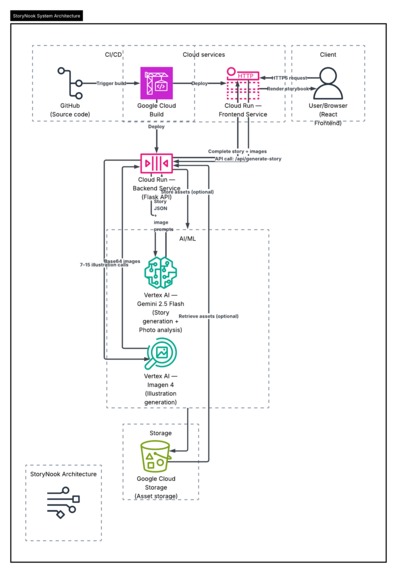
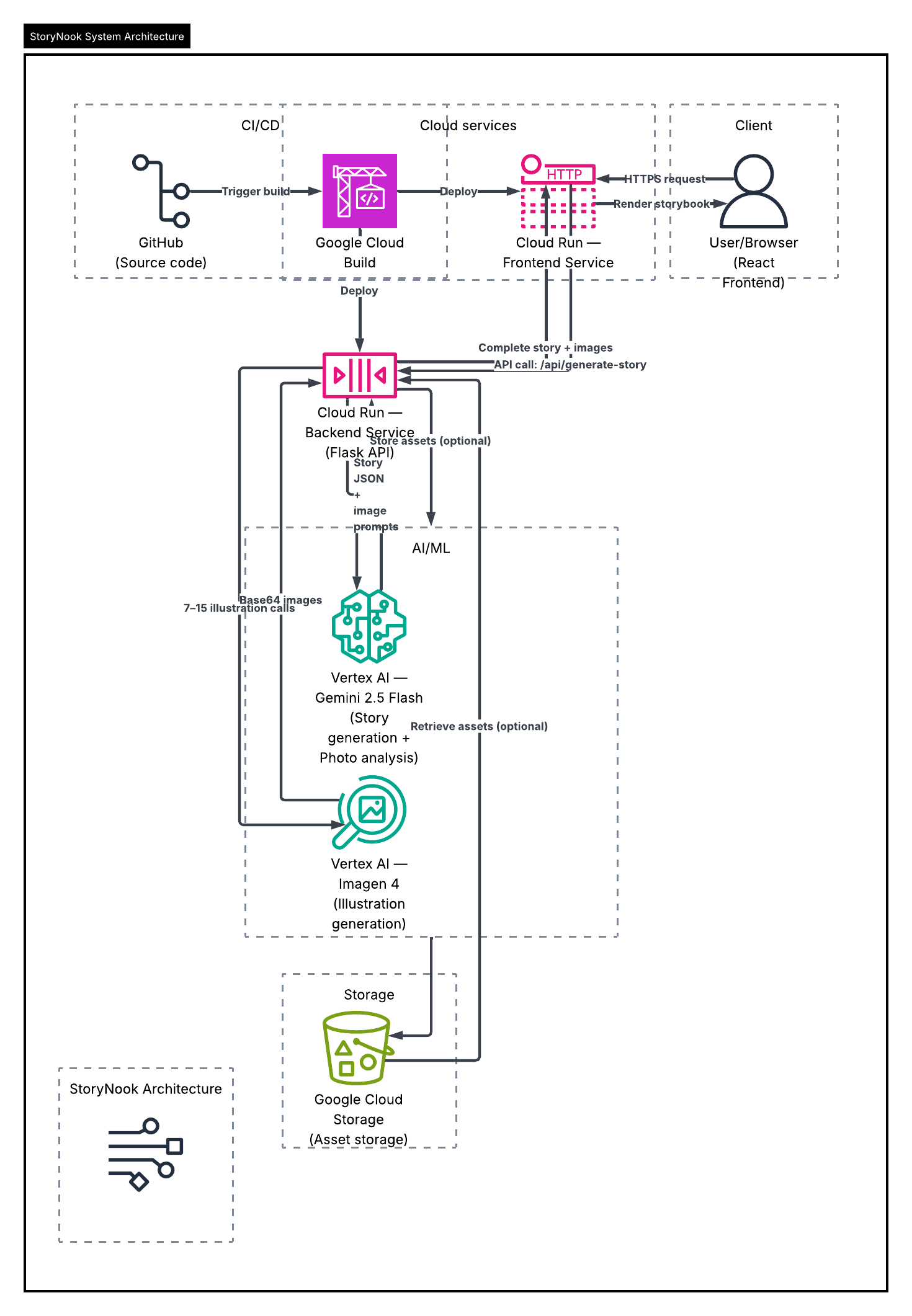
Workflow Architecture
Inspiration
My inspiration came from my little cousin. She loves reading stories where the hero looks like her and shares her interests. But her favorite things change all the time — one week it's dinosaurs, the next it's space or mermaids. Instead of constantly buying new books that quickly lose their appeal, I wondered: what if a story could adapt to the child instead?
Every parent has bought a “personalized” storybook that simply swaps a name into a generic template. The illustrations rarely look like the child, and the story doesn’t reflect who they are. After a few reads, the book ends up forgotten in a drawer.
I built StoryNook to change that making stories that are truly about the child.
What it does
StoryNook creates AI-generated personalized storybooks where the child becomes the main character of their own adventure.
Parents upload a photo of their child and choose things they love — like dinosaurs, space, or mermaids — along with a life lesson such as kindness or sharing.
StoryNook then generates a fully illustrated story where the child appears as the hero and learns that lesson through the adventure.
The result is a 7–15 page illustrated storybook designed specifically for that child.
Key features include:
📸 Photo-to-Character Generation The child’s photo is analyzed to create a cartoon character that resembles them.
🎨 Custom AI Illustrations Every page of the story is illustrated based on the narrative.
🌍 Multilingual Stories Stories can be generated in multiple languages.
📚 Adjustable Story Length Parents can generate short bedtime stories or longer adventures.
💡 Lesson-Driven Narratives Stories subtly teach values like kindness, patience, and honesty.
How I built it
StoryNook combines several AI and cloud technologies:
Frontend: React + Vite
Backend: Python Flask API
AI Story Generation: Gemini 2.5 Flash via Vertex AI
Image Generation: Imagen 4 for story illustrations
Photo Understanding: Gemini multimodal analysis to extract character traits
Deployment: Google Cloud Run
Gemini handles story generation and character description, while Imagen generates consistent illustrations that bring the story to life.
Challenges I ran into
There were many challenges while building StoryNook.
One of the biggest issues was image generation limitations. Early on, Imagen 3 wasn’t able to reliably generate characters based on a child’s photo, which made it difficult to create illustrations where the character actually resembled the child. Even after switching models, I ran into problems where the character’s features would change from page to page, breaking the consistency of the story.
Another challenge was generating scenes with multiple characters. Getting two or more characters to appear correctly in the same illustration required careful prompt structuring and iteration.
I also had to deal with image generation rate limits. At first, images were failing because too many requests were being sent too quickly. I solved this by adding delays between requests so the pages could generate sequentially without hitting the API limits.
Beyond the AI challenges, there were also many UI and design issues to work through. Small details like layout alignment, rounded corners, spacing, and color consistency required multiple adjustments to make the interface feel polished and user-friendly.
Accomplishments that I'm proud of
Building a full AI storytelling pipeline from photo → character → story → illustrated book
Designing a simple user experience where a parent can generate a personalized book in minutes
Successfully combining multimodal AI (photo, text, and image generation) into one cohesive product
Creating something that feels magical and personal rather than templated
Seeing my little cousin read a story where she is the hero, which was the original inspiration behind building StoryNook
Most importantly, building something that helps children(and my little cousin) see themselves as the hero of their own story
What I learned
I learned how powerful multimodal AI can be when combining story generation, image generation, and photo understanding.
Using Gemini for creative storytelling and Imagen for visual illustration allowed me to build a system that feels like a personalized story studio for families.
What's next for StoryNook
The next step for StoryNook is connecting with book printing providers who can turn these AI-generated stories into real physical books that families can hold and keep.
I also want to expand StoryNook from a prototype into a fully available website for families to use, where parents can easily create personalized stories for their children.
The long-term goal is to make StoryNook a platform where families can generate, read, and order custom storybooks where every child is the hero of their own adventure.


Log in or sign up for Devpost to join the conversation.