-
-
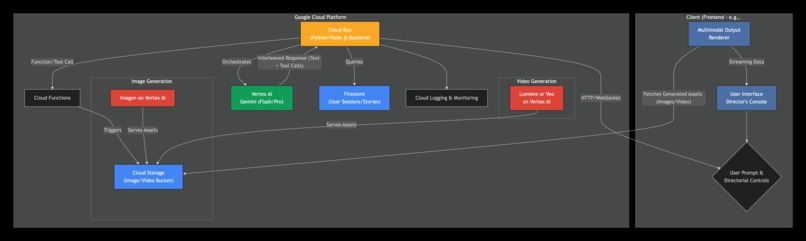
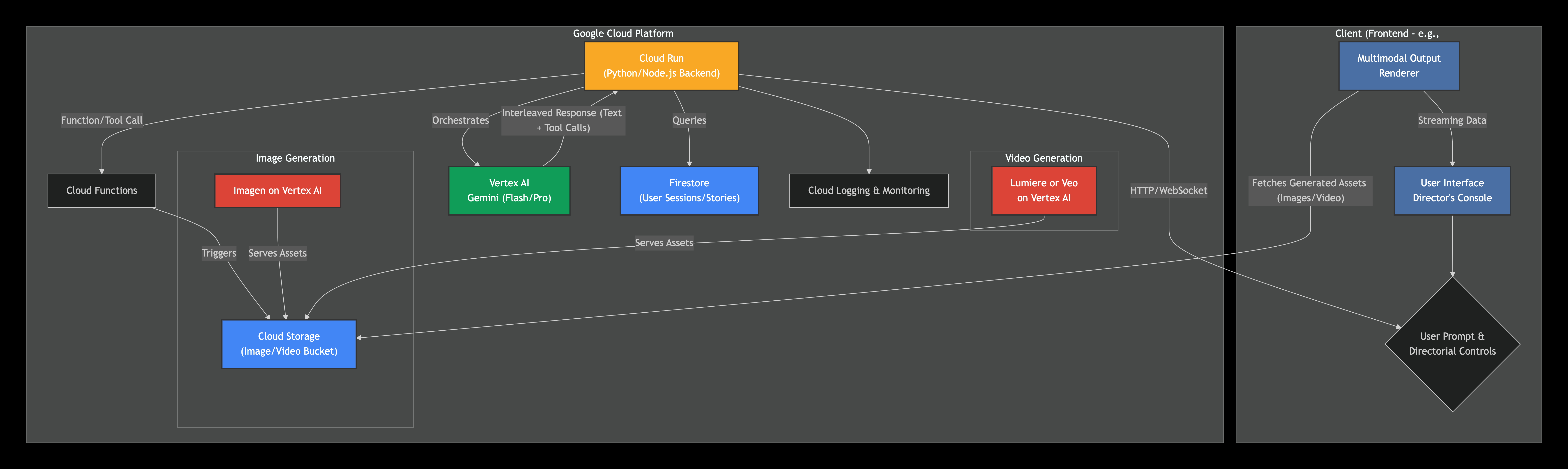
Proposed Diagram Working
-
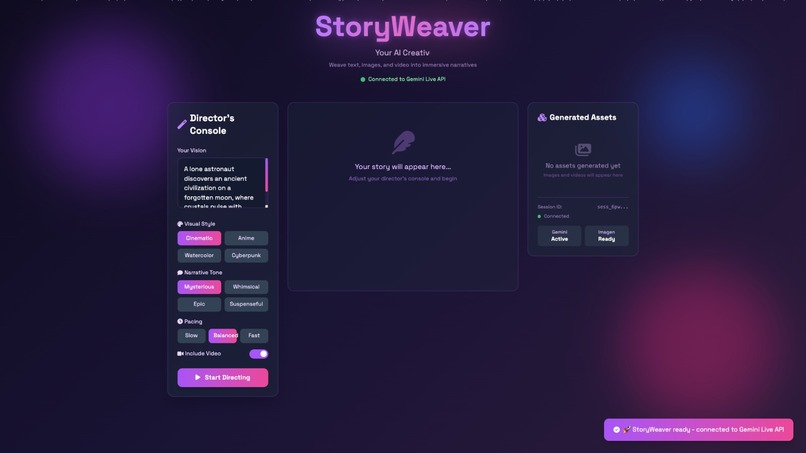
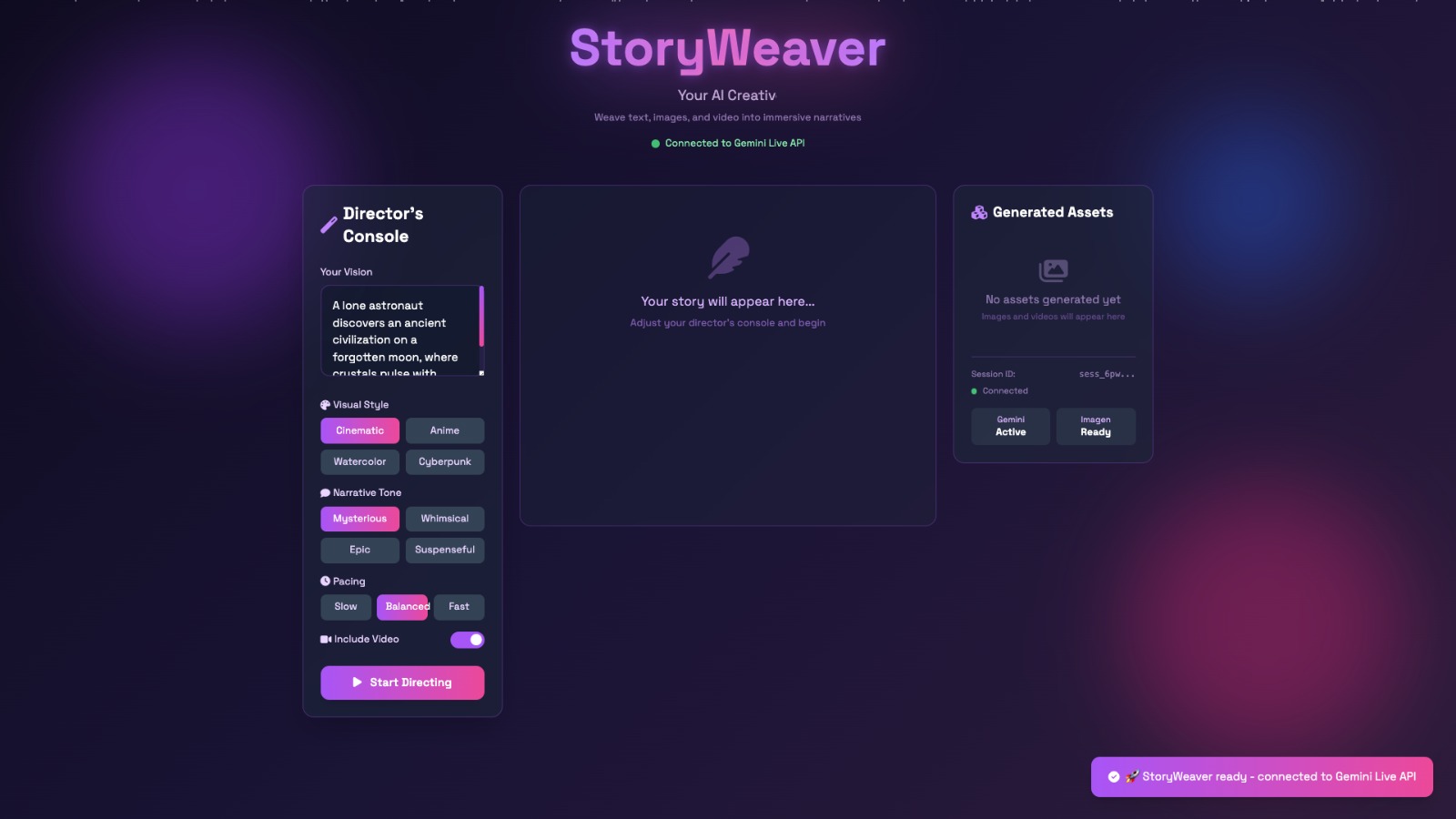
Prototype
Here’s a polished hackathon-style project write-up you can use and refine:
Inspiration
Storytelling has always evolved with technology — from oral traditions to print, from cinema to interactive media. Inspired by the cinematic imagination of studios like Studio Ghibli and the seamless creative tooling emerging from modern AI ecosystems like Google DeepMind, we asked a simple question:
What if storytelling wasn’t just written… but directed?
Writers today jump between tools — text editors, image generators, music libraries, video platforms — fragmenting the creative flow. We wanted to create a single, immersive experience where storytelling unfolds as a living, multimedia stream.
That idea became StoryLens AI — StoryWeaver: The Multimodal Director.
What it does
StoryWeaver is an AI-powered creative director that transforms a single prompt into a fully orchestrated, interleaved multimedia experience.
Instead of generating plain text, StoryWeaver produces:
- 📖 Flowing narrative text
- 🎨 Inline character and scene concept art
- 🎼 Background music suggestions or generated audio
- 🎬 Short AI-generated cinematic clips for key moments
The experience is streamed in real time inside a cinematic “Director’s Console” interface. Text fades in, images scale into view, and video clips play seamlessly as the story unfolds.
Users don’t just prompt — they direct.
They can adjust:
- Visual Style (e.g., “Watercolor Fantasy,” “Cyberpunk Noir”)
- Narrative Tone (e.g., “Whimsical,” “Suspenseful”)
- Pacing (e.g., “Slow Burn,” “Fast-Cut Action”)
The result is a cohesive, semantically linked multimedia narrative — not separate assets, but a unified creative output.
How we built it
🧠 AI Orchestration
At the core of StoryWeaver is a multimodal AI model capable of generating interleaved outputs — text, visual prompts, and media instructions in a single structured stream.
We used:
- An agent orchestration layer built with an Agent Development Kit (ADK-style architecture)
- A streaming pipeline that parses and renders interleaved content in real time
Structured prompts that allow the AI to decide:
- When to generate an image
- What the image should depict
- When a scene deserves a video moment
- How music enhances emotional tone
The model acts as a creative director brain, making decisions about pacing and media placement dynamically.
🎬 Frontend Experience
We built a cinematic React-based interface featuring:
The Director’s Console
- A primary streaming narrative panel
- A control panel for real-time creative adjustments
Fluid animations
- Text fade-ins
- Image scale and blur transitions
- Seamless video embedding
- Dynamic scene segmentation
Motion libraries (e.g., Framer-style animation patterns) were used to give the experience a premium, polished feel.
Challenges we ran into
Maintaining semantic coherence across modalities Ensuring that images, video, and text all reference the same characters and tone required structured prompt engineering and memory management.
Streaming interleaved content smoothly We had to design a renderer that could intelligently interpret content types mid-stream without breaking immersion.
Balancing creativity with control Giving users directorial knobs without overwhelming them was a UX challenge. Too many controls felt technical; too few reduced collaboration.
Latency management Multimedia generation introduces delays. We implemented staged streaming so text appears first while media loads progressively.
Accomplishments that we're proud of
- ✅ A fully interleaved storytelling pipeline — not stitched outputs
- ✅ A cinematic, real-time streaming UI
- ✅ A “Director Mode” interaction model that shifts users from prompt engineers to creative directors
- ✅ Cohesive multimodal storytelling instead of fragmented generation
Most importantly, we built something that feels magical. Watching a story unfold with synchronized visuals and motion creates a genuine “wow” moment.
What we learned
- Multimodal storytelling is not just a technical challenge — it’s a narrative design challenge.
- The interface is as important as the AI. Presentation shapes perception.
- Creative AI works best as a collaborator, not an autonomous storyteller.
- Streaming experiences dramatically increase emotional engagement compared to static outputs.
We also learned that giving users “directional control” changes how they think — they stop asking for outputs and start shaping vision.
What’s next for StoryLens AI — StoryWeaver: The Multimodal Director
🚀 Real-time co-creation mode Two or more users directing a story together.
🎮 Interactive branching narratives Let viewers influence plot direction mid-stream.
🎵 Adaptive soundtracks Emotion-aware music that evolves with narrative tone.
📚 Export formats Turn generated sessions into:
- Illustrated storybooks
- Short animated films
- Pitch decks for filmmakers
- Game concept bibles
🧠 Persistent world memory Allow users to build long-running universes with consistent characters and lore.
StoryWeaver isn’t just generating content. It’s redefining how stories are created — from written words to directed experiences.
Log in or sign up for Devpost to join the conversation.