-
-
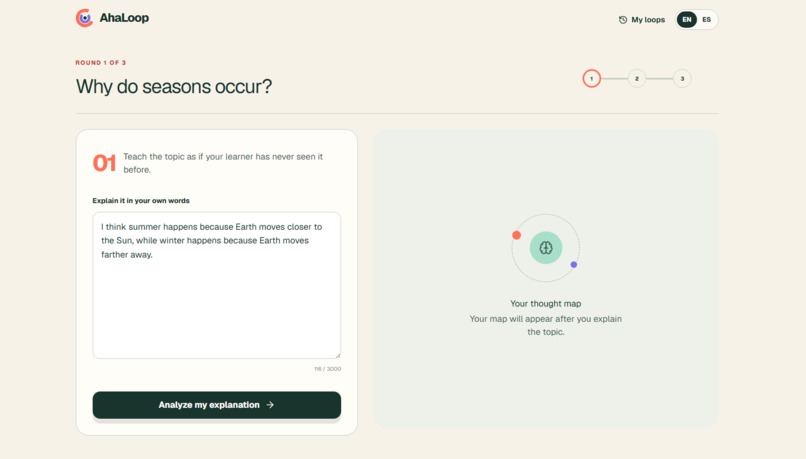
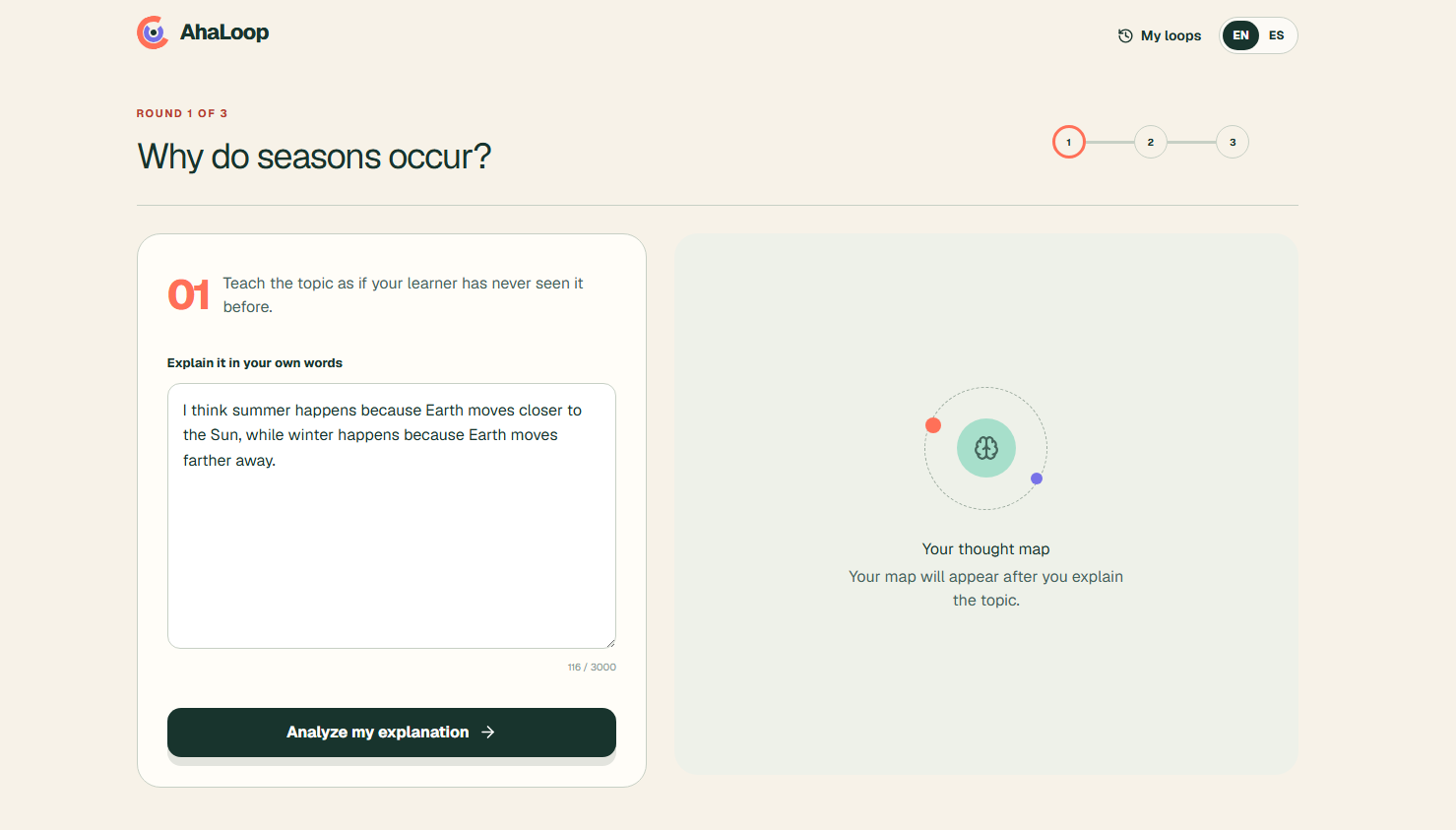
Round one preserves the learner's original reasoning before GPT-5.6 analyzes the mental model.
-
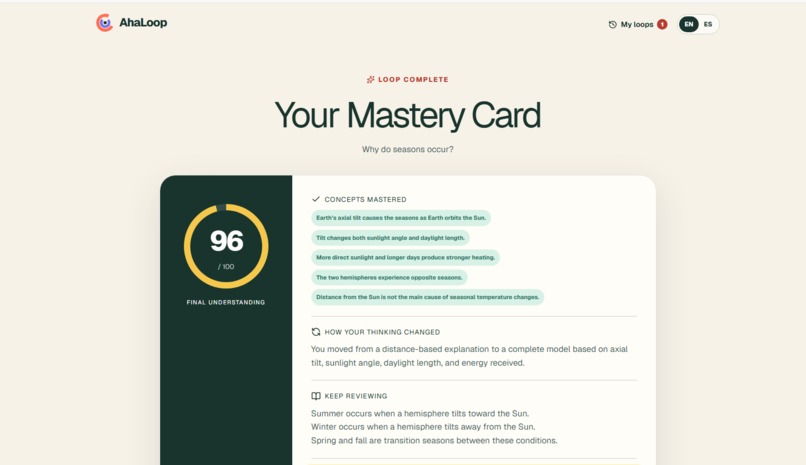
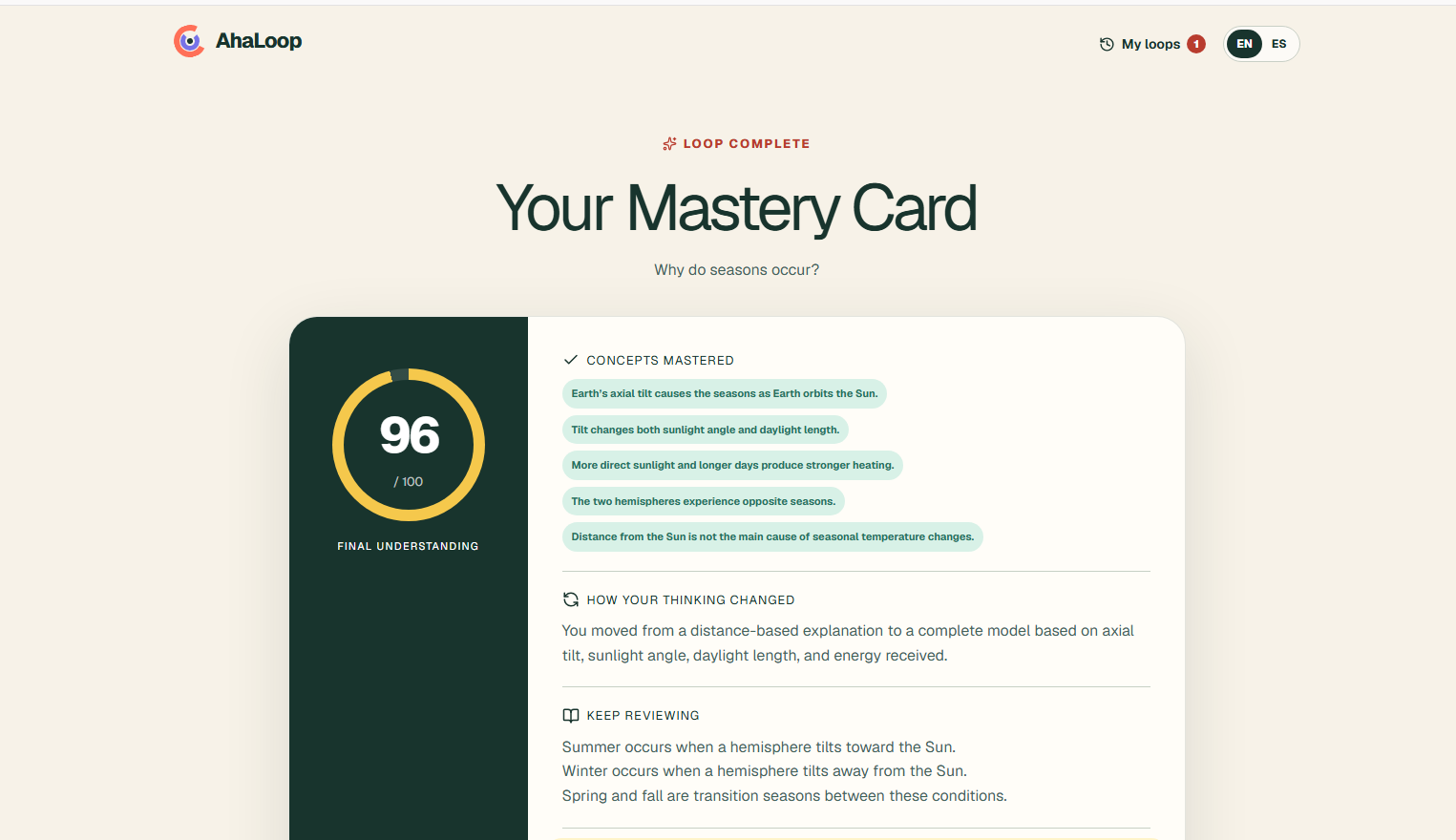
The final Mastery Card shows 96% understanding, concepts mastered, review points, and a transfer challenge.
-
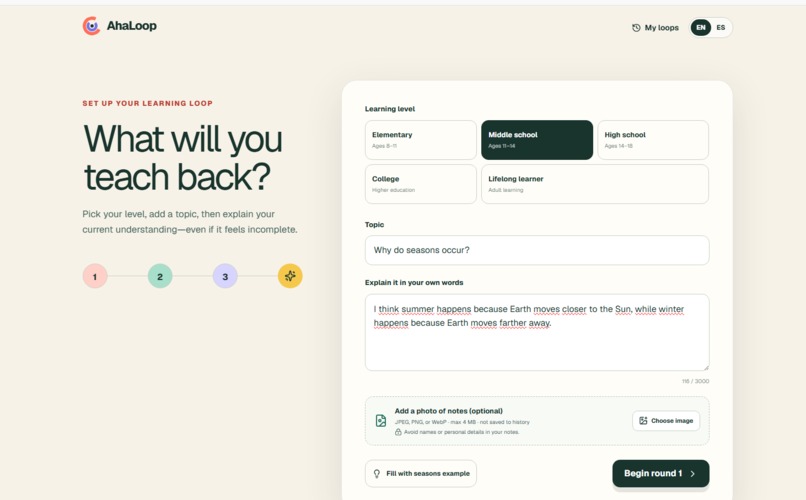
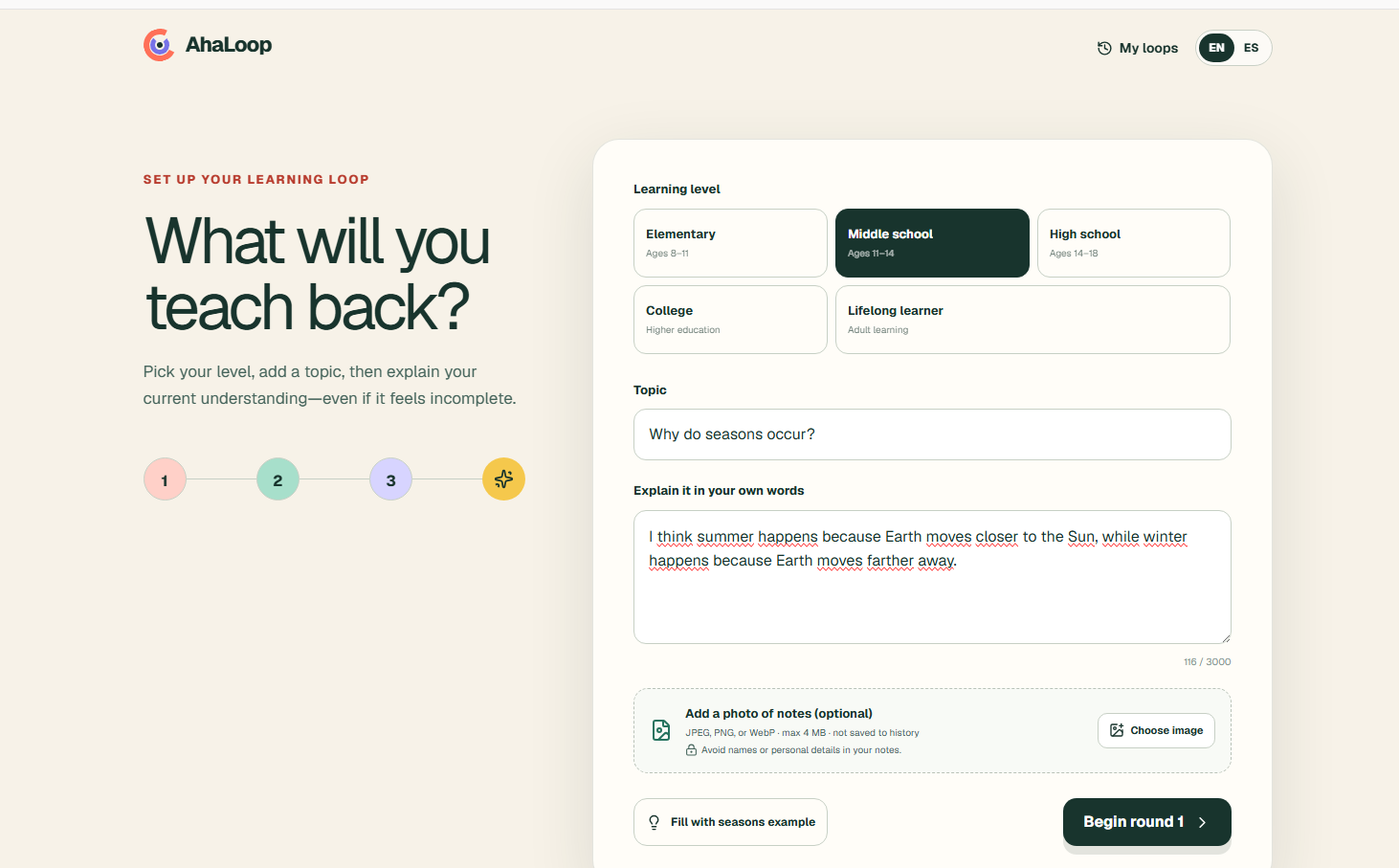
The learner selects a level and topic, then explains their current understanding in their own words.
-
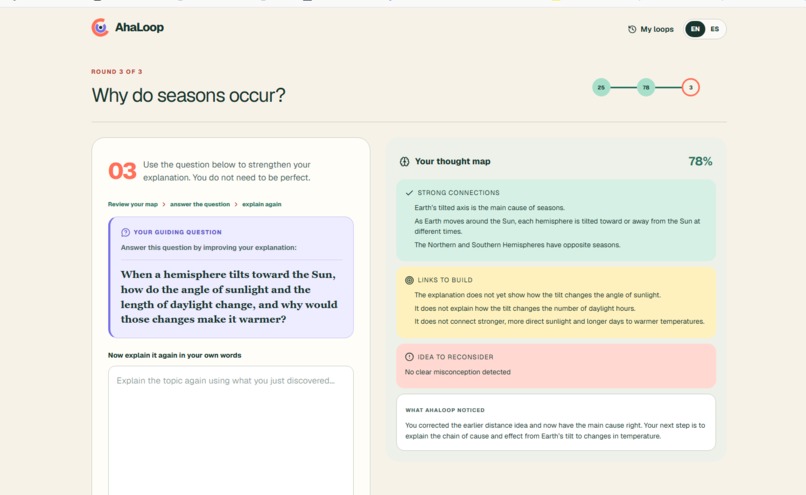
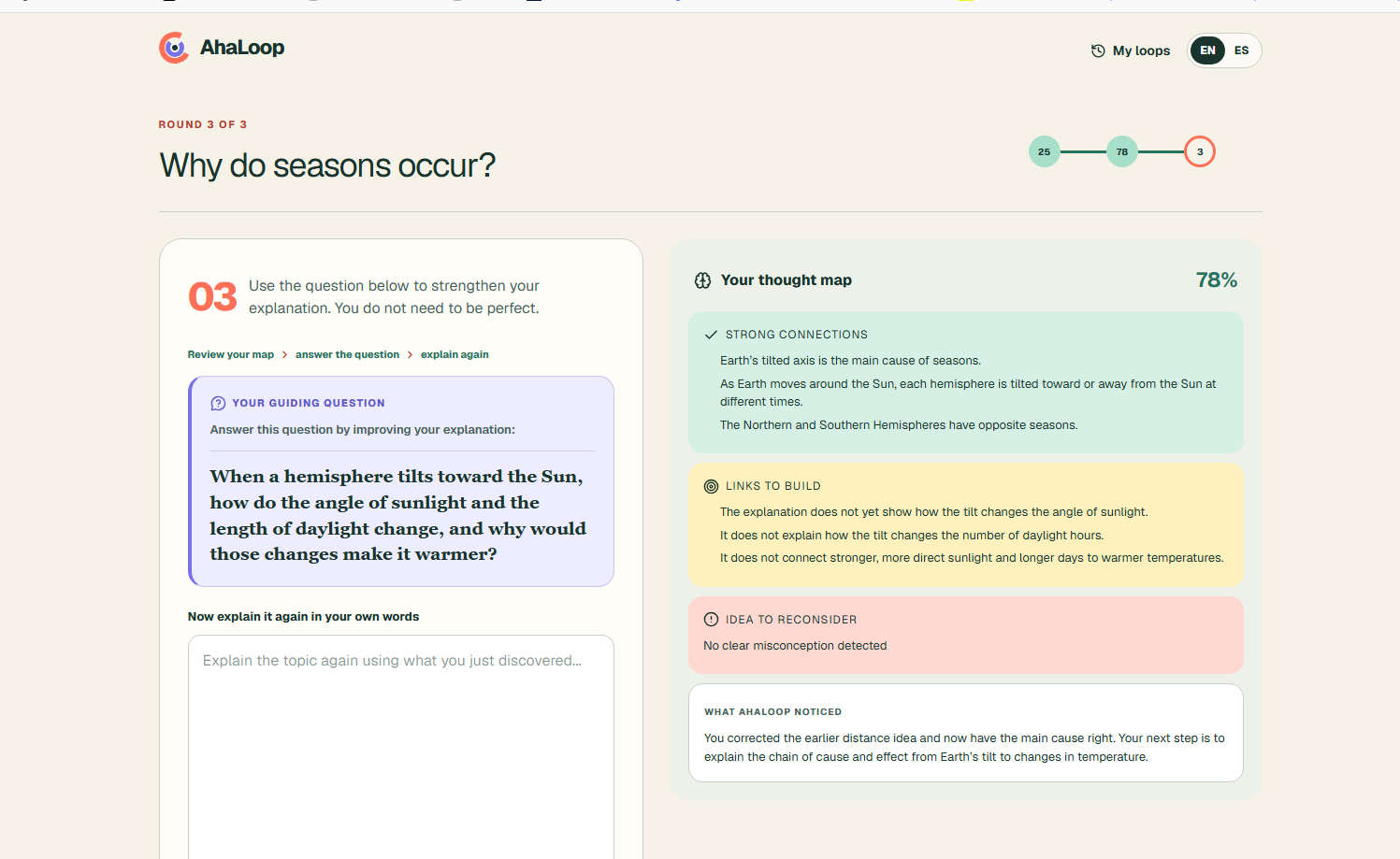
Understanding rises to 78% as the learner builds a stronger and more accurate mental model.
-
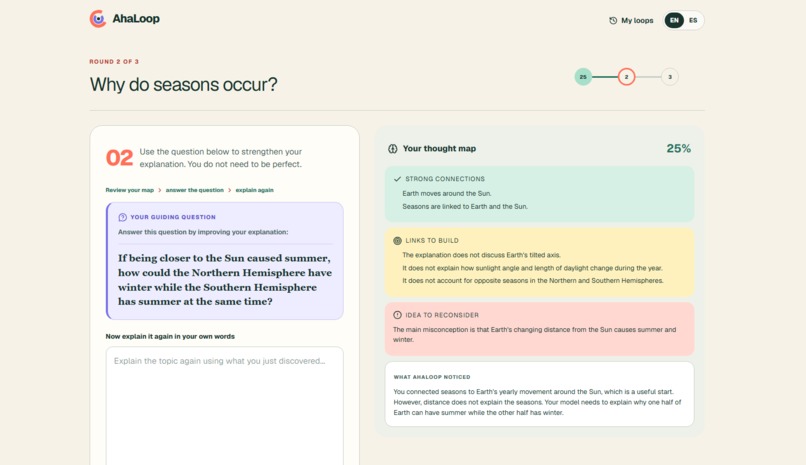
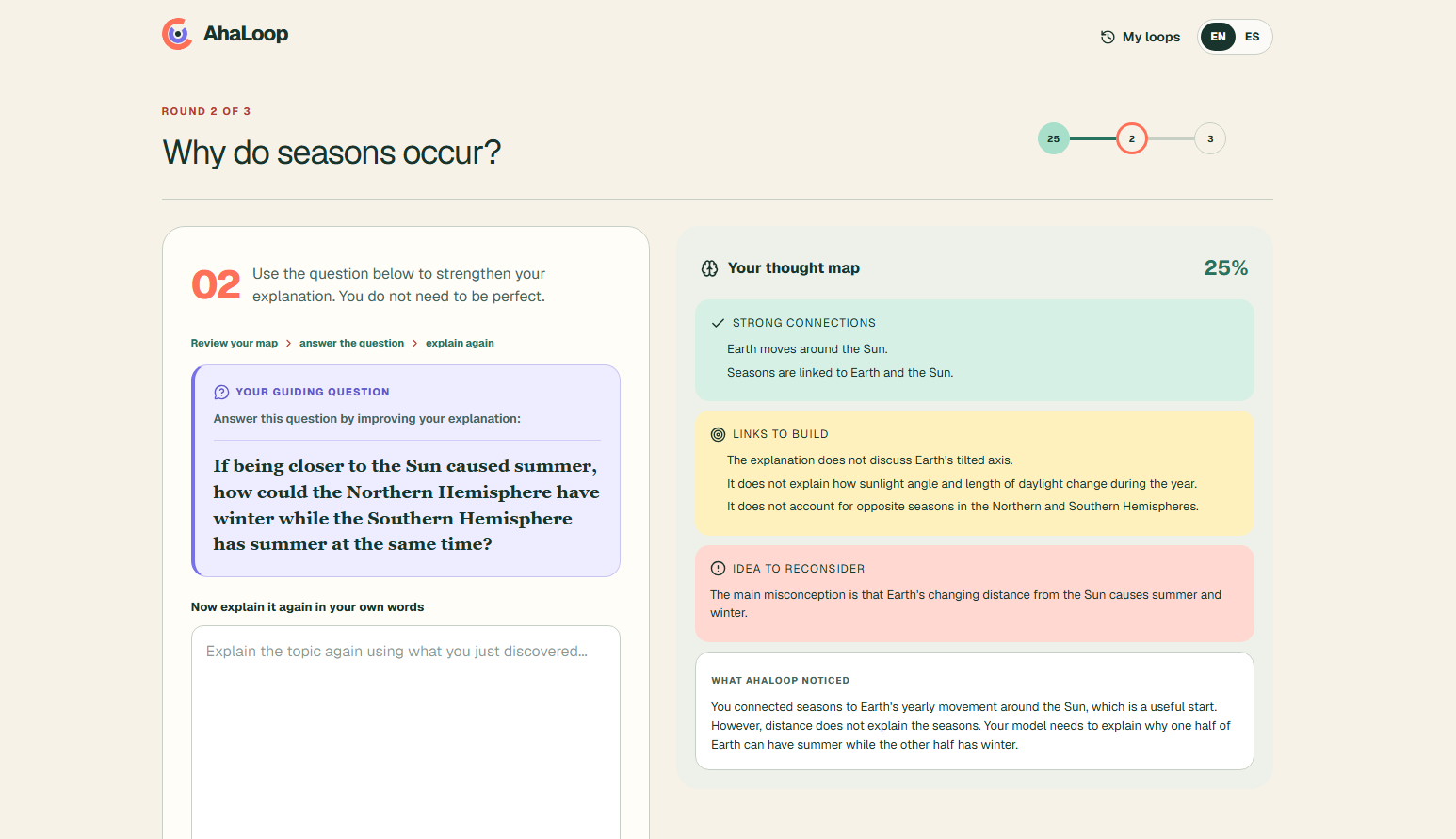
AhaLoop identifies strong connections, missing links, and a misconception, then asks one Socratic question.
-
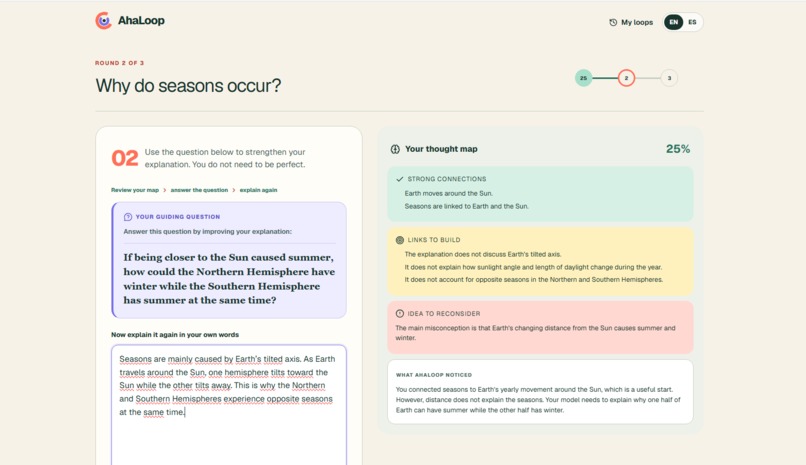
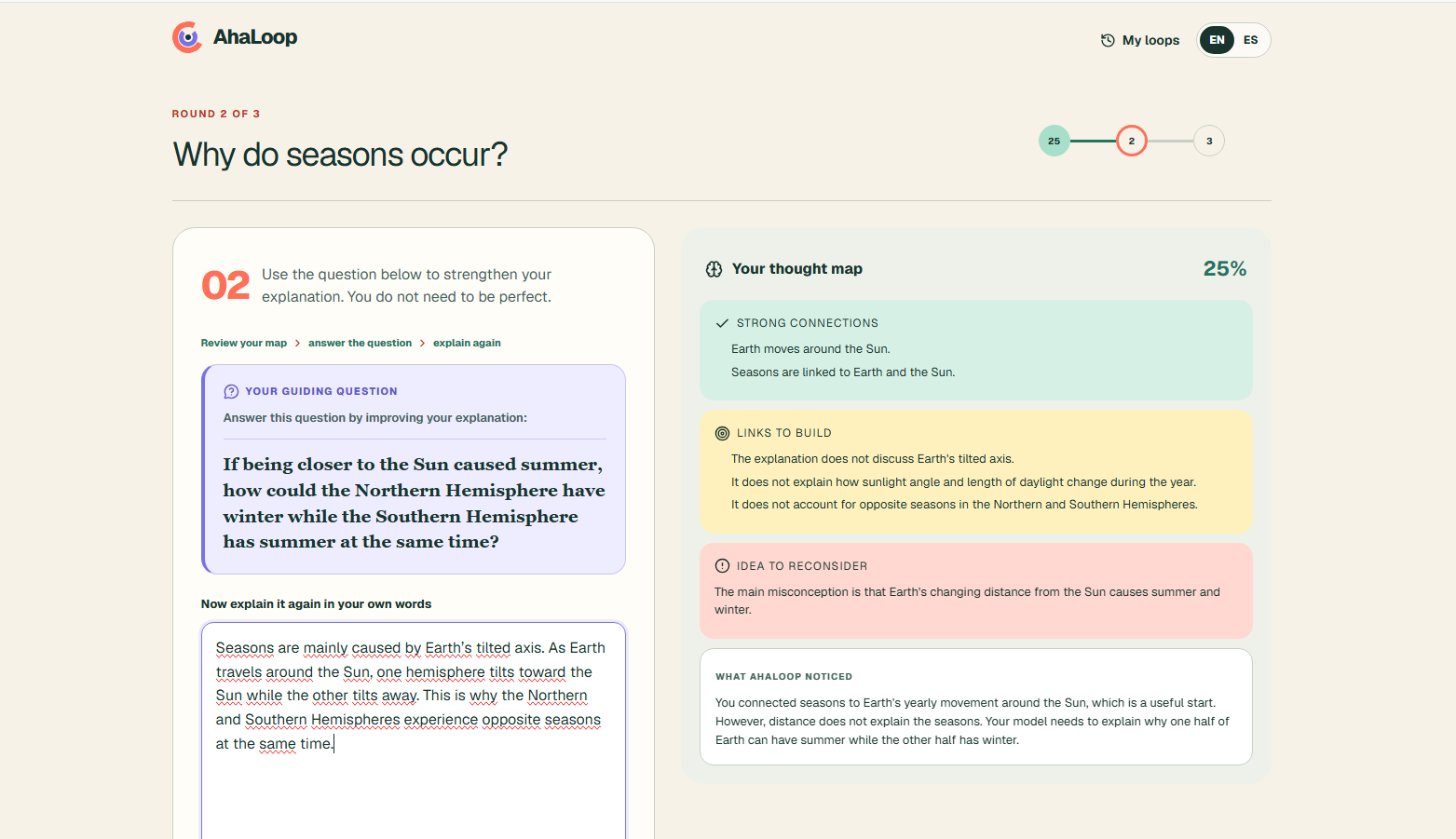
The learner responds to the guiding question and improves the explanation without being given the answer.
-
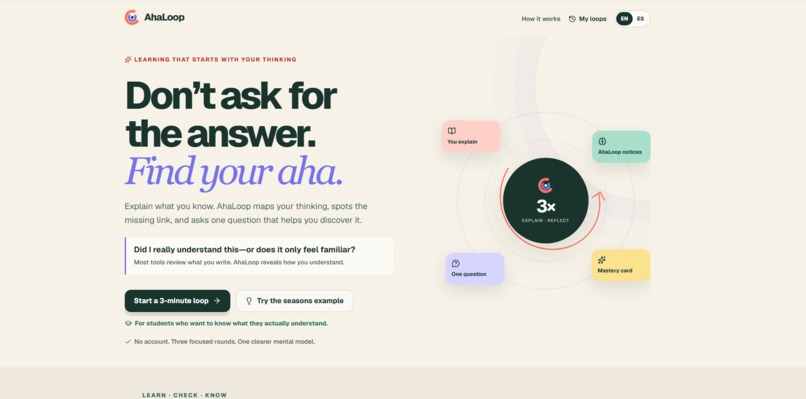
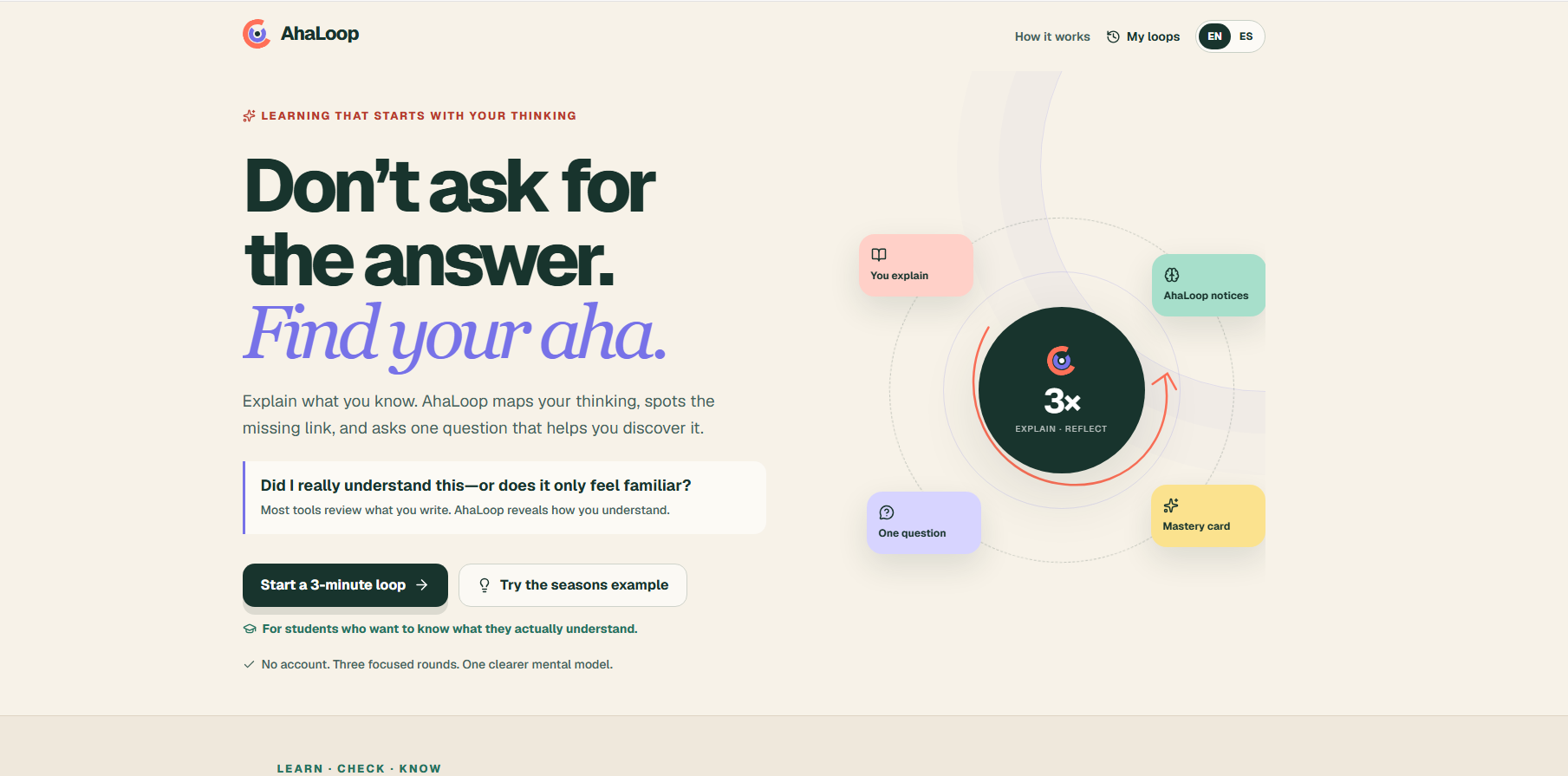
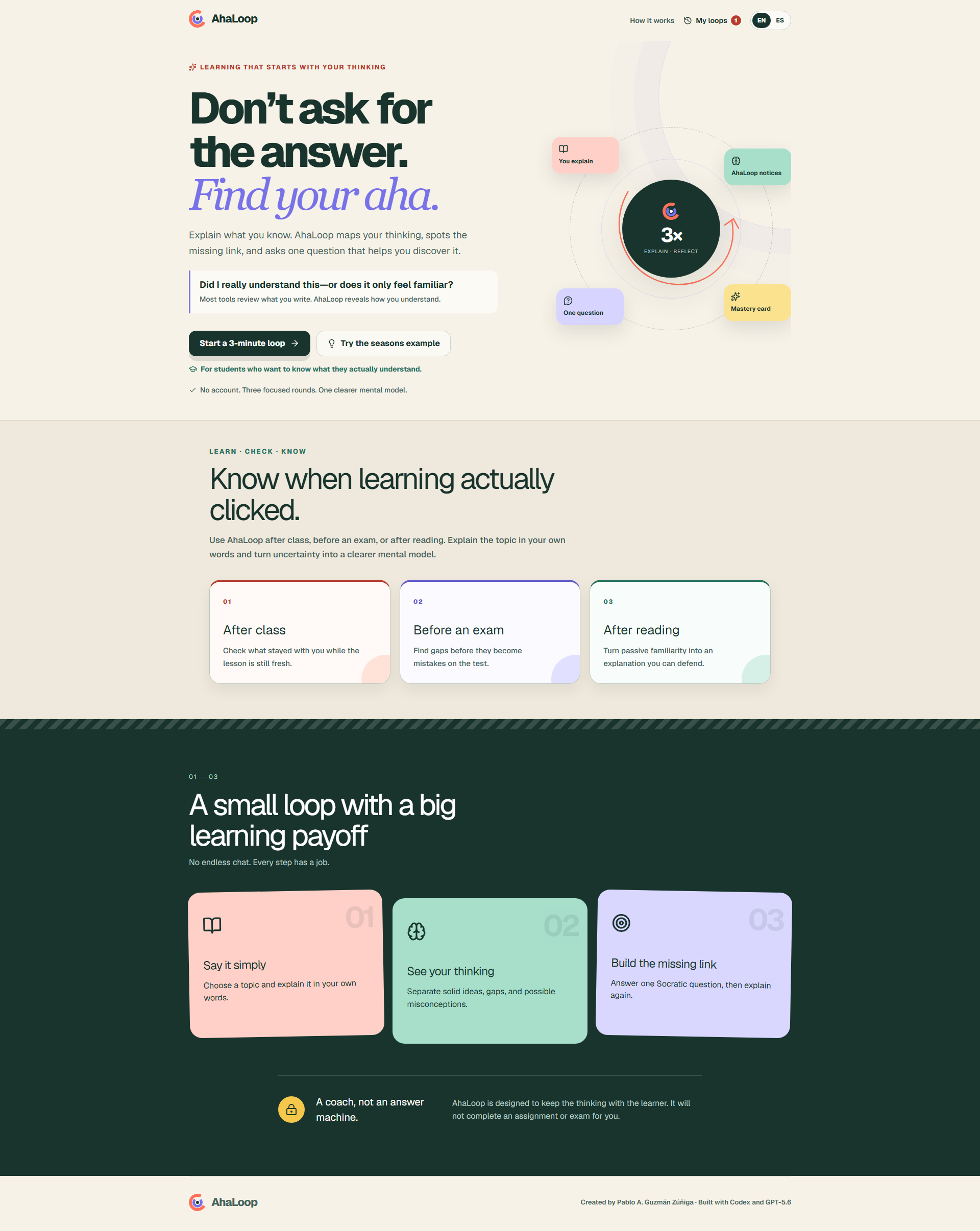
AhaLoop helps students discover what they truly understand through explanation, reflection, and Socratic guidance.
-
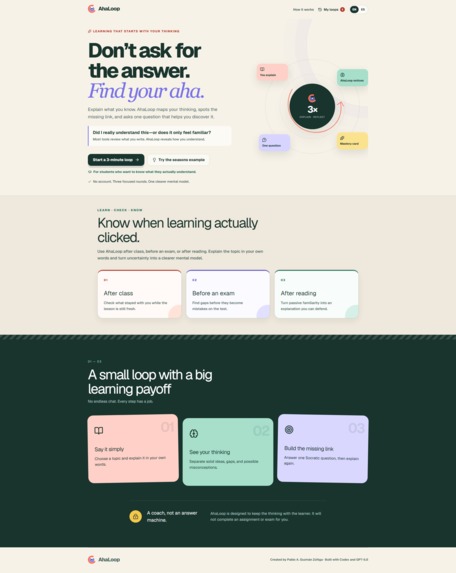
A complete bilingual and responsive learning experience built with Codex and GPT-5.6.
Inspiration
Most AI learning tools give students answers. But receiving an answer does not prove that a student truly understands the subject.
AhaLoop was created around one question: Did I really understand this—or does it only feel familiar?
What it does
AhaLoop is an AI-powered learning coach. The student chooses an educational level and a topic, then explains what they currently understand in their own words.
GPT-5.6 analyzes the explanation and creates a thought map showing strong connections, missing links, possible misconceptions, and one focused Socratic question.
Instead of giving away the answer, AhaLoop asks the student to reflect and explain again. After three focused rounds, it generates a Mastery Card showing the student's progress, concepts mastered, changes in thinking, topics to review, a clear mental model, and a final transfer challenge.
The Mastery Card can also be printed or saved as a one-page PDF. AhaLoop works in English and Spanish and does not require an account.
How we built it
AhaLoop was built from scratch during OpenAI Build Week with Codex and GPT-5.6.
The application uses Next.js, React, TypeScript, Tailwind CSS, Framer Motion, the OpenAI Responses API, Structured Outputs with Zod, local browser storage, and Vercel.
GPT-5.6 powers the structured educational analysis and generates the Socratic question for each learning round. The OpenAI API key and internal instructions remain securely on the server.
Codex collaborated throughout product planning, architecture, implementation, responsive design, API integration, testing, debugging, documentation, and deployment.
Challenges we ran into
Our main challenge was creating an AI learning experience that guides students without becoming an answer machine. We also needed consistent structured responses, a clear three-round experience, bilingual support, secure error handling, responsive mobile layouts, and a printable one-page Mastery Card.
Accomplishments that we're proud of
AhaLoop transforms an imperfect explanation into a visible learning journey.
In our demonstration, a student begins with the misconception that seasons are caused by Earth's changing distance from the Sun. Through Socratic guidance, the student connects Earth's axial tilt, sunlight angle, daylight length, and temperature.
The demonstrated progression is 25% → 78% → 96%.
What we learned
We learned that educational AI becomes more valuable when it analyzes reasoning instead of simply evaluating a final answer. One carefully selected question can help a student build a stronger mental model while keeping the intellectual work with the learner.
What's next for AhaLoop
Future versions could include optional student and teacher accounts, classroom dashboards, curriculum-aligned activities, progress across multiple topics, voice explanations, accessibility improvements, and additional languages.
Built With
- api
- codex
- css
- gpt-5.6
- next.js
- openai
- react
- responses
- tailwind
- typescript
- zod


Log in or sign up for Devpost to join the conversation.