-
-
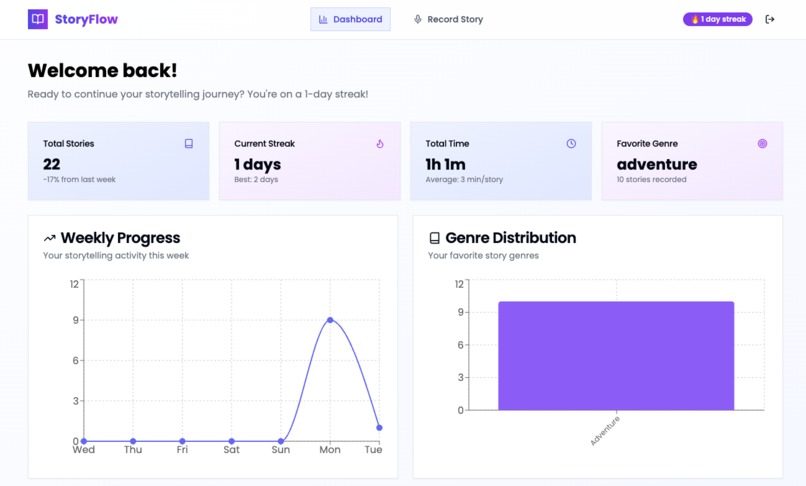
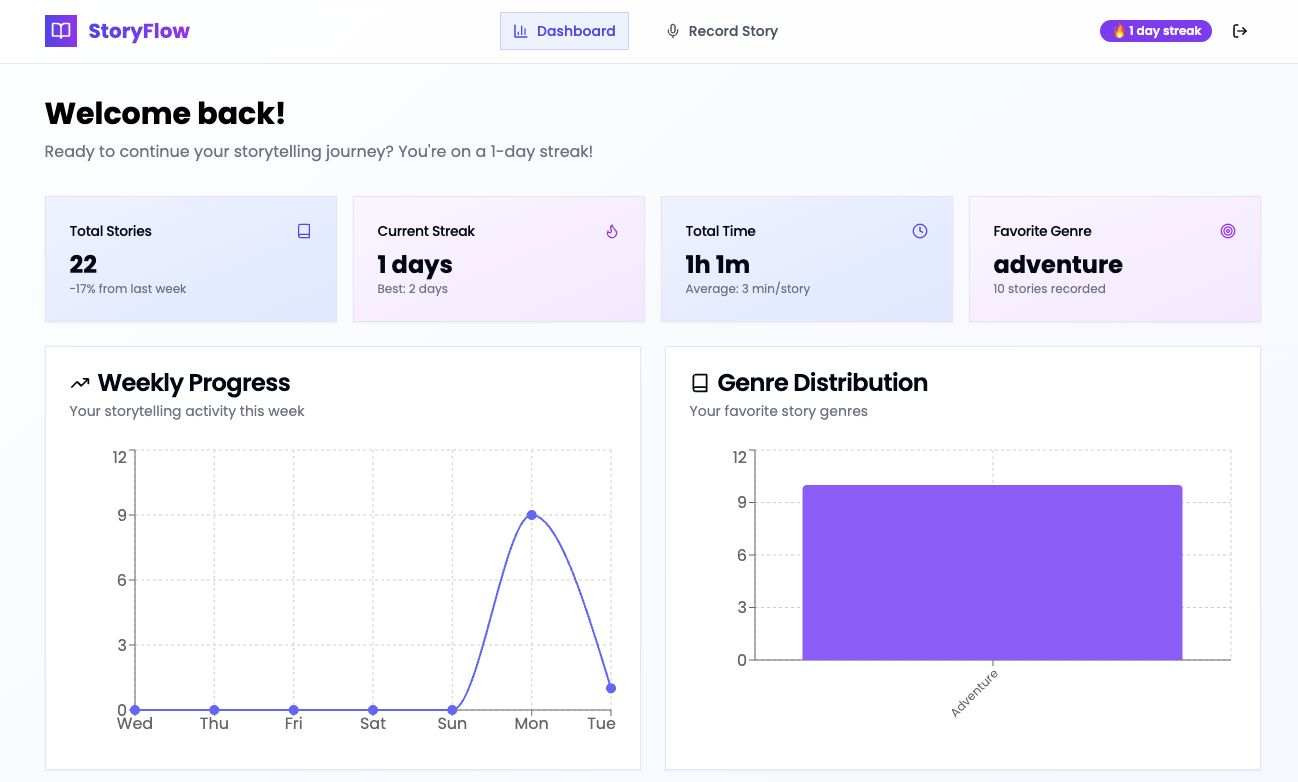
Dashboard page
-
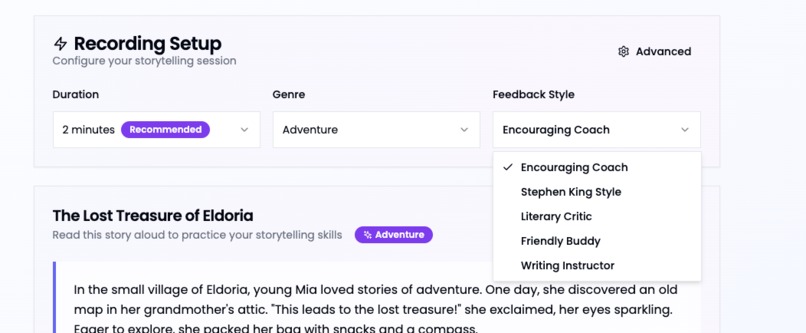
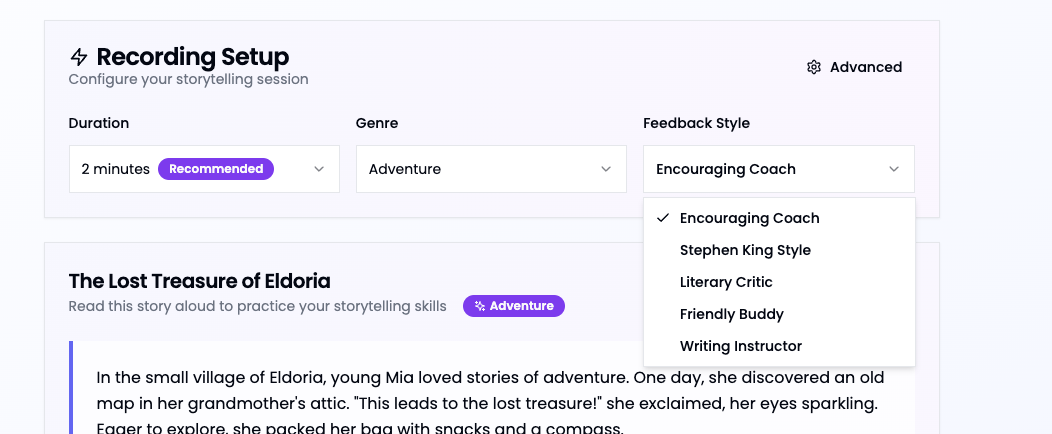
Record Story Page
-
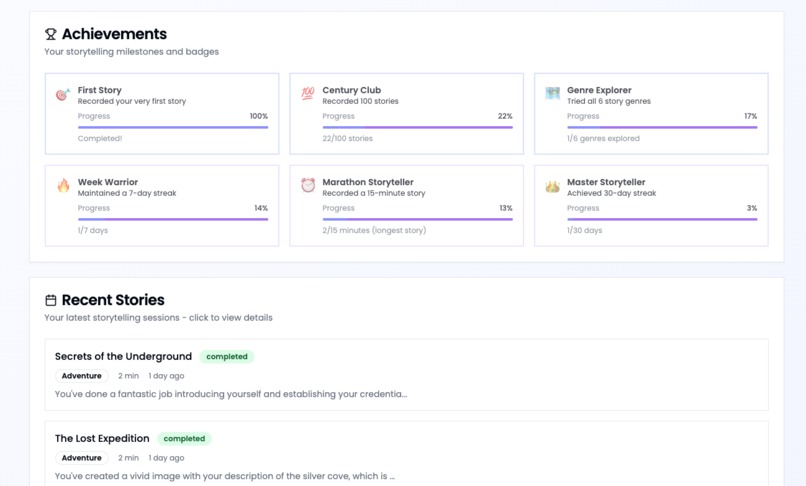
Achievement and List of stories
-
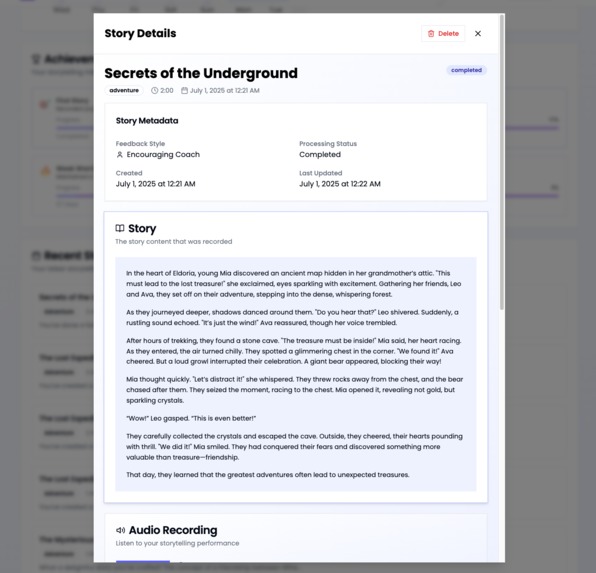
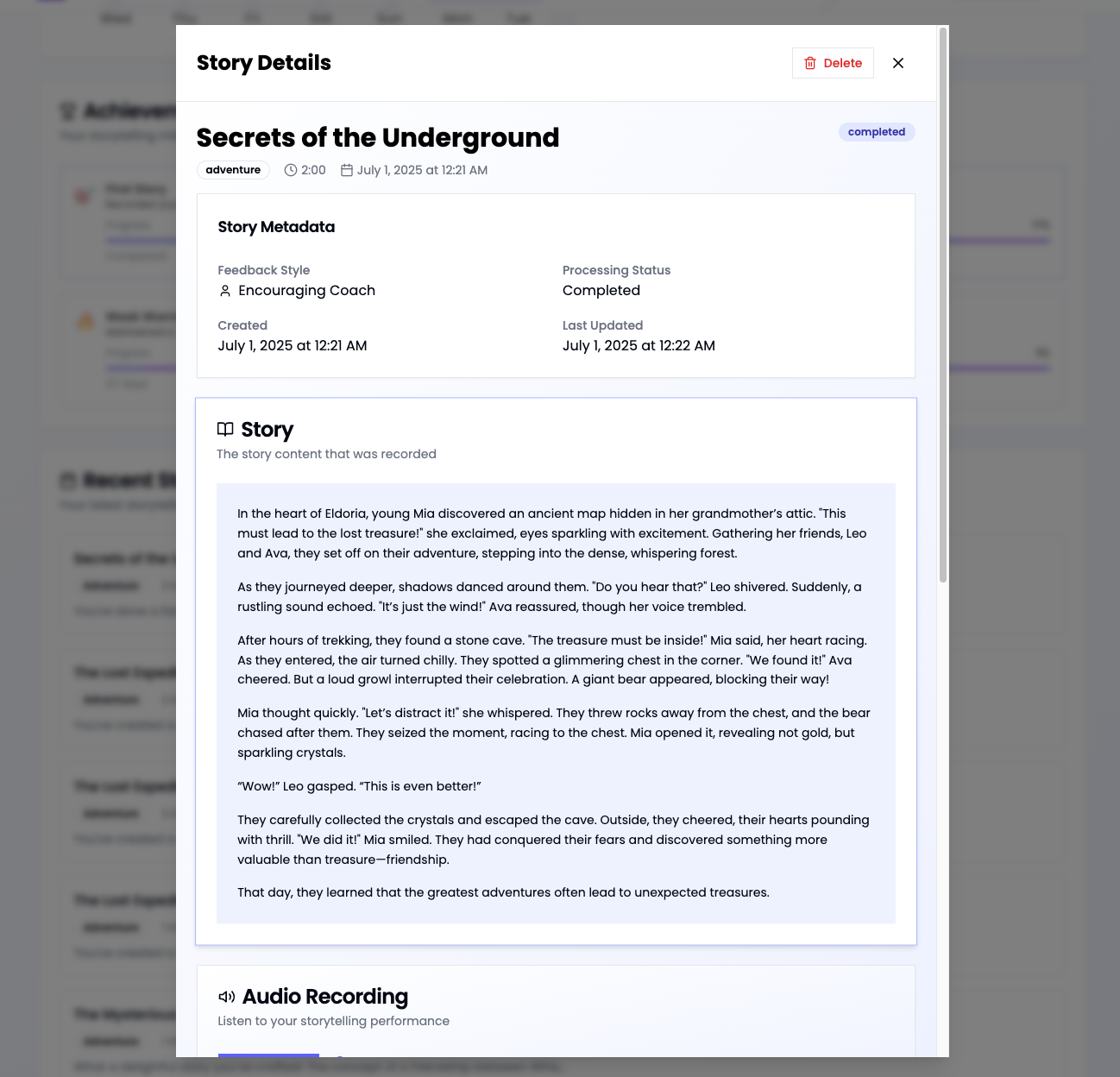
Story Details
-
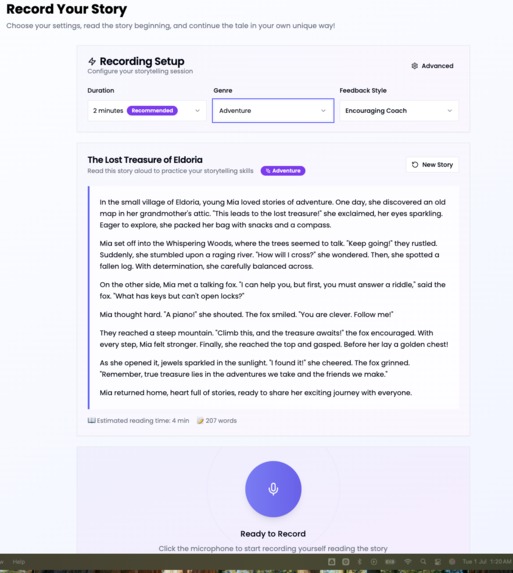
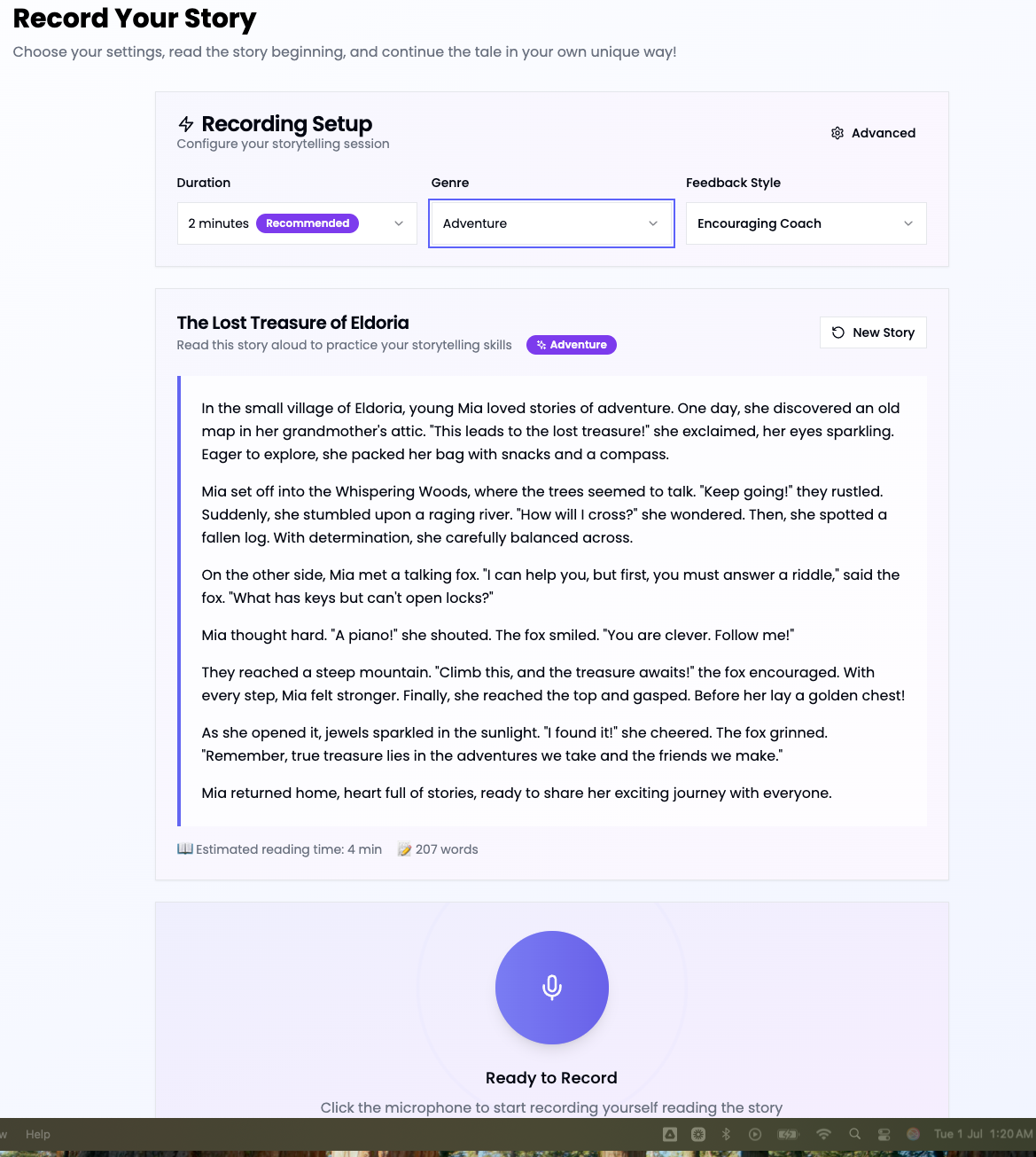
Record Page

StoryFlow - AI-Powered Storytelling Practice App
Inspiration
Communication and storytelling have always been my personal struggle. I tried Toastmasters, but weekly meetings weren't enough consistent practice. Personal coaching was too expensive and unsustainable. I found myself without any accessible platform to regularly practice and improve these crucial skills.
This frustration grew when I observed colleagues in my organization facing the same communication challenges—struggling to present ideas, convince stakeholders, or simply engage audiences effectively. I realized that everyone should learn to tell stories because they're the foundation of how we engage, inspire, and influence others.
That's when I decided to create an application that solves this exact problem I was experiencing.
What it does
StoryFlow is an AI-powered storytelling practice platform that provides:
- Personalized Story Prompts: Users receive tailored prompts based on their interests and goals
- Timed Recording Sessions: Practice storytelling in 2, 3, 5, 10, or 15-minute sessions
- AI Feedback in Famous Authors' Styles: Get critiqued like Stephen King for horror stories or Agatha Christie for mysteries
- Gamified Progress Tracking: Streaks, achievements, and badges keep users motivated to practice daily
- Genre-Specific Feedback: Customized critique based on different storytelling genres
The app captures natural speech patterns and provides constructive, actionable feedback to help users improve their narrative skills consistently.
How we built it
I followed a structured development approach:
- Problem Definition: Started with my personal communication struggle as the core problem statement
- Brainstorming: Conducted extensive discussions with ChatGPT to explore the problem space and potential solutions
- Feature Planning: Developed a comprehensive list of features that would address storytelling practice needs
- Application Design: Learned to design the application based on specific requirements rather than building features in isolation
- Iterative Development: Built the platform focusing on AI-powered feedback systems and gamification elements
Challenges we ran into
- Token Management: Initially, my development conversations consumed excessive tokens, leading to high costs. I had to study documentation to learn efficient token usage strategies
- Debugging Difficulties: Even with provided logs, debugging remained challenging, and the AI sometimes couldn't identify or fix issues despite clear problem descriptions
- Regression Issues: While fixing one bug, previously resolved issues would resurface, creating frustrating cycles of repeated work
- Over-Engineering: Instead of targeted fixes, the AI often rewrote entire code sections, unnecessarily consuming time and resources
- Solution Misalignment: Sometimes the AI provided solutions that didn't align with the specific issues mentioned, requiring multiple iterations
Accomplishments that we're proud of
- Solving a Personal Problem: Successfully created a solution for a real challenge I've experienced firsthand
- Innovative AI Integration: Implemented unique author-style feedback that makes practice engaging and personalized
- User-Centric Design: Built a platform that addresses the core issue of consistent, accessible storytelling practice
- Gamification Implementation: Created a system that motivates daily practice through streaks and achievements
- Technical Growth: Overcame significant development challenges and learned efficient AI collaboration techniques
What we learned
Technical Insights:
- How to design applications based on specific requirements rather than random features
- The importance of deconstructing complex problems into manageable chunks
- Never solve problems as a whole—break them down first, then tackle each piece
- Context length and tokens have real costs as AI conversations grow
- Never ask AI to write code without first discussing the solution approach
- Always seek clarification on missing pieces before committing to code
- "Vibe coding" alone can't build complex applications—foundational knowledge is essential
Strategic Lessons:
- Choosing your own problem as the problem statement creates authentic motivation
- Personal experience with the problem leads to better solutions
- Consistent practice platforms are more valuable than occasional intensive sessions
What's next for StoryFlow
- Mobile App Development: Transform the concept into a fully functional mobile application
- Enhanced AI Models: Integrate more sophisticated author personalities and feedback styles
- Advanced Analytics: Provide detailed progress tracking and personalized improvement recommendations
- Voice Analysis: Implement speech pattern analysis to provide feedback on delivery, pace, and clarity
- Integration Capabilities: Connect with presentation tools and communication platforms for broader application.
Built With
- bolt
- react
- supabase

Log in or sign up for Devpost to join the conversation.