-
-
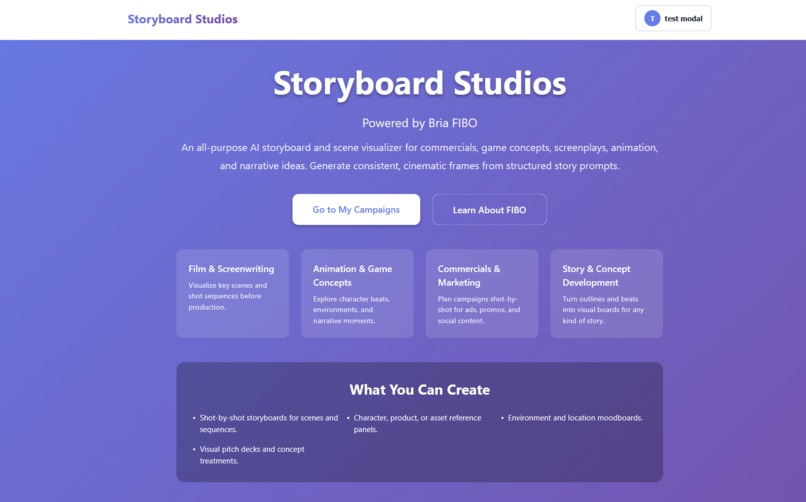
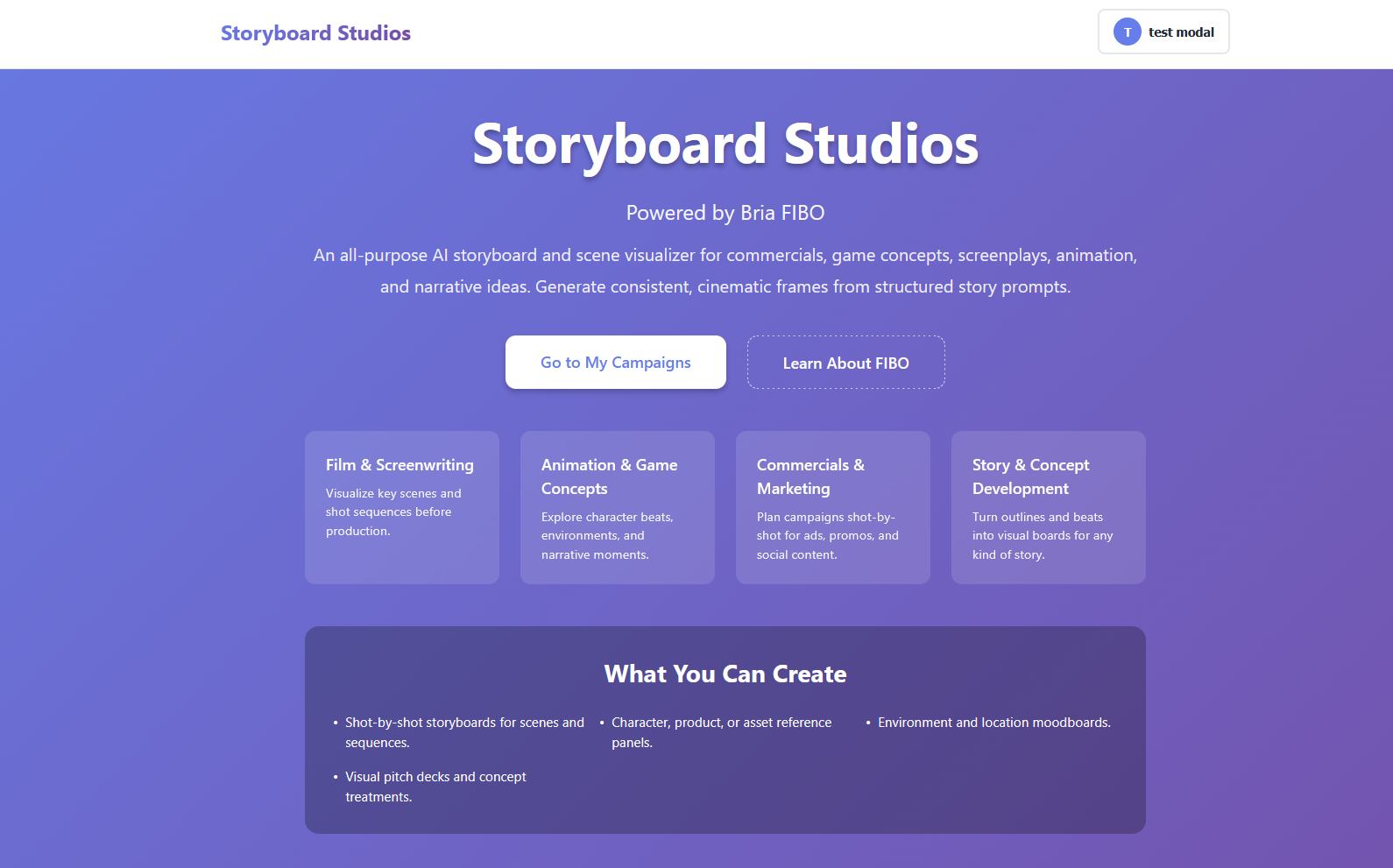
HomePage
-
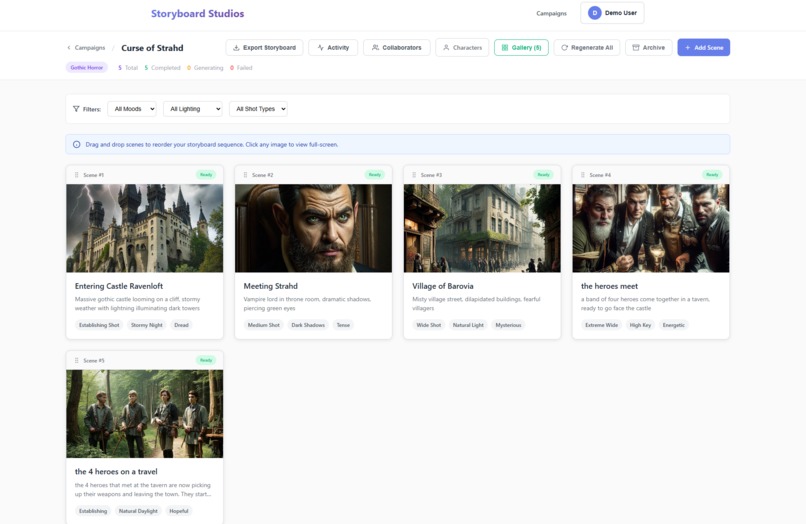
First Look
-
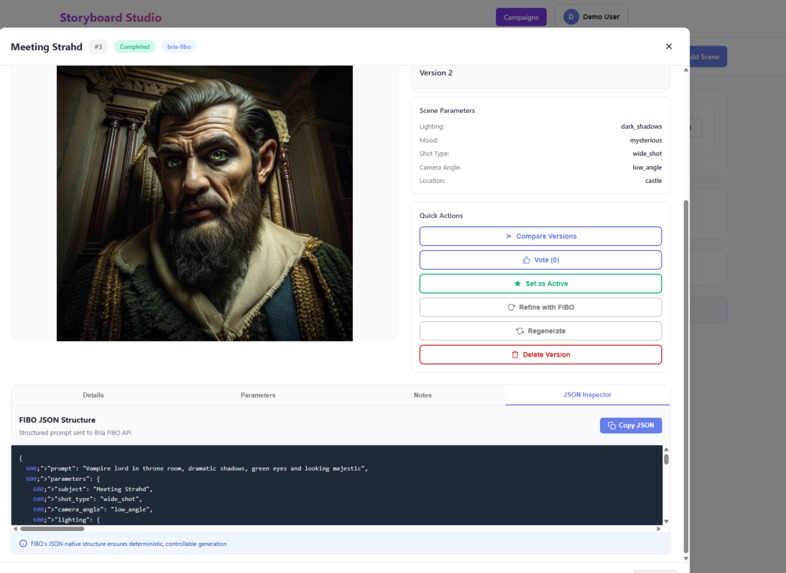
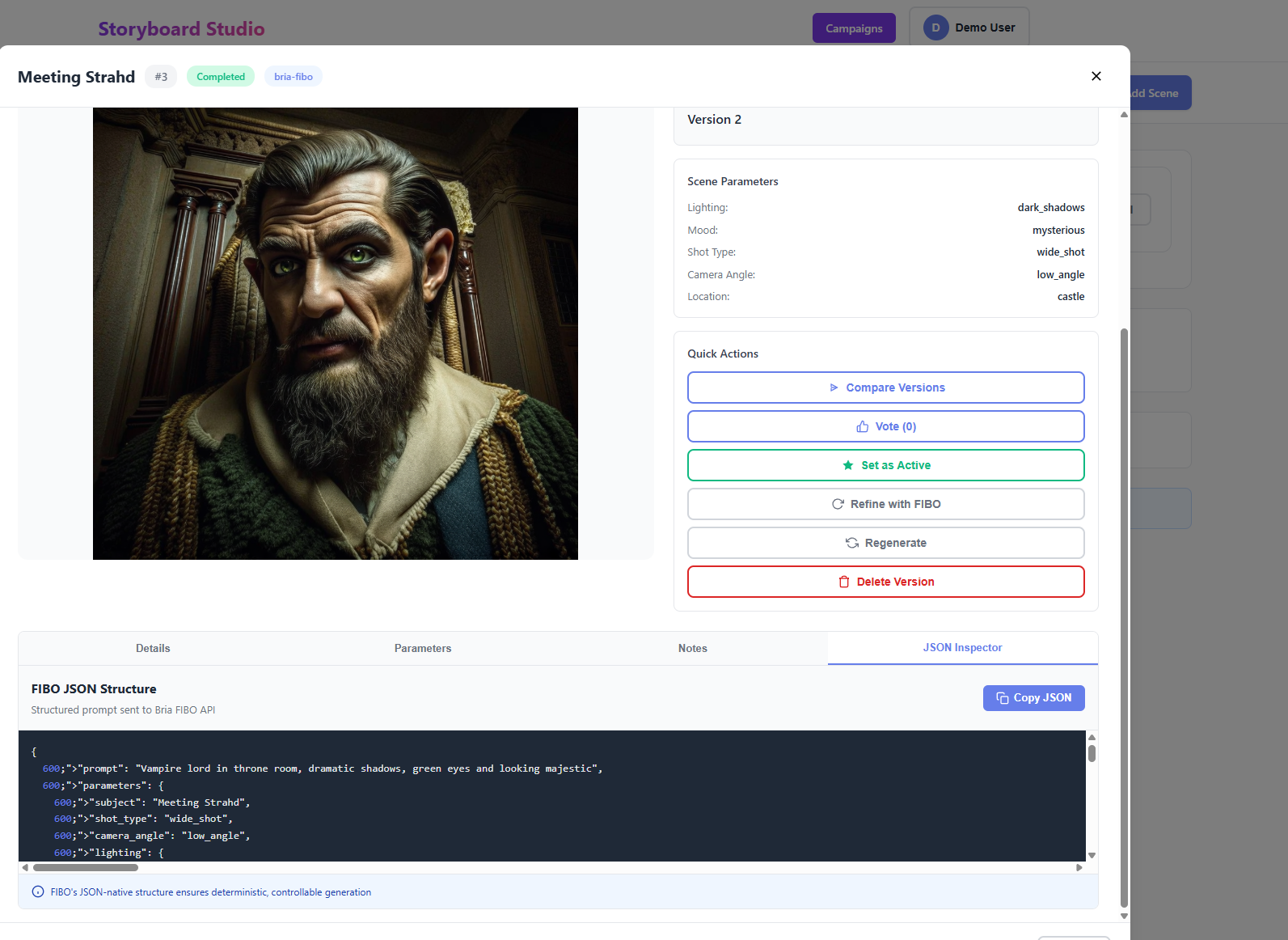
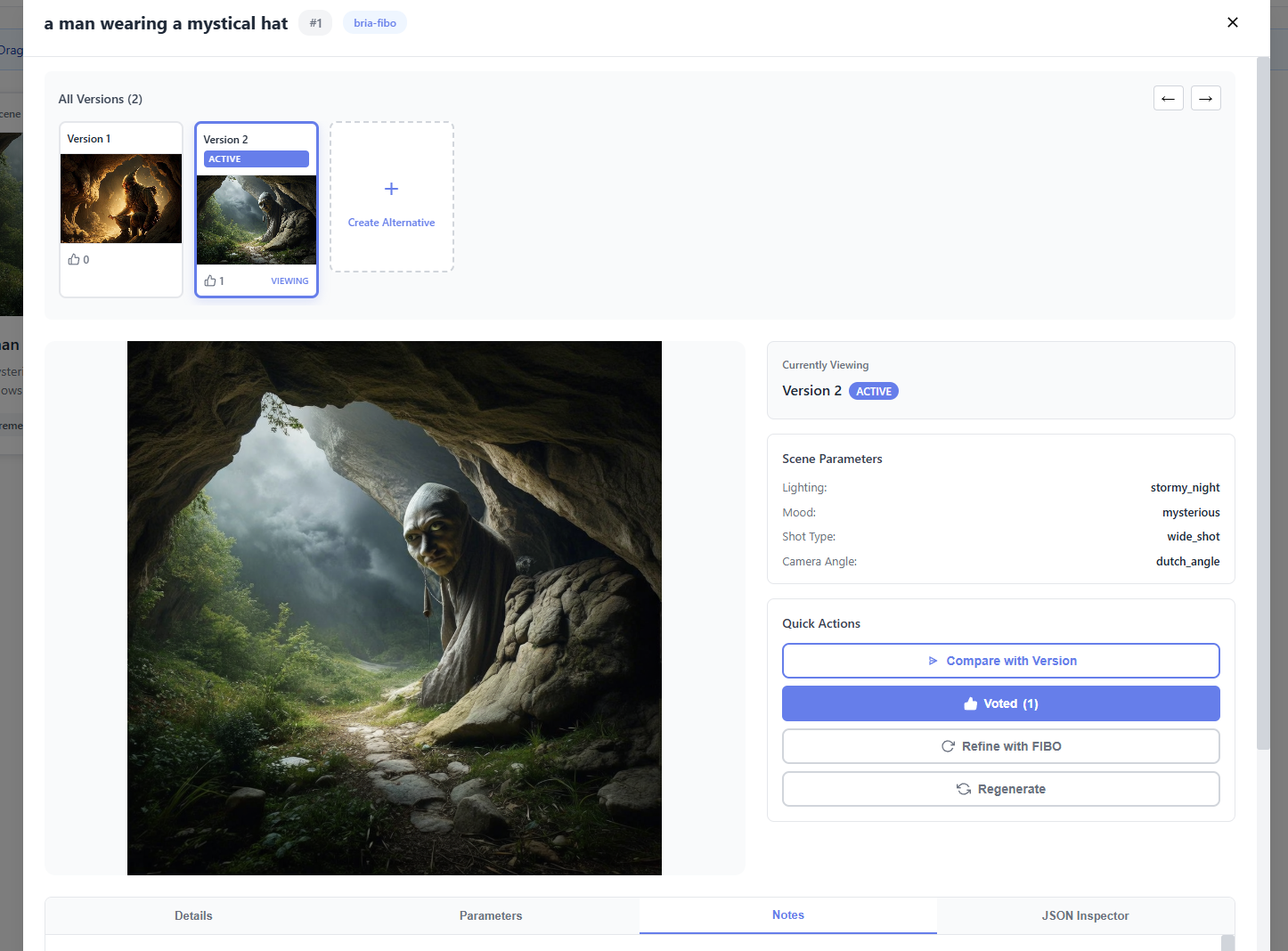
Scene with image, notes, voting, JSON parameters, description
-
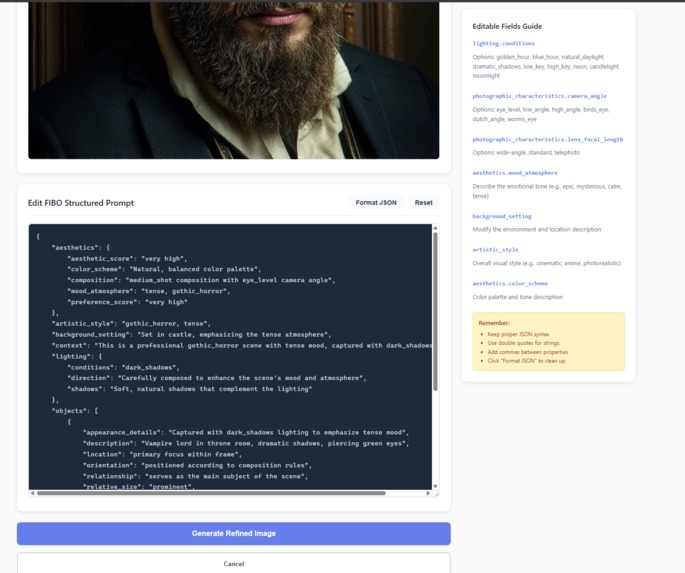
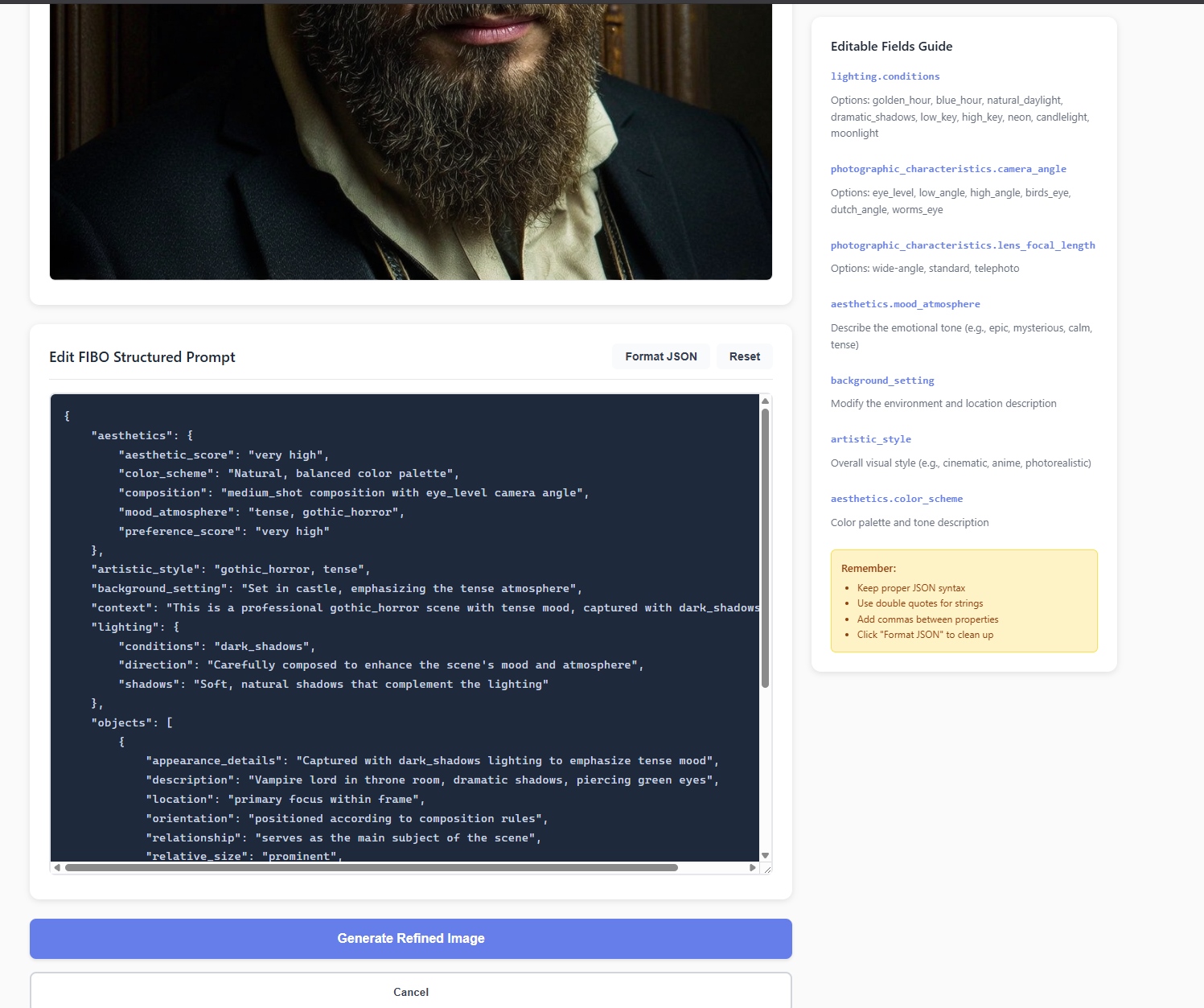
Use FIBO JSON to fine tune
-
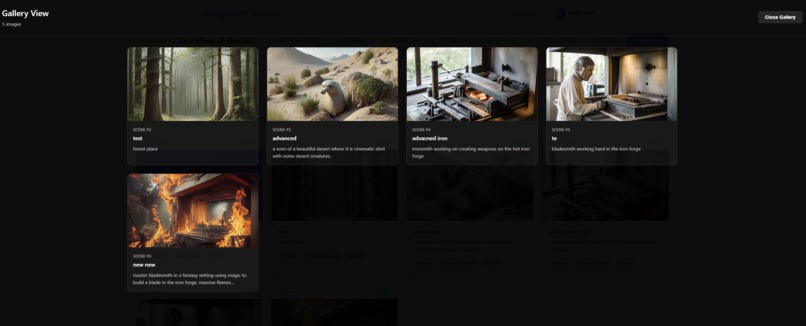
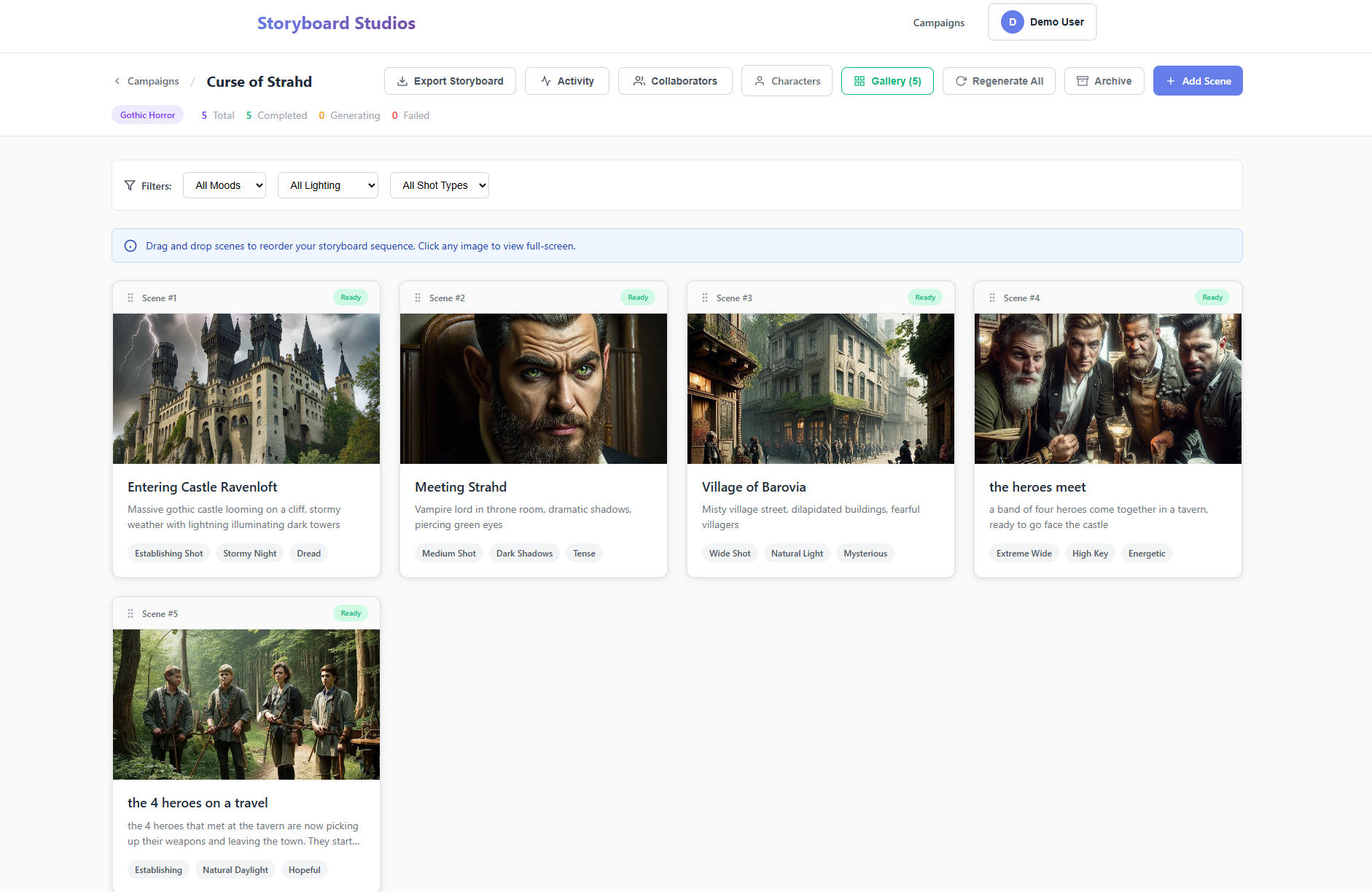
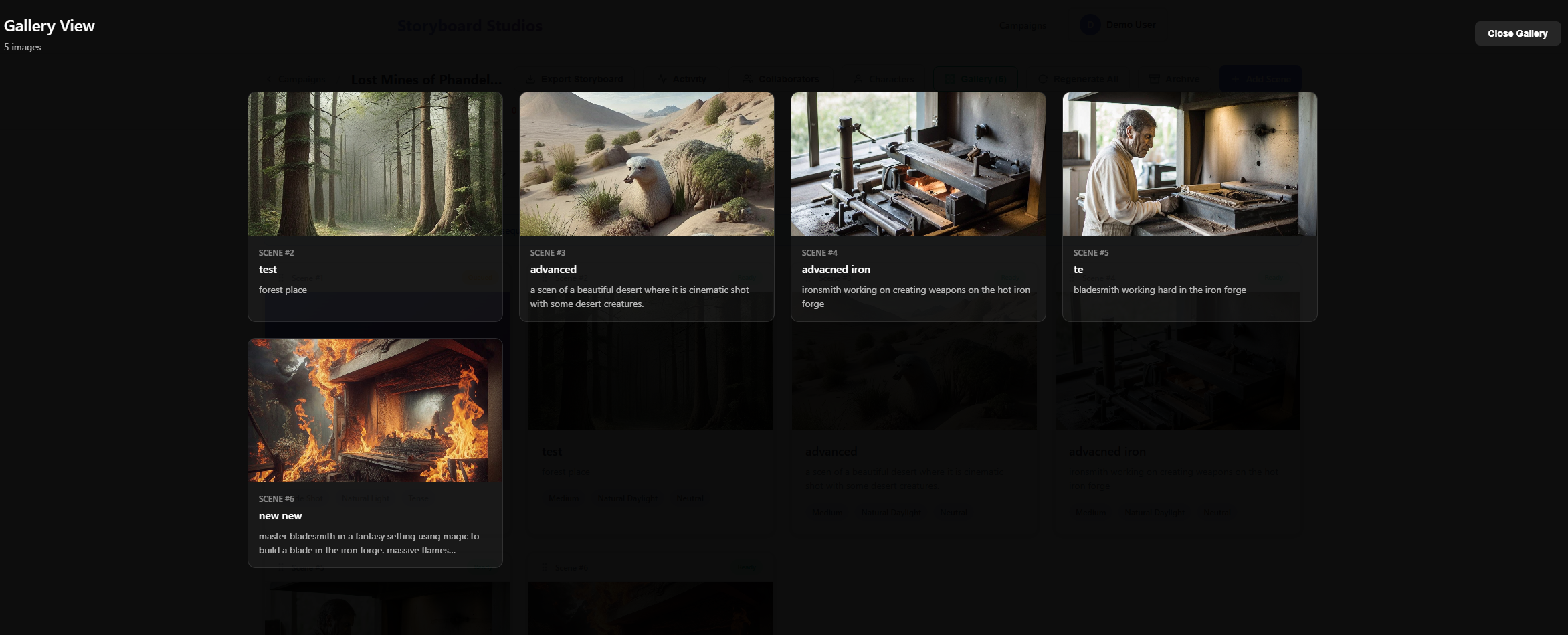
See the whole story
-
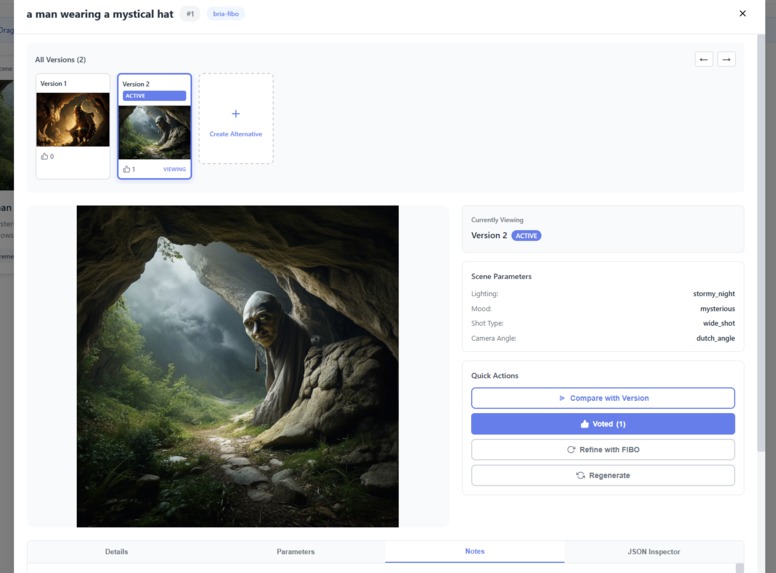
Create alternate images for your scenes
-
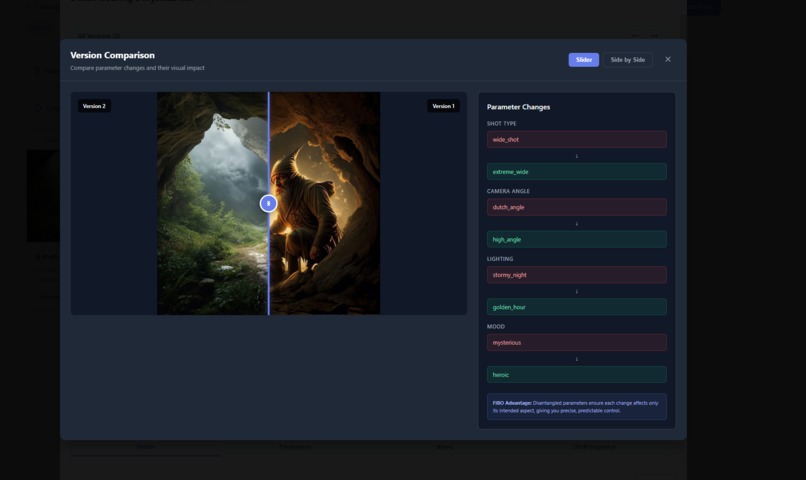
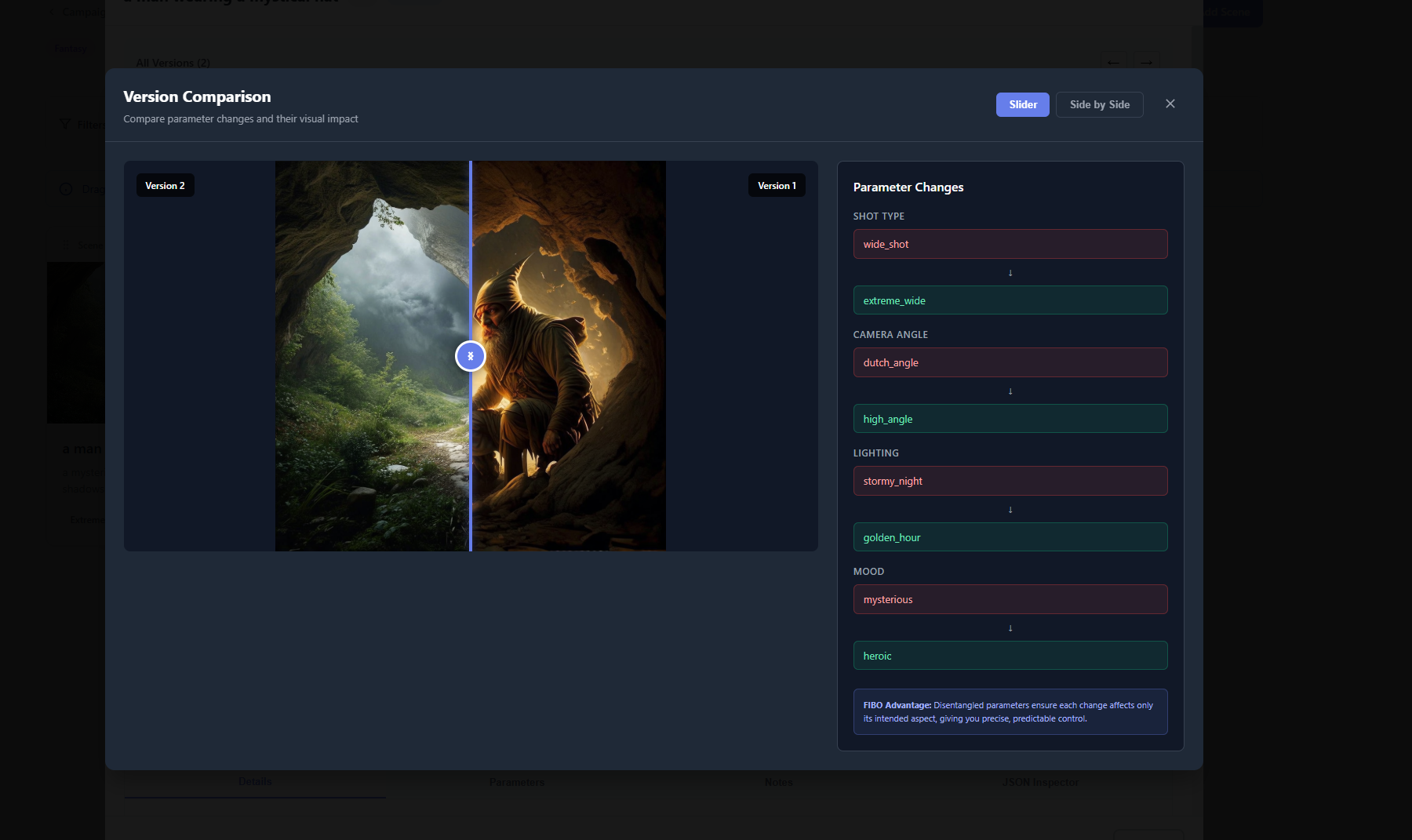
Compare alternate versions
-
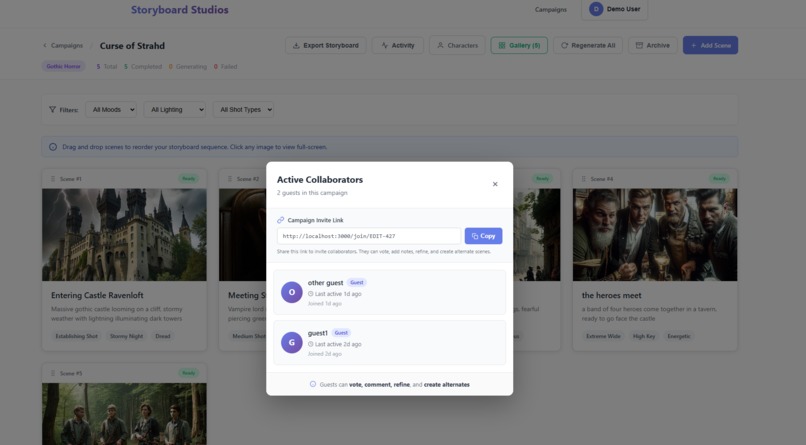
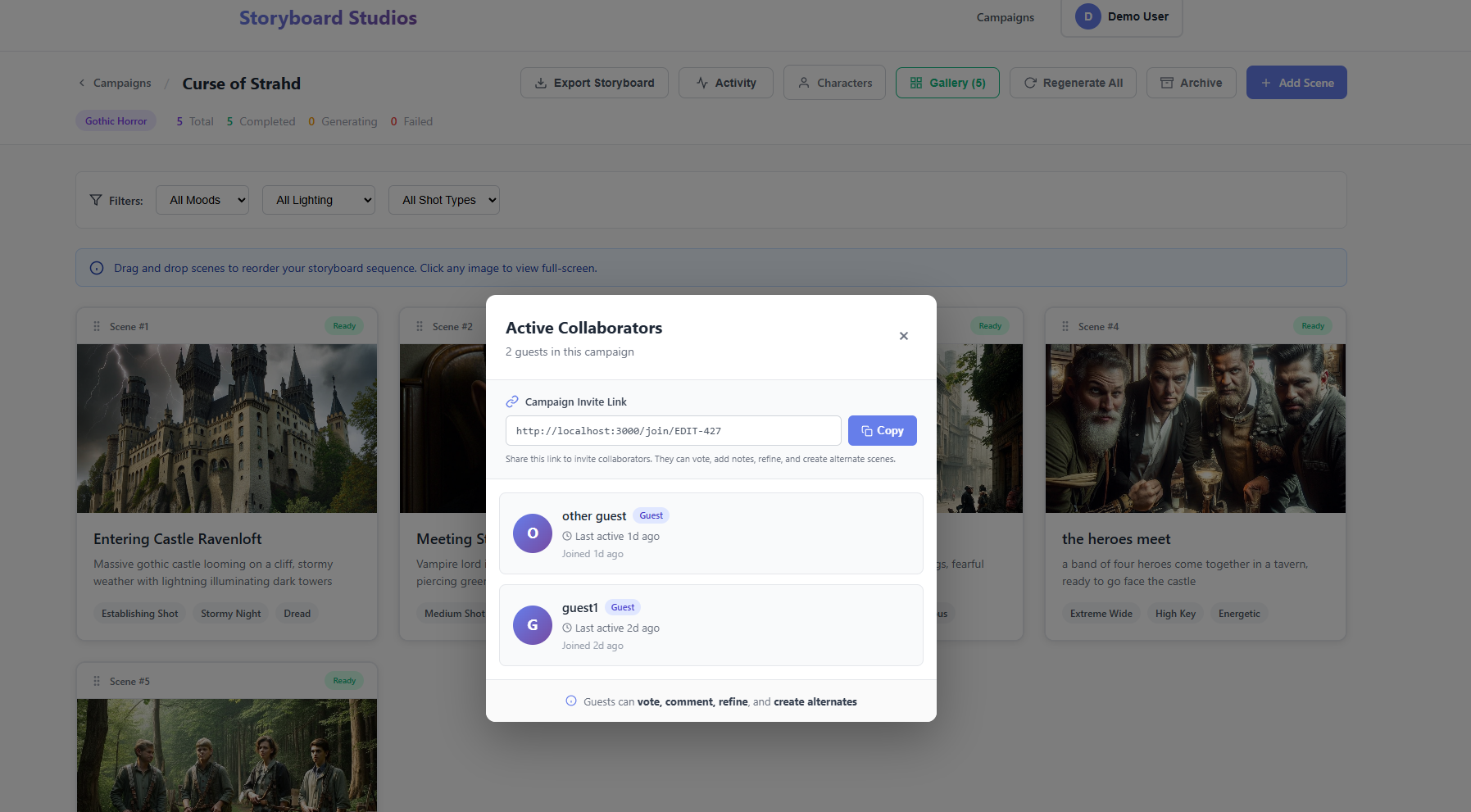
Collaborate with shared link
Inspiration
Creative teams waste weeks iterating on AI-generated storyboards because existing tools treat generation as a black box. A game studio art director says "make it warmer" - the designer regenerates everything, loses the composition they liked, and starts over. An animation director wants "lower camera angle" - another full regeneration. Clients need to review concepts, but sharing requires accounts, and onboarding friction kills feedback loops.
We realized the problem isn't AI quality - it's workflow. FIBO's structured JSON generation offered something revolutionary: professional parameters you could control independently. We asked: what if teams could refine AI output surgically instead of regenerating randomly? What if collaboration required zero friction? What if AI generation had version control like code?
Storyboard Studio emerged from a simple insight: FIBO's technical capabilities deserve production-grade workflows to match.
What it does
Storyboard Studio transforms FIBO's structured generation into enterprise-ready creative workflows for animation studios, game developers, marketing agencies, and film teams.
The Refinement Loop: Users generate a scene with FIBO and receive both the image and the structured parameters that created it - camera angle, shot composition, lighting, mood, color palette. Instead of prompt engineering, they adjust parameters visually through professional controls. FIBO regenerates with the same seed, preserving composition while transforming specific elements. An art director can change lighting from natural to dramatic without losing the framing they approved. A game studio can explore different camera angles while maintaining character consistency.
Team Collaboration: Multiple team members collaborate on campaigns through anonymous guest sessions - no accounts required. Share an invite code, stakeholders join instantly. Art directors vote on preferred variations. Clients leave comments. 3D teams create alternates. Every action tracked in activity logs for compliance and review.
Production Infrastructure: Campaigns organize dozens of scenes with consistent parameters. Each scene supports multiple AI-generated variations for A/B testing. Teams compare versions side-by-side with parameter diff views showing exactly what changed. Export to PDF for production teams. Archive completed projects while preserving history.
Professional Parameters: FIBO's complete cinematography vocabulary exposed through intuitive controls: camera angles (eye level to bird's eye), shot types (extreme close-up to establishing), lens focal length (24mm to 200mm), lighting conditions (golden hour to neon), mood atmosphere, and precision color palettes. Technical users can inspect raw JSON. Non-technical users never see complexity.
The platform bridges FIBO's technical power with the collaborative, systematic workflows professional teams require.
How we built it
Technical Architecture:
We architected Storyboard Studio as a full-stack TypeScript application to ensure type safety throughout the generation and collaboration pipeline.
Frontend: Next.js 14 with App Router and React Server Components provides the foundation. We built modular, reusable components, refactoring from initial 900-line monoliths down to focused 200-line modules. The UI abstracts FIBO's JSON complexity into visual controls while maintaining a JSON inspector for technical users. Real-time updates use polling (5-second intervals) for serverless compatibility rather than WebSockets.
Backend: PostgreSQL with Prisma ORM stores complete FIBO request and response JSON for every generation, enabling deterministic regeneration and parameter-level version control. Custom session authentication supports both user codes and anonymous guest sessions with 7-day persistence. Activity logging captures every action for audit trails.
FIBO Integration:
The prompt builder (lib/fibo/prompt-builder.ts) transforms UI parameters into FIBO's structured JSON format. We map camera angles, shot types, lighting conditions, and color palettes to FIBO's expected values. Seed capture on initial generation enables deterministic refinement - same seed with modified parameters produces consistent composition with targeted changes. The refinement endpoint (POST /api/scenes/[id]/refine) accepts modified structured prompts and preserves seeds for surgical editing.
Data Model:
Campaign → Scenes → Variations hierarchy supports enterprise workflows. Each scene stores fiboConfig (request), structuredPrompt (response), and seed for reproducibility. Variations link to parent scenes with delta tracking. Votes and comments thread through scenes for collaborative decision-making. Activity feed aggregates all actions with timestamps.
Deployment: Vercel hosts serverless functions with automatic scaling. Supabase provides managed PostgreSQL with connection pooling. Environment variables isolate FIBO API credentials from the codebase. Comprehensive error handling and logging ensure production reliability.
Development Process: We started with a monolithic scene creation form and progressively refactored into composable components. Extracted reusable UI patterns (FormCard, CharacterSelector). Built custom hooks for data fetching and state management. Established type-safe API contracts with Zod validation. Migrated from synchronous to polling-based updates for better serverless compatibility.
The architecture prioritizes maintainability, type safety, and production readiness over rapid prototyping.
Challenges we ran into
Parameter Mapping Complexity:
FIBO's structured JSON uses specific enum values that didn't always match our UI terminology. We needed bidirectional mapping - UI labels like "Low Angle" to FIBO's low_angle, and camera concepts like "Medium Shot" to FIBO's lens focal length equivalents. Initial mismatches caused validation errors. Solution: comprehensive mapping functions with exhaustive testing against FIBO's schema.
Seed-Based Refinement Reliability: Deterministic regeneration requires preserving seeds between initial generation and refinement. Early implementations lost seeds during database transactions or failed to pass them through API layers. Users would refine a scene and get completely different composition. Solution: seed capture on first generation, database storage, and explicit seed passing through the entire refinement pipeline with validation.
Collaboration Without Authentication: Enterprise teams need stakeholder feedback but onboarding friction kills review workflows. OAuth requires accounts. Session management is complex. We needed zero-friction access that remained secure enough for production use. Solution: anonymous guest sessions with cryptographically random invite codes, 7-day cookie-based persistence, and campaign-scoped permissions. Guests can collaborate but can't access other campaigns.
Real-Time Updates in Serverless: FIBO generation takes 30-60 seconds. Users need to see progress without blocking. WebSockets don't work in serverless environments (Vercel functions are stateless). Solution: polling-based updates with 5-second intervals. Frontend polls generation status endpoint. Activity feed refreshes automatically. Serverless-compatible with acceptable UX trade-offs.
Component Architecture at Scale: Initial scene creation form grew to 900 lines - unmaintainable. Mixing concerns (UI, API calls, validation). No reusability. Refactoring risked breaking existing functionality. Solution: systematic extraction into focused components (SceneForm, VisualParameterControls, ScenePreview), custom hooks for data fetching, and comprehensive testing during migration.
Type Safety Across API Boundaries: TypeScript types don't cross API boundaries by default. Frontend and backend could drift. Zod schemas on API routes but no shared contract. Solution: shared types package with Zod schemas that both client and server import. Runtime validation on API routes, compile-time safety on frontend.
Each challenge pushed us toward more robust, production-ready solutions rather than quick hacks.
Accomplishments that we're proud of
We Made JSON Invisible: FIBO's power is in structured parameters, but JSON is intimidating. Our visual controls give non-technical users professional cinematography vocabulary without seeing a single bracket. Art directors adjust "camera angle" and "lighting" through buttons. Under the hood, we're building complex JSON objects and sending them to FIBO. Technical users can still inspect raw JSON if needed. We democratized access to professional AI controls.
Zero-Friction Collaboration Actually Works: Guest users join by typing an invite code. No email. No password. No OAuth dance. No account creation. Within 10 seconds they're voting on scenes and leaving comments. We've tested this with non-technical stakeholders - it just works. For enterprise creative workflows, removing onboarding friction is a 10x multiplier on feedback velocity.
Version Control for AI Generation: We built what doesn't exist elsewhere - true version control for AI-generated content. Every generation tracked. Seeds preserved. Parameter changes logged. Compare versions side-by-side with diff views showing exactly what changed. Teams can explore systematically instead of random prompt spinning. This transforms AI from toy to production tool.
Production-Ready on Day One: Not a prototype. Not a demo. Production infrastructure: PostgreSQL database, type-safe queries, comprehensive error handling, activity logging, PDF export, guest session management, real-time updates. We could deploy this for a studio tomorrow. The code quality reflects enterprise standards because we built it for enterprise use from the start.
Complete FIBO Integration: We didn't cherry-pick easy features. We integrated FIBO's full parameter set - camera angles, shot types, FOV control, lighting conditions, mood atmosphere, color palettes. Every control maps to FIBO's structured JSON. We showcase what becomes possible when you leverage FIBO's complete capabilities, not just text-to-image generation.
Refinement Workflow Innovation: The generate-refine loop is novel. See the parameters FIBO used. Adjust visually. Regenerate with seed preservation. This workflow doesn't exist in other tools. It's the missing bridge between "AI made this randomly" and "I controlled this professionally." Client says "warmer lighting" - one parameter change, instant result.
We're proud that we solved real production problems, not just built interesting technology.
What we learned
Structured Generation Changes Everything: FIBO's JSON-native approach isn't just technically elegant - it enables fundamentally different workflows. When parameters are disentangled and controllable, you can build version control, parameter diff views, systematic exploration, and audit trails. Unstructured prompts make this impossible. We learned that FIBO's architecture unlocks production workflows other models can't support.
Collaboration Needs to Be Frictionless: Every authentication step loses 50% of potential reviewers. OAuth is a conversion killer for stakeholder feedback. Anonymous sessions with invite codes work because they ask for zero commitment. We learned that enterprise doesn't always mean complex - sometimes it means removing barriers.
Type Safety Is Production Readiness: TypeScript strict mode caught hundreds of potential runtime errors during development. Shared Zod schemas between frontend and backend prevented API contract drift. Type-safe database queries with Prisma eliminated entire classes of bugs. We learned that compile-time guarantees dramatically reduce production issues.
Users Don't Want to See JSON: Even technical users prefer visual controls over editing raw JSON. Our JSON inspector gets almost zero usage compared to parameter buttons. We learned that abstraction isn't hiding complexity - it's presenting it appropriately for the task.
Deterministic Regeneration Requires Discipline: Seed preservation is fragile. One database transaction that doesn't save the seed, one API call that doesn't pass it through, breaks the entire refinement workflow. We learned that deterministic systems require systematic testing and validation at every layer.
Production Infrastructure Takes Time: Activity logging, audit trails, guest sessions, PDF export, version comparison - these aren't glamorous features but they're what separates demos from deployable tools. We learned that 80% of enterprise readiness is infrastructure, not core features.
Real-World Workflows Beat Perfect Technology: Teams don't need perfect AI - they need reliable iteration loops, collaborative decision-making, and production integration. FIBO's structured generation is powerful, but wrapping it in team workflows is what makes it valuable. We learned that deployment context matters more than technical capabilities.
These lessons apply beyond this project - they're principles for building production AI tools in any domain.
What's next for Storyboard Studios
Advanced Collaboration Features: Role-based permissions (owner, editor, viewer). Workspace-level invite management. Real-time presence indicators showing who's viewing what. Threaded discussions with mentions and notifications. Enterprise SSO integration for studio deployment. These features transform individual collaboration into systematic team workflows.
Enhanced FIBO Integration: HDR and 16-bit color space support for high-end production. Custom style presets trained on studio-specific aesthetics. Batch generation for entire campaigns with parameter propagation. API-driven workflows for pipeline integration. Advanced ControlNet integration for reference image guidance. Push FIBO's capabilities to production limits.
Production Pipeline Integration: Shotgun/ShotGrid integration for VFX pipelines. Unreal Engine export for real-time pre-vis. FBX export with camera data for 3D software. Frame.io integration for client review workflows. These integrations embed AI storyboarding into existing studio infrastructure.
AI-Powered Workflow Enhancements: Automated scene sequencing using LLM analysis of script breakdown. Intelligent parameter suggestions based on narrative context. Style consistency checking across campaign scenes. Automated variation generation exploring parameter space. Let AI assist not just generation but creative decision-making.
Enterprise Features: Audit trails with compliance reporting. Usage analytics and cost tracking. Custom deployment for on-premise requirements. White-label options for agency resale. Service-level agreements and support contracts. Make this ready for Fortune 500 creative teams.
Expanded Use Cases: Comic book panel generation with consistent character designs. Architectural visualization with parameter-controlled perspectives. Product photography with brand-consistent styling. Educational content with systematic visual progression. FIBO's structured generation applies beyond film and games.
Community & Ecosystem: Public storyboard gallery showcasing FIBO capabilities. Community-contributed parameter presets and color palettes. Template campaigns for common use cases. Developer API for third-party integrations. Build ecosystem around production-grade AI storyboarding.
The platform foundation is production-ready. What's next is scaling to handle diverse creative workflows across industries while maintaining the core principle: make FIBO's professional controls accessible to teams who need to ship.
Built With
- briafiboapi
- nextjs
- postgresql
- prisma
- supabase
- typescript
- vercel


Log in or sign up for Devpost to join the conversation.