Inspiration
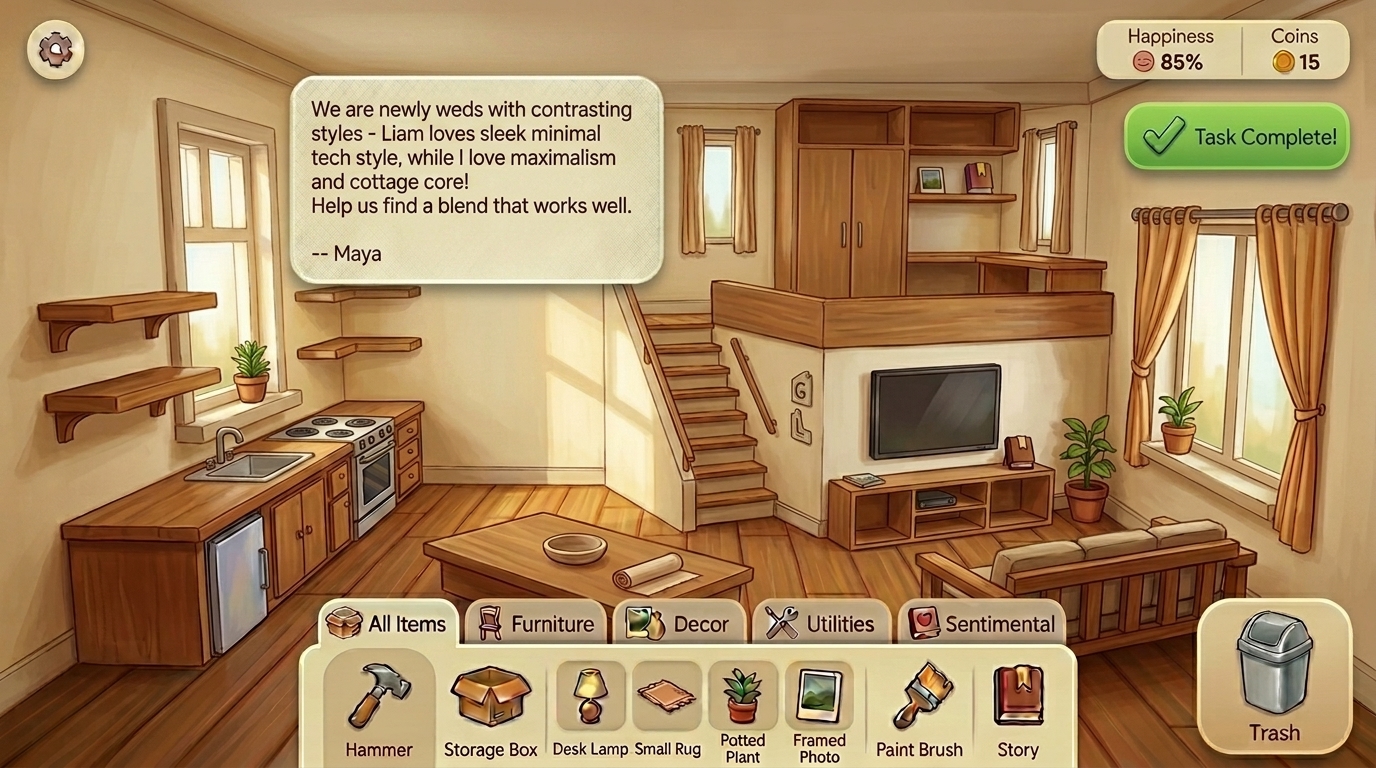
Story in the Box was inspired by my love for The Sims and a comedic milestone in my own life. I recently married my husband—a classic, clean-cut "tech bro"—while I am a maximalist lover of all things rustic and cottagecore.
When we moved in together, unpacking became a hilarious exercise in aesthetic negotiation. Unpacking boxes filled with items from different stages of my life felt incredibly cathartic as I entered this next chapter. I realized that moving isn't just about hauling cardboard; it's a silent, emotional transition. I wanted to build a meditative game that captures this exact feeling, focusing on the personal stories behind the items we own and the human side of moving on.
What it does
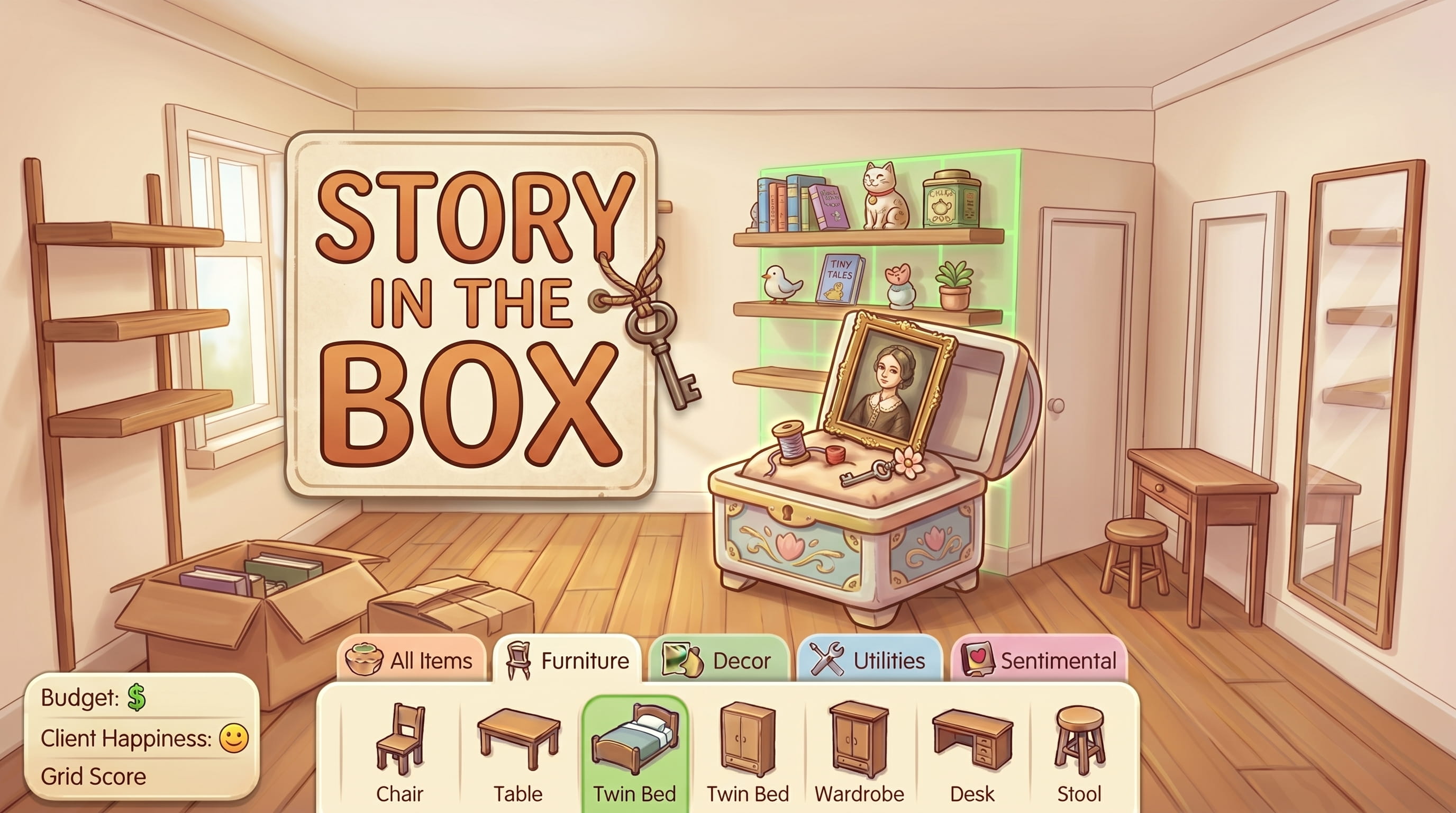
Story in the Box is a spatial-management and interior design game where players unpack moving boxes and arrange objects onto various furniture surfaces—like credenzas, bedroom dressers, vanities, and desks.
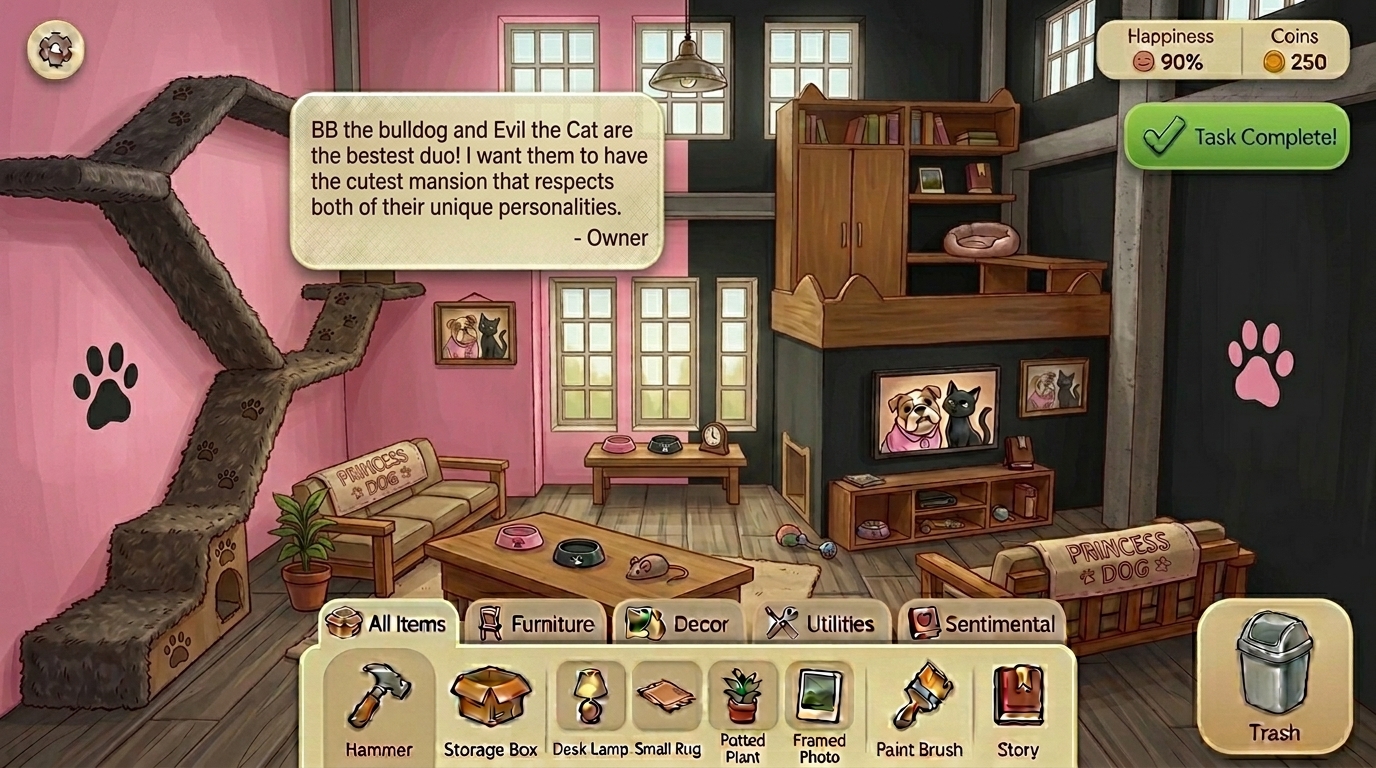
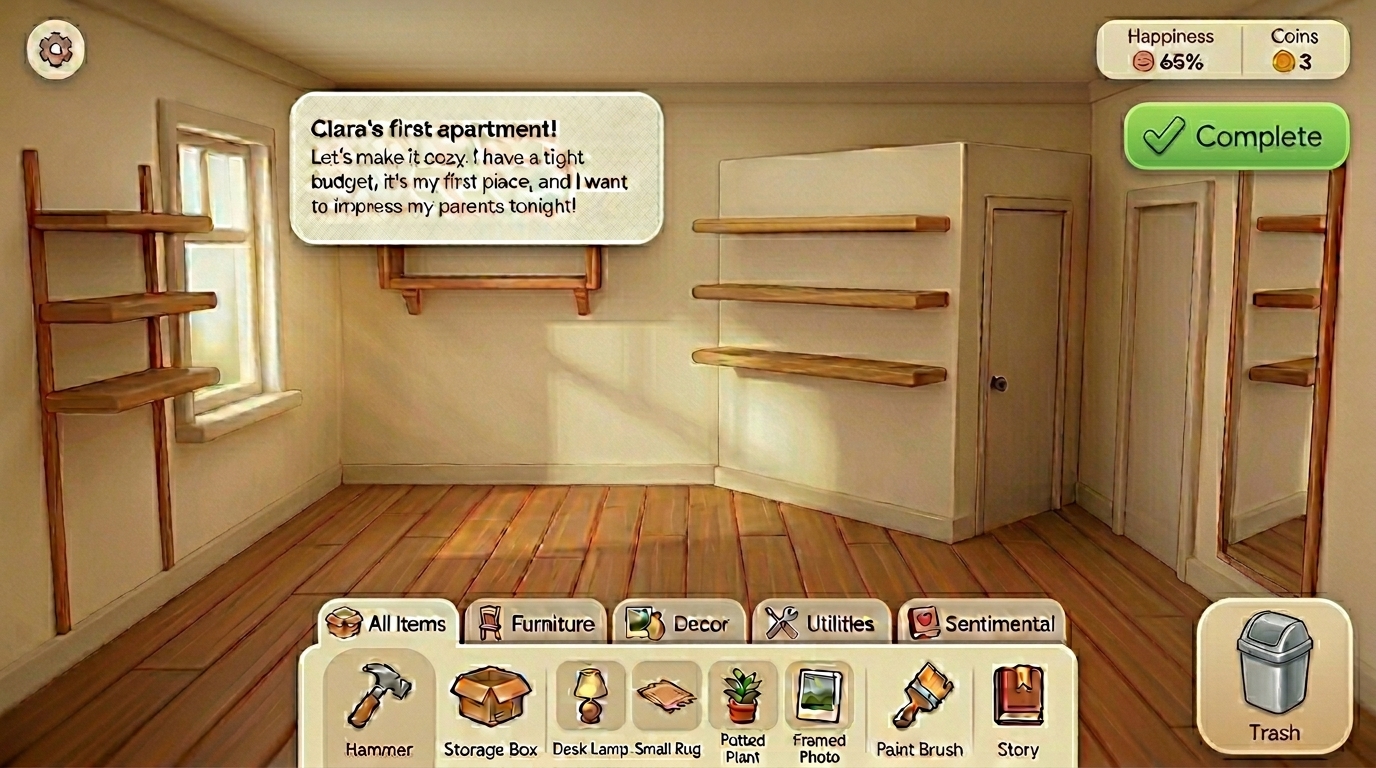
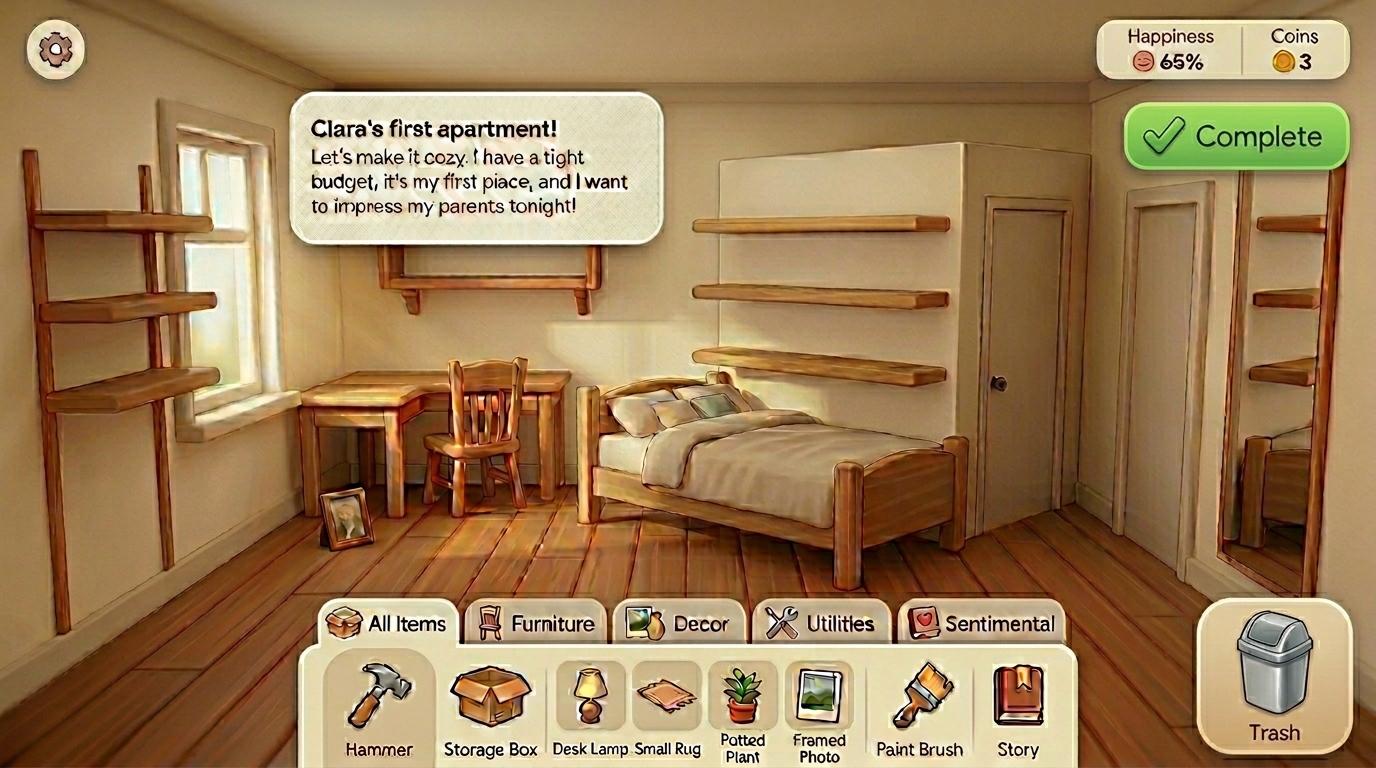
Client Backstories: Before styling a room, players receive a profile detailing the client's quirks, personality, and current life transition.
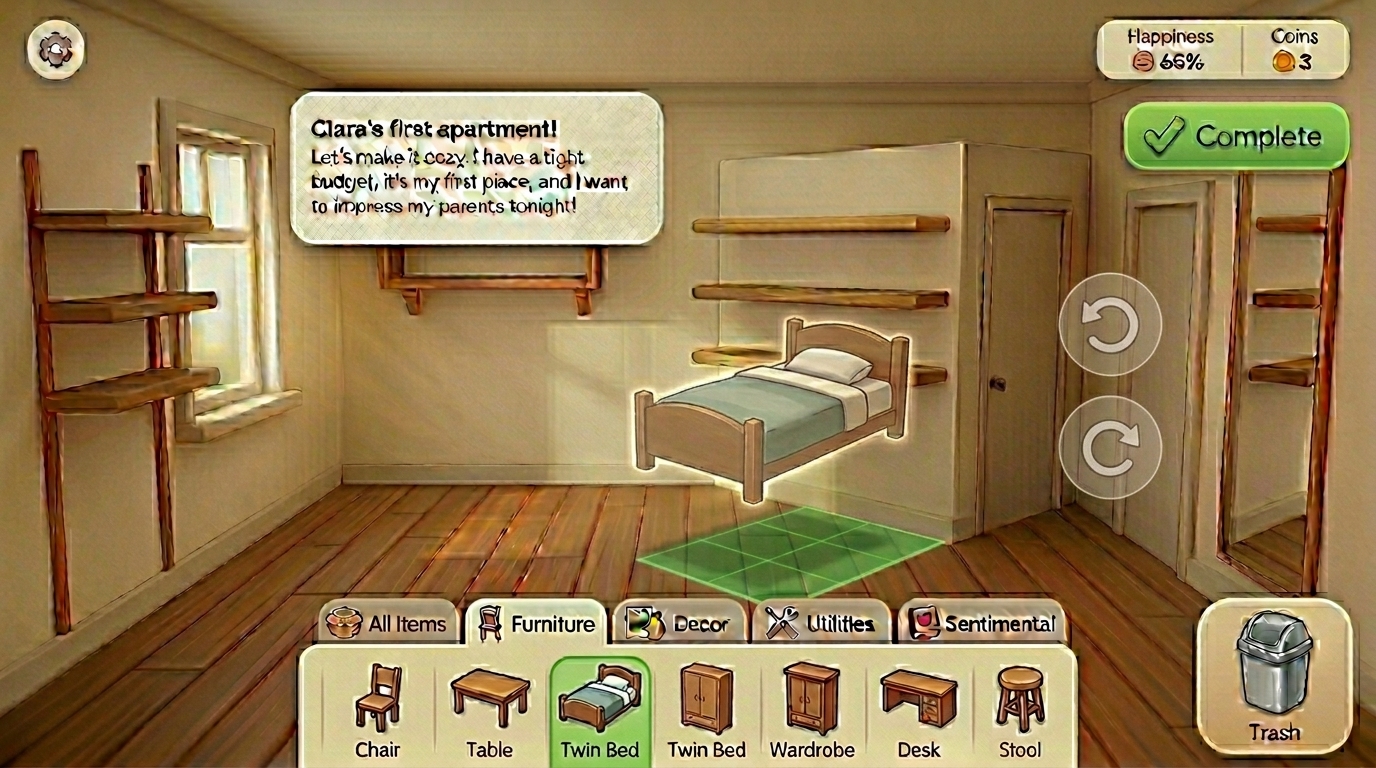
The Unpacked Tray: Tapping a box immediately empties its entire contents into organized tabs at the bottom of the screen, giving players full visibility of all items from the start.
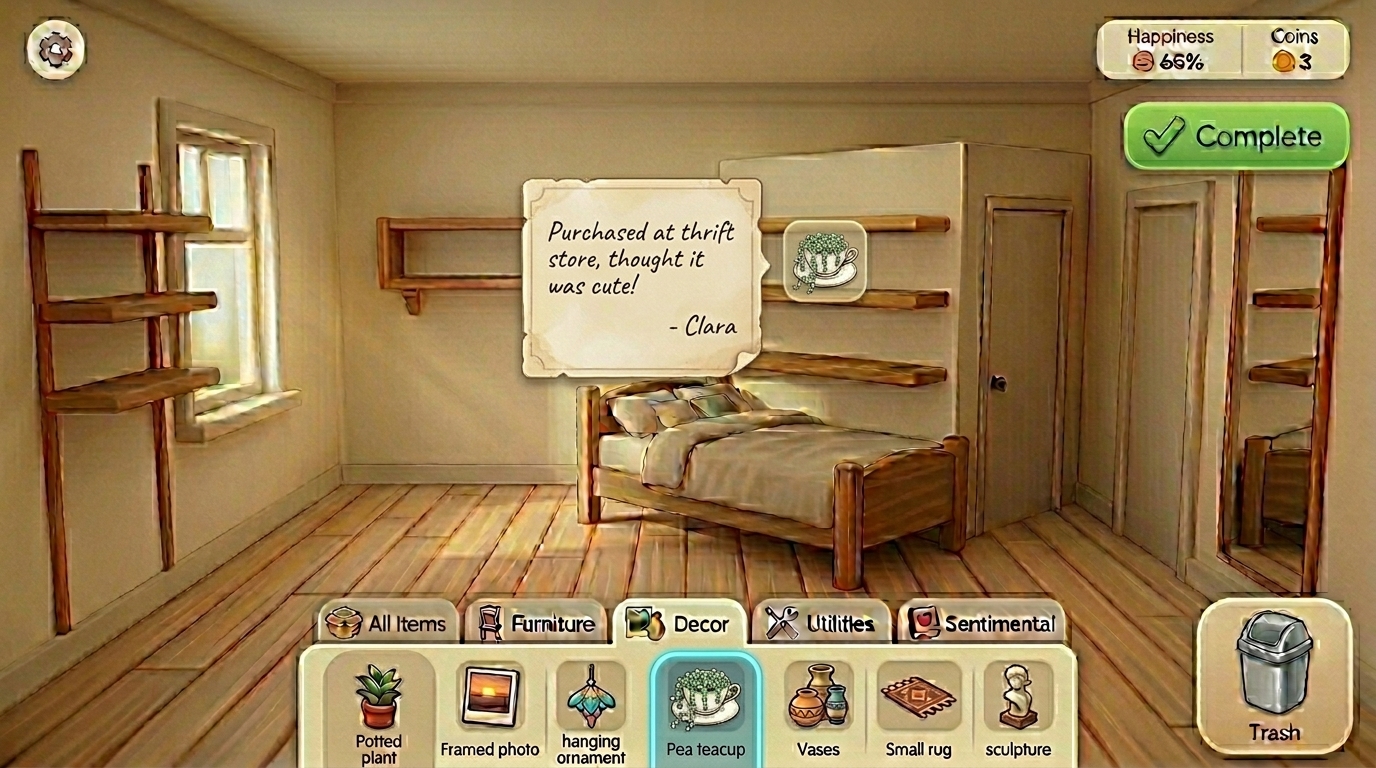
Item Memories: Selecting an item displays a short backstory, memory, or quirk attached to it, explaining why the client kept it.
Letting Go (The Discard Mechanic): If players feel a client is ready to move on without a certain item, or if space on the furniture is too tight, they can choose to throw that item back into the box to be discarded. Discarding items frees up physical layout space and directly alters the emotional energy of the room.
Grid Layouts: Items have specific grid footprints ($1\times1$, $1\times2$, or $2\times2$) and structural rules. Heavy books need sturdy, low surfaces, while trailing plants need clear vertical space to hang.
Aesthetic Clashes: Players must bridge conflicting styles—like placing a sleek tech gadget right next to a cozy, rustic ceramic teapot on the same console table.
Dual-Scoring: Upon finalizing a layout, players are rated on:
Aesthetics: How well the layout, color palette, and design rules are balanced.
The Brief: How accurately they respected the client's emotional boundaries, sentimental wishes, and storage needs.
How I built it (designed)
We built the game to feel tactile and clean on mobile screens:
Grid Snapping: A touch-based grid system for smooth dragging, holding, and tapping to rotate items across furniture surfaces.
Item & UI Database: An organized tab system that dynamically categorizes all items inside the client's box (e.g., books, plants, decor, electronics) once opened.
Tactile Audio: Satisfying sound effects—like tape cutting, cardboard folding open, and wood-on-wood "snaps" when items hit the grid.
Collapsible UI: A pull-up asset tray that slides away when actively placing items, keeping the 16:9 landscape screen clean and uncluttered.
Challenges I ran into
Adding Meaning to Decorating: Our biggest hurdle was ensuring the game didn't feel like a generic design app. We solved this by anchoring every item to a character backstory, letting players act as emotional editors who decide what the client keeps and what they let go of.
Scoping a Feasible MVP: Keeping our Minimum Viable Product practical was a constant test. We focused strictly on polishing the core grid-placement mechanics, the discard loop, and a high-quality asset library before adding secondary systems.
Relaxation vs. Challenge: We had to find the right balance of difficulty. If the layout was too tight, players felt anxious. Adding the discard mechanic served as the perfect gameplay relief valve—players can choose to clear difficult clutter, but they must weigh the emotional cost of throwing away a client's sentimental possession.
Mobile Screen Space: Fitting a 16:9 layout with a categorization tray, unboxing area, and large furniture was tight. The collapsible tray was our main solution to keep the workspace clear.
Accomplishments that I am proud of
Environmental Storytelling: We managed to tell funny, human stories through props like the "World's Okayest Grad" Mug or a spiky "Compromise Cactus" wearing a hand-knitted pink sweater to hide its prickles.
Tactile Feedback: Achieving a satisfying, physical "snap" feeling when dropping items onto the furniture.
Simple Progression: A straightforward loop where completing jobs earns points to customize the player's own design agency office.
What I learned
Cozy Requires Good Logic: Underneath a relaxing aesthetic, a cozy management game needs rock-solid grid logic and clean item state changes to prevent player frustration.
UX is Everything: Hitbox sizes, slide speeds, and clear placement previews are just as important to the game's feel as the core rules.
Embrace the Imperfections: Players don't want sterile, identical rooms. They fall in love with chipped mugs, messy instant ramen cups, and the real compromises of living with other people.
What's next for Story in the Box
Light Zones: Introducing light-zone overlays (Sunlight vs. Shade) where plants grow, bloom, or wilt based on window placement.
Mid-Run Interruptions: Events where clients arrive mid-level to deliver a massive, sentimental heirloom that forces you to reorganize your layout or convince them to let it go.
Asymmetric Co-Op: A two-player mode where one player frantically packs boxes at a thrift shop under a timer, while the second player unboxes, reads item backstories, and decides what to keep or discard in real-time.
Built With
- cursor
- gemini
- googleaistudio
- procreate


Log in or sign up for Devpost to join the conversation.