-
-
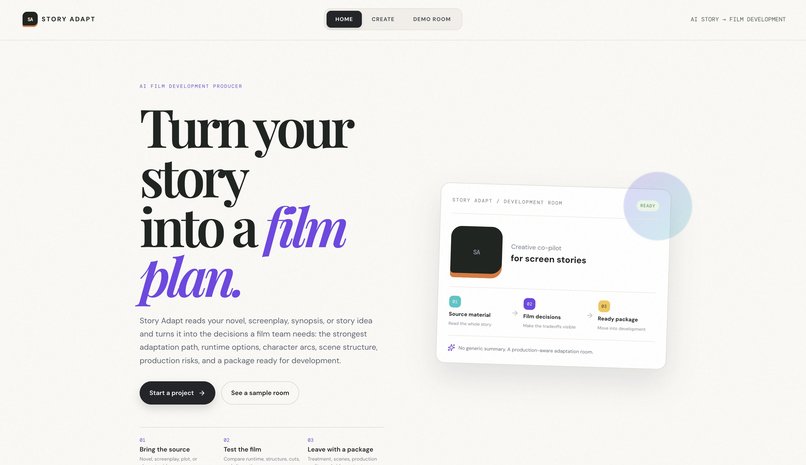
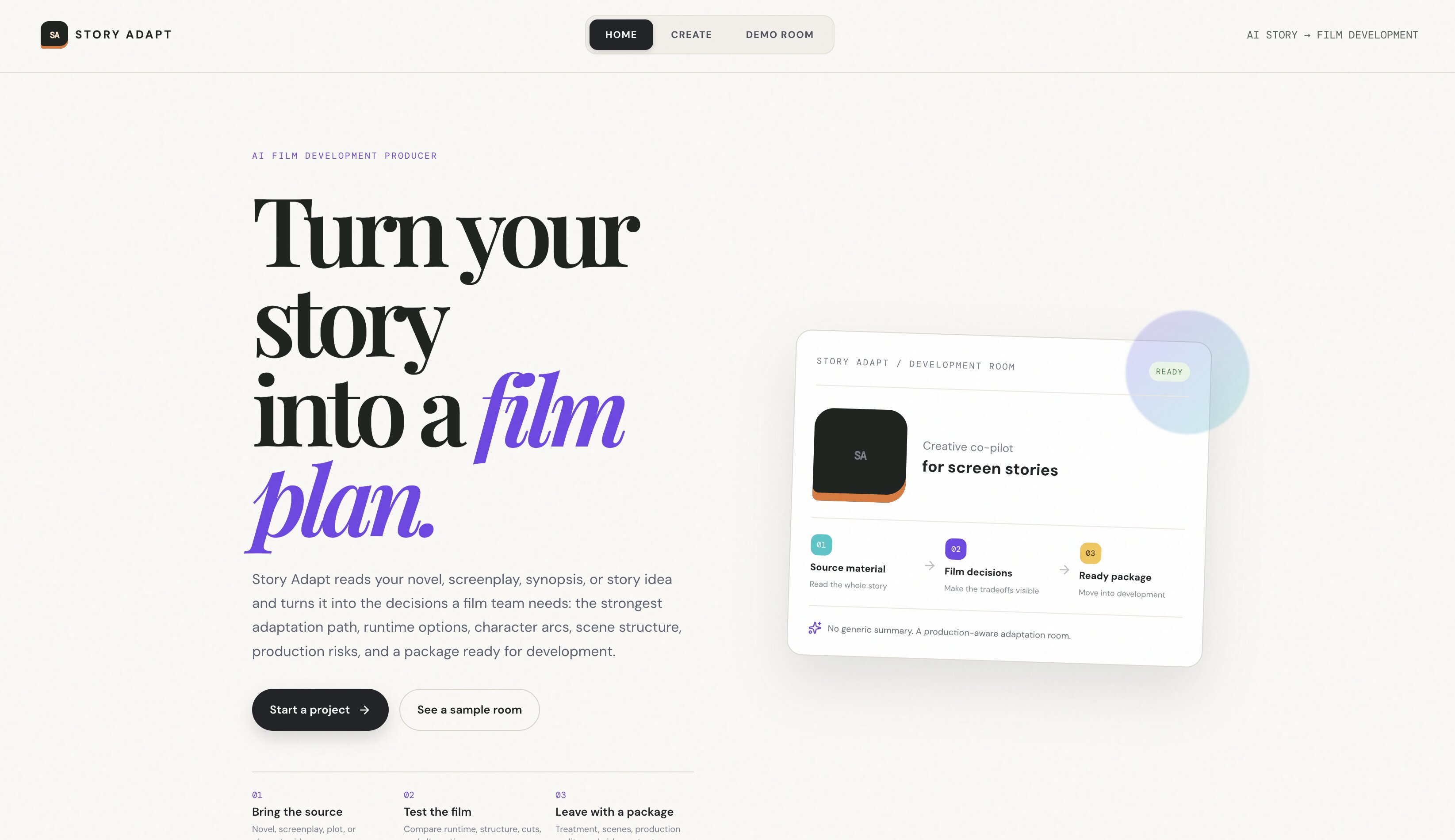
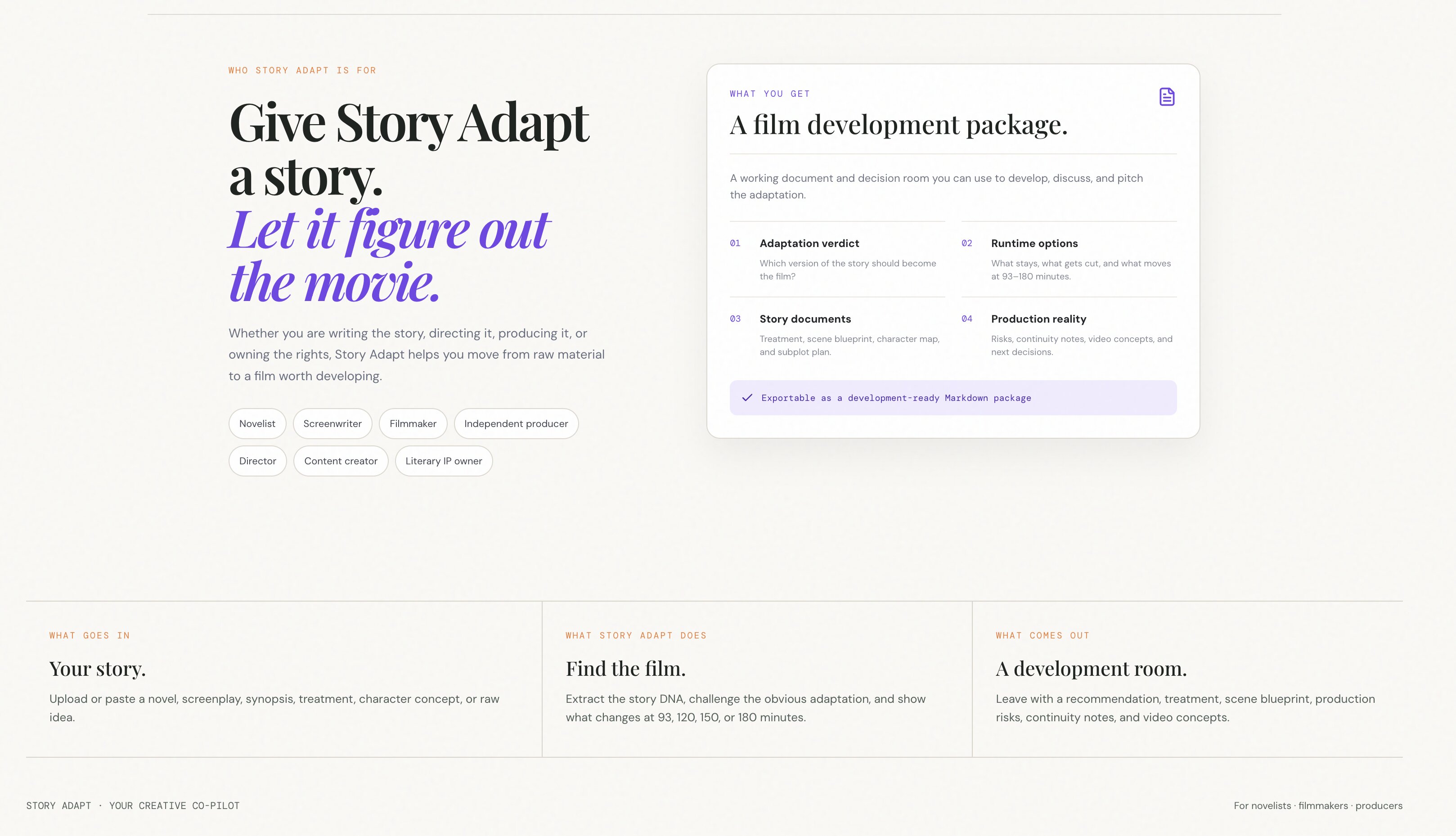
Story Adapt Hero Section
-
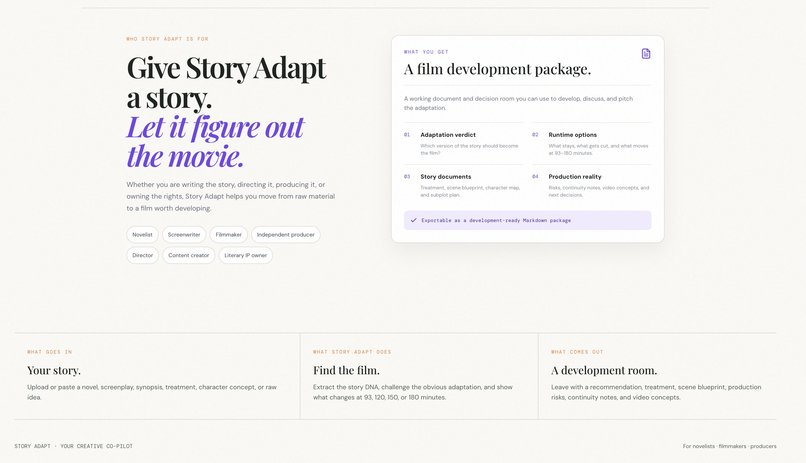
For Authors, Directors, Screen writers, Producers etc..
-
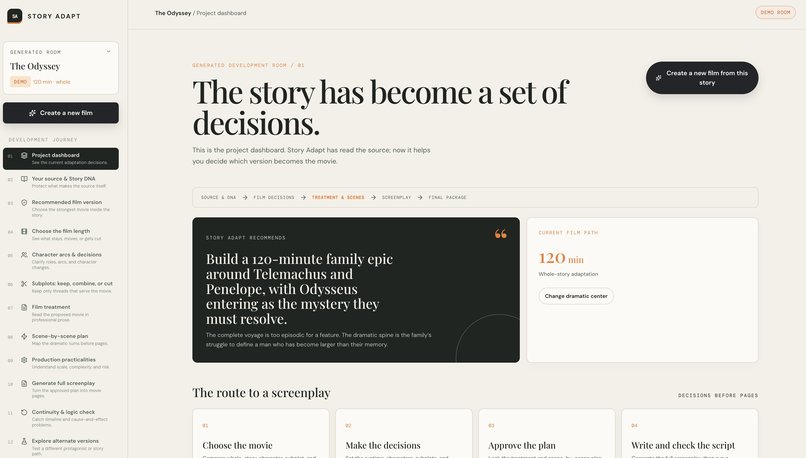
The Feedback
-
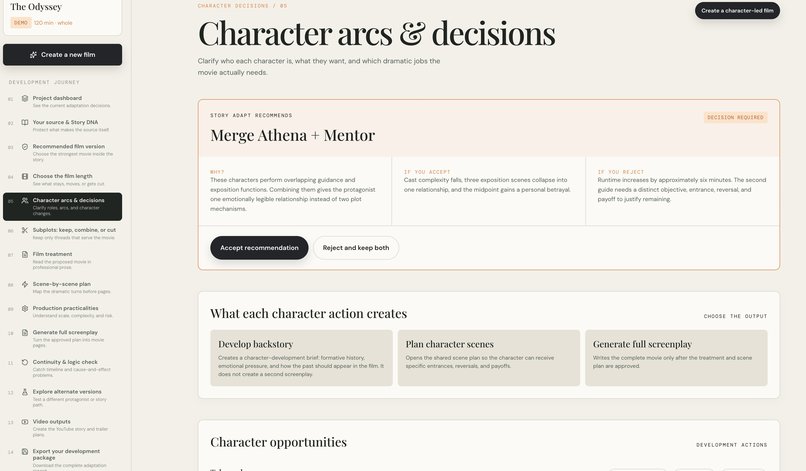
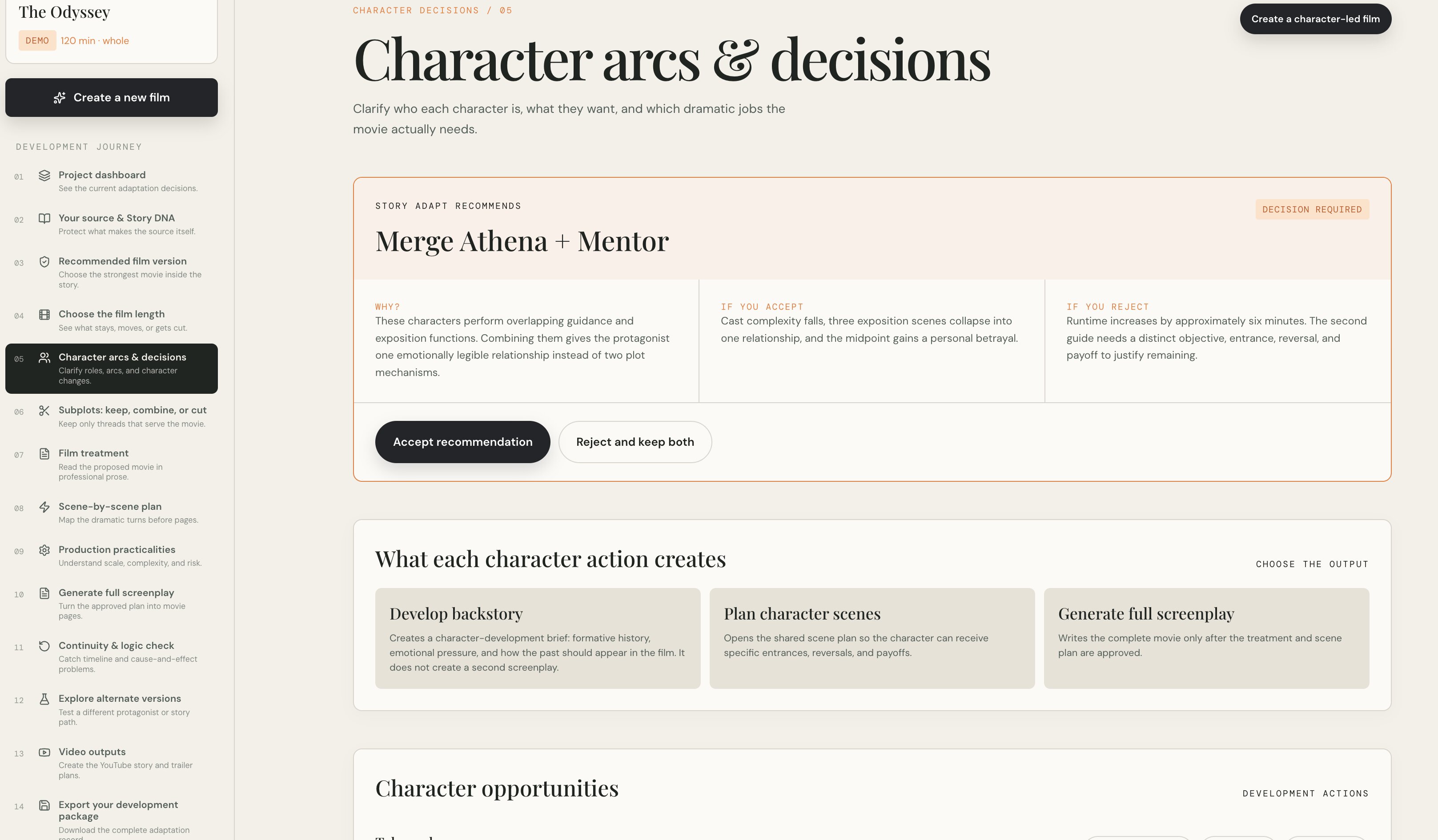
Character Bible
-
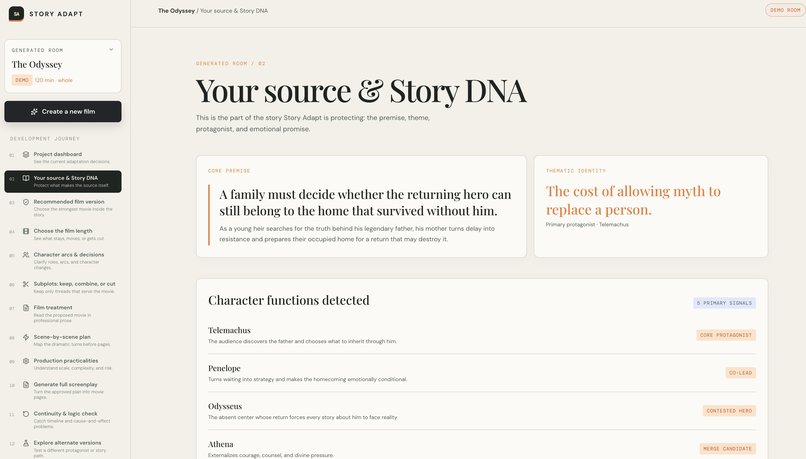
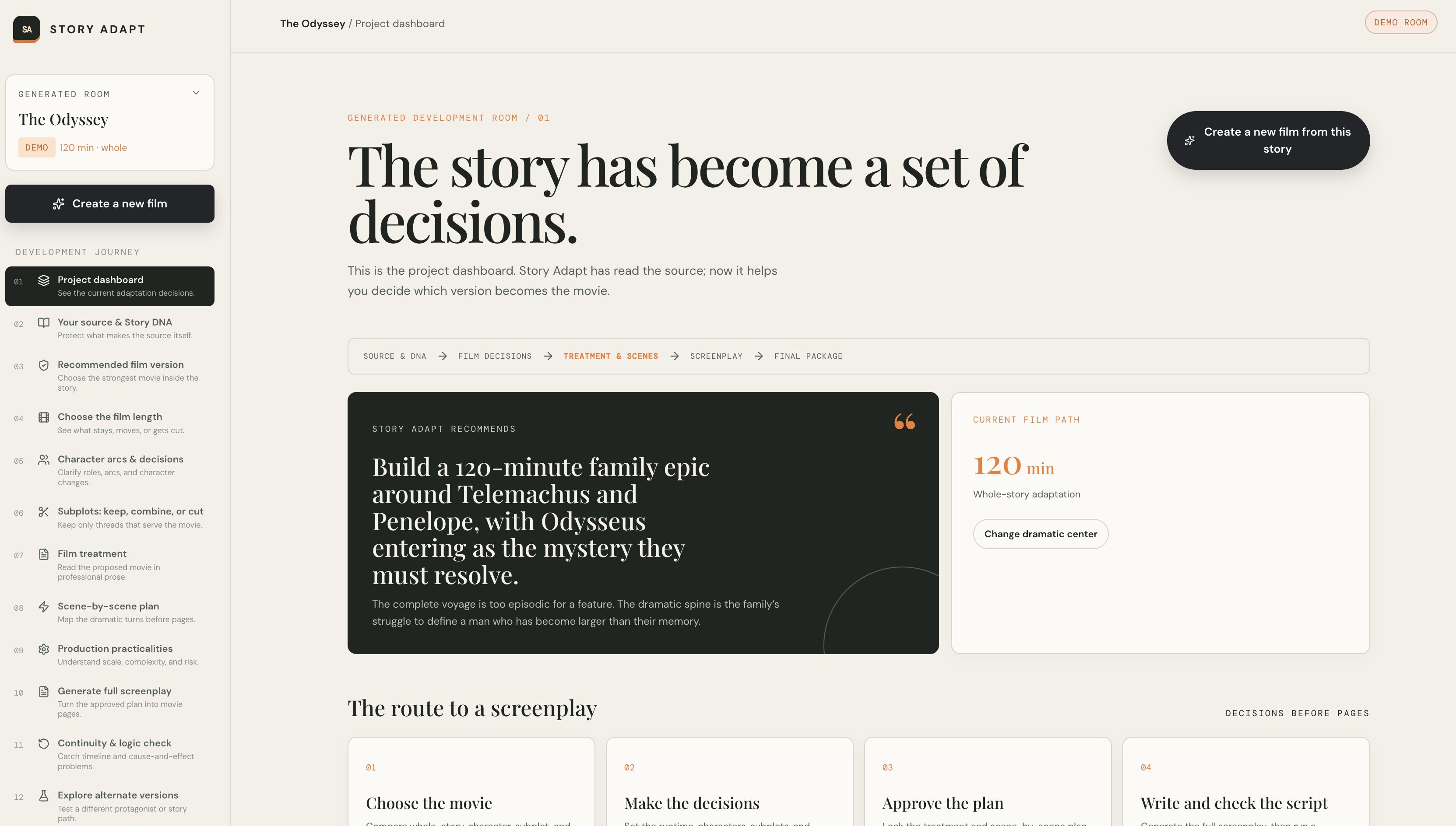
Decisions
-
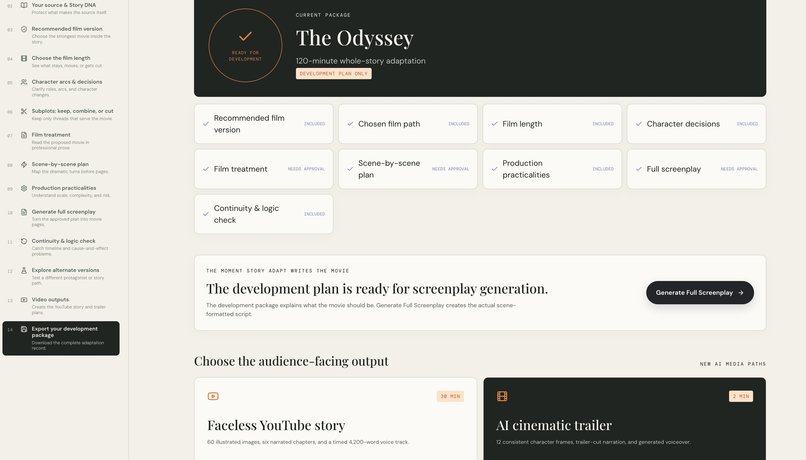
The final document
-
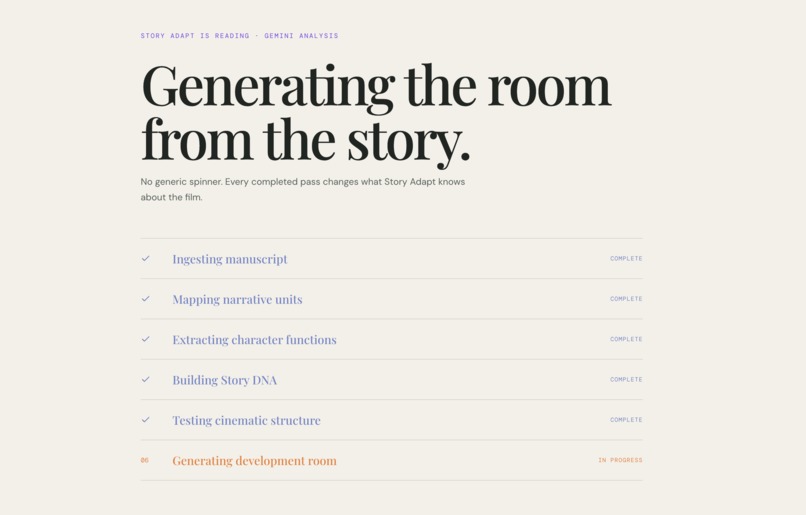
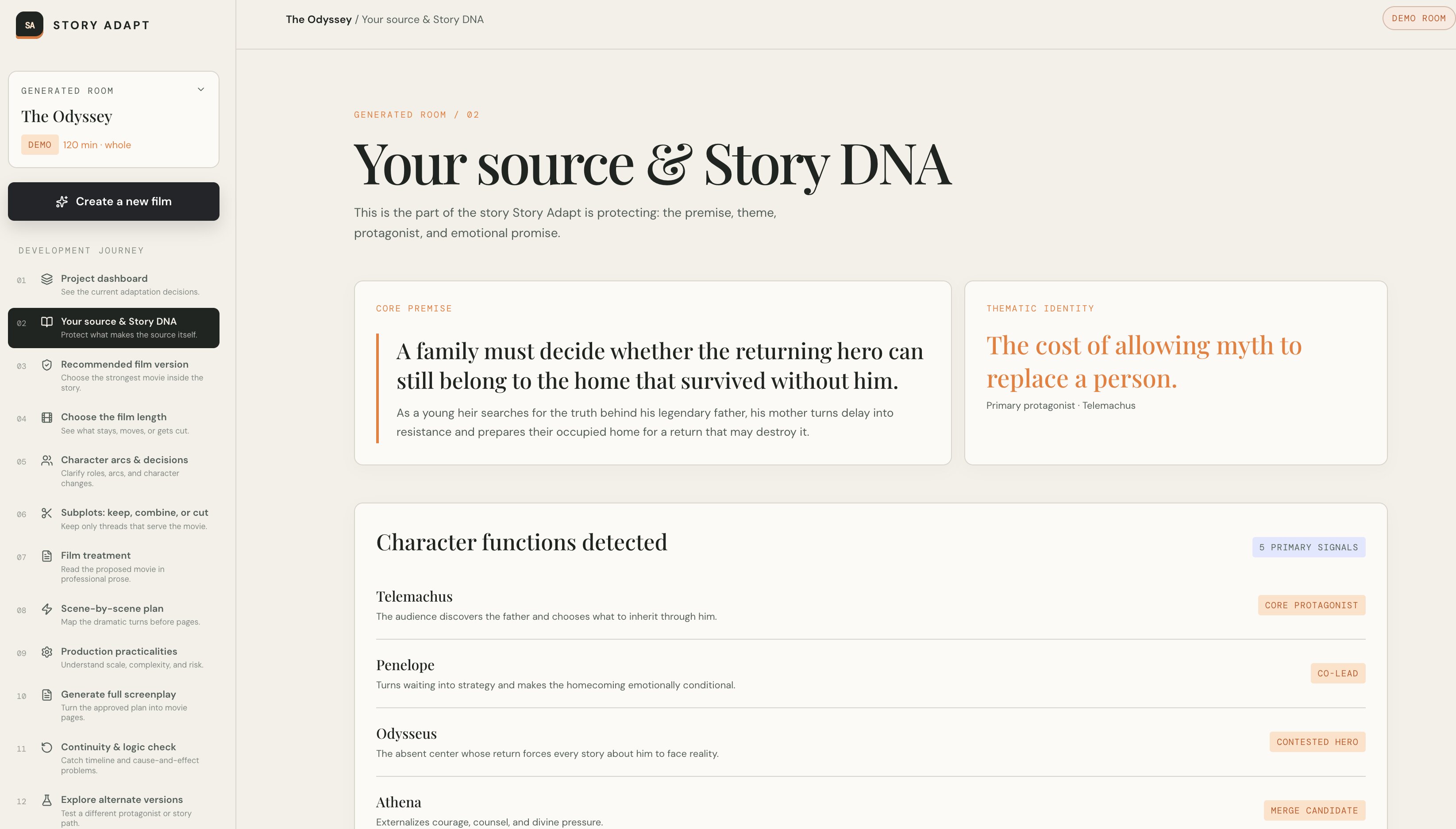
The process
Inspiration
As a founder working on KRE8, I kept coming back to one question: what happens when a great novel has the potential to become a great film, but nobody knows what needs to change to make that happen?
A novel can be 30,000 words or 150,000 words. A film cannot simply carry all of it onto the screen. Characters have to be combined, subplots have to be cut, timelines compressed, and sometimes the story has to be seen through a completely different character.
I wanted to build the kind of tool I would have loved as a writer and producer: something that doesn't just rewrite a book, but helps discover the movie hidden inside it.
What it does
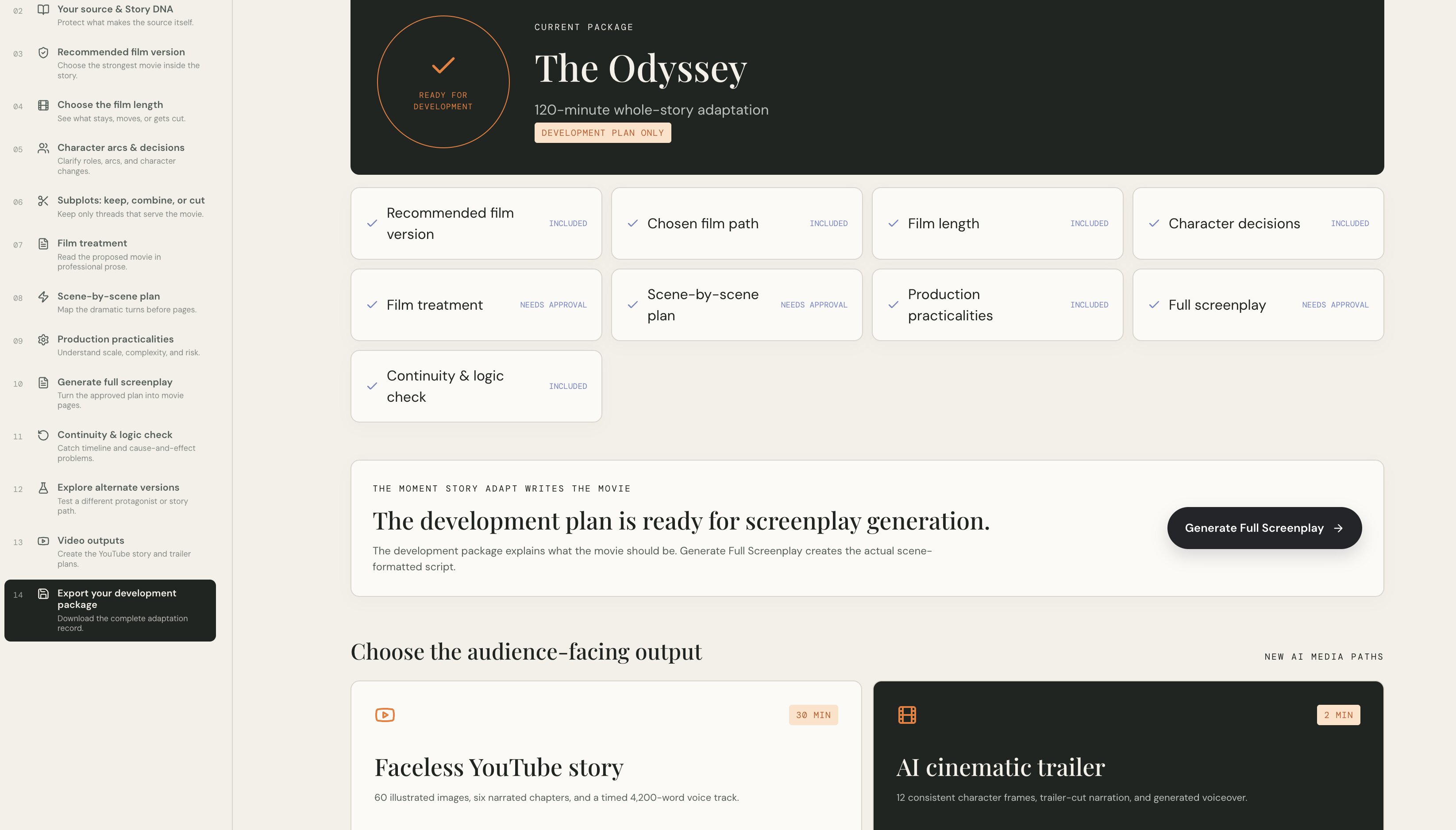
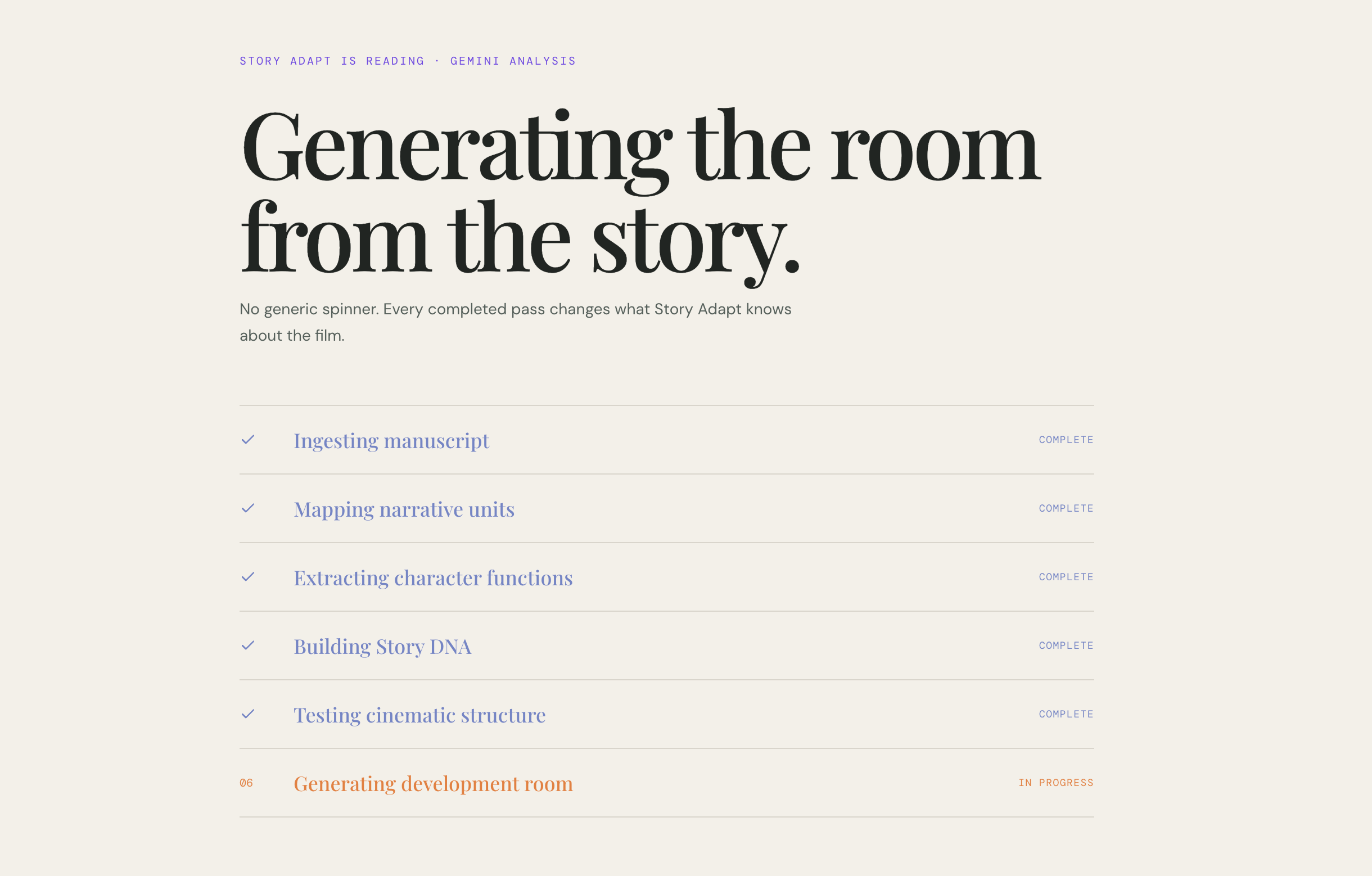
Story Adapt takes a novel, story, plot or screenplay and works through the adaptation with you.
It first understands the story, then asks the difficult questions: Can this work as a 90, 120 or 180 minute film? What should stay? What should go? Which characters can be combined? What happens if we tell the story through another character? Can we actually produce it?
It then turns those decisions into a film treatment, scene-by-scene plan and ultimately a screenplay.
One of our favourite capabilities is being able to say:
“Don't adapt the whole book. Make the movie about this character instead.”
How we built it
We built Story Adapt with Replit Agent, using Replit as the development and deployment environment, and used Google Cloud Vertex AI (via Replit AI) for the story analysis and adaptation work.
Challenges we ran into
The hardest part was realizing that adaptation is full of judgement calls.
A model can summarize a novel quite easily. Deciding whether two characters should become one, whether a subplot is essential, or whether a three-page internal monologue should become a two-minute scene is much harder.
We also had to think about very different source sizes, from short stories to huge novels, without treating every book in the same way.
And then there was the biggest challenge of all: making something that feels creative and cinematic without turning it into another generic AI interface.
Accomplishments that we're proud of
We are proud that Story Adapt doesn't simply say, “Here is your screenplay.”
It can actually challenge the source material.
It can tell you that a story is too large for a 90-minute film, suggest what to remove, explain why, and show the consequences of those decisions.
We are also particularly proud of the character-driven adaptation idea: taking someone who was a supporting character in a novel and asking, “What would their movie be?”
Most importantly, we now have the beginnings of a system that treats a story as something that can be explored, reshaped and tested—not just generated.
What we learned
We learned that the interesting part of AI storytelling isn't necessarily writing faster.
It's making better decisions before you write. We learned that the interesting part of AI storytelling isn't necessarily writing faster.
It's making better decisions before you write.
What's next for Story Adapt
This is only the beginning.
We want Story Adapt to become a true story-to-screen development studio.
Next, we'd like to take the work all the way from novel → adaptation → treatment → screenplay → storyboard → visualisation.
Beyond that, we see a much bigger opportunity: helping publishers, writers and filmmakers discover which stories are worth adapting, which characters deserve their own films, and how one piece of IP can become many different screen experiences.
Ultimately, the ambition is simple:
Don't just write the story. Find the movie inside it.
Built With
- css
- google-cloud
- lucide
- opengraph
- radixui
- react
- replit
- replitai
- tailwind
- umami
- vertexai

Log in or sign up for Devpost to join the conversation.