Inspiration
What it does
How we built it
Challenges we ran into
Accomplishments that we're proud of
What we learned
What's next for StormGuard AI
StormGuard AI
Inspiration
Extreme weather events such as floods and heatwaves can quickly become dangerous, especially when people have difficulty understanding weather information and knowing what actions to take.
This inspired me to build StormGuard AI, an intelligent disaster preparedness system designed to transform weather and environmental data into understandable risk information and actionable safety guidance.
I wanted to build more than a simple weather application. My goal was to create a system that could analyze the situation, assess the potential risk, explain it clearly, and help people prepare.
How We Built It
StormGuard AI combines several components into one system.
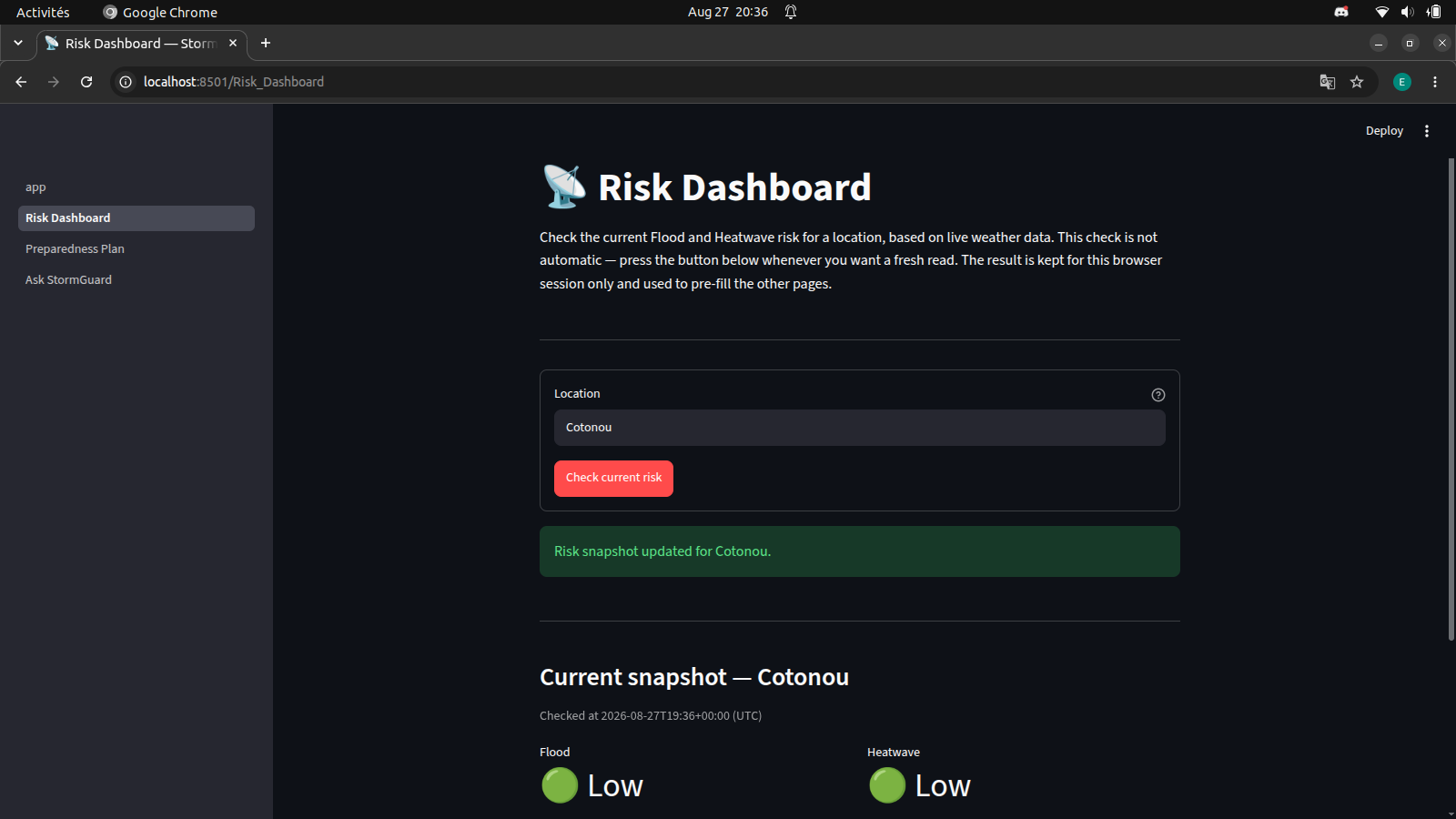
We started by collecting weather and environmental data from accessible sources. This data is processed and analyzed to identify conditions associated with extreme weather events.
The system focuses on two major hazards:
- 🌧️ Floods
- 🔥 Extreme heat / heatwaves
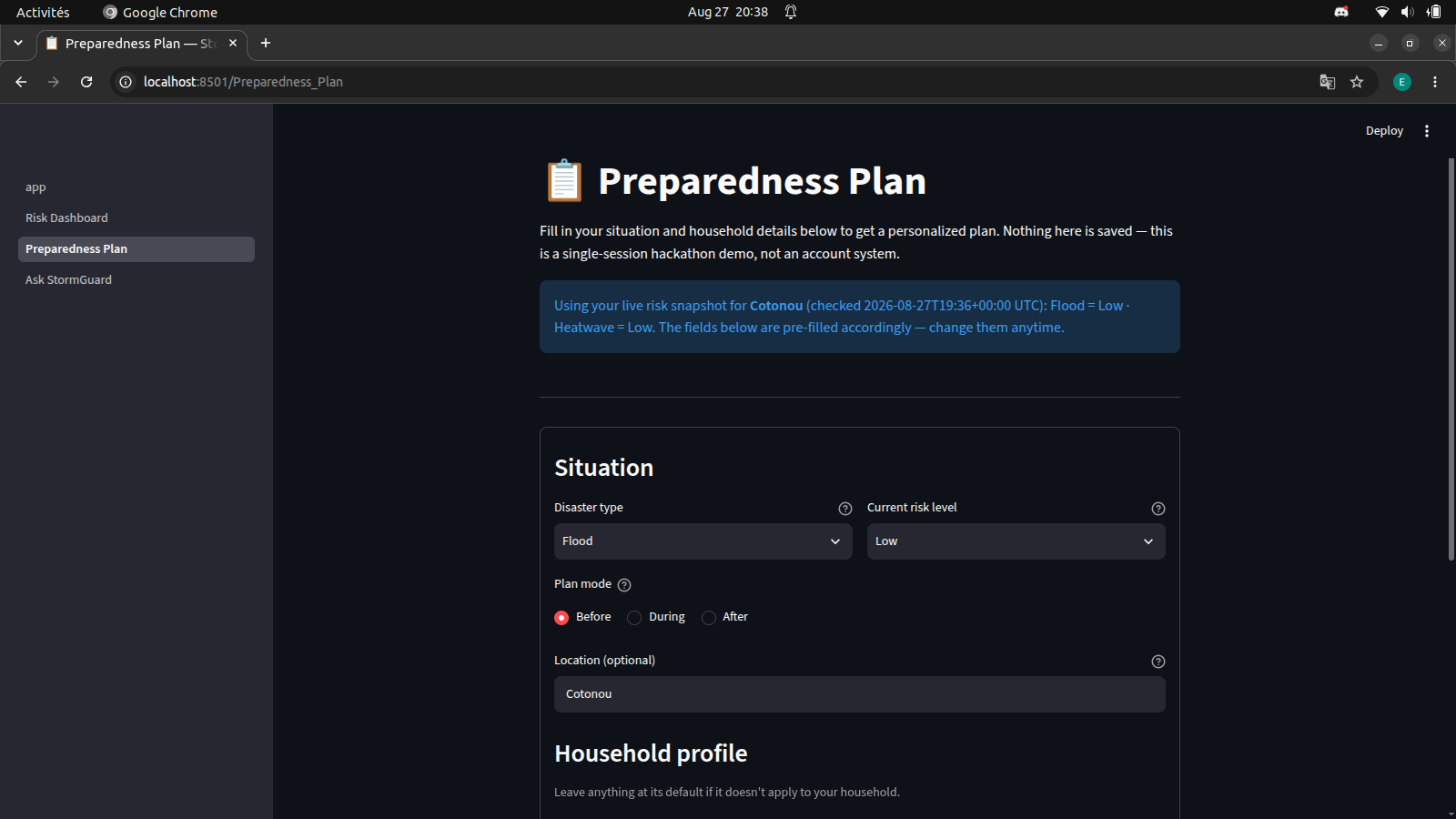
We developed a risk assessment system that analyzes the available information and produces an understandable risk level.
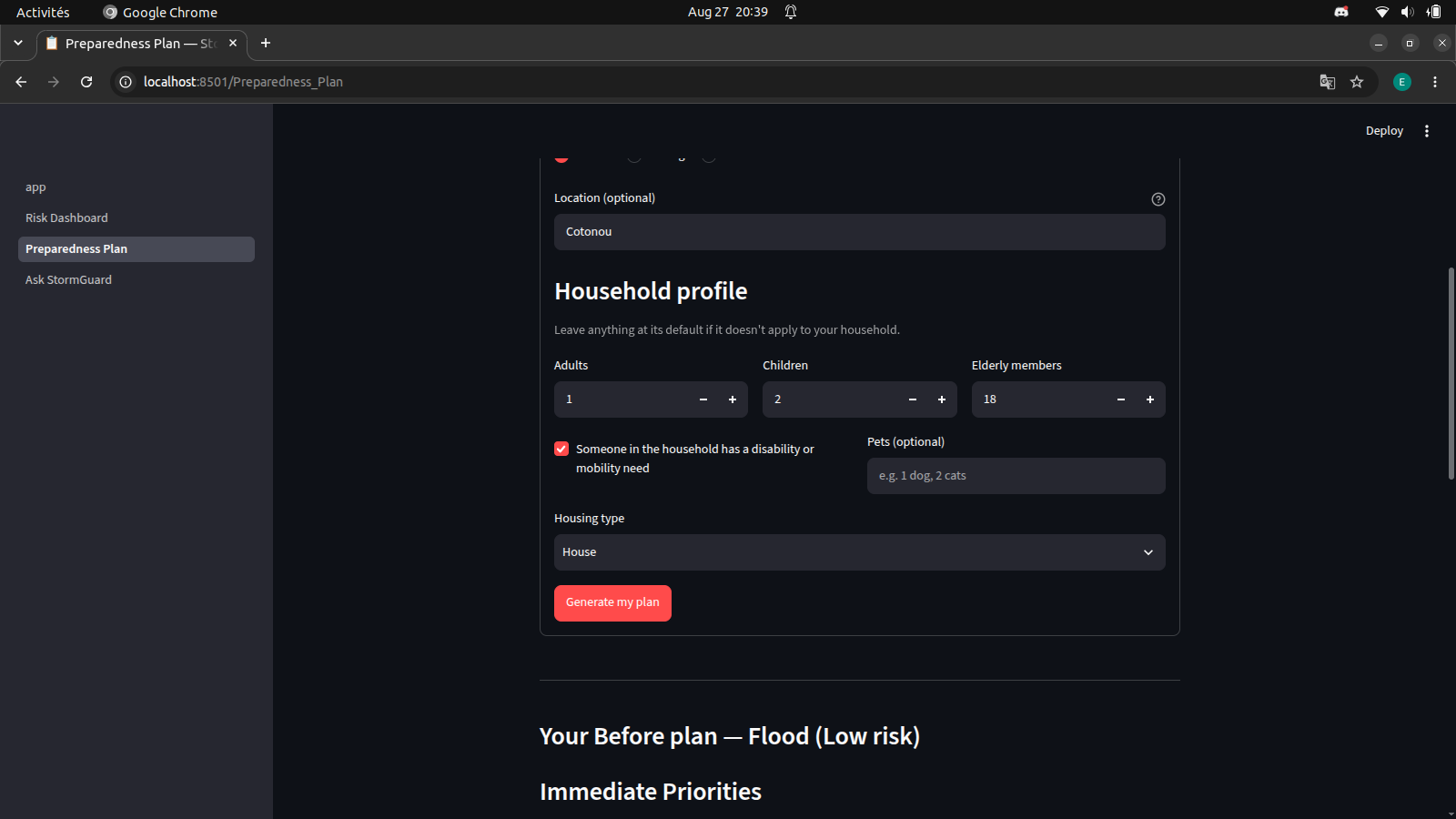
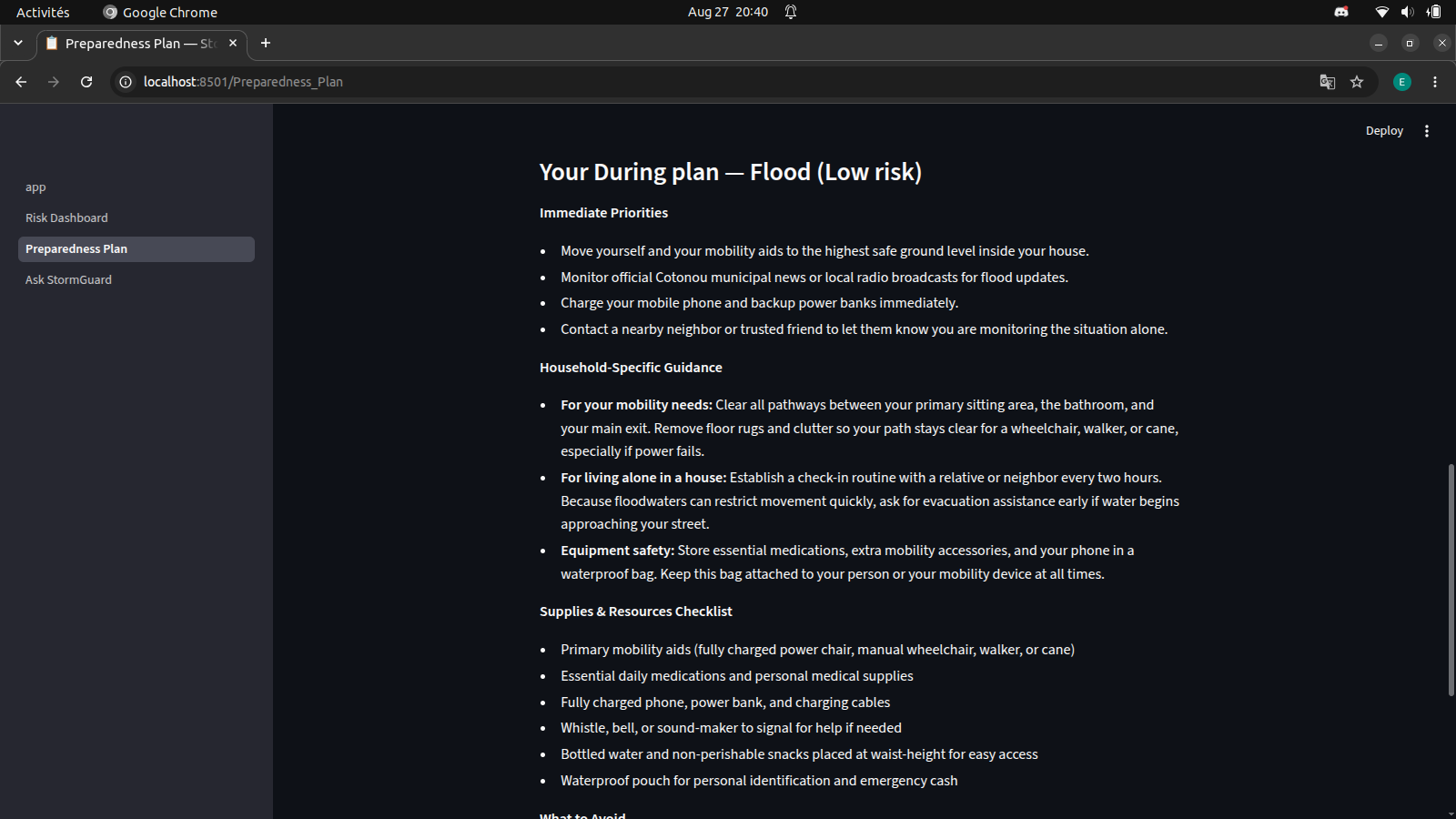
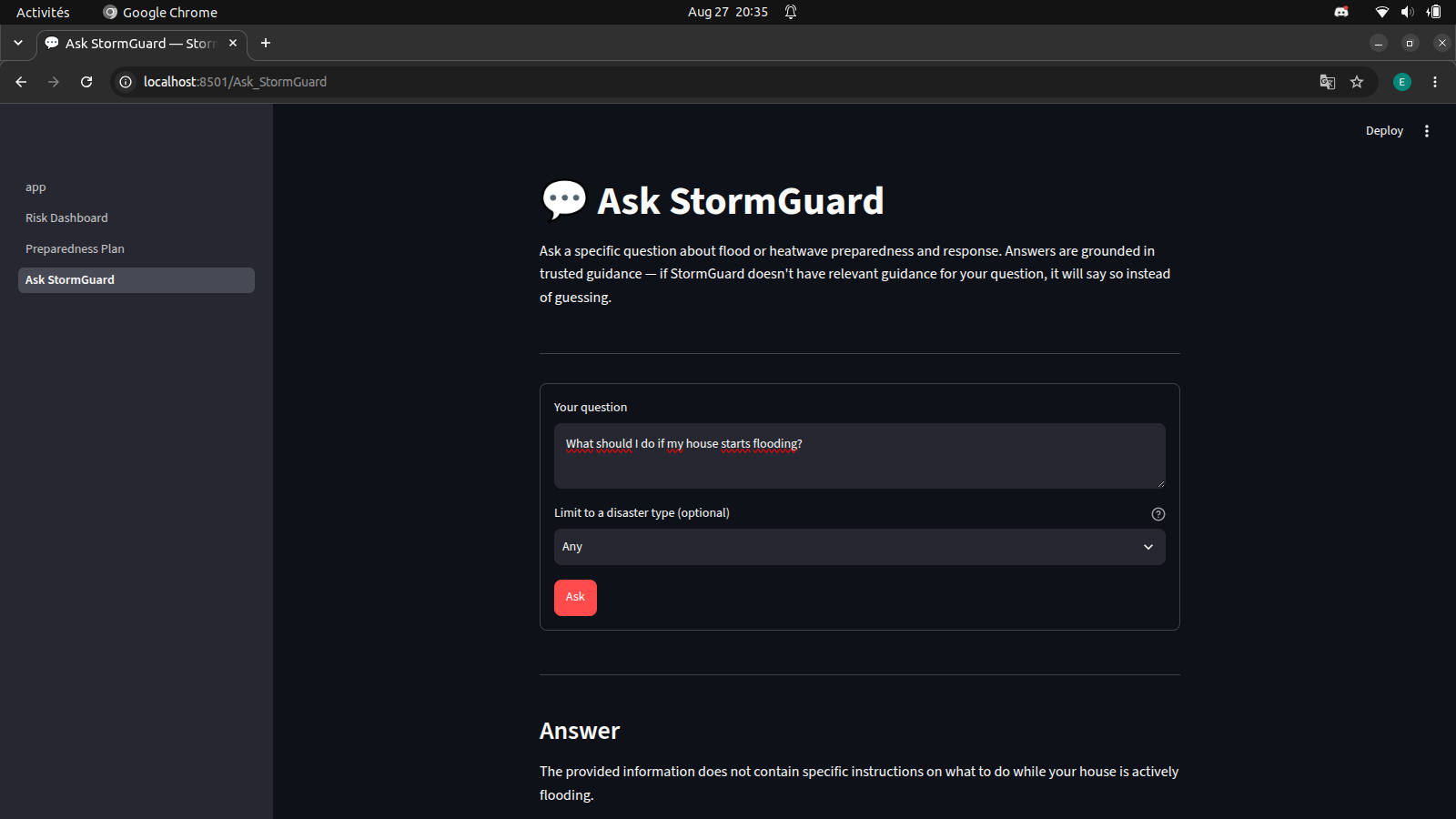
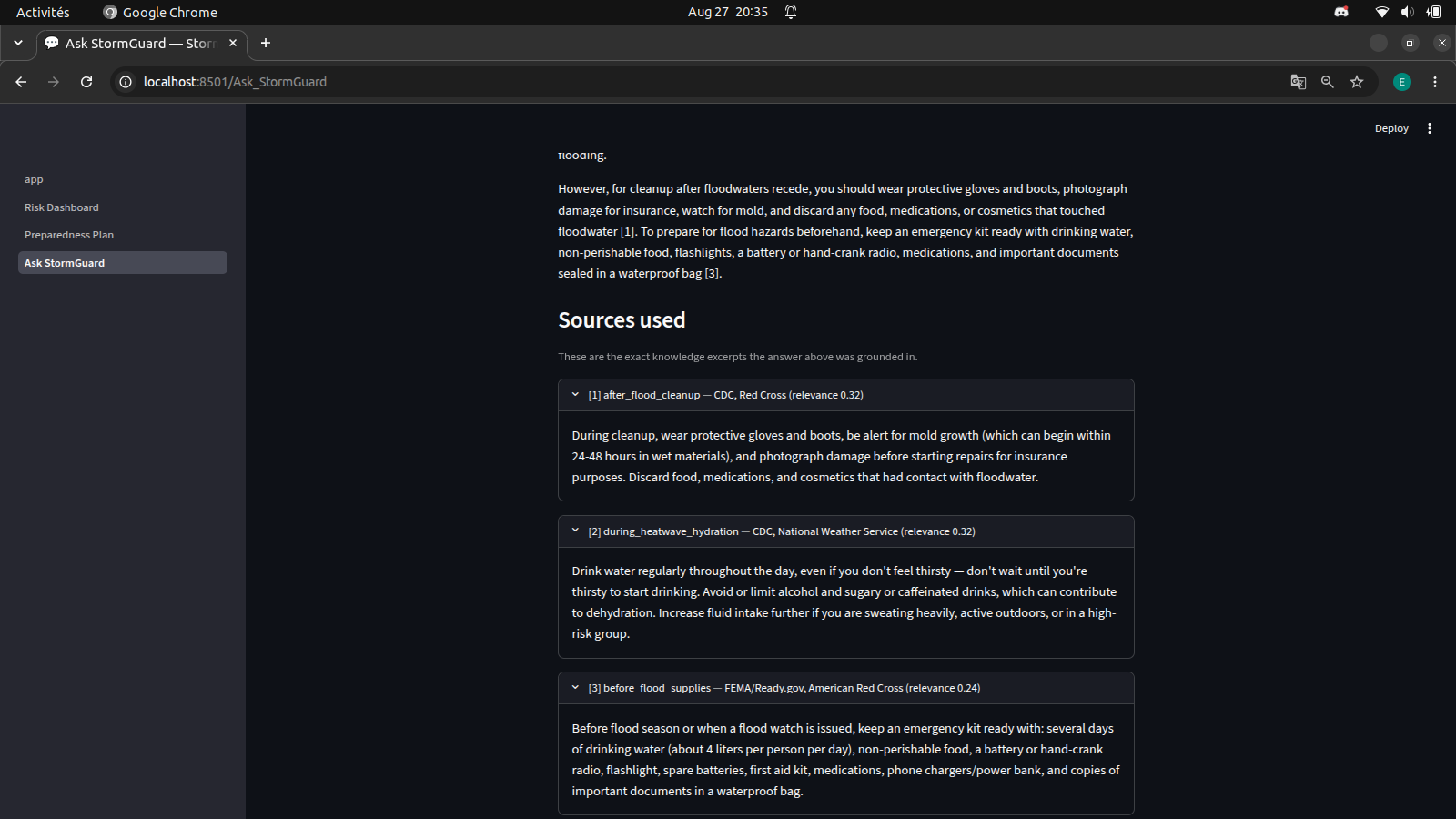
We also integrated a Large Language Model (LLM) to explain the detected risks and provide context-aware preparedness guidance. In addition, we built a knowledge base and a Retrieval-Augmented Generation (RAG) system so that the AI can retrieve relevant safety information instead of relying only on a simple prompt.
The architecture separates the different responsibilities: data and deterministic services handle data collection and risk analysis, while the generative AI helps transform the results into clear and useful information for users.
Challenges
One of the biggest challenges was designing a system that could work with weather information that changes over time.
Another important challenge was deciding what should be handled by traditional code and what should be handled by AI. We did not want the LLM to simply invent a risk level. Instead, the risk assessment is based on the data and system logic, while the LLM focuses on explanation and assistance.
Building the RAG component was another challenge. We had to make sure that the system could retrieve relevant information according to the type of hazard detected and provide useful guidance.
Finally, we had to turn a relatively complex technical architecture into a simple user experience where someone can quickly understand the situation and what they can do to prepare.
What I Learned
Building StormGuard AI taught me that creating a useful AI system is much more than simply connecting an application to an LLM API.
I learned how to combine real-world data, data processing, risk analysis, machine learning/AI components, LLMs, RAG, and user interfaces into a coherent system.
I also learned the importance of separating deterministic logic from generative AI. For safety-related applications, the AI should not blindly generate critical information. Instead, reliable data and system logic should provide the foundation, while generative AI makes the information easier to understand and interact with.
Why StormGuard AI Matters
StormGuard AI demonstrates how AI can transform complex environmental and weather information into clear, accessible, and actionable disaster preparedness guidance.
The goal is not simply to tell users that an extreme weather event may be dangerous, but to help them understand the risk and prepare before it becomes an emergency.
Through this project, I wanted to explore how modern AI technologies can be applied to a real-world problem where better information and preparation can make a meaningful difference.
Built With
- ai
- analytics
- artificial
- data
- deep
- early
- good
- intelligence
- learning
- machine
- predictive
- science
- warning


Log in or sign up for Devpost to join the conversation.