-
-
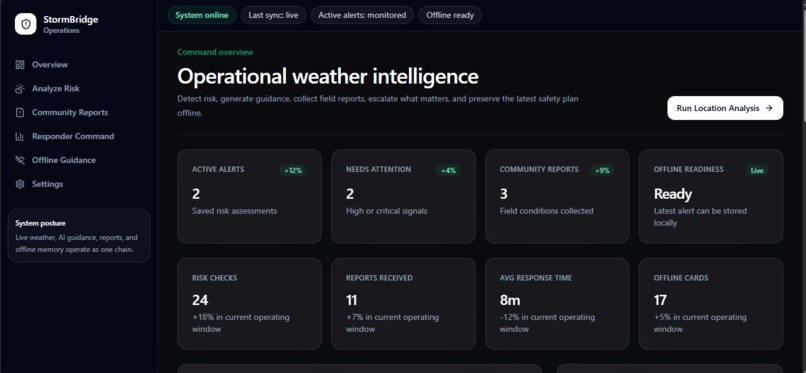
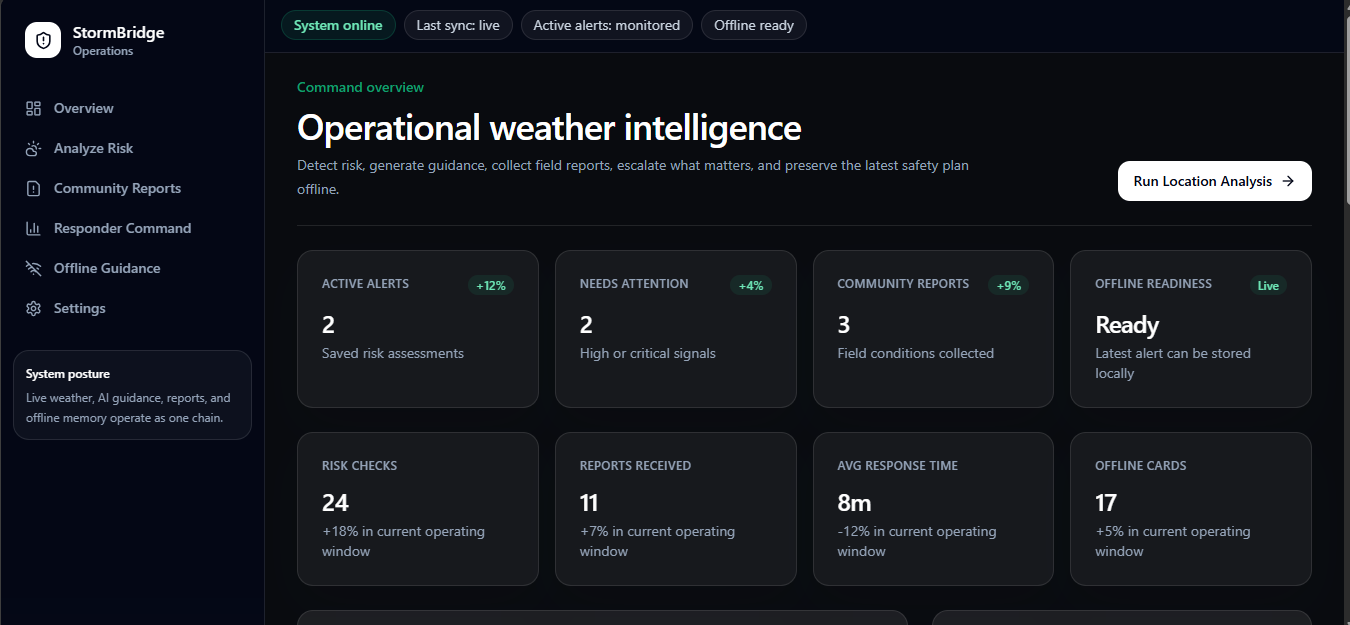
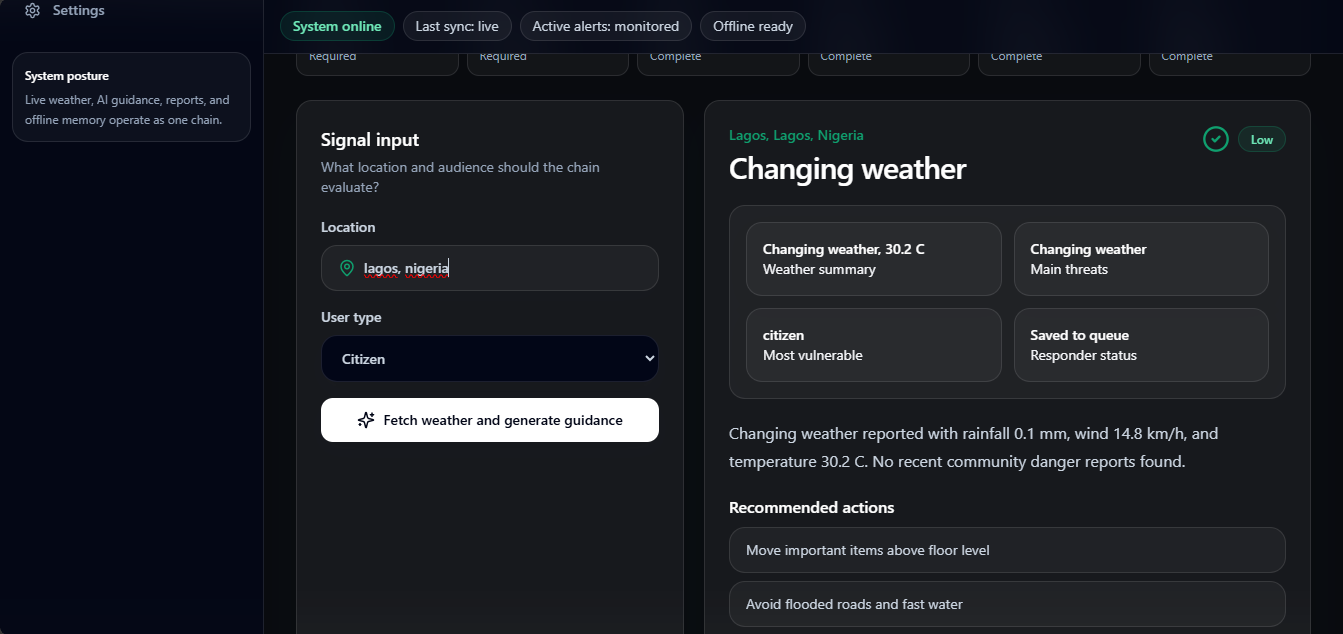
operation weather intelligence page
-
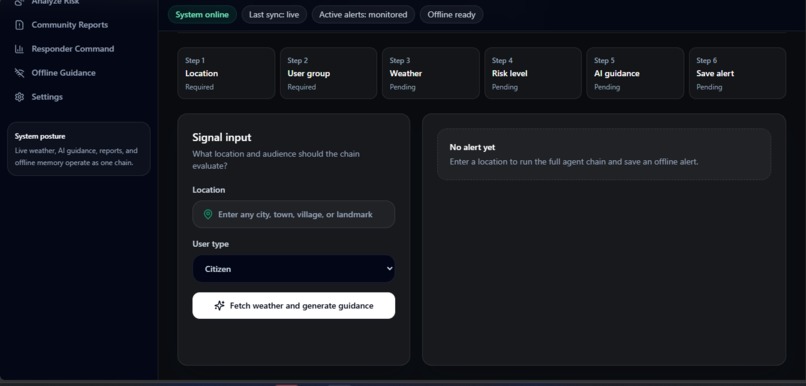
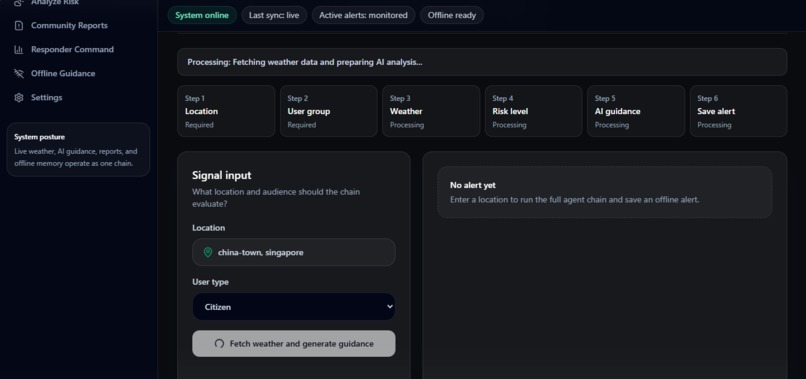
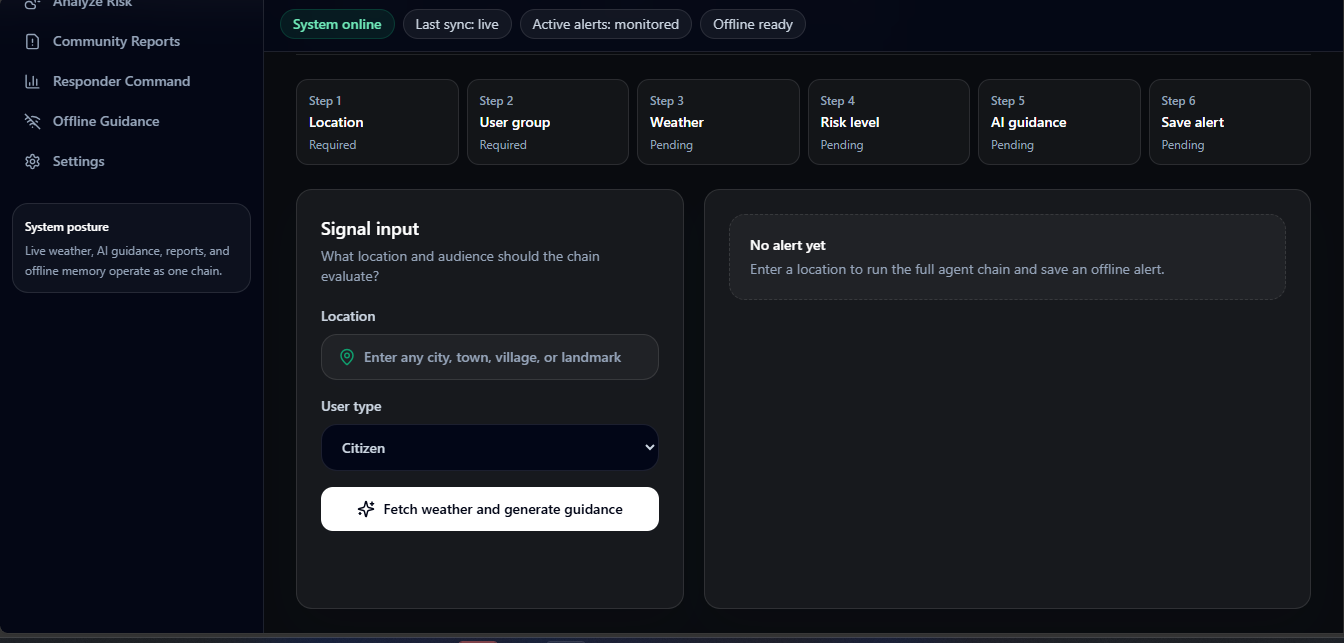
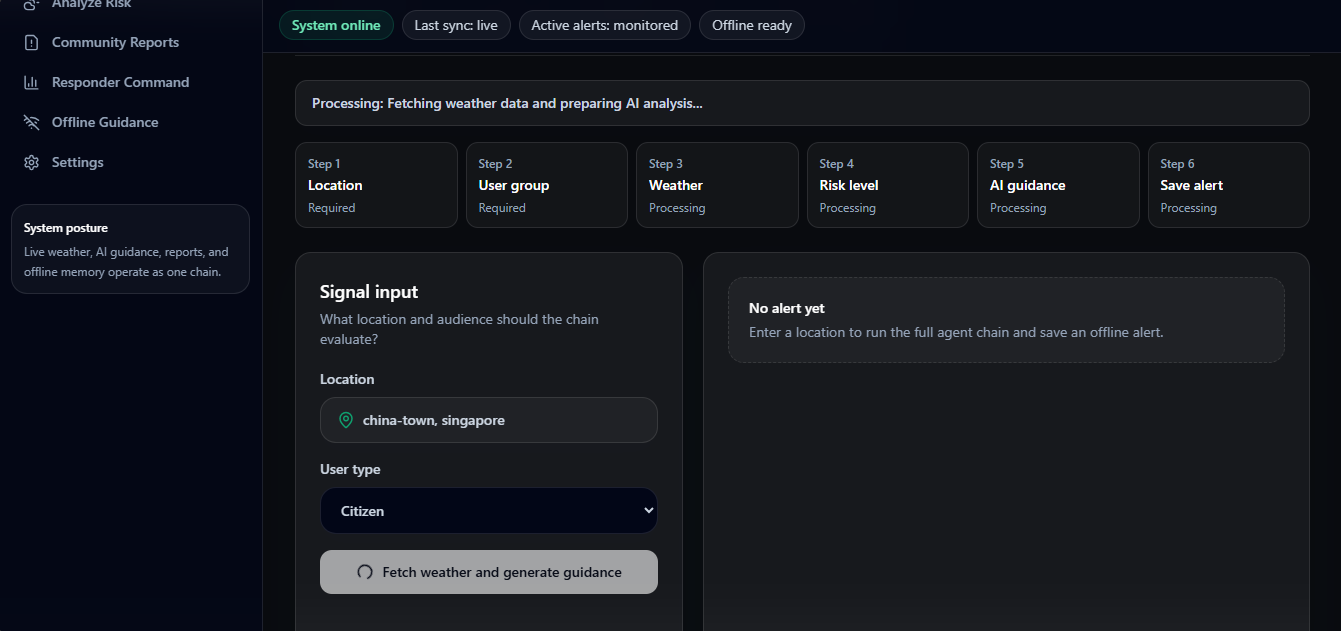
user presses run location analysis
-
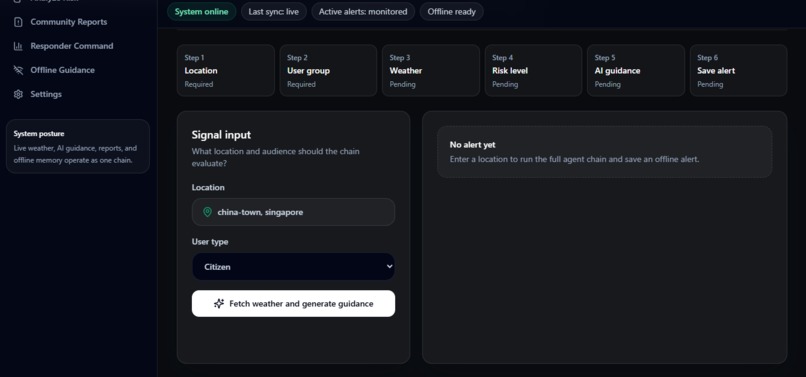
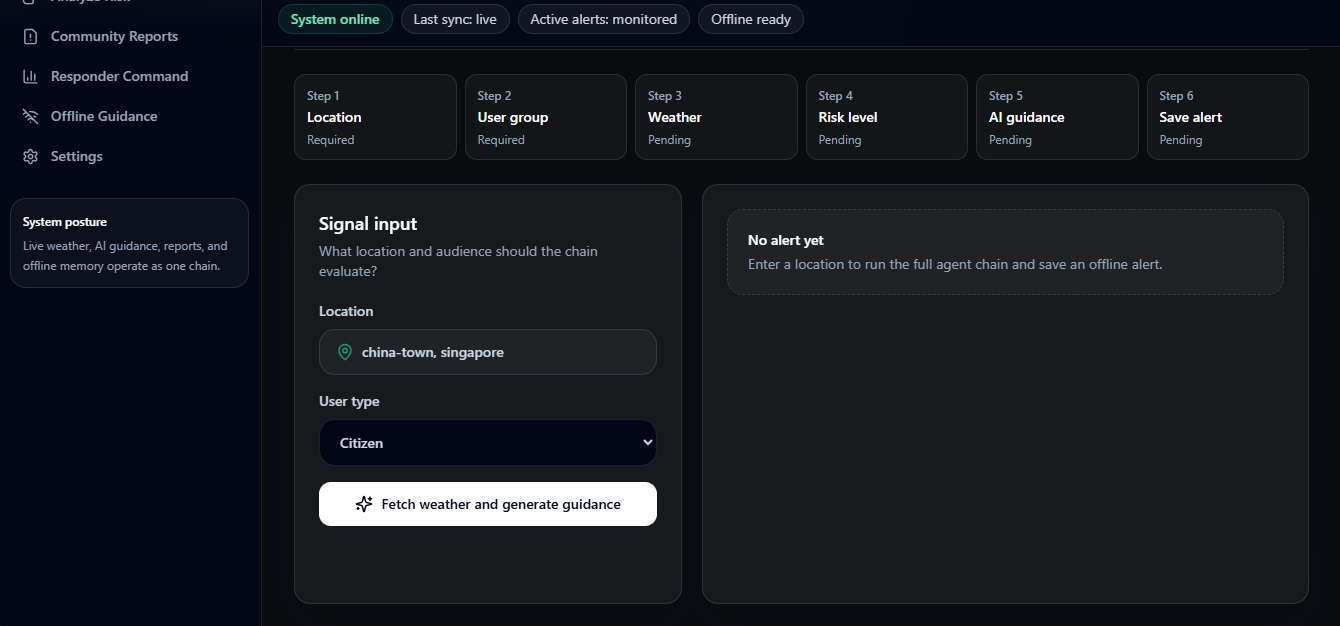
user fills in exact location
-
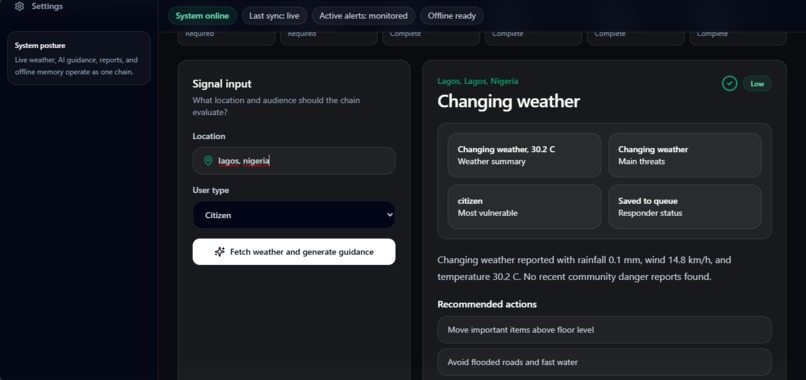
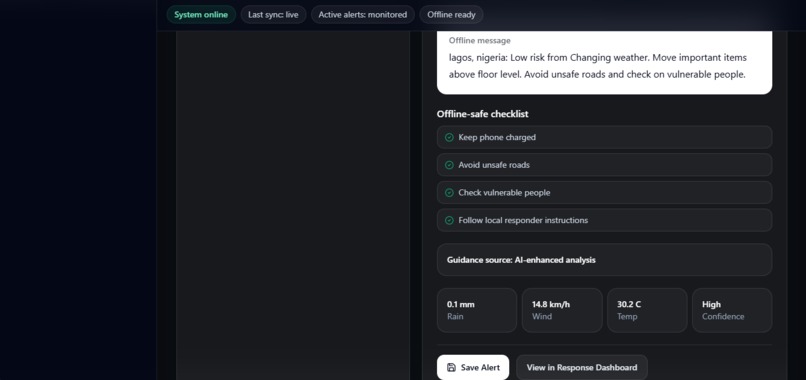
response is returned explaining current climate situation
-
-
-
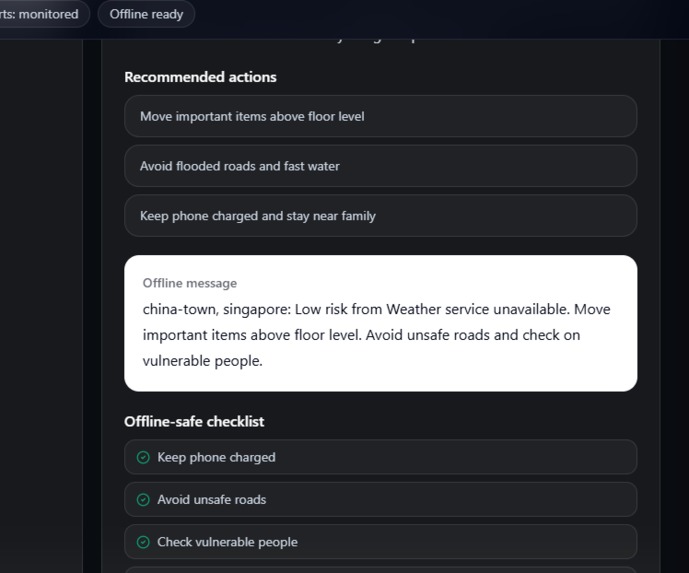
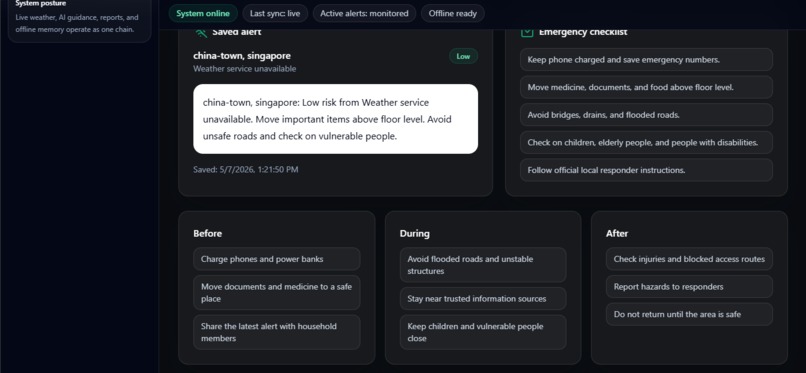
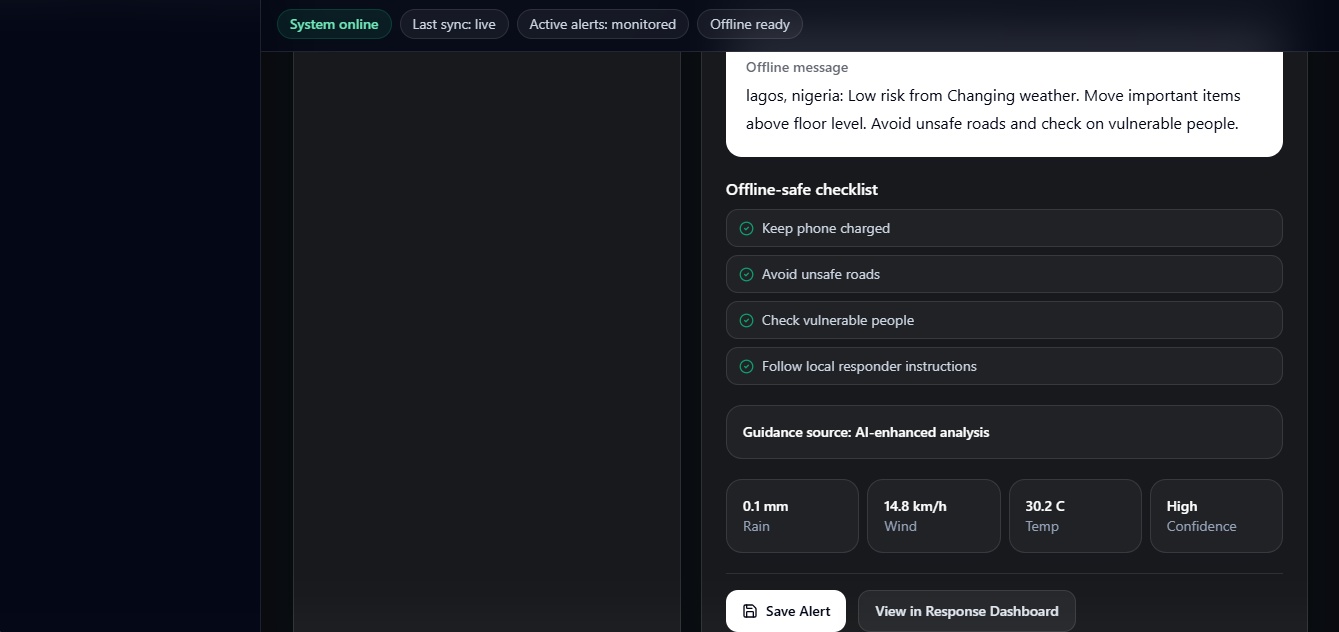
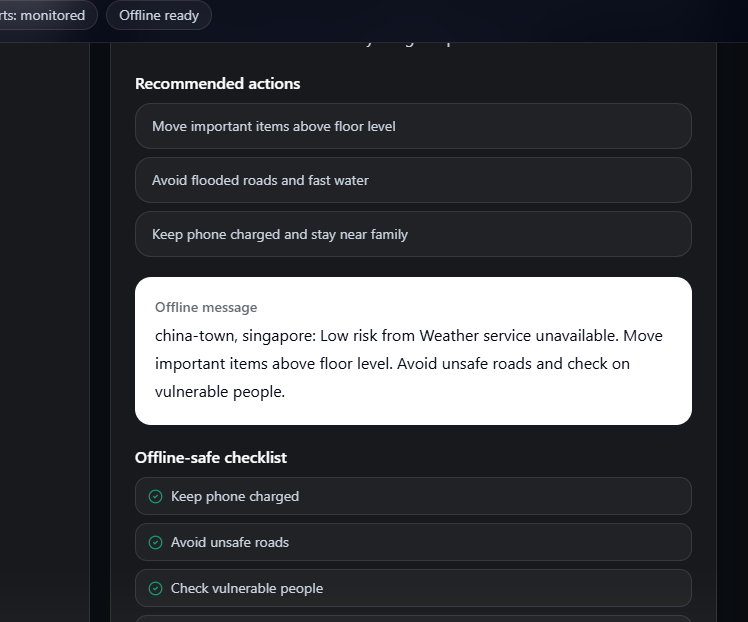
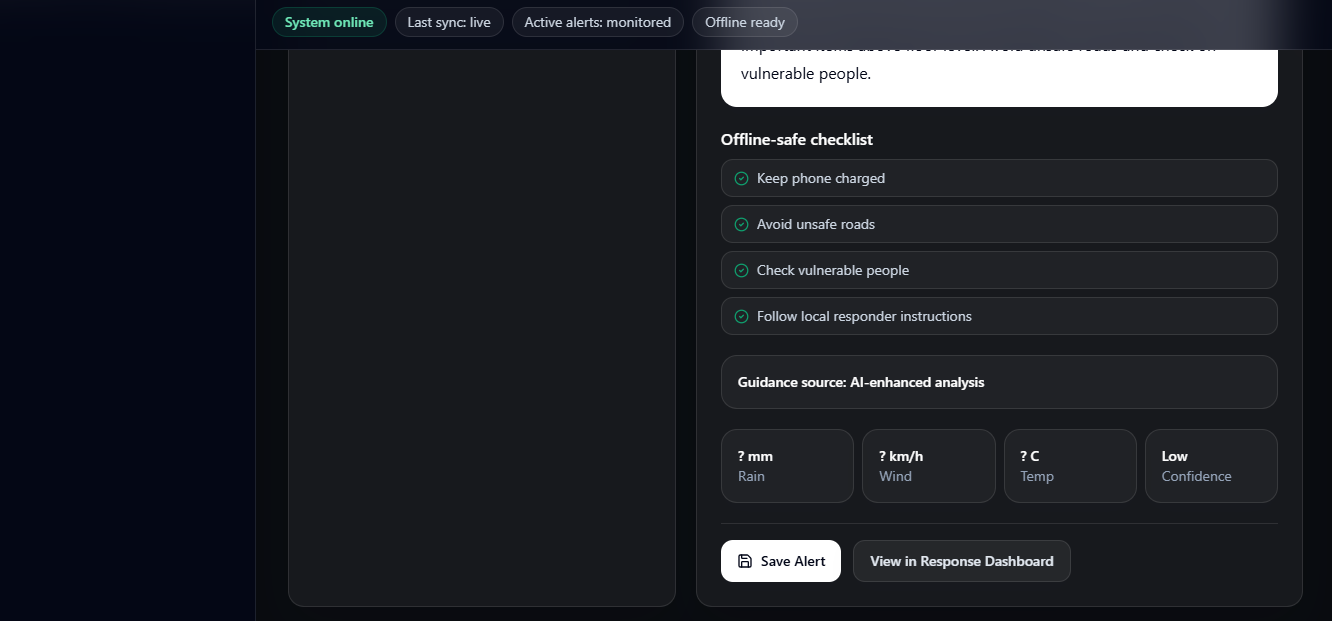
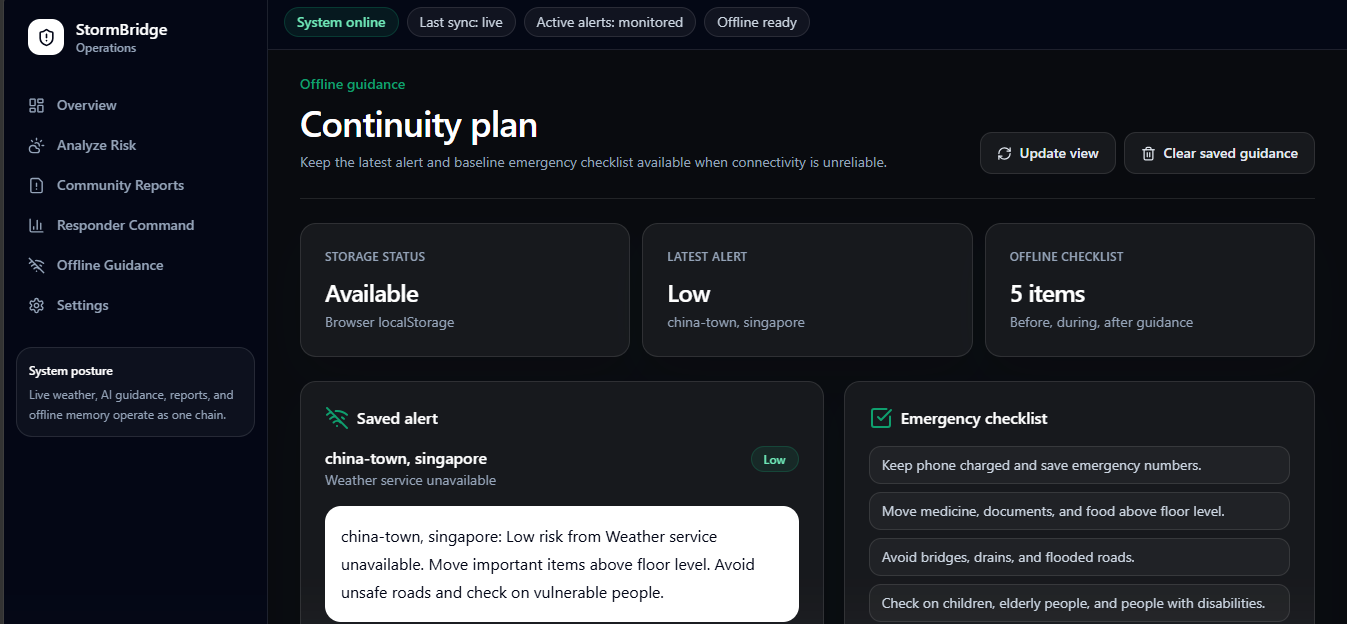
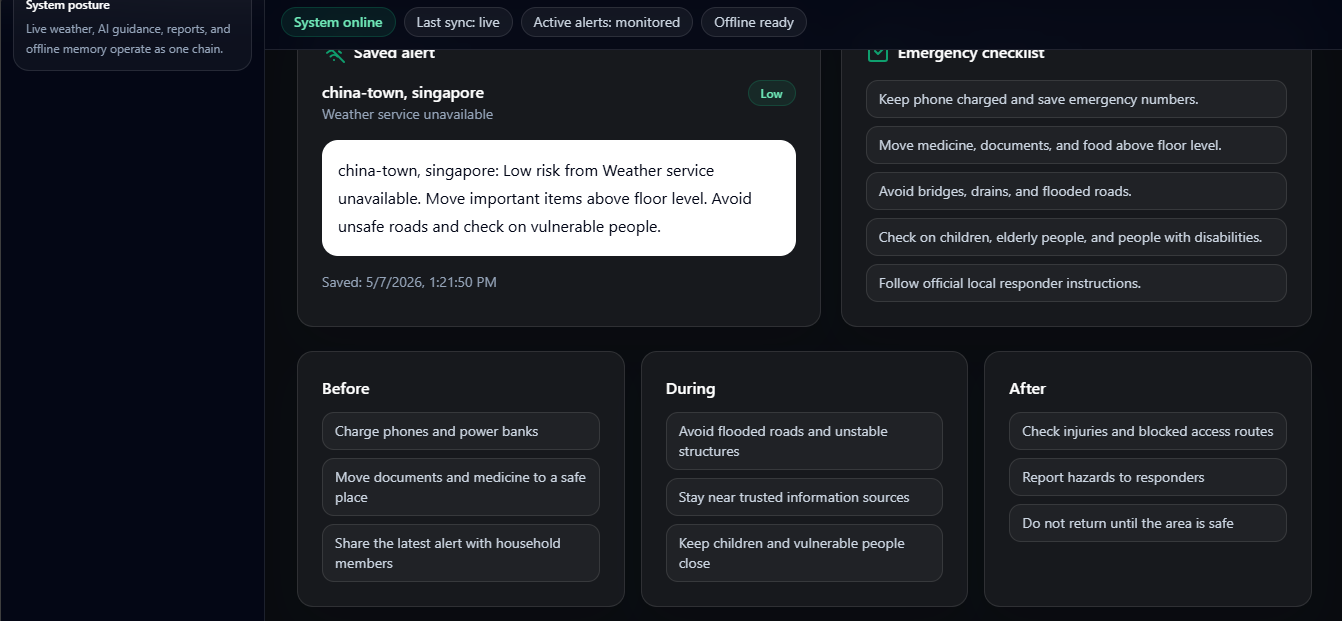
an offiline message is then computed and the offline message also runs in the background to either be sent to teh genral public via offline
-
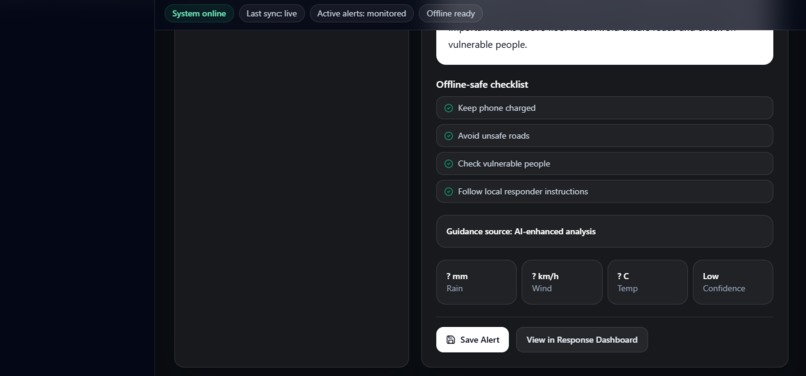
more information regarding
-
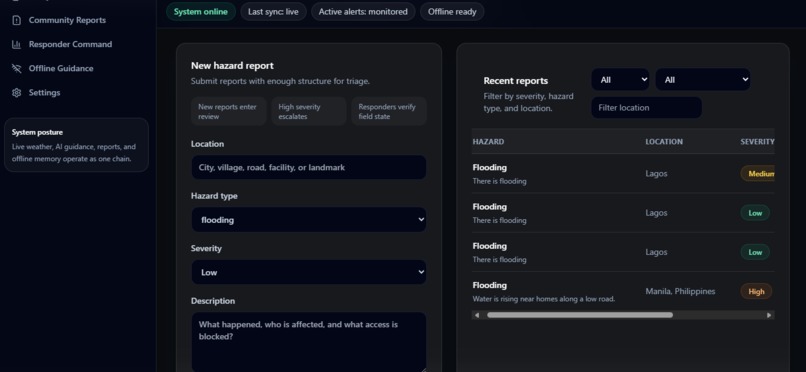
i general public info system this info is sent to all users can be done manually or autiomatically by ai integration
-
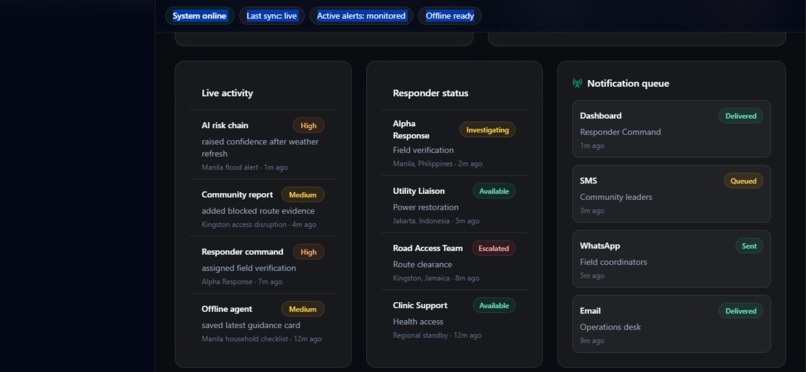
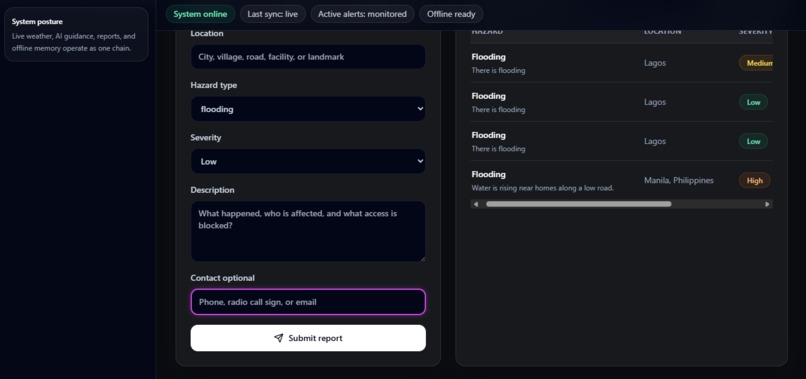
this can be used individually or by volunters or even by the government
-
-
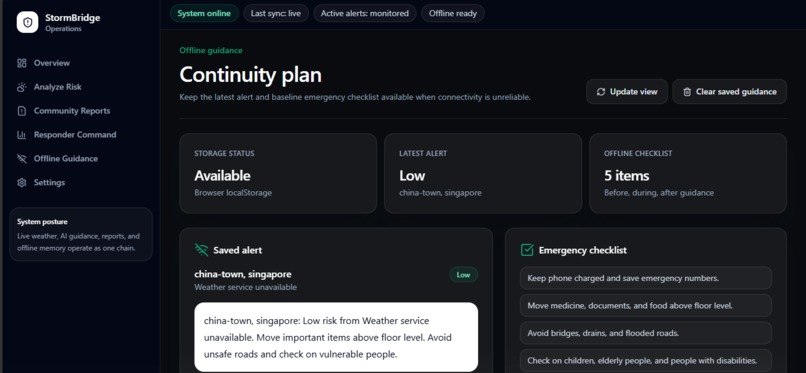
saved alert system
-
StormBridge
Inspiration
Climate-related disasters and extreme weather events are becoming increasingly frequent across many communities, especially in regions with limited access to fast emergency response systems and reliable environmental intelligence. I wanted to explore how AI-powered systems could help communities move from reactive response to proactive preparedness.
StormBridge was inspired by the idea of creating a centralized operational platform that combines weather intelligence, AI-assisted risk analysis, community hazard reporting, responder coordination, and offline emergency guidance into a single system. Instead of only displaying weather information, I wanted to build a platform that supports real decision-making during environmental emergencies.
My goal was to design a system that could help people:
- detect environmental risks earlier,
- coordinate emergency responses more effectively,
- and maintain access to critical guidance even during connectivity issues.
What it does
StormBridge is an AI-powered environmental risk and emergency response platform designed to improve climate resilience and disaster preparedness.
The platform allows users to:
- analyze environmental risk levels for specific locations,
- generate AI-assisted emergency guidance,
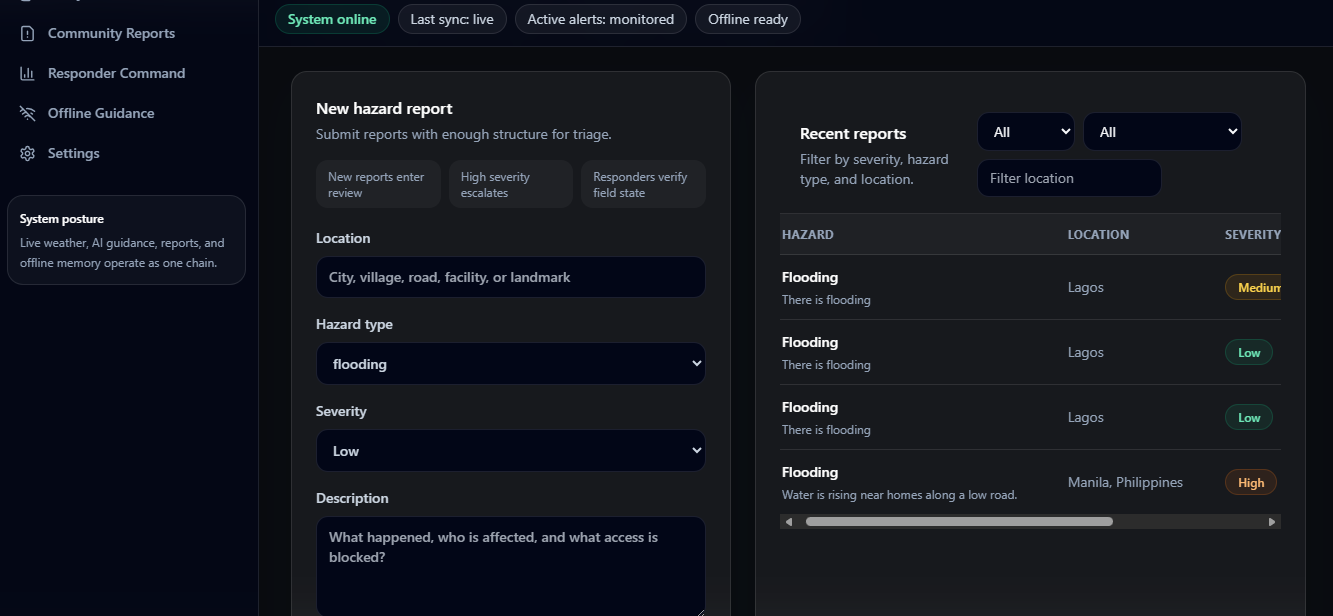
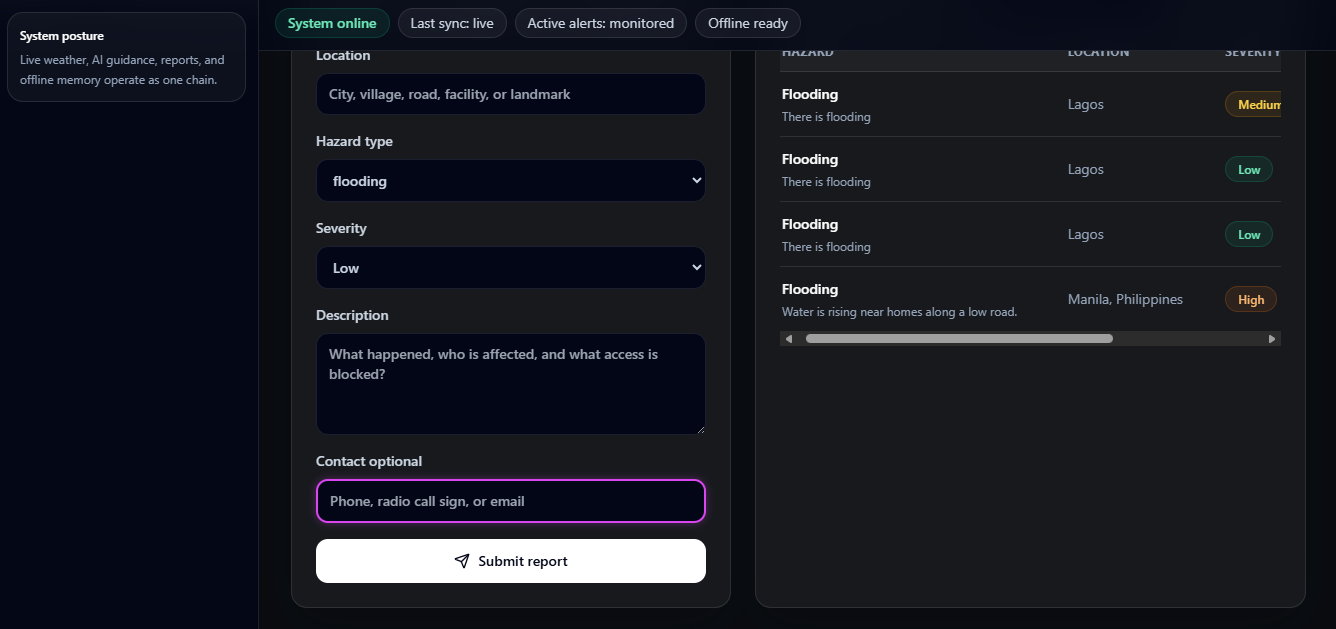
- submit community hazard reports,
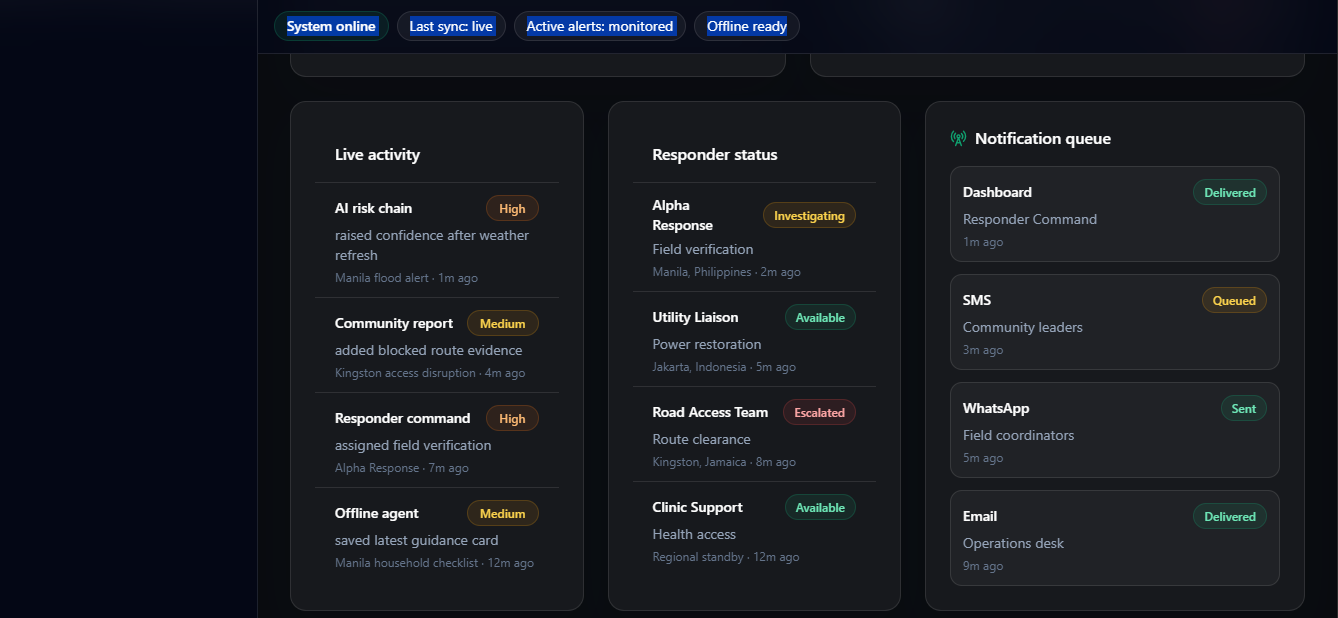
- monitor operational response queues,
- track high-priority incidents,
- and access offline emergency guidance.
The system is structured like a real operational workflow:
- Detect risk
- Analyze environmental conditions
- Generate emergency guidance
- Escalate critical incidents
- Coordinate response actions
- Preserve offline-ready emergency information
StormBridge combines real-time weather intelligence with operational dashboard workflows inspired by modern enterprise SaaS platforms.
How I built it
StormBridge was built as a modern web application using:
- Next.js
- React
- Tailwind CSS
- TypeScript
- localStorage for offline persistence
- Open-Meteo APIs for environmental/weather data
- AI-assisted workflow generation and operational guidance
The frontend architecture focused heavily on:
- modular dashboard systems,
- operational workflow design,
- enterprise SaaS interaction patterns,
- responsive layouts,
- and offline-first emergency accessibility.
I also explored professional product workflow principles inspired by platforms such as Linear, Retool, Stripe, Vercel, and Notion in order to create a more realistic emergency operations experience instead of a simple static dashboard.
Challenges I ran into
One of the biggest challenges was balancing:
- operational complexity,
- user experience,
- and performance.
As the dashboard became more feature-rich, the application initially became slower due to rendering too many operational panels simultaneously. I had to rethink component structure, loading behavior, dashboard density, and lazy-loading strategies to improve responsiveness.
Another challenge was designing the platform to feel like a real operational system rather than just a collection of UI sections. I spent significant time refining:
- workflow progression,
- responder coordination logic,
- alert prioritization,
- information hierarchy,
- and state-driven UX behaviors.
Creating a clean but realistic emergency-response experience required multiple iterations.
What I learned
This project taught me that building impactful AI-powered systems is not just about integrating AI models — it is about designing complete workflows around real-world decision-making.
I learned:
- how important operational UX is in mission-critical systems,
- how enterprise dashboard architecture affects usability,
- how stateful interfaces improve realism,
- and how performance optimization becomes critical as systems scale.
I also gained deeper experience with:
- frontend architecture,
- workflow-driven UI systems,
- dashboard design,
- component optimization,
- and integrating AI-assisted emergency guidance into user-centered applications.
What's next for StormBridge
Future improvements include:
- live geospatial hazard mapping,
- real-time responder collaboration,
- SMS and WhatsApp emergency alerts,
- multilingual accessibility,
- predictive environmental analytics,
- and deeper AI-driven disaster forecasting.
I also plan to expand offline functionality to support low-connectivity regions more effectively and improve accessibility for vulnerable communities.
StormBridge represents my vision for how AI, environmental intelligence, and operational software can work together to improve disaster preparedness and community resilience.
Built With
- authentication
- next.js
- node.js
- nvidia
- open-meteo
- react
- supabase
- tailwindcss
- typescript
- vercel


Log in or sign up for Devpost to join the conversation.