Inspiration
Small businesses rely on knowing their customer base in order to be successful, but since most retail shopping is moving online, business owners never get the chance to actually meet their customers. For non technical people, understanding their web store analytics is extremely difficult, so we wanted to make figuring out their customer base simple, easy, and intuitive. After some research we found out that many of these businesses aren't aware of the potential benefits of having website analytics for their storefront so we wanted to make a tool that makes it easy for us to showcase the value of websites for these business owners.
What it does
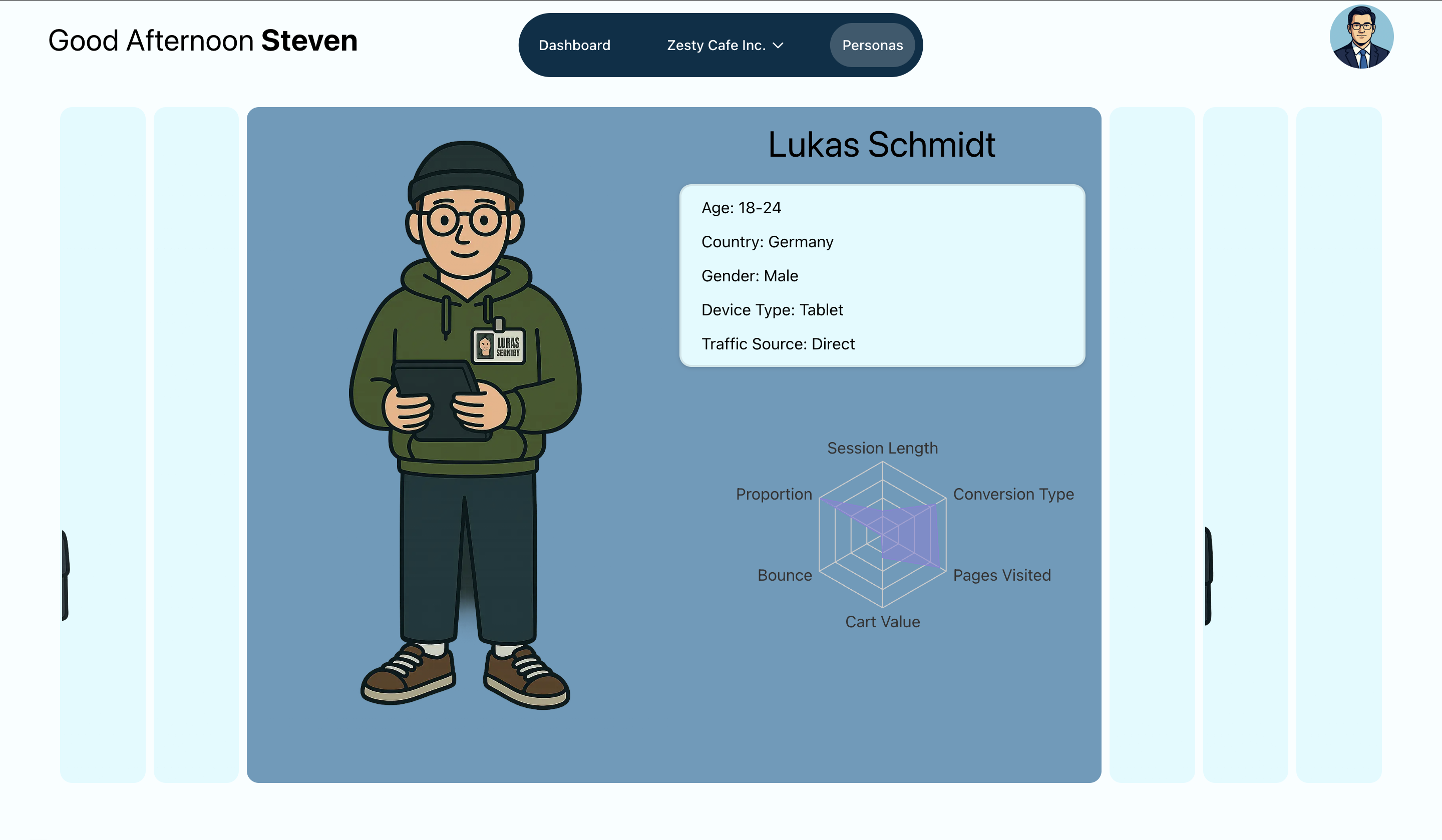
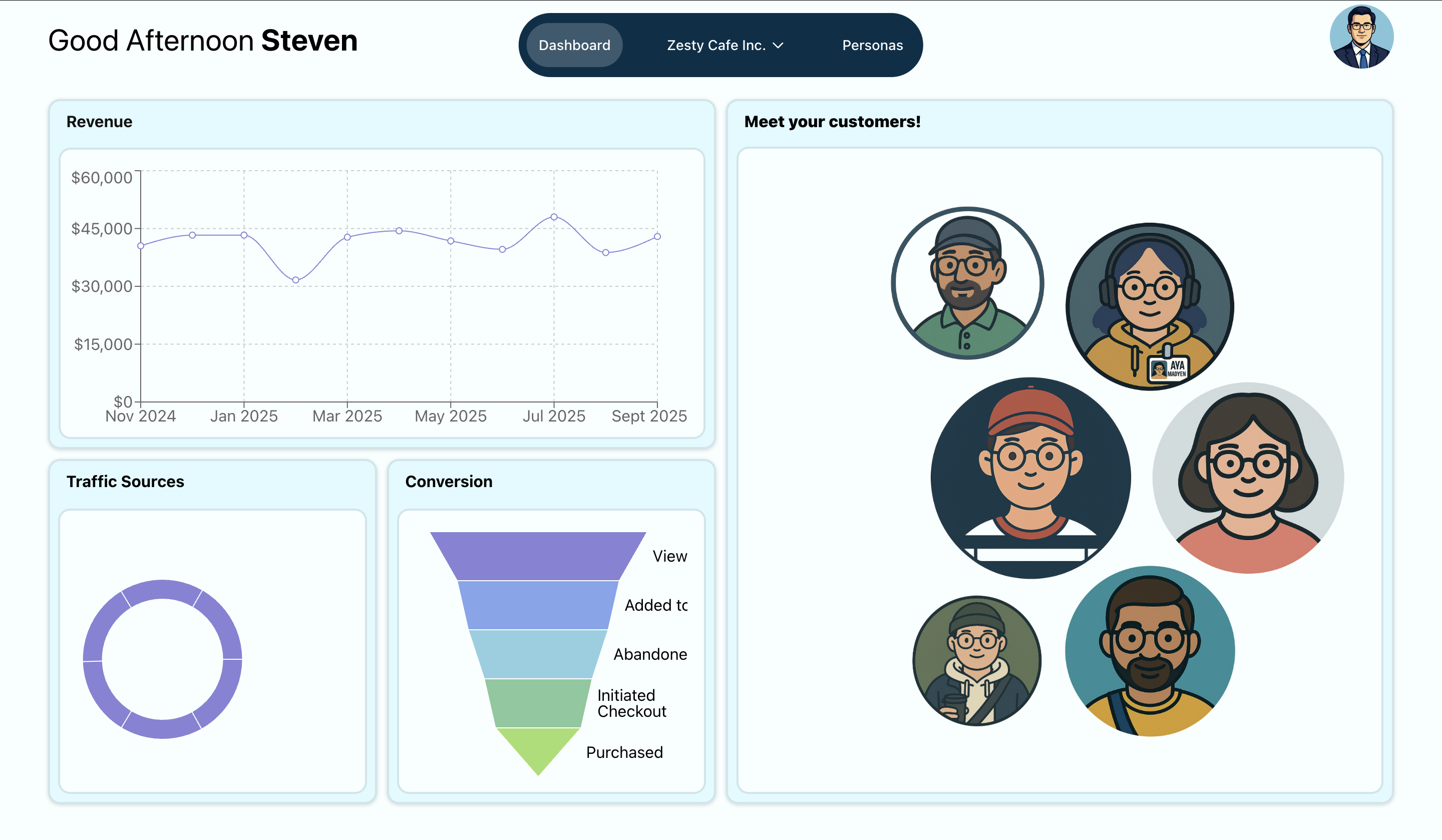
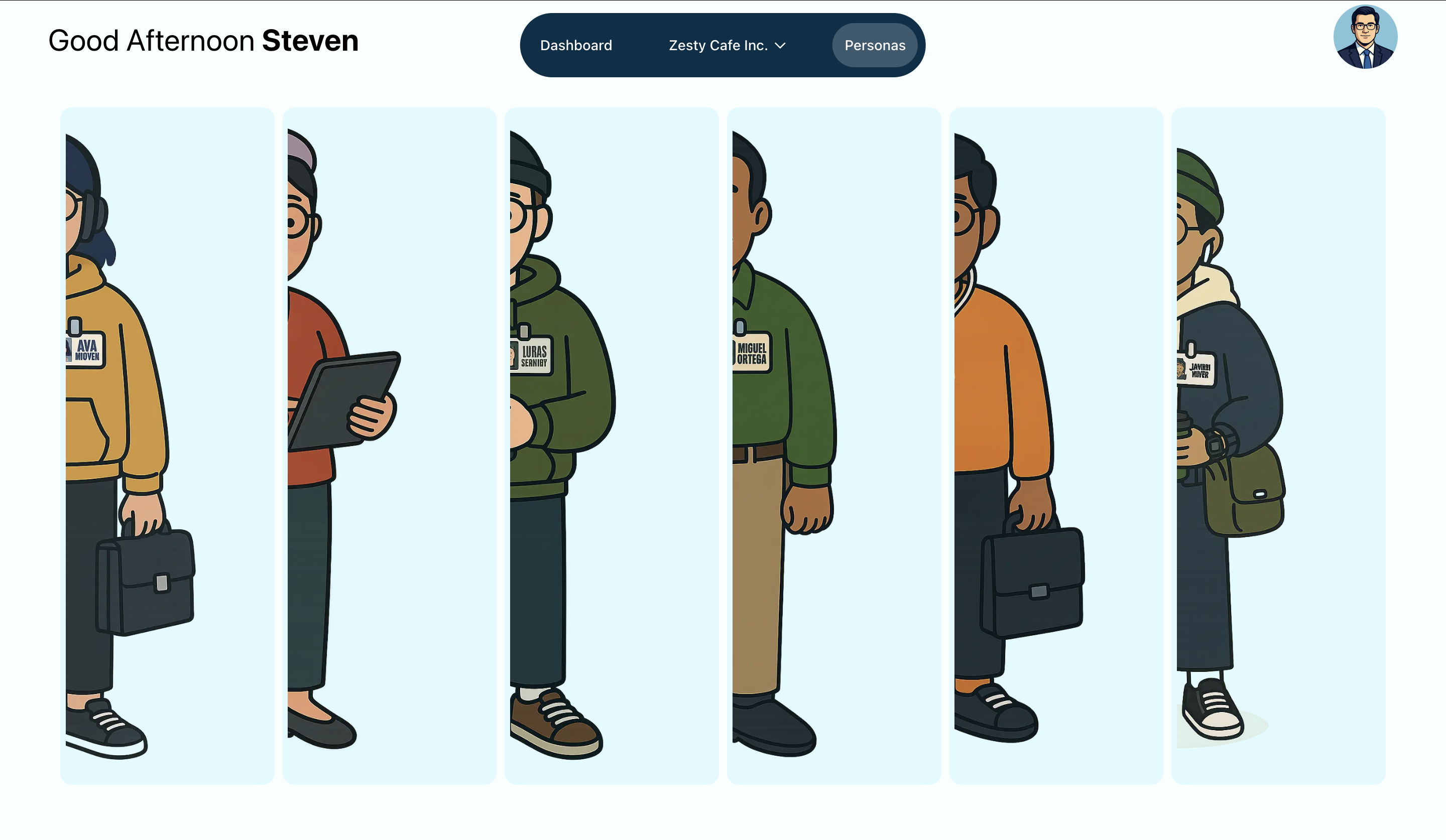
Our platform acts as a central hub for business owners to log in and view all their analytics in one easy-to-use dashboard. But here’s where we stand out, unlike most analytics tools that only display numbers and charts, we go further by building detailed user personas. Using data from Google Signals, we generate profiles that represent real customer types — giving business owners a clear picture of who’s visiting their site, where they’re coming from, and how they interact with their products. It’s analytics made human.
How we built it
We started by integrating Google Analytics as the backbone for tracking site activity. To test our system, we created two main components:
- Collector – a demo website that records visitor behavior and activity.
- Viewer – a centralized dashboard where business owners can log in to visualize their analytics and explore their customer personas. To generate those personas, we tapped into Google Signals to access anonymized insights like age range and gender — helping us build accurate and privacy-compliant user profiles.
Challenges we ran into
Building this project in just 24 hours with a team of three came with its fair share of hurdles. One major challenge was scope. We had to stay laser-focused on our MVP to ensure we delivered a working prototype in time. Another was data acquisition. Because Google Analytics prohibits storing any personally identifiable information (PII), we had to find creative, policy-compliant ways to generate meaningful user insights. Thankfully, Google Signals provided the perfect solution — allowing us to build rich personas without breaching privacy rules. We also struggled with finding enough data to test our system, since Google’s privacy protections limit access. In the end, we simulated data to validate our features and keep development moving forward.
Accomplishments that we're proud of
Going into this project we were definitely in uncharted territories in terms of our expertise in the areas. To start, we used a web framework that we were not familiar with as we wanted to gain more experience working with a more widely recognized framework by the industry. Secondly, we have very little experience working with web analytics tracking prior to this project thus we needed to not only learn the technical knowledge required for it but also the legal and ethical aspects to ensure that we are complying with modern policies.
What we learned
From this project we learned how to prioritize features, delegate tasks, and communicate efficiently to ensure for minimal conflicts and a seamless merge at the end of the hackathon. We also learned a lot about the NextJS as well as using Google Analytics as there was a lot of debugging required.
What's next for Personas
Next, we plan to build a full backend for enhanced client login and data management. We also want to expand our visualization features — adding filters, trend comparisons, and performance insights over time. Our vision is to turn Personas into the go-to analytics companion for small business owners — one that helps them truly see and understand their customers.
Built With
- d3.js
- figma
- google-analytics
- google-cloud
- google-signals
- nextjs
- react
- tailwindcss
- vercel


Log in or sign up for Devpost to join the conversation.