Inspiration
What it does
Inspiration
Every retail store owner knows the headache of empty shelf gaps. During busy hours, store managers either walk the aisles with a clipboard or discover stock-outs only after a customer complains and leaves empty-handed. We wanted to solve this without requiring expensive dedicated IoT camera hardware or complex warehouse robotics. The goal was simple: turn the smartphone already in an employee’s pocket into an intelligent shelf auditor that flags empty inventory and misplaced items in seconds.
What it does
StoreVision AI turns a quick snapshot of a retail rack into an immediate shelf health audit:
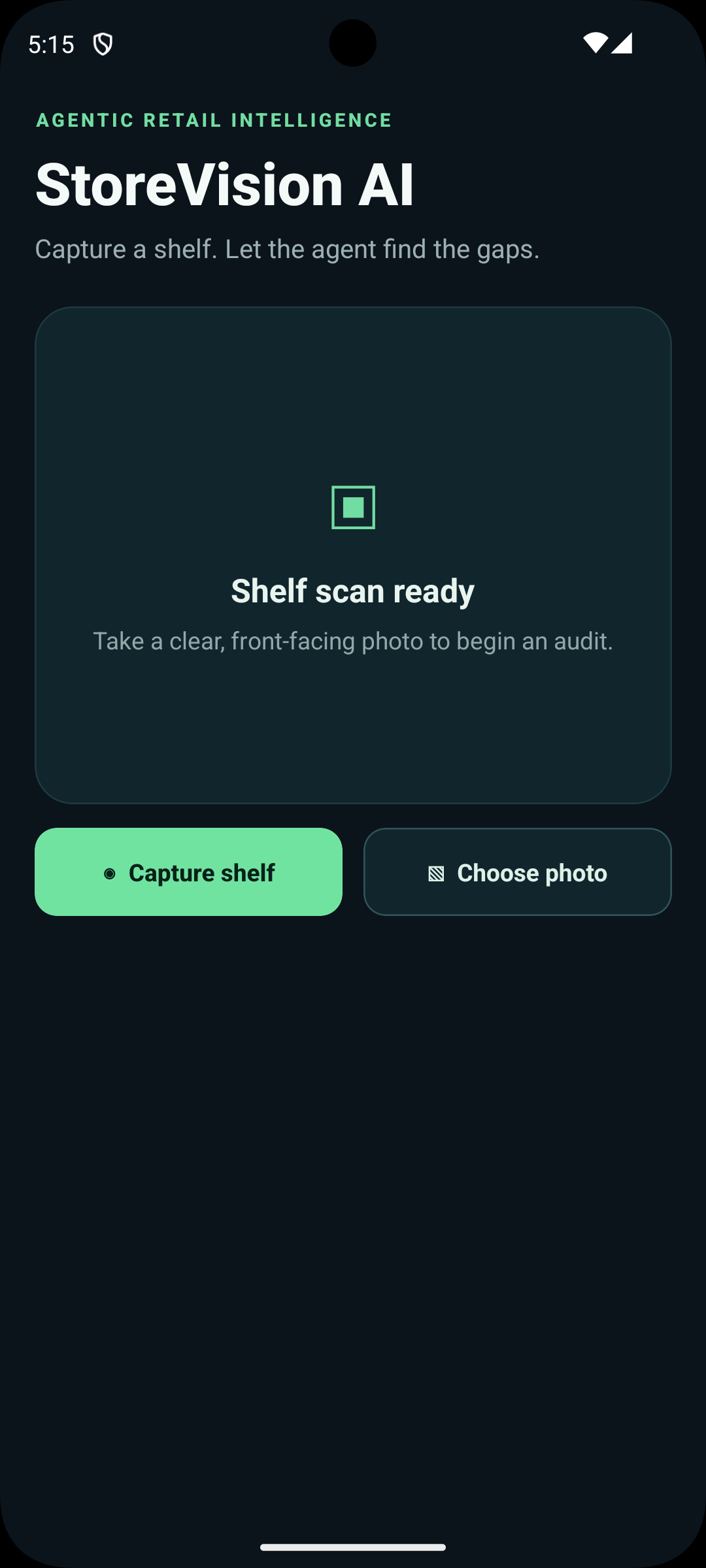
- One-Tap Shelf Audit: Store associates snap a photo of any grocery or retail shelf using a clean React Native mobile app.
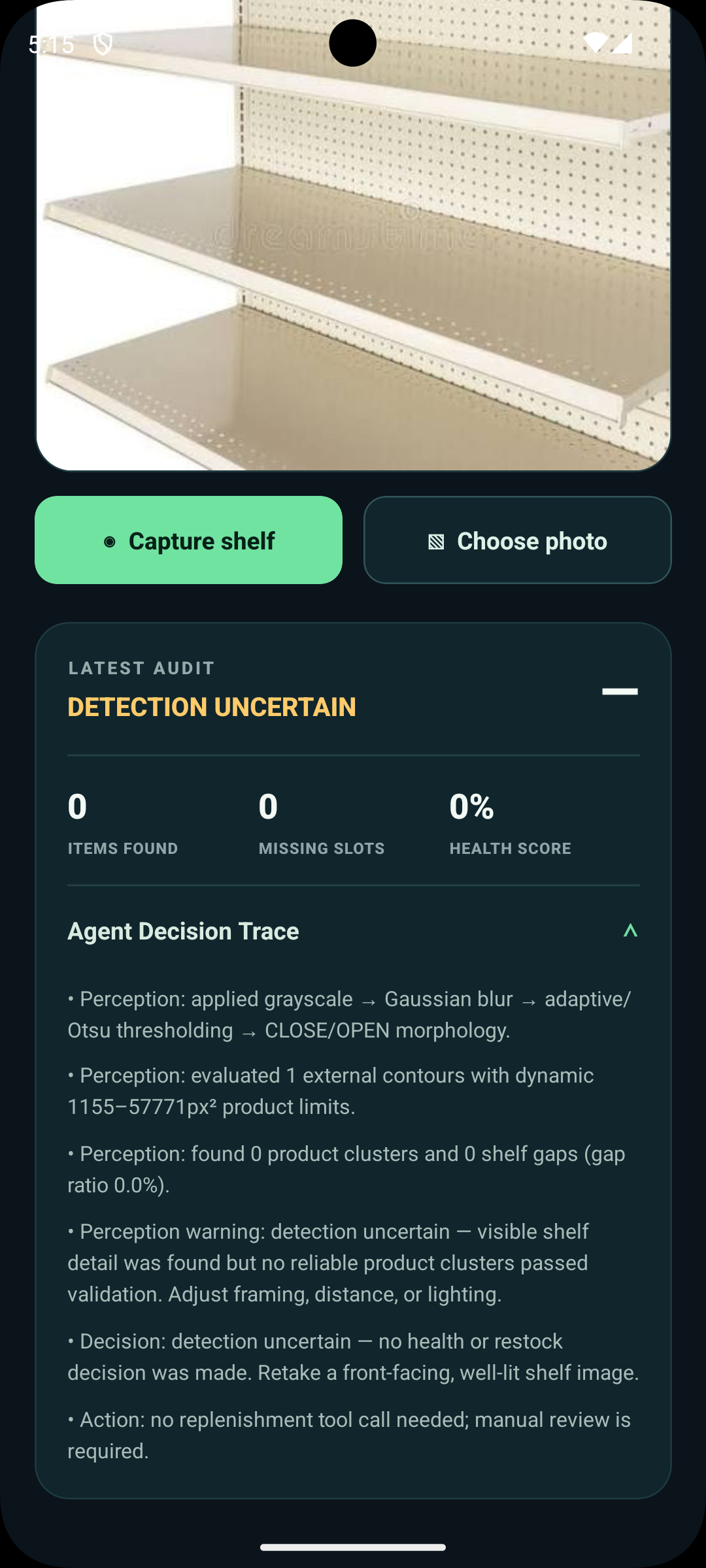
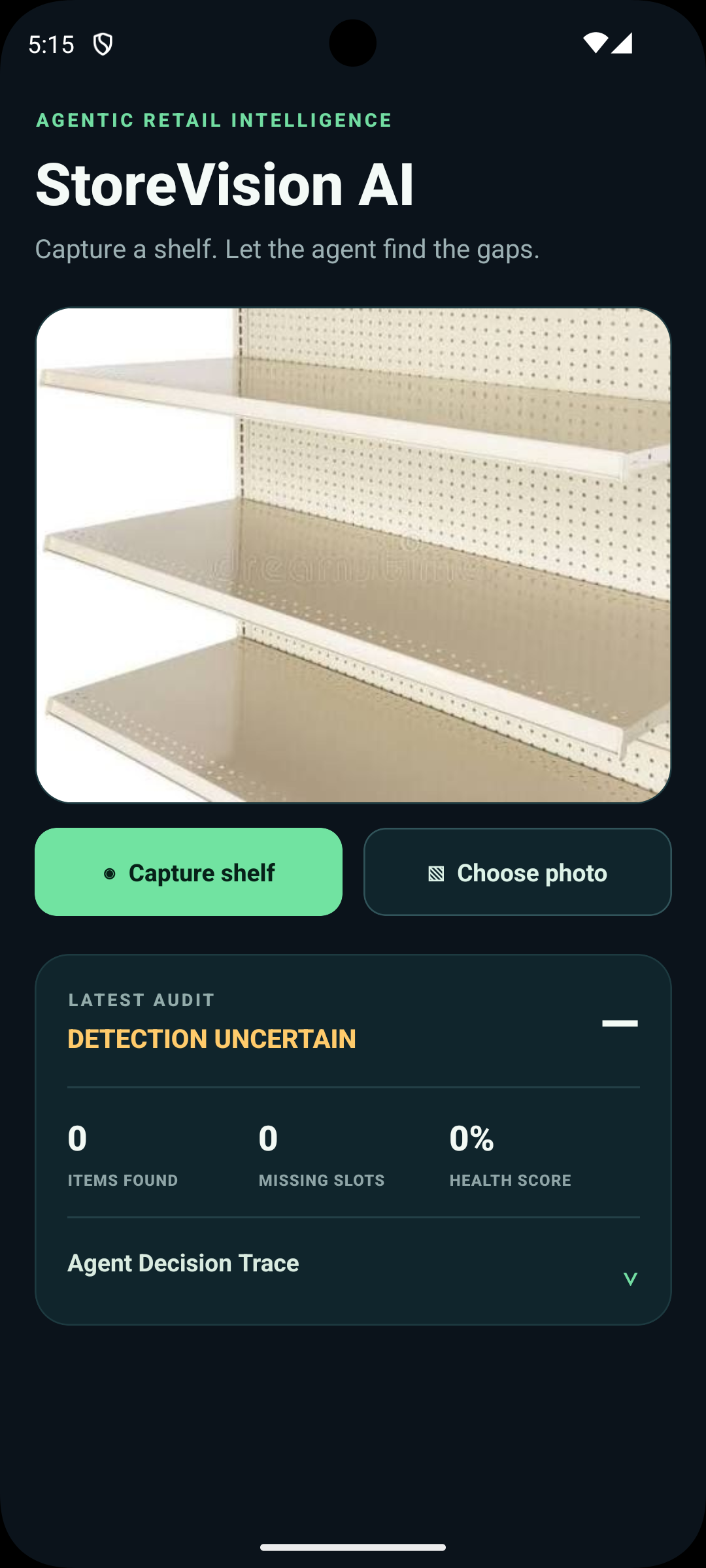
- Computer Vision Segmentation: The image is processed through OpenCV to detect horizontal shelf boundaries, identify individual product clusters, and flag empty slots between items.
- Cloud Sync & Analytics: The captured frame and metadata are dispatched to AWS (S3 & Lambda-based event handling) to aggregate store-level audit reports and calculate a Shelf Health Score.
- Instant Actionable Feedback: The app highlights missing spots with red bounding boxes on the captured image and triggers immediate restock notifications so floor staff can refill shelves right away.
How we built it
- Mobile Frontend: Built with React Native and TypeScript, focusing on fast photo capture, responsive UI feedback, and an intuitive visual overlay showing bounding boxes directly over the scanned photo.
- Vision Pipeline: Built a Python FastAPI service leveraging OpenCV. We utilized adaptive thresholding, bilateral filtering to reduce packaging glare, and contour hierarchy detection to isolate individual shelf tiers and calculate empty spacing ratios.
- Cloud Architecture: Images are securely uploaded to AWS S3 buckets. An AWS Lambda trigger logs the audit event, handles inventory counts, and simulates stock alert dispatches.
Challenges we ran into
- Lighting & Packaging Reflections: High-gloss plastic packaging under fluorescent mart lighting created bright glare spots that confused basic thresholding. We had to fine-tune pre-processing with morphological operations to isolate actual product shapes rather than light reflections.
- Spacing Ambiguity: Distinguishing between an actual missing item vs intentional spacing between different product categories required setting dynamic contour distance thresholds based on neighboring product widths.
- Mobile-to-Cloud Latency: Compressing the captured photo on the mobile side before sending it over the network was essential to keep analysis turn-around time under 2 seconds.
Accomplishments that we're proud of
- Achieving clean bounding box detection and empty slot localization using straightforward computer vision principles without running massive, slow neural networks on high-end hardware.
- Delivering an end-to-end working loop from a physical phone snapshot to a processed visual response with actionable metrics in real time.
- Designing an interface that a store clerk can understand in under 5 seconds without training.
What we learned
- OpenCV 5 edge and contour analysis can achieve surprising accuracy on structured scenes like retail shelving when pre-processing (grayscale contrast and dilation) is properly tuned.
- Designing for non-desk workers requires ultra-fast feedback; visual bounding boxes are ten times more useful on the shop floor than raw tables of numbers.
What's next for StoreVision AI
- Upgrading to live video stream processing so associates can simply walk along the aisle while the app scans shelves continuously.
- Integrating barcode reading into the detected product boxes for direct SKU tracking.
- Direct web-hook sync with retail ERP and POS systems to automate re- ## How we built it
Challenges we ran into
Accomplishments that we're proud of
What we learned
What's next for StoreVision AI
Built With
- amazon-web-services
- computer
- fastapi
- opencv
- python
- react-native
- typescript

Log in or sign up for Devpost to join the conversation.