Inspiration
Running an e-commerce business means constantly switching between customer support, order management, product creation, and business operations. Existing AI tools can answer questions or generate content, but they rarely take ownership of an entire workflow.
We asked a different question: what if AI wasn't just an assistant, but an autonomous employee that could operate a store, make informed decisions, use multiple AI models and tools, and involve a human only when the stakes are high?
That idea became StoreOS.
What it does
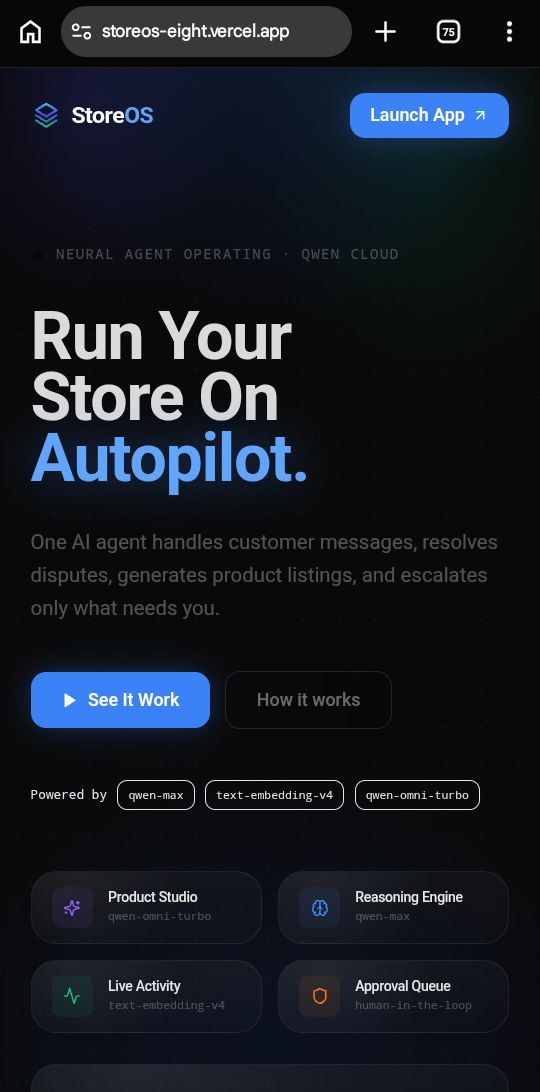
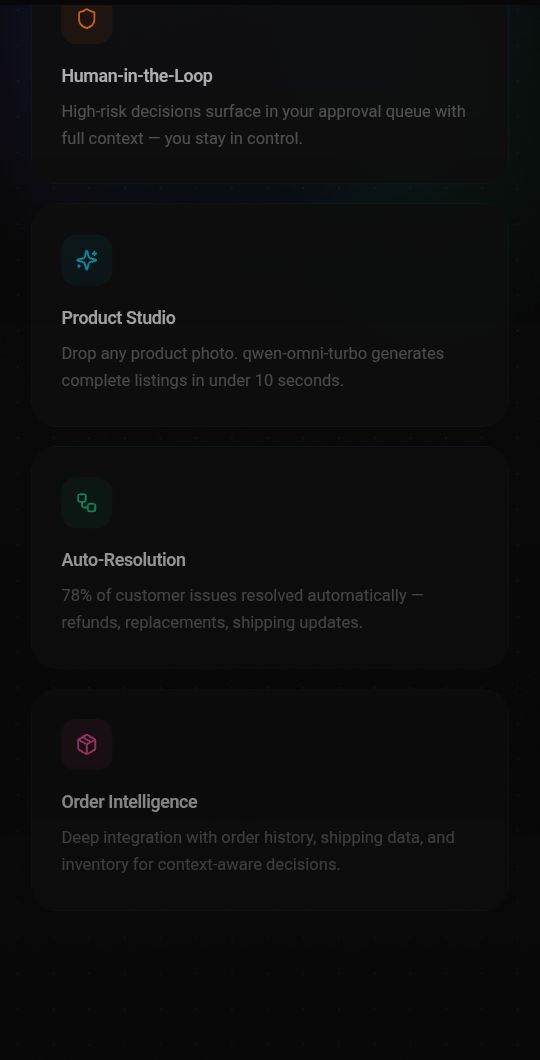
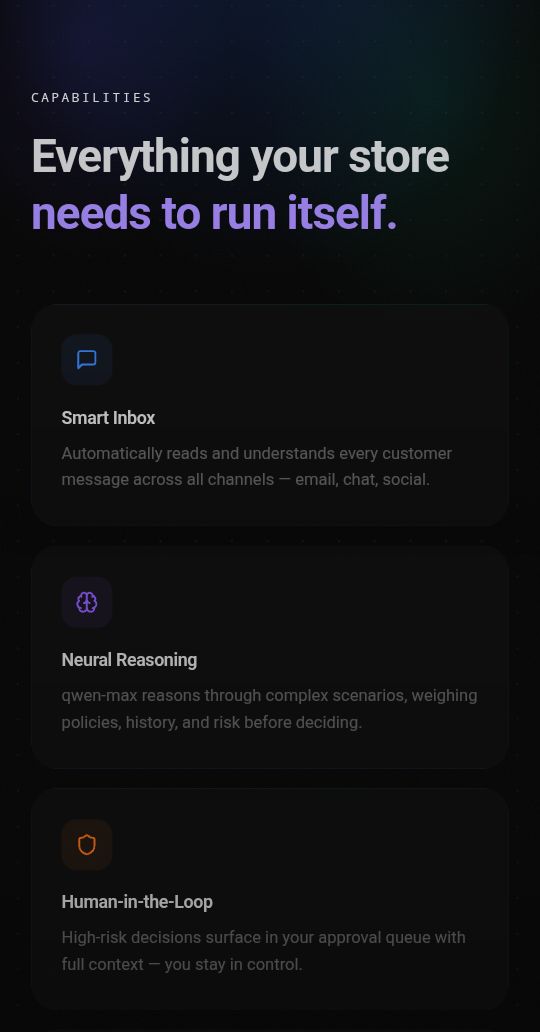
StoreOS is an autonomous AI operating system for e-commerce that manages customer conversations, resolves disputes, and creates product listings while keeping merchants in control of high-risk decisions.
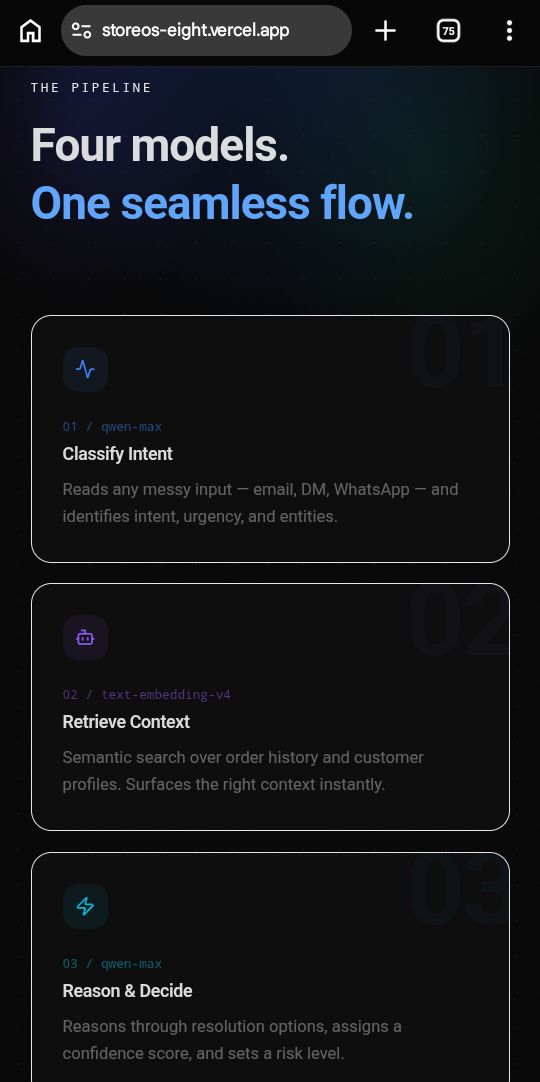
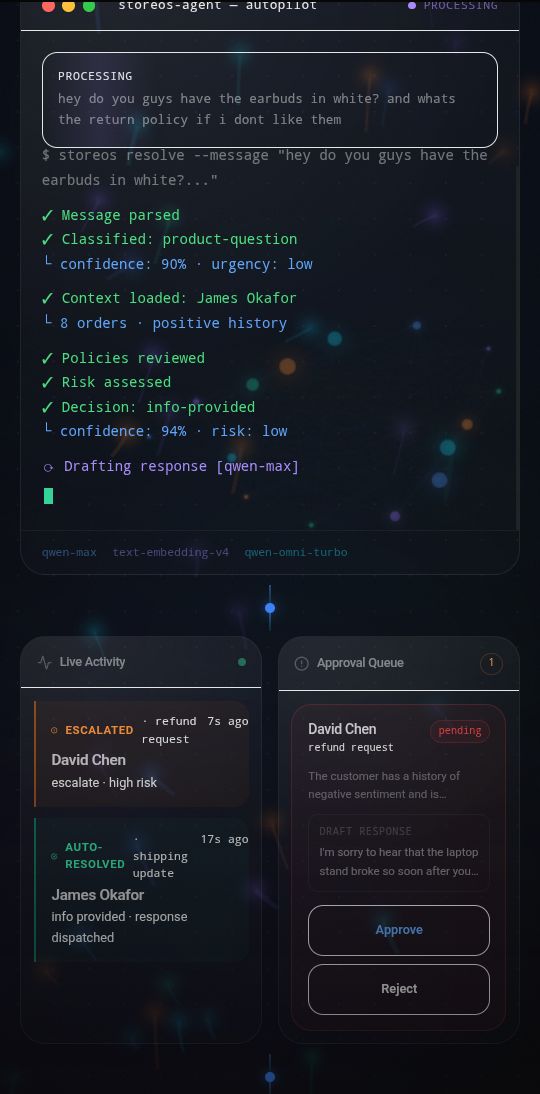
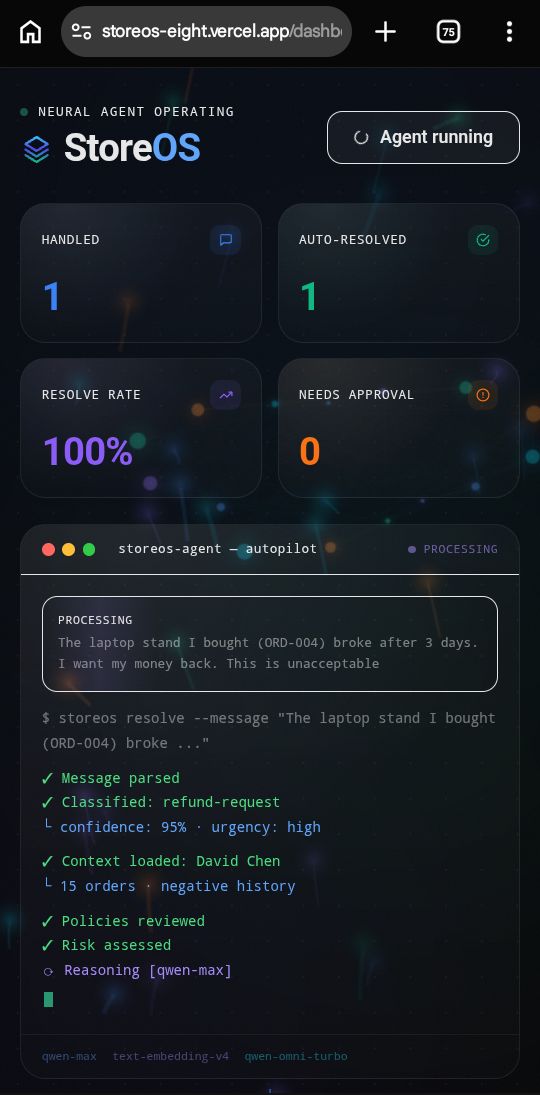
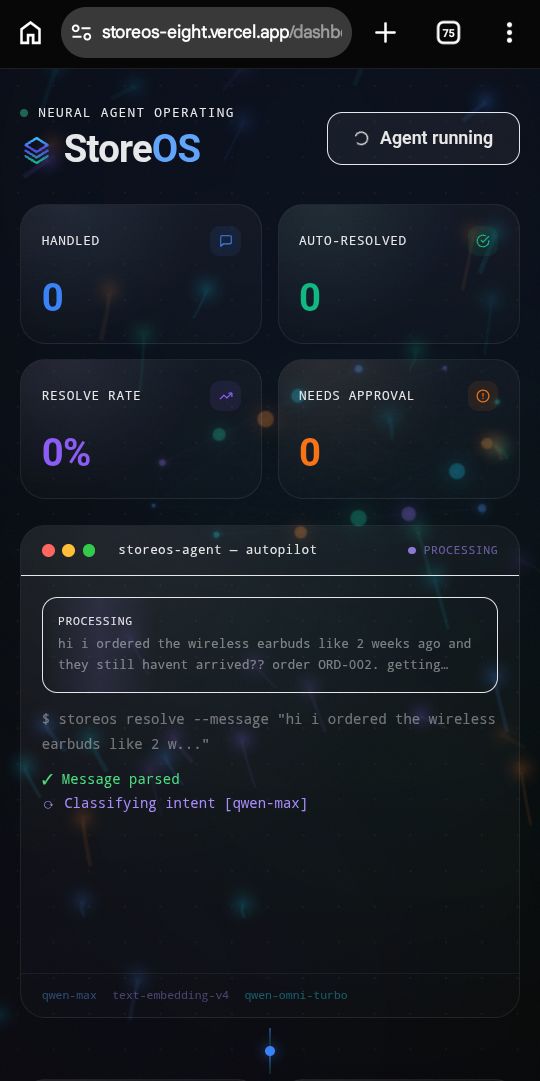
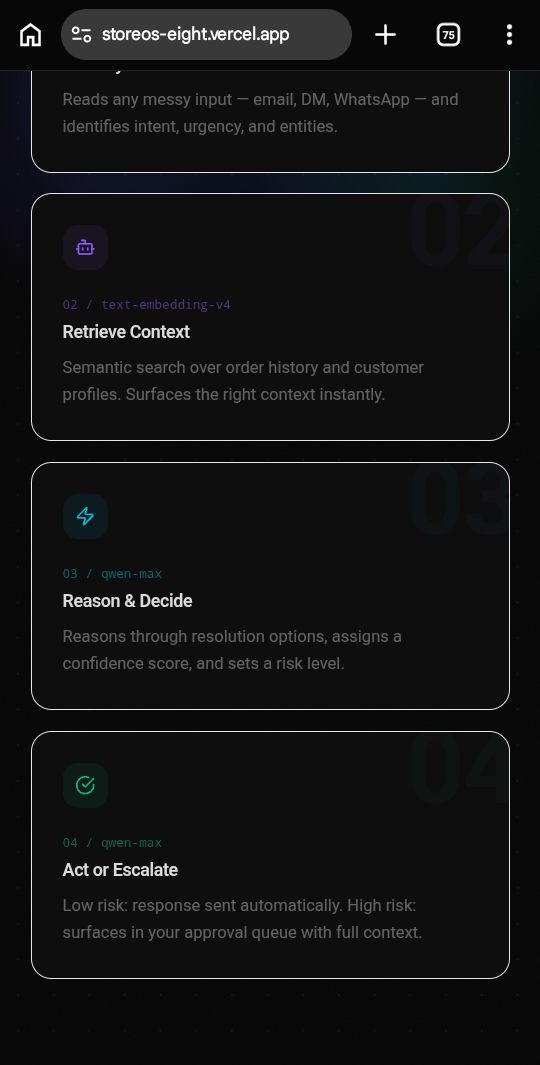
Every customer message flows through a four-stage Qwen Cloud pipeline:
- Classify Intent (qwen-max) - Understands messy, real-world customer messages and extracts intent, urgency, sentiment, and important entities such as order IDs.
- Retrieve Context (text-embedding-v4) - Performs semantic search across orders, customer history, and store knowledge to gather the context needed for a decision.
- Reason & Decide (qwen-max) - Evaluates the request against business policies and customer history, then generates a resolution with a confidence score and risk assessment.
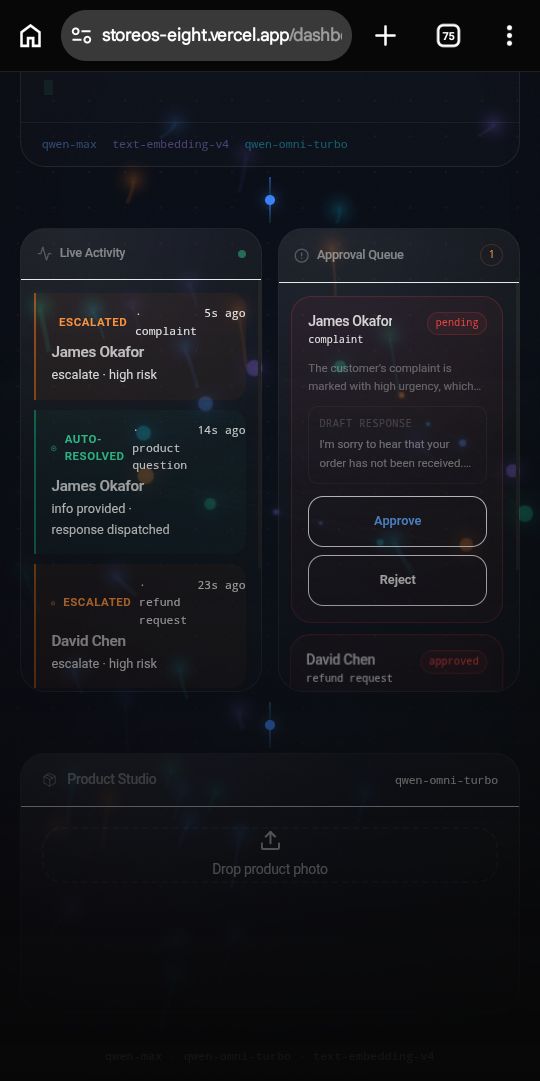
- Act or Escalate (qwen-max) - Low-risk requests are resolved automatically, while high-risk actions such as large refunds or suspicious cases are routed through a mandatory human approval checkpoint.
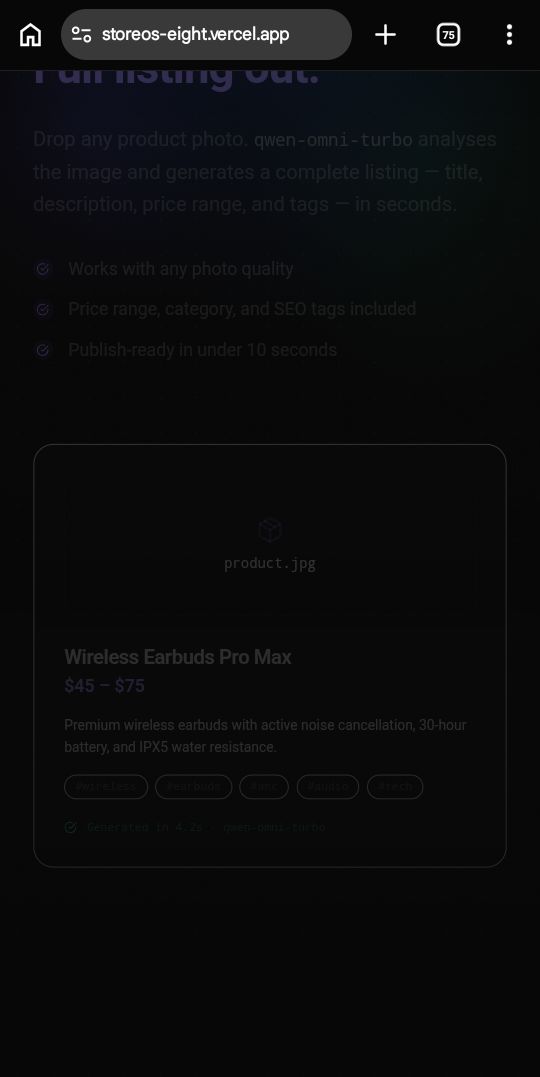
StoreOS also includes a Product Studio powered by qwen-omni-turbo, where a single product photo is transformed into a complete product listing with a title, description, suggested price range, and tags.
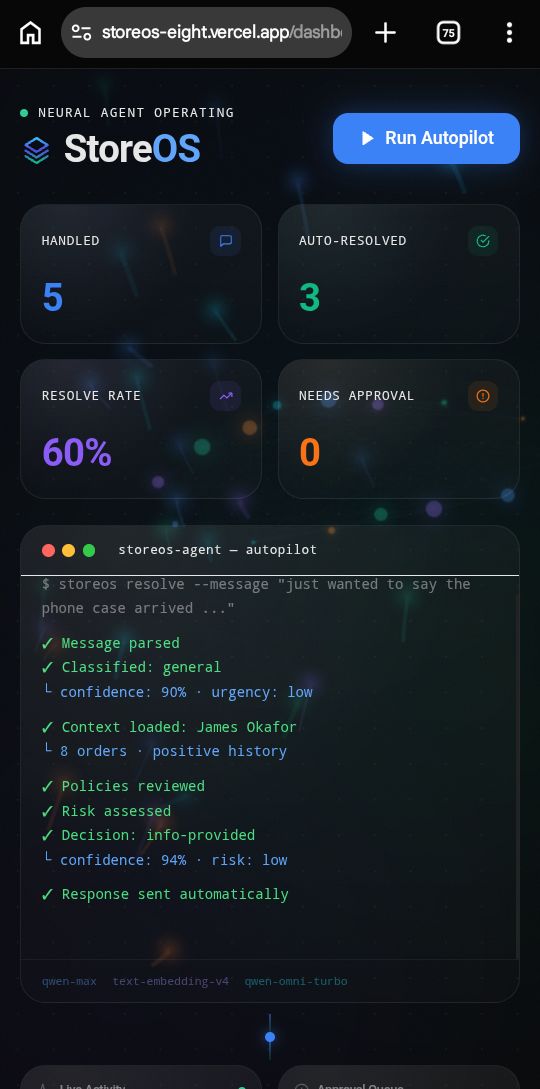
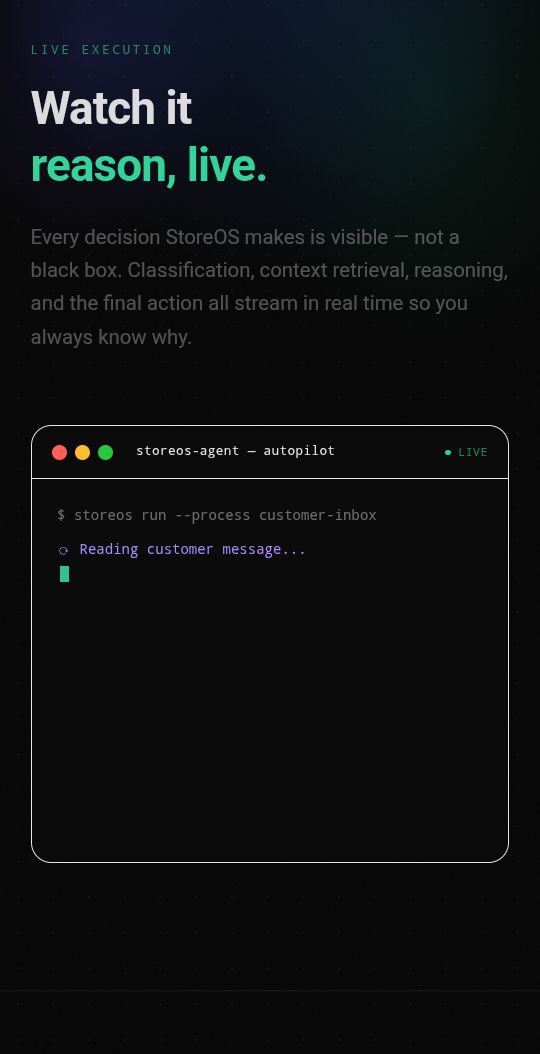
Every step of the AI's reasoning is displayed in a live execution timeline, making the decision process transparent rather than a black box.
How we built it
We built StoreOS using Next.js, TypeScript, Tailwind CSS, Framer Motion, Supabase, and Alibaba Cloud's Qwen models.
Instead of relying on a single model for everything, we designed a multi-model architecture where each model has a specific responsibility:
- qwen-max for orchestration, intent classification, reasoning, and workflow execution
- text-embedding-v4 for semantic retrieval and contextual search
- qwen-omni-turbo for vision-based product listing generation
This architecture allows StoreOS to process ambiguous real-world input, retrieve relevant business context, reason through decisions, and execute workflows while maintaining human oversight.
Challenges we ran into
One of the biggest challenges was designing an AI agent that merchants could actually trust.
Autonomous systems are powerful, but allowing an AI to approve refunds or make expensive business decisions without oversight introduces unnecessary risk.
To solve this, we implemented confidence scoring, risk assessment, and mandatory human approval checkpoints for high-impact actions. We also focused on making every stage of the agent's reasoning visible so users understand exactly how decisions are made.
Accomplishments that we're proud of
- Built an autonomous commerce agent powered by multiple Qwen Cloud models.
- Successfully combined reasoning, semantic retrieval, vision, and workflow automation into a single experience.
- Created a transparent execution timeline that explains every AI decision.
- Designed a human-in-the-loop approval system suitable for real business workflows.
- Built a polished interface that feels like an operating system rather than a traditional chatbot.
What we learned
Building autonomous AI isn't just about model quality—it's about orchestration, transparency, and trust.
We learned that combining specialized AI models produces better results than relying on a single model, and that users are far more comfortable trusting AI when they can understand what it is doing and intervene when necessary.
What's next for StoreOS
Our vision is to expand StoreOS into a complete autonomous operating system for commerce.
Future versions will integrate directly with platforms like Shopify, Stripe, and Klaviyo, support inventory management, marketing automation, fulfillment, analytics, and multi-agent collaboration, allowing merchants to delegate entire business operations while remaining in control of critical decisions.
Ultimately, we want StoreOS to become the AI employee that helps businesses operate faster, smarter, and more efficiently.
Built With
- ai-agents
- alibaba-cloud
- computer-vision
- framer-motion
- github
- natural-language-processing
- next.js
- node.js
- qwen-cloud
- react
- rest-api
- retrieval-augmented-generation
- semantic-search
- tailwind
- typescript
- vercel


Log in or sign up for Devpost to join the conversation.