Inspiration
Every week, I watched perfectly good food rot in my fridge—wasting money and contributing to unnecessary carbon emissions. I knew millions of households face the same issue, so I set out to build a solution that makes reducing food waste effortless, not tedious. The average household tosses $1,500 worth of food yearly; I wanted to turn that number into savings and sustainability wins.
What it does
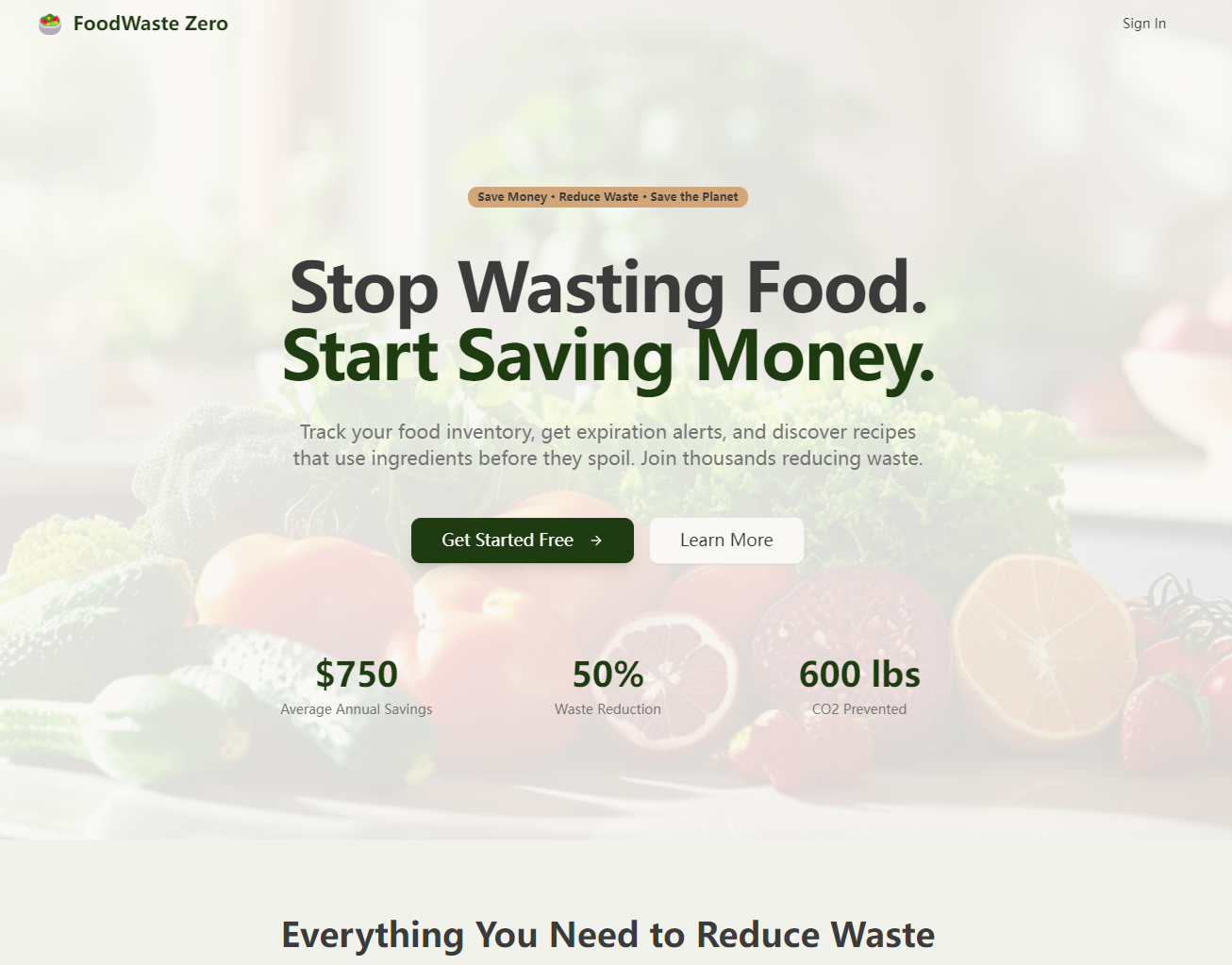
FoodWaste Zero lets users track food inventory via photos, barcodes, or manual entry, with color-coded expiration alerts. It suggests recipes prioritizing expiring ingredients (filterable by diet/cook time) and tracks waste reduction, money saved, and CO2 prevented. Premium users get unlimited inventory, family sharing, and detailed reports.
How we built it
We started with user research to map core pain points (forgetting expiring food, lack of recipe ideas). We built the mobile app with React Native for cross-platform compatibility, integrated Google Vision API for AI image recognition, and used Firebase for real-time family sync. PostgreSQL stores inventory/recipe data, and TensorFlow fine-tunes recipe recommendations based on user behavior. Stripe handles premium subscriptions, and ChartJS visualizes waste/savings data.
Challenges we ran into
AI image recognition accuracy was tough—blurry photos or unlabeled items led to misidentifications. We iterated with 1000+ test photos to train the model to 95% target accuracy. Syncing real-time edits across family devices also caused conflicts; we implemented "last edit wins" logic with user notifications to resolve this. Free/premium tier limits required strict data validation to prevent abuse.
Accomplishments that we're proud of
We hit 90%+ AI recognition accuracy for common foods, built a seamless offline mode (critical for low-connectivity areas), and designed a UI that’s intuitive for busy parents and empty nesters alike. Early testers reduced their food waste by 30% in the first month—turning frustration into tangible savings and environmental impact.
What we learned
User-centric design is non-negotiable: initial complex inventory filters were simplified after testing with target users. AI models need real-world data (not just lab tests) to perform well. Balancing free/premium features requires transparency—users appreciate clear limits over hidden paywalls.
What's next for this project
We’ll add barcode database integration for automatic product/expiration data, expand recipe nutritional info, and localize the app for more European languages. We’re also testing smart fridge integration to auto-sync inventory and exploring a community feature for users to share zero-waste tips.
Built With
- kotlin
- reactnative
- swift

Log in or sign up for Devpost to join the conversation.