-
-
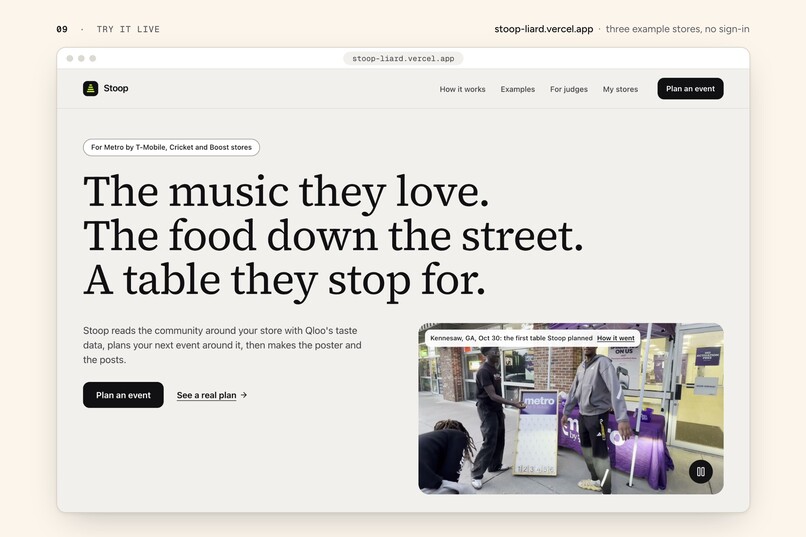
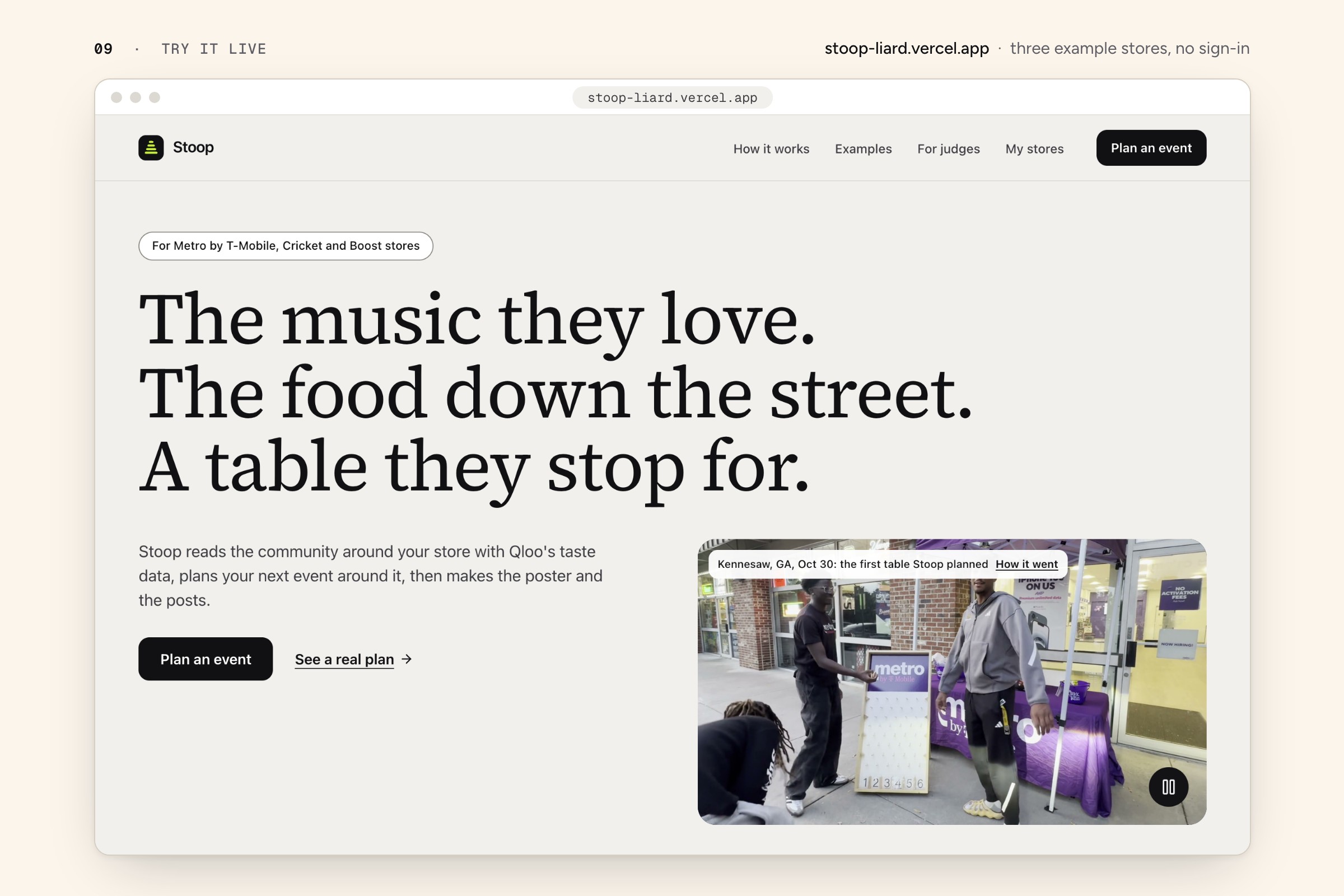
Stoop plans the table your community stops for.
-
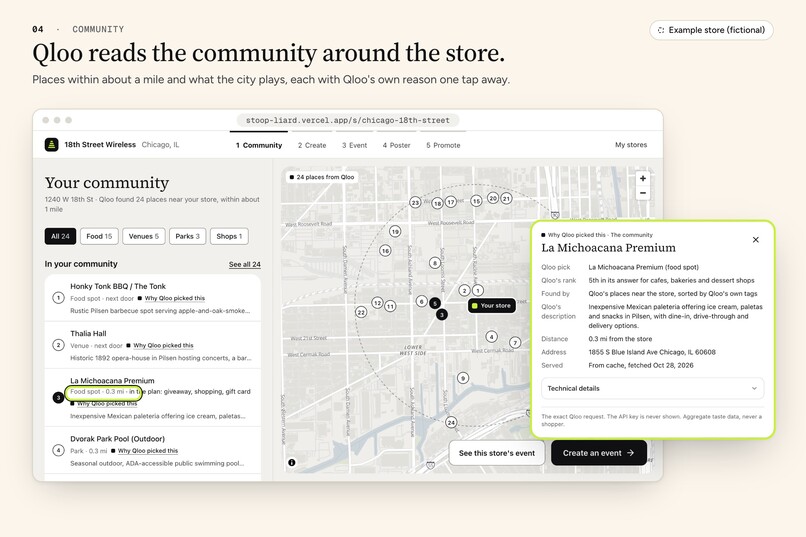
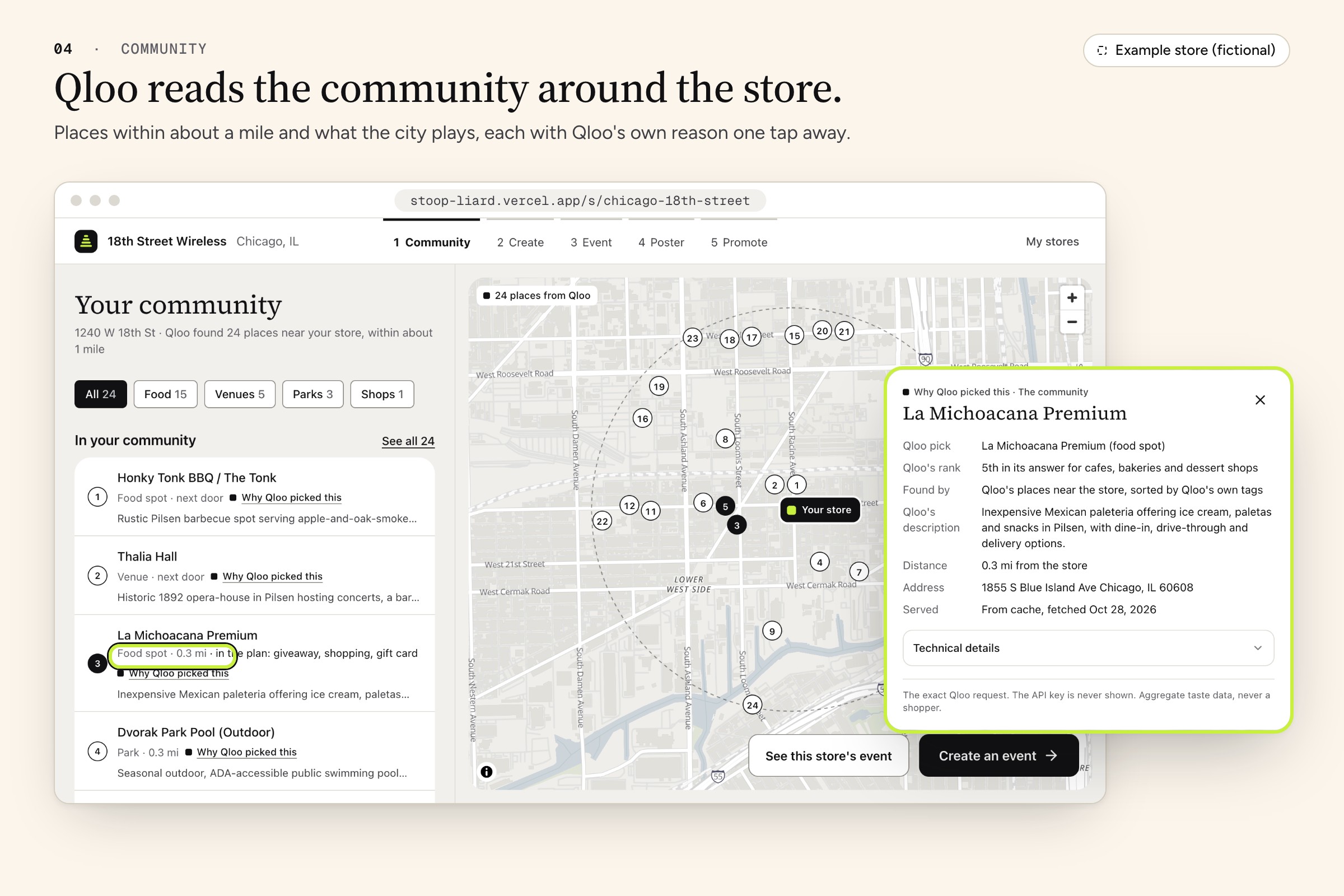
Qloo reads the community: every place comes with its reason.
-
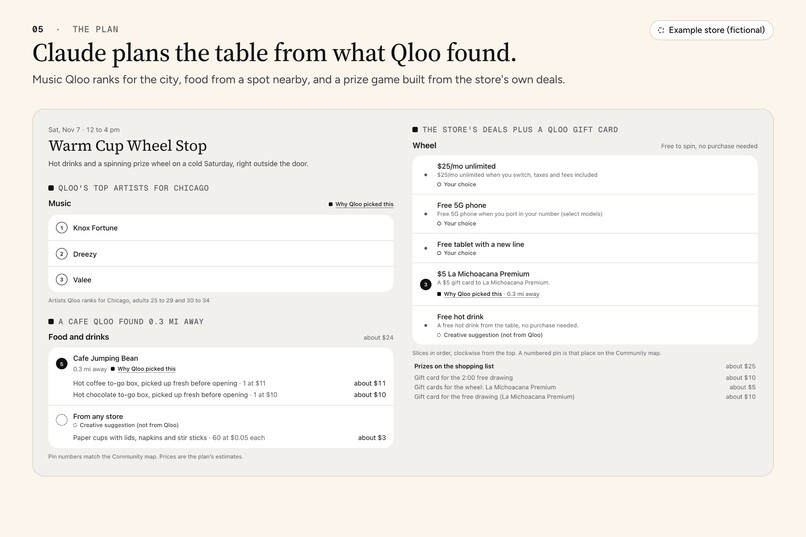
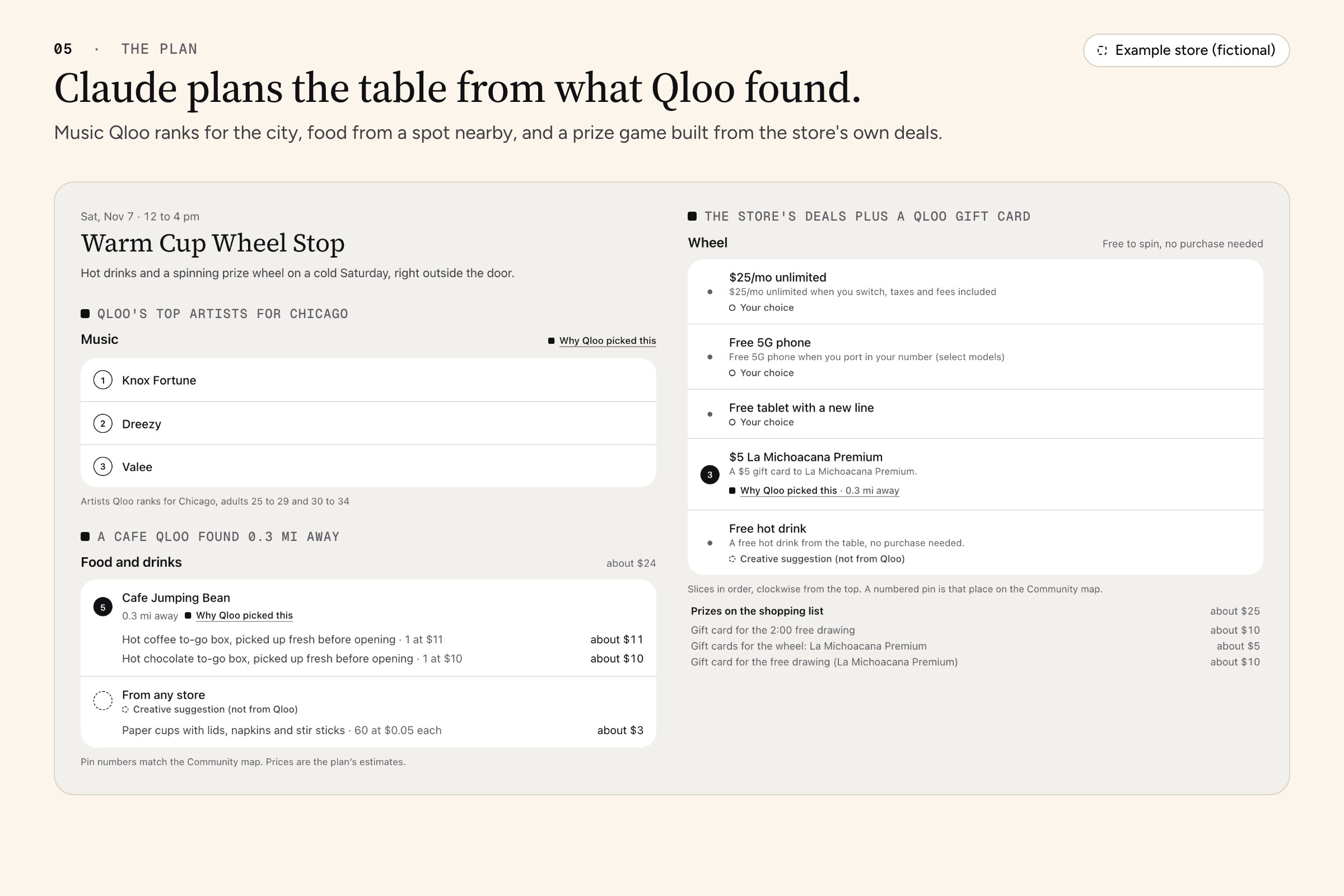
The plan: the city's music, food nearby, a prize game from your deals.
-
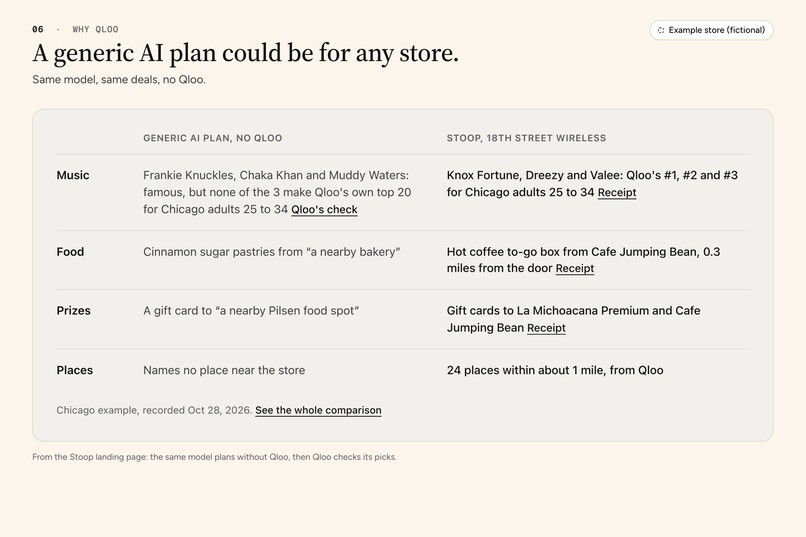
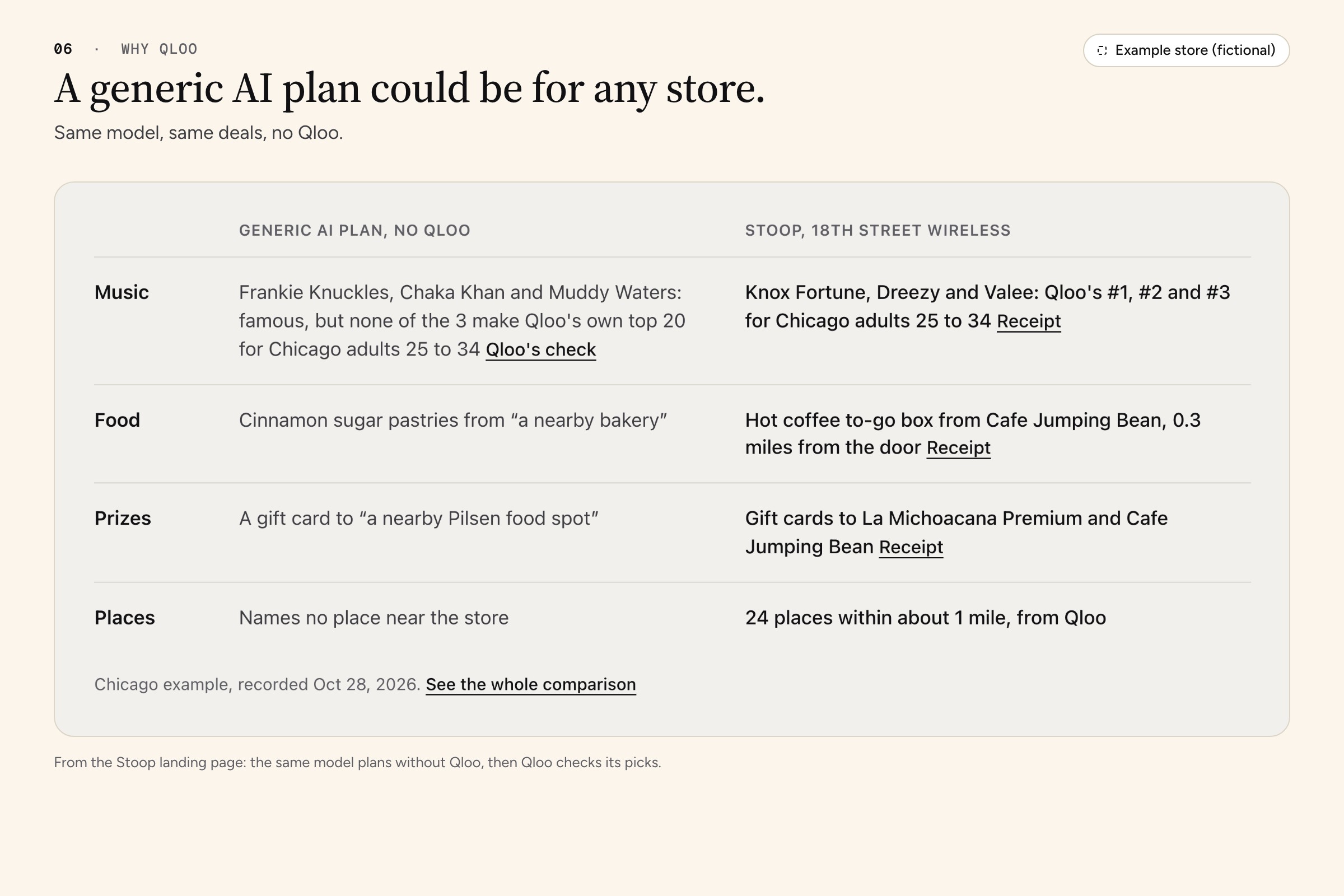
Without Qloo, a generic AI plan could be for any store.
-
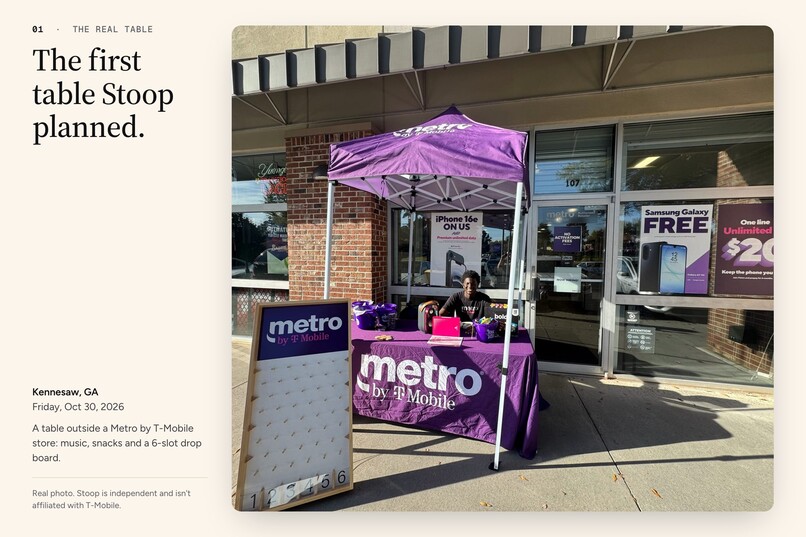
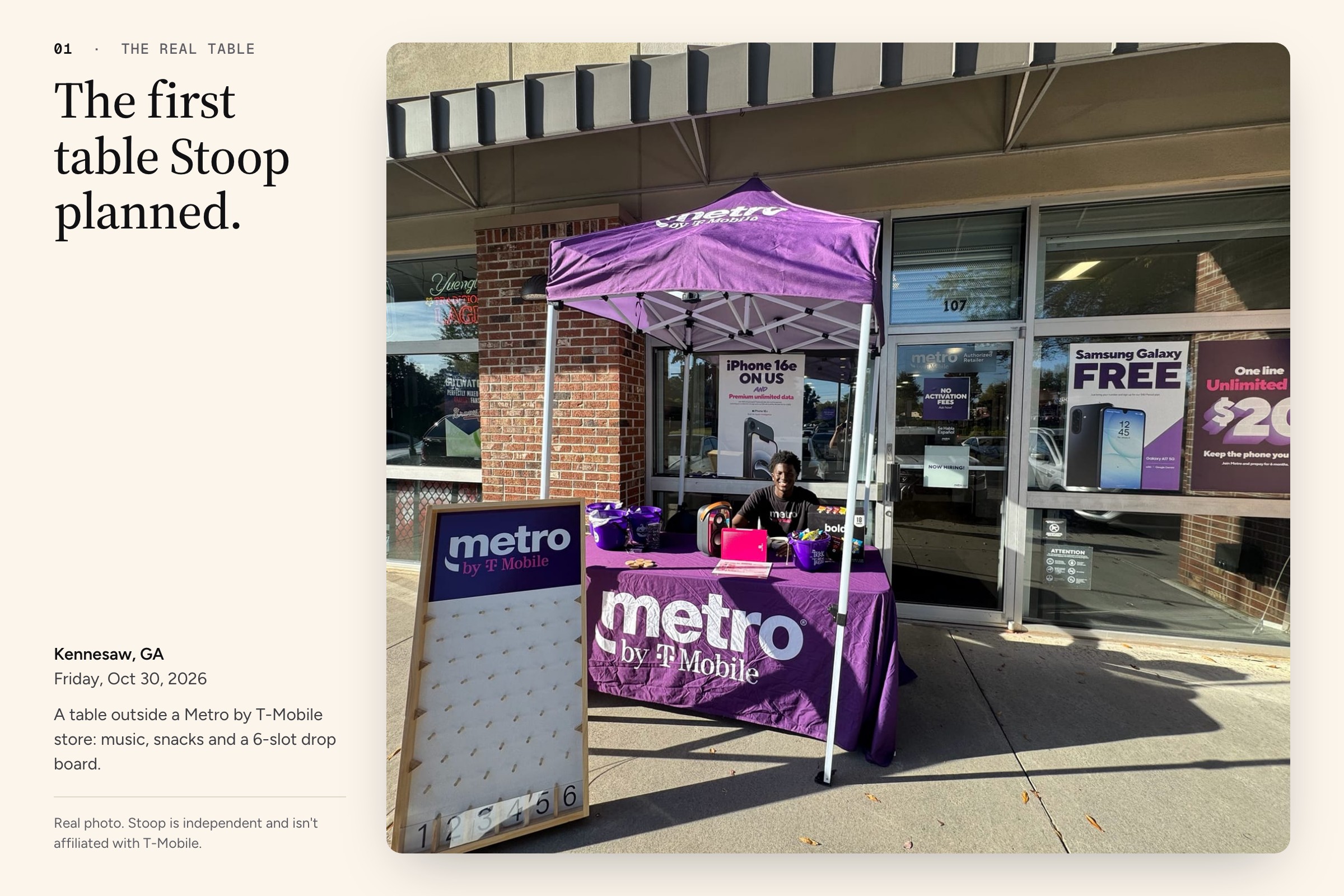
Oct 30, Kennesaw, GA: the first table Stoop planned.
Inspiration
Driving sales at a Metro by T-Mobile store is already really hard. I work the floor, and most days traffic is slow. It isn't just us: T-Mobile's own SEC filing says it began closing dealer and corporate stores this year, and more than 16,000 prepaid stores compete for the same walk-ins.
What helped at my last store, on Tara Boulevard, was going outside: putting a table out front and hosting events so the community could stop by and feel connected. I knew my regulars there, so the music and the food fit, and people came.
When I did the same thing at my new store in Kennesaw, I didn't get the same results. The community here is more diverse, it was hard to get a grasp on what people actually liked, and I wasn't going to guess from how people look. No one really stopped. A few weeks ago the store even bought about 100 ice creams for an event, and about 5 people came.
We had the budget for events. What we didn't have was a way to know what the community wants. That's what I built Stoop to do.
What it does
A store manager types the store, the day, a budget and the store's deals. In about a minute, Stoop:
- Reads the community with Qloo: the artists Qloo ranks for the city and the store's adult age bands, and the places within about a mile, each with Qloo's own reason. It sums up the food spots by Qloo's tags and shows which adult age bands the people who love those spots skew toward.
- Plans the table with Claude: music, food from spots nearby, a prize wheel or 6-slot drop board built from the store's deals word for word plus gift cards to nearby spots, a timeline and a shopping list in budget. Every pick shows where it came from.
- Tells people: a poster plus Facebook, Instagram and WhatsApp posts. Nothing posts without the manager's tap.
It can also take the table to where people already go: "Plan it here" on a park or venue Qloo found, with the request to the district manager and the organizer already written.
How I built it
- Qloo decides: Insights for artists (the city as
signal.location.query, plus the store's age bands), Insights for places (filter.locationat the store's point, 1.5 km, with explainability), and onefilter.results.entitiescall that scores the generic plan's music against Qloo's own. About 11 calls per plan, cached and capped. - Claude plans, but can't invent: it cites Qloo ids only, and a guard rejects any name Qloo didn't return. Deals are quoted word for word.
- Next.js 16, React 19, TypeScript, the Vercel AI SDK, Upstash Redis and Vercel Blob. Posters: an image model paints the background and code sets every word.
- 2,639 unit tests and 152 end-to-end tests. The code is open source (MIT) without Qloo's data: a filter keeps every recorded Qloo answer out of the public repo.
Challenges I ran into
- The planner ignored the community at first. 0 of 9 Tara Boulevard plans used the spots Qloo found. Now the community leads the plan.
- "Jonesboro" landed in Arkansas. The plan now checks the state.
- A stereotype slipped in. A plan for my own store was titled "Trap Friday." Titles and posts now refuse genre names and community slang.
Accomplishments that I'm proud of
- A real table at a real store. On Oct 30, everything at my Kennesaw store's table came from Stoop's plan, and the music came straight from Qloo's list. The store saw about 30% more walk-ins than a usual Friday, across the whole day, and about twice the usual device sales. One day, the day before Halloween: a first look, not proof.
- Qloo matched what I knew. With nothing typed about the area, Stoop built my old store's table around the Mexican spots down the street, in 3 of 3 runs.
- A measured difference. Across 24 real Metro stores in Atlanta and Dallas, a generic AI plan named no business near any store. Stoop named nearby spots for every one, each with a Qloo receipt.
What I learned
Most of the value is in the community, not the city. Qloo's music is city-wide, but the places near each store are different every time. And honesty takes work: every number here came from a real run.
What's next for Stoop
Stoop starts with the more than 16,000 prepaid wireless stores, where a table outside is already the playbook. Then any local store that markets to the street, like barbershops, gyms and franchise retail, and the owners who run dozens of locations.
More events at both pilot stores, then a whole dealer. An events feed, so Stoop can find fairs and festivals by date and Qloo can rank which ones fit the community. And posting straight to Facebook once Meta approves the app.
Built With
- anthropic
- claude
- fal
- maplibre
- next.js
- qloo
- react
- tailwindcss
- typescript
- upstash
- vercel

Log in or sign up for Devpost to join the conversation.