-
-

Stoolum Logo
-
Stoolum UI
-
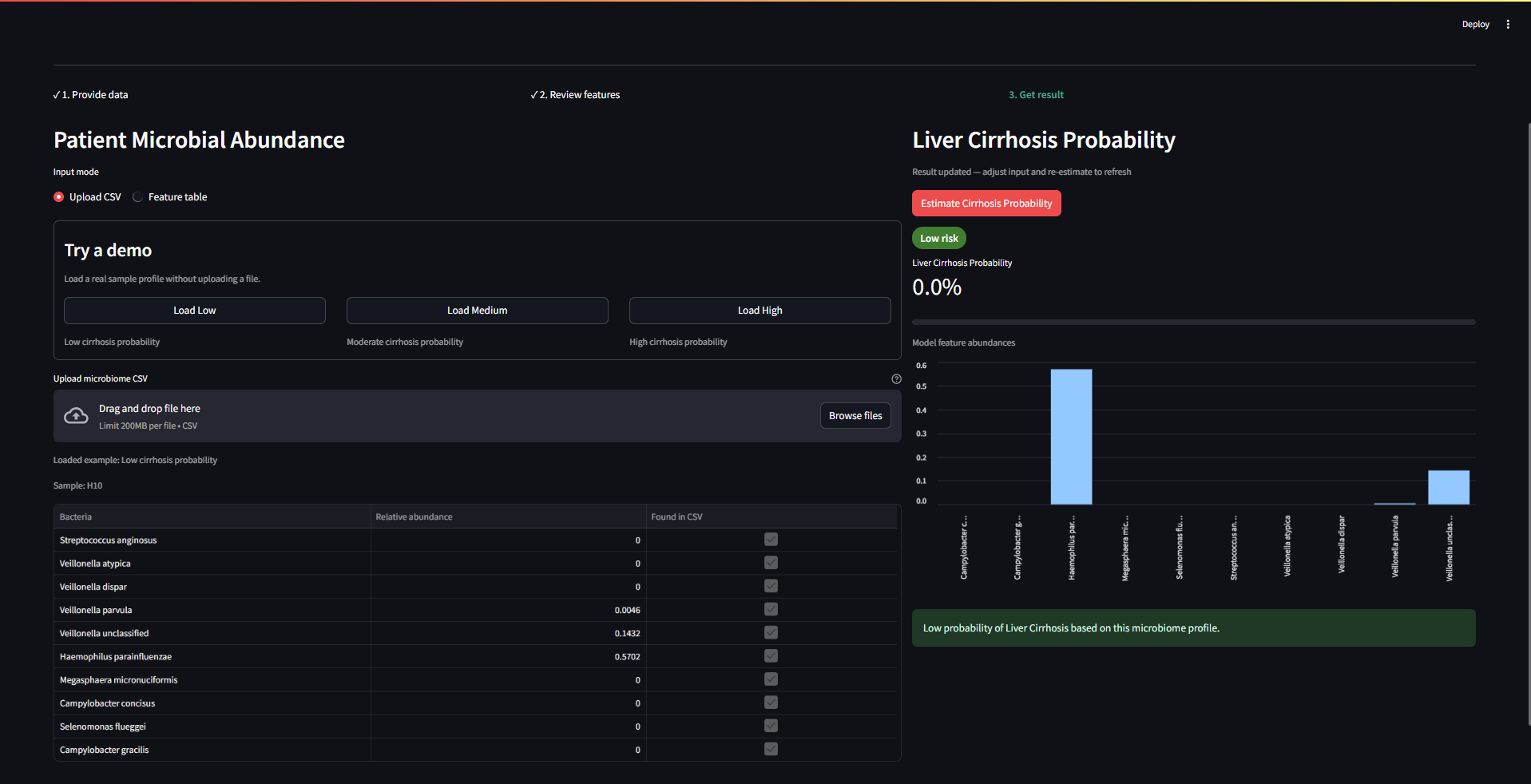
Low Probability Demo
-
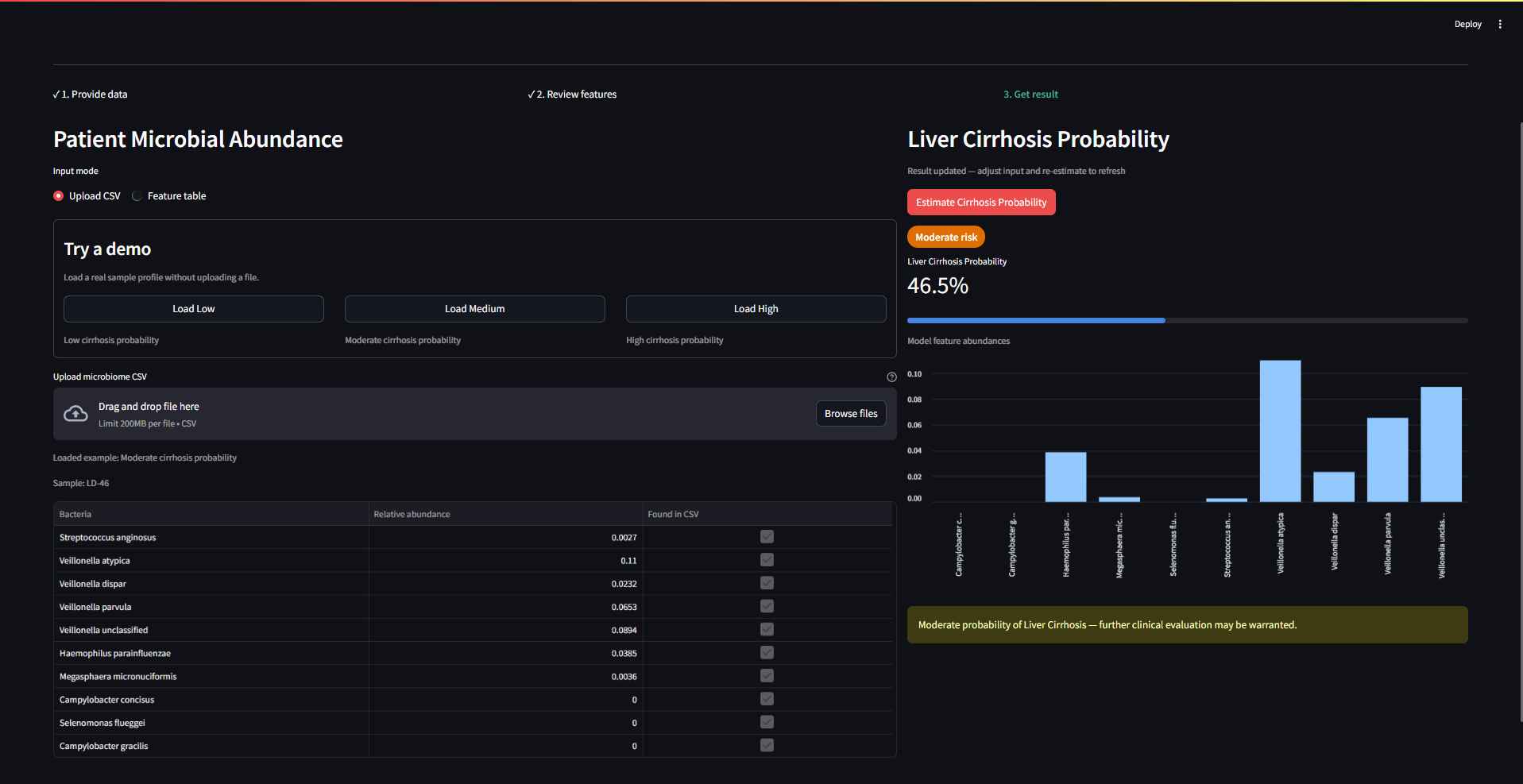
Medium Probability Demo
-
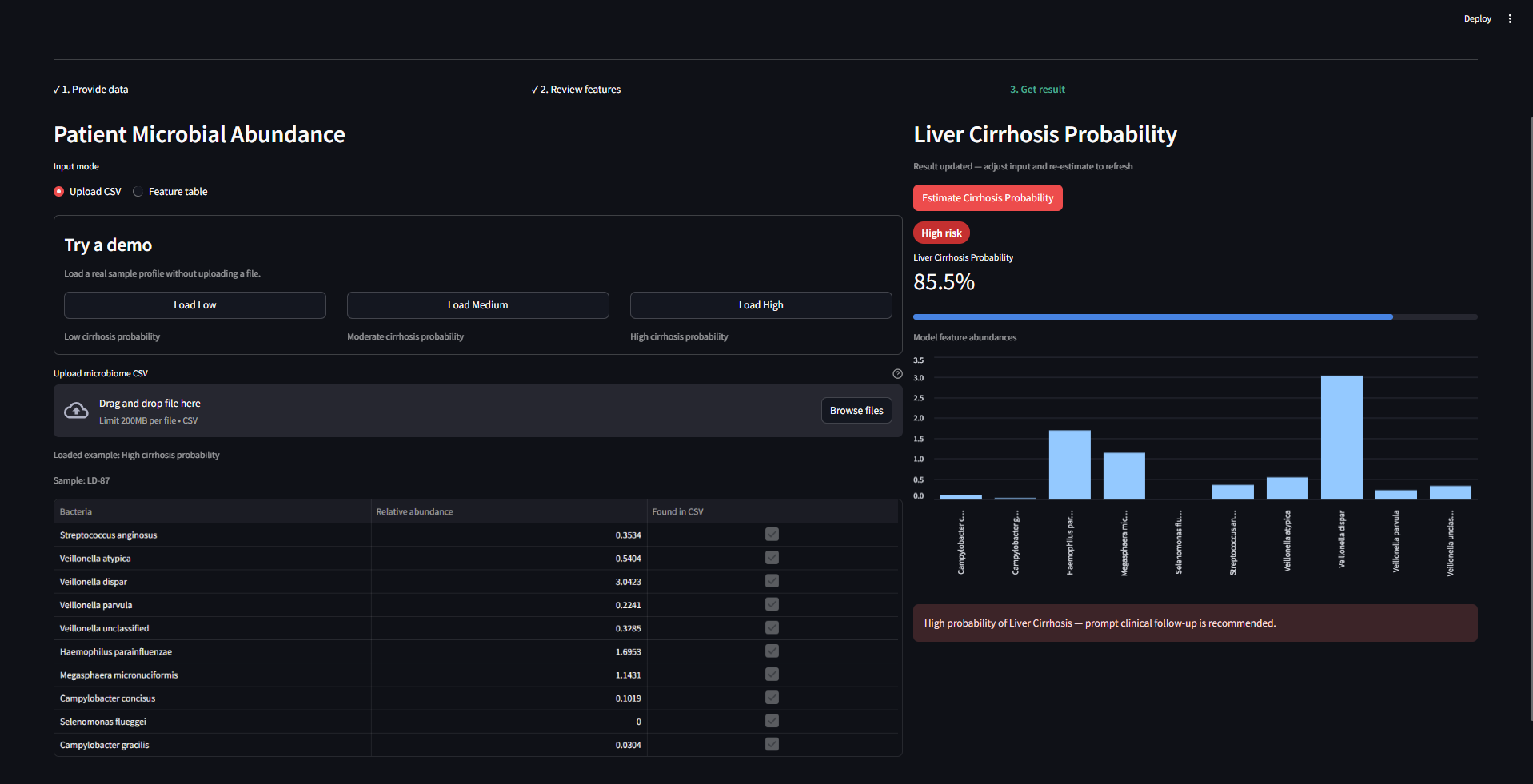
High Probability Demo

Inspiration
- Cirrhosis usually gets caught late, typically once liver damage is severe and treatment options are limited.
- Research on the gut-liver axis shows certain gut bacteria (like Veillonella and Haemophilus) show up more often in people with advanced liver disease
- That led us to a simple question: could a stool sample flag cirrhosis risk before symptoms get serious?
- That was our inspiration for Stoolum: a tool that turns microbiome data researchers already have into a cirrhosis probability score in minutes
What it does
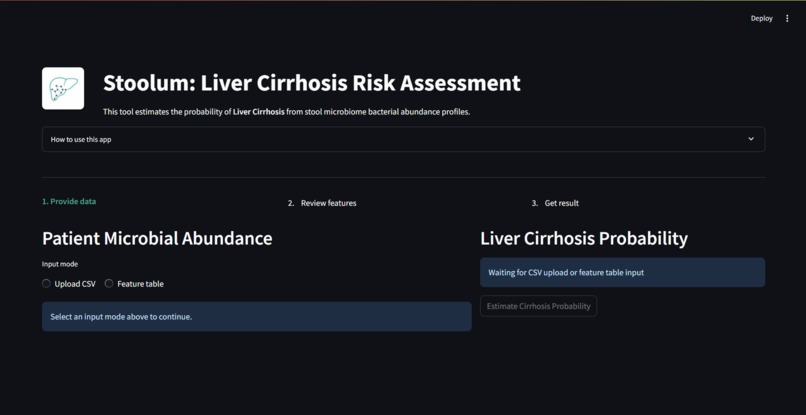
- Estimates cirrhosis probability from stool bacterial abundance data
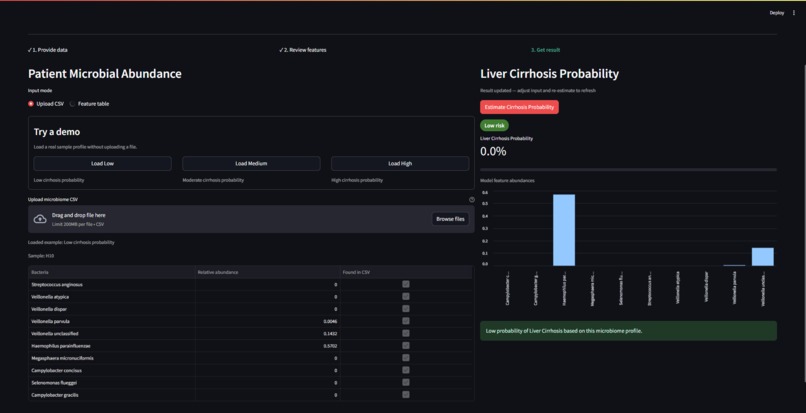
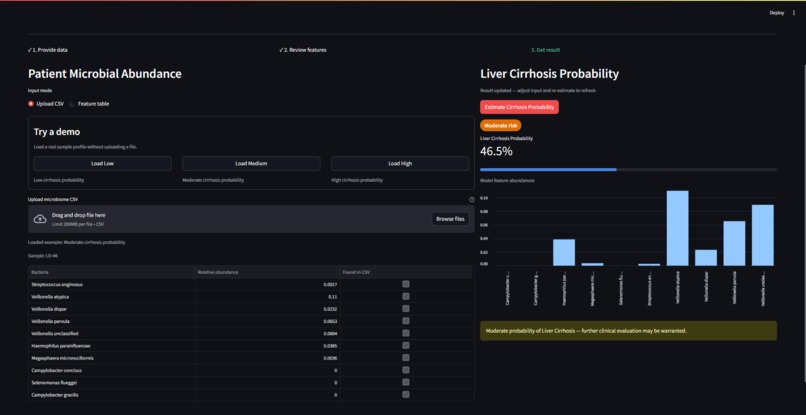
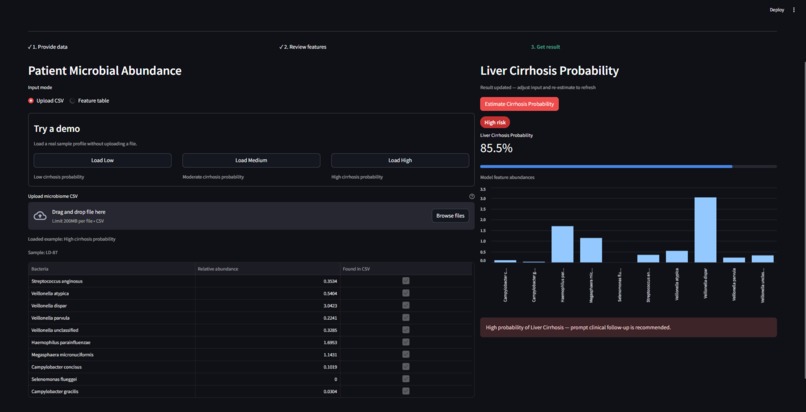
- Users can upload a MetaPhlAn CSV, enter values manually, or try a demo profile
- Pulls out 10 key bacterial species and shows what it found
- Returns a probability score with a risk level (low/moderate/high)
- Built for research triage/diagnosis
How we built it
- Trained on about 1,989 stool samples with 826 species-level features
- Used ANOVA F-tests to narrow it down to the 10 species most linked to cirrhosis (mostly Veillonella and related oral-gut bacteria)
- A Random Forest classifier learned from those 10 features
- Runs in a Streamlit app that handles messy real-world CSV formats using pandas/numpy
- Shows preview tables so users can trust what's happening under the hood
Challenges
- Microbiome data is sparse; most species show up as zero in most samples, so feature selection had to do a lot of work
- Real CSV exports have long, ugly taxonomy headers, so we built logic to match them to our model's features
- Sliders don't work well for this kind of data; CSV upload became the main path instead
What we're proud of
- A full pipeline, from raw CSV to prediction to readable result
- The tool is built around how researchers actually work, utilizing a MetaPhlAn CSV used in metagenomics
What we learned
- Feature selection matters as much as the model itself when you have way more species than samples
- Good ML tools are workflow tools first: they need to fit into what people already have, not ask for something new
- I learned how to build a Random Forest classifier in Python for the first time.
What's next
- External validation on new data (i.e. testing out the model on different datasets)
- Batch scoring: calculating the scores for multiple samples
- Feature importance explanations so people can see which species drove a given score

Log in or sign up for Devpost to join the conversation.