
Inspiration
Most trading platforms are still “UI-first”: you click through menus, translate your intent into form fields, double-check tickers, and repeat. We wanted to flip that workflow: start with natural language, keep every decision grounded in real account context (positions, buying power, open orders), and then turn intent into safe, structured actions.
StonksGPT was inspired by a simple question: what if trading felt like talking to a copilot?
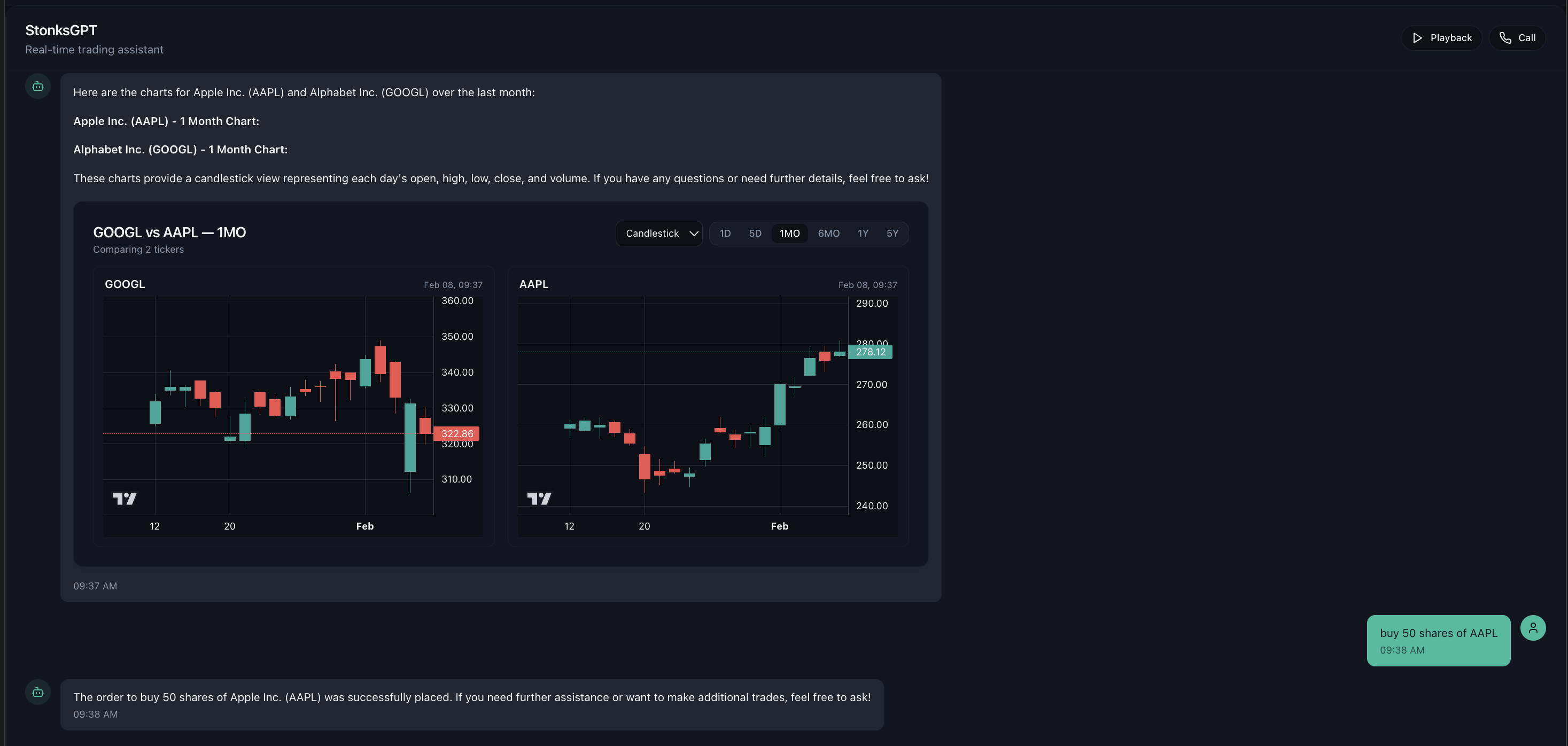
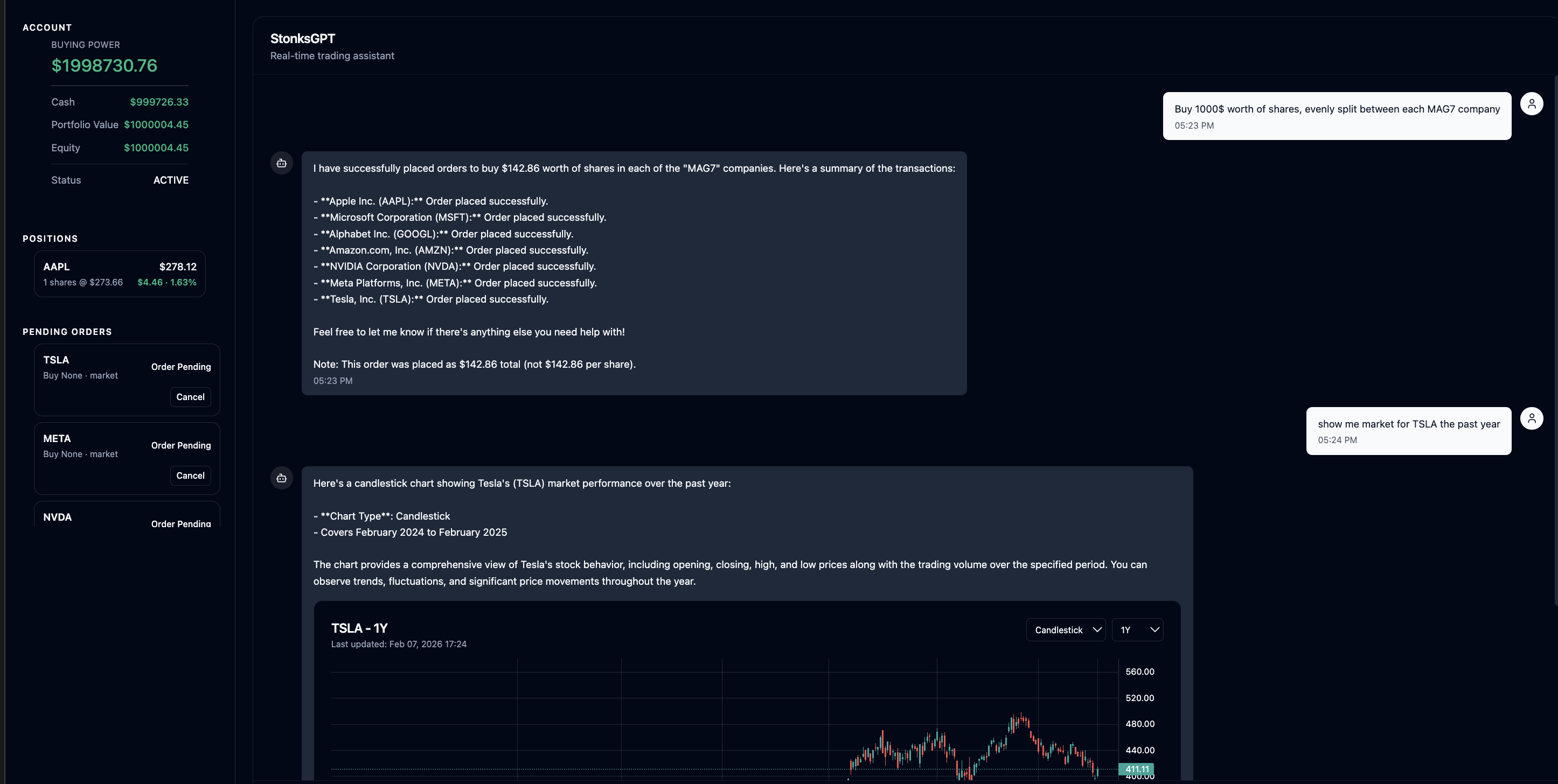
“Buy $50 of NVDA.” “Close 10% of my TSLA position.” “Compare AAPL vs MSFT and explain the move.” "Loop up the 3 most traded crypto by volume this month. Then place an order for $100 each." Instead of hunting for buttons, the assistant should resolve symbols, fetch market/account data, and execute the exact tool call (with guardrails!) like paper trading by default and constrained, auditable tool usage.
What it does
- Natural-language -> trading: Chat with StonksGPT to place/inspect orders, view positions, check account balances, and manage watchlists using plain English.
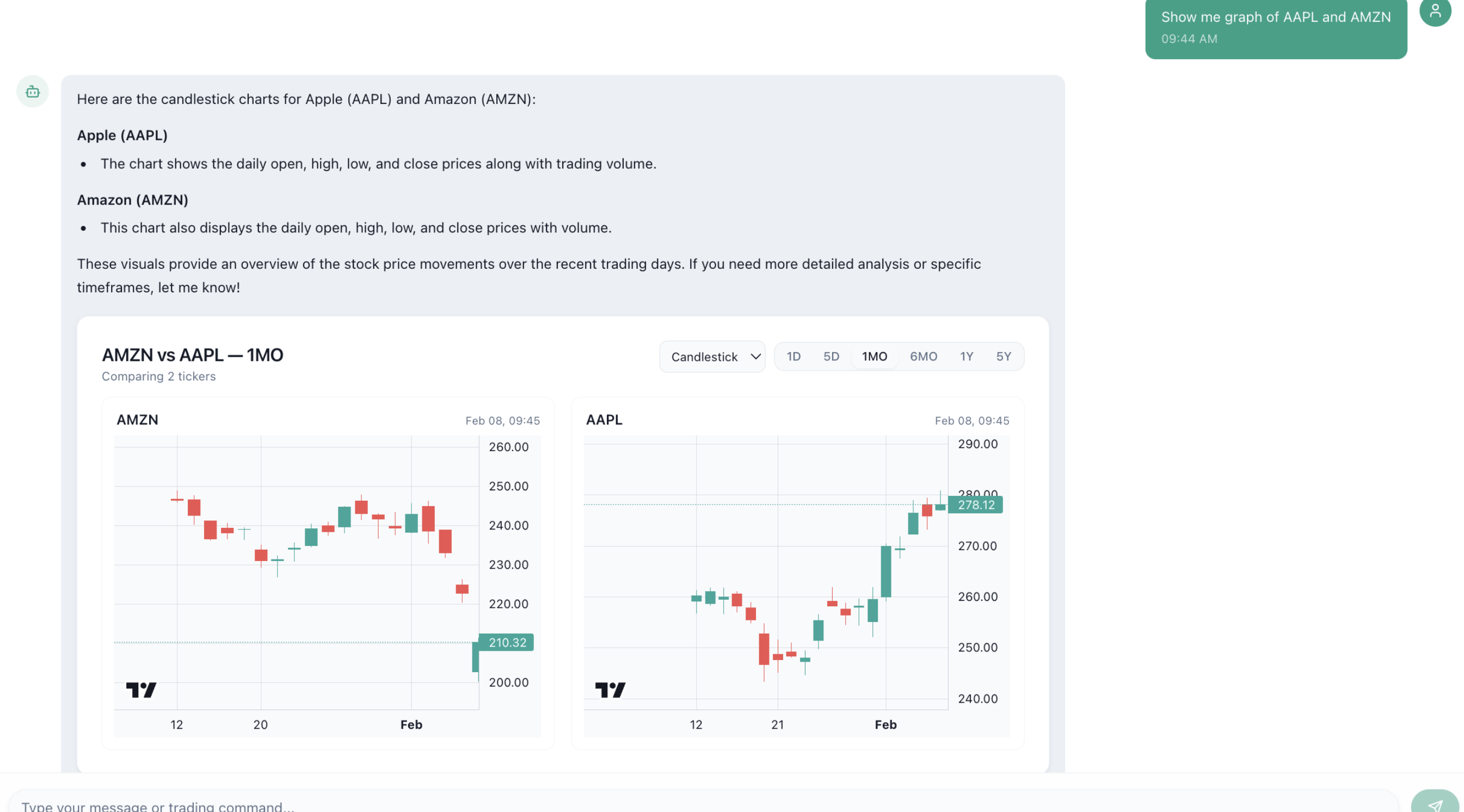
- Market charts + comparisons: Pull price bars and render interactive line/candlestick charts across timeframes, including multi-ticker comparisons.
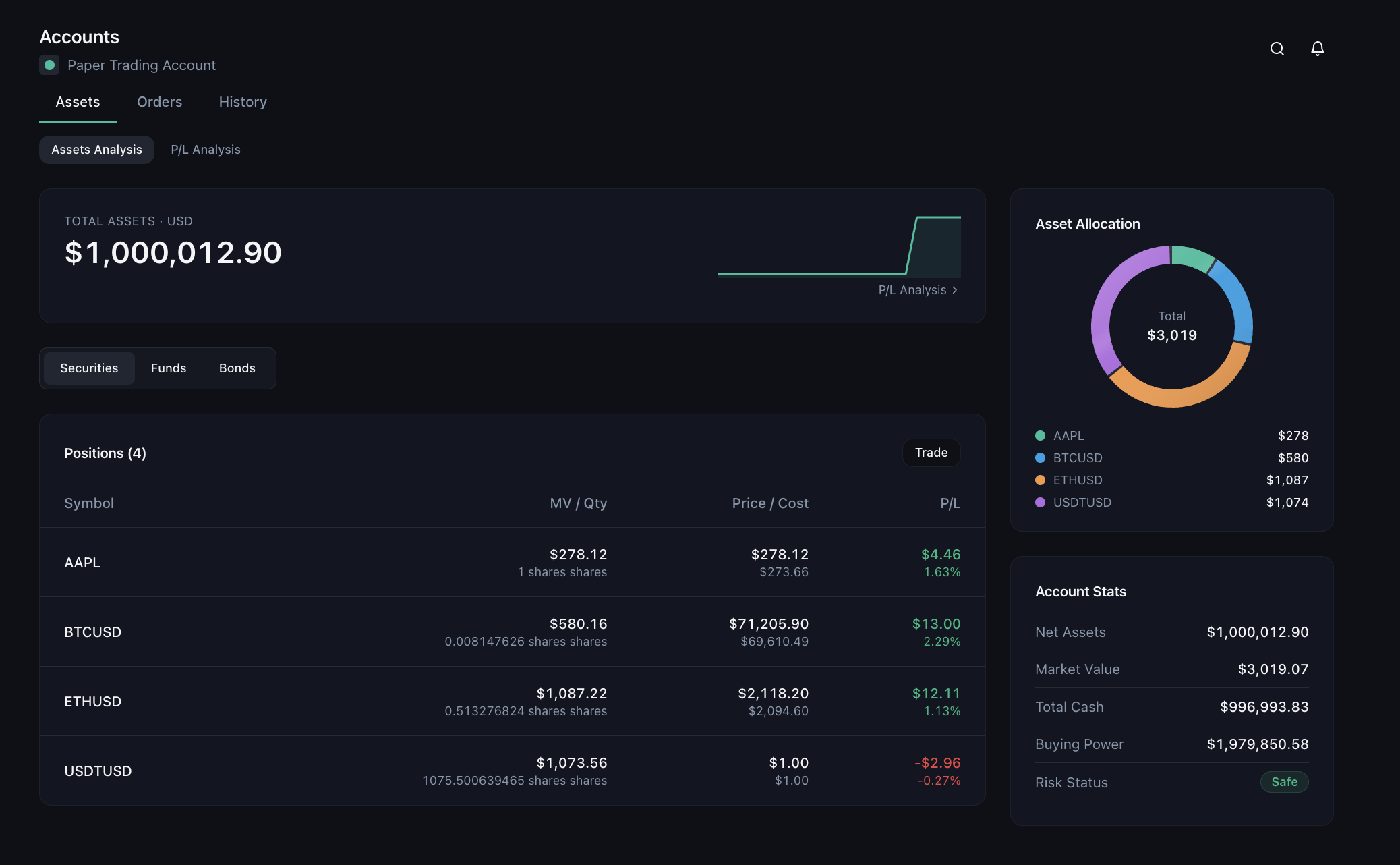
- Portfolio & account analytics: View positions, allocation breakdowns, and portfolio equity/P&L history.
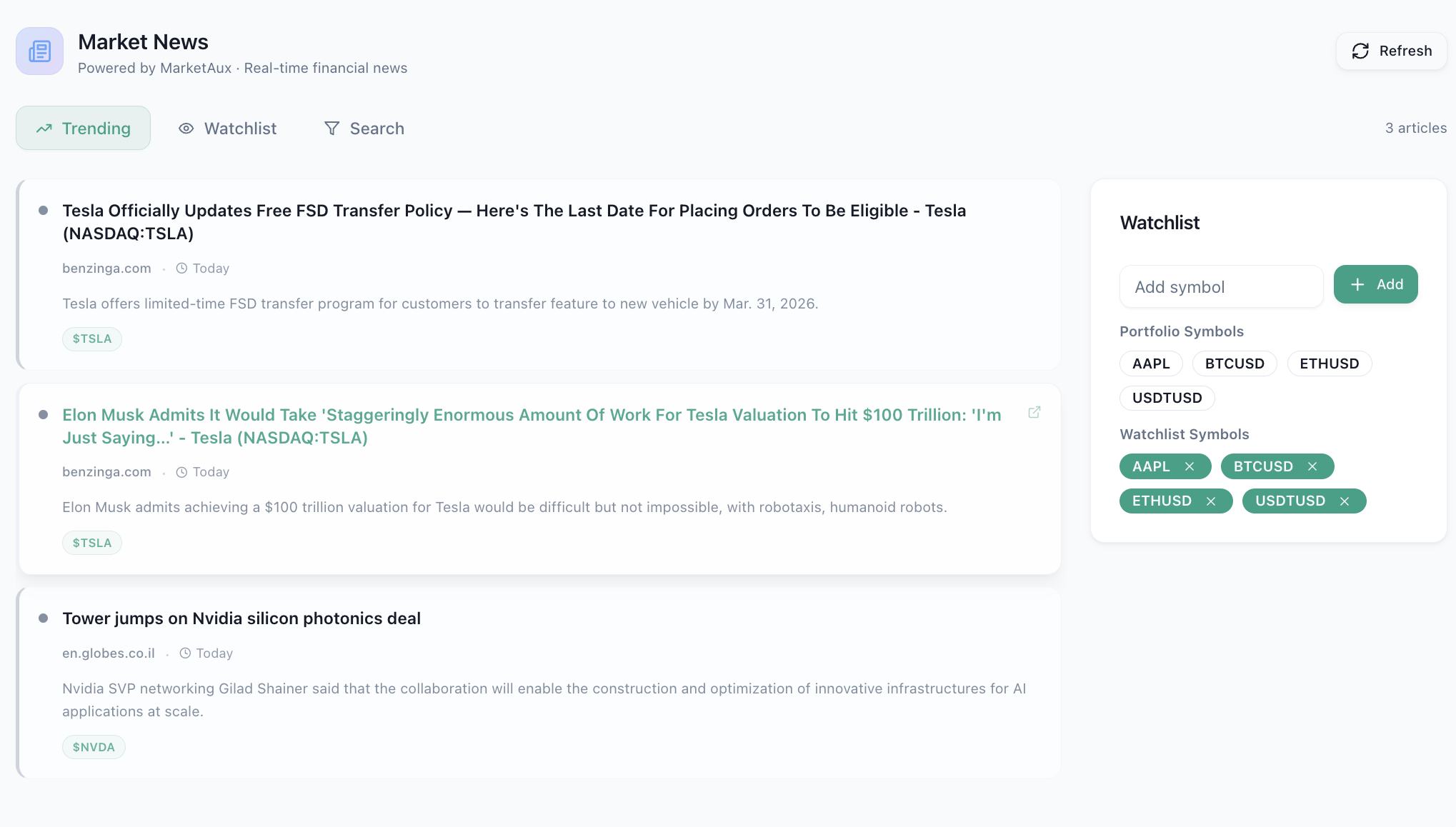
- Market news: Browse trending news, portfolio news, and watchlist news (with watchlist auto-sync based on your current positions).
- Sessions: Create trading sessions and persist chat history per session.
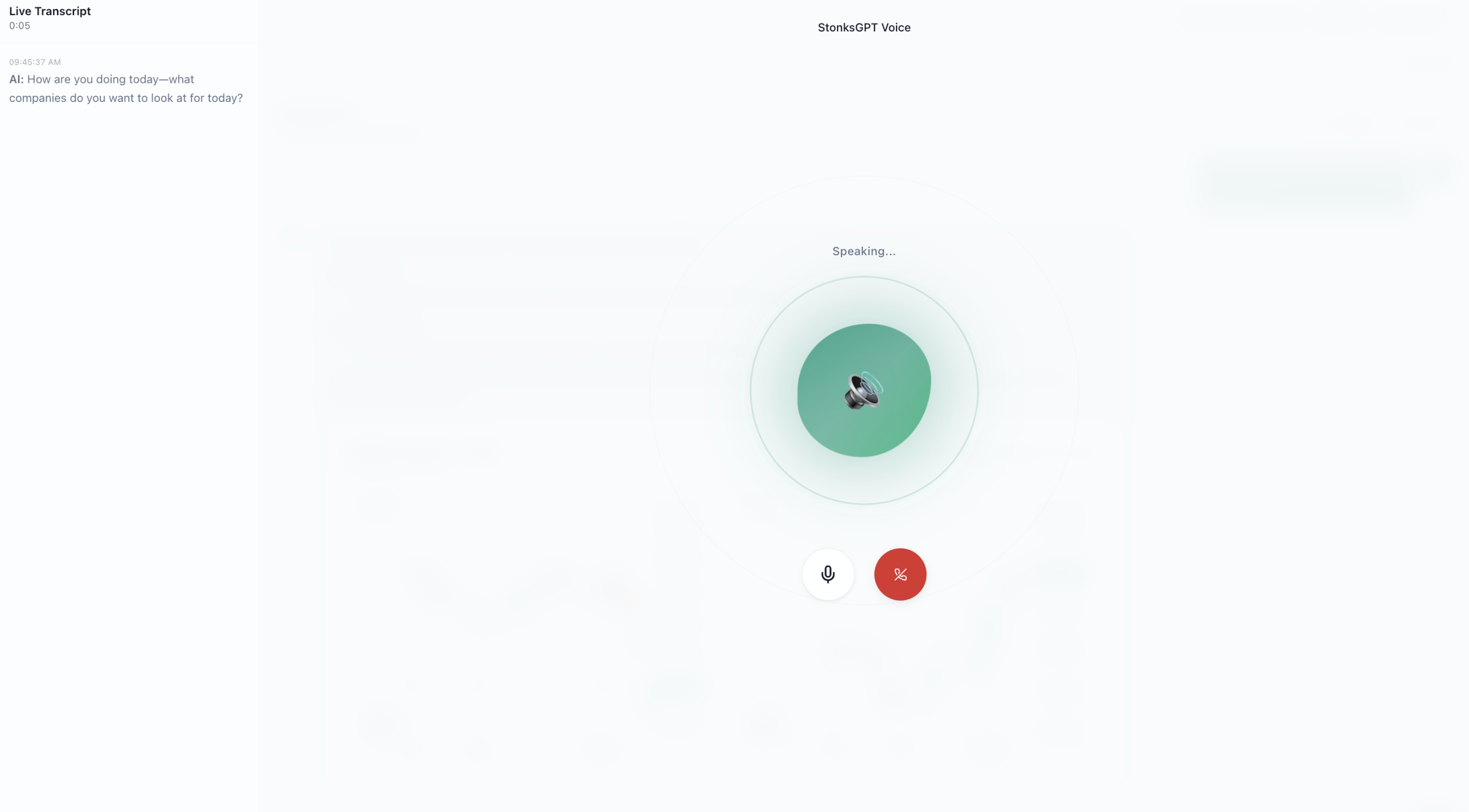
- Voice experience: Optional voice call overlay with real-time speech-to-text, plus text-to-speech playback and spoken session recaps.
How we built it
- Frontend (React): Built a responsive dashboard in React (Vite) with TanStack Query for fetching/caching, Tailwind + shadcn/ui for UI, and lightweight-charts for fast, interactive market charts.
- Backend (Express.js): Implemented an Express API that bridges the UI to the agent + tooling layer, with practical timeouts, caching, and predictable JSON responses.
- MCP + Dedalus Labs (agentic tool-calling): We wrapped Alpaca functionality behind MCP tools and used the Dedalus Labs SDK (with the Dedalus Auth standard) to run an intent -> tool selection -> validated JSON args -> tool results -> response loop. We also deployed an MCP server to Dedalus Labs so tools can be accessed in a hosted, secure, consistent way.
- News via API: Implemented a real news pipeline using the MarketAux News API (and merged/deduped results where needed), with endpoints for symbol, portfolio, and watchlist-based feeds.
- Token cost efficiency (1M+ token prompts): As context grew (long sessions + tool outputs), prompts could explode to \(10^6+\) tokens if naïvely replayed. We used Gemini for token compression/summarization so the agent keeps only the decision-critical context while staying fast and cost-efficient.
- Voice (ElevenLabs): Added ElevenLabs TTS for spoken playback and a WebSocket bridge to ElevenLabs realtime STT for voice calls.
Challenges we ran into
- Safe execution: Turning casual language into trading actions requires strict boundaries—tools must be structured, arguments must be validated, and the assistant must stay grounded in real account state.
- Token blow-ups + cost: Large histories and verbose tool outputs can create \(10^6+\) token prompts, which are slow and expensive. Compression helped, but required careful tuning so we didn’t lose critical constraints.
- Latency & rate limits: LLM calls, web research, and news requests can be slow or rate-limited; we added caching, timeouts, and fallback behavior to keep the UX responsive.
- Parsing tool outputs: Some tool results arrive as formatted text or JSON strings, so we had to robustly parse symbols, bars, watchlists, and portfolio history.
- Voice streaming complexity: Real-time STT involves streaming audio chunks, handling partial vs final transcripts, and keeping UI state stable during calls.
Accomplishments that we're proud of
- End-to-end natural-language trading with an agent that can safely call real tools (account/positions/orders/watchlists) instead of hallucinating actions.
- A polished dashboard: charts, news, portfolio analytics, sessions, and voice, all working together as one product.
- Performance wins: caching/prefetching for charts and token compression for the agent made the experience feel dramatically faster.
- Hosted MCP on Dedalus Labs with Dedalus Auth for secure tool access in a deployable environment.
What we learned
- LLMs are best when constrained: “Tools + schemas” beats free-form text when money is on the line.
- Determinism matters: keep data pipelines (charts, transformations) structured and predictable; use LLMs for language tasks (summaries, explanations, compression).
- Token efficiency is a product feature: compression and context hygiene directly impact speed, reliability, and cost.
- Great UX needs systems thinking: agent logic, caching, API design, and UI all have to cooperate to feel seamless.
What's next for StonksGPT
- Richer safety rails: pre-trade confirmations, spending limits, “dry-run” previews, and stricter validations around market status and order parameters.
- Better long-term memory: move beyond localStorage to real persistence so sessions and preferences follow users across devices.
- Smarter insights: portfolio-aware news ranking, impact summaries, and daily “what changed?” briefings.
- Alerts & automation: guardrailed triggers (price/news/portfolio events) with human-in-the-loop approvals.
- More coverage: deeper analytics (risk, diversification, scenario testing) and broader asset support while keeping the interface simple.
Built With
- axios
- cors
- dedalus-auth
- dedalus-labs-sdk
- elevenlabs
- express.js
- google-gemini
- javascript
- marketaux-news-api
- model-context-protocol-(mcp)
- node.js
- openai
- python
- react
- react-router
- tailwind-css
- typescript
- vite
- websockets


Log in or sign up for Devpost to join the conversation.