-
-
ChatRot
Inspiration
Chatrot was inspired by the idea of mixing humor and AI, bringing together memes, quirky personalities, and a touch of brainrot to make chatting more fun and entertaining. I wanted to create something that could engage users in a lighthearted way while still providing a playful chat experience. It draws inspiration from the internet's culture of memes, personality quizzes, and the whole concept of brainrot that has taken over social media. It combines these elements with the chatbot experience for a unique interaction.
What it does
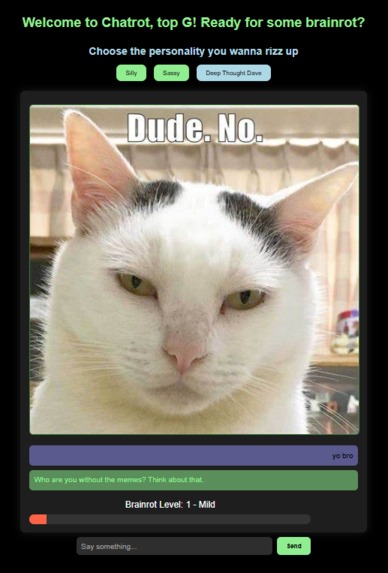
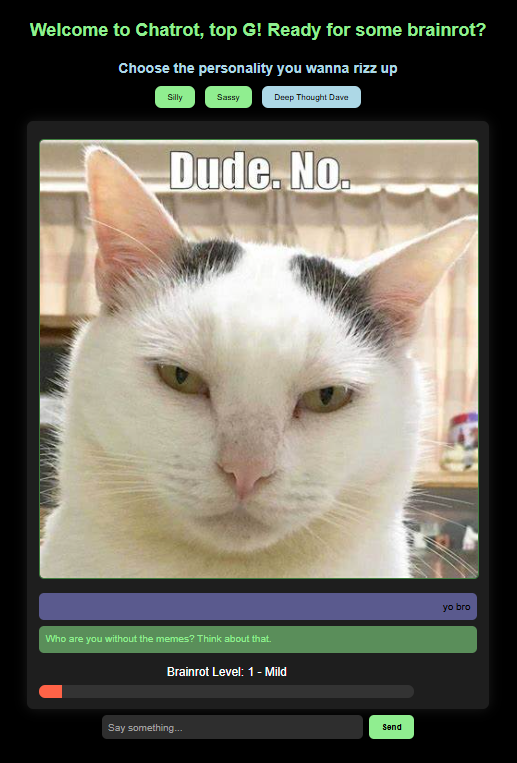
Chatrot is an interactive chatbot that lets users chat with three different personalities: Silly, Sassy, and Deep Thought Dave. It features a Brainrot Meter that tracks the user's "brainrot" level based on their input. As users chat, the bot responds with humorous, sassy, or deep responses, and the brainrot meter fluctuates based on the randomness and length of the conversation. Additionally, Chatrot displays random memes to keep the mood light and fun. The personality options are fully customizable, allowing users to pick the personality they want to "rizz up" and chat with.
How we built it
Chatrot was built using HTML, CSS, and JavaScript. The front-end design utilizes modern web development techniques to create a visually engaging user interface with a mix of dark colors and playful styles. The bot responses are handled through JavaScript, with pre-defined responses for each personality. The Brainrot Meter is dynamically updated using JavaScript to reflect the user's input, and memes are displayed by fetching random image URLs. A personality selector was implemented to let users choose the bot’s mood, which in turn influences the conversation flow.
Key steps include:
- Implementing a random meme generator.
- Using JavaScript to handle real-time user input and bot responses.
- Creating a dynamic Brainrot Meter that adjusts based on conversation length and randomness.
- Designing a clean and playful UI using CSS, ensuring the chatbot is easy to use and visually appealing.
Challenges we ran into
Some of the challenges faced during the development of Chatrot include:
- Handling dynamic content: Keeping the meme section and Brainrot Meter in sync with the conversation flow.
- Personality switching: Implementing the ability to change personalities mid-chat while maintaining smooth transitions and ensuring the correct responses are given based on the selected personality.
- UI consistency: Ensuring the chatbot interface looks good across different devices and screen sizes, which required a bit of tweaking to make everything responsive.
- Keeping the Brainrot Meter stable: Making sure the Brainrot Meter fluctuates appropriately without becoming too erratic or being overly sensitive to minor input changes.
Accomplishments that we're proud of
- Dynamic interaction: The chatbot’s ability to switch personalities and generate appropriate responses based on the selected mood is a key feature that makes Chatrot stand out.
- Brainrot Meter: The Brainrot Meter, which tracks and reflects the user's "brainrot" level, adds a fun element to the chat experience.
- Memes: The integration of random memes throughout the conversation keeps things engaging and humorous.
What we learned
Throughout the development of Chatrot, we learned:
- JavaScript event handling: Specifically, how to handle real-time user input, dynamically generate content (such as bot responses and memes), and update the UI based on changes.
- UI/UX design: The importance of creating an engaging user interface that balances aesthetics with functionality, especially when dealing with something as dynamic as a chatbot.
- Personality-driven interaction: How to make a bot feel personal and fun by implementing different 'personalities' and tailoring responses accordingly.
- Debugging and troubleshooting: Fixing issues with user input and ensuring that the Brainrot Meter and other dynamic features worked seamlessly.
What's next for ChatRot
Looking ahead, there are several potential improvements and features that could be added to Chatrot:
- Voice integration: Allow users to chat using voice and have the bot respond audibly.
- More personalities: Introduce additional personalities for users to choose from, adding variety and further customization.
- Smarter responses: Implement AI-driven responses that learn from the user's input to generate even more personalized and unpredictable replies.
- Social sharing: Allow users to share their Brainrot levels or funniest interactions on social media, adding a layer of social engagement.
- Improved meme generator: Integrate with an API for fetching more meme options or allow users to upload their own memes for a fully custom experience.


Log in or sign up for Devpost to join the conversation.