Inspiration : Small retailers often make gut-based inventory decisions, which leads to either overstocking (waste) or understocking (lost sales). Unlike big corporations, they lack access to data science tools for demand forecasting.
StockSense was inspired by the idea of democratizing AI — making intelligent forecasting tools simple, offline-friendly, and usable by even local grocery store owners.
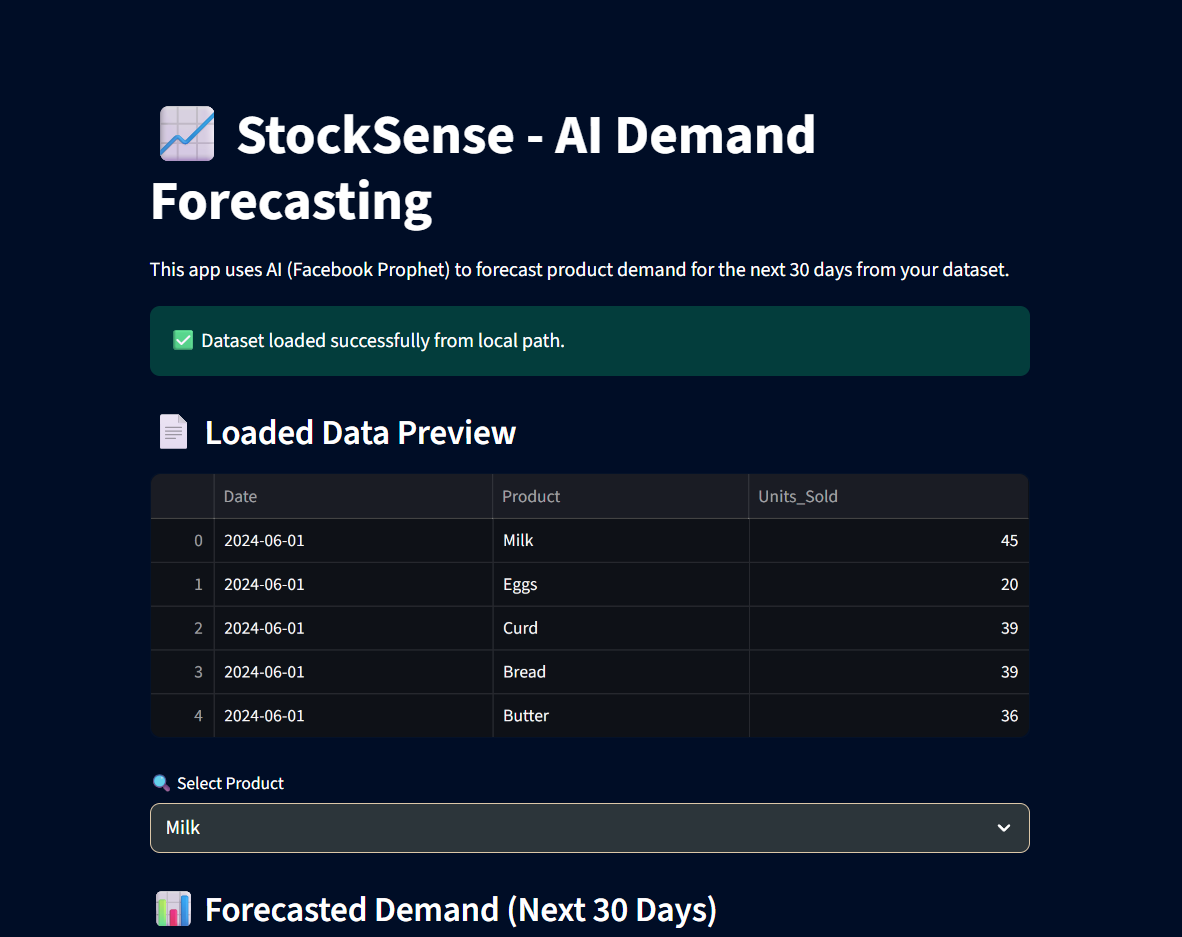
How We Built It : Frontend: Streamlit — for a simple, clean web interface with interactive plots and dropdowns Backend / AI Engine: Facebook Prophet — an open-source forecasting model that learns from time-series data Data Input: CSV dataset with product sales over time (7 products × 30 days) Data Output: Interactive charts and downloadable forecasts (.csv)
Features :
- Upload or auto-load sales CSV
- Dropdown to select any product (e.g., Milk, Eggs, Curd)
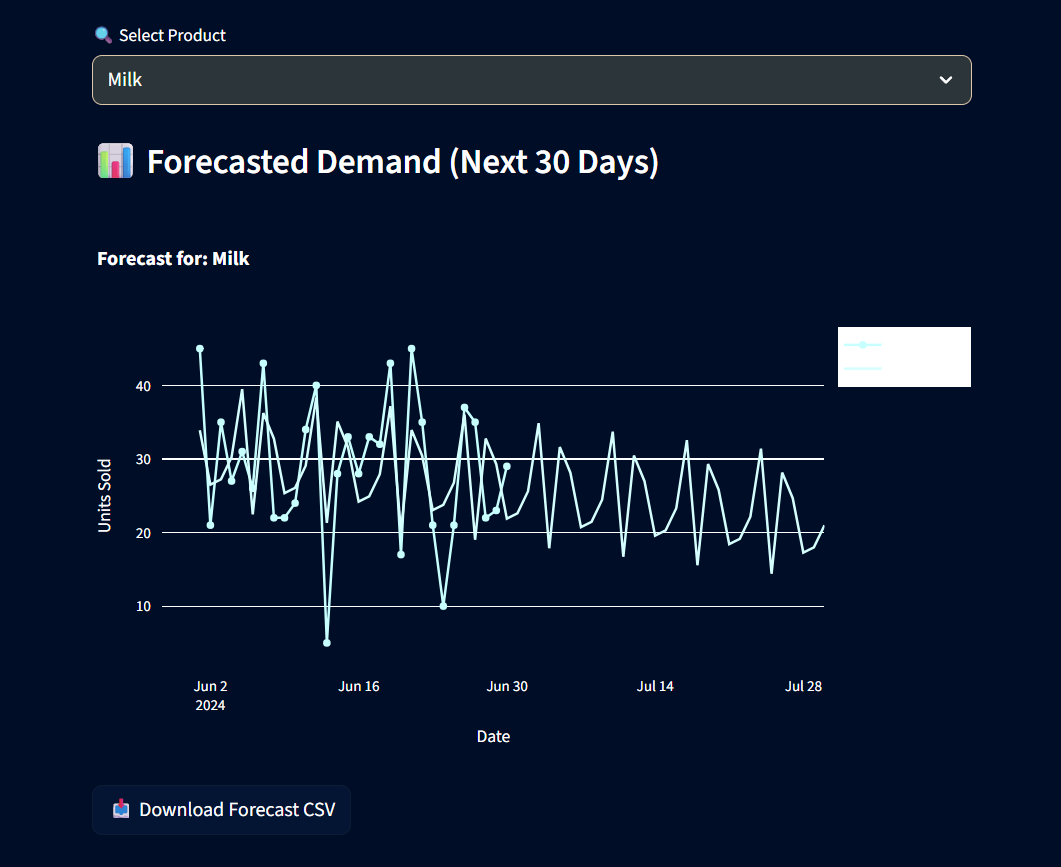
- Forecasts next 30 days using AI
- Interactive line chart of past + predicted sales
- Download predictions as a CSV
- Works entirely offline
What We Learned :
- How to use Facebook Prophet for real-world forecasting
- Importance of clean, well-structured time-series data
- Streamlit integration with AI models for rapid prototyping
- How small tweaks in UX (like product selection) massively improve usability
Challenges We Faced :
- Time-series data preprocessing (date formatting, missing values)
- Ensuring the model works for multiple products in one dataset
- Rendering visualizations clearly for non-technical users
- Handling file input locally and ensuring smooth auto-detection of product types
What’s Next :
- Integrate with Firebase for cloud sync
- Add inventory threshold alerts (restock notifications)
- Build a simple mobile app to view forecasts on the go
- Enable OCR to extract sales data from printed bills
- Train model on revenue predictions instead of just units sold
Team :
- Tushar N

Log in or sign up for Devpost to join the conversation.