-
-
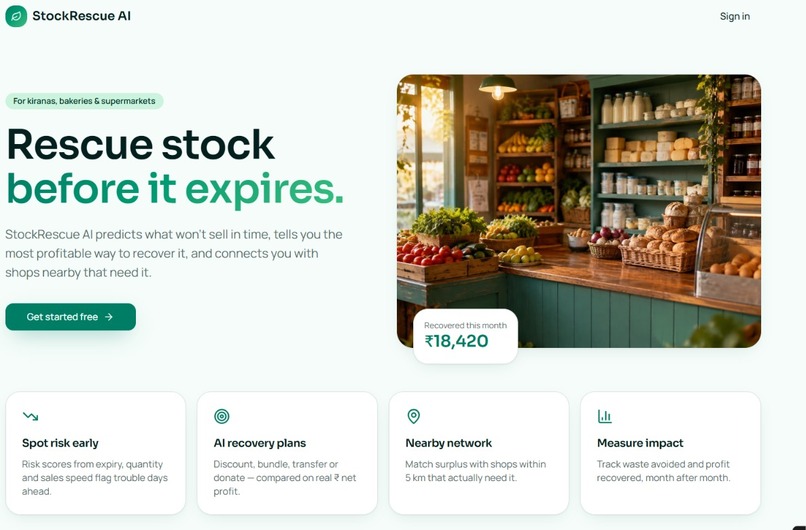
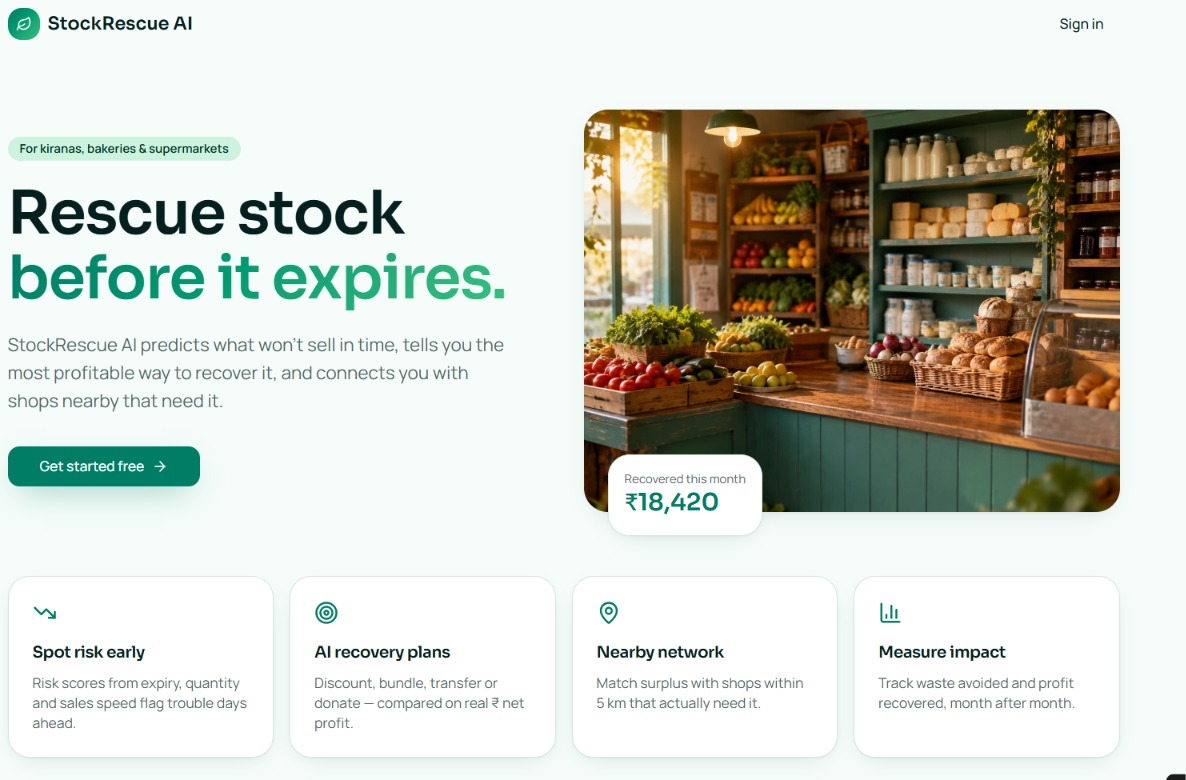
StockRescue AI
-
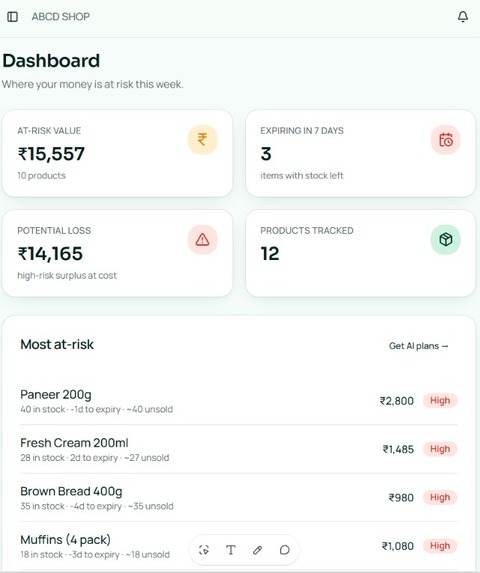
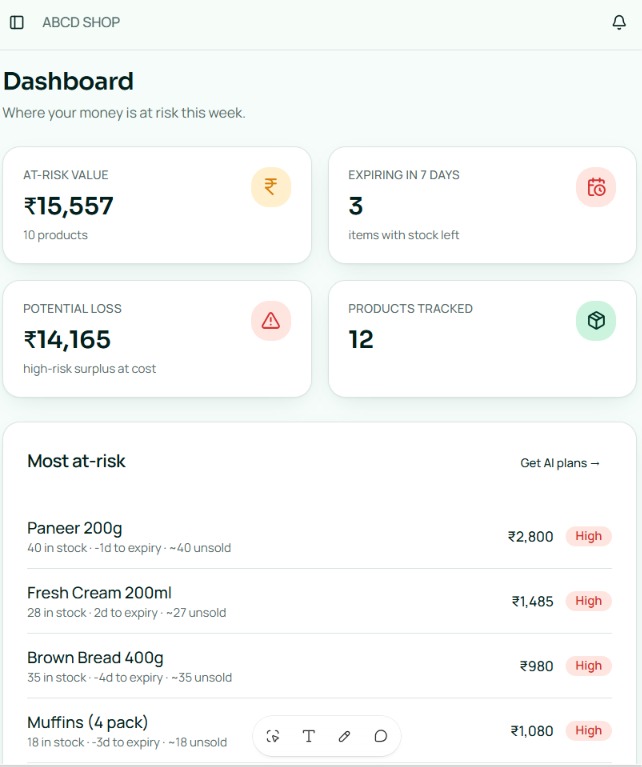
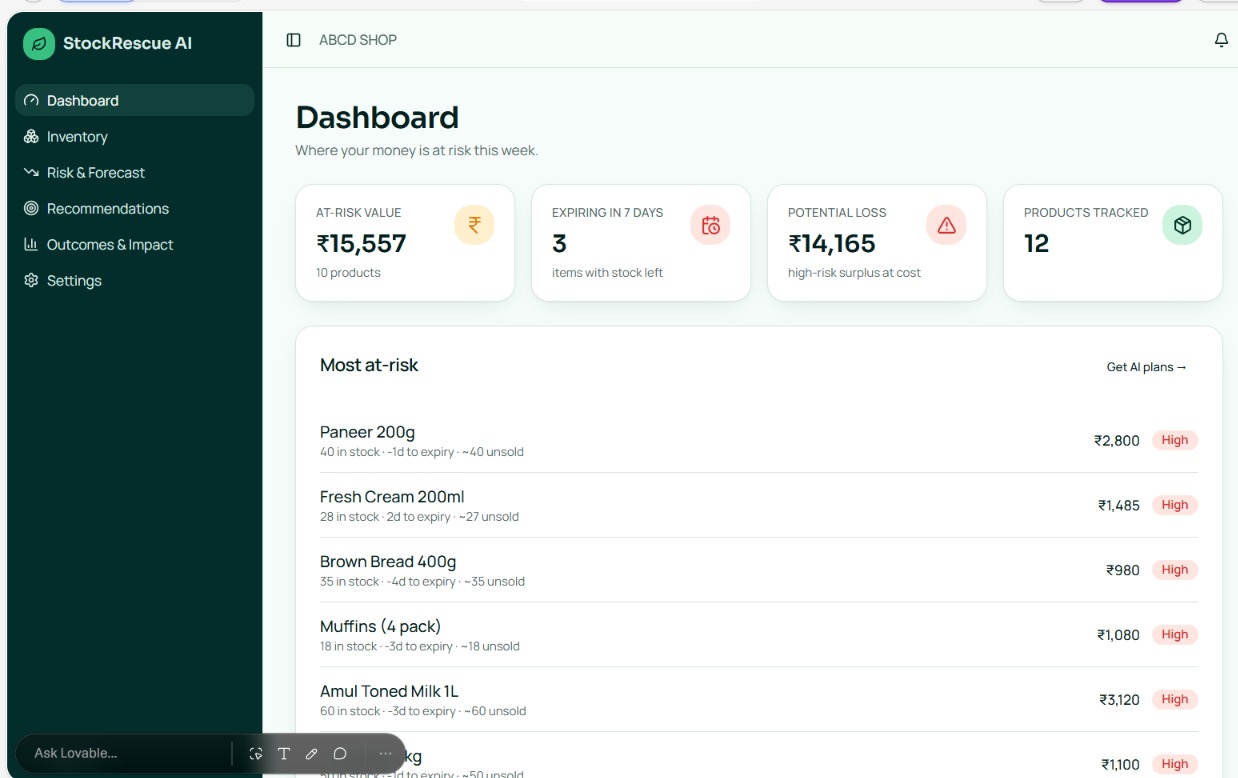
Dashboard 1
-
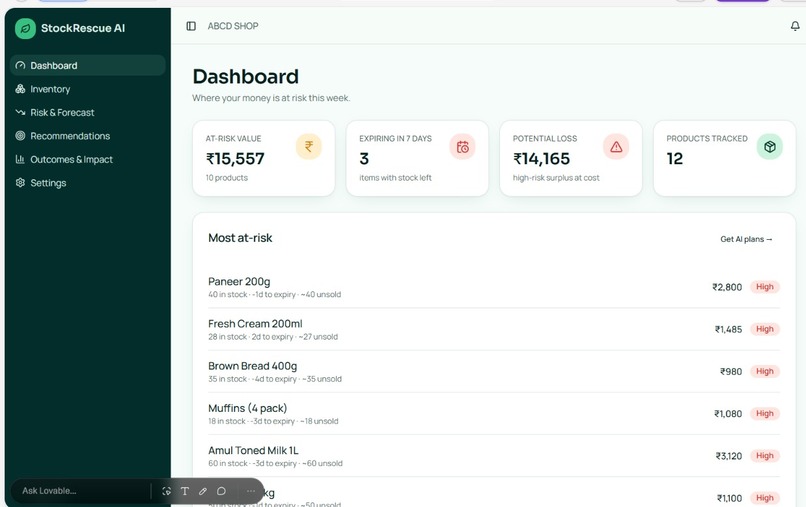
Dashboard 2
-
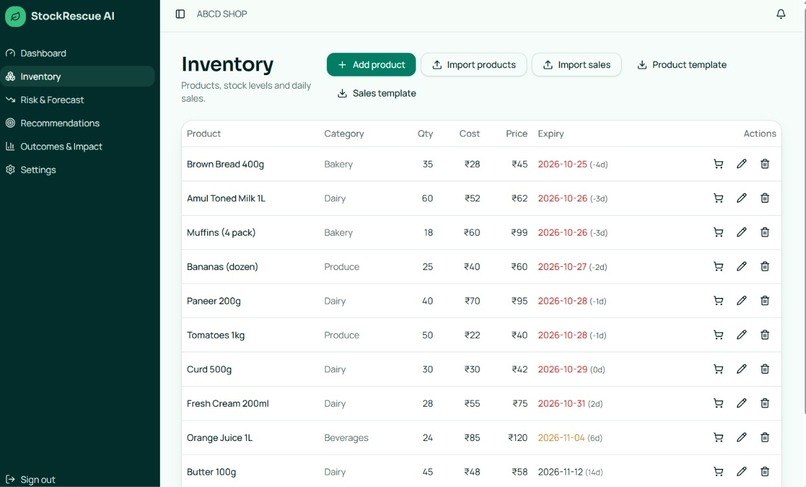
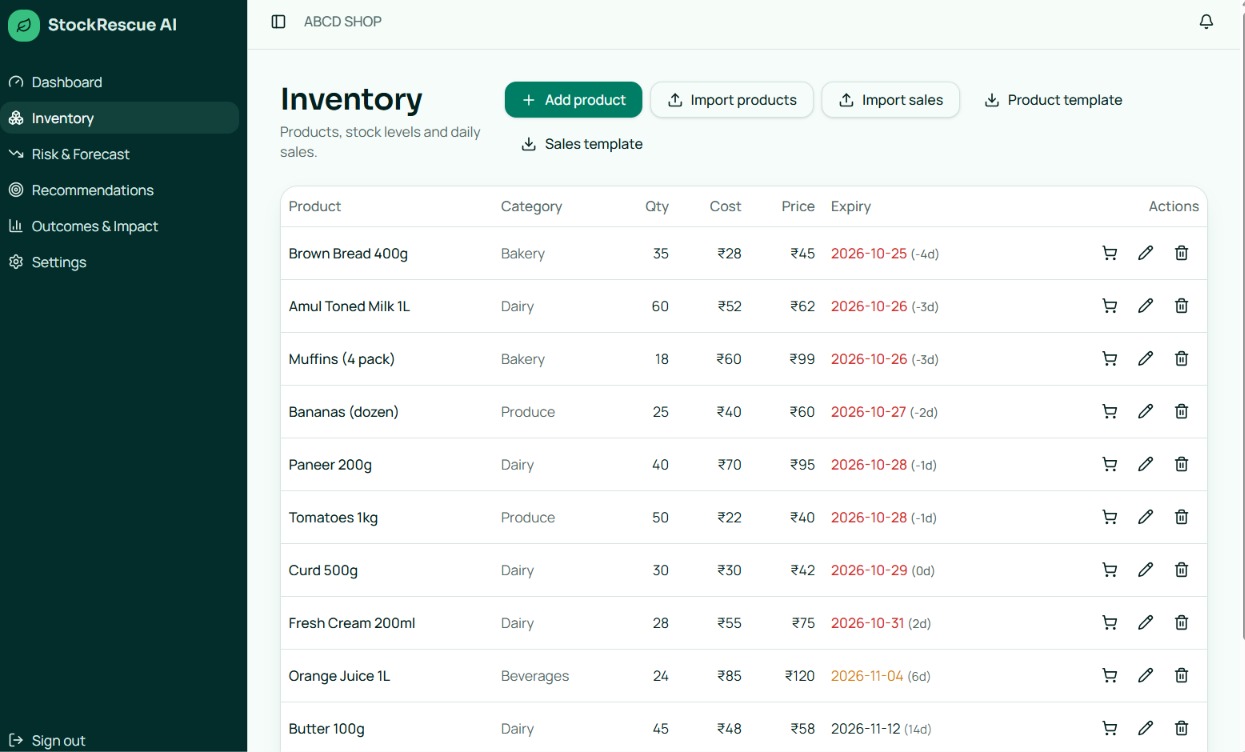
Inventory page
-
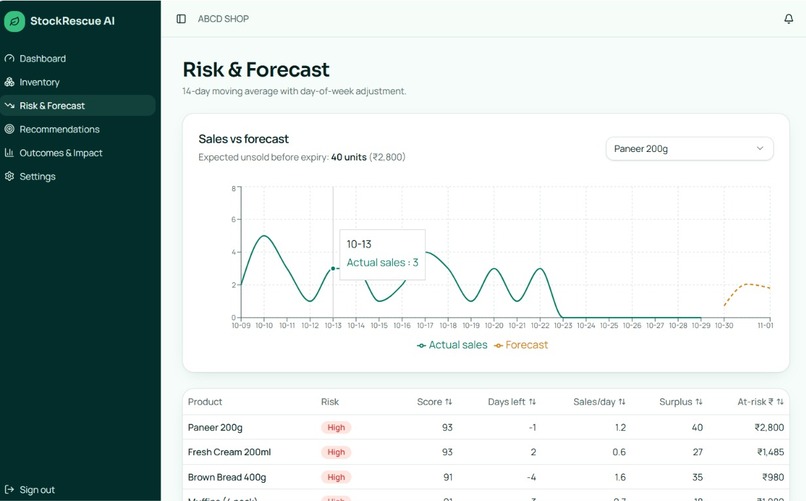
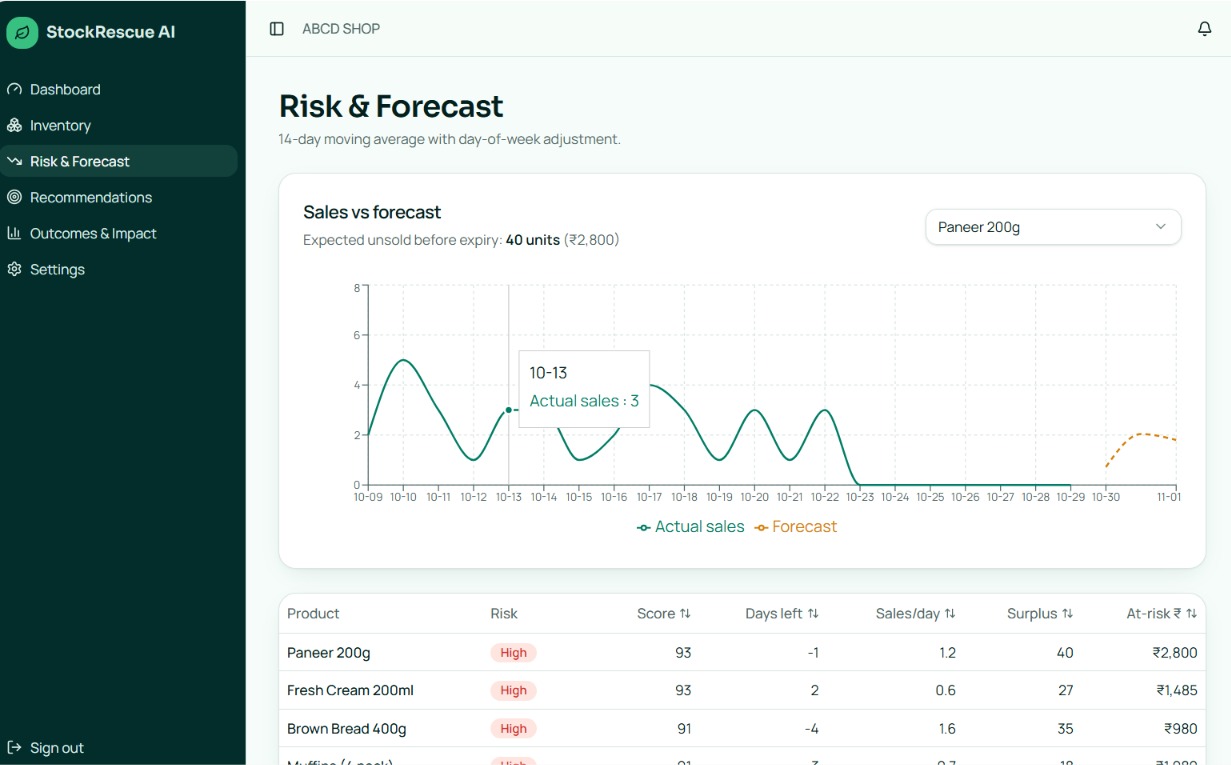
Risk and forecast
-
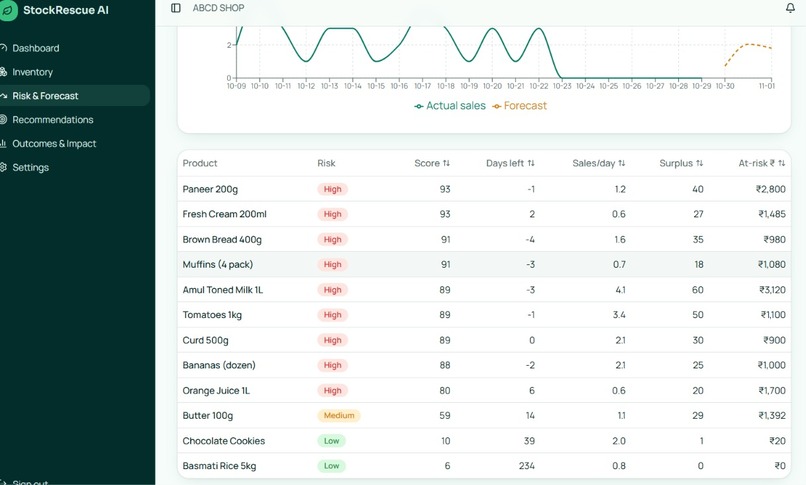
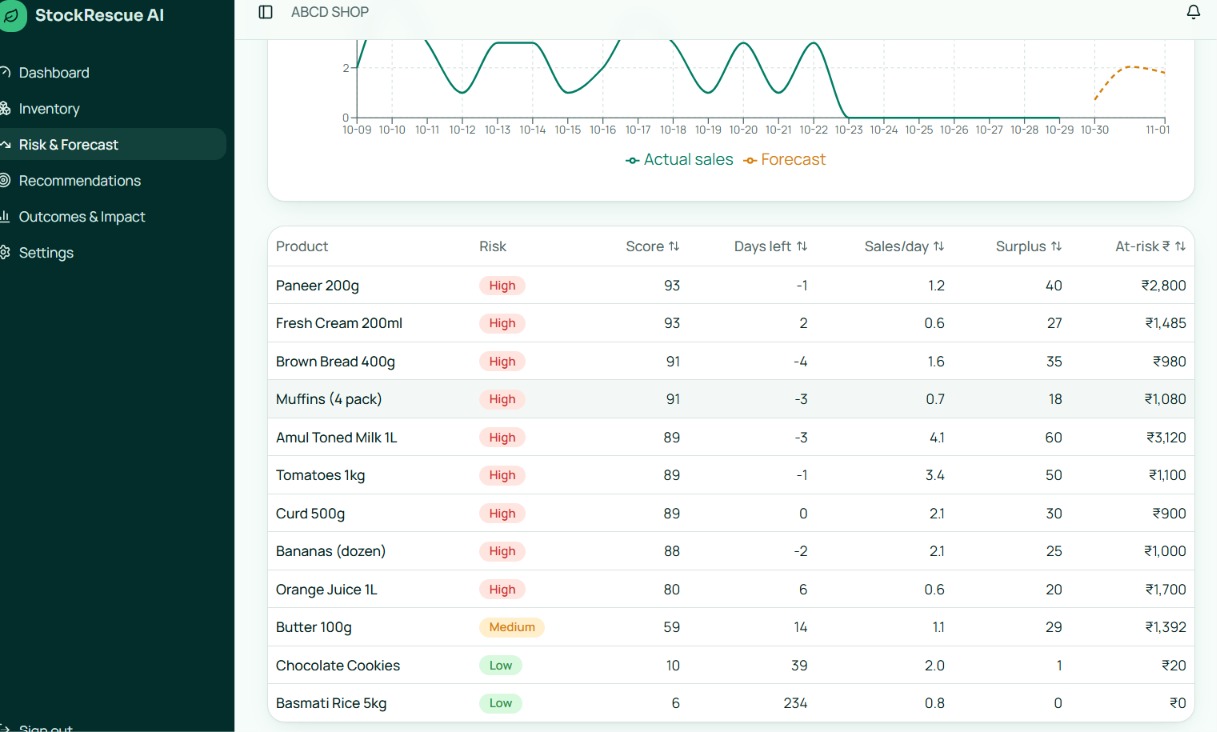
Data about product days left,sales/day
-
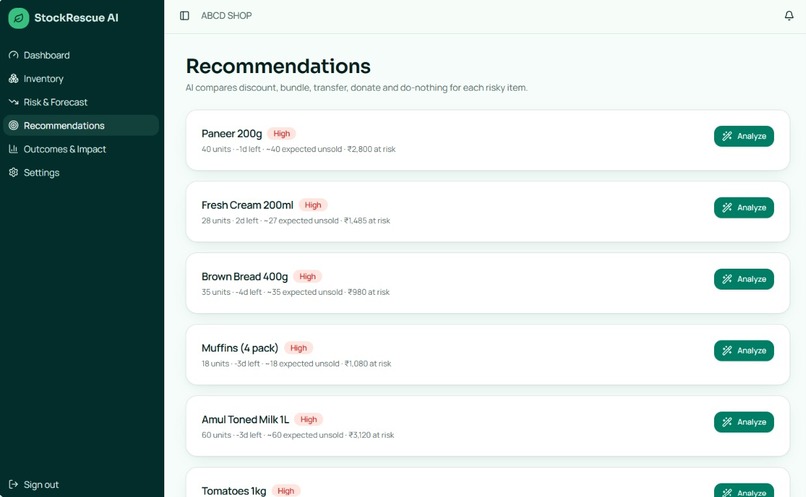
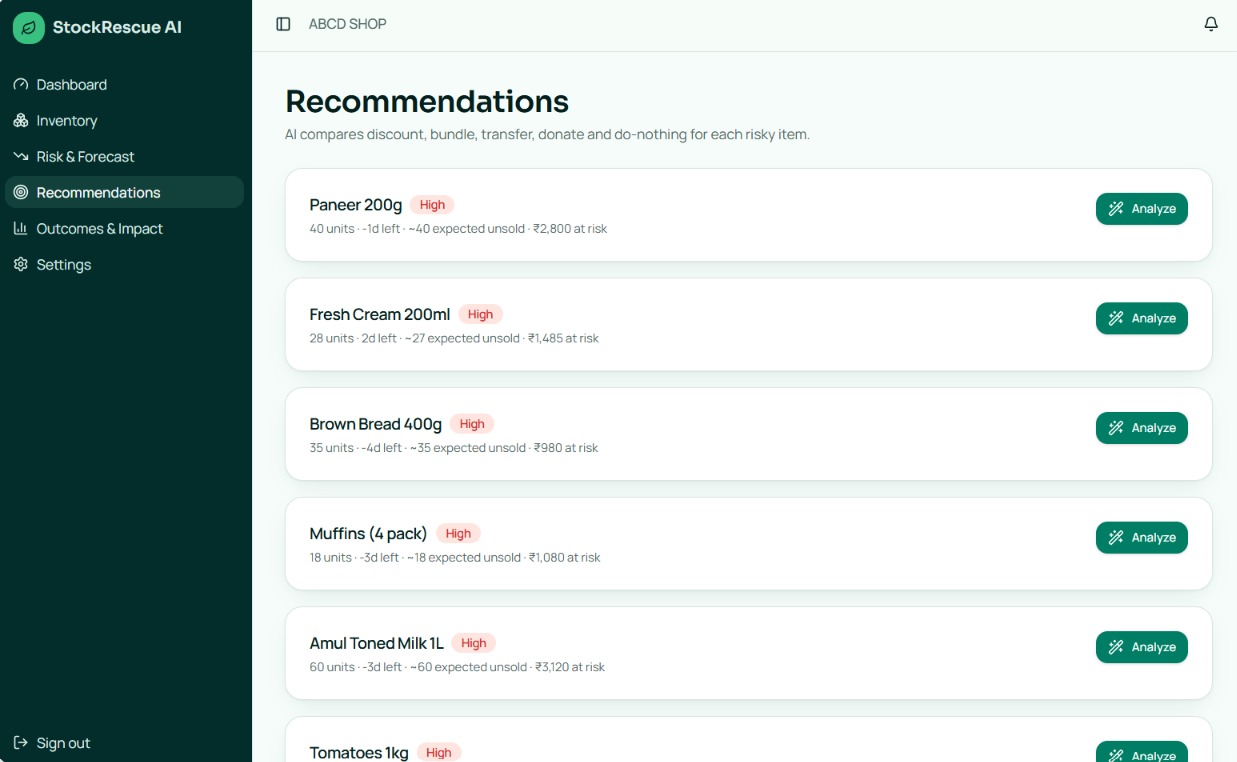
Recomendations
-
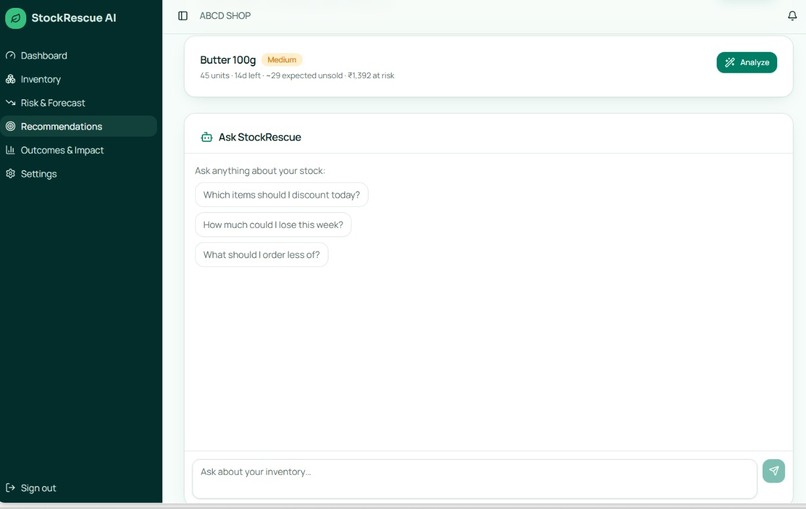
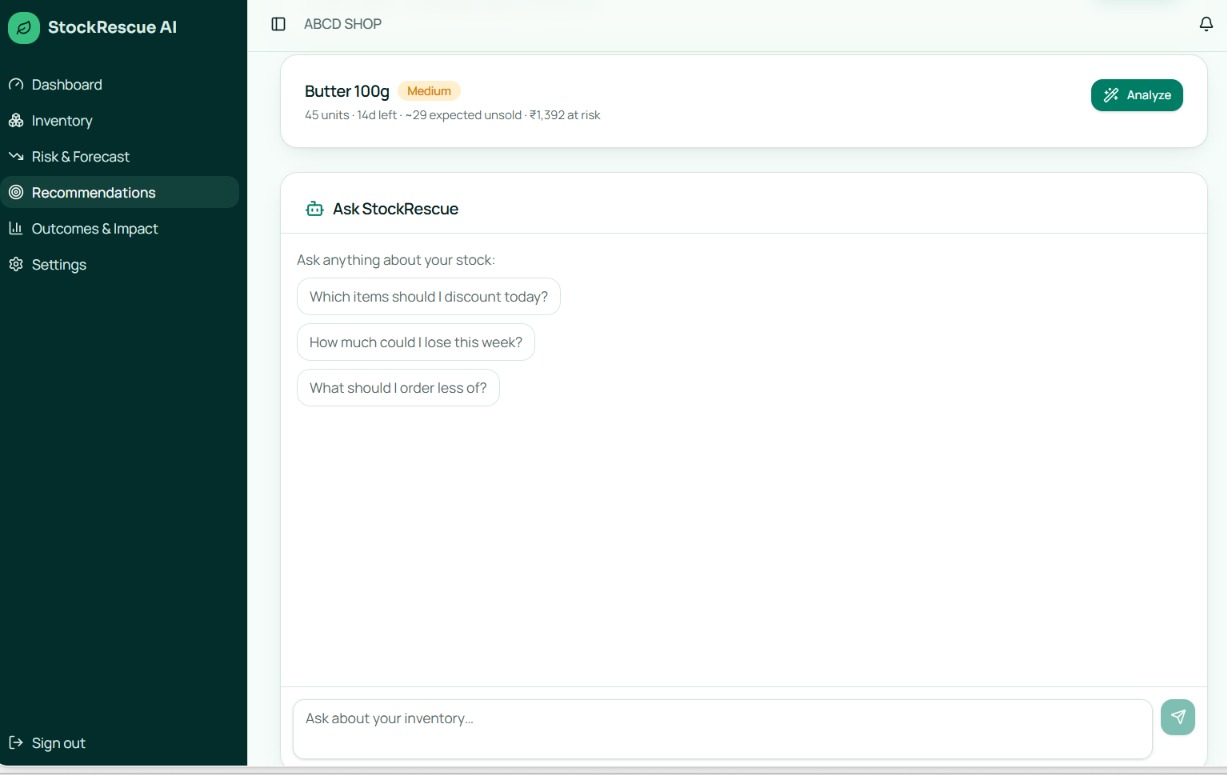
Ask StockRescue Tab
-
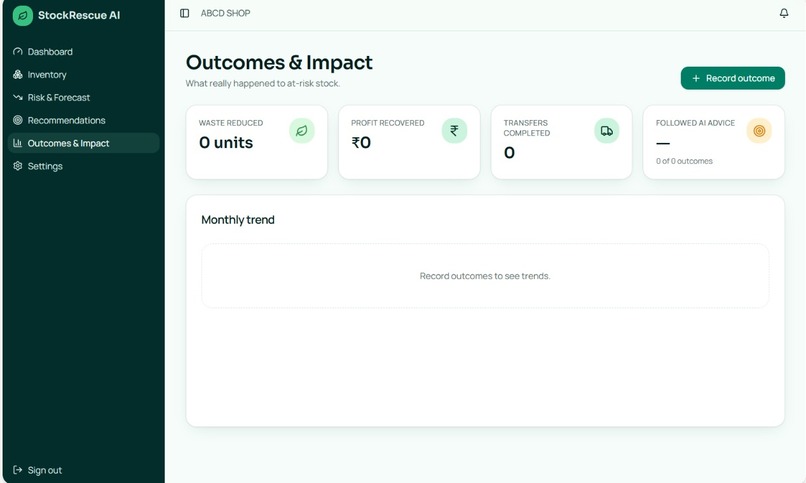
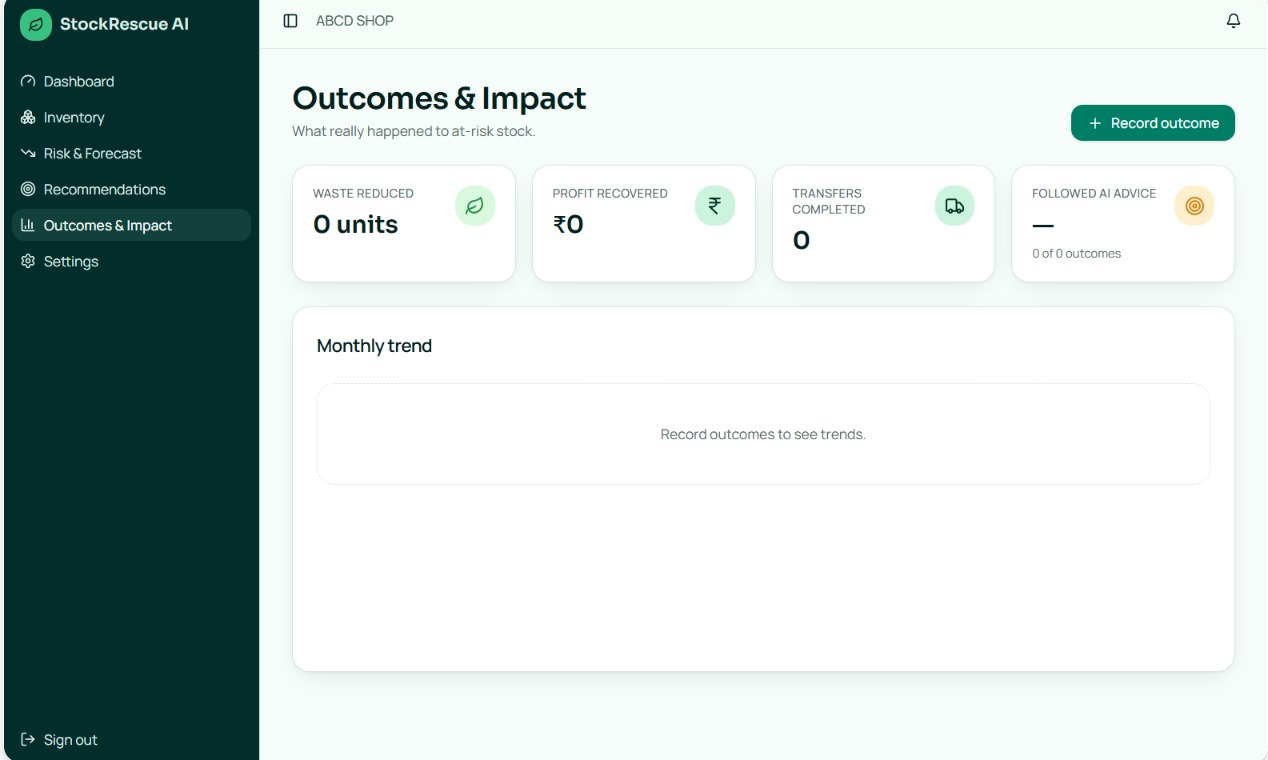
Outcomes and Impact
-
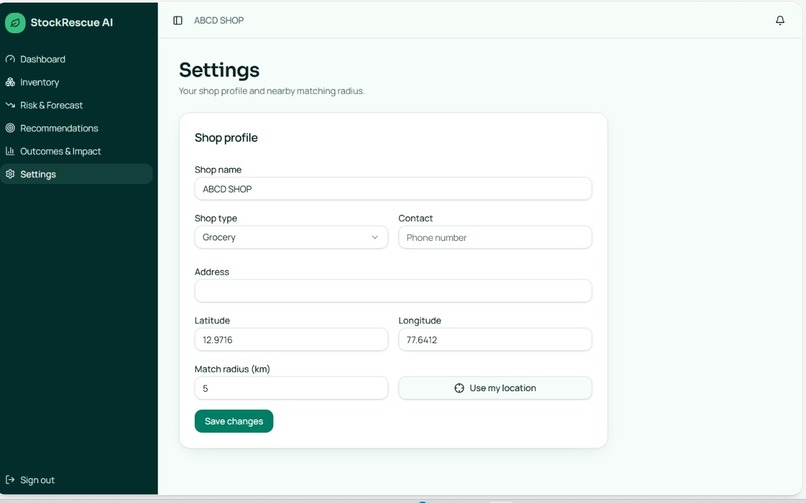
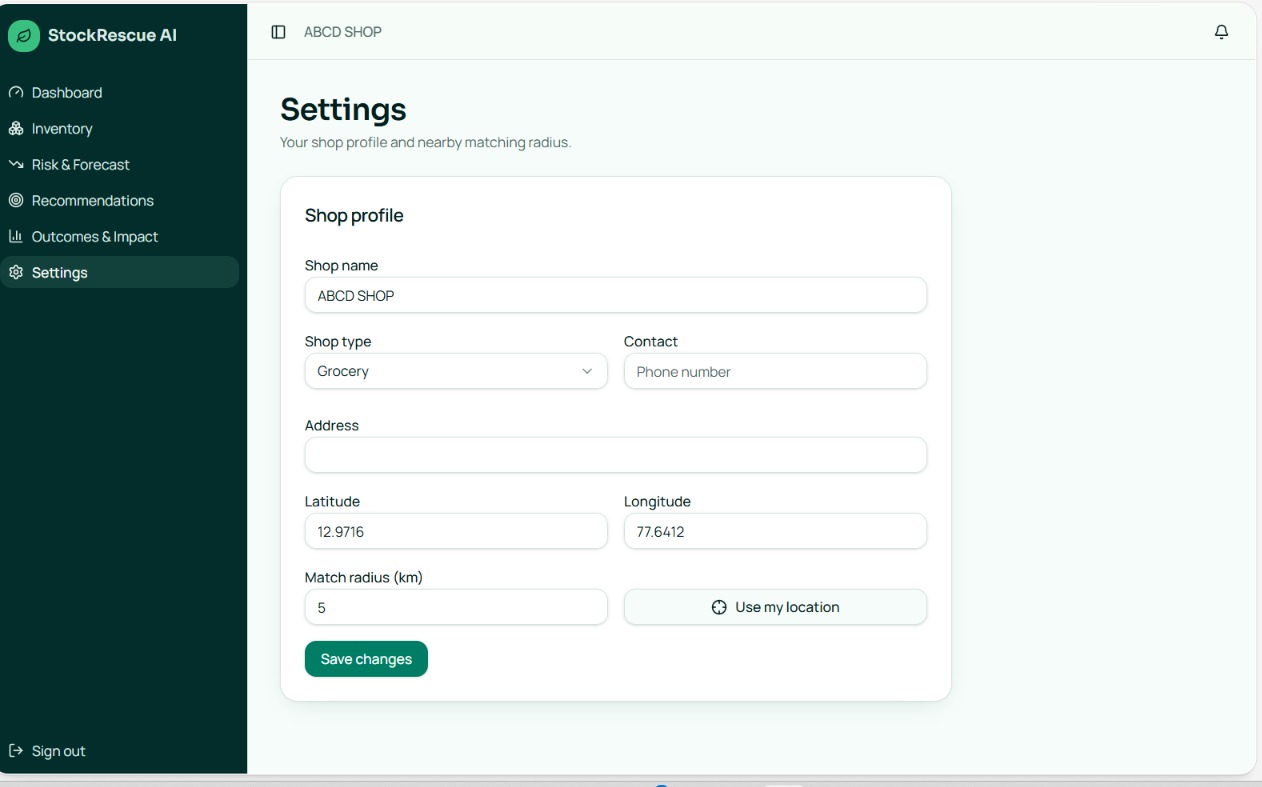
Settings
Inspiration
We were inspired by the everyday struggles of small retailers who lose money when products remain unsold or expire, while nearby shops may face shortages of the same products. We saw an opportunity to use AI to connect surplus stock with potential demand. This led us to create StockRescue AI, an intelligent inventory recovery agent that helps retailers make smarter decisions, recover value from unsold products, reduce waste, and improve profitability. Our vision is to turn surplus inventory from a financial burden into an opportunity for sustainable growth.
What it does
StockRescue AI is an AI-powered inventory recovery agent that helps small retailers reduce losses and recover value from surplus stock. It identifies excess, slow-moving, and near-expiry products, estimates future demand using historical sales data, and compares recovery strategies such as discounts, bundle offers, holding stock, and transfers to nearby shops. By analyzing estimated revenue, costs, and stock risks, it recommends suitable actions and explains its suggestions using an AI agent. It also supports outcome tracking to help retailers evaluate results and make smarter inventory decisions, reduce avoidable waste, and improve profitability.
How we built it
We built StockRescue AI using Python for the core logic and Pandas to analyze inventory and historical sales data. We used Streamlit to create an interactive dashboard where retailers can view stock risks and recovery recommendations, and SQLite to store inventory and transaction records. The system analyzes excess and slow-moving stock, estimates future demand, and compares recovery options such as discounts, bundles, and stock transfers based on estimated revenue and costs. We incorporated an LLM-based AI agent to explain recommendations in simple language and designed an outcome-tracking workflow to help retailers evaluate their decisions. Our focus was to create a practical, accessible solution that helps small businesses make smarter inventory decisions while reducing waste.
Challenges we ran into
One of our biggest challenges was finding the best recovery strategy for surplus stock. Discounts can help products sell faster, while stock transfers may involve additional costs, and holding inventory can increase the risk of losses or expiry. We had to consider estimated demand, potential revenue, and recovery costs to make meaningful comparisons. Another challenge was working with limited historical sales data, which can affect demand estimates. We also focused on making AI recommendations clear, practical, and easy for small retailers to understand. These challenges helped us recognize the importance of reliable data, realistic calculations, and human-reviewed AI recommendations when building a useful real-world solution.
Accomplishments that we're proud of
We are proud to have developed StockRescue AI around a real-world problem faced by small retailers. Instead of simply tracking inventory, our project focuses on helping businesses decide what to do with surplus stock through data-driven recovery recommendations. We brought together inventory analysis, demand estimation, profit-based comparisons, and AI-powered explanations into one solution. We are especially proud of our idea of connecting retailers with potential demand from nearby shops, turning excess inventory into a possible opportunity rather than a loss. This project has strengthened our understanding of AI, data analysis, and practical problem-solving while inspiring us to build technology that supports both business growth and sustainability.
What we learned
Through StockRescue AI, we learned how to apply AI and data analysis to solve a real-world business problem. We explored inventory management, demand forecasting, profit calculations, and comparing recovery strategies using Python and Pandas. We also gained experience in designing interactive dashboards with Streamlit, storing data using SQLite, and using an LLM-based AI agent to explain recommendations. Beyond the technical skills, we learned the importance of reliable data, practical decision-making, teamwork, and considering real-world constraints when developing an AI solution. Most importantly, we realized that AI can do more than automate tasks—it can help businesses reduce waste, recover value, and make smarter decisions.
What's next for StockRescue AI
Our next step is to make StockRescue AI smarter, more accurate, and accessible to more small retailers. We plan to improve demand forecasting using machine learning, introduce real-time inventory updates, and develop location-based matching to connect shops with surplus stock to those that need it. We also aim to enable retailer-approved stock transfers, add multilingual support for local businesses, and build analytics dashboards to track recovered revenue and waste reduction. In the long term, we envision a collaborative retail ecosystem where AI helps businesses minimize losses, reduce product waste, and turn surplus inventory into valuable opportunities.
