Inspiration
The inspiration for StockQuest came from a gap we kept seeing in financial education: teenagers are told to “learn about money,” but they are rarely given a safe place to actually practice financial decisions. Students may learn definitions like diversification, risk, or compound growth in class, while social media exposes them to investing long before they fully understand those concepts. At the same time, most investing platforms are designed for adults who already know what the numbers mean. We wanted to build something in between: a place where teens could explore stocks, make simulated decisions, understand why those decisions were risky or smart, and build financial confidence before real money was involved. That idea became StockQuest.
What it does
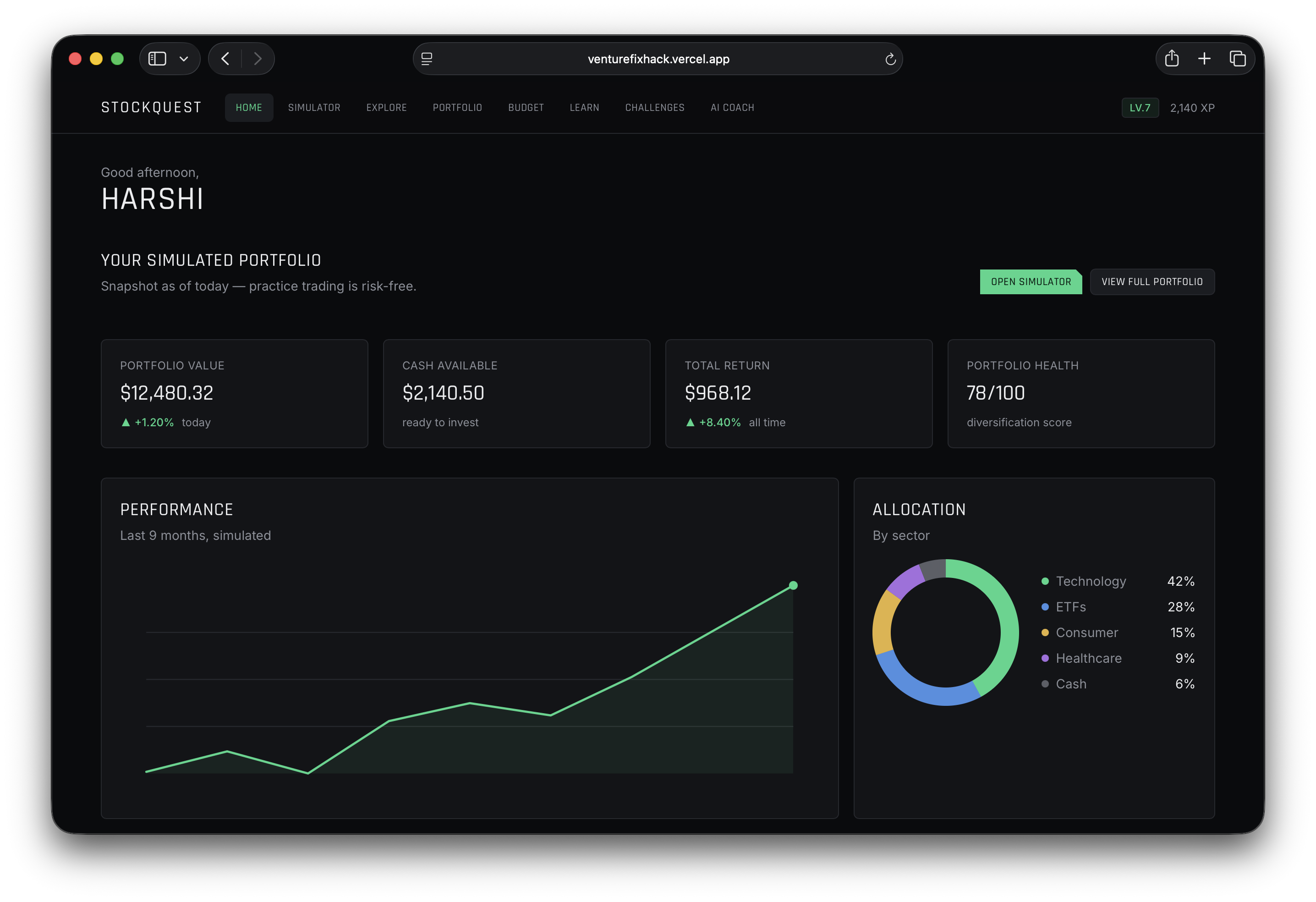
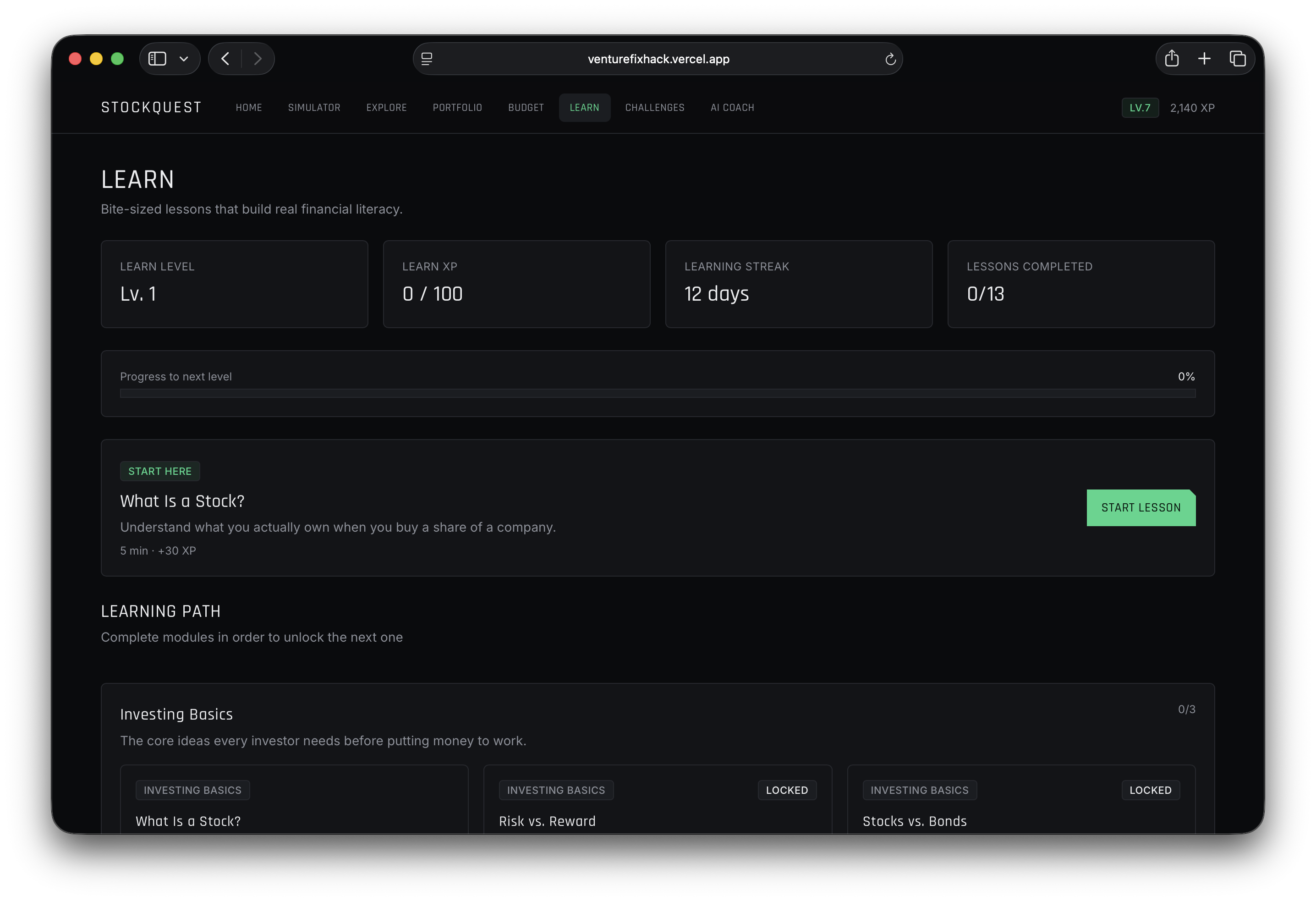
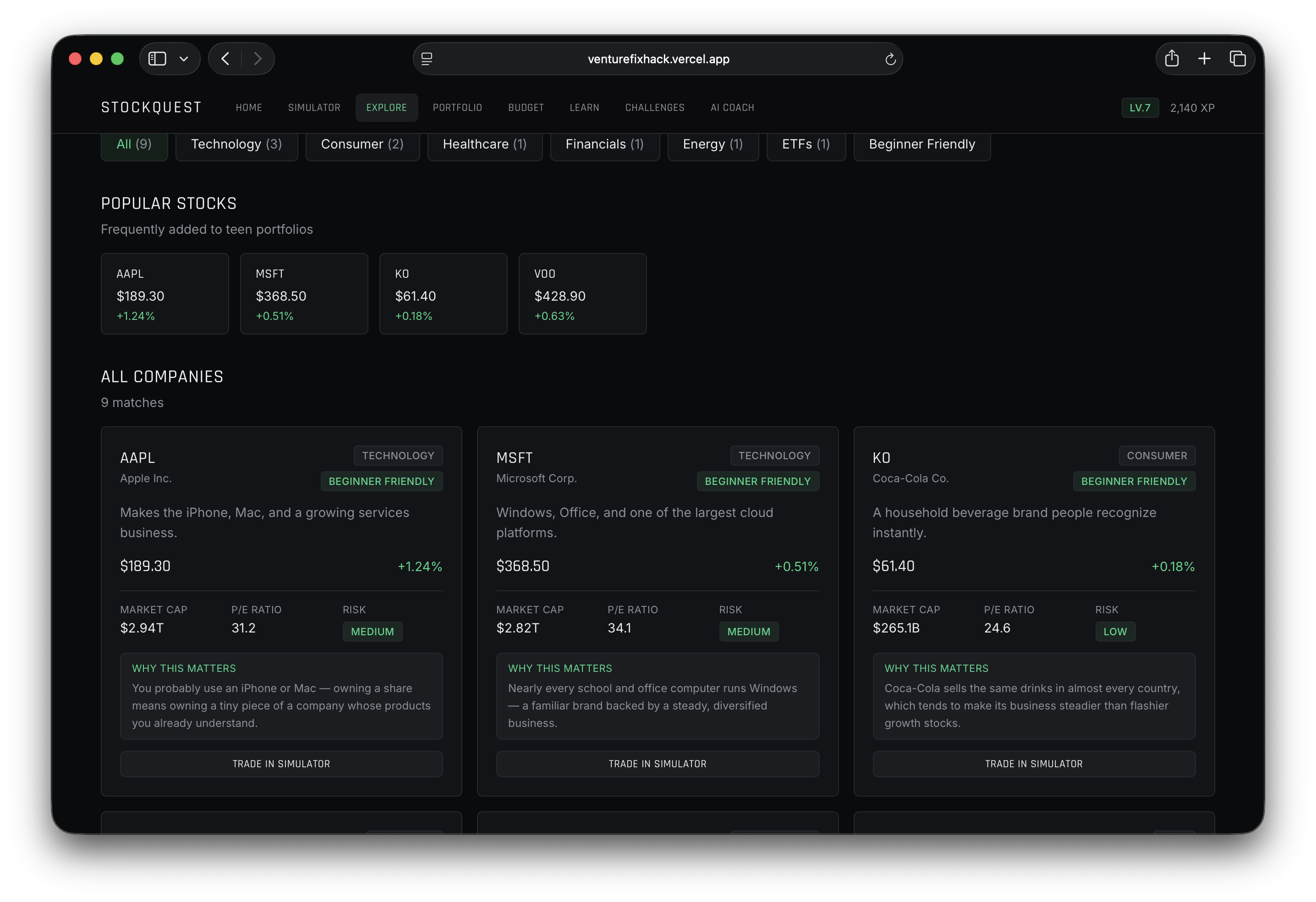
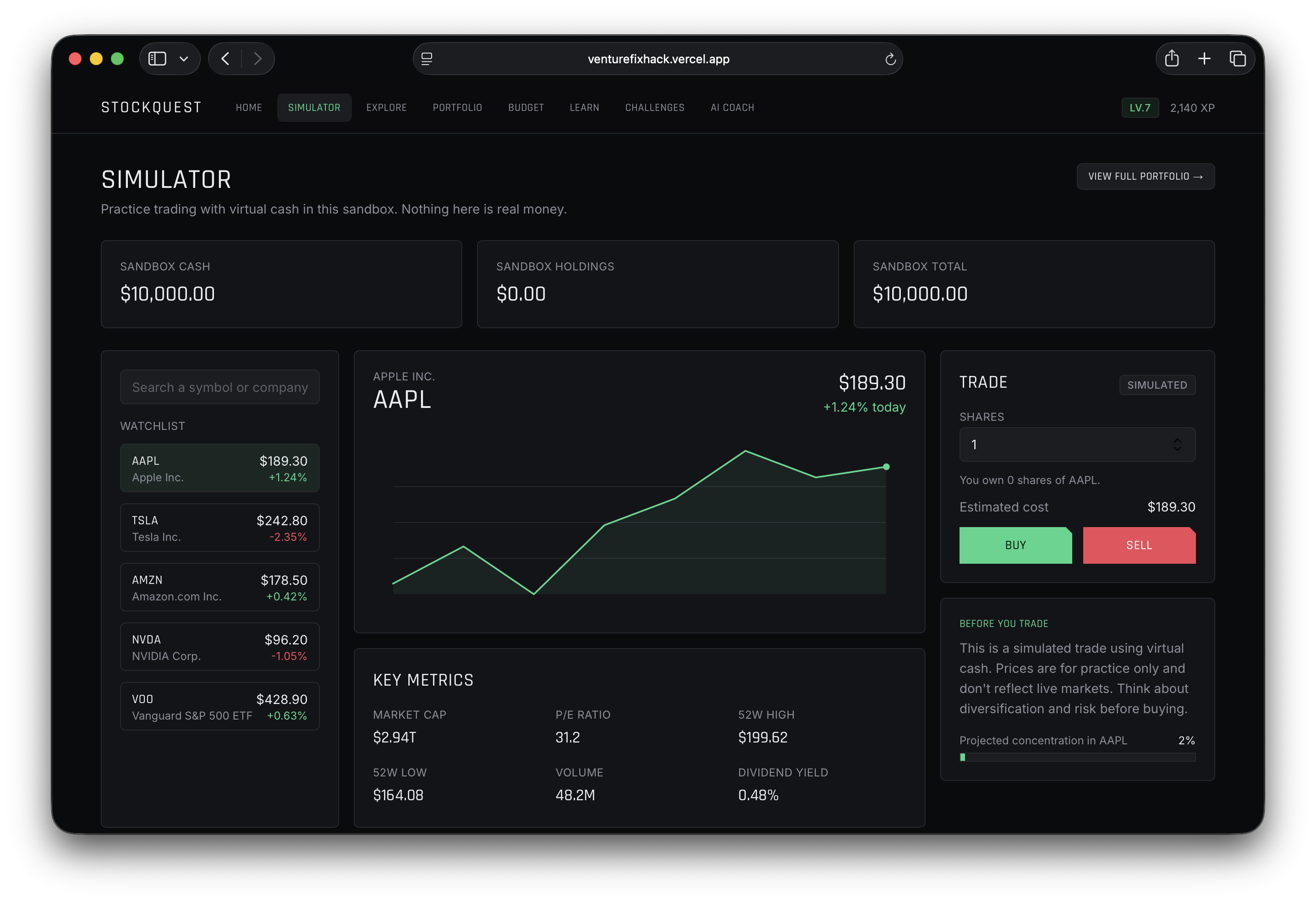
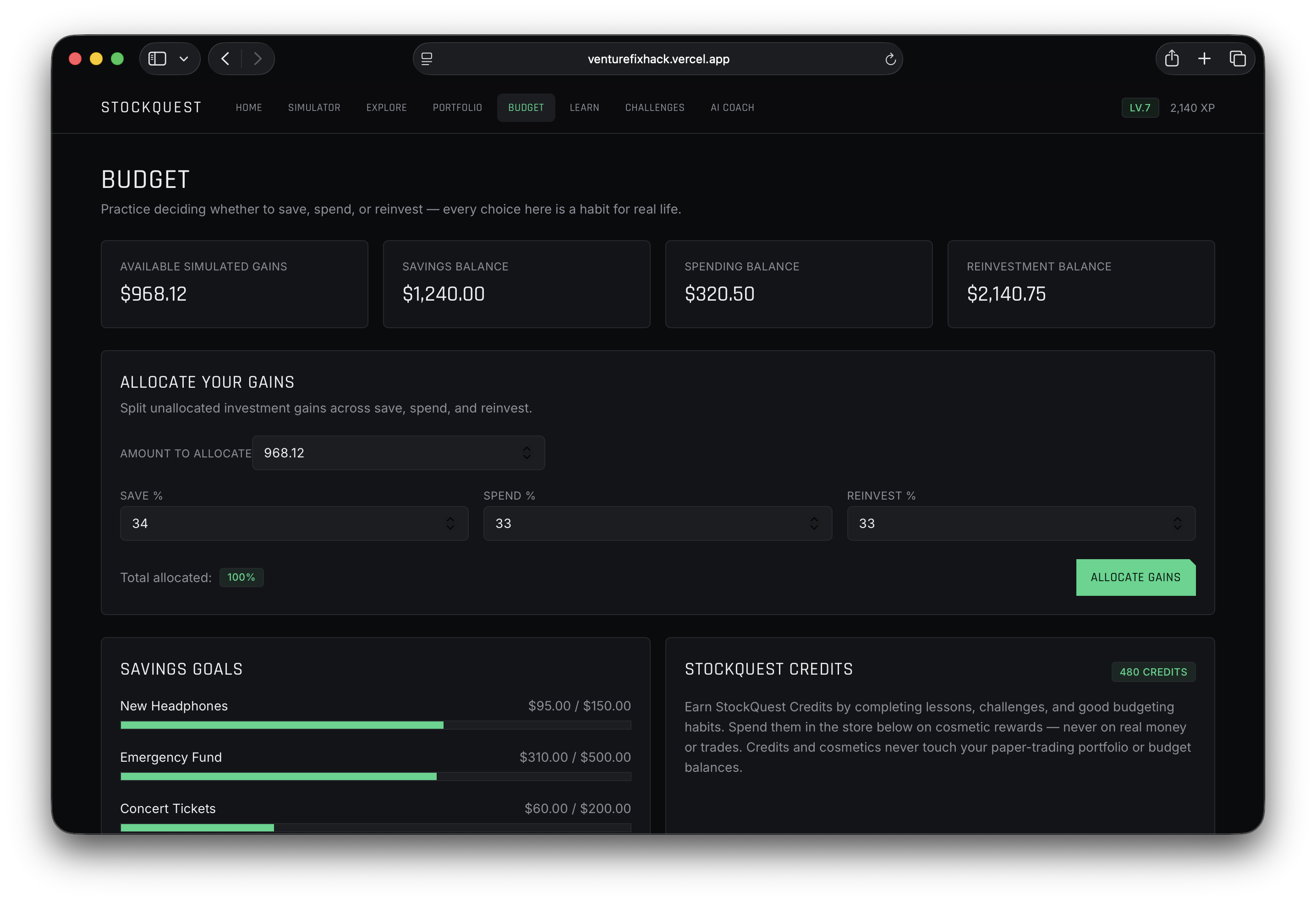
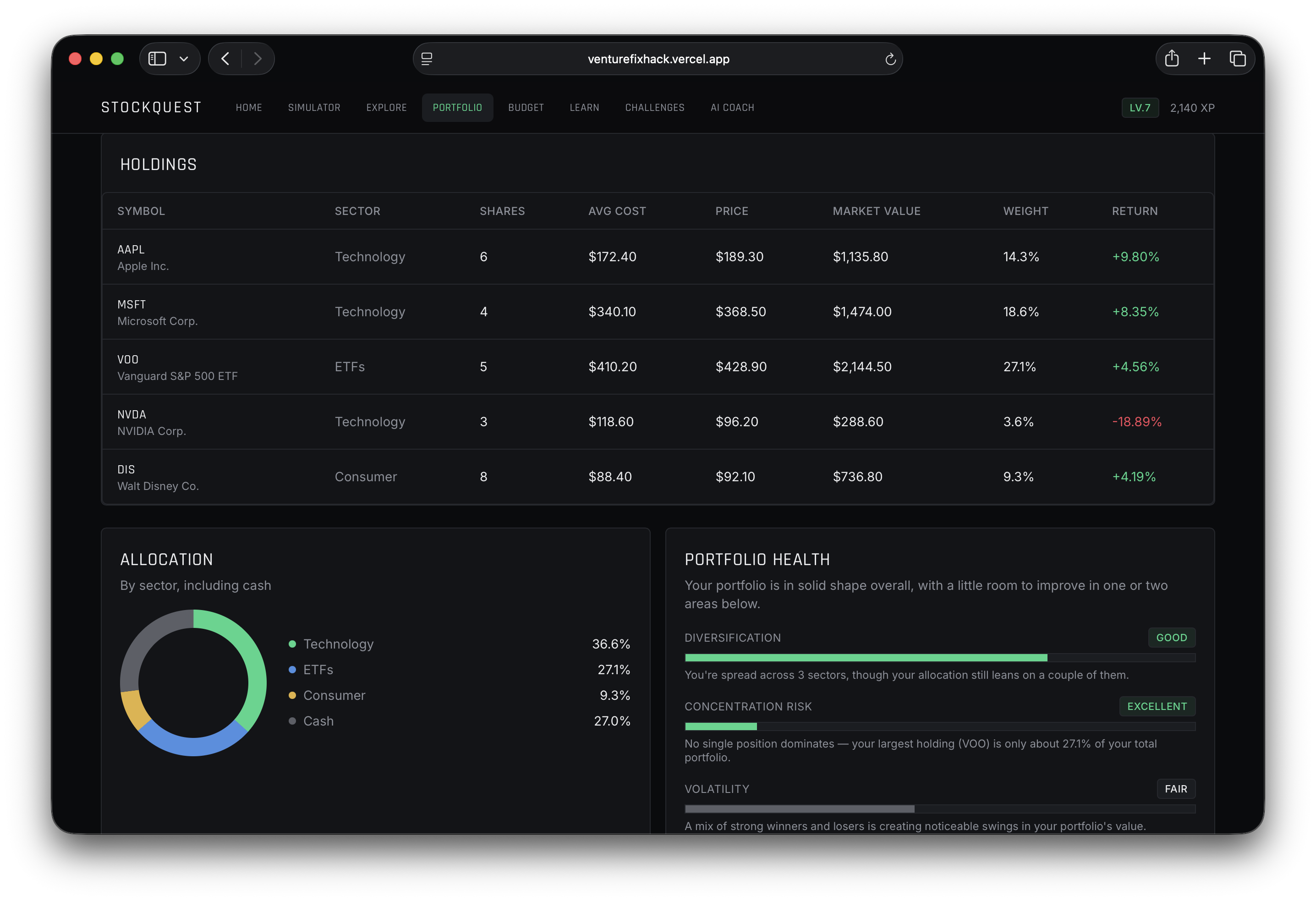
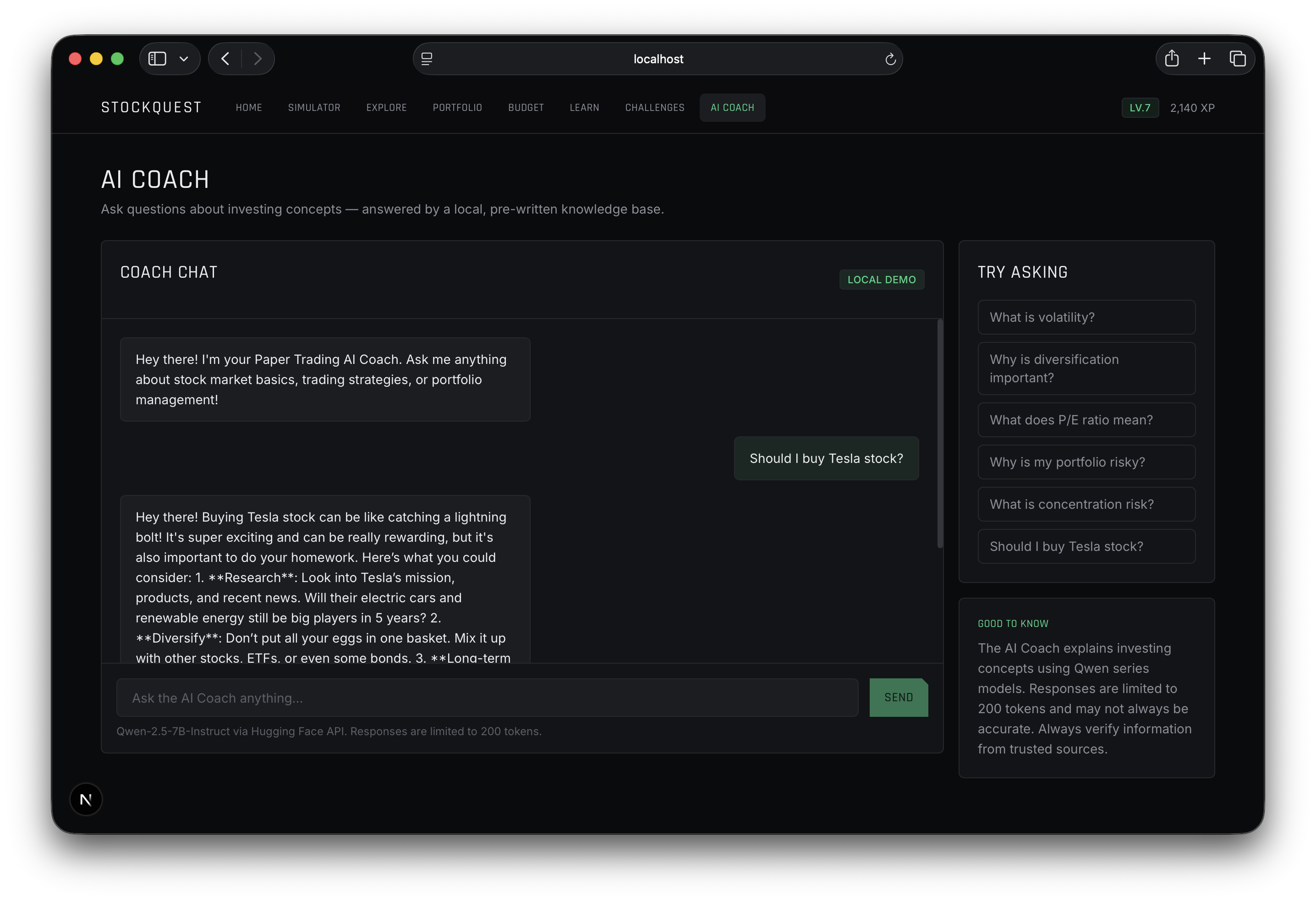
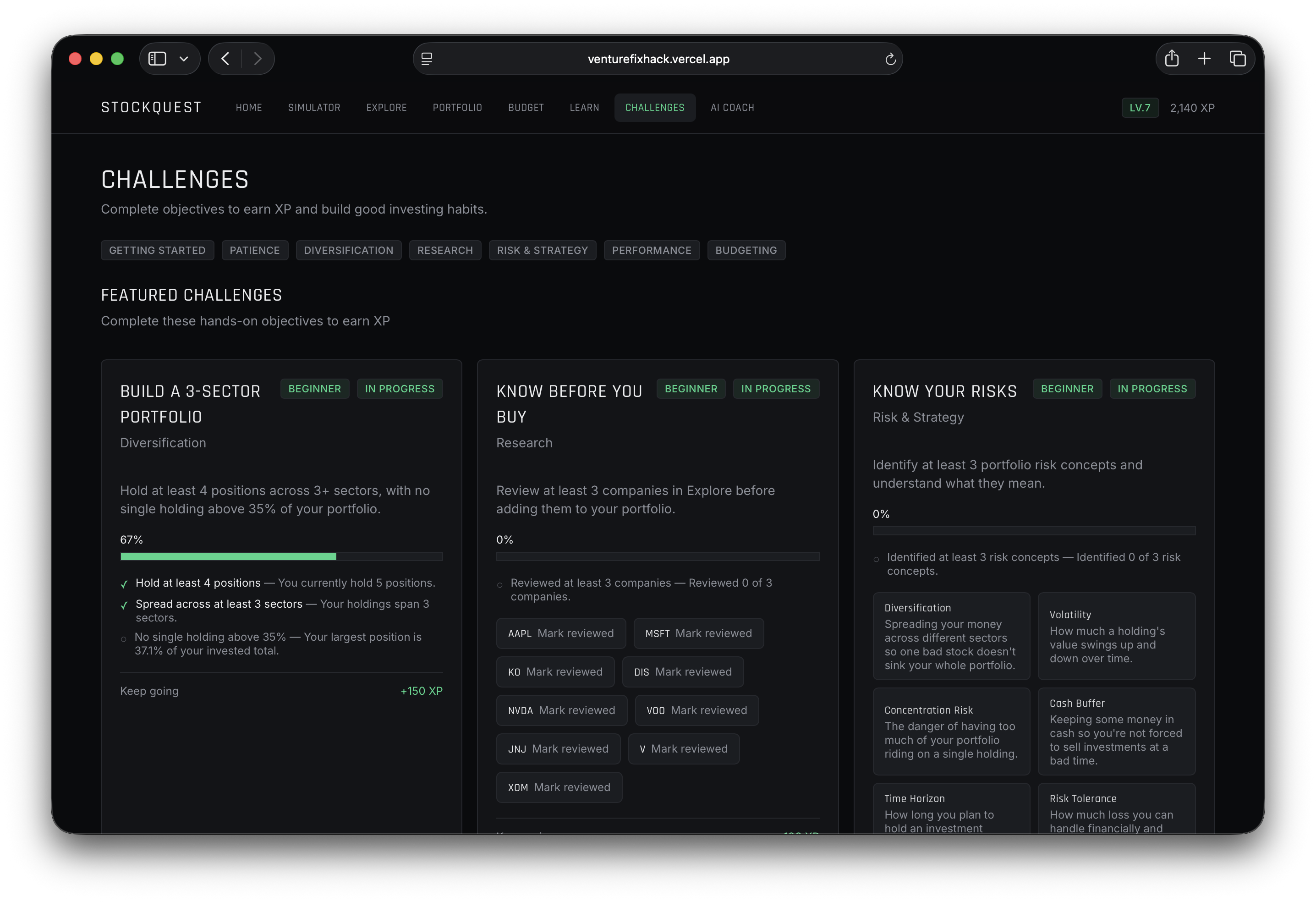
StockQuest turns financial education into practice. Teenagers can research companies, simulate investments, manage a portfolio, budget simulated gains, complete financial challenges, and get AI-powered explanations of concepts like risk, diversification, and valuation. Every feature is connected so users can learn a concept, test it, see what happened, and make a better decision next time.
How we build it
We built StockQuest primarily with TypeScript, HTML, and CSS, using Next.js and React to create the interactive user experience. We also integrated an open-source Hugging Face model to power the AI Coach, connecting model responses to the website through custom routing and handling constraints like token limits and response flow.
Challenges we ran into
It was hard to integrate the AI chatbot after leaving a static placeholder, as we had to change a lot of the file structure.
Accomplishments we are proud of
We’re especially proud of the budgeting tool because it connects paper-trading profits directly to real financial literacy skills. Instead of stopping at investment performance, StockQuest asks users to decide how much to save, spend, or reinvest, helping turn simulated gains into practical lessons about budgeting, opportunity cost, and long-term decision-making.
What we learned
We gained hands-on experience integrating Hugging Face models into a live web application, including handling token limits, routing requests, and connecting AI functionality to the user experience. We also learned how to make AI useful in a financial education context by focusing on clear explanations rather than direct investment advice.
What's next for StockQuest
The next step for StockQuest is turning the hackathon product into a persistent financial-learning platform. We want to add secure user accounts, saved portfolios and progress, richer real-time market data, more advanced portfolio analytics, personalized learning paths, and a stronger AI Coach that can explain a user’s decisions in context while staying educational rather than advisory. We also see potential for classroom and youth-program use through educator dashboards, progress tracking, guided curricula, and group challenges. Long term, StockQuest could become the financial practice layer young people use before their first real investment account, paycheck, or major money decision.


Log in or sign up for Devpost to join the conversation.