Inspiration
Many warehouses and small businesses still rely on manual registers or scattered Excel sheets to track inventory. This often leads to stock mismatches, delays in operations, and poor visibility of warehouse activity.
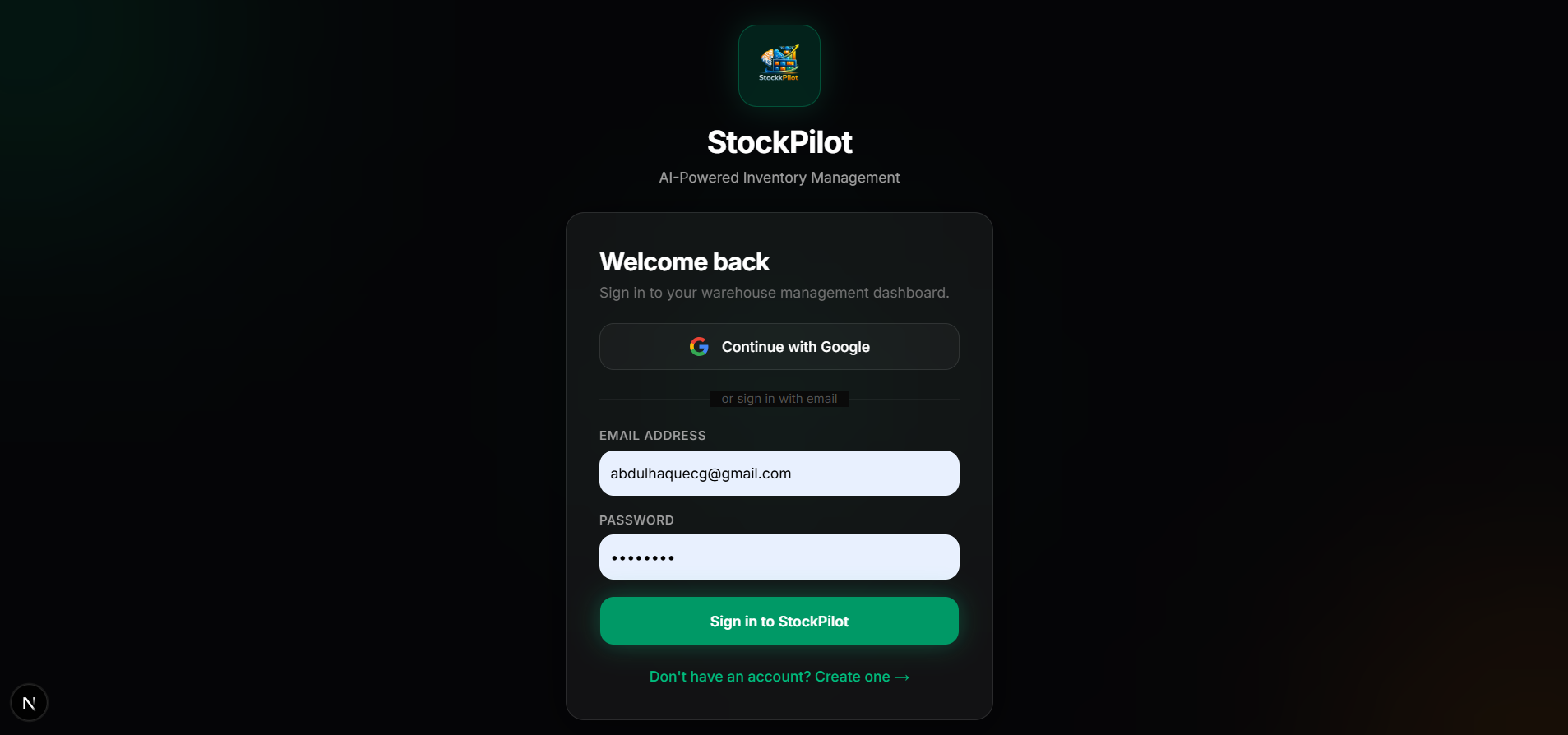
We built StockPilot to solve this problem by creating an intelligent inventory command center. Our goal was to design a system that gives warehouse managers complete control and real-time visibility over stock, movements, and storage locations.
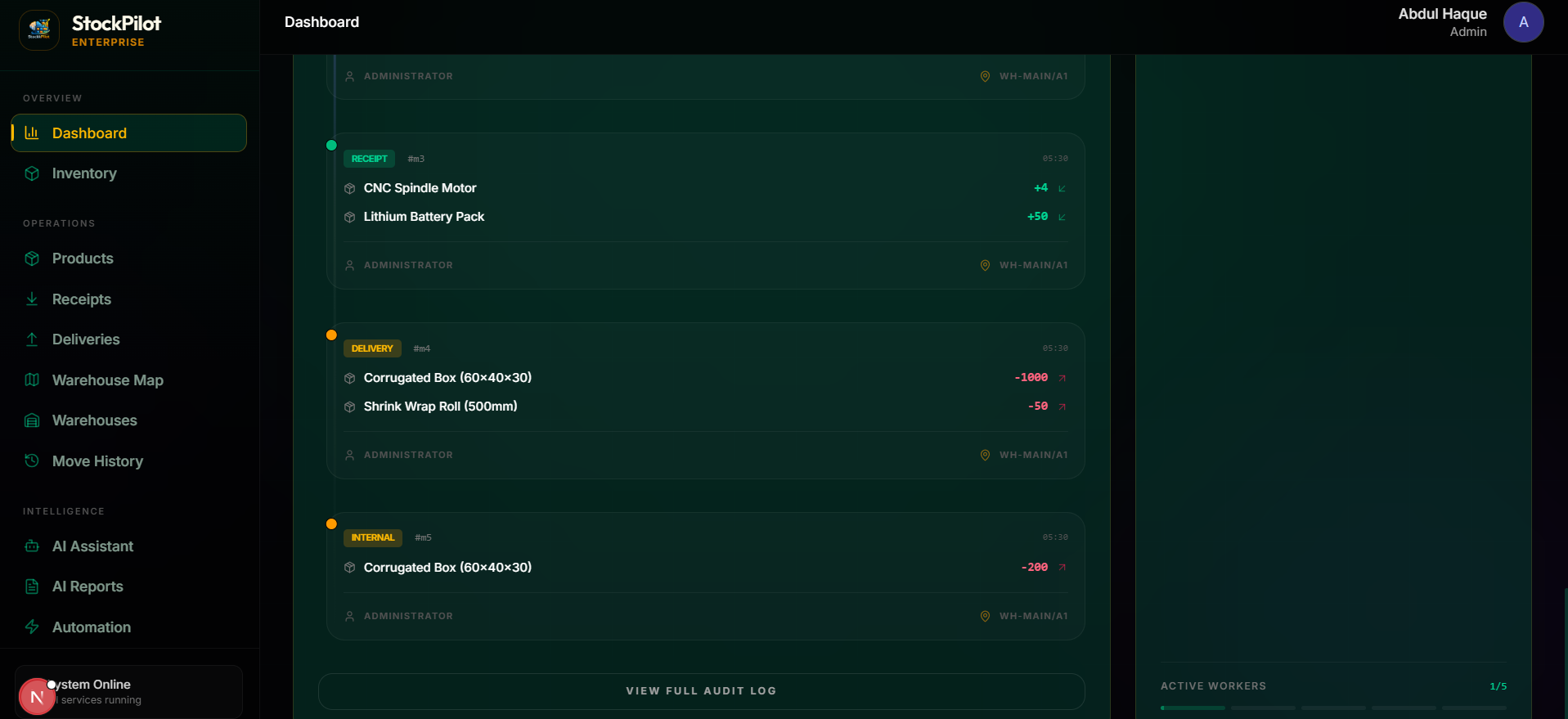
Inspired by modern operational dashboards like Bloomberg Terminal and Linear-style interfaces, we wanted StockPilot to feel like a professional warehouse control room rather than a basic inventory tool.
What it does
StockPilot is an AI-powered inventory management platform that helps businesses track products, manage warehouse operations, and make smarter decisions using automation and AI insights.
The platform allows users to:
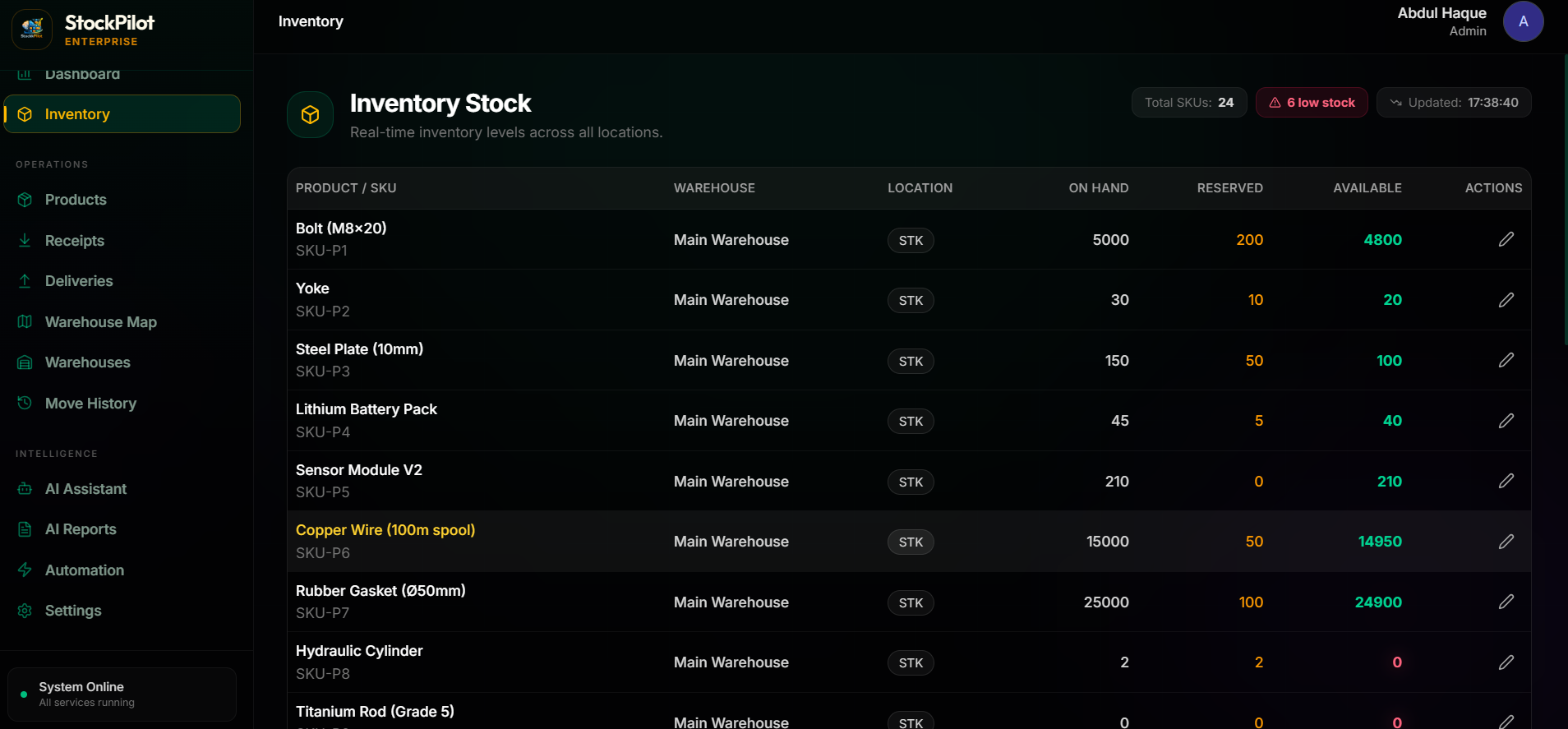
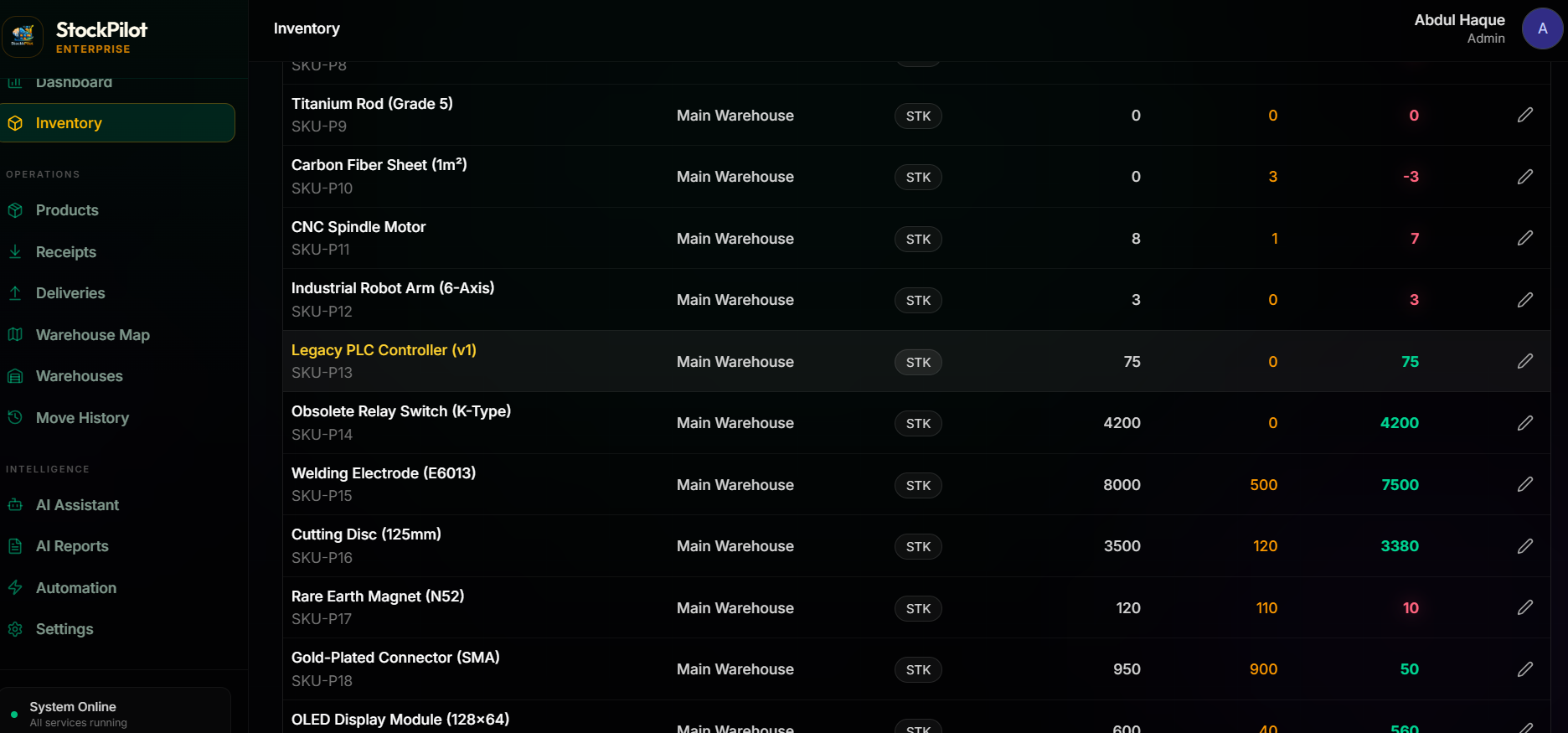
- Track inventory in real time
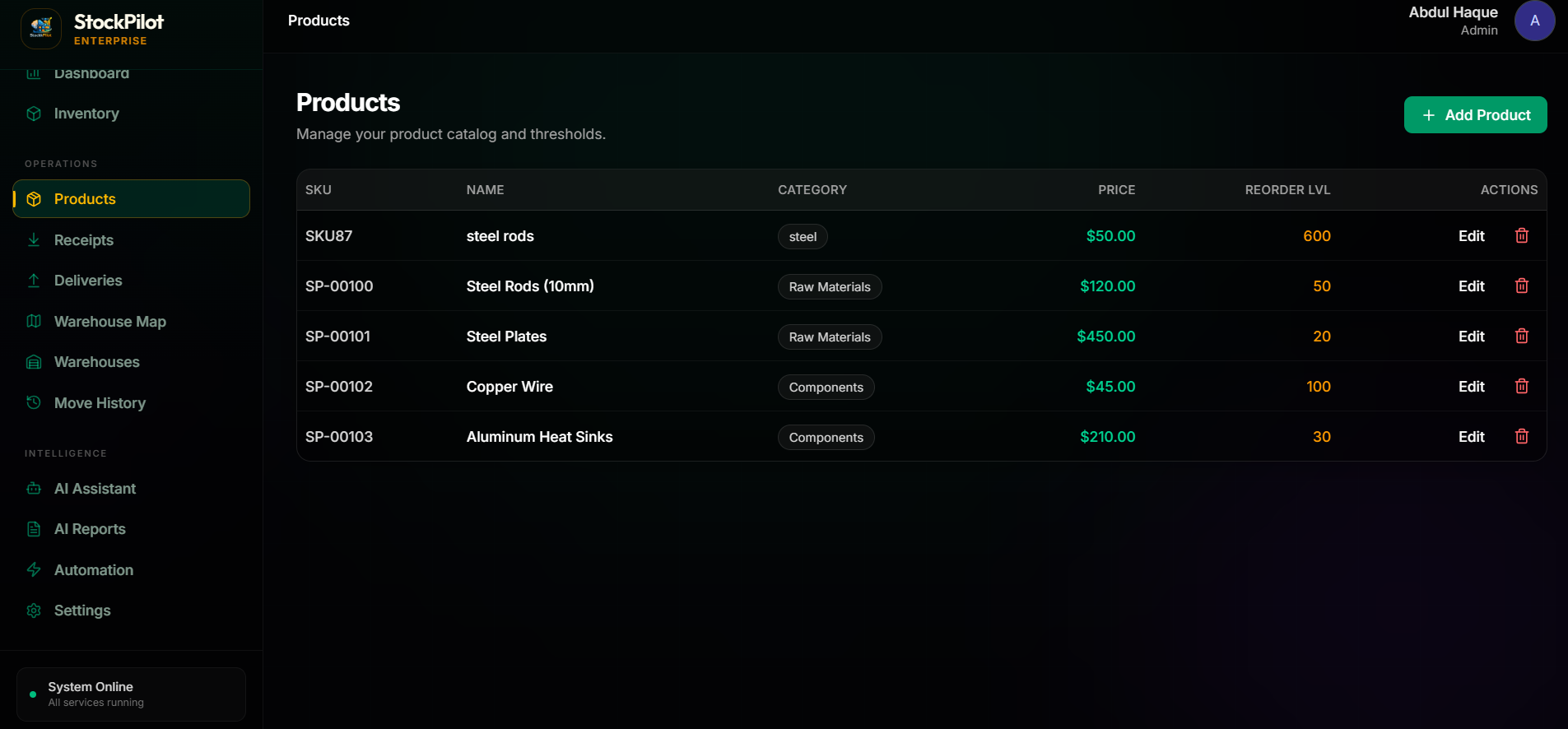
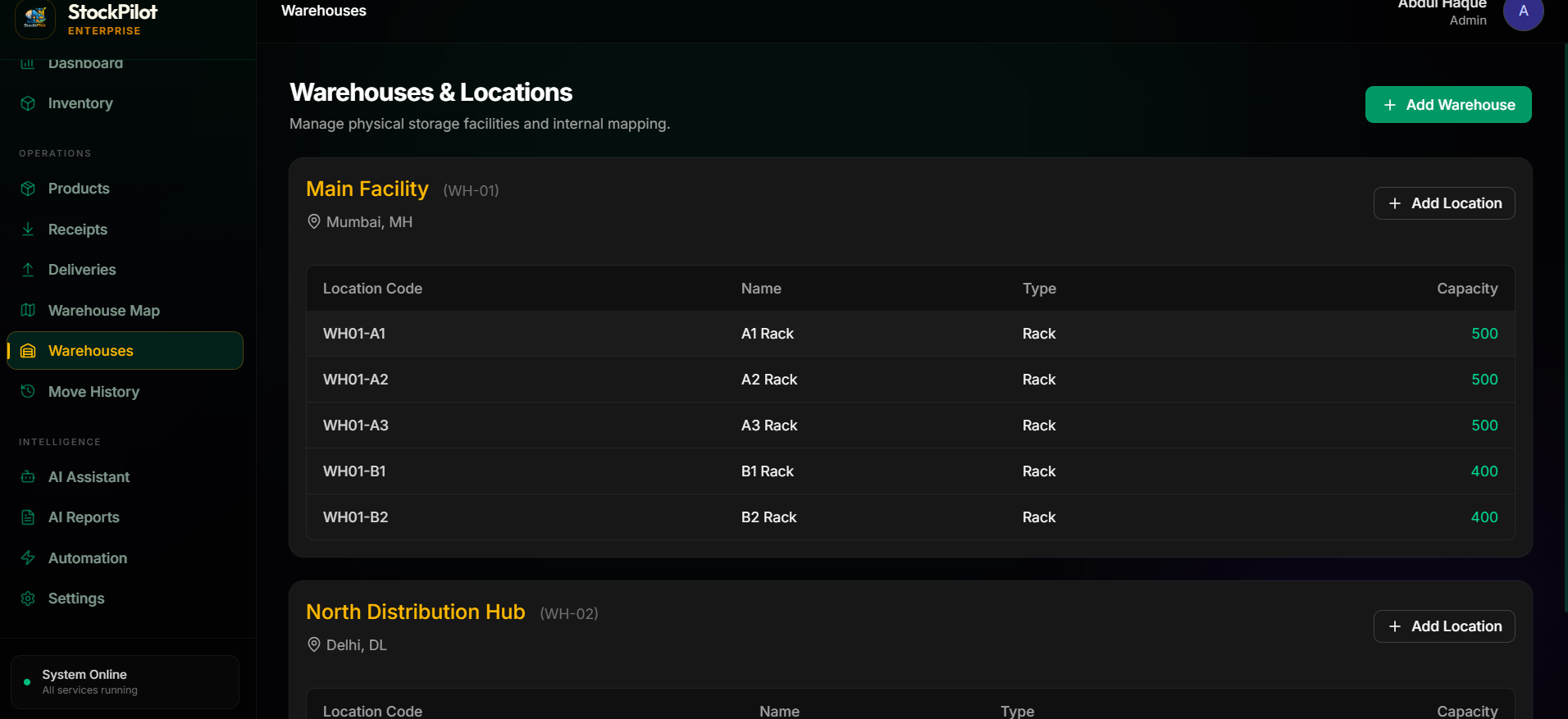
- Manage products and warehouse locations
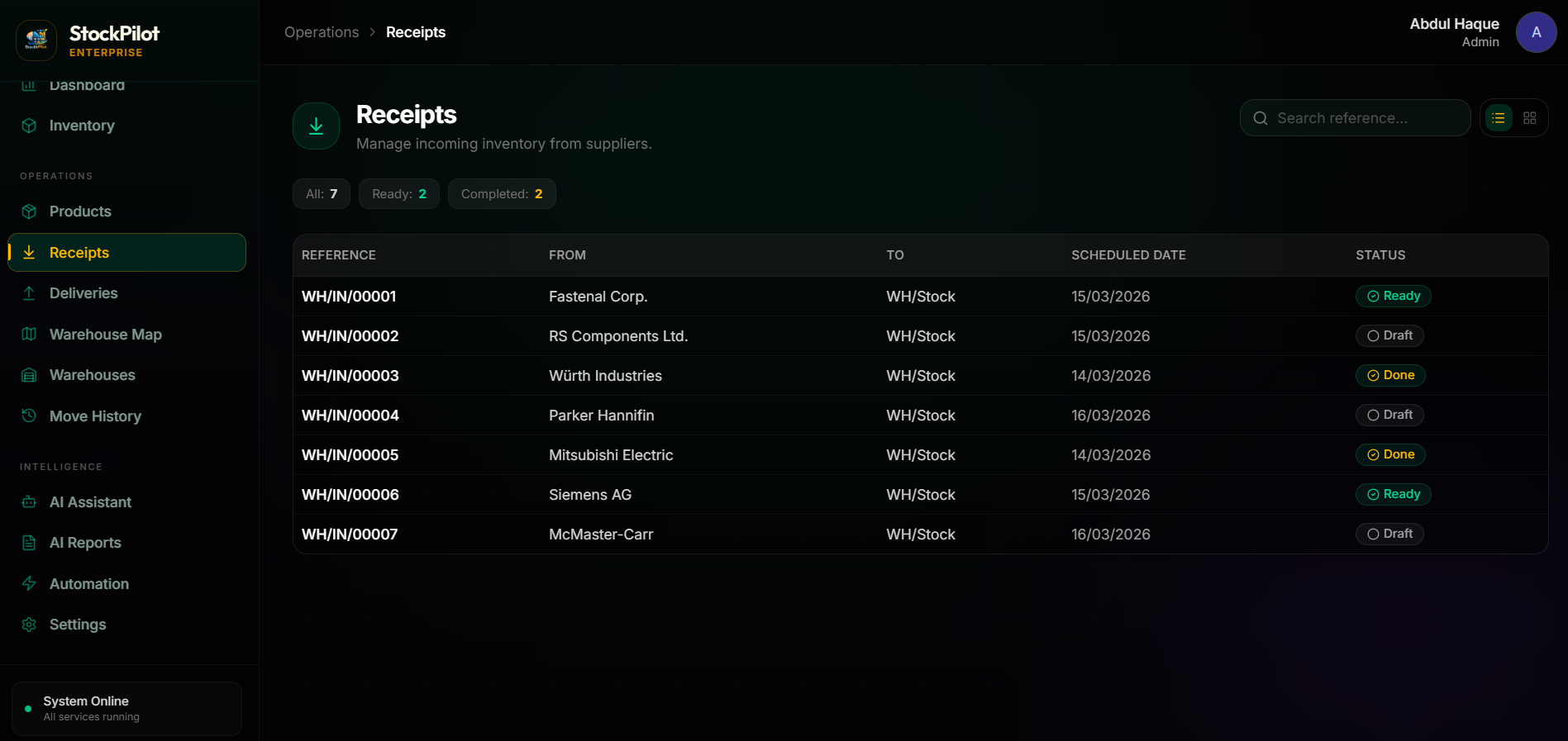
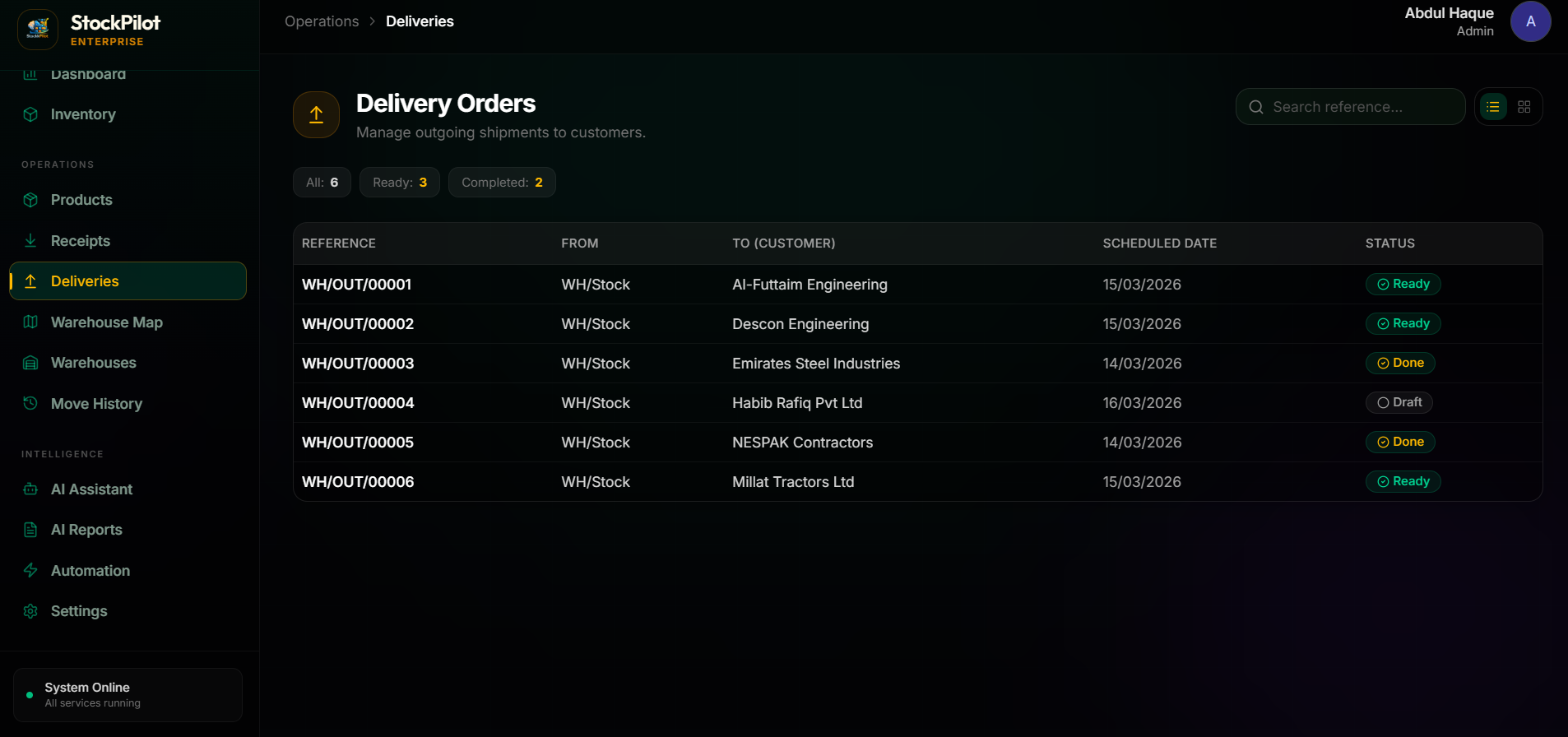
- Handle incoming receipts and outgoing deliveries
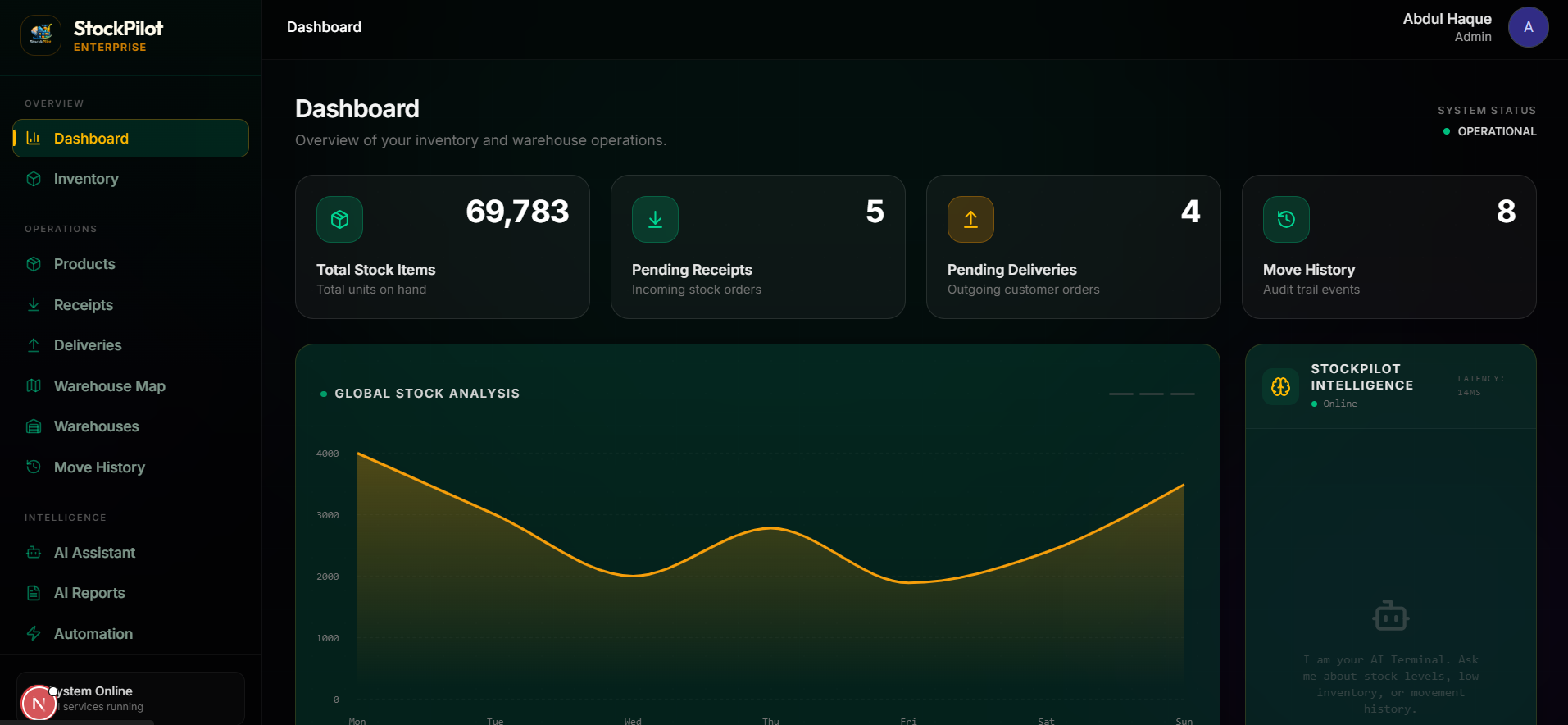
- Monitor stock levels and low-stock alerts
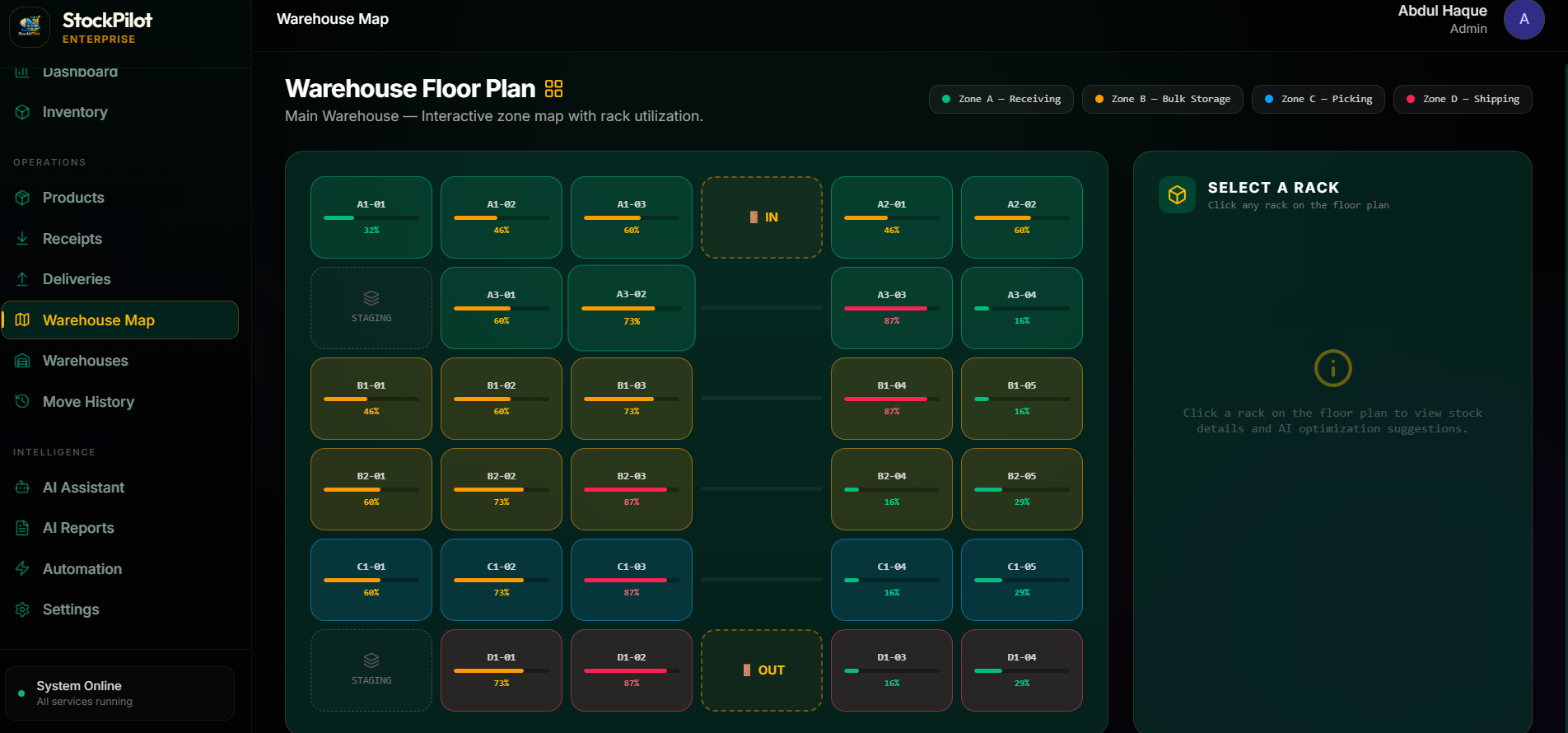
- Visualize warehouse storage using an interactive map
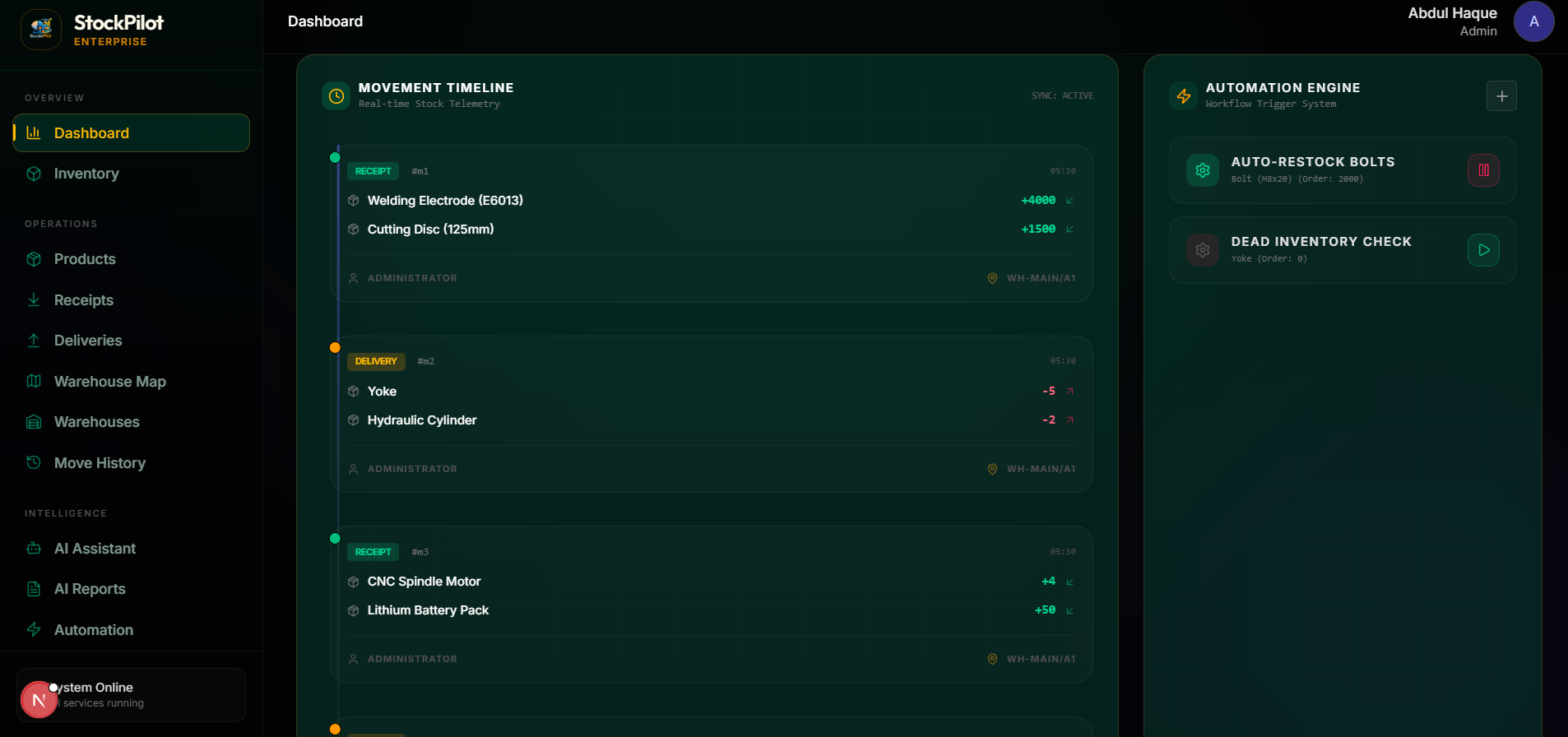
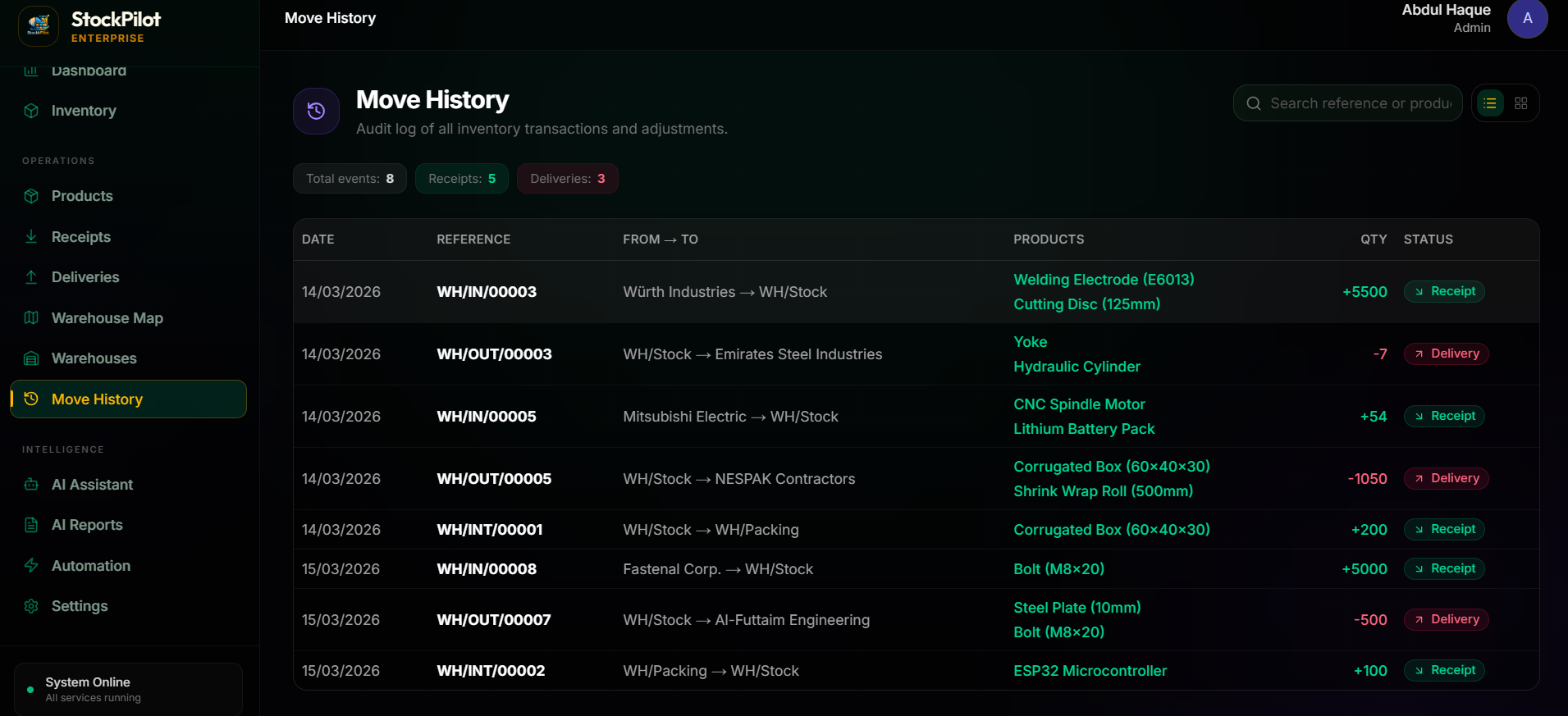
- Track every inventory movement with a complete audit trail
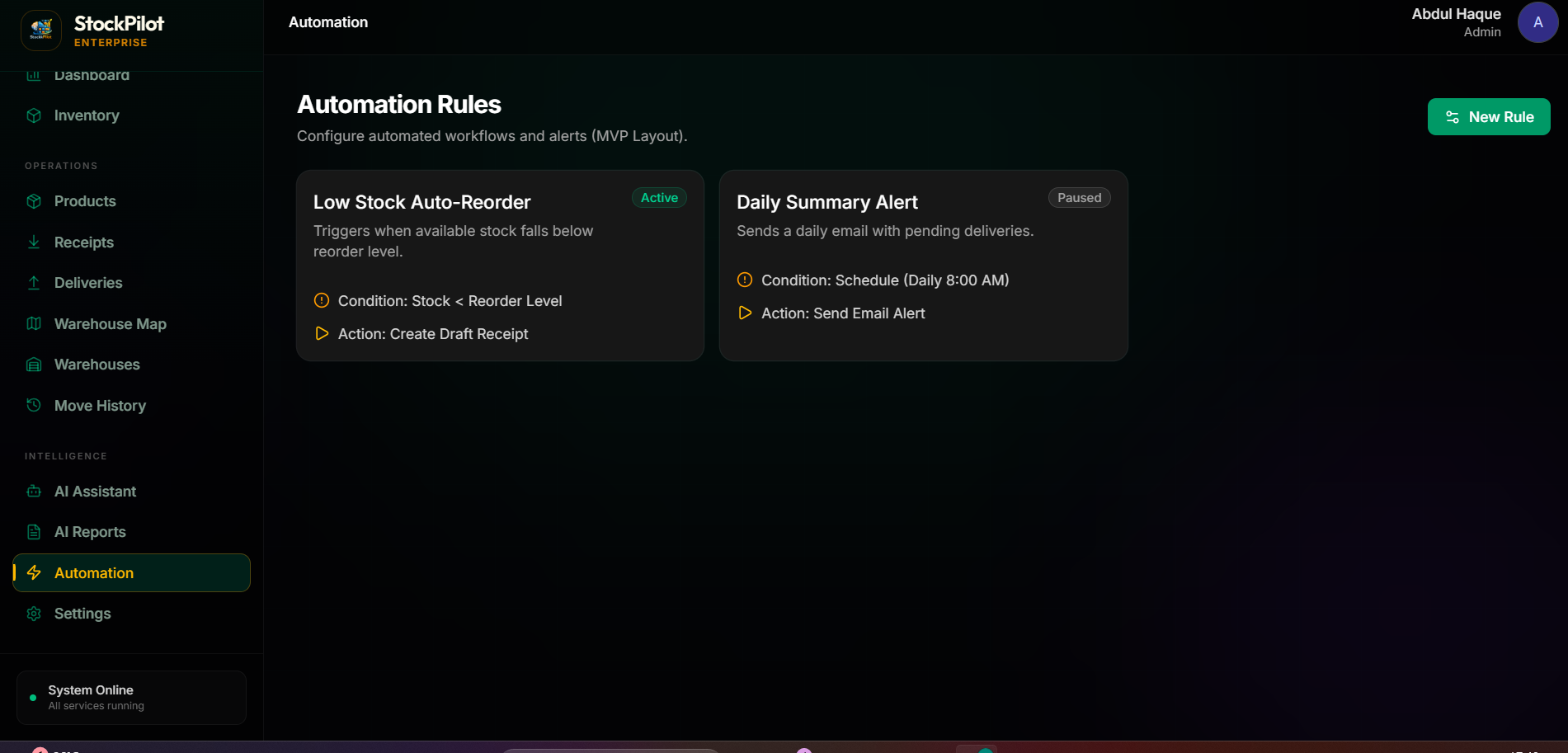
- Use automation rules to trigger alerts or actions
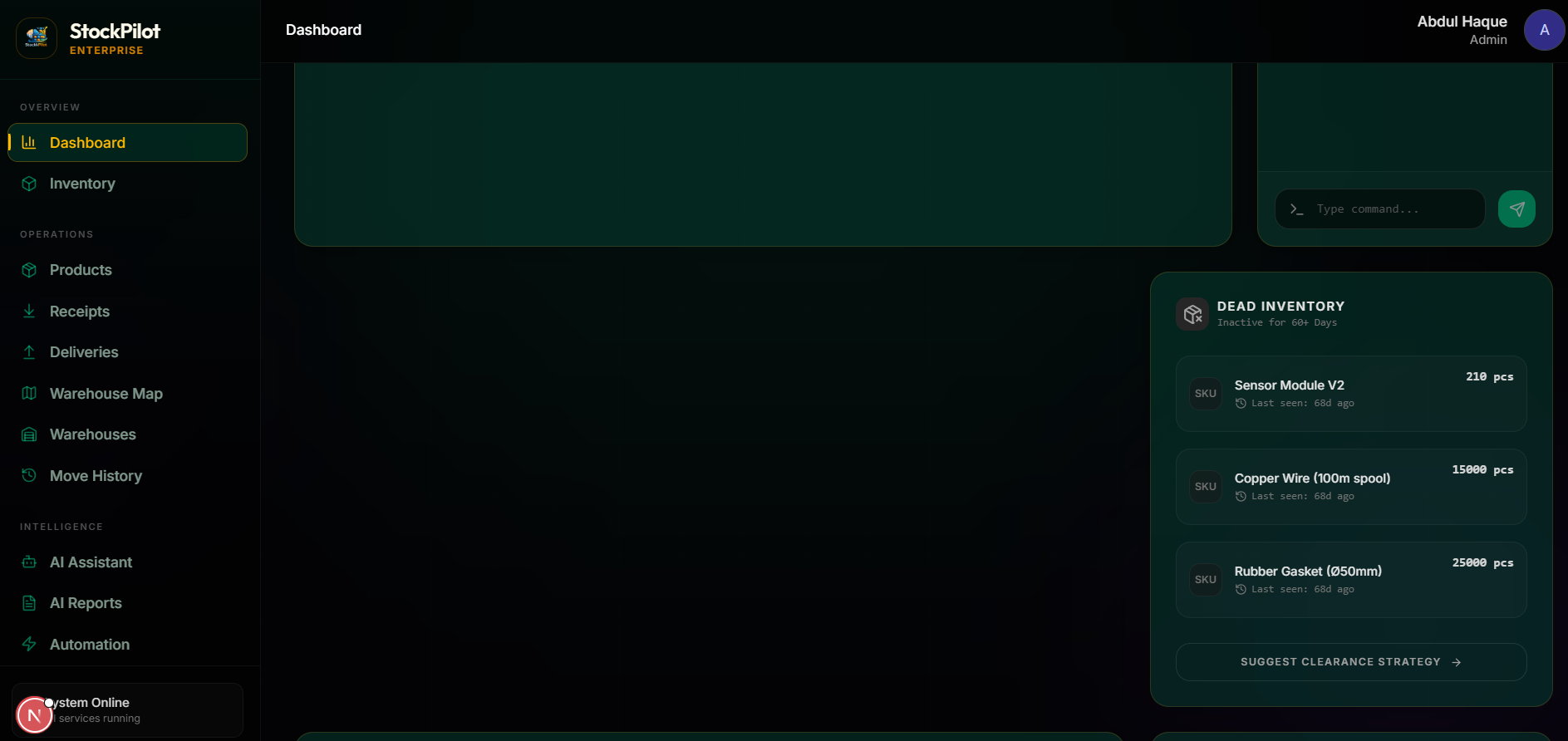
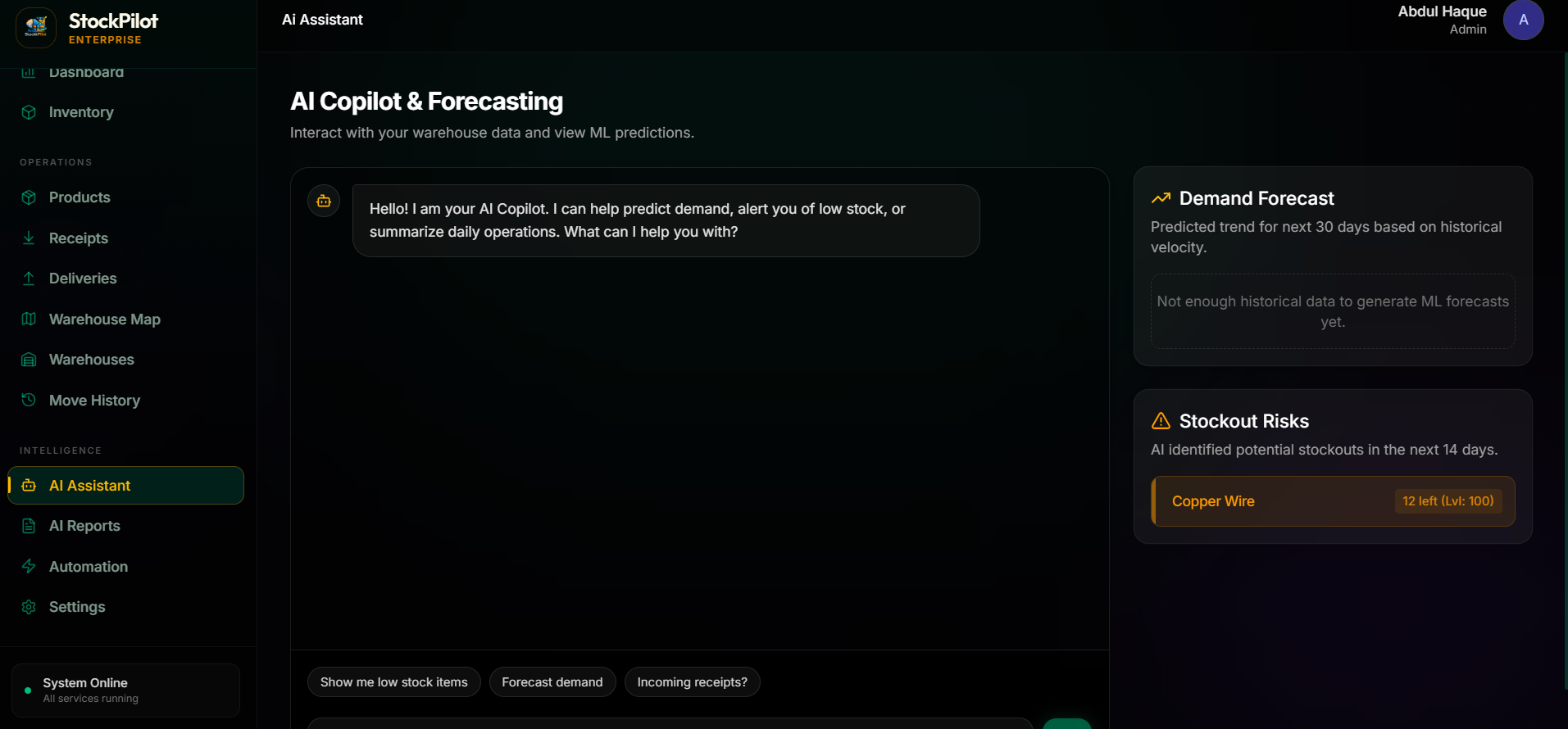
- Ask the built-in AI assistant questions about inventory data
StockPilot acts as a central command system for warehouse operations, ensuring that managers always know where every item is stored and how inventory is moving.
How we built it
StockPilot was designed as a full-stack web application with a modern data-dense dashboard UI.
We created a modular system consisting of:
- A responsive frontend dashboard for managing inventory
- Backend APIs that handle stock operations and data processing
- A database to store product data, warehouse locations, and movement records
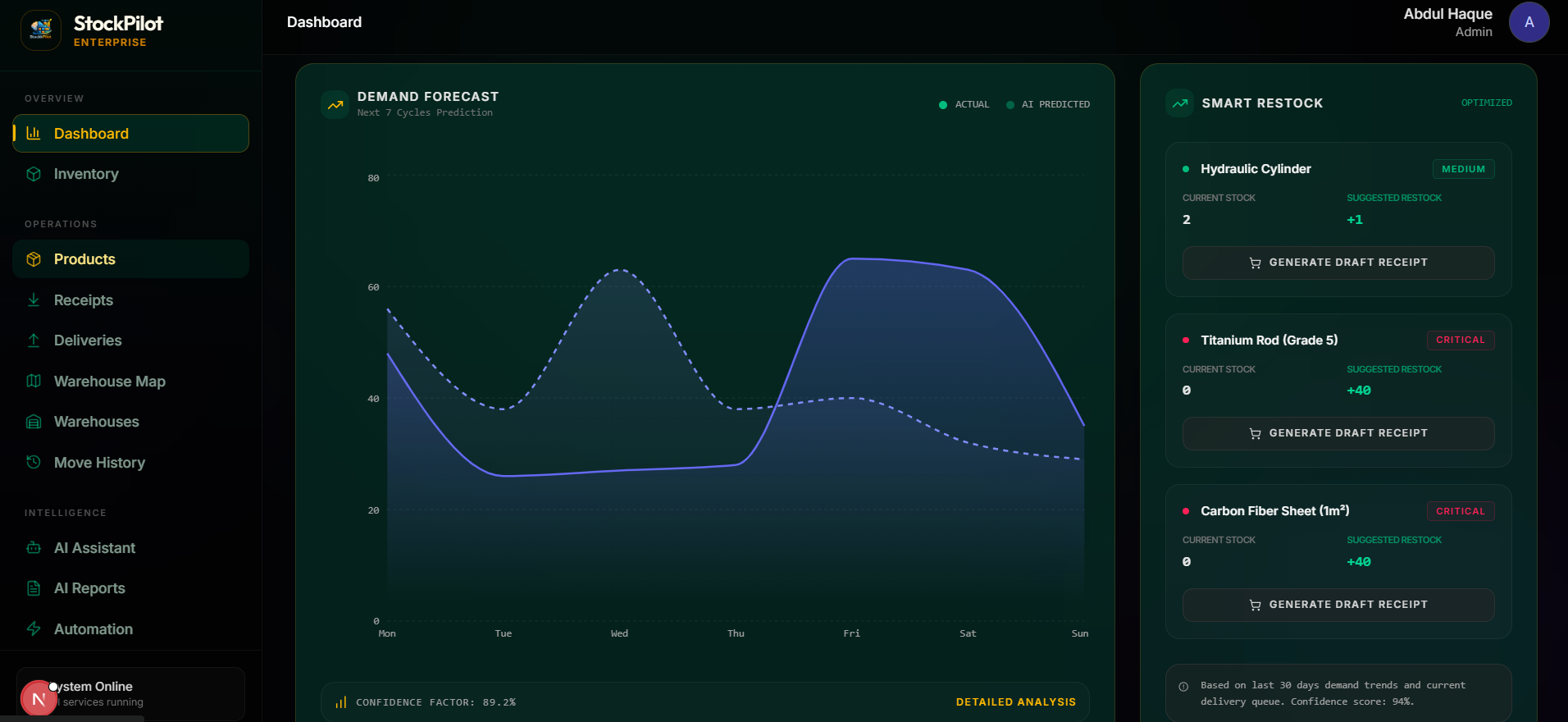
- AI-powered assistant capabilities to query inventory data and generate insights
The interface was designed with a dark industrial theme to resemble a professional operations control panel, making it easier for warehouse managers to monitor large amounts of data efficiently.
Challenges we ran into
During development we faced several challenges:
- Designing a high-density dashboard that still remained readable
- Structuring the inventory database to track movements and stock accurately
- Connecting product, warehouse, and location data in a scalable way
- Implementing real-time updates for inventory operations
- Designing a UI that feels like a professional operations platform
We solved these issues by refining our system architecture and carefully designing the UI components.
Accomplishments that we're proud of
- Built a working prototype of an AI-powered inventory platform
- Designed a modern warehouse control dashboard
- Implemented stock tracking, receipts, deliveries, and movement history
- Added automation rules for intelligent alerts
- Integrated an AI assistant capable of answering inventory questions
What we learned
This project helped us learn:
- Full-stack system design
- Data modeling for inventory systems
- Dashboard UI design for operational tools
- Building scalable APIs for warehouse workflows
- Integrating AI features into business applications
What's next for StockPilot
We plan to extend StockPilot with:
- Barcode and QR scanning support
- Predictive inventory forecasting using AI
- Multi-warehouse optimization
- Mobile warehouse management apps
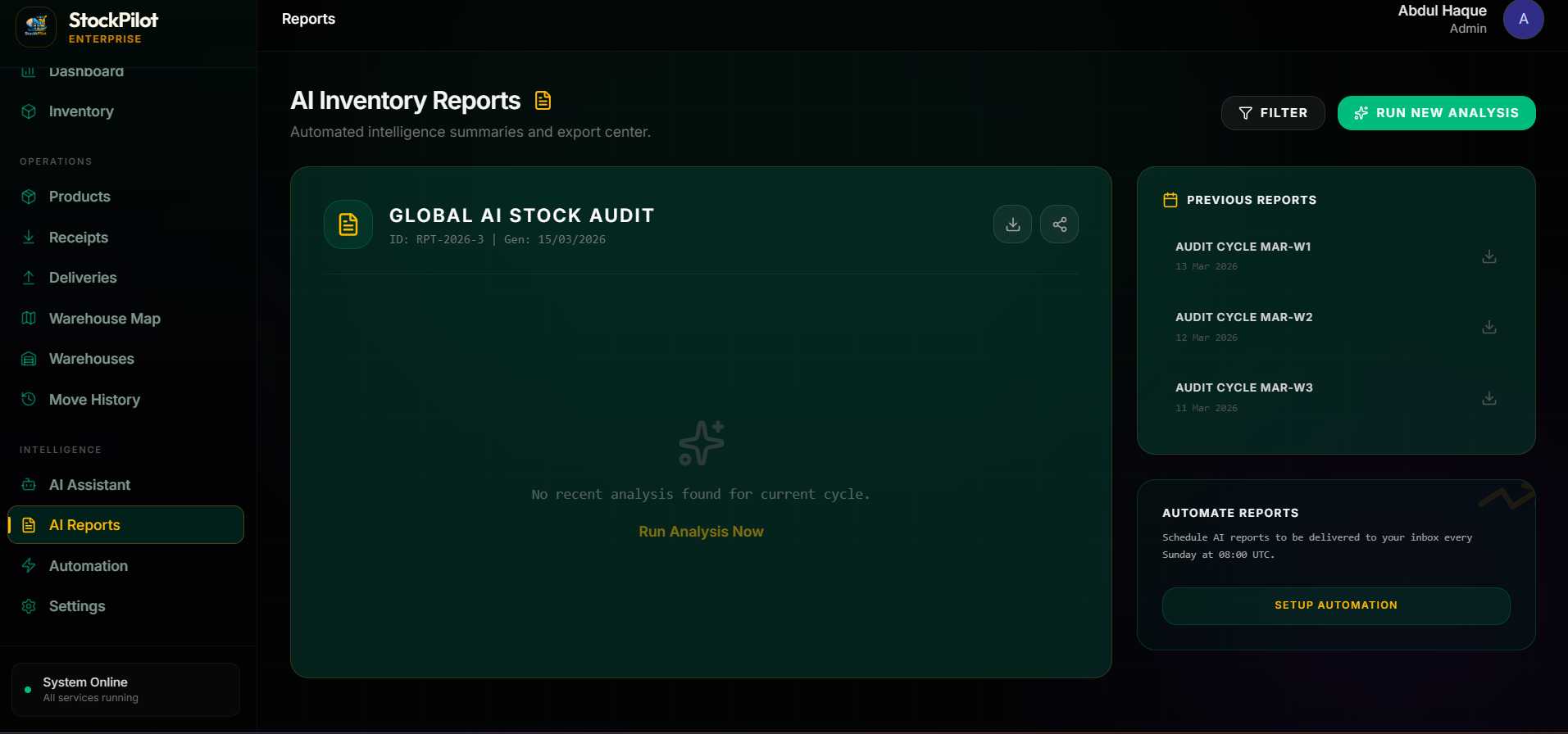
- Advanced analytics and reporting dashboards
Built With
- ai
- assistant
- auth
- authentication
- backend
- code
- css
- database
- design)
- express.js
- features
- figma
- for
- frontend
- github
- html
- inventory
- javascript
- mongodb
- node.js
- oauth
- platforms
- react.js
- supabase
- tailwind
- tools
- vs

Log in or sign up for Devpost to join the conversation.