-
-
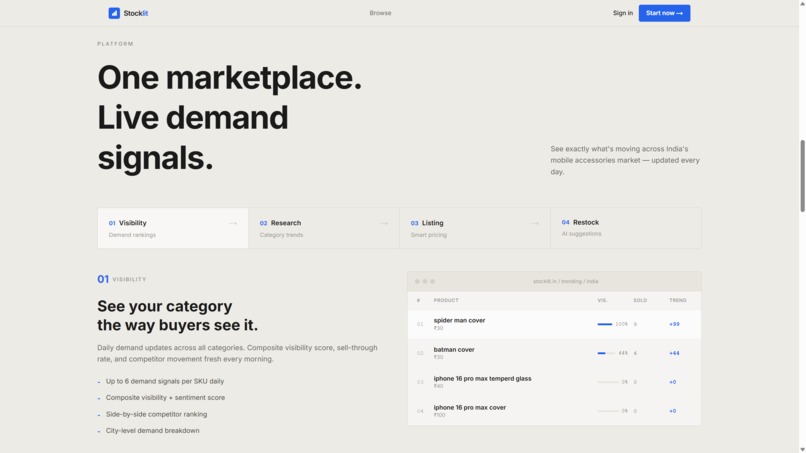
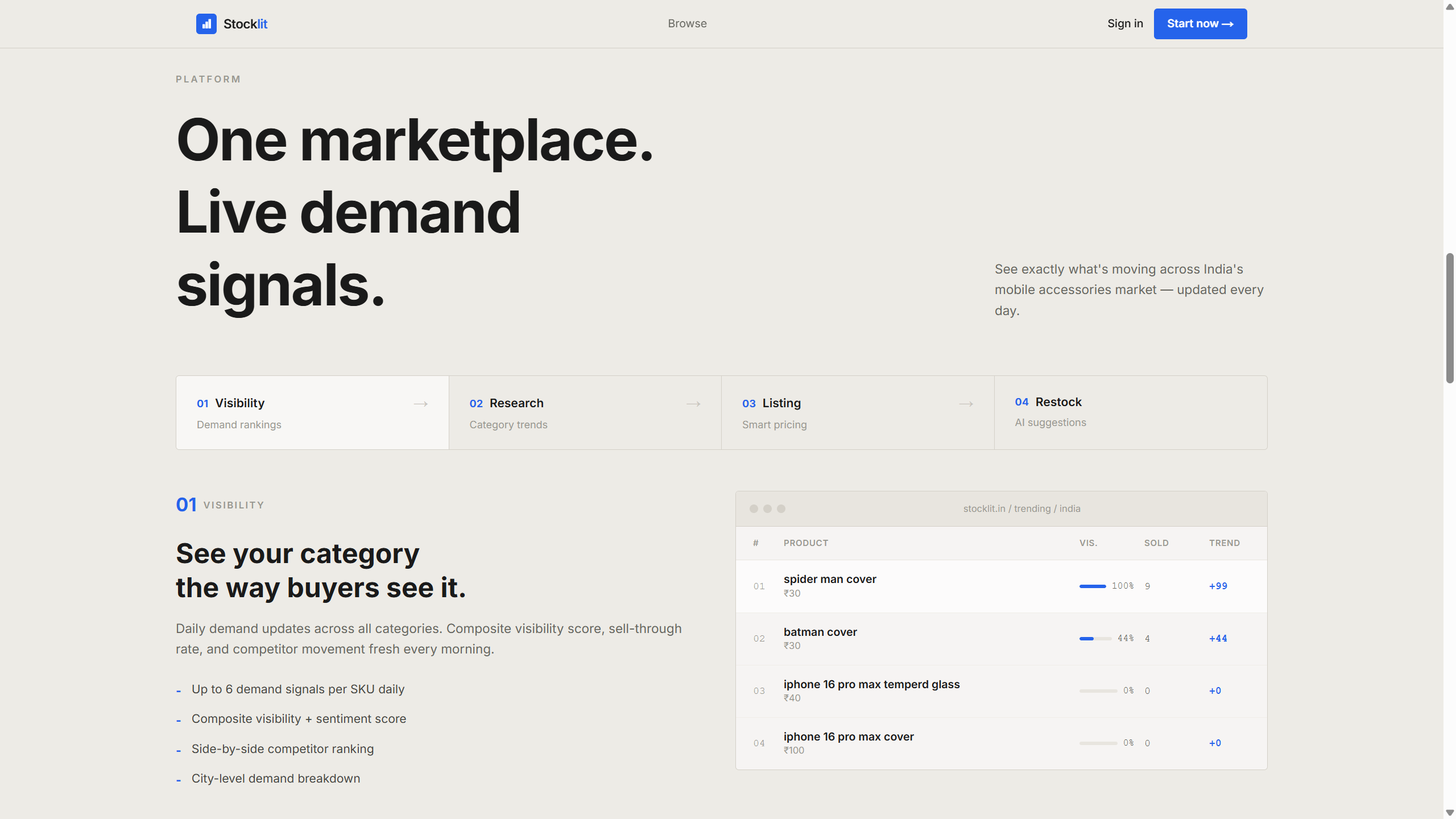
home page
-
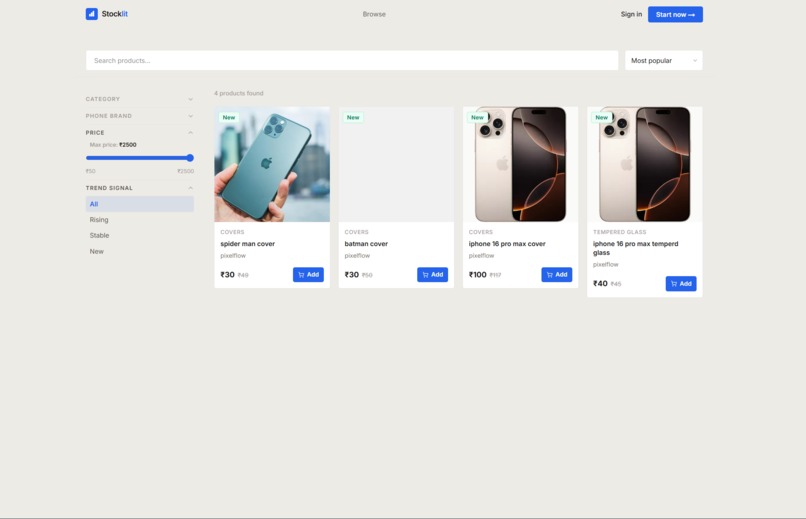
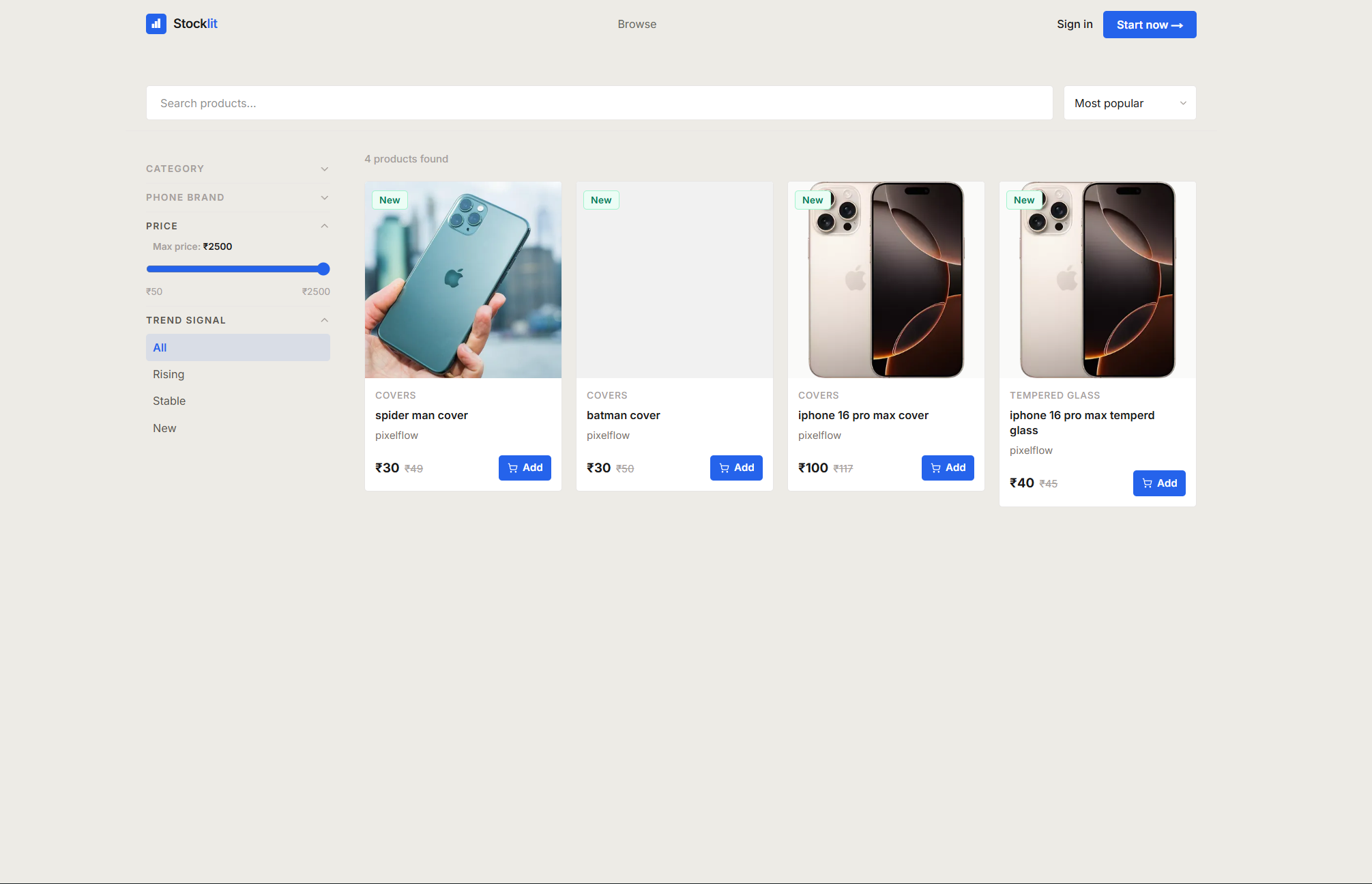
browse page - all listed products
-
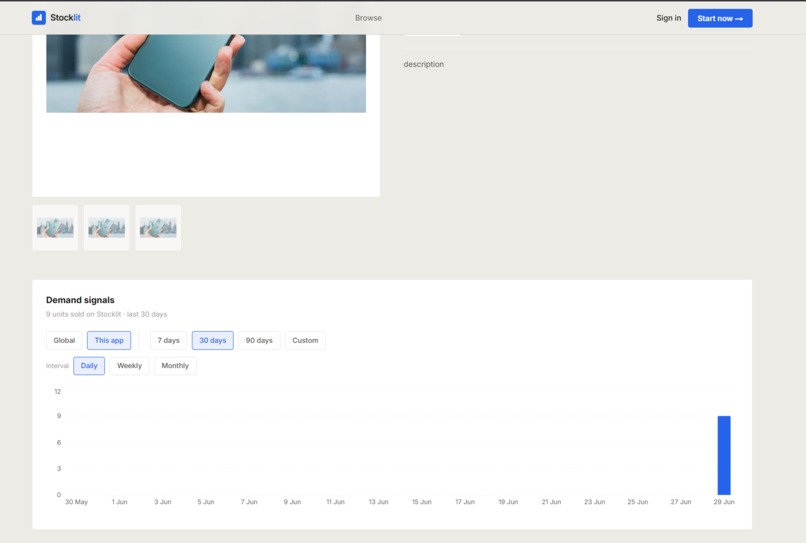
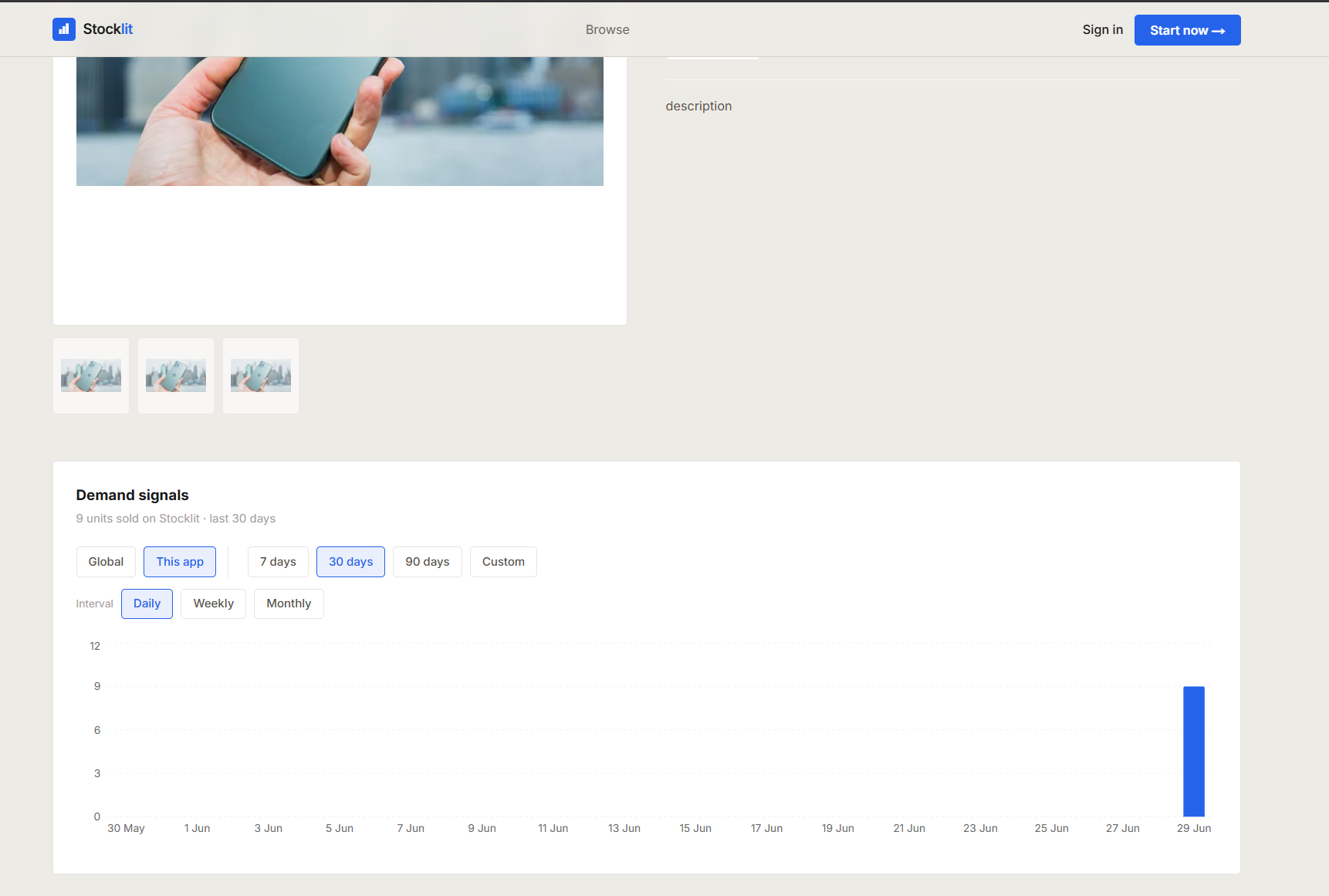
Product page visualizes sales trend data
-
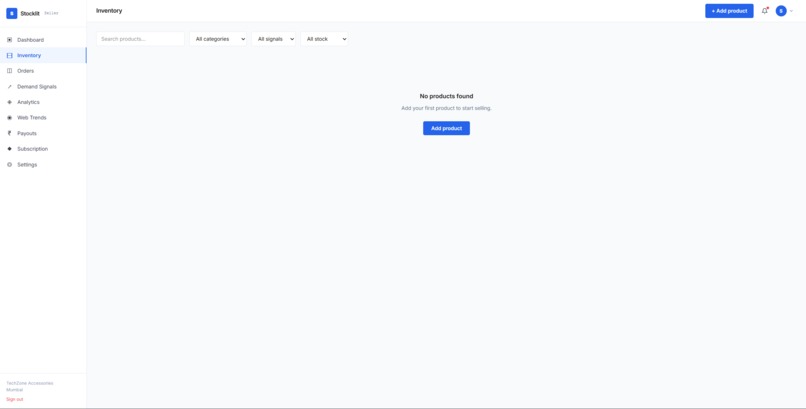
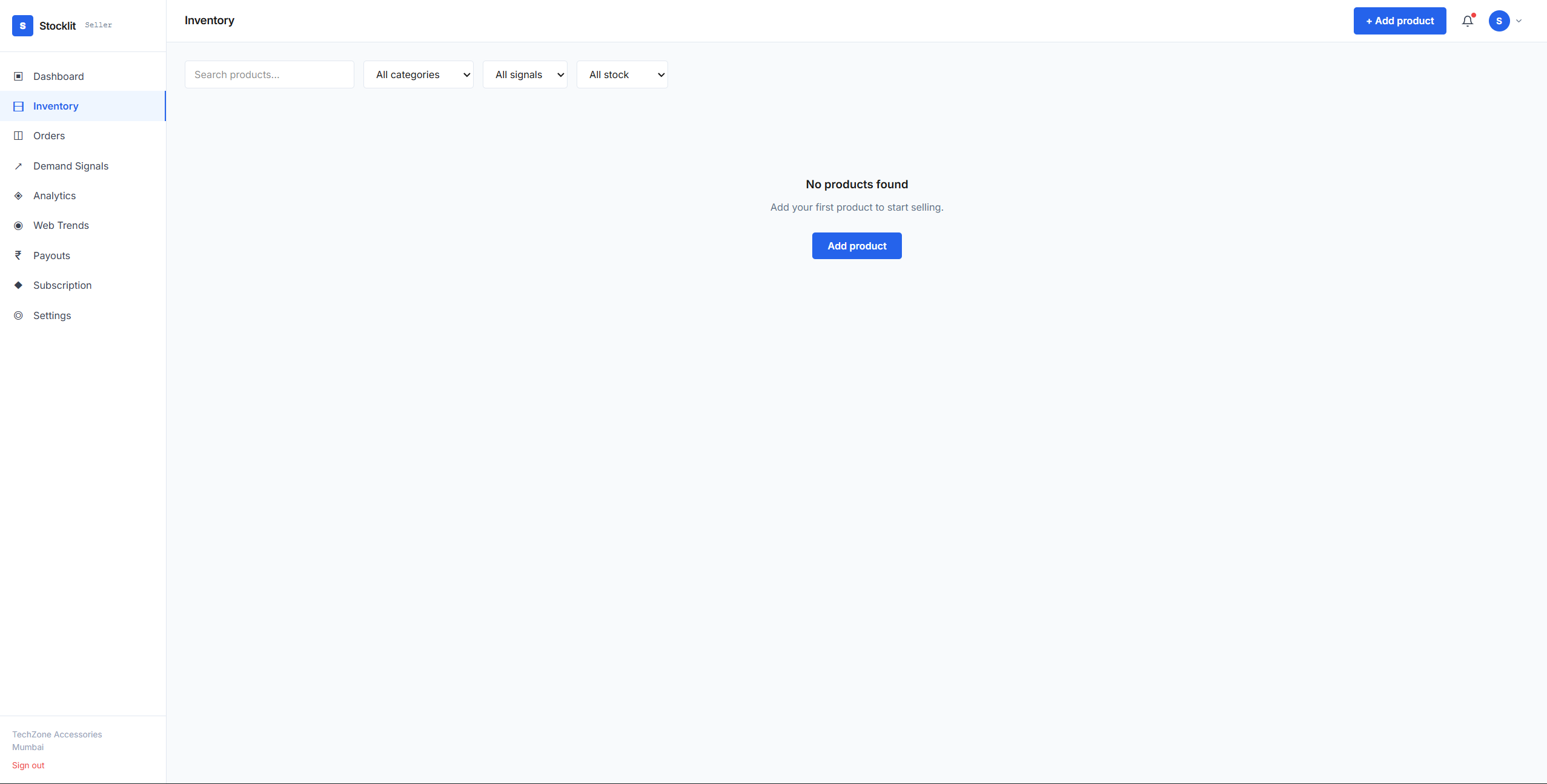
Seller Inventory Page
Inspiration
Finding deadstock at a mobile accessories shop sparked the idea — turns out overstocking is a widespread, quietly painful problem across the industry.
What it does
Stocklit is a B2B-first mobile accessories marketplace that gives sellers real demand intelligence alongside their listings. Instead of guessing what to stock, sellers get data-backed signals on what's actually moving — helping them buy smarter and reduce dead inventory.
How we built it
Built on Next.js 16 with TypeScript and Tailwind CSS for the frontend, Prisma as the ORM with the @prisma/adapter-pg driver adapter, and AWS Aurora PostgreSQL as the database. We used shadcn/ui for components, TanStack Query and SWR for data fetching, React Hook Form with Zod for validation, and Zustand for state management. Demand intelligence is powered by the Rainforest API, pulling real Amazon sales trend data as a market proxy.
Challenges we ran into
There's no off-the-shelf API that gives clean, reliable sell-through analytics for mobile accessories at scale. Rainforest API currently returns a single day's snapshot, so building a meaningful trend picture requires accumulating data over time — we're essentially laying the groundwork now and will need ~30 days of collection before the intelligence layer gets genuinely powerful.
Accomplishments that we're proud of
Honestly, just validating that the problem is real. Deadstock in mobile accessories is something every small retailer deals with but nobody's built tooling around. Getting a working prototype that connects inventory listings with actual market demand data — in a hackathon window — felt like a meaningful first step toward something that could genuinely save sellers money.
What we learned
Real-world data availability is often the hardest constraint to engineer around. Building for a niche (accessories wholesale) forces you to think about the actual buyer workflow, not just generic e-commerce patterns.
What's next for Stocklit
The core pricing philosophy is simple: sellers shouldn't pay per sale. Instead, Stocklit will move to a flat subscription model where access to the demand intelligence layer is the paid feature — not a cut of each transaction. This keeps product prices clean and competitive for end buyers, while giving the platform a sustainable revenue stream that scales with value delivered, not volume.
Built With
- amazon-web-services
- next.js
- postgresql
- prisma
- react-hook-form
- shadcnui
- tailwindcss
- tanstack-query
- typescript
- v0
- vercel
- zod
- zustand


Log in or sign up for Devpost to join the conversation.