-
-
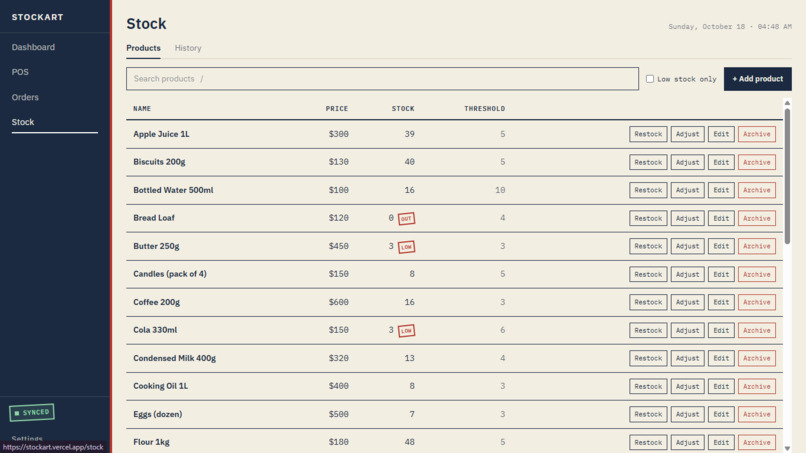
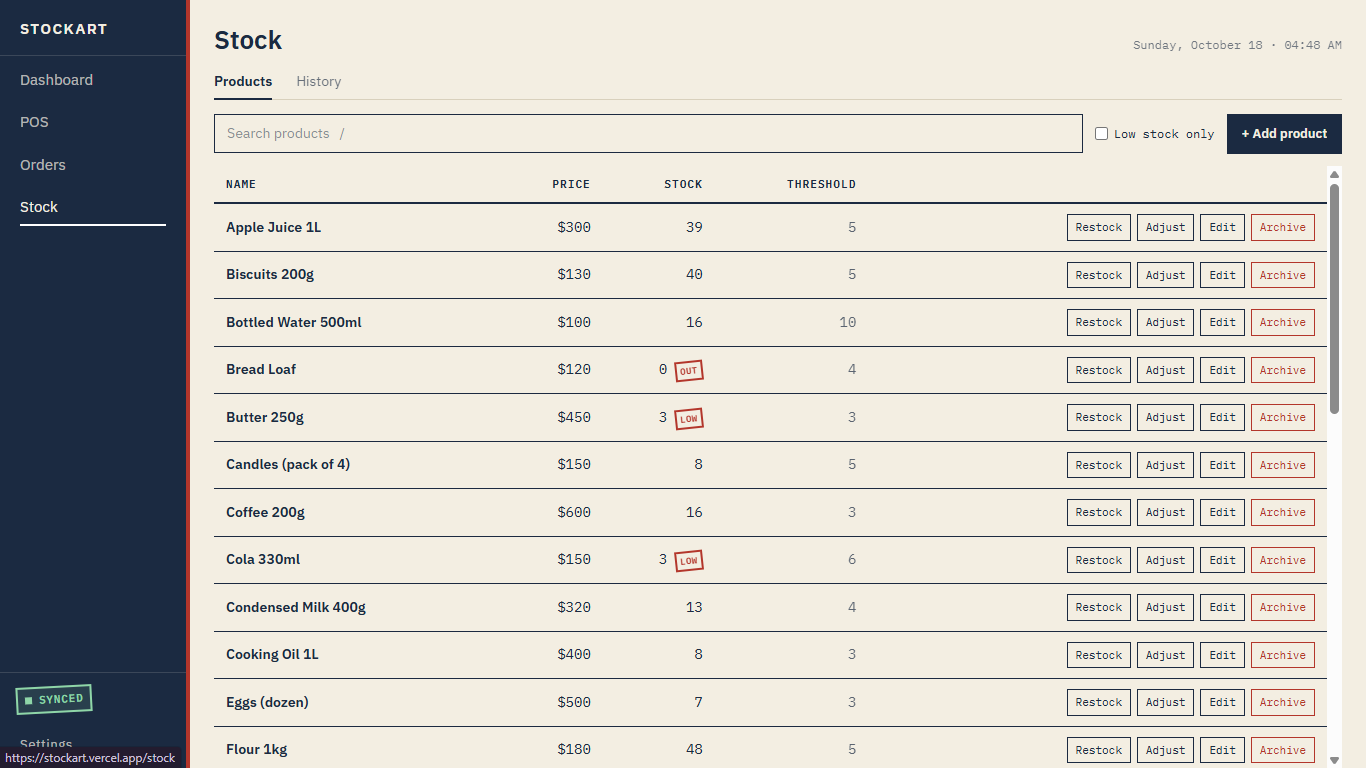
Stock screen
-
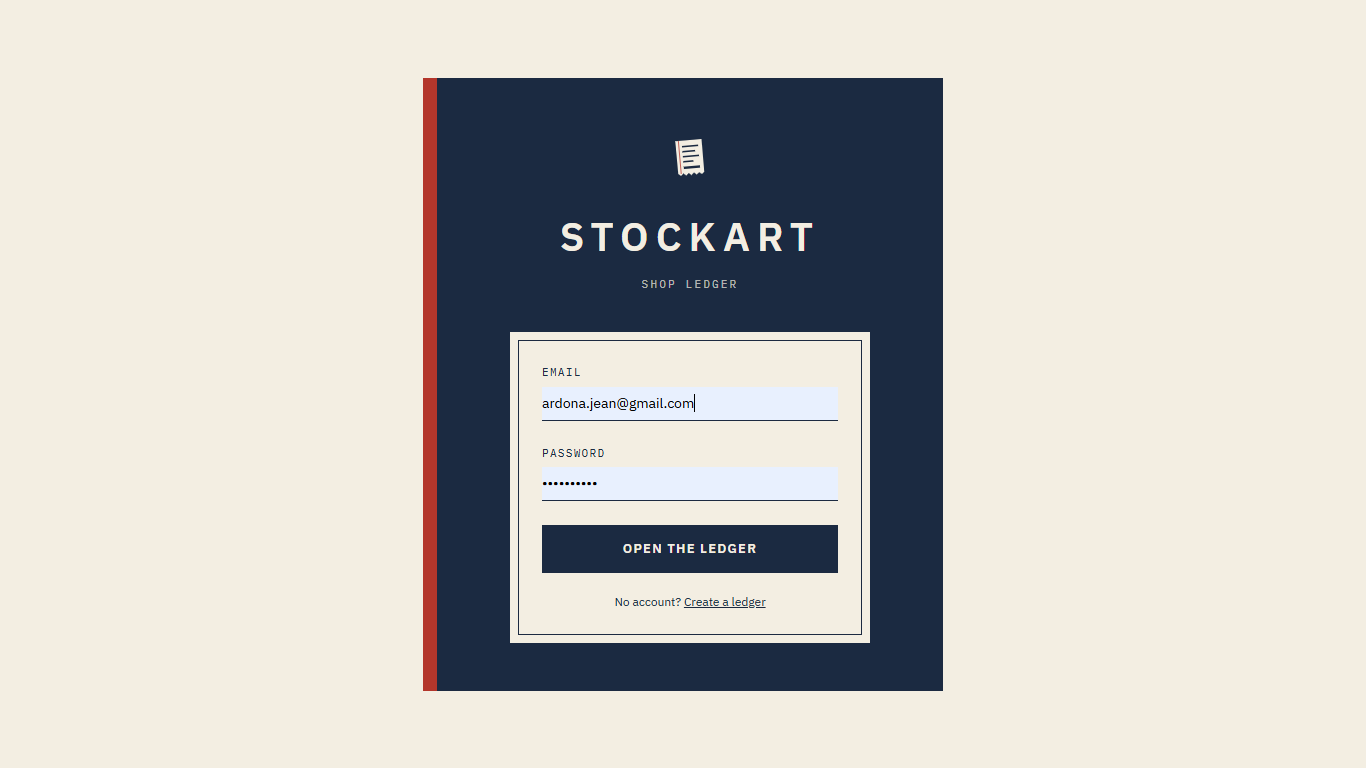
Login screen
-
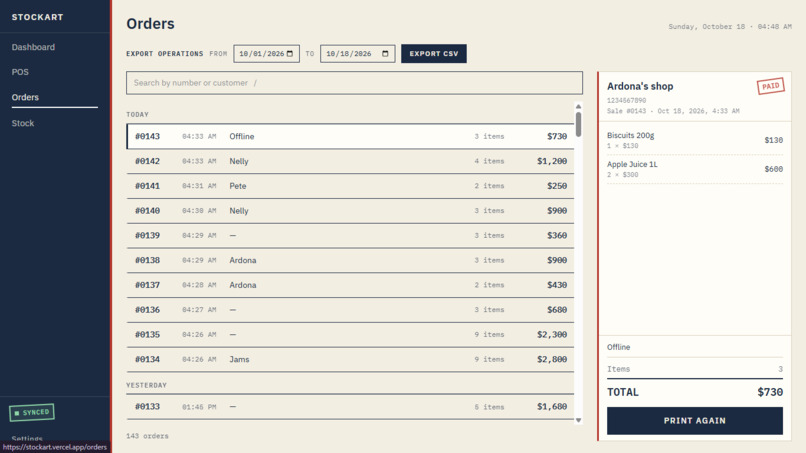
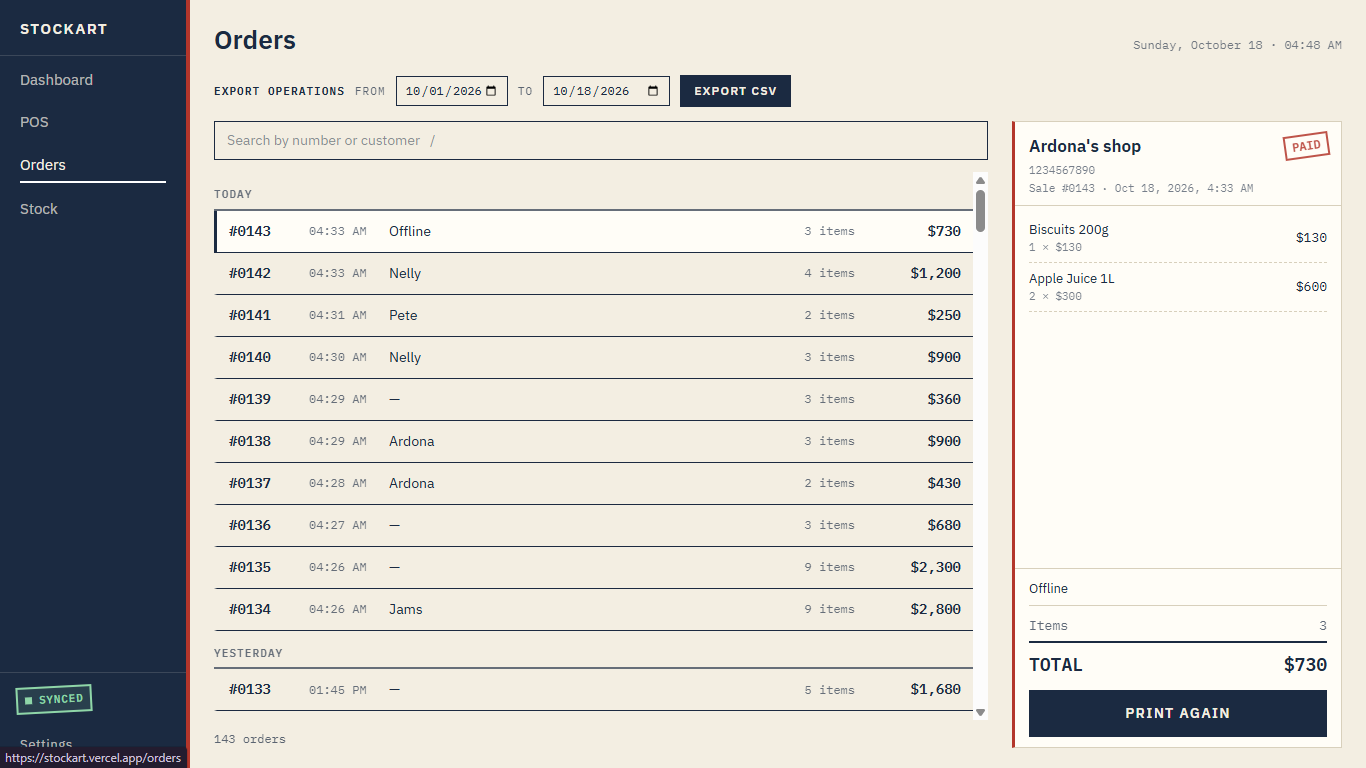
Orders history
-
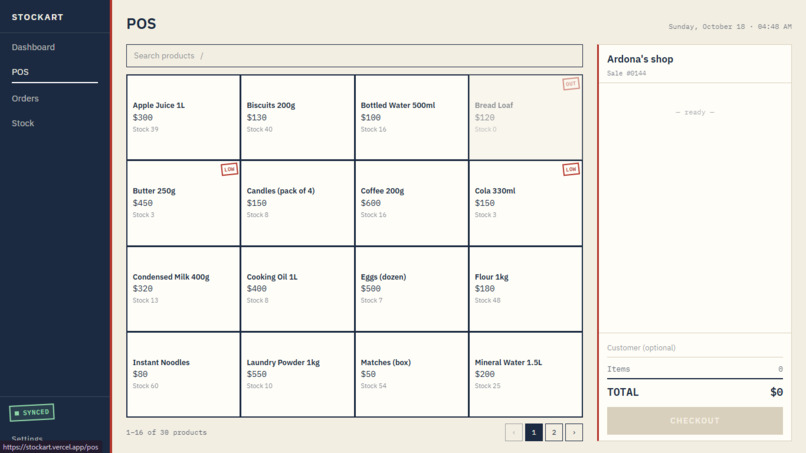
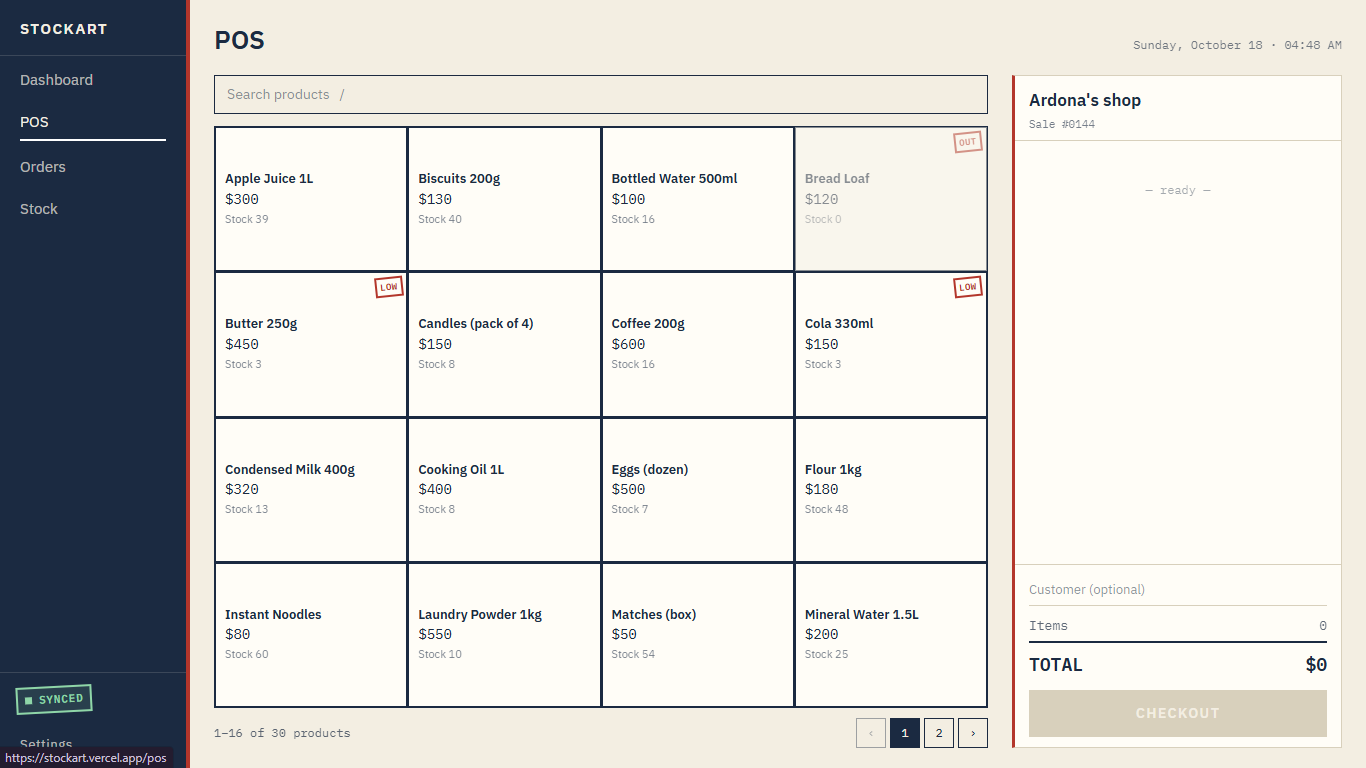
Point of Sale
-
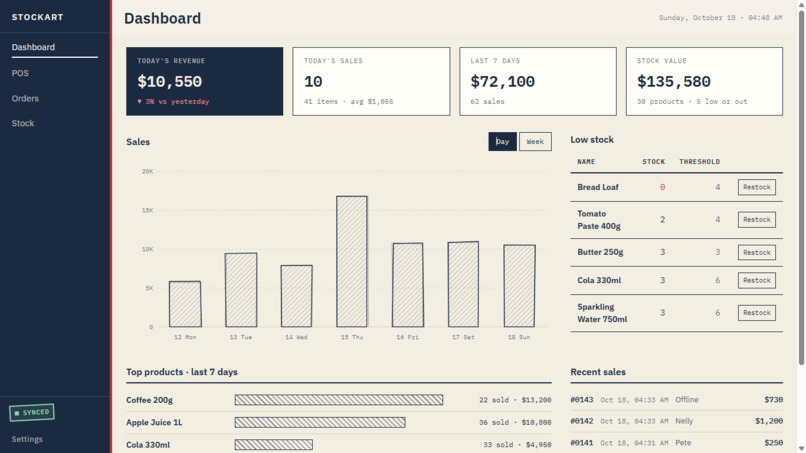
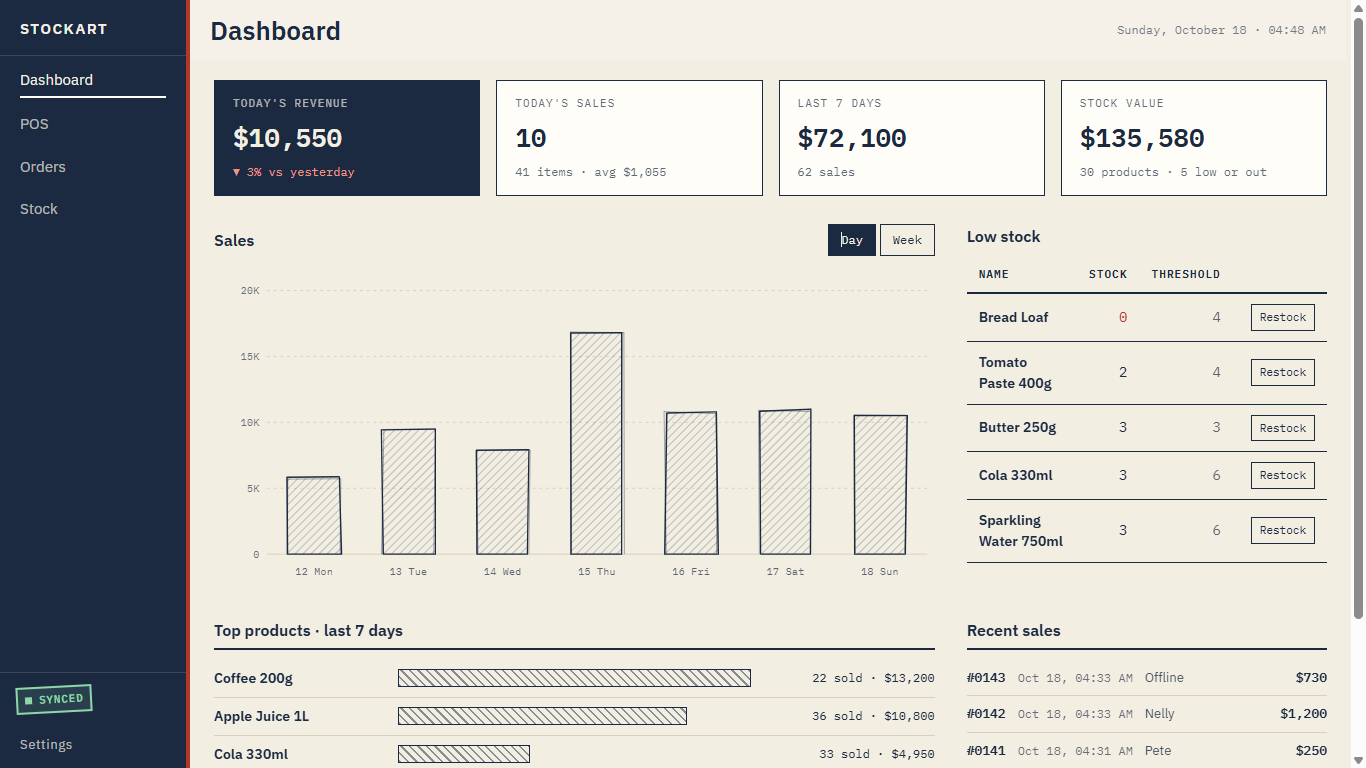
Dashboard
Stockart: shop management that keeps working offline
What it does
Stockart is a web app for small shops: a point of sale (the cash register), stock management, order history and a dashboard, all in one place.
Every sale, restock and change is saved in the browser first, so the shop keeps selling even when the internet drops. When the connection comes back, everything is sent to the cloud automatically, and a colored stamp in the sidebar shows what is synced, pending or offline.
You can sell with a receipt strip that prints line by line, never sell more than you have in stock, download a PDF receipt, find and reprint any past order, export all operations for a period as a CSV, and read the dashboard: revenue against yesterday, a hand-drawn sales chart, top products and low stock.
It is designed for a computer and looks like a shopkeeper's paper ledger (cream paper, ink blue, a red margin line, rubber stamps), on purpose not like a generic dashboard.
Who it's for
Small shop owners who still run on a paper notebook or a spreadsheet, especially where the internet is unreliable. Online tools stop working when the connection does, and a cash register that is down is a tool that gets abandoned. Stockart is built so the shop never stops.
What I learned
- Planning first saves credits. Early on I burned my agent credits with vague prompts. With a scope, a PRD and a spec written first, the build became fast and predictable, and I knew what "done" meant at every step.
- Offline-first is a data-flow problem. The key ideas were: the local database is the source of truth, a queue remembers what changed, and sending is idempotent (upsert on a unique ID), so retries never create duplicates.
- Review what an agent produces. Reading the spec and testing the sync logic found real problems before they reached users, for example a missing column that would have made Row Level Security reject every sale line.
- A written design reference keeps the look consistent. Putting the identity in one file (colors, fonts, rules) let the agent reproduce it.
- Cut scope, then ship. Customers and debts, two-way sync and multiple users are planned for v2, so the core could be finished and polished.
How I built it
Planned and built with the Devpost Learn skill pack in Kiro (scope, PRD, spec and build plan are in the repository). Claude (Anthropic) was used as a pair-programming and design assistant for several screens, the sync engine, receipt printing and CSV export, and its work was tested before being added.
Stack: React, TypeScript, Vite, Tailwind CSS, Dexie (IndexedDB), Supabase (Auth, Postgres, Row Level Security), vite-plugin-pwa, Vercel.
Links
- Live app: https://stockart.vercel.app
- Code and planning docs: https://github.com/Jean-ardona/STOCKART
- Demo video: https://www.youtube.com/watch?v=KERLJNLFZ3I
Demo data in the video is generated for the demonstration.
Built With
- dexie
- react
- supabase
- typescript
- vite

Log in or sign up for Devpost to join the conversation.