-
-
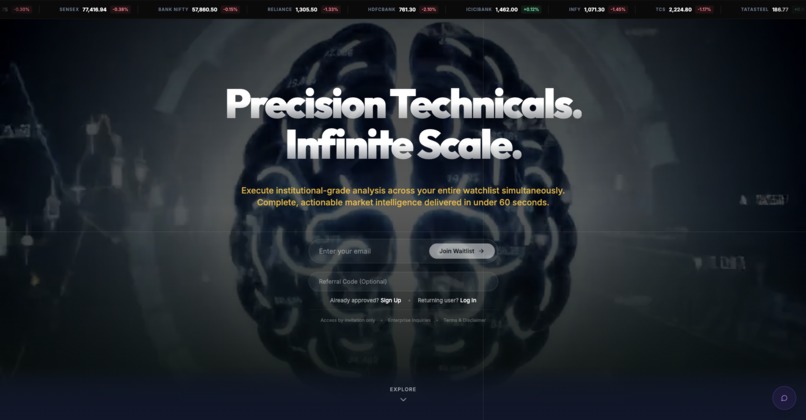
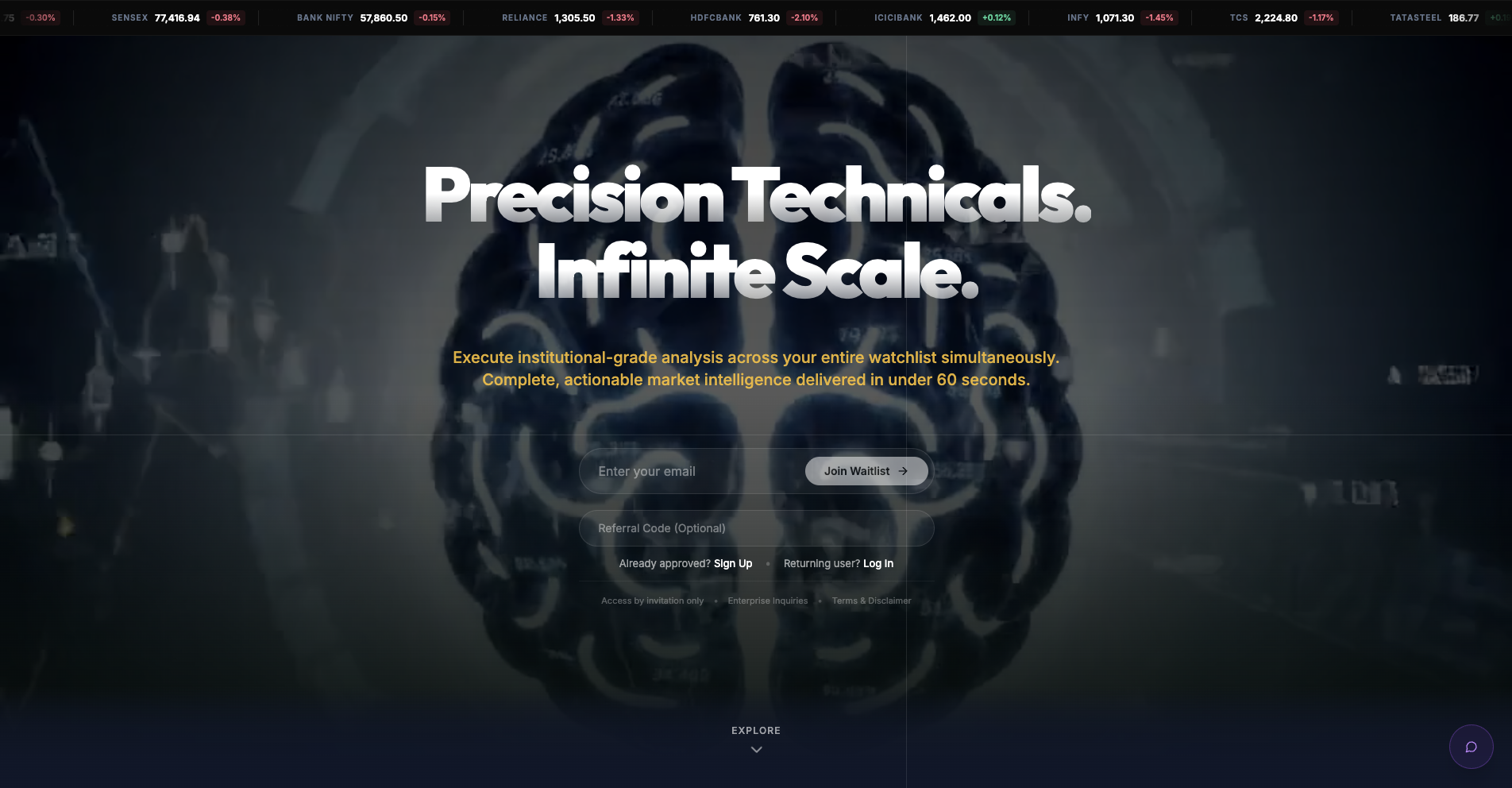
home page
-
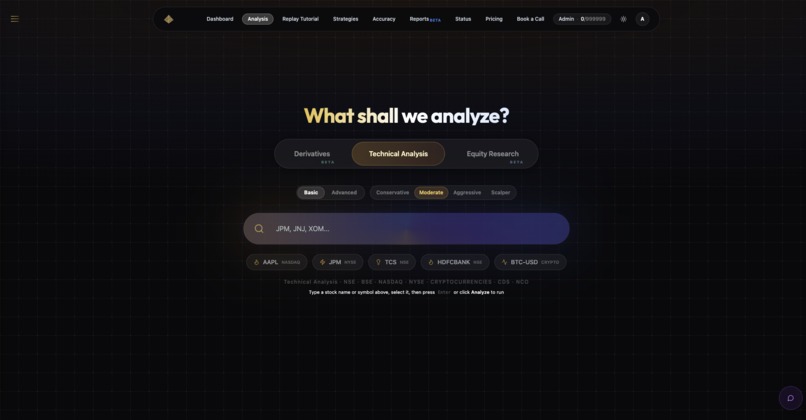
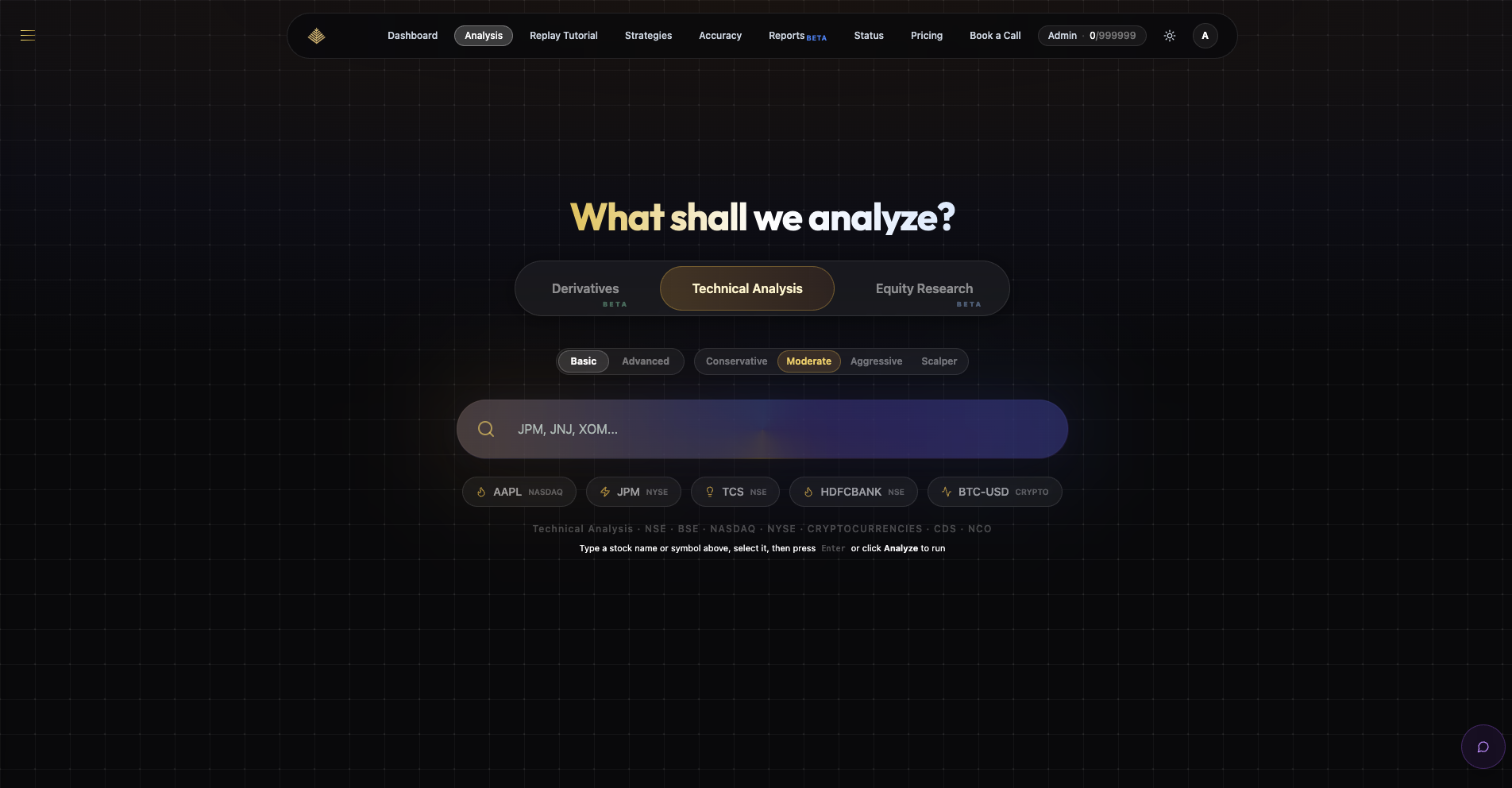
analysis page
-
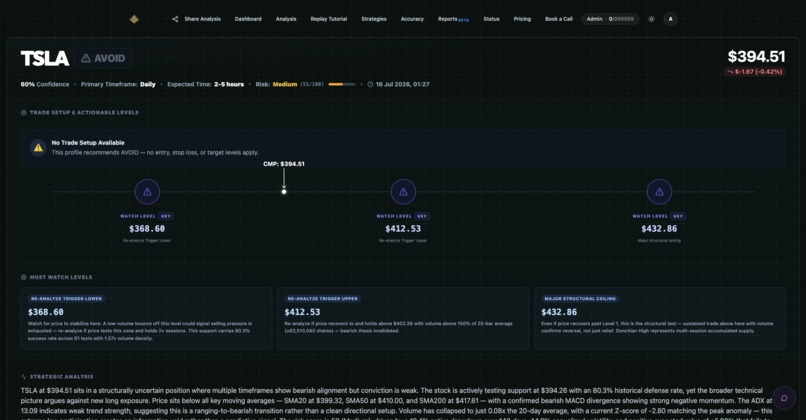
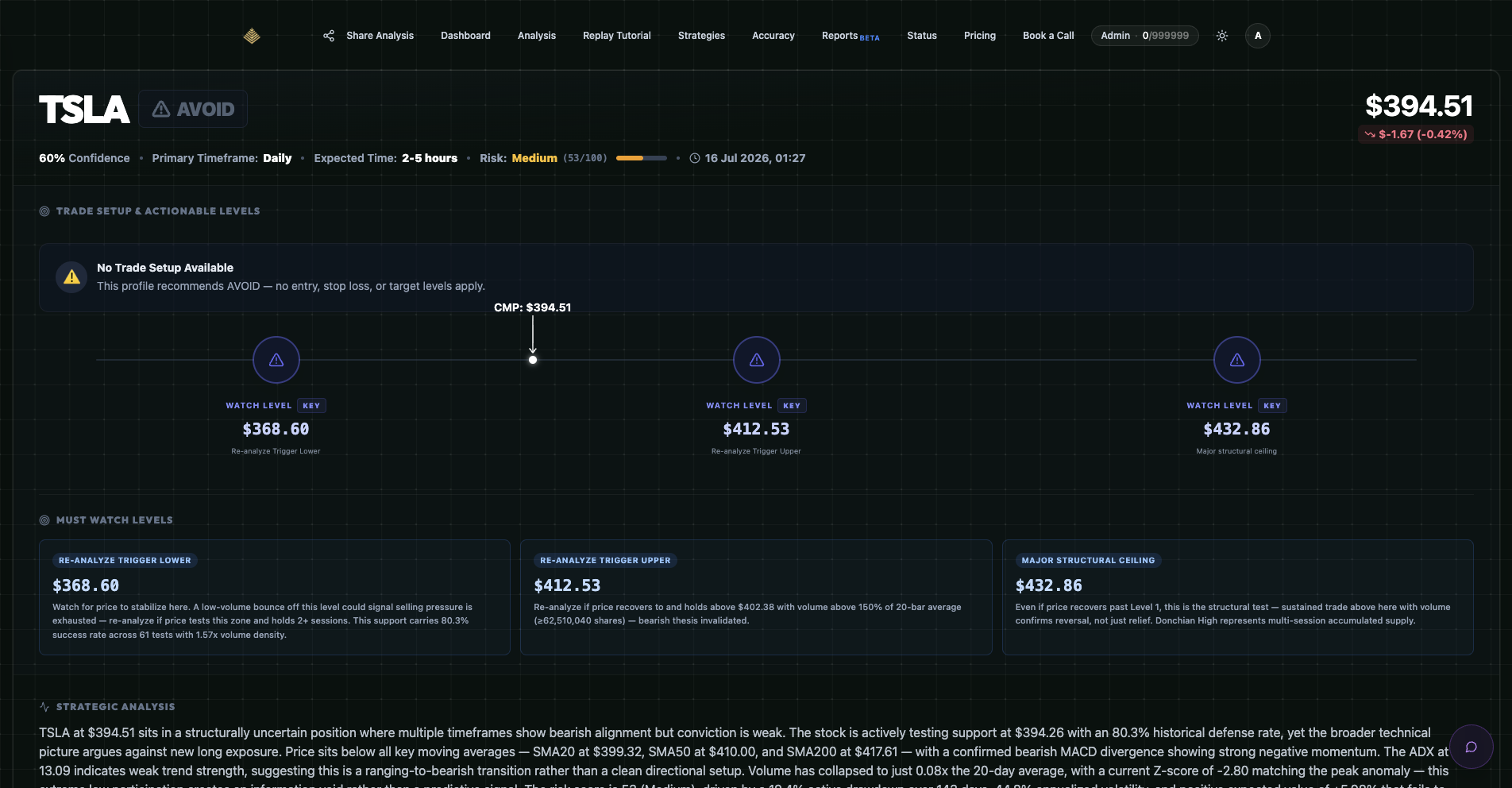
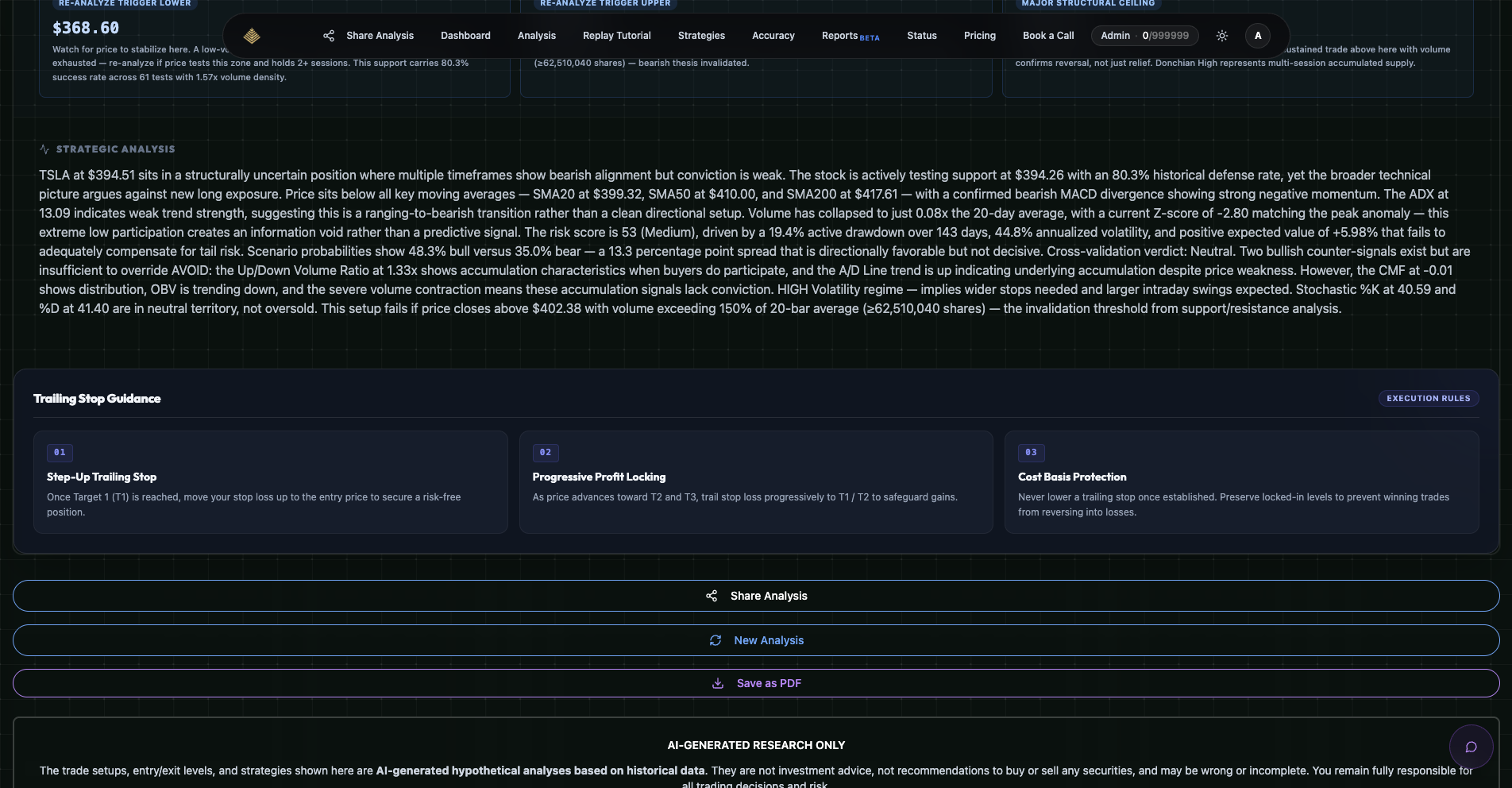
TSLA(TESLA) analysis part 1
-
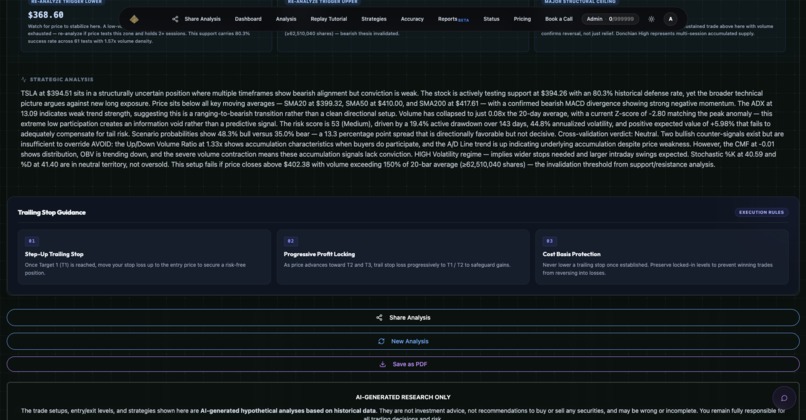
TSLA(TESLA) analysis part 2
-
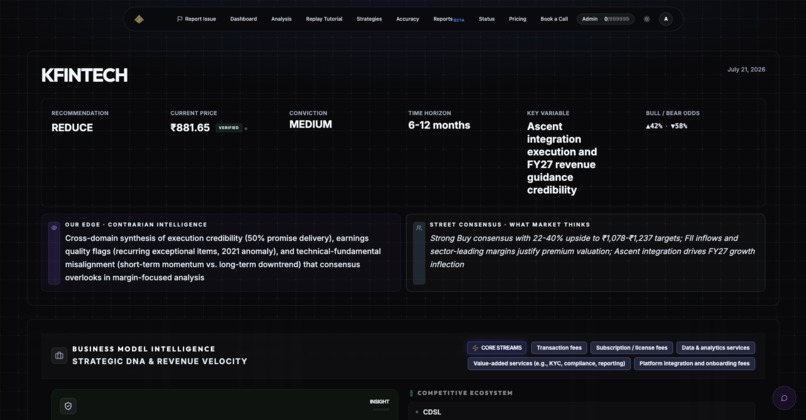
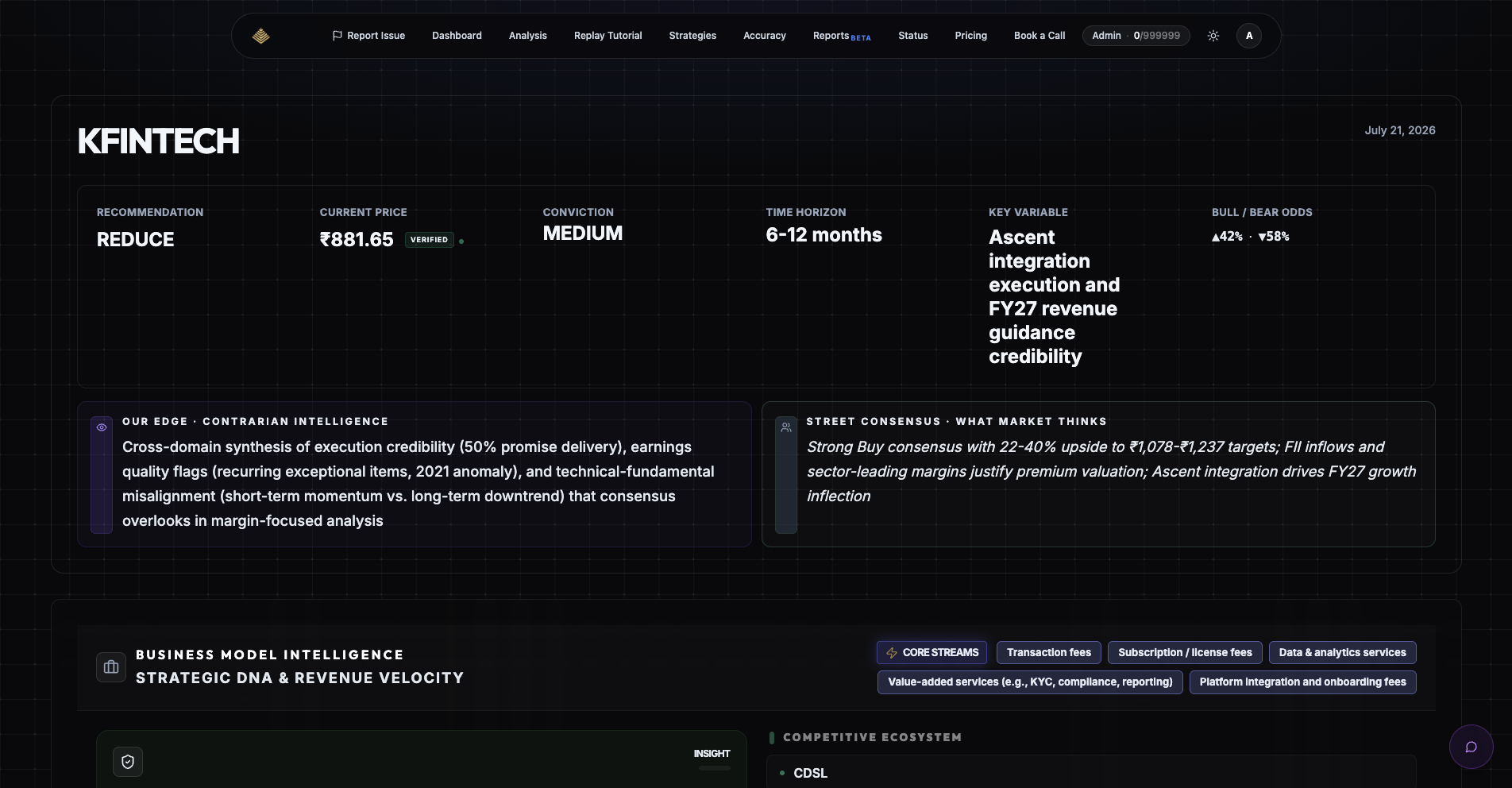
upcoming equity research
Inspiration
Good technical analysis is still slow. A skilled analyst often needs thirty to sixty minutes per stock to check structure, volume, patterns, multiple timeframes, risk, and sector context. That does not scale. Coverage stays thin; most names never get a full read.
Existing tools only cover pieces of the job. Charting apps show price. Screeners rank lists. Many AI trading tools skip the synthesis analysts actually rely on, or return a score with no verifiable record.
We built for the gap: run the analysis end to end, return stop, entry, and target with reasoning, and publish results people can audit.
For OpenAI Build Week, we used Codex and GPT-5.6 to accelerate architecture, prompts, evaluation, and shipping.
What it does
StockAnalyzer Pro is a multi-agent platform for live technical analysis across major markets.
- Search a stock
- Hit Analyze
- Specialist agents run in parallel
- A Final Decision returns side, stop, entry, target, and reasoning
That full read returns in under ninety seconds instead of thirty to sixty minutes.
Markets: NYSE, NASDAQ, NSE, BSE, and cryptocurrencies.
Accuracy is around 80%. The scorecard is public on the website, and analyses can be shared with a frozen timestamp.
Try it (skips the waitlist):
[https://www.stockanalyzerpro.com/register?vip=PRELAUNCH100]
Invite code: PRELAUNCH100
How we built it
Frontend: React 18, Vite, TypeScript
Backend: FastAPI, Python
Market data: Coinbase, Twelve Data, Zerodha
Models: GPT-4, GPT-5.1, GPT-5.6, GPT-OSS-120B, Claude Sonnet 4.5, Claude Opus 4.6, Claude Haiku 4.5, Kimi K2.5, NVIDIA Nemotron, Google Gemini
Infra: Supabase, Redis, AWS Bedrock, GCP Cloud Run, Cloud Build
Build tools: Codex, Antigravity, Claude Code, SuperGrok, Cursor, Warp
Challenges we ran into
Sub-90s multi-agent latency. Parallel agents, timeouts, and a final synthesis step had to stay reliable without dropping quality. If the run is slow, people go back to charts.
Hallucination and run-to-run drift. Same stock, same data, same scenario could still produce different reasoning and different calls. Invented levels, a softened stop, or a thesis that flips between identical runs is worse than a clean failure: it looks confident and is wrong.
Models ignoring rules and data in the prompt. Even with strong prompts, models skip levels already in the data, soften risk rules, or invent a path that the instructions forbid. Accuracy is not only “good average reasoning.” It is whether the model stays inside the data and the hard rules on every run.
Accomplishments that we're proud of
- Live product on real stocks across India equities, US equities, and crypto
- Full technical analysis with stop, entry, and target in under ninety seconds, at about $0.15 inference cost per analysis
- Around 80% accuracy on published calls
- Proved the system under real-time market use, not only offline demos
What we learned
Conflicting data needs specialized sub-agents. Full TA brings a lot of material that does not agree (structure, volume, patterns, levels, risk, sector, etc.). A single prompt cannot hold that mass of conflicting signal and still return a clean call. Sub-agents dig into each area; Final Decision reconciles into side, stop, entry, target, and reasoning.
Coverage is the job, not the chart. Analysts already know how to read a name. The bottleneck is doing that work across a book. Depth only matters if you can apply it to more names without losing quality.
What's next for StockAnalyzer Pro
Core product is live. Next is leverage on cost, models, and who can use it.
Lower cost per analysis. Keep depth and speed while cutting unit cost. Target: about $0.05 per analysis.
Fine-tune smaller models. Train on analyses and outcomes we already generate for faster, cheaper specialists on jobs this stack already does well.
Team and institutional use. Research teams, brokerages, and desks that need consistent coverage across large books.
Try it: [stockanalyzerpro.com/register?vip=PRELAUNCH100]
Built With
- ai
- amazon-web-services
- antigravity
- claude
- codex
- fastapi
- gcp
- grok
- python
- react
- react-native
- supabase
- vercel

Log in or sign up for Devpost to join the conversation.