-
-

Logo
-
Sign in
-
Dashboard

Inspiration
Inefficient inventory management leads to significant food waste, financial loss, and environmental strain for small-to-medium business (SMB) owners
What it does
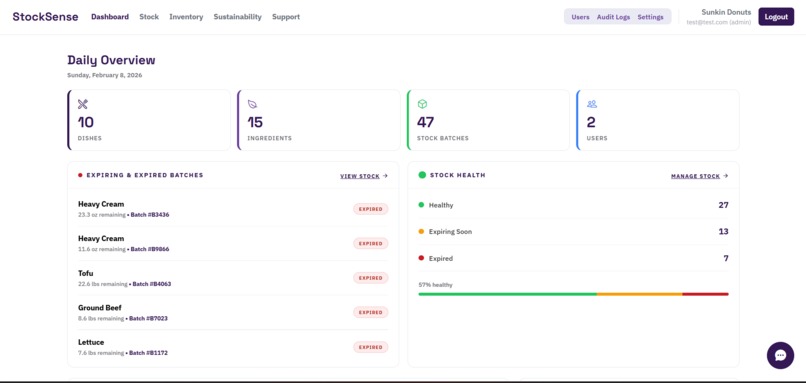
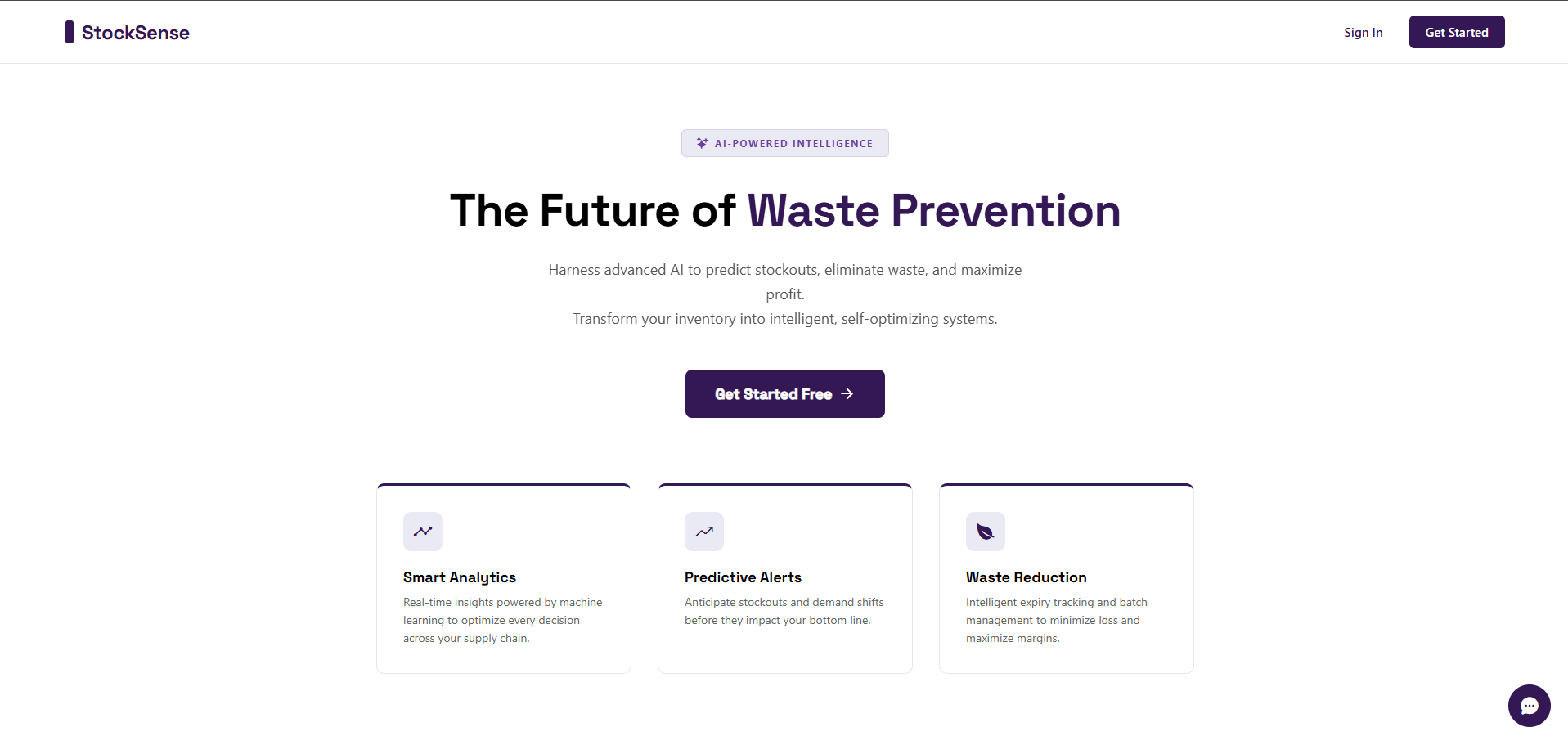
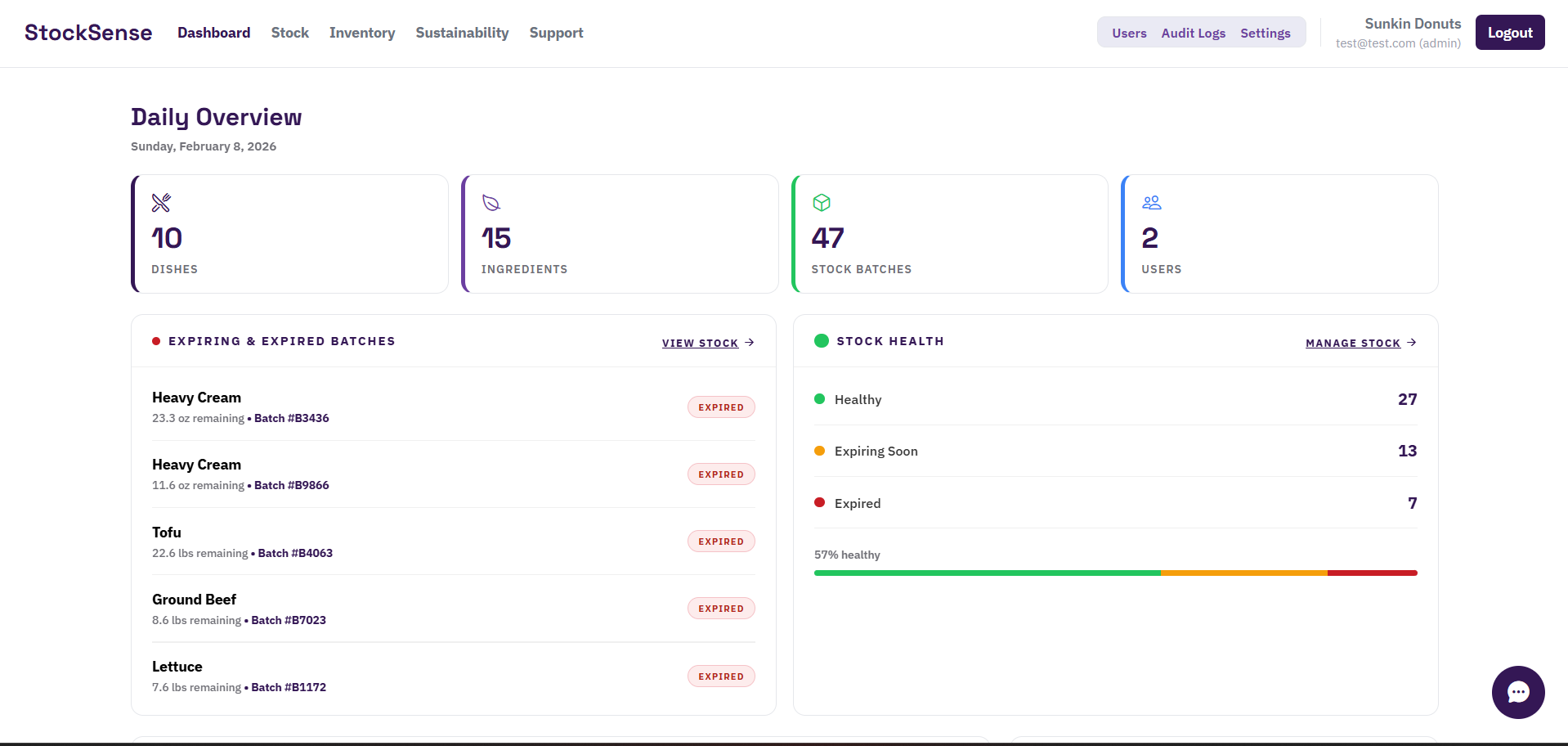
We used a predictive dashboard that uses AI to forecast stockouts, suggest contextual reorders, and bridge the gap between surplus and community need. To modernize the inventory pipeline for SMB owners by shifting from reactive restocking to proactive, AI-driven waste prevention. We aim to maximize profit while minimizing environmental footprint.w
How we built it
Database
We used MySQL to structure our inventory data, specifically implementing many-to-many relationships to link ingredients to specific menu dishes.
Cloud Hosting
The database was migrated from a local environment to Digital Ocean to allow for team collaboration and scalability.
AI Integration
We implemented the Gemini API to power our intelligent chatbot and used AI-driven insights to refine our UI/UX.
Testing
We used Postman to test and validate various API calls during the development process.
Challenges we ran into
Database Schema
Early on, we struggled with relating ingredients to dishes. We solved this by implementing a junction table to facilitate a many-to-many relationship.
Cloud Migration
Connecting our local database to Digital Ocean presented a learning curve in terms of cloud platform configuration.
API Implementation
We initially faced difficulties implementing the Gemini API, requiring significant troubleshooting to get the chatbot functional.
Time Constraints
We hit a wall with time during the final hours, which meant we couldn't integrate all the API calls we had been testing in Postman.
Accomplishments that we're proud of
Successful Migration: Moving our database from a local machine to a live cloud platform (Digital Ocean).
Functional AI: Successfully integrating the Gemini API to create a working AI chatbot.
Core Feature Completion: We managed to implement all our priority features within the tight 48-hour window, including the predictive logic and the support page.
What we learned
Database Design: Understanding complex data relationships, such as many-to-many.
Cloud Infrastructure: Learning how to host and migrate databases on platforms like Digital Ocean.
API Testing: Using Postman to verify and troubleshoot API endpoints.
Project Management: Learning how to prioritize features and manage a development pipeline under a strict deadline.
What's next for Stock Sense
Fully Integrate APIs: Finalize the API calls we were testing in Postman to provide even deeper data insights.
UI/UX Refinement: Spend more time polishing the dashboard interface to make it more intuitive for SMB owners.
Community Connection: Build out the module that connects businesses with local charities to donate predicted surplus food


Log in or sign up for Devpost to join the conversation.