-
-
STKR Icon
-
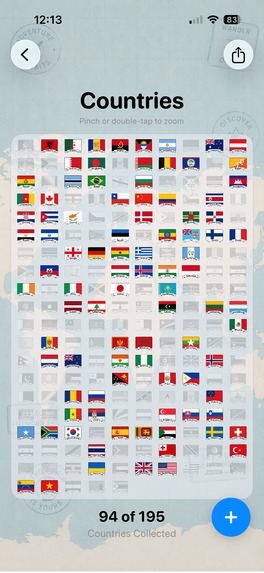
Travel every country visited
-
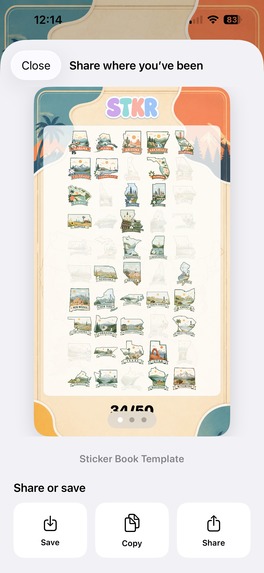
Share your travel collection
-
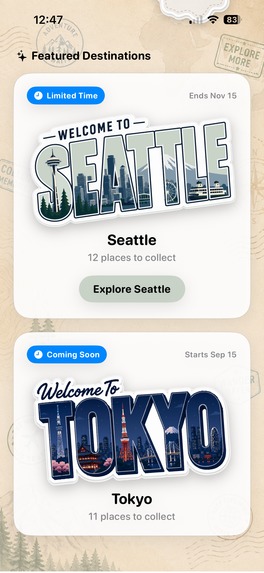
Limited time events
-
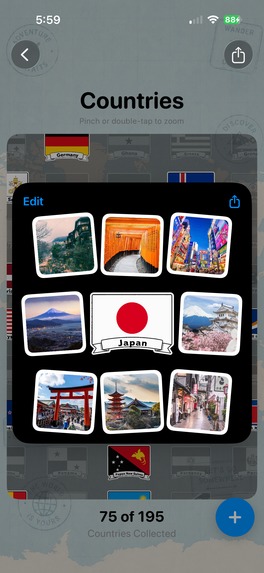
Log photos of your travel
-
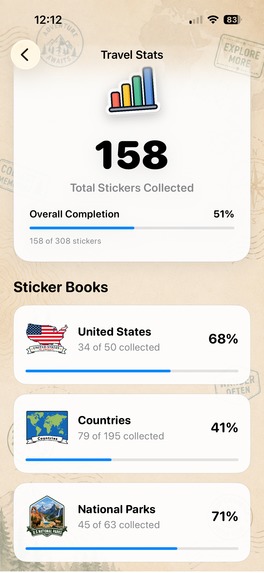
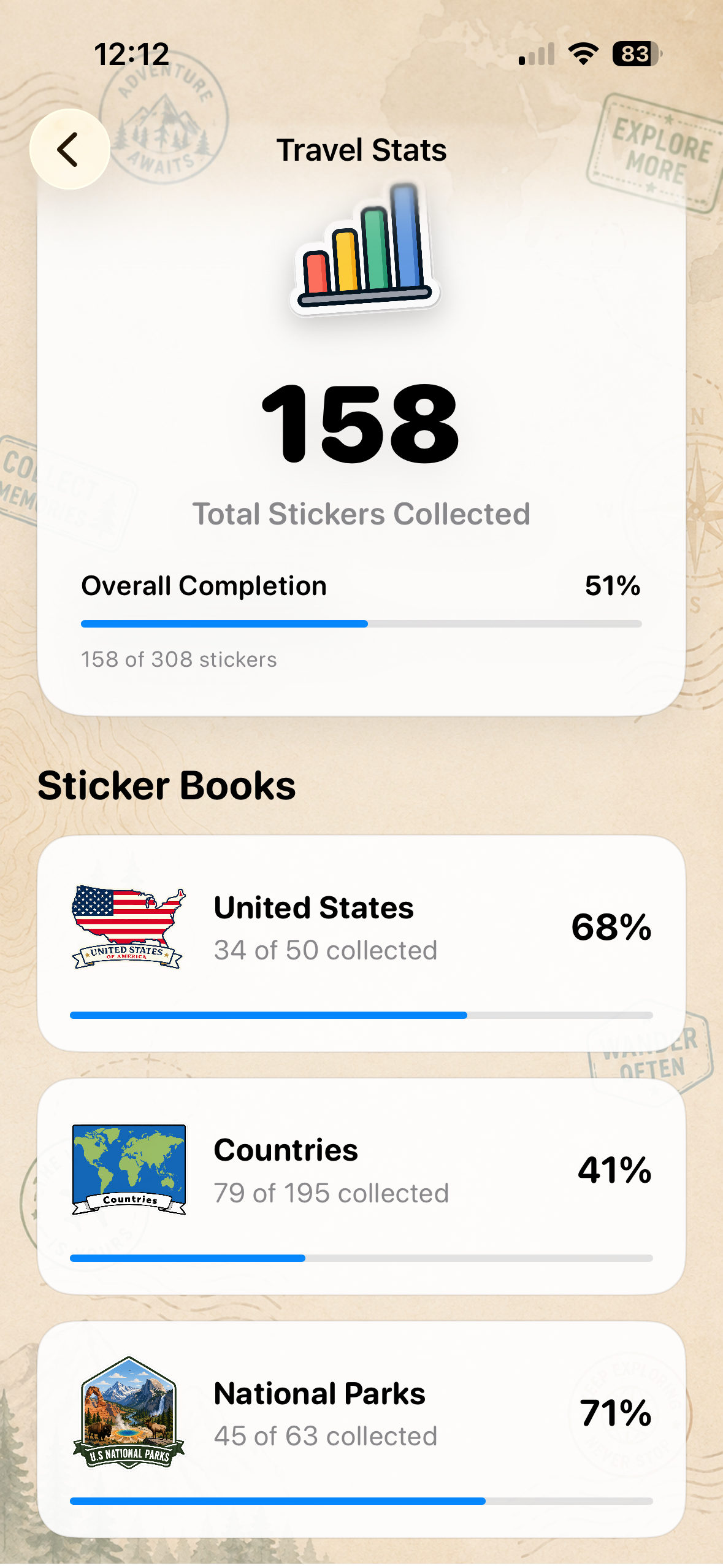
Track your travel progress
Inspiration
I’m fairly new to traveling, and one tradition I’ve started is buying a pin from every place I visit. I love having something physical that represents where I’ve been and the memories I made there.
That got me thinking about how we usually track travel digitally. A lot of the experience comes down to lists, maps, or statistics. I wanted something that captured the feeling of actually collecting something.
That idea became STKR: Travel Collection.
STKR takes the simple satisfaction of adding a sticker to a collection and turns it into a way to remember and share your travels. Instead of just checking a place off a list, every new destination becomes another sticker you get to add to your collection.
What it does
STKR lets you build digital sticker collections based on the places you’ve visited.
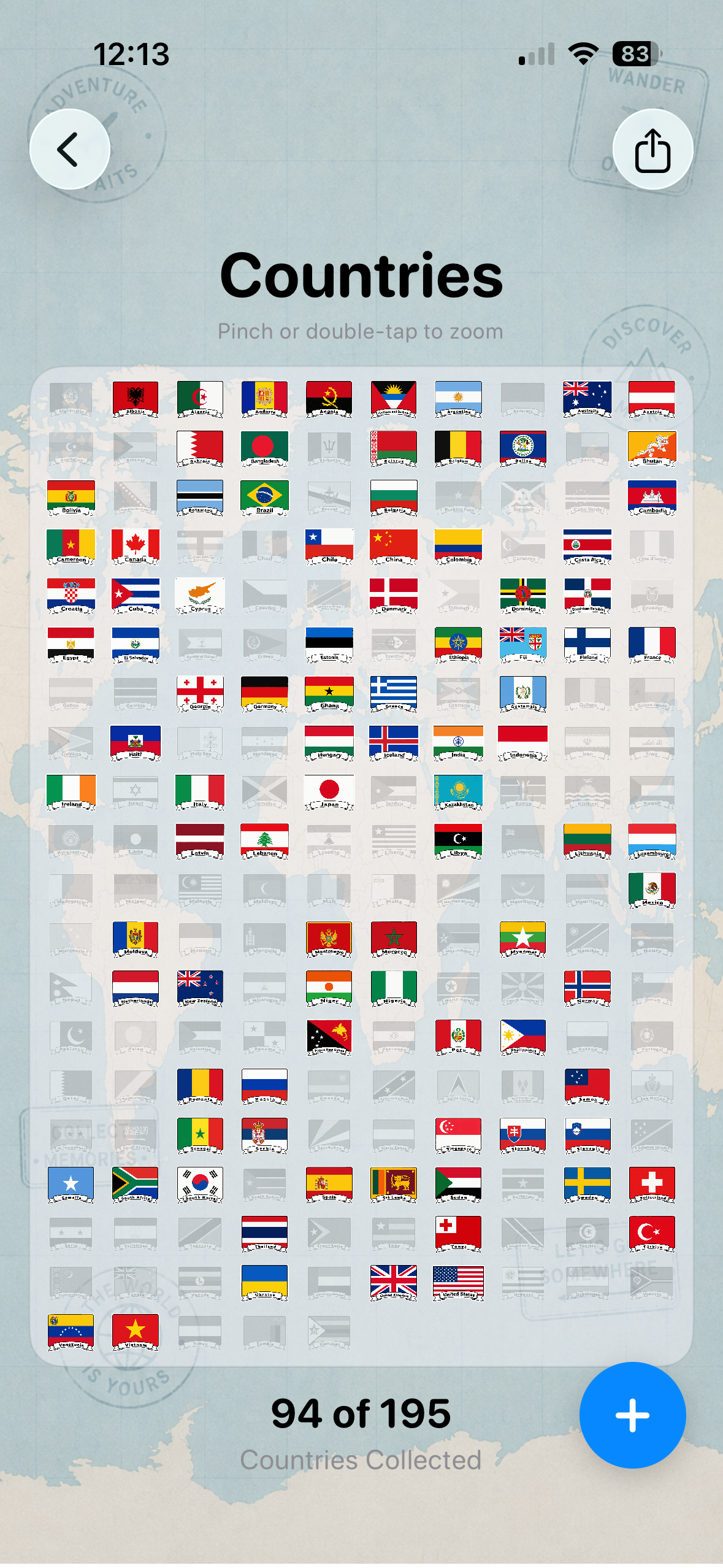
You can collect stickers across categories like Countries, U.S. States, National Parks, and World Wonders. Each destination has its own custom sticker artwork, turning your travel history into a visual collection that grows alongside you.
Adding a new place is designed to feel rewarding. When you mark a destination as visited, its sticker is animated into your sticker book rather than simply changing a checkbox.
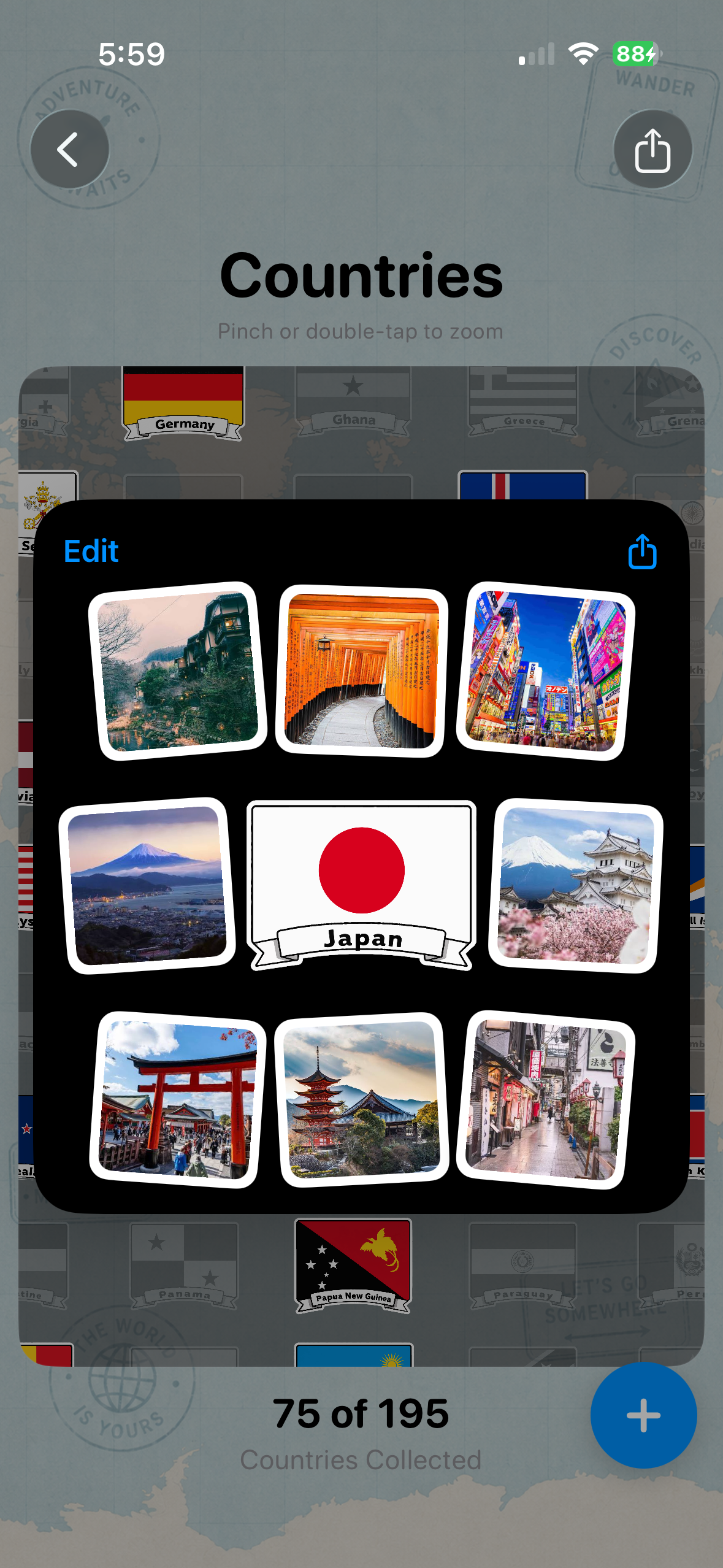
STKR also lets you attach your own photos to the places you’ve visited, so a sticker can become a small collection of memories from that destination.
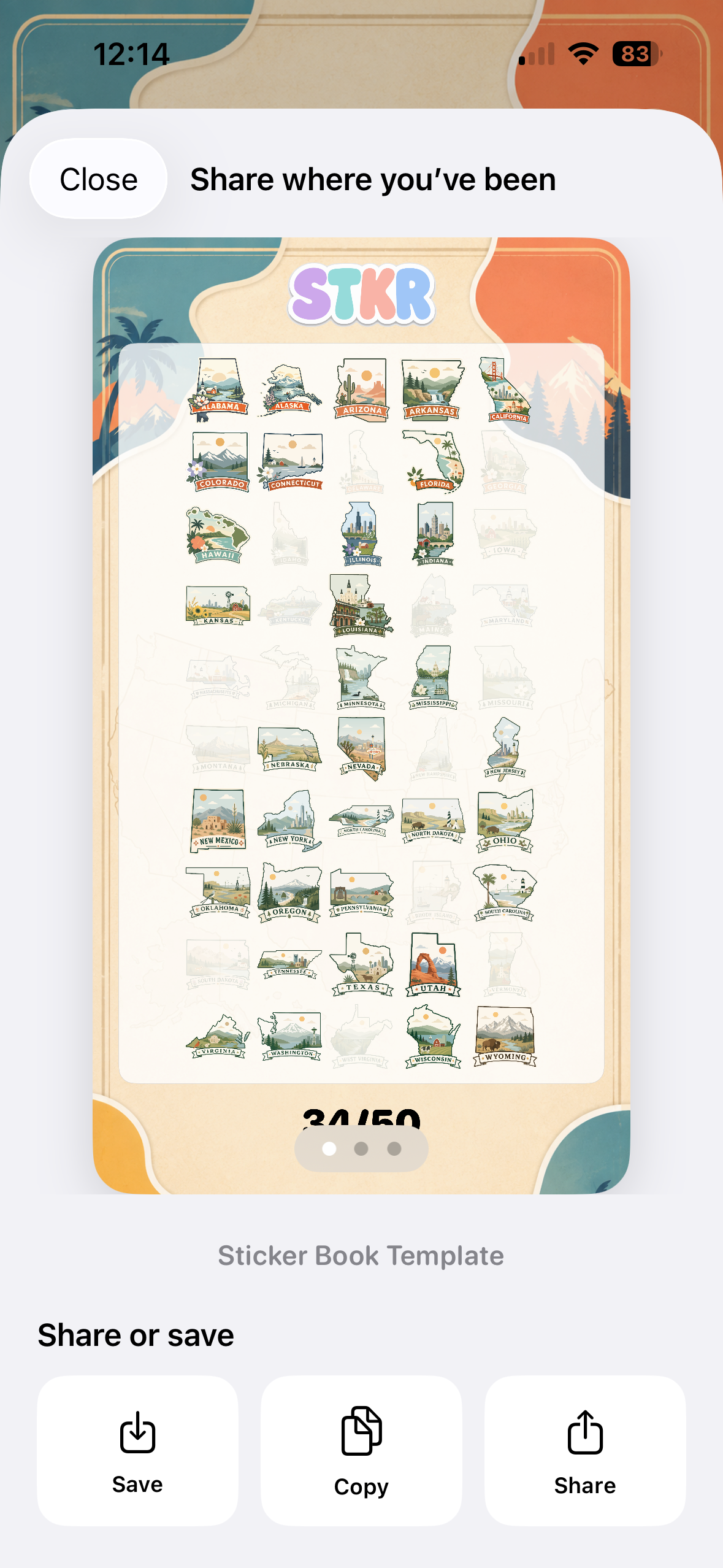
Once you’ve built a collection, you can create shareable versions using different templates and show friends and family the places you’ve been.
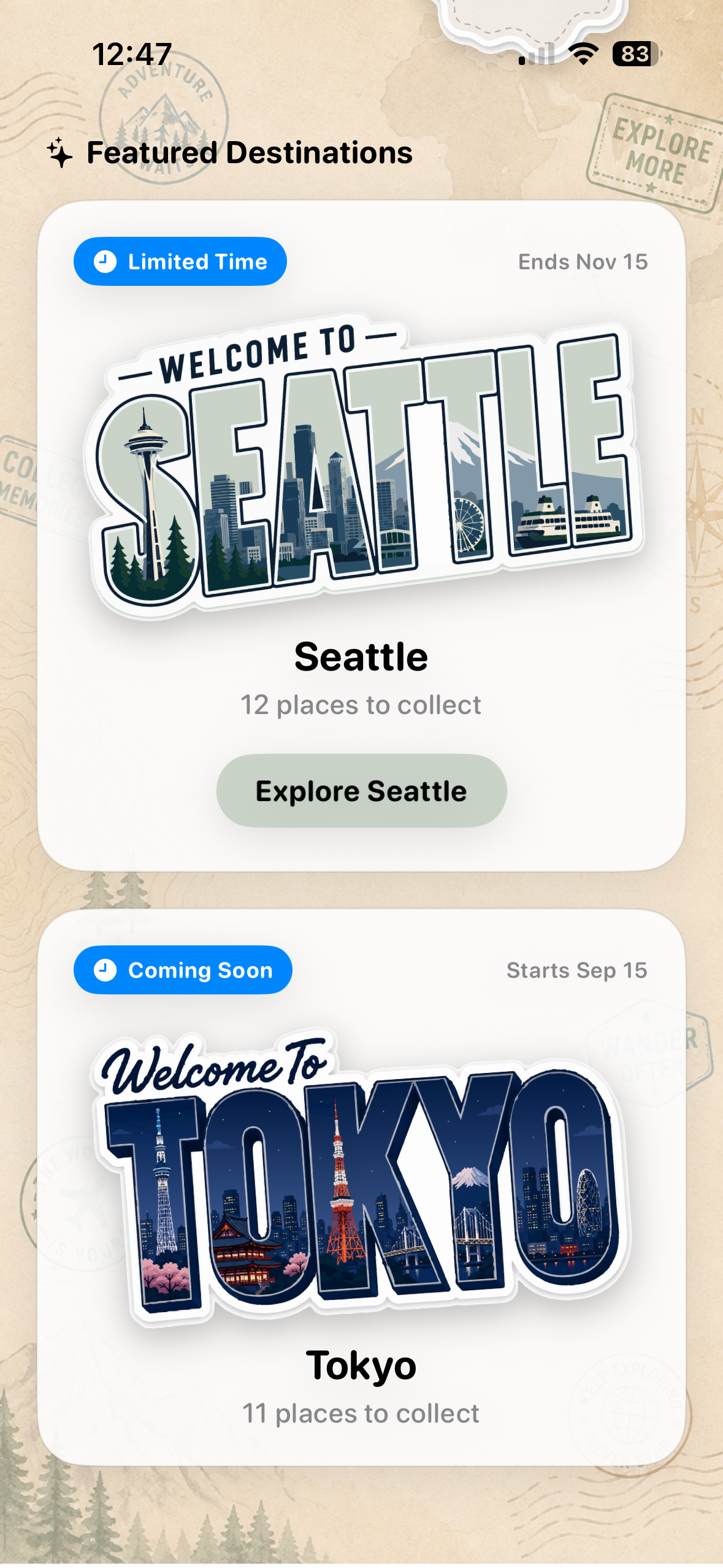
One of my favorite parts of STKR is Featured Destinations. These are limited-time collections centered around a specific city or area. Instead of simply visiting the city, you can collect stickers for its landmarks, places, and experiences. Featured Destinations also include a map showing where each collectible location is, turning the sticker book into something you can actually use while exploring.
How we built it
STKR was built natively for iOS using Swift and SwiftUI.
The interface was designed around one central idea: the app itself should feel like a sticker book.
Rather than placing the sticker theme on top of a traditional app interface, I tried to carry it throughout the entire experience. Categories are presented as sticker sheets, navigation elements look like stickers, collections use custom backgrounds, and stickers have small rotations and imperfections that make them feel physically placed rather than perfectly aligned UI elements.
SwiftUI powers the interface and animations, while SwiftData is used to persist a user’s sticker collection. The app also supports storing photos associated with visited locations.
For Featured Destinations, I integrated MapKit to show collectible locations around a city, with the actual sticker artwork appearing as map markers.
I also used RevenueCat to manage STKR’s premium experience and in-app purchases.
A lot of attention went into the smaller interactions: stickers stamping into collections one at a time, haptic feedback, zoomable sticker sheets, animated onboarding experiences, and transitions that reinforce the feeling that the user is interacting with a physical collection.
Challenges we ran into
One of the biggest challenges was finding the balance between making STKR feel playful and making sure it still felt intuitive as an iOS app.
It would have been much easier to build traditional grids, buttons, and lists and simply place sticker artwork inside them. Instead, I wanted the sticker concept to influence the entire interface without making navigation confusing.
Another challenge was handling the growing amount of data behind what looks like a simple sticker book. STKR needs to remember which stickers have been collected, associate photos with destinations, synchronize changes correctly, generate shareable collections, and support very different types of sticker books.
Featured Destinations introduced another challenge because the collections aren't just visual. Each sticker represents a real-world location that needs to appear correctly on a map while still preserving the collectible feel of the app.
Animation was also something I spent a lot of time refining. When multiple destinations are added, for example, I wanted stickers to appear individually in the order they were selected instead of the entire collection simply updating at once. Small details like that made the implementation more complicated, but they also made the experience feel much more satisfying.
Accomplishments that we're proud of
I’m especially proud that STKR developed its own visual identity.
The sticker concept isn't limited to the app icon or a single screen. It carries through the sticker books, buttons, navigation, animations, maps, sharing experience, onboarding, and even the way new destinations are revealed.
I’m also proud of the amount of sticker artwork that went into building the different collections. Countries, U.S. States, National Parks, World Wonders, and Featured Destinations each needed to feel like part of the same app while still having their own personality.
Featured Destinations is probably the feature I’m most proud of. It takes STKR beyond being a record of where someone has already traveled and gives them a reason to explore somewhere in a new way.
Most importantly, STKR now feels like the original idea I had in my head: a digital travel collection that is genuinely fun to fill in.
What we learned
Building STKR taught me how much small interactions can influence the personality of an app.
A feature can technically work with a checkbox and a database update, but making a sticker physically stamp into a collection with animation and haptic feedback creates an entirely different feeling.
I also learned to design around a concept rather than individual screens. Once I decided that STKR should feel like a physical sticker book, that idea started answering design questions for me. Buttons became stickers. Categories became sticker sheets. Visited places became collectibles. Sharing became showing someone your sticker collection.
I also learned a lot about building an app that combines persistent user data, photos, maps, animations, in-app purchases, and SwiftUI while still trying to keep the experience simple for the person using it.
What's next for STKR: Travel Collection
There are a lot more places left to collect.
I want to continue expanding STKR with new permanent sticker books and rotating Featured Destinations from around the world. Featured collections can go beyond major cities and highlight islands, regions, road trips, and other areas where someone can realistically complete a collection during a trip.
I also want to expand the memory side of STKR. Attaching photos to stickers opens the door for each destination to become a richer record of a trip rather than simply something marked as visited.
There are also opportunities for more collection milestones, statistics, completion rewards, and ways to revisit previous trips.
Ultimately, I want STKR to become a travel collection that grows with you.
There will always be another sticker to collect.

Log in or sign up for Devpost to join the conversation.