-
-
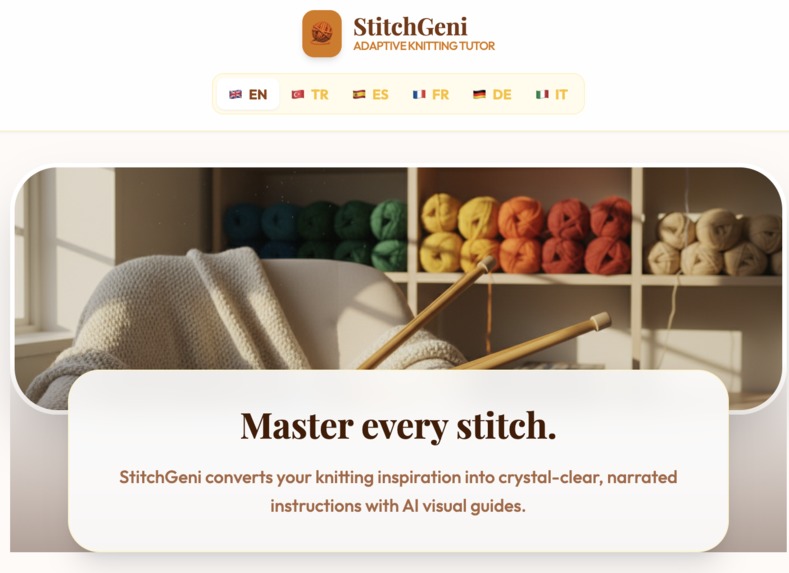
Language Selection
-
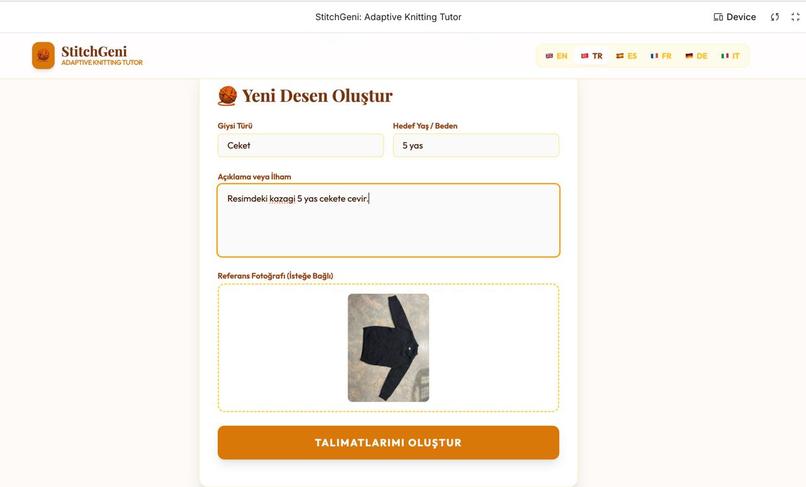
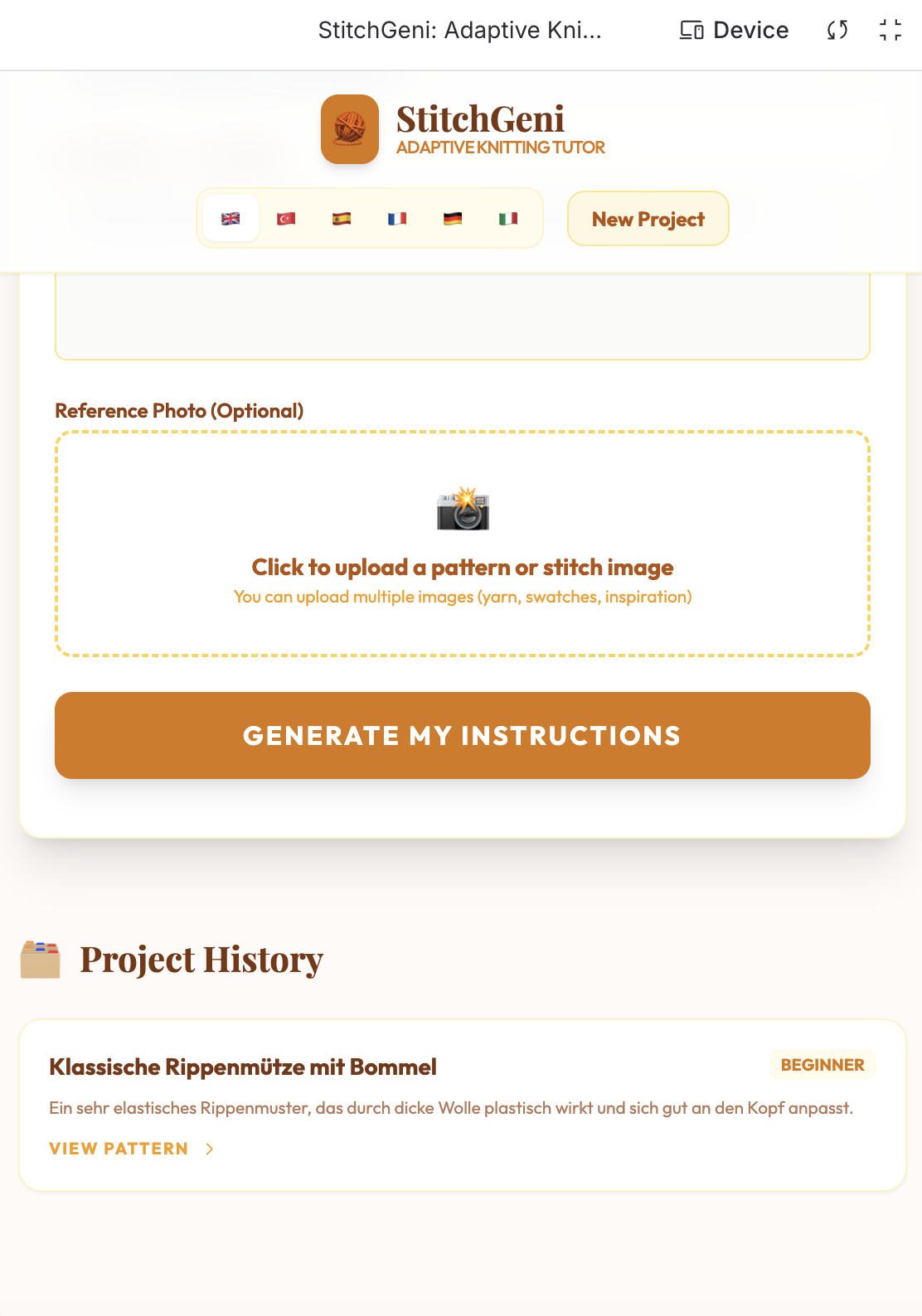
Photo Upload
-
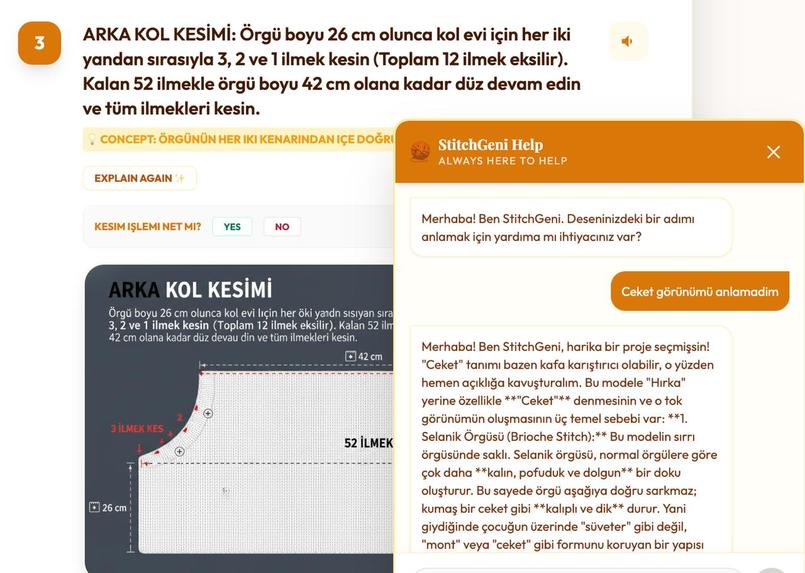
StitchGeni Help
-
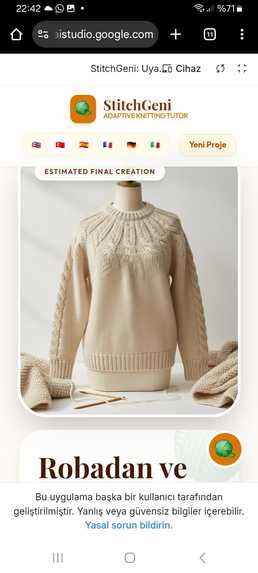
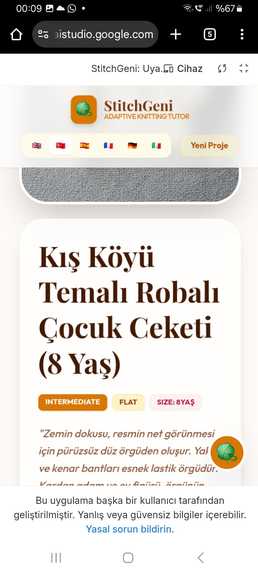
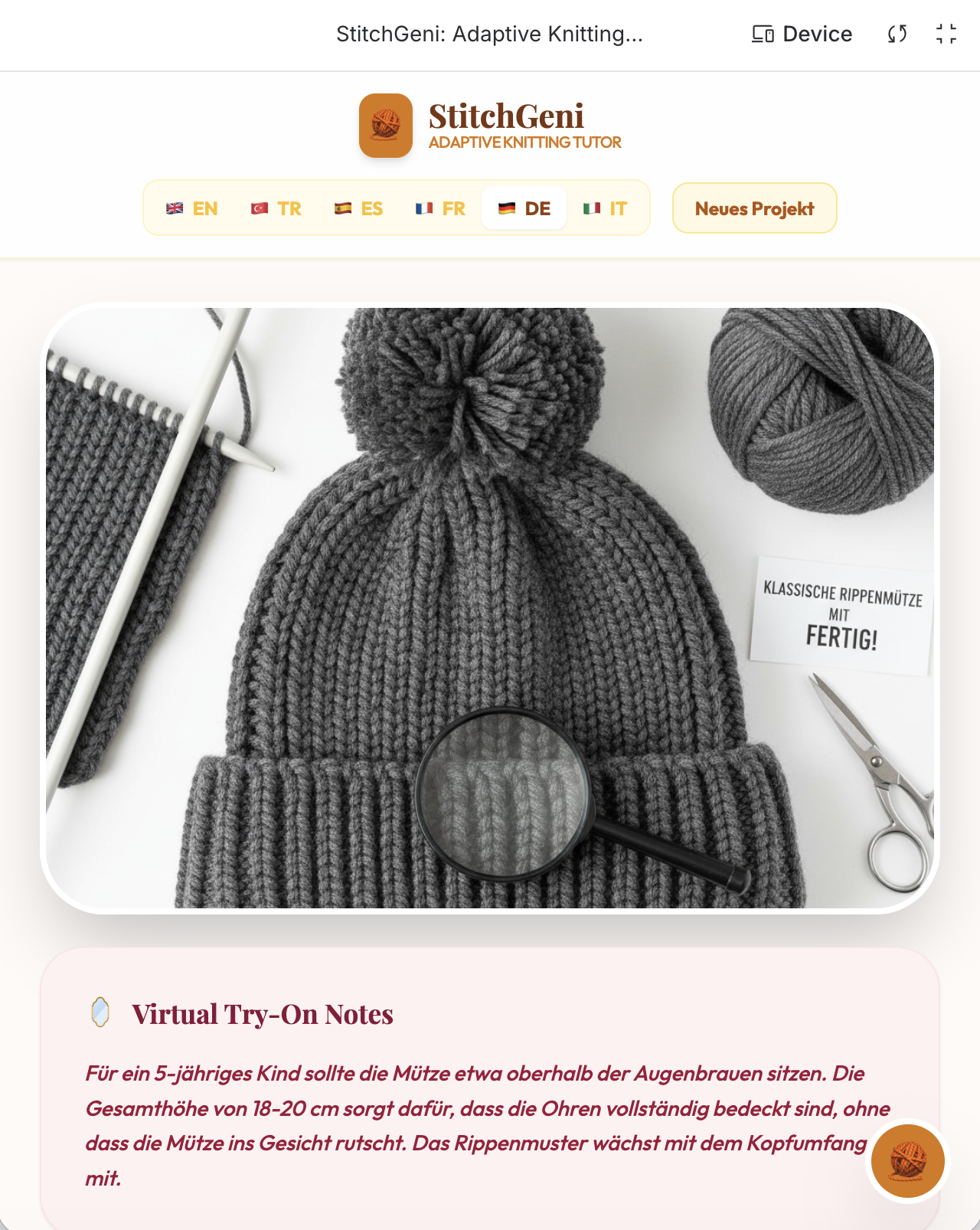
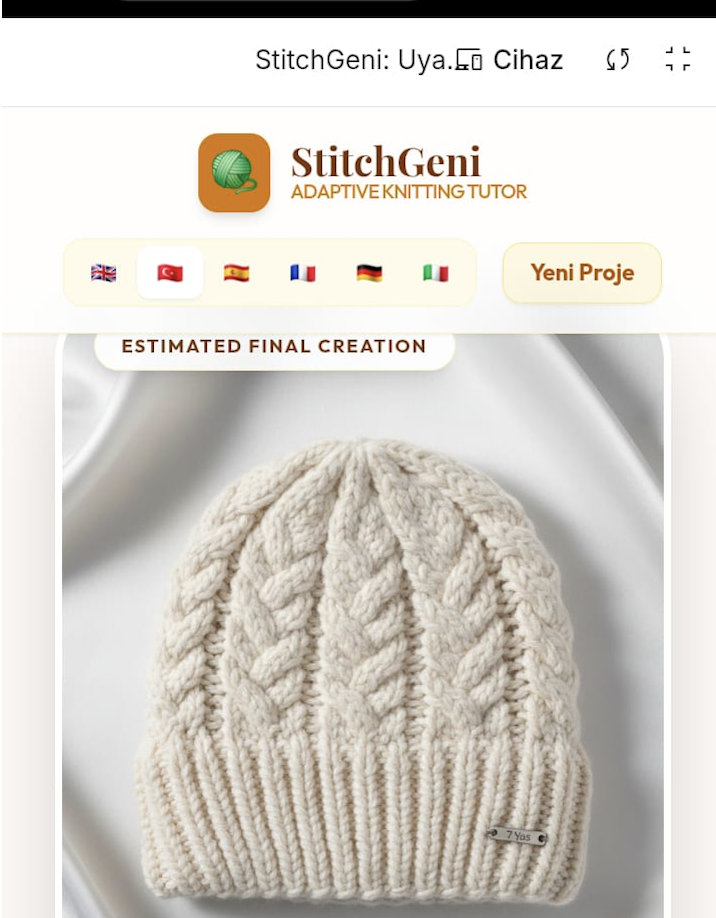
Final Look
-
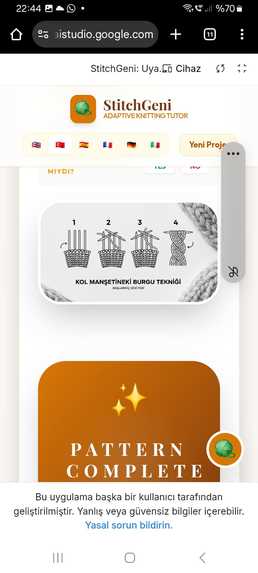
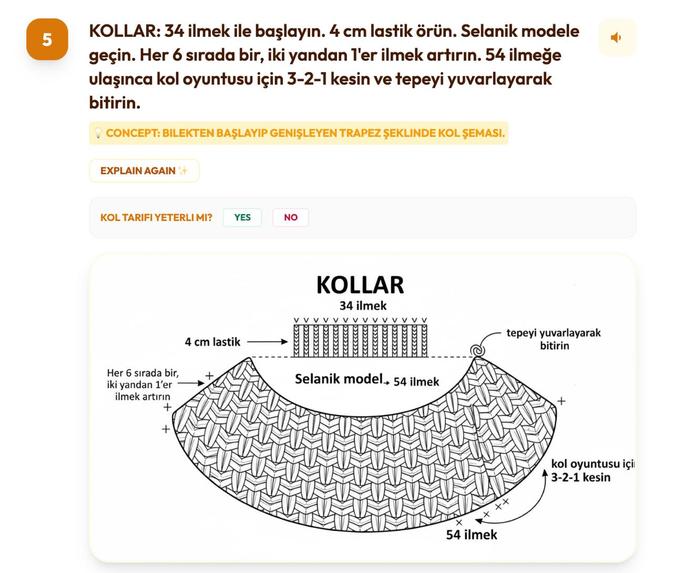
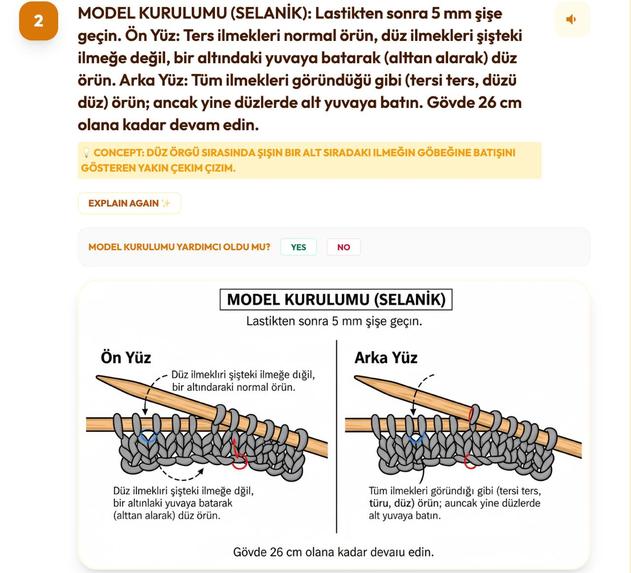
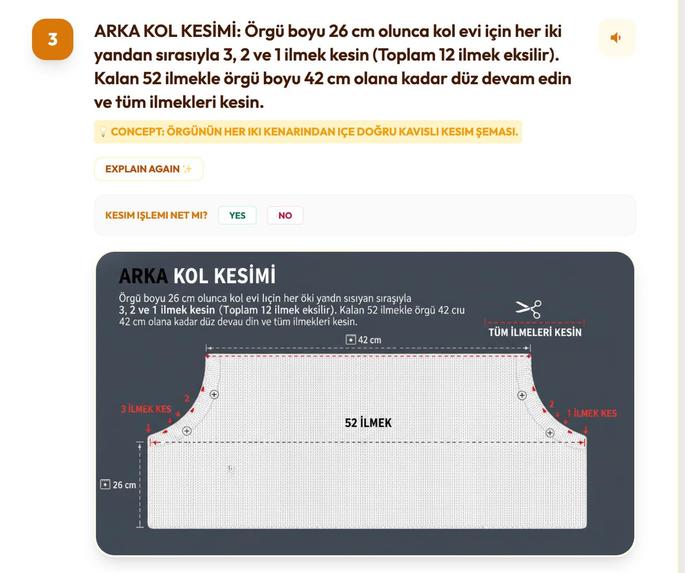
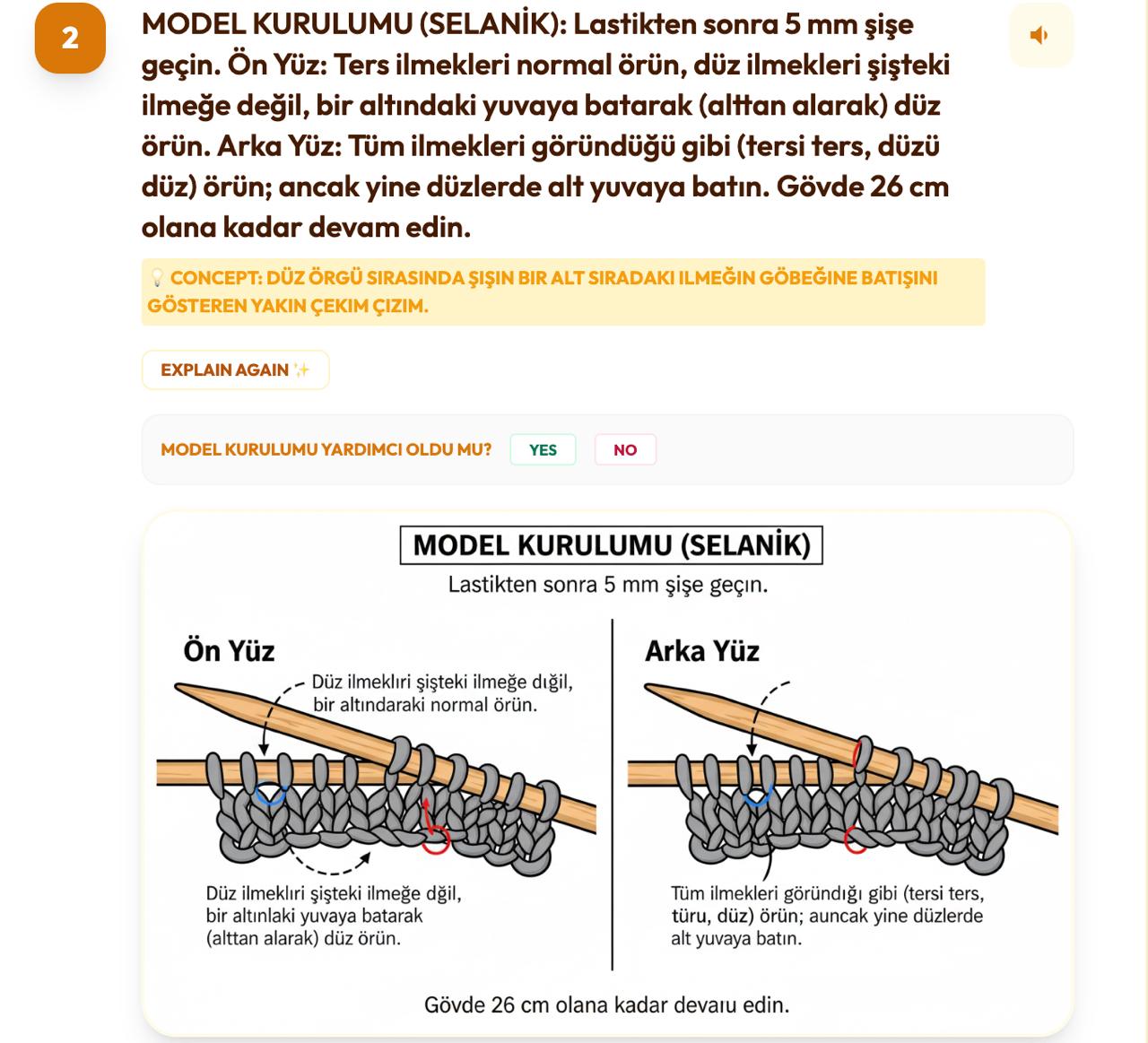
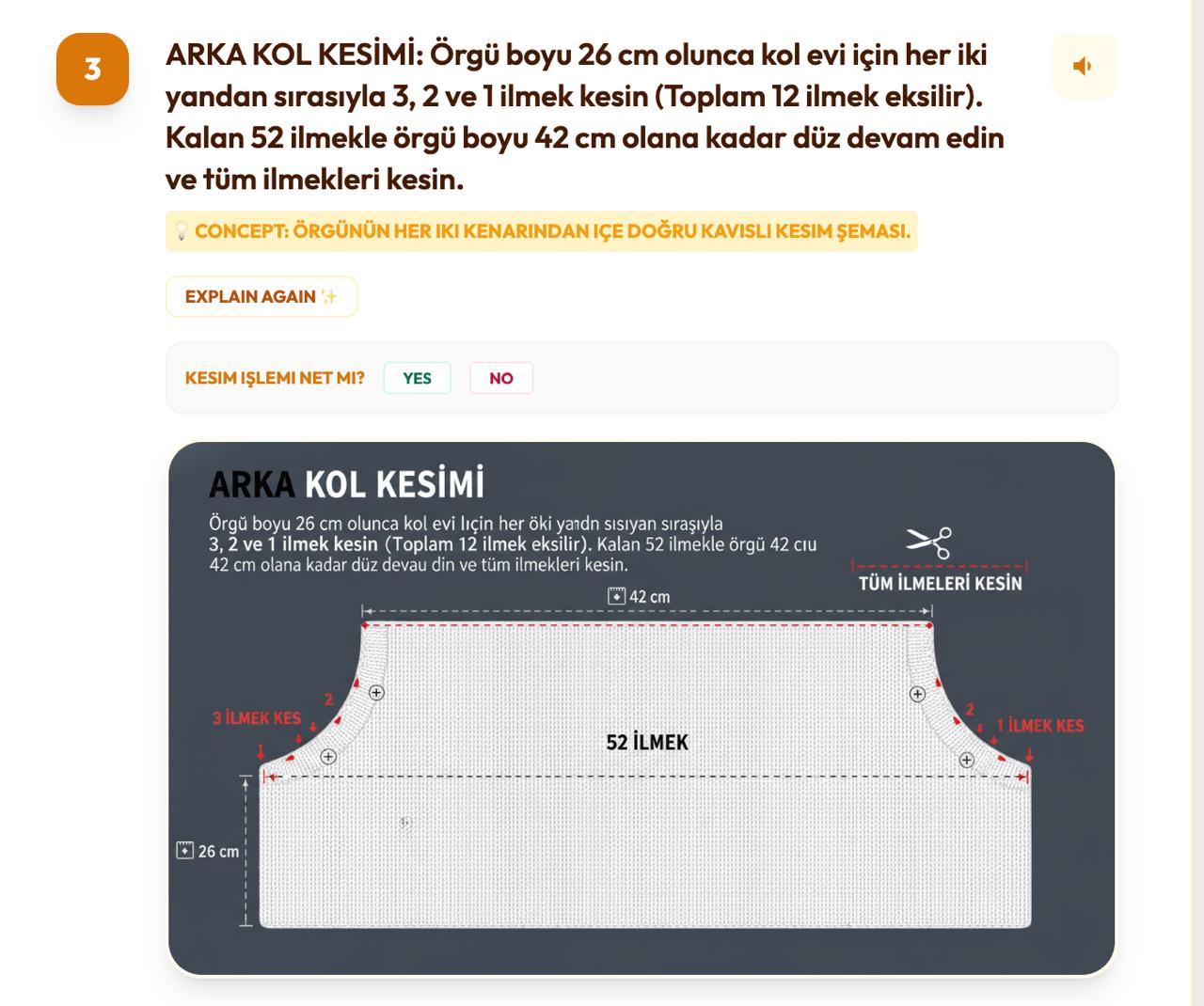
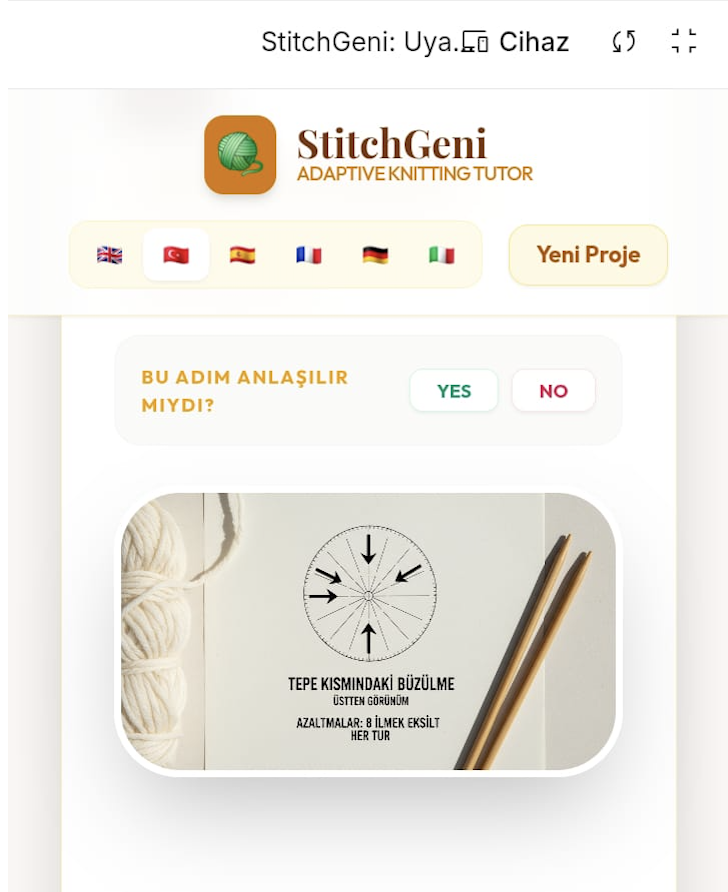
Sample step
-
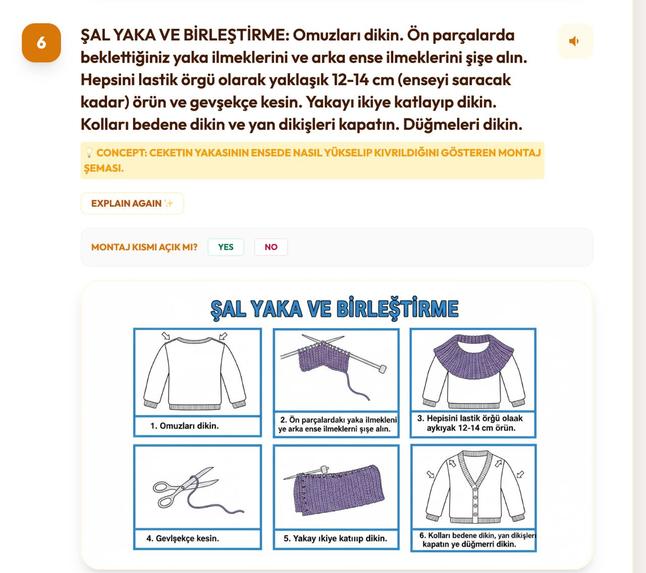
-
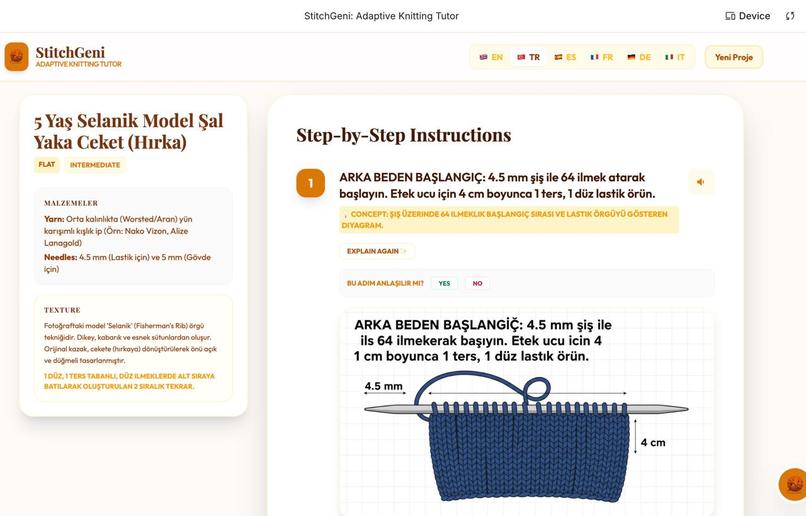
-
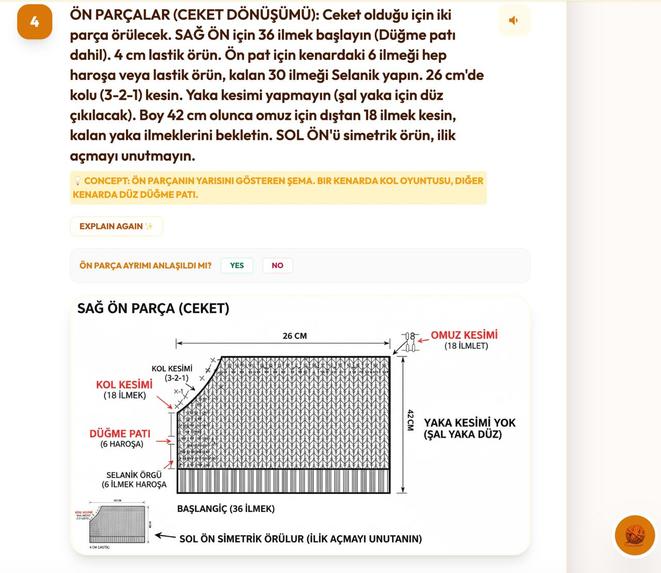
-
-
-
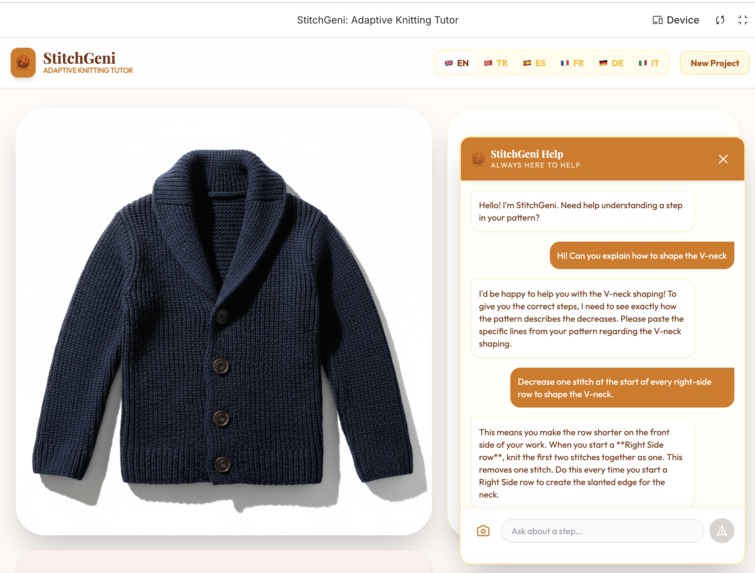
stitch help
-
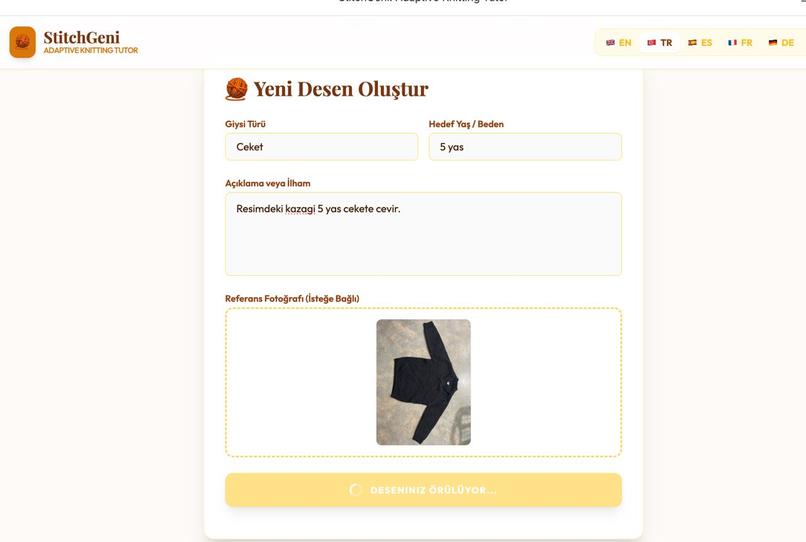
Generating Instructions
-
-
-
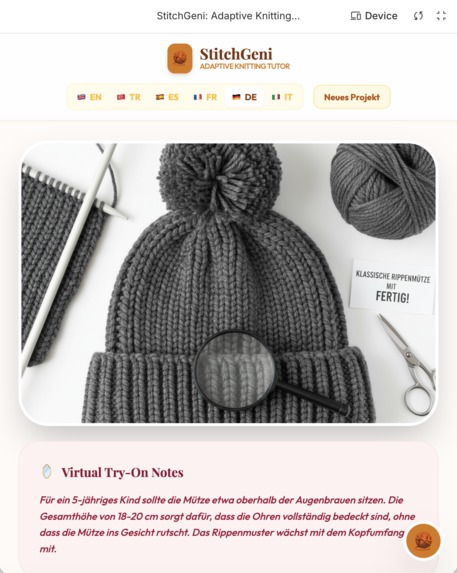
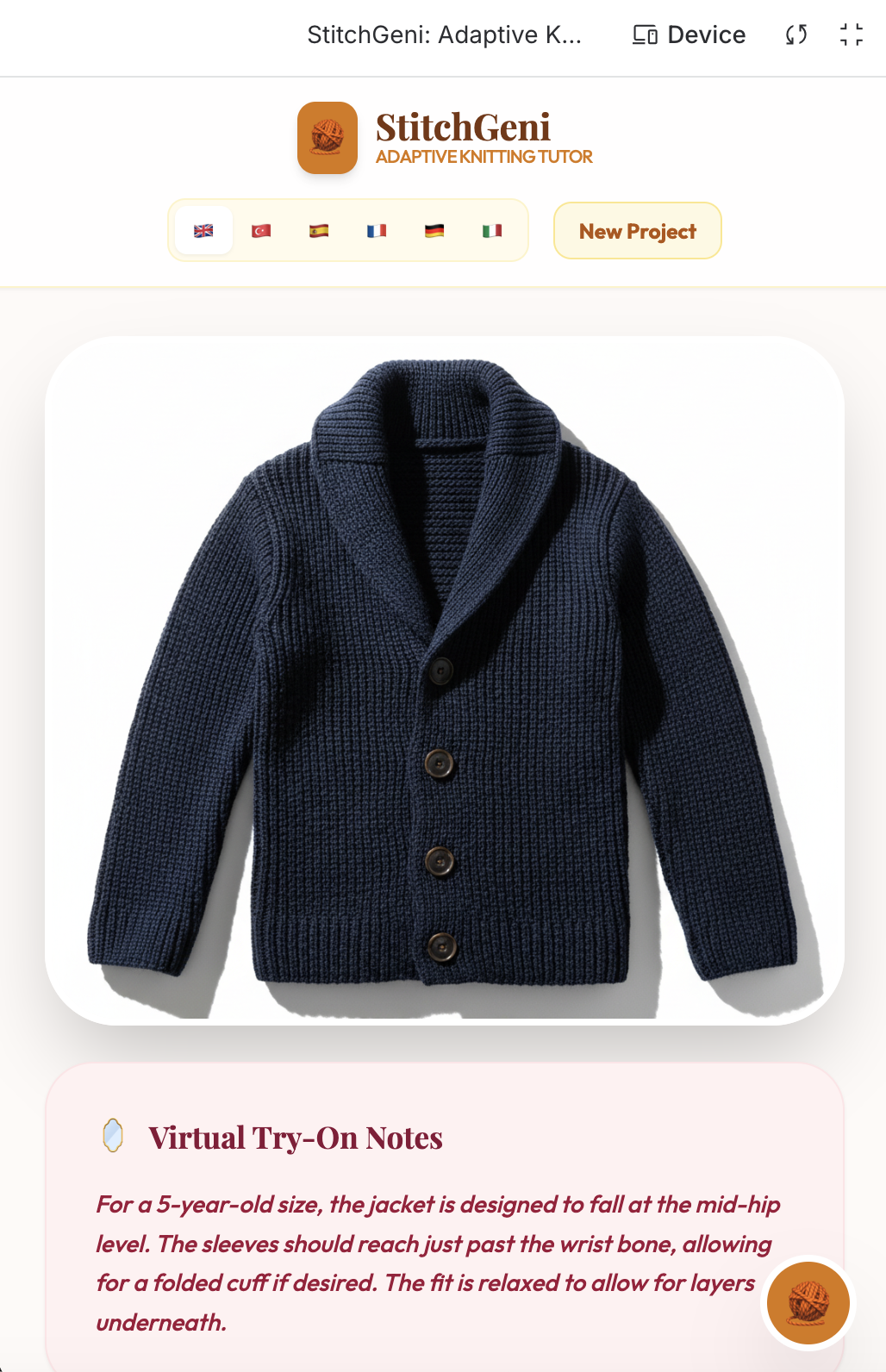
Virtual Try-on Notes
-
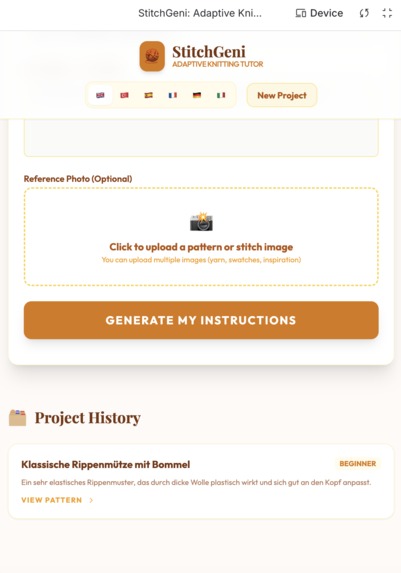
Project Gallery
-
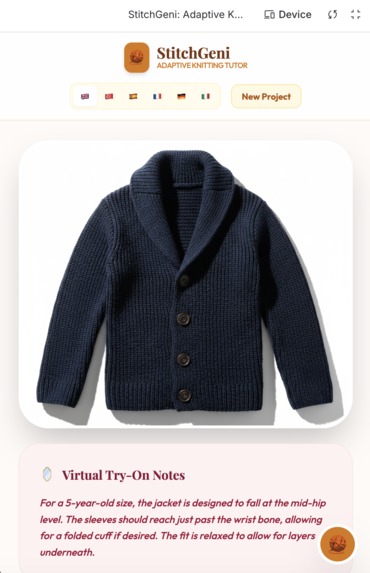
Try-On Notes
-
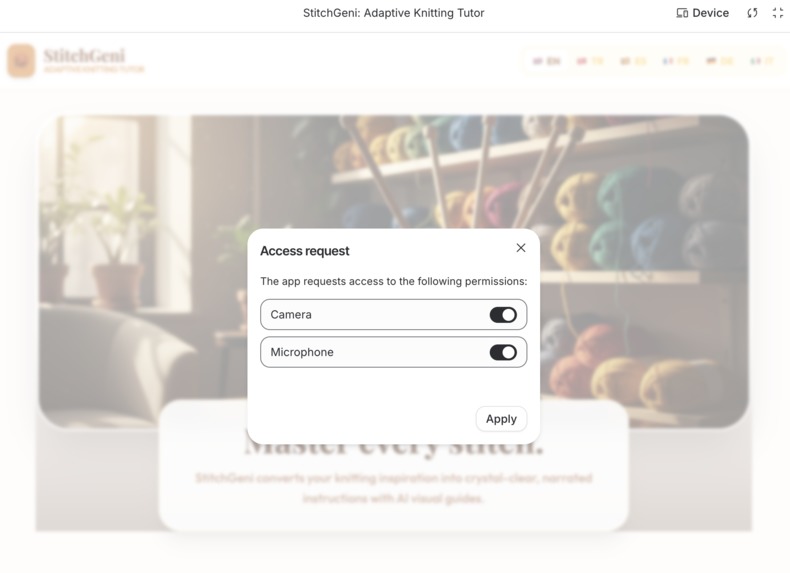
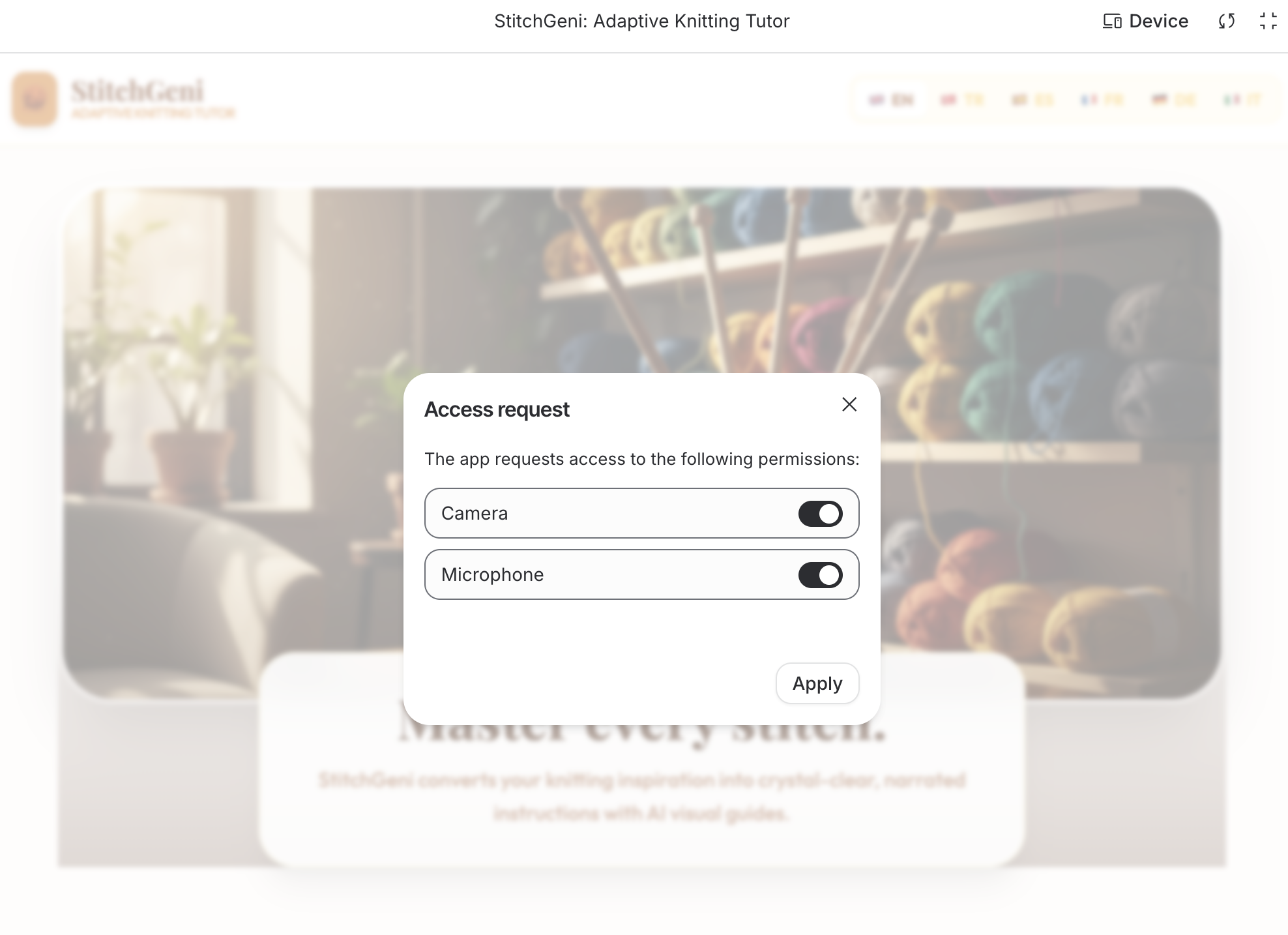
camera and mic access request
-
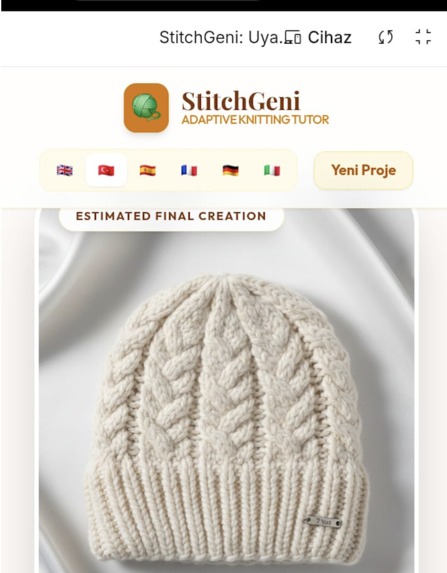
-
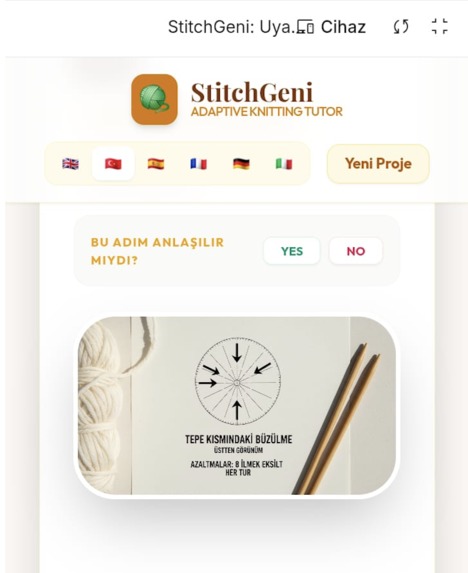
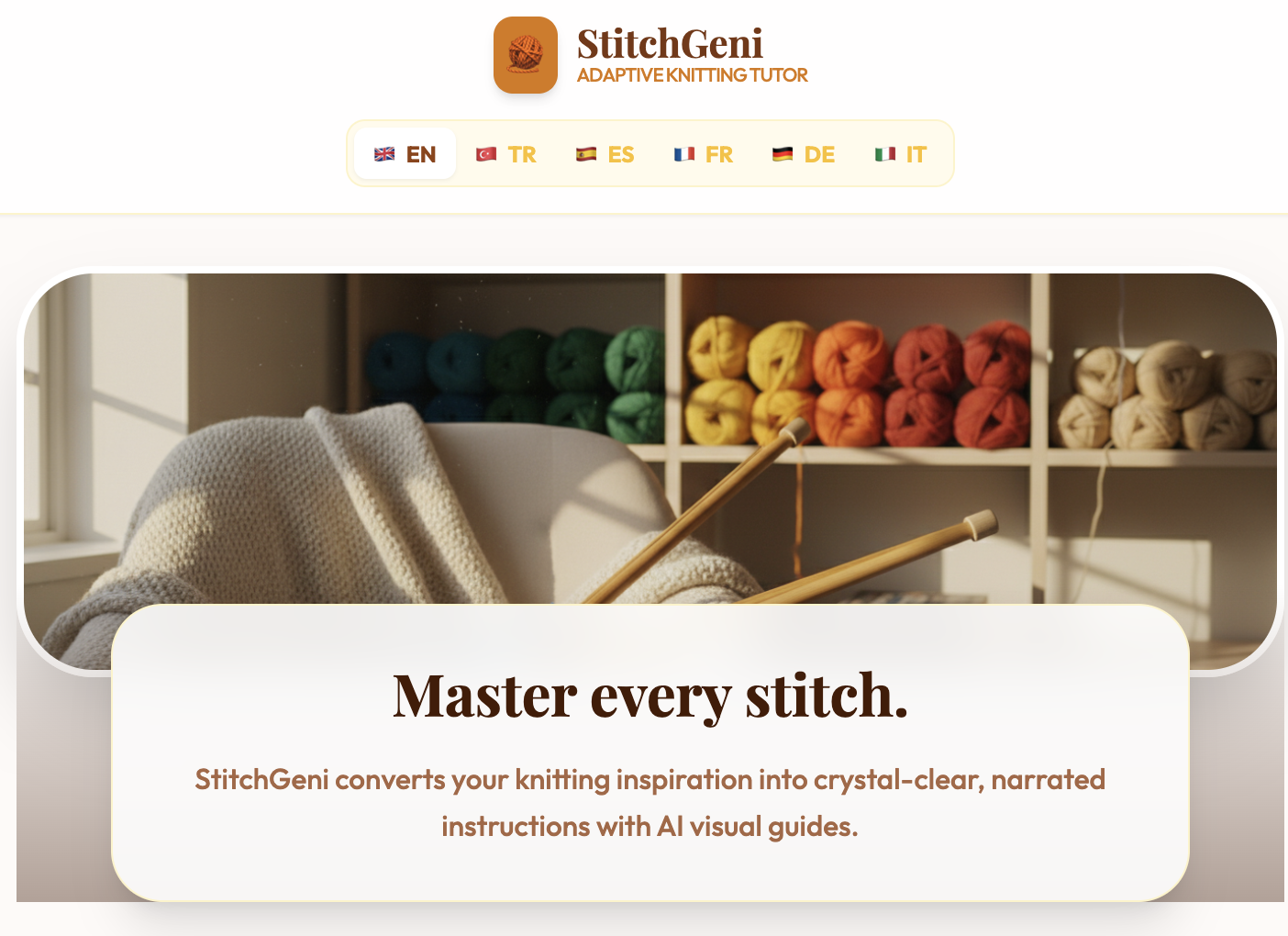
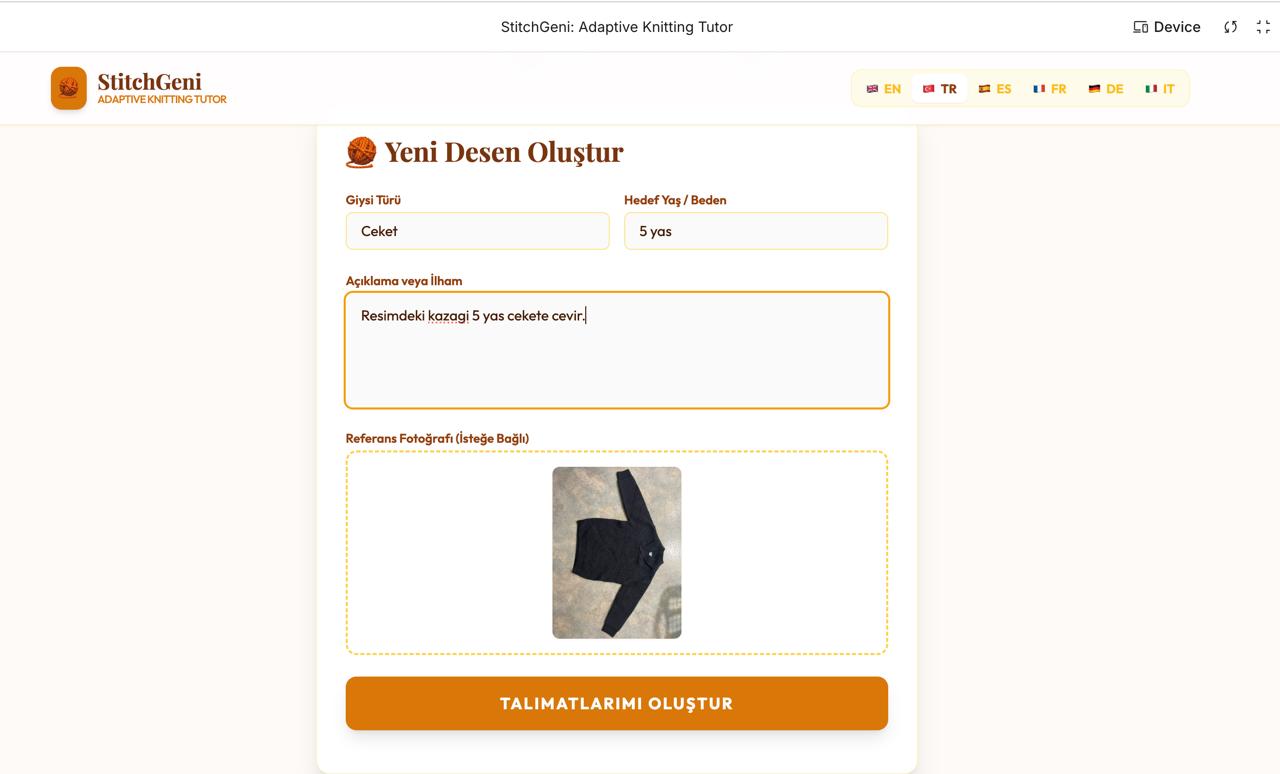
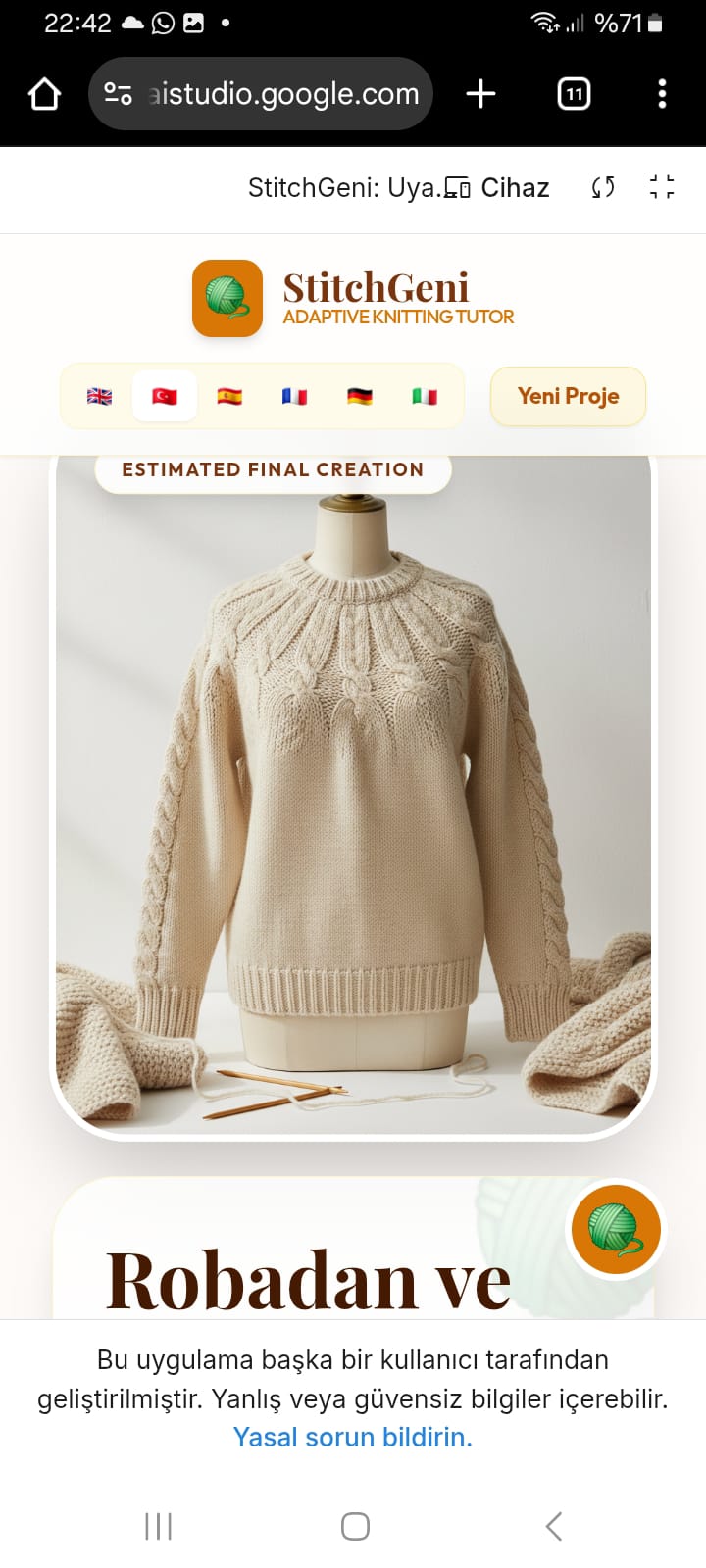
StitchGeni — Adaptive Knitting Tutor
Inspiration
StitchGeni was inspired by a very human problem: knitting patterns are often hard to understand, inaccessible, and visually inconsistent. Many patterns rely on abbreviations, dense charts, or assumed prior knowledge. This creates barriers for beginners, children, non-native speakers, and especially visually impaired users.
The idea grew from asking a simple question:
What if knitting instructions could adapt to the person — not the other way around?
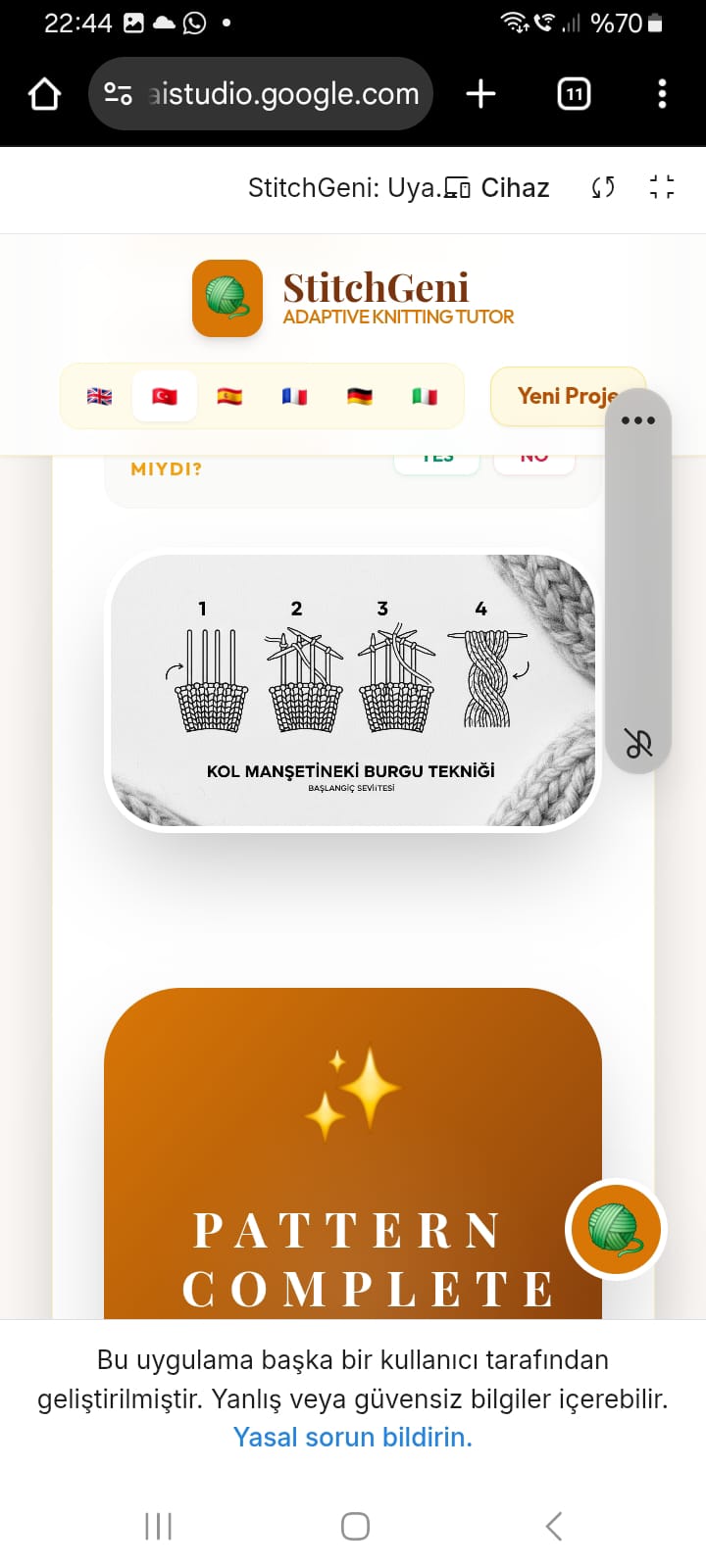
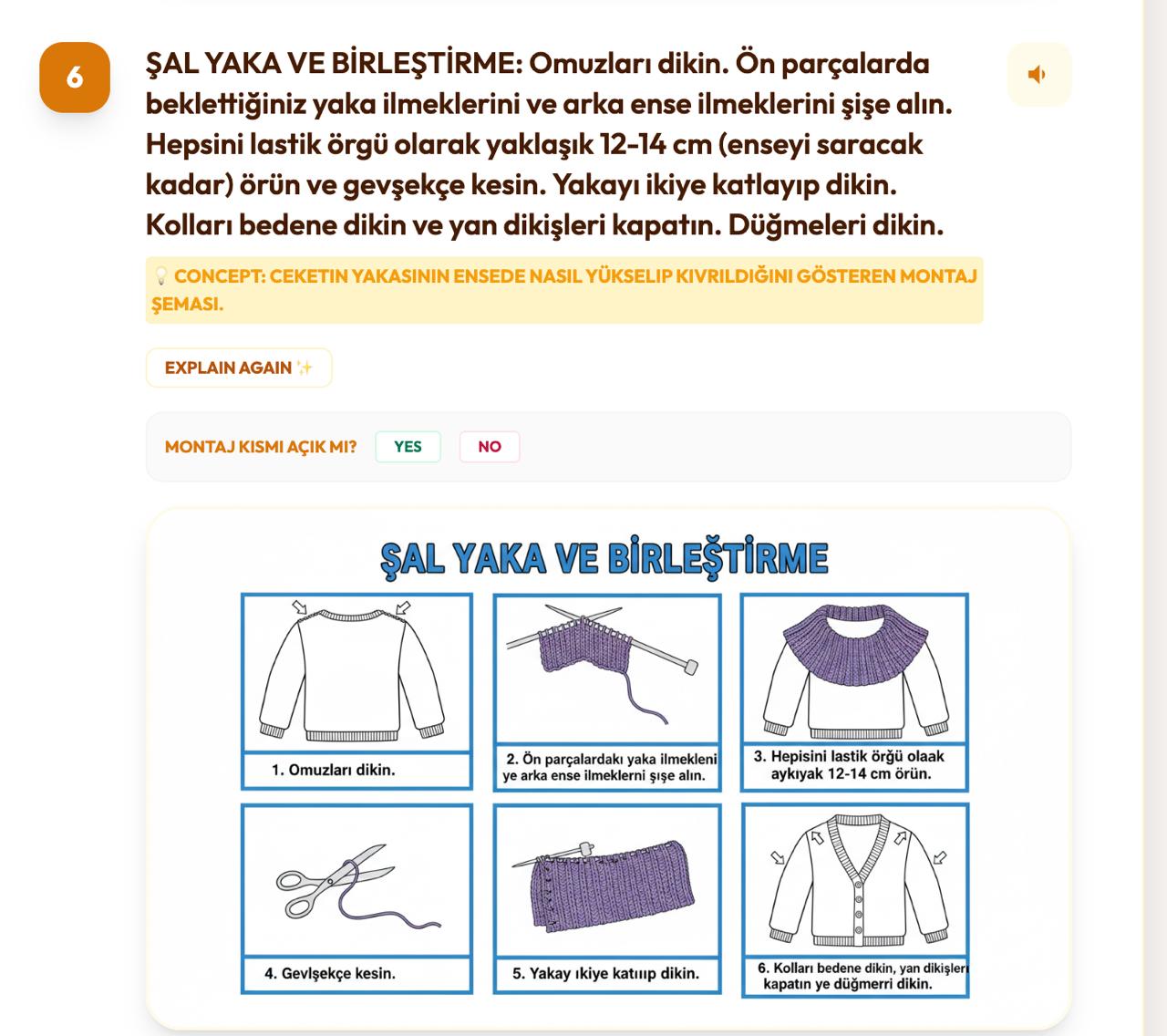
Instead of forcing users to interpret unclear diagrams or shorthand, StitchGeni aims to translate visual knitting knowledge into clear, spoken, step-by-step guidance, aligned with visuals that truly match each instruction.
What it does
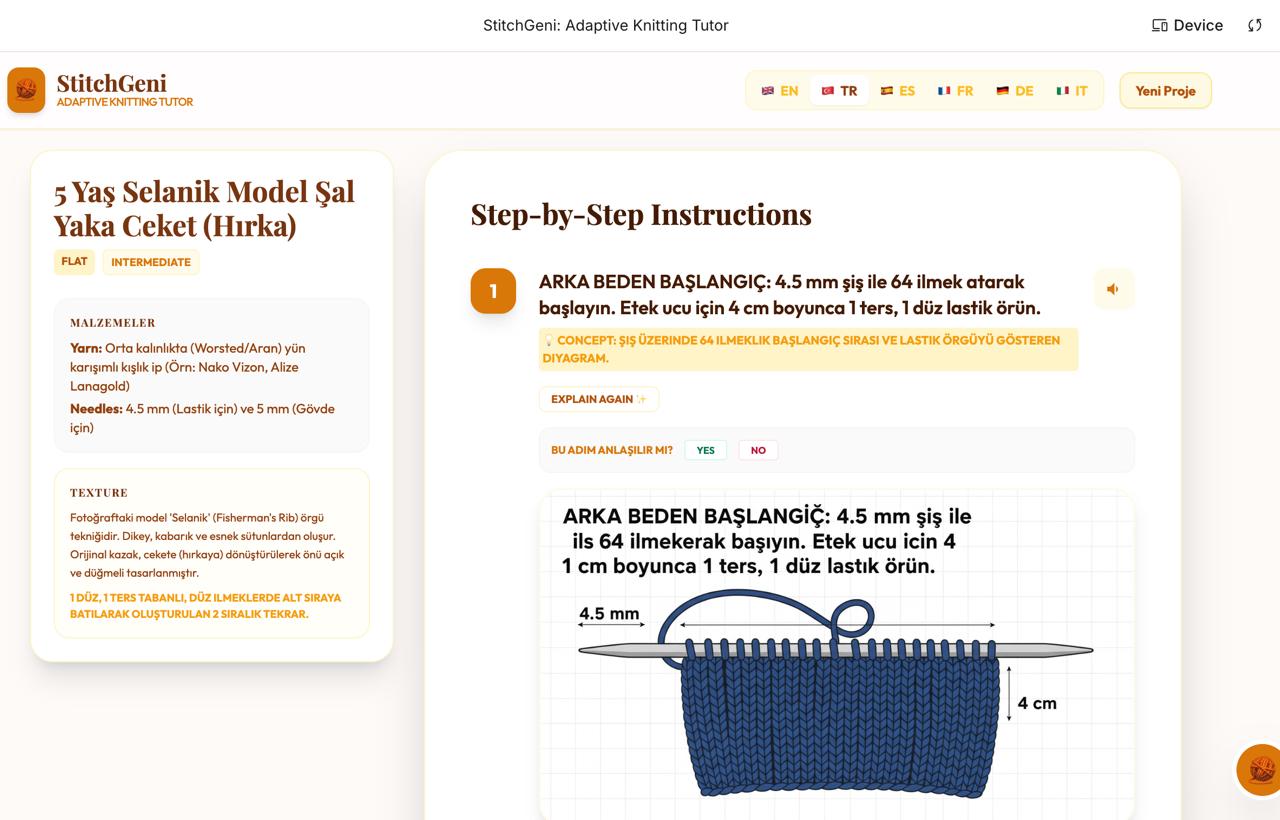
StitchGeni is an adaptive knitting tutor that:
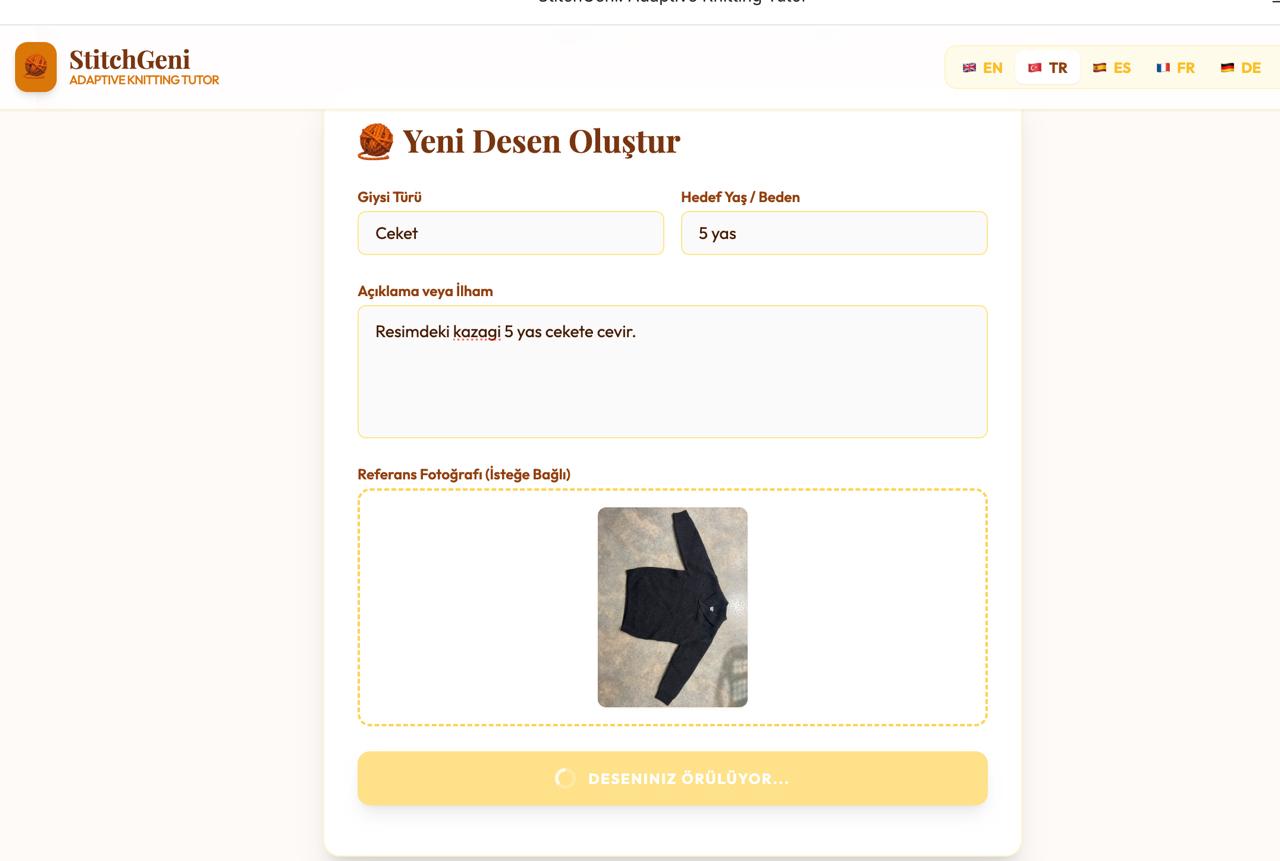
- Analyzes knitting images, charts, or textual descriptions
- Converts them into complete, start-to-finish knitting instructions
- Adapts patterns for:
- Specific ages (for example, a 5-year-old or 12-year-old)
- Garments (hat, jacket, pants, etc.)
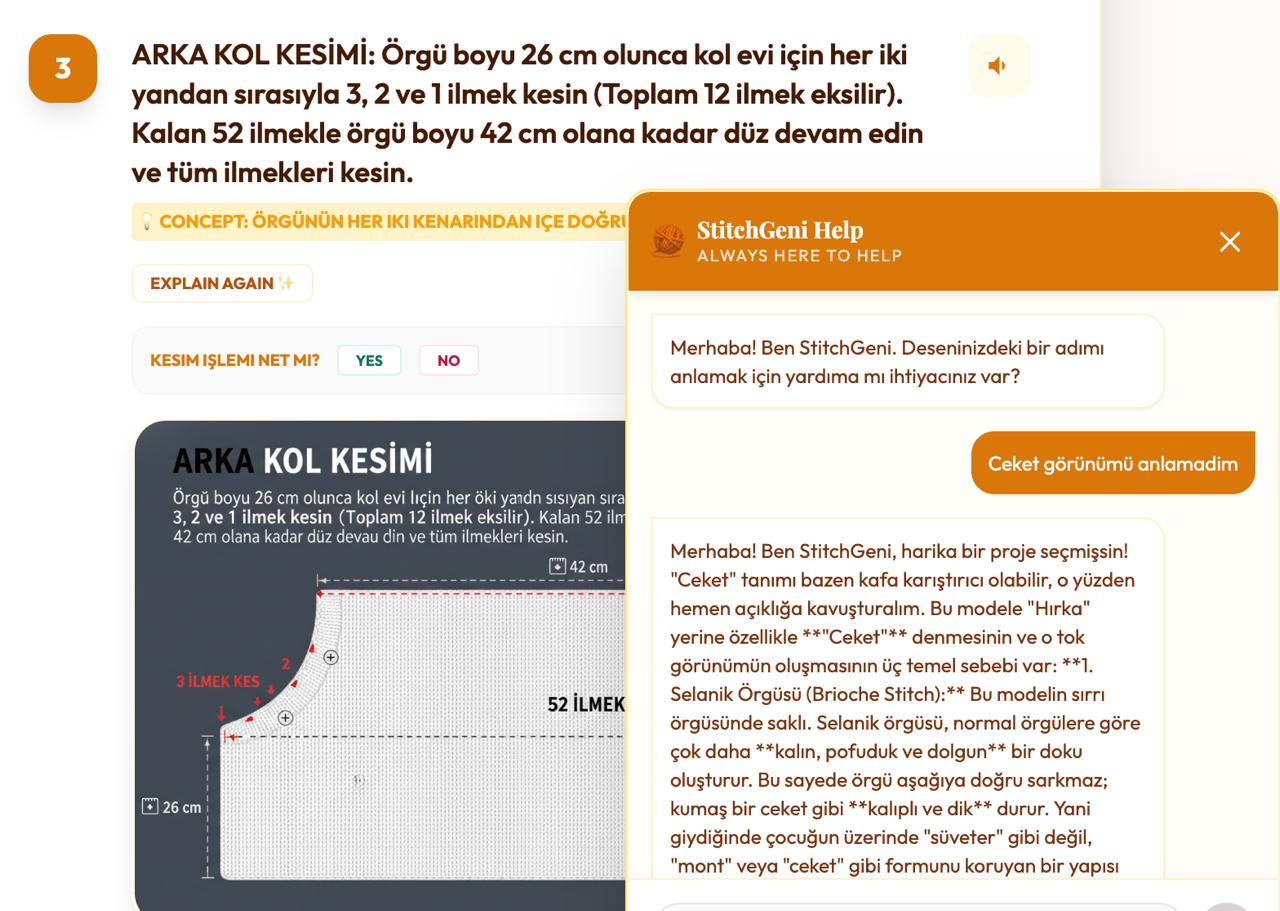
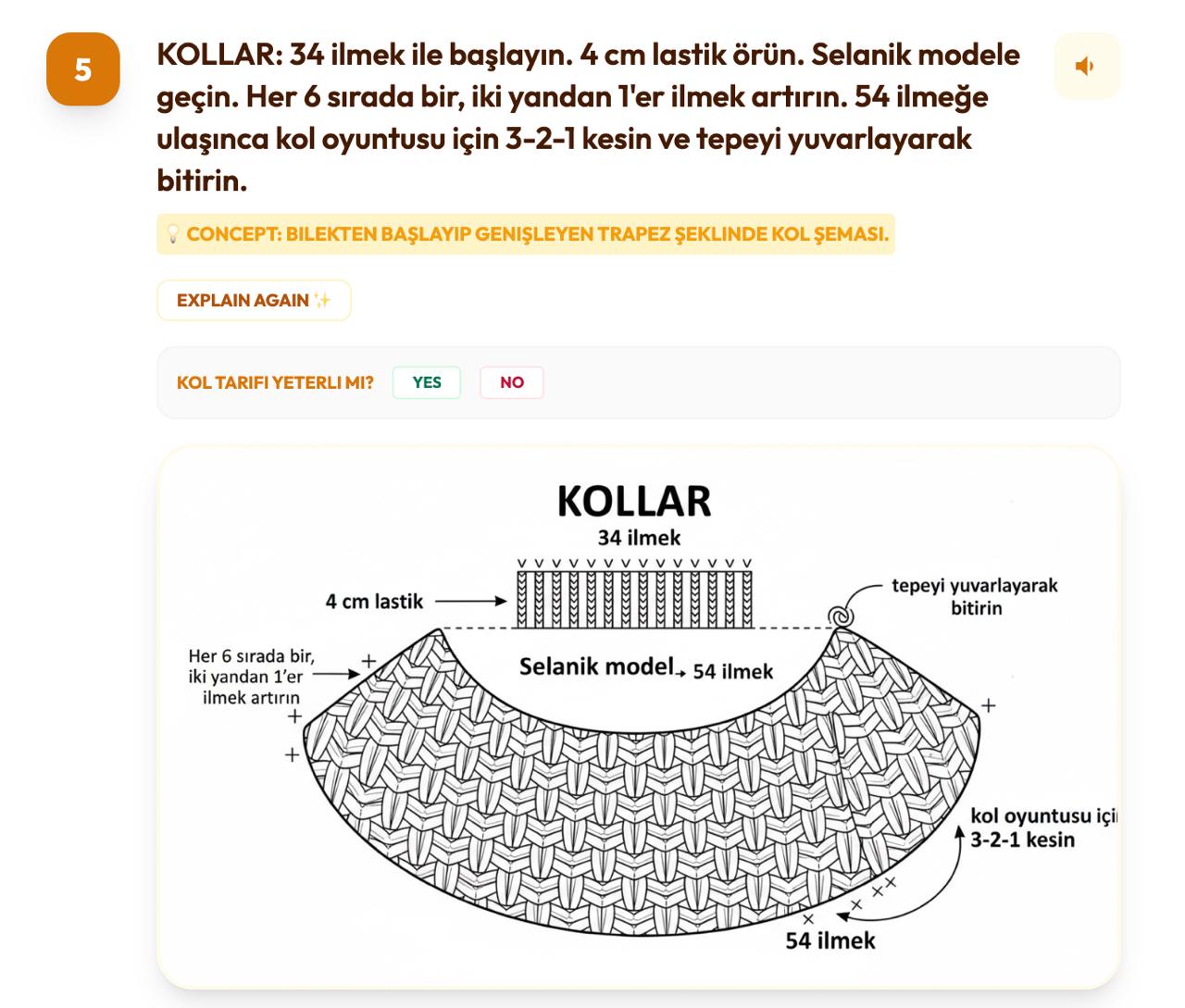
- Produces structured steps, where each step includes:
- Clear written instructions (no abbreviations)
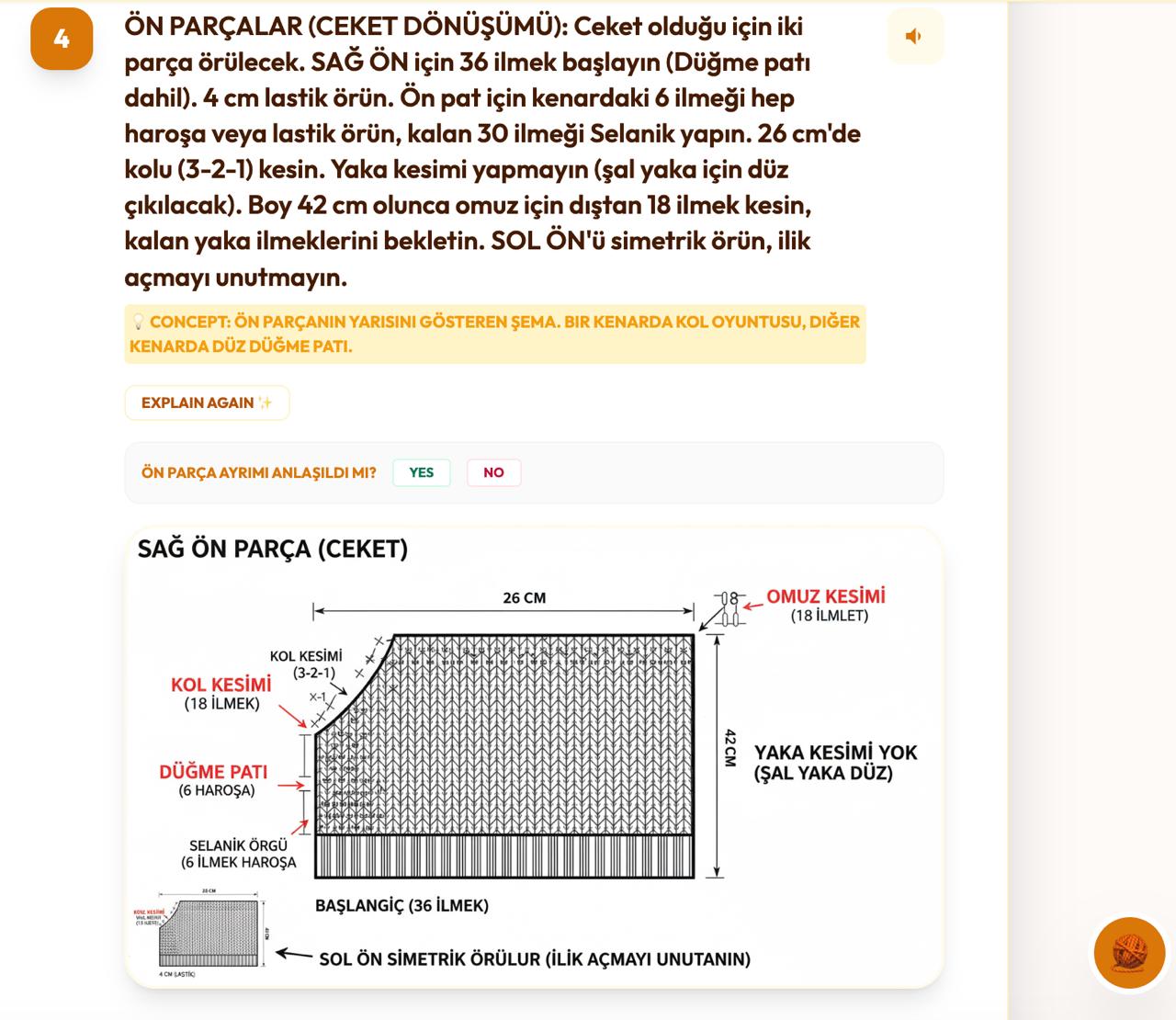
- A matching instructional image or diagram
- Audio narration (text-to-speech)
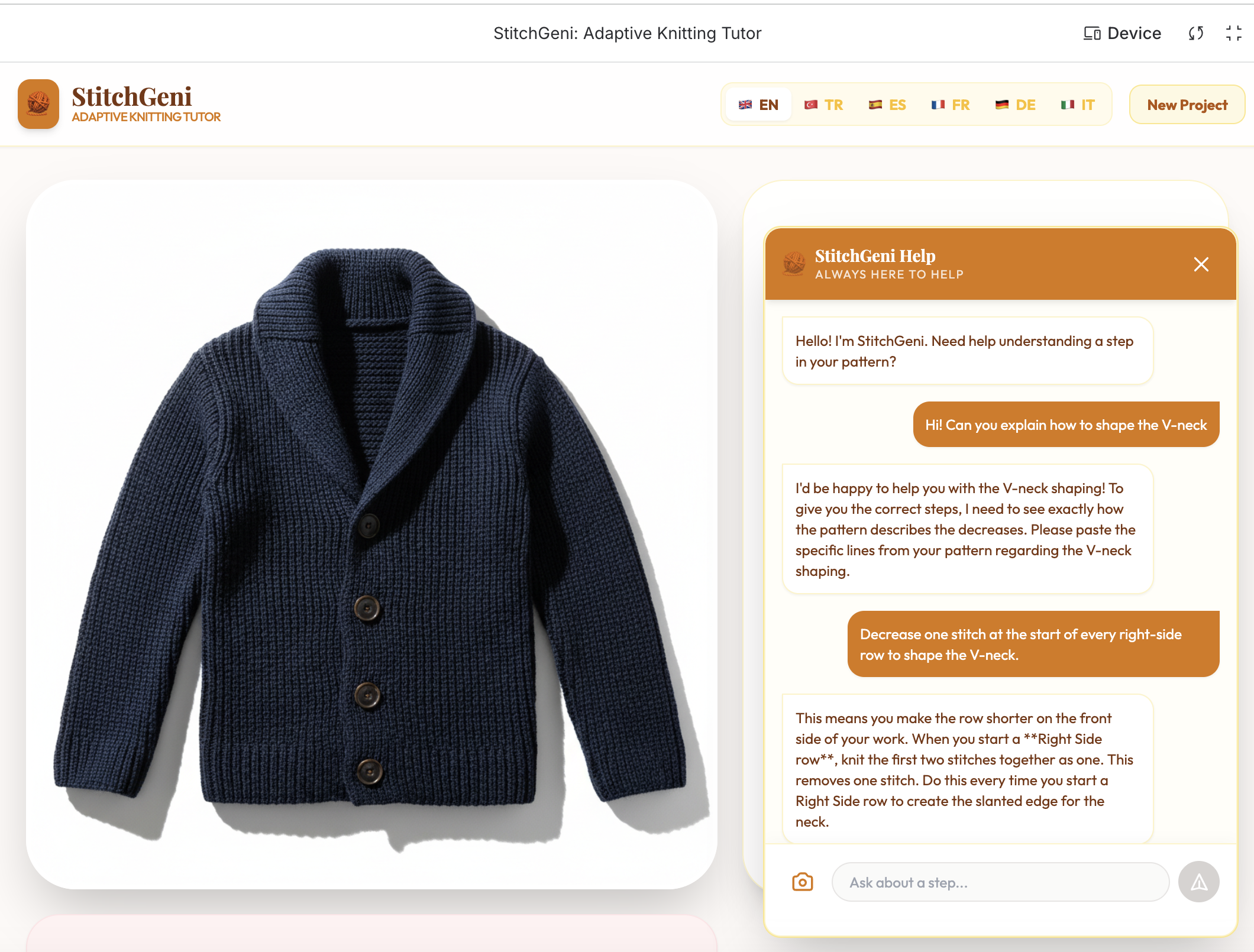
- A simplified re-explanation if the user gets stuck
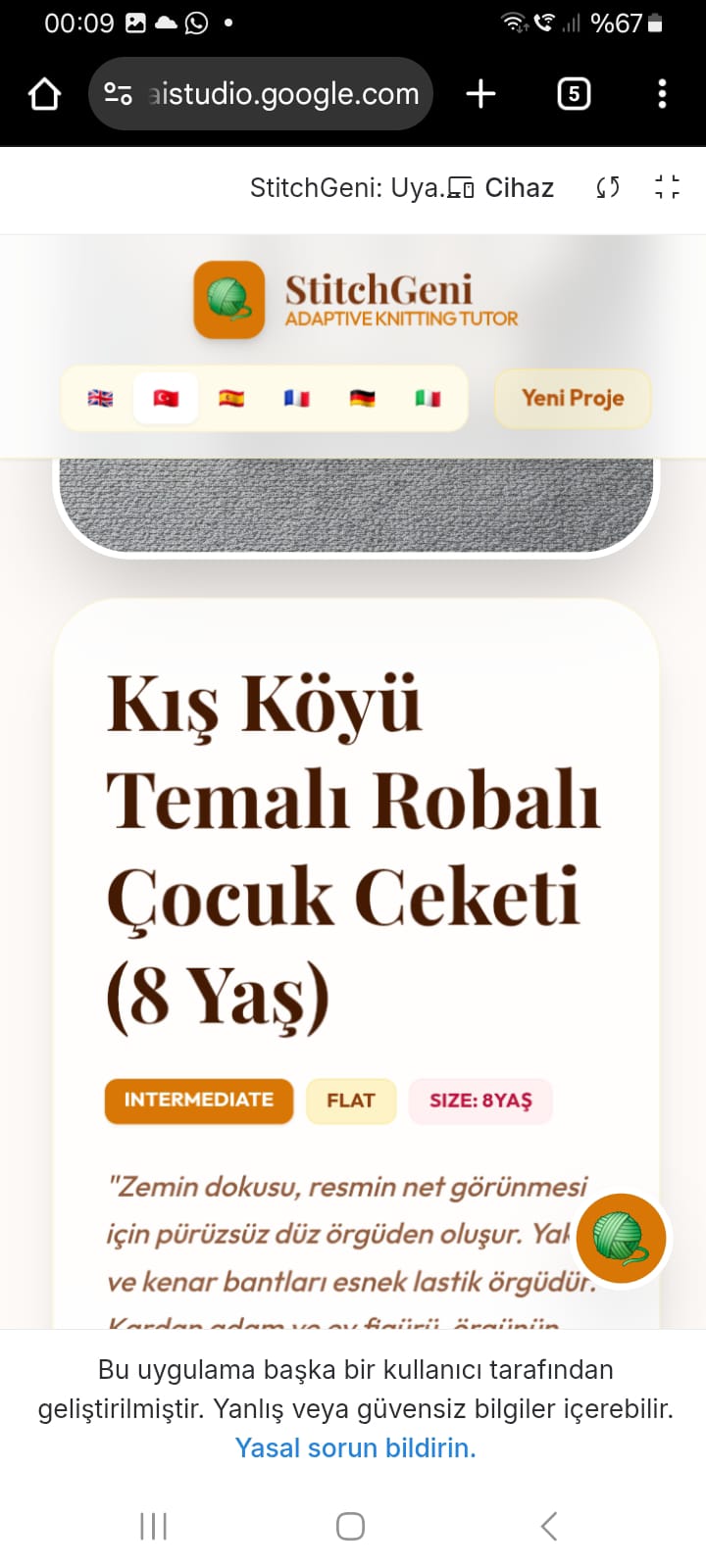
- Supports multiple languages (English, German, Turkish)
- Maintains a session gallery so users can revisit previously generated patterns without regenerating them
Accessibility is a core principle: every step is understandable even without seeing the image.
How we built it
StitchGeni was built using:
- Google AI Studio with Gemini models for:
- Pattern reasoning and structured instruction generation
- Image understanding and step-aligned diagram generation
- Text-to-speech for narrated instructions
- TypeScript + React for a clean, accessible frontend
- Gradio-style interaction patterns adapted into a custom UI
- A strict JSON schema to ensure deterministic, reusable outputs
- Accessibility-first UI design:
- Keyboard navigation
- ARIA labels
- “Skip to main content” support
- A modular architecture:
geminiService.tsfor AI orchestration- Component-based UI for patterns, steps, and gallery reuse
Each knitting step is treated as a unit that can be: [ \text{explained} \rightarrow \text{visualized} \rightarrow \text{spoken} \rightarrow \text{re-explained} ]
Challenges we ran into
- Visual alignment: Generated images did not always reflect the exact instruction. This required refining prompts so visuals are instructional diagrams, not decorative images.
- Language leakage: Images sometimes contained English text even when Turkish or German was selected, requiring explicit language constraints in prompts.
- Ambiguous inputs: Knitting images often lack full context (yarn weight, gauge, size), forcing the system to safely mark outputs as approximate.
- Accessibility balance: Making instructions detailed enough for beginners without overwhelming users.
- State vs storage: Designing a session gallery without violating privacy or assuming consent for long-term storage.
Accomplishments that we're proud of
- Built a deterministic, reusable knitting instruction system
- Achieved true step-to-image alignment, not generic visuals
- Integrated audio narration for hands-free learning
- Designed a system that respects privacy by default
- Created a gallery experience that encourages reuse instead of regeneration
- Made knitting instructions understandable without abbreviations or charts
What we learned
- Multimodal AI is most powerful when structure comes first
- Accessibility improves everyone’s experience, not just edge cases
- Visual generation must be tightly constrained to be educational
- Clear schemas are essential when combining text, image, and audio outputs
- Creative tools still need strong guardrails to be reliable
What's next for StitchGeni
Next steps include:
- A visual diagram renderer for knitting steps (symbols + stitches)
- Optional “Üzerimde gör” (see it on me) mode using user-provided photos
- Smarter pattern similarity detection to avoid duplicates
- Long-term gallery support with explicit user consent
- Offline-friendly pattern exports (printable + audio)
- Expanding language and accessibility support further
StitchGeni is not just about knitting —
it’s about making skilled knowledge adaptive, inclusive, and human.
Built With
- document-scanner
- gemini-image-models
- gemini-text-to-speech
- gemini3-flash-preview
- google-ai
- google-ai-studio
- javascript
- json
- react
- typescript

Log in or sign up for Devpost to join the conversation.