-
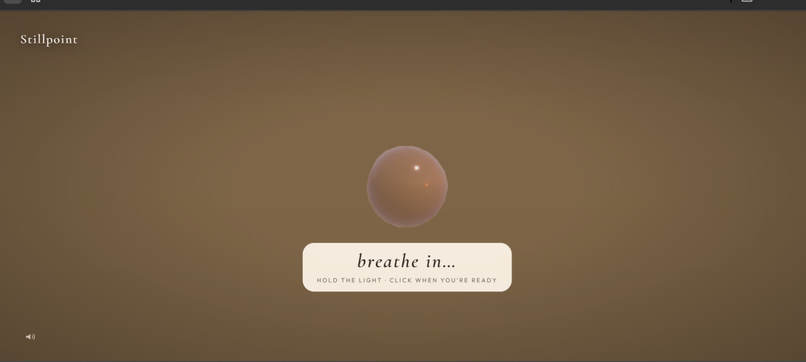
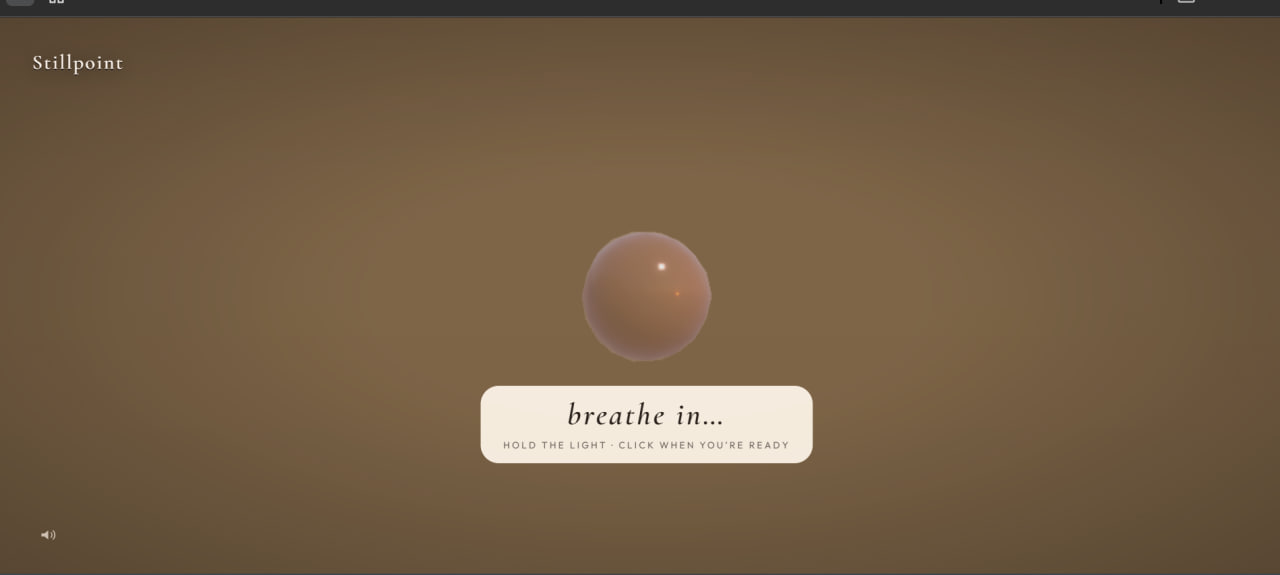
stillpoint breathing exercise
-
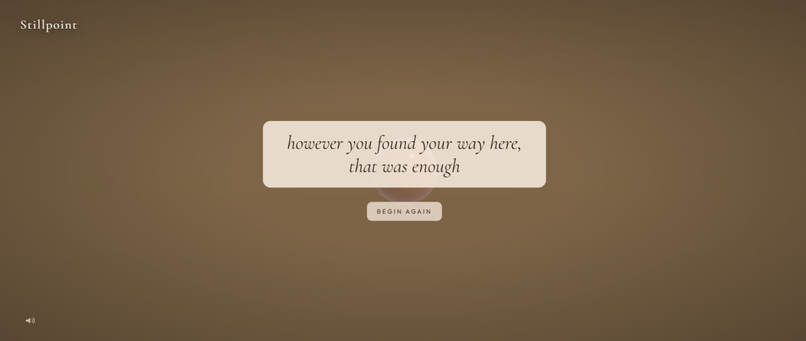
stillpoint exit
-
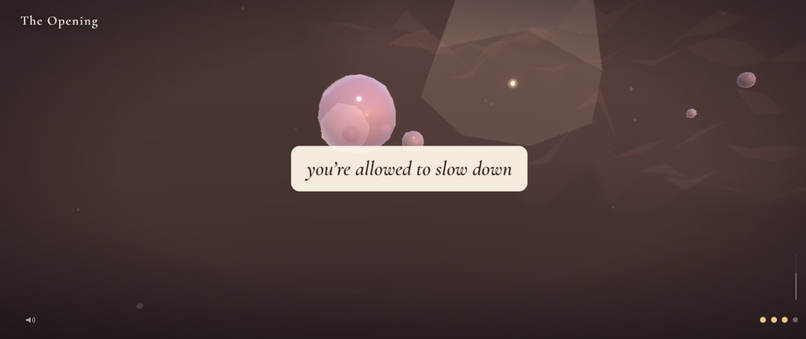
calm moment's texts
-
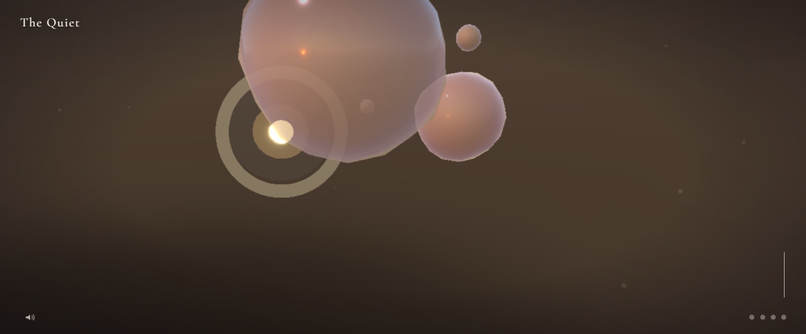
3rd section with calm moment
-
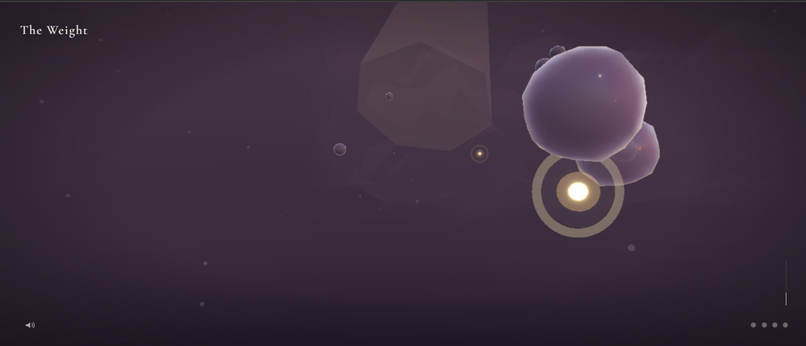
1st section with calm moment
-
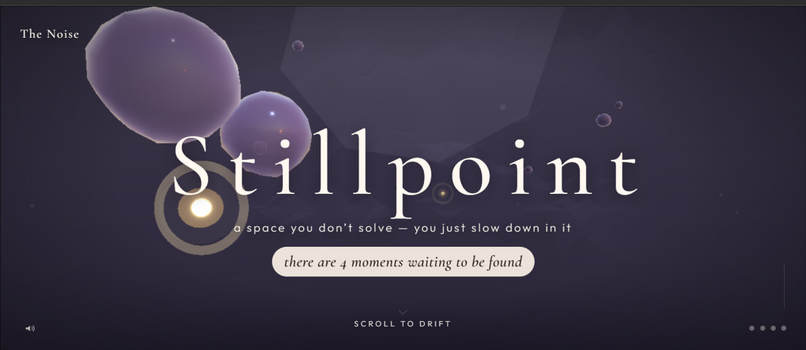
main page
-
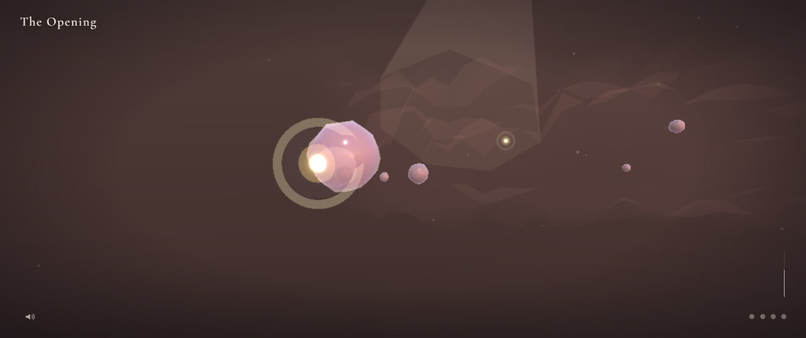
2nd section with calm moment
Inspiration
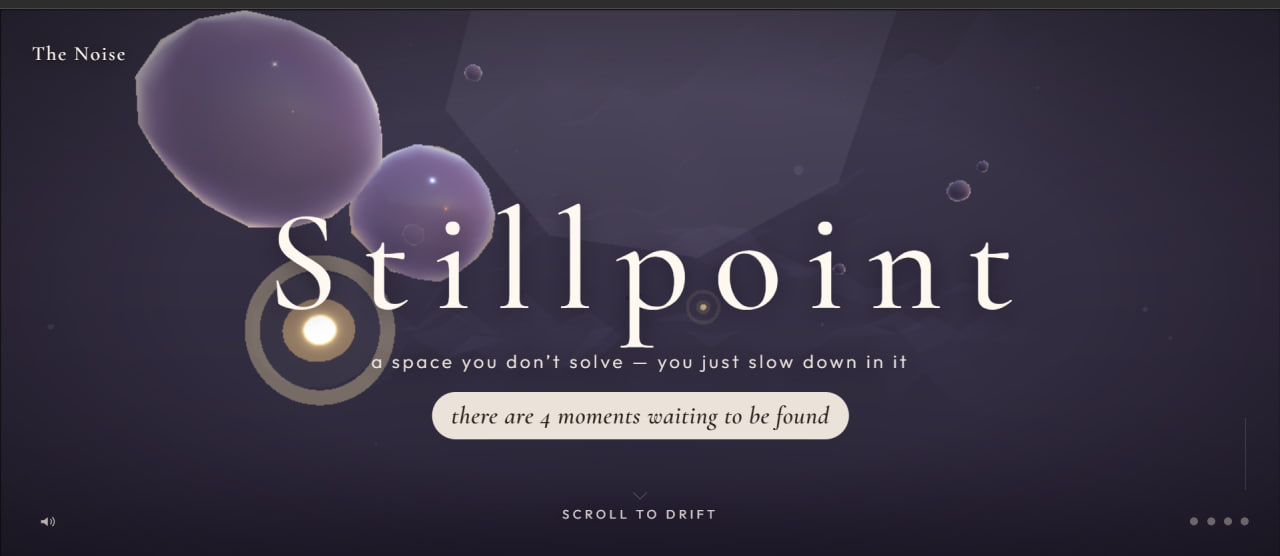
We wanted to build something that didn't just showcase 3D technique for its own sake, but actually felt like something while you used it. Most 3D website demos are either product showcases or sci-fi tech flexes — we wanted to try something quieter: what if a website could visually represent the feeling of calming down? That became Stillpoint — a 3D space you don't solve, you just slow down in.
What it does
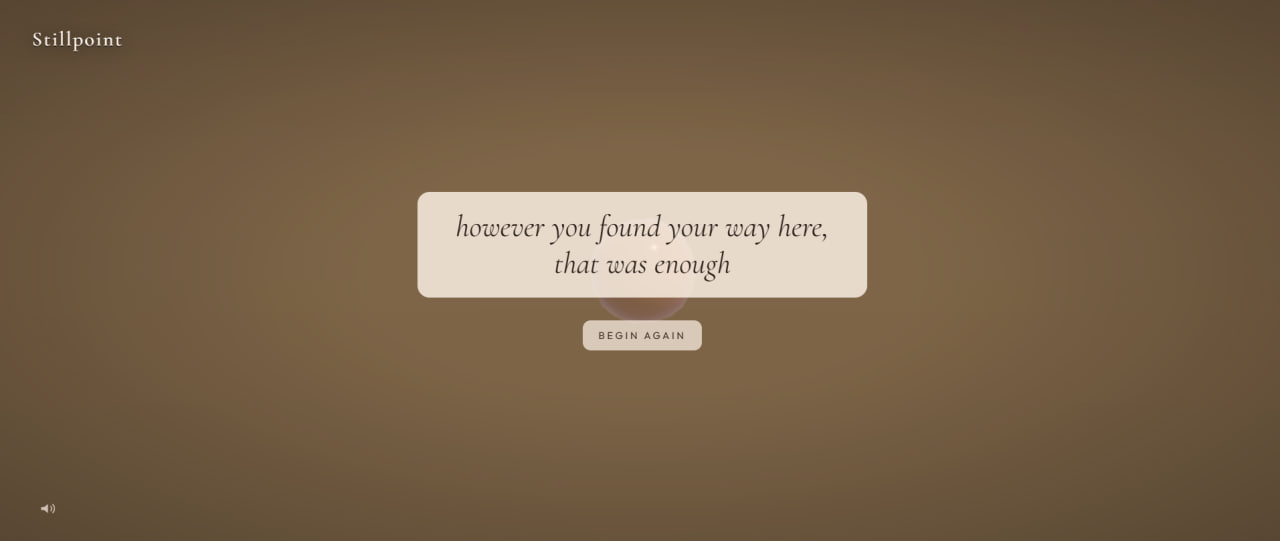
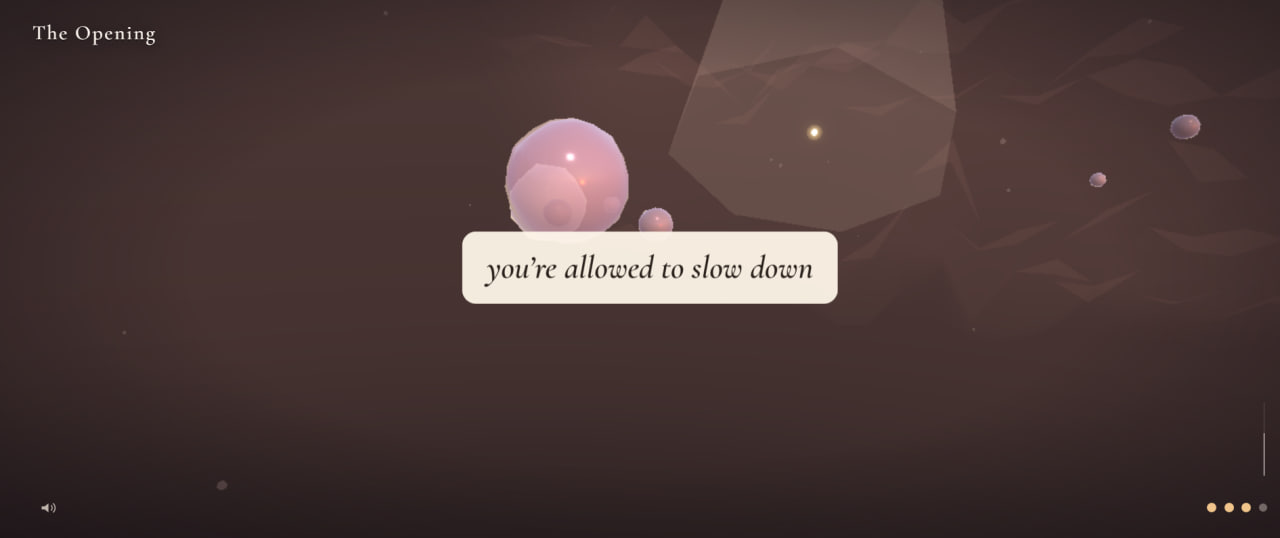
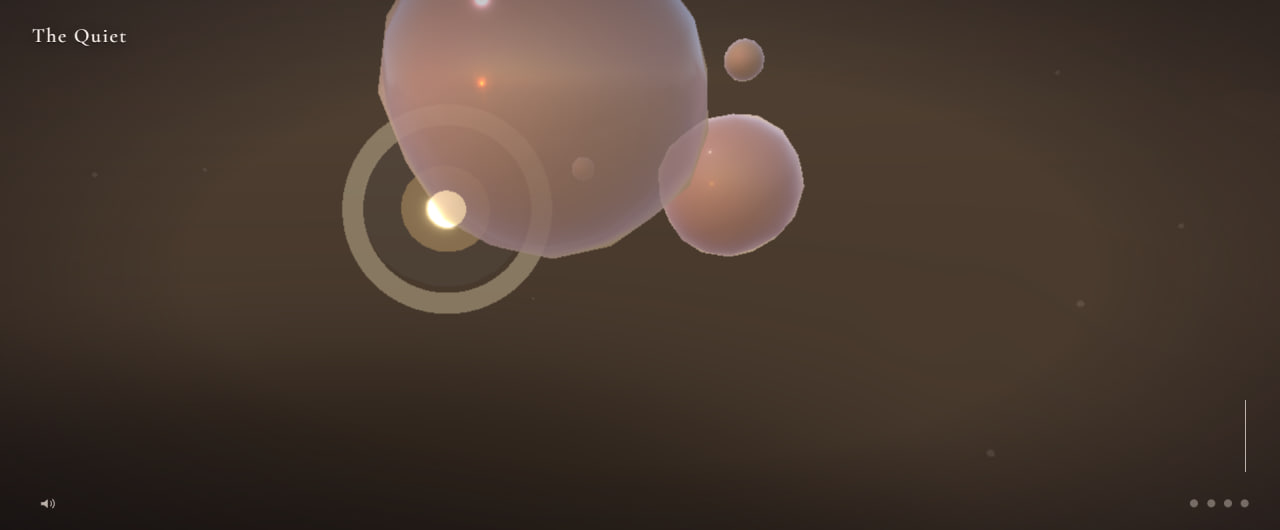
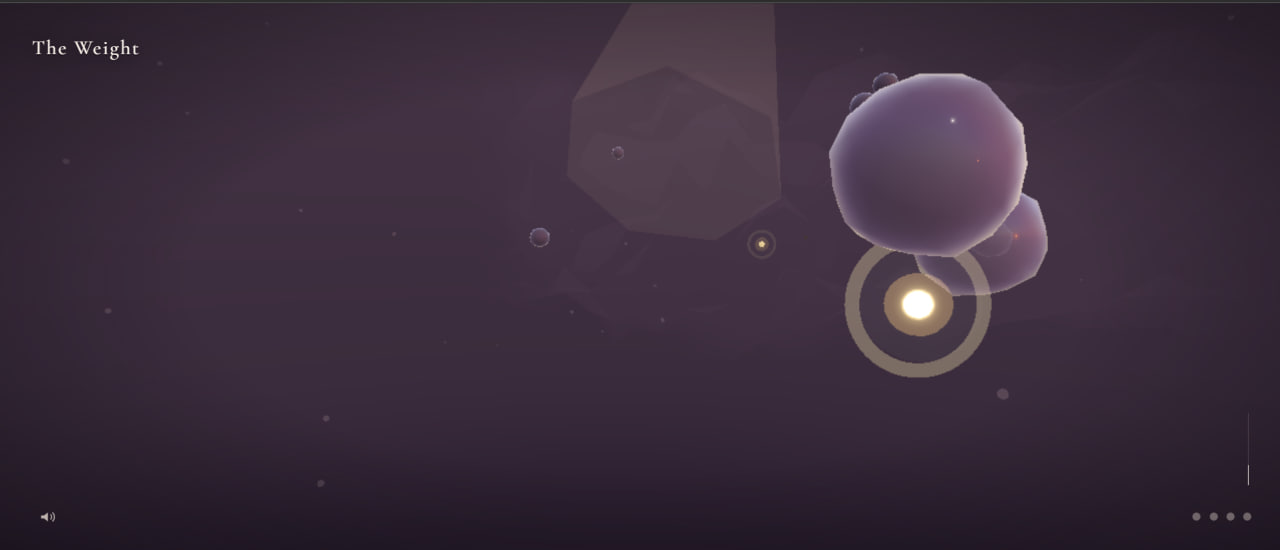
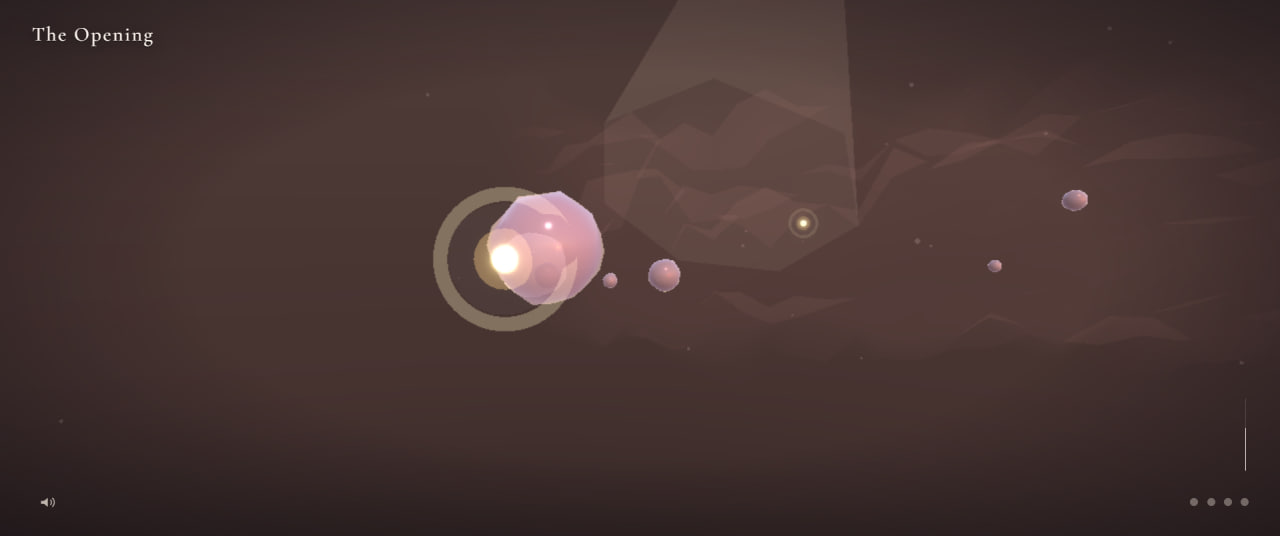
Stillpoint is an immersive 3D journey through five scenes that visually progress from overwhelm to stillness. As you scroll and explore, you discover four hidden "moments of calm" scattered through the dreamscape — collecting each one triggers a gentle visual and audio response, and once all four are found, you unlock a final scene built around a slow, breathing-synced glow. It's not a wellness app or a clinical tool — just an atmospheric experience built around a simple idea: things can get quieter, one small moment at a time.
How we built it
We built Stillpoint with React and Three.js via @react-three/fiber, using @react-three/drei for scroll controls, environment lighting, and transmission materials to get that soft glass-like glow on the hero objects. @react-three/postprocessing handles the bloom and chromatic aberration that give the scenes their dreamlike softness, and GSAP choreographs the camera movement between scenes. Zustand manages the lightweight state — which scene you're in, how many calm-moments you've collected. Each of the five scenes was deliberately designed with less visual noise than the last, so the feeling of settling comes through in the density of particles, the pacing of motion, and the color palette, not just in the text.
Challenges we ran into
Balancing "visually rich" against "genuinely calm" was harder than expected — it's easy to make a 3D scene busy and impressive, but much harder to make emptiness and slowness feel intentional rather than unfinished. We also had to be careful with performance, since particles, transmission materials, and postprocessing effects all add up fast — we leaned on instancing repeated geometry to keep frame rates smooth, especially in the busier early scenes. Getting interactive elements (the calm-moment motes) to feel discoverable without over-explaining them with UI text took a few iterations too.
Accomplishments that we're proud of
Getting the emotional arc to actually read through purely visual means — color, pacing, density — without relying on instructional text, was the part we're happiest with. The breathing-synced finale scene in particular ended up being the moment we'd point to as "this is what we were going for."
What we learned
A lot about React Three Fiber's ecosystem — instancing, transmission materials, and postprocessing pipelines — but also, less technically, how much restraint matters in a project like this. Our first instinct was to add more effects everywhere; the project actually got better once we started removing things from the final scene instead of adding to it.
What's next for Stillpoint
We'd like to explore audio-reactive elements more deeply, expand the number of scenes, and potentially let the "calm moments" carry user-submitted, anonymized reflections instead of fixed poetic lines — so the space becomes something a little more collective over time.
Built With
- drei
- gsap
- javascript
- react
- react-three-fiber
- react-three-postprocessing
- three.js
- vite
- webgl
- zustand

Log in or sign up for Devpost to join the conversation.