-
-
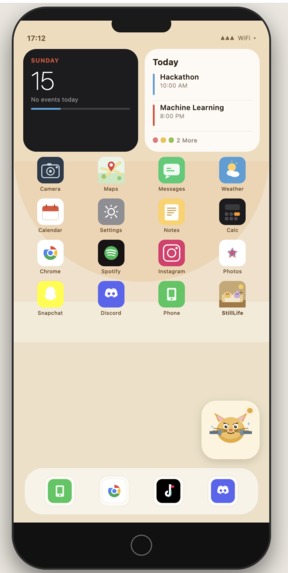
Widget homescreen visual
-
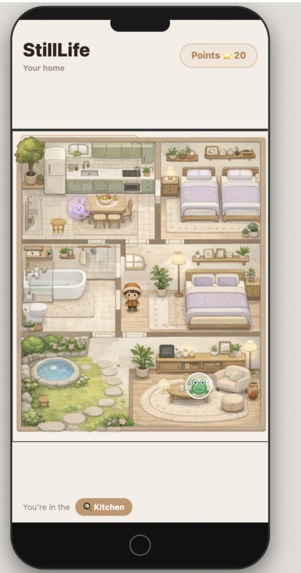
StillLife app house view
Inspiration
StillLife was inspired by how many social apps depend on constant replies to maintain connection - but in real life, people get busy, routines change, and relationships can quietly fade. We wanted to create something that keeps people connected at the pace of life, where presence doesn’t rely on replying, but on sharing everyday moments naturally.
What it does
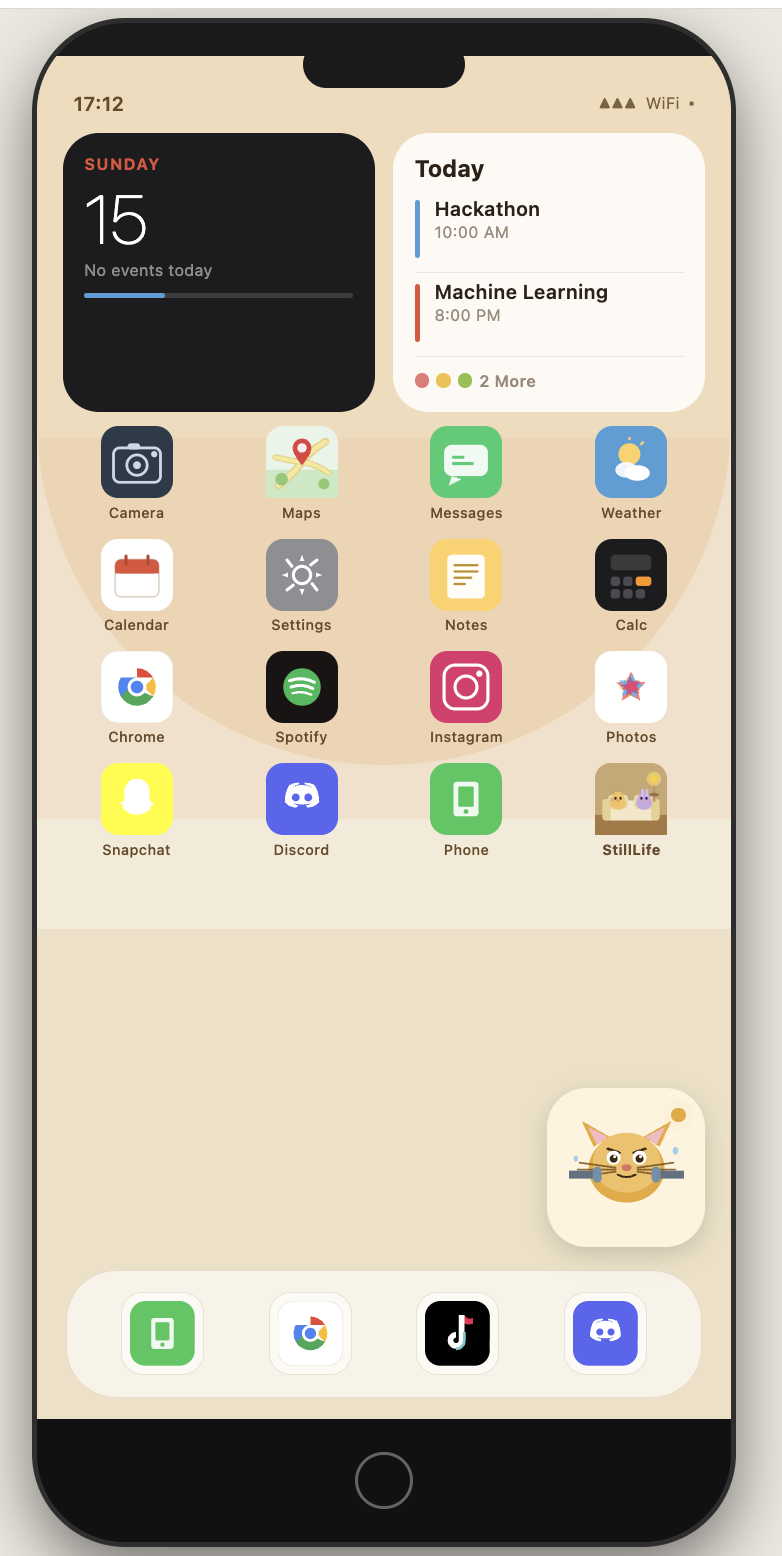
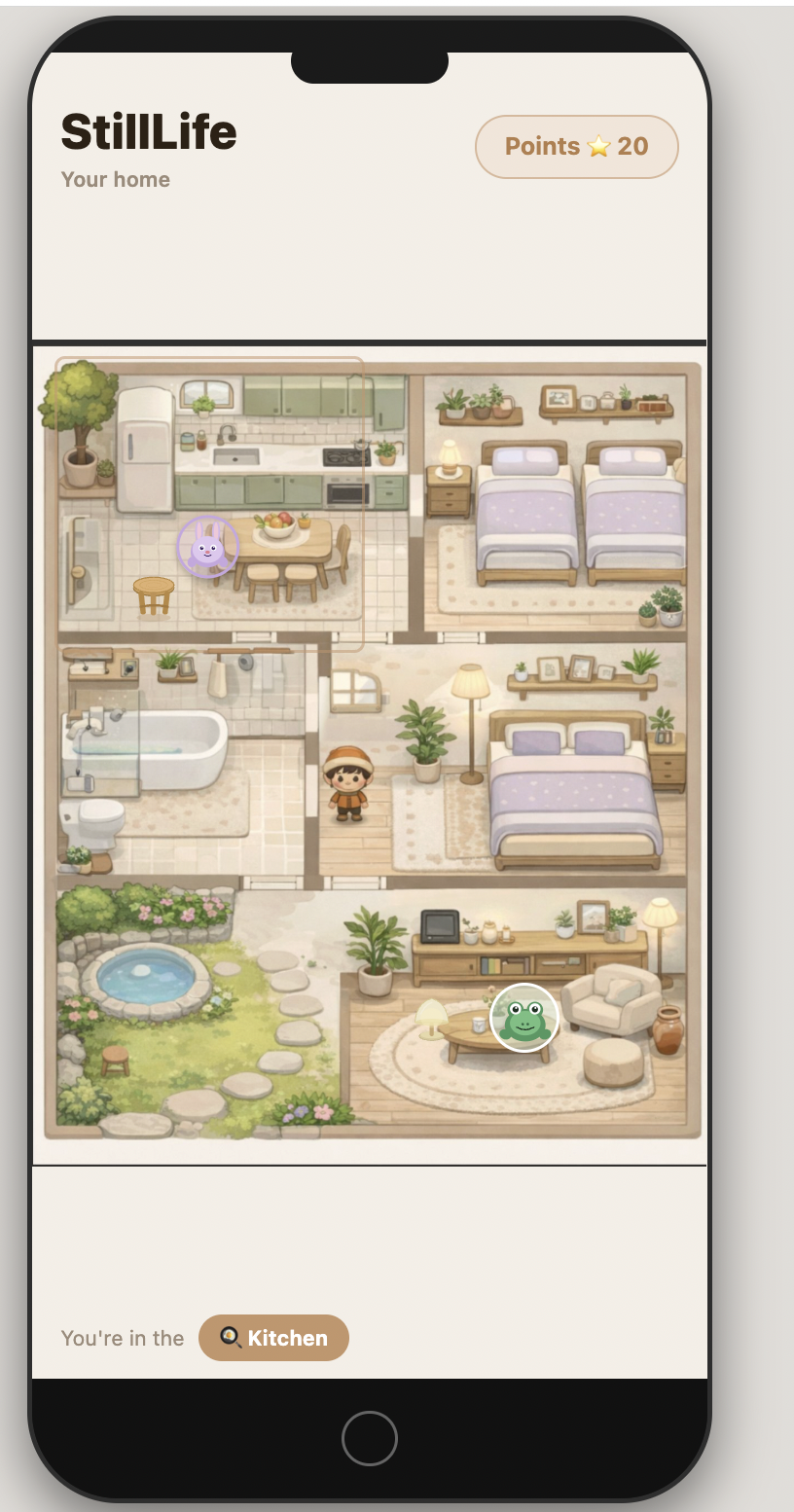
StillLife uses a live widget linked to your day, showing what friends are doing rather than exactly where they are - creating presence without feeling intrusive. As you go about daily life, activities that support your physical, mental, and social wellbeing count toward building and customising a shared virtual home, making connection feel meaningful, low-pressure, and rewarding.
How we built it
We built StillLife as a browser-based prototype using Expo to simulate both the live widget and the interactive shared-home experience, allowing us to demonstrate how the house interior changes through customisation and how avatars reflect live daily activity. Development was done in Visual Studio Code, with the core logic coded in Java for backend structure, while Expo handled the frontend prototype and visual interactions
Challenges we ran into
One of our main challenges was tying multiple interactive elements into one smooth experience - from opening the widget and entering the app, to navigating inventory, dragging items into the house, and animating characters naturally. We also had to keep a consistent visual identity across the characters, floor plan, app icon, and overall interface so the prototype felt like one cohesive product. Our biggest challenge was tying all the interactive elements into one smooth experience, especially linking live location data to the action or animation shown by the widget in real time.
Accomplishments that we're proud of
We’re most proud of being able to demonstrate the app’s interactive experience despite not fully integrating live location, especially within a short time frame. We were also able to create a clear visual theme, from the widget to the house interior and characters in a way that feels cohesive and realistic enough to translate into a real product.
What we learned
Through this project we learned how to build front-end simulations to communicate an idea clearly, while managing time effectively under tight constraints. We also gained experience troubleshooting bugs and errors quickly, prioritising feasible solutions, and focusing on quick wins that captured the core concept while still delivering a functional prototype.
What's next for StillLife
Next for StillLife is making the experience more dynamic by integrating live location into real-time widget activity, refining character design, and expanding from a single-room prototype into a larger evolving house. We also want to grow the inventory system, introduce different house themes, and develop it into a true widget or pop-up experience for both Android and iOS so it feels native to everyday phone use.
Built With
- expo.io
- reactnative
- typescript
- vscode


Log in or sign up for Devpost to join the conversation.