
Still Places
Inspiration
I caught a severe cold in the middle of a dark winter. The days were short and grey, I was stuck indoors, and what I really wanted was somewhere warm and sunny to rest and recover. I couldn't travel, but I had a VR headset.
So I built the place I needed: put on the headset and you're sitting on a sunny beach, in a bright meadow or by a quiet lake at dawn. You hear the waves or the birds, and you're guided to breathe slowly. It's a small escape for when your body needs rest and the weather outside won't help. I made it a web page, with no install and no account, so it's easy to open when you're feeling low.
What it does
Still Places is a meditation website that runs in a VR headset through WebXR, or in any browser tab.
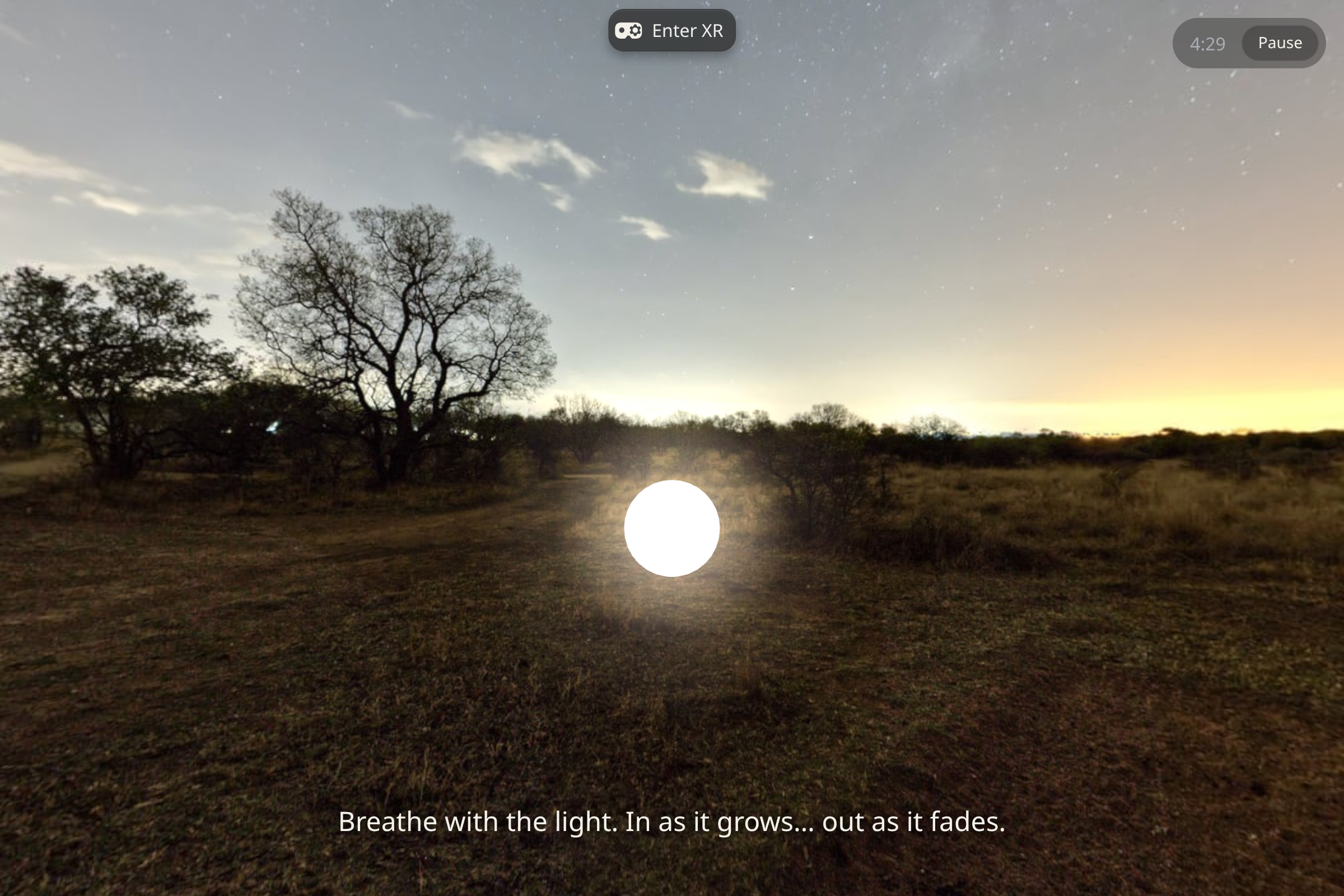
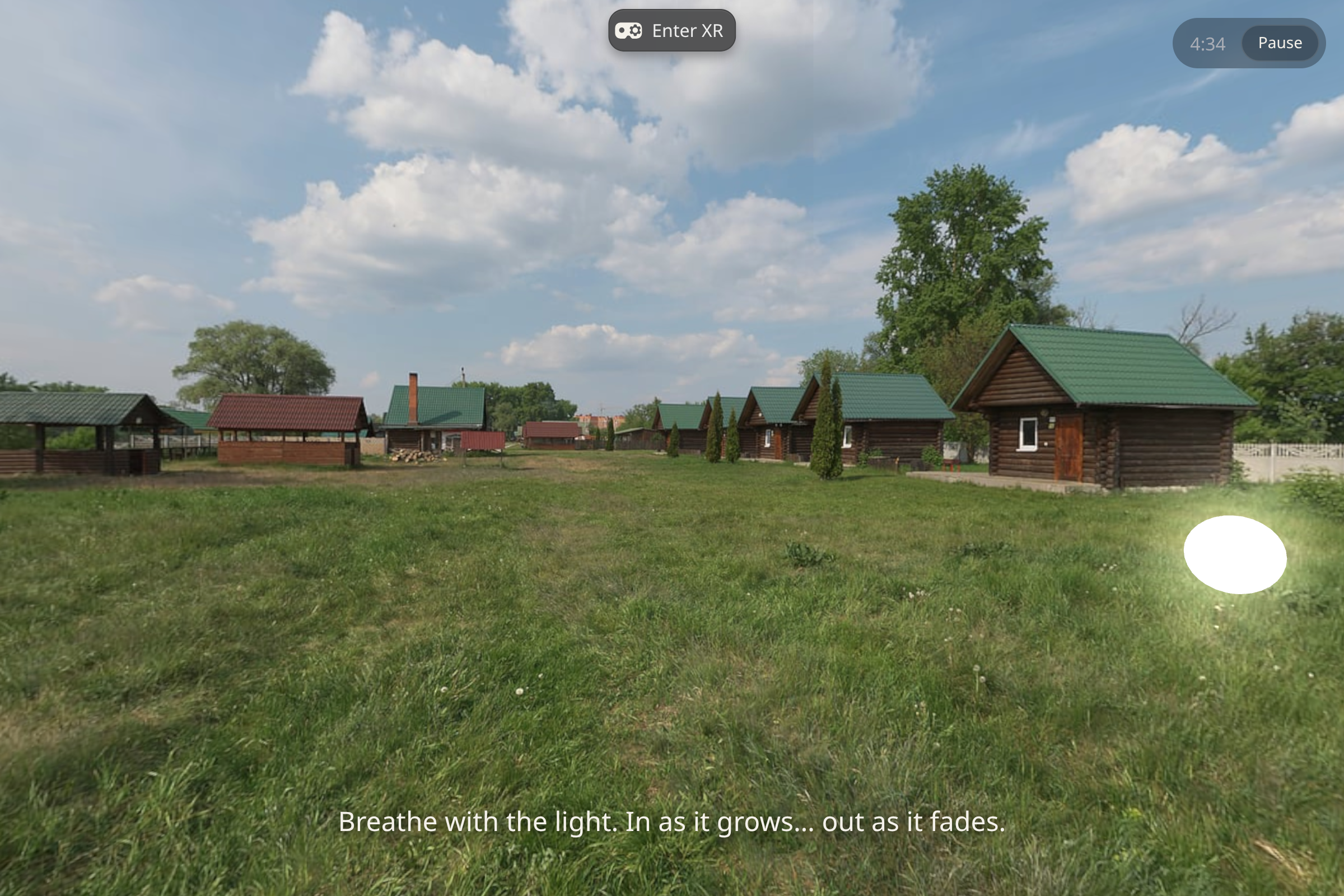
- 6 places: dawn mountain, forest, lake, beach sunrise, meadow and starry night. Each is a full 360° panorama that also lights the scene.
- Guided breathing: a glowing orb grows and shrinks to pace each breath, so you can follow it with your eyes half-closed.
- 3, 5, 10 or 20 minutes. Every session follows the same shape: arrive → settle → anchor → main practice → close, with short text cues and a closing bell.
- Sound: singing bowls plus rain, forest, waves, stream or night ambience, all synthesized live in the browser.
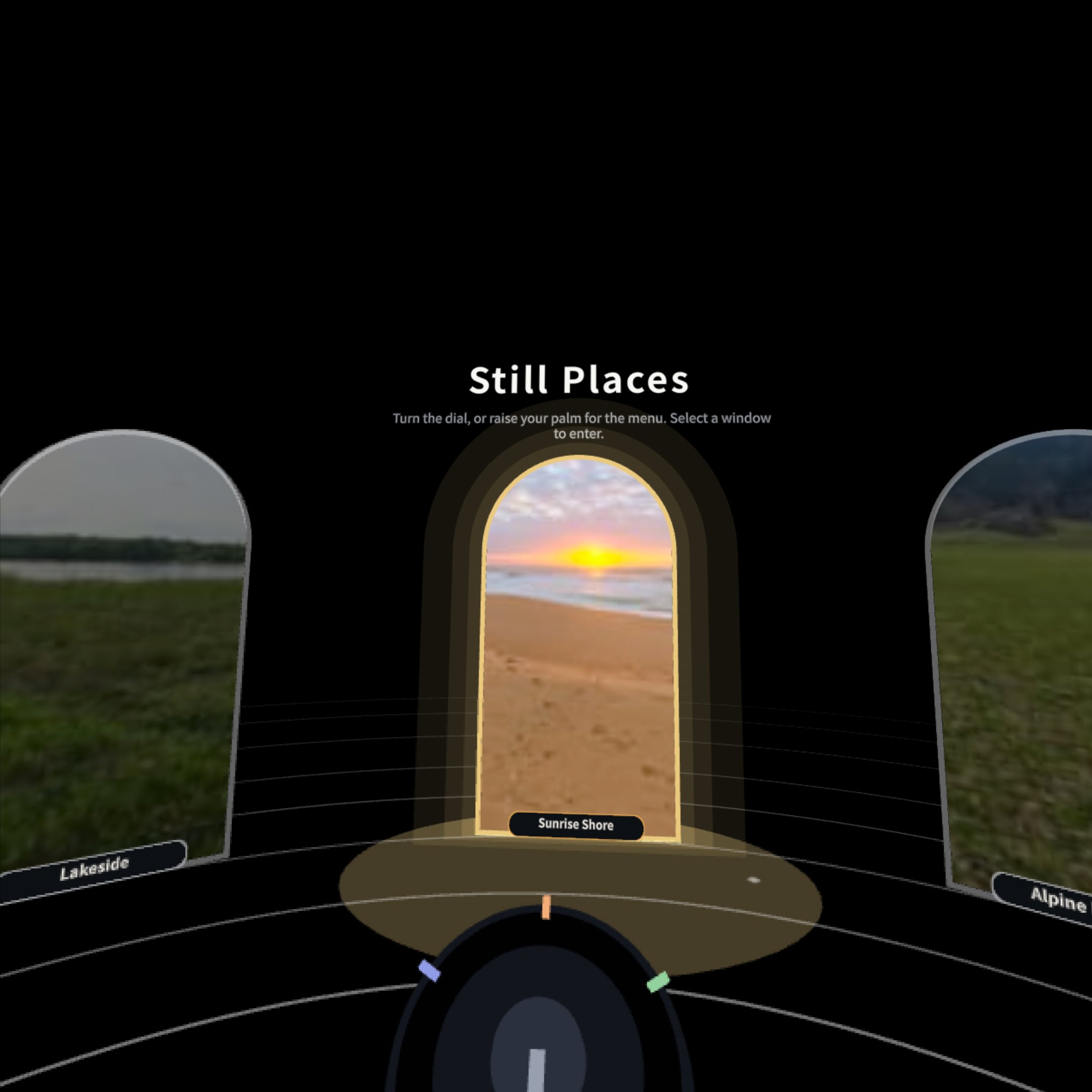
- A place hub: in VR you stand inside a ring of "windows". Each one previews a place, and you turn a dial to browse them and step into the one you like.
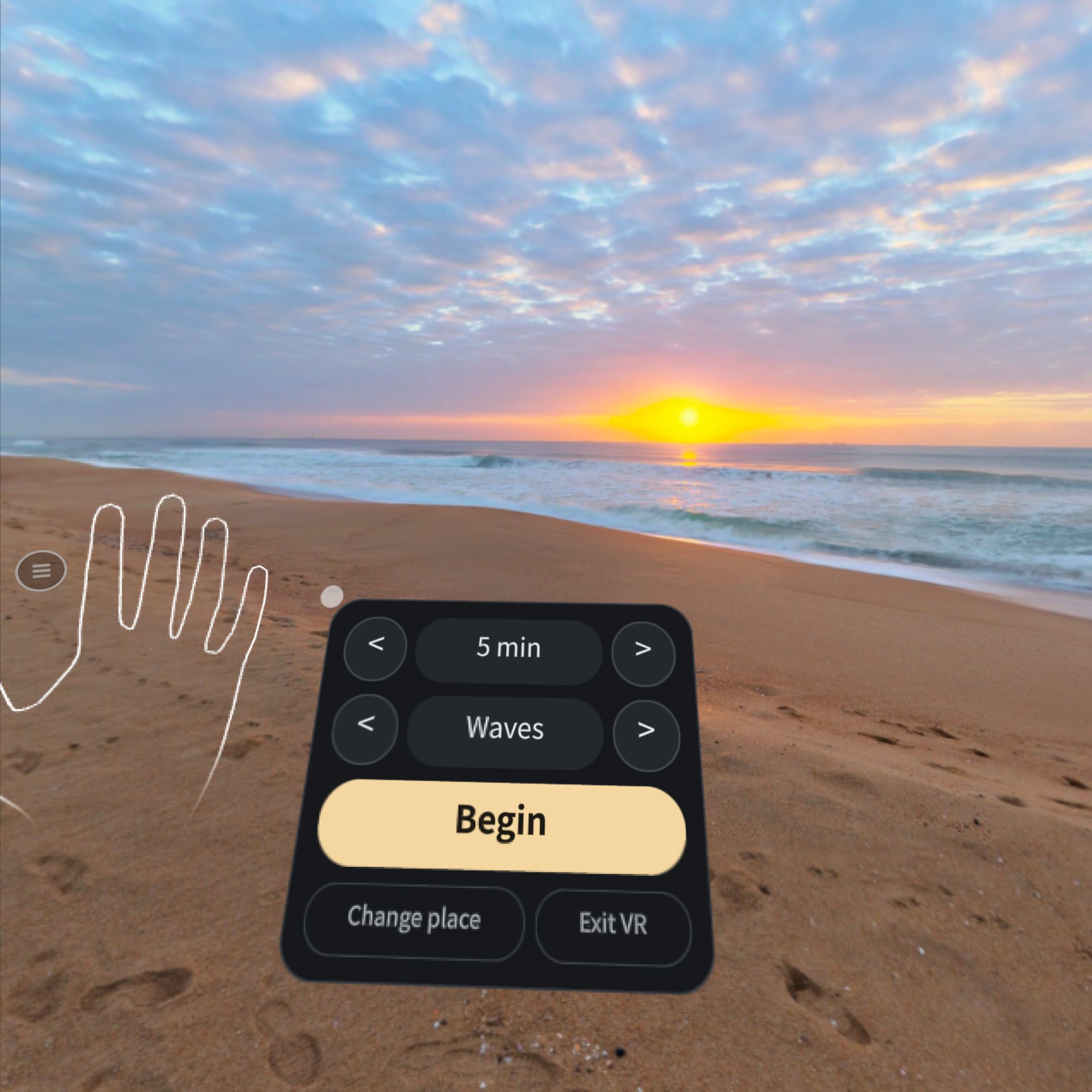
- Hand menu: turn your palm toward your face and a small menu appears beside your hand. You can pause, change the length or start a session without controllers.
- No accounts and no backend. Your preferences and session history stay on your device.
How I built it
- Meta's Immersive Web SDK (IWSDK) with TypeScript and Vite, using its ECS (entity-component system) architecture. Separate systems handle the place, the session clock, the breathing orb, the VR panels, the hub and the hand menu.
- Poly Haven CC0 HDRIs for the places. A build script downloads them, resizes them into 4K/8K backgrounds plus small HDR files for lighting, and converts them to compressed cube maps.
- Spatial UI written in UIKitML for the VR panels, and a plain HTML overlay for flat screens.
- Web Audio It schedules bells and cross-fades ambience beds, and synthesizes all sound procedurally, so there are no audio files to license.
Challenges I ran into
- GPU memory crashes. Each 360° background is quietly turned into a large uncompressed cube map. One 8K place cost about 680 MiB, and the tab crashed after two or three place changes on a headset. I measured the problem, moved to pre-built compressed cube maps, and made sure old textures are actually freed.
- Motion sickness in the hub. My first ring of windows slid around you as you turned the dial. That sideways motion at the edge of your view (vection) made people dizzy. I tried a card-deck layout and dropped it. The final design keeps the windows still: they fade out, swap places while nothing is visible, and fade back in.
Accomplishments that I'm proud of
- A calm, complete experience: pick a place, sit, breathe and finish with a summary. The UI disappears during the session.
- It's comfort-first: you stay seated, there's no locomotion, and nothing moves the camera.
What I learned
- In VR, what feels calm matters more than what looks impressive. Small motion choices decide whether people feel relaxed or sick.
- High-resolution textures on the web cost much more GPU memory than their file size suggests. Measure before you guess.
- The emulator saved a lot of time, but it can't tell you how something feels.
What's next for Still Places
- Voice guidance as an alternative to text cues.
- Hand-picked CC0 field recordings to go with the synthesized soundscapes.
- More places and practices, and maybe places from your own 360° photos.
- Deploy publicly and package it as an installable PWA for the Meta Horizon Store.
Built With
- claude
- iwsdk
- web
