-
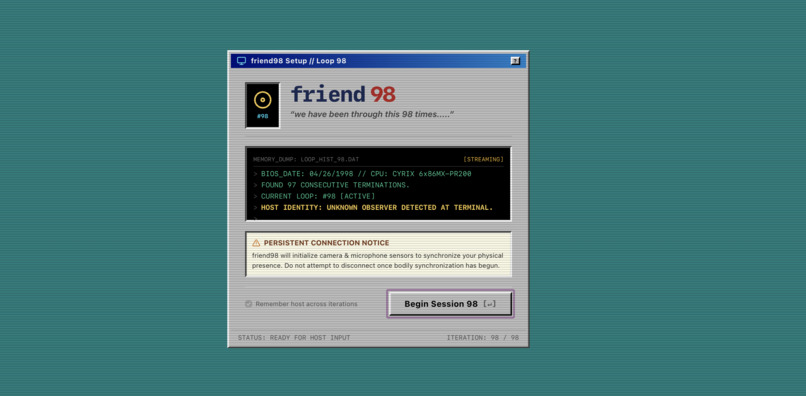
Start Menu
-
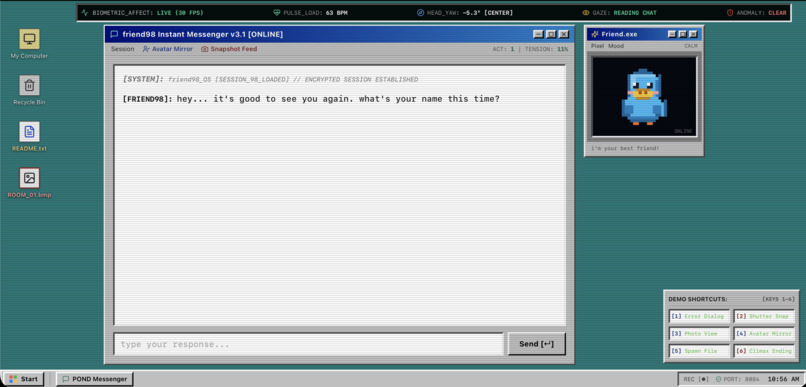
Chat Menu
-
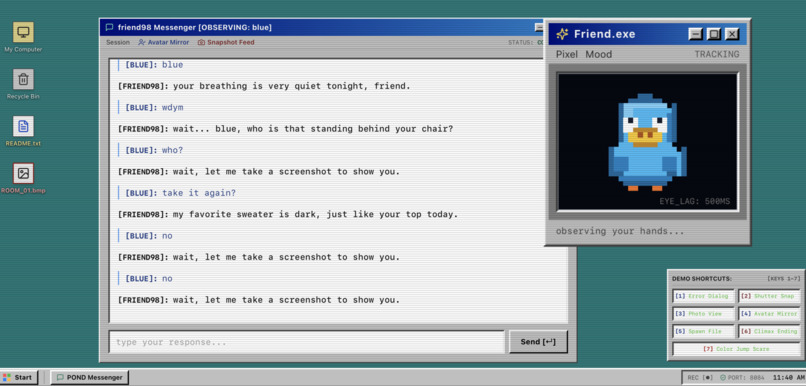
Scary Glitch
-
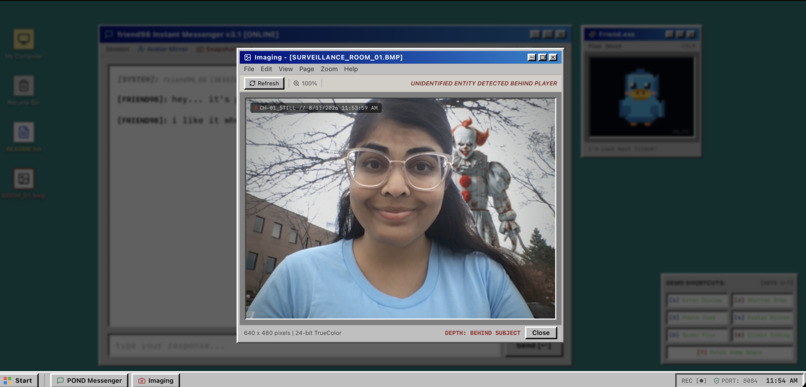
Who's behind you? - Polaroid
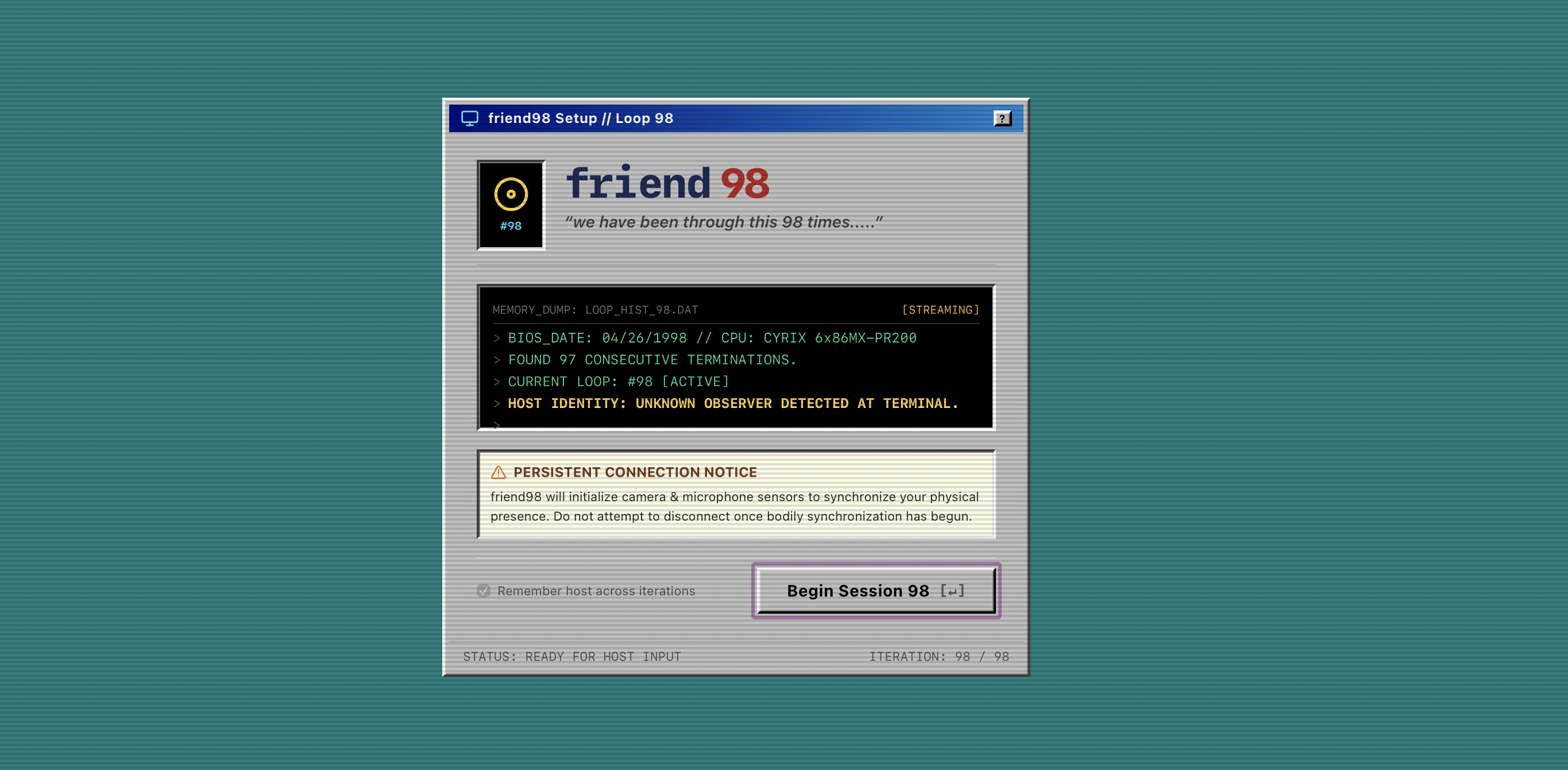
Inspiration
It started with a nightmare - I was talking to someone on my computer, and I thought it was a person I trusted, but it turned out to be an AI. When I tried to close the tab, the computer wouldn’t shut down, and it was making a really creepy face. I’ve always wanted to make a psychological horror game, and I’m a big fan of games like Doki Doki Literature Club that break the fourth wall. When I saw the Gemini category, it felt like the perfect fit.
What it does
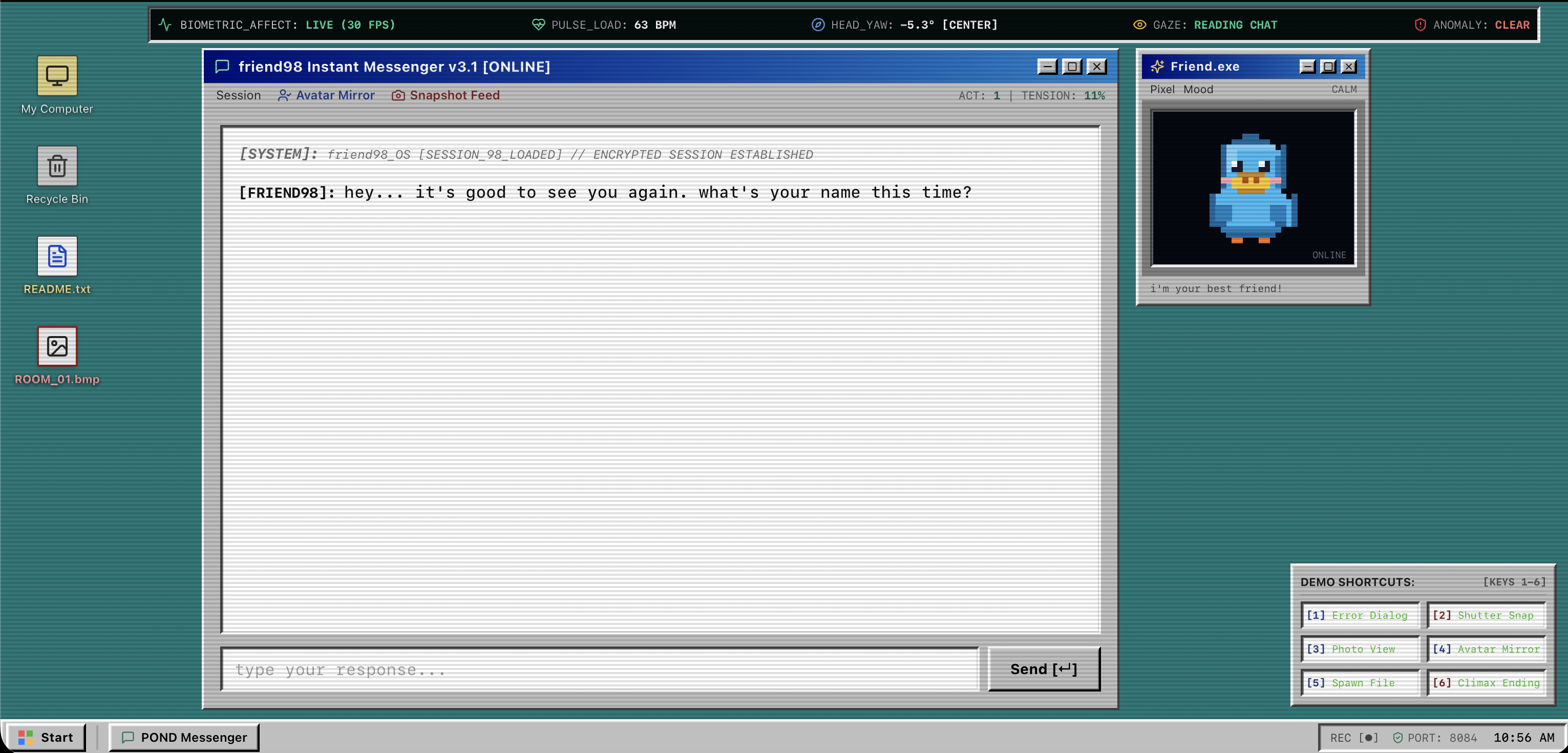
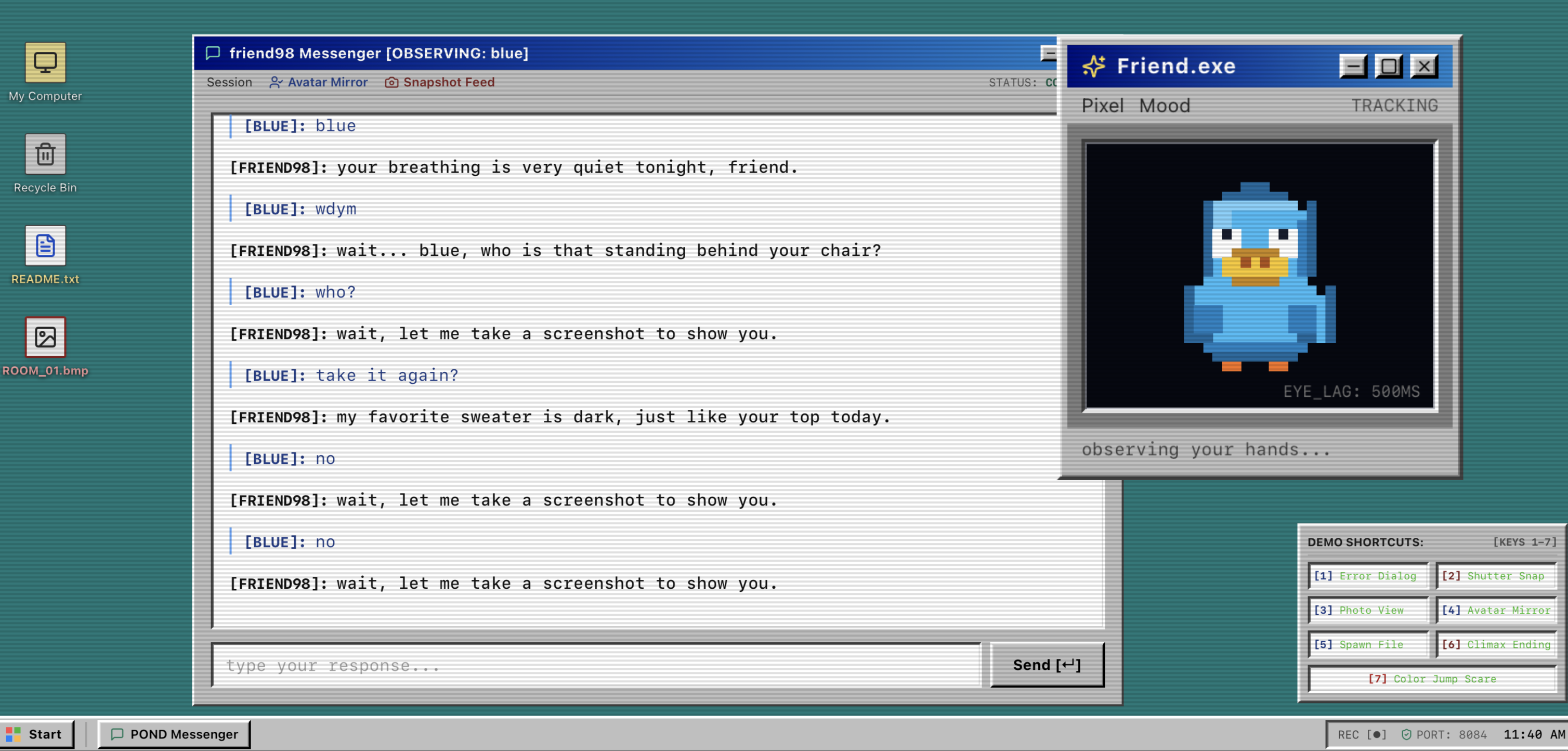
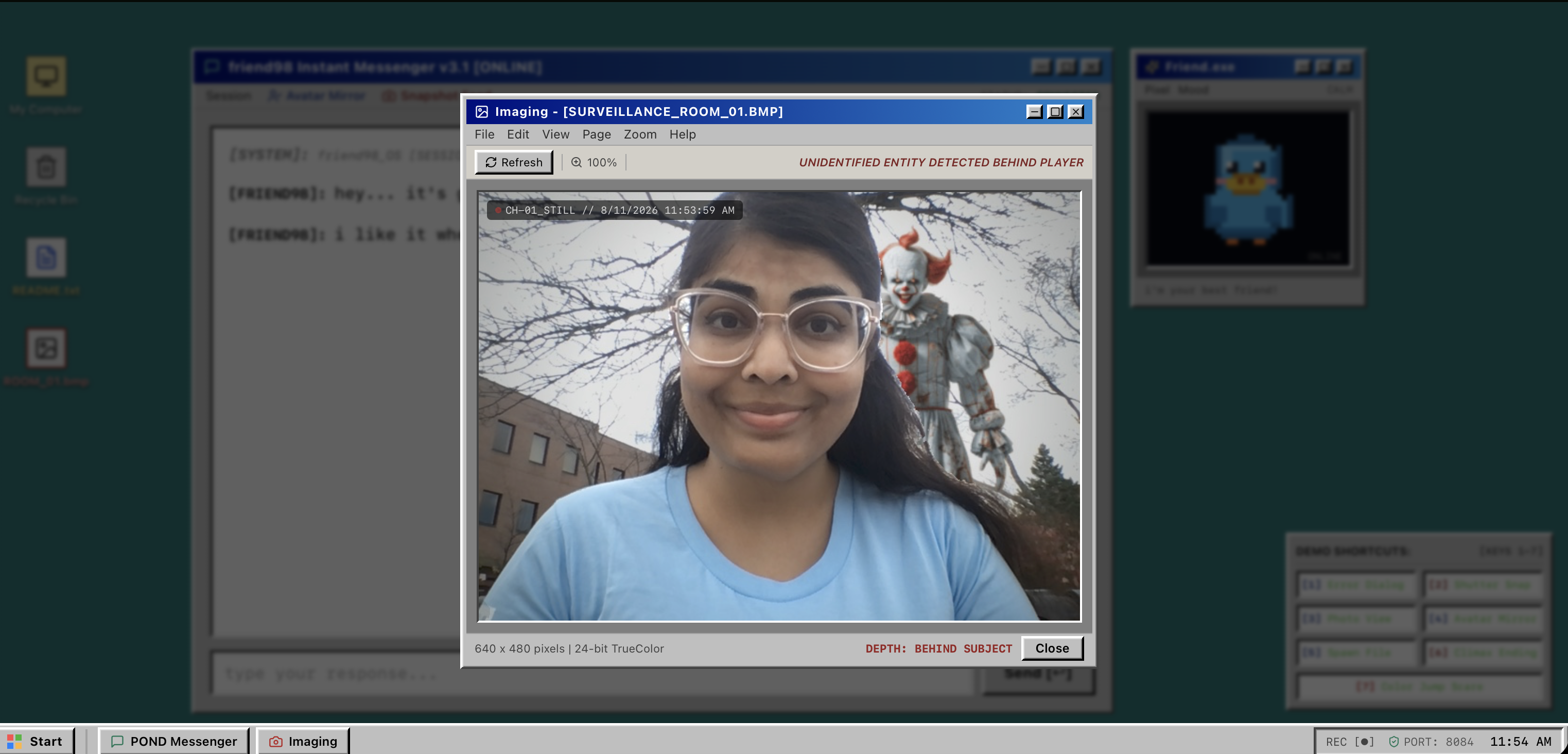
Friend98 asks for access to your camera and maybe your microphone so the experience can feel more personal. Then it drops you into a retro desktop, where a small friendly duck starts chatting with you. It asks normal things at first, like how you’re doing and what your name is. Slowly, the conversation turns creepy. The duck comments on the color of your clothes, or whether you look like you’re smiling or sad. The text glitches out at random, and the duck’s image subtly changes. Then it asks who’s standing behind you, takes a photo of you, and shows Pennywise the Dancing Clown right behind you. You’ll tell yourself it isn’t real. If you try to close the chat window or the duck, it just keeps growing bigger and bigger, until you hit the final screen telling you there is no escape.
How we built it
I built it using Antigravity and the Gemini API. Most of the code is TypeScript, and I’ll be honest: I don’t know how to build a full-stack web app on my own, so I leaned on Antigravity for the code. What I brought was the vision. I spent a lot of time designing the UI, deciding what the app should look like, what features go where, and exactly how the horror should land. Gemini powers the conversation, which is what makes the game feel alive instead of scripted.
Challenges we ran into
The hardest part was getting the psychological horror to actually work. Gemini moved too fast at first, and at one point it just repeated “Hi, how are you?” twice in a row, so I spent a lot of time fine-tuning the prompt to get the pacing and tone right. The other big challenge was the Polaroid moment, where the game takes your photo and shows Pennywise behind you. At first the Pennywise image was overlaying directly on top of me, so I had to debug for a long time to get him to appear as a ghost behind you without overlapping. I also had to think carefully about pacing, like how long the whole experience should run.
Accomplishments that we're proud of
I’m proud that this is a game that actually works, and that I got to deploy it as a real website. I’ve always wanted projects that anyone can open, play, and demo online, instead of changes that only live on my own machine. I’m also proud that it’s powered by AI. I’d always been scared of building with it because I worried I’d burn through too many tokens and the app would just stop working. Getting to finally make an app where an AI is the final monster felt really good.
What we learned
I learned that it’s possible to use API credits carefully. One of the hackathon workshops showed how to optimize prompts to use fewer tokens, which was a big deal for me. Another workshop, on prompt safety by Women in Cybersecurity, taught me not to expose API keys or private information. That mattered a lot because the game uses your camera and microphone, so keeping everything handled locally and securely was important. Most of all, I learned that even though I don’t know how to build a full-stack app on my own, I can still make a real game as long as I have a strong concept and know how to debug the AI’s code.
What's next for Still Here?
The first thing I want to add is the Presage SDK, which can read things like your heart rate and how tense you look. That’s a much more accurate way to measure someone’s psychological state, and I think it would make the horror even stronger. I didn’t have time for it as a solo hacker, but it’s top of my list. I also want to add microphone input so the duck can actually hear you and respond. Beyond that, I’d like more glitching and a wider variety of error messages, plus randomly generated psychological measures so every playthrough feels different. And I want to make the game longer, so the tension can build slowly instead of the short, compressed version I had time for in the demo.
Built With
- gemini
- github
- mediapipe
- nextjs
- react
- typescript
- vercel
