-
-
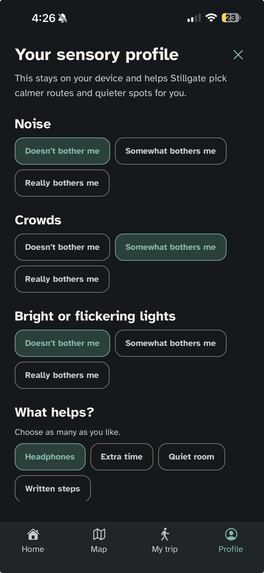
Sensory Profile
-
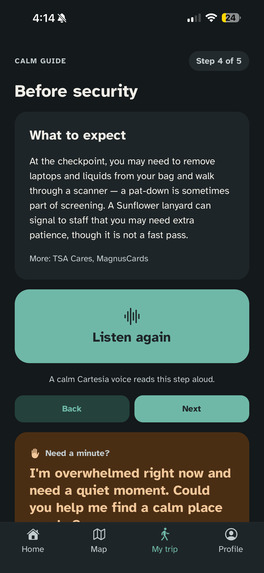
Before security
-
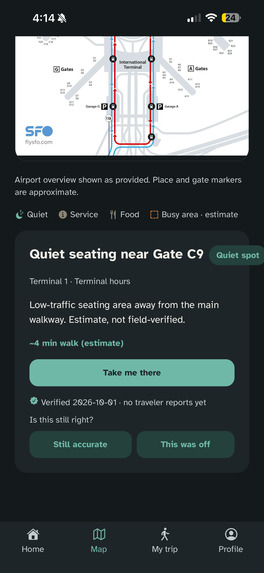
Quiet-places
-
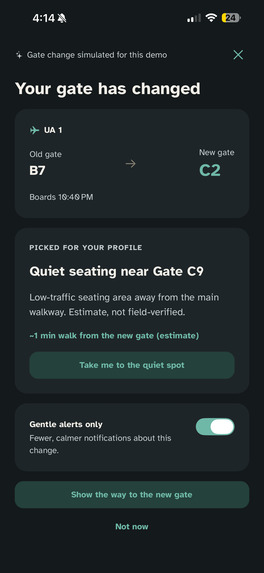
Calm guide
-
Gate location
Inspiration
Airports can be loud, crowded, bright, and unpredictable. For autistic and other neurodivergent travelers, sensory overload and sudden changes can make it especially difficult to know what to do next. We wanted to build an airport companion that puts each traveler’s sensory preferences first, without requiring a diagnosis or assuming everyone needs the same support.
What it does
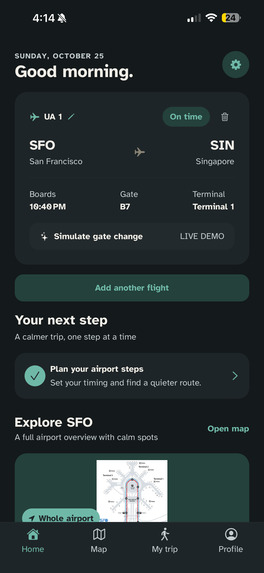
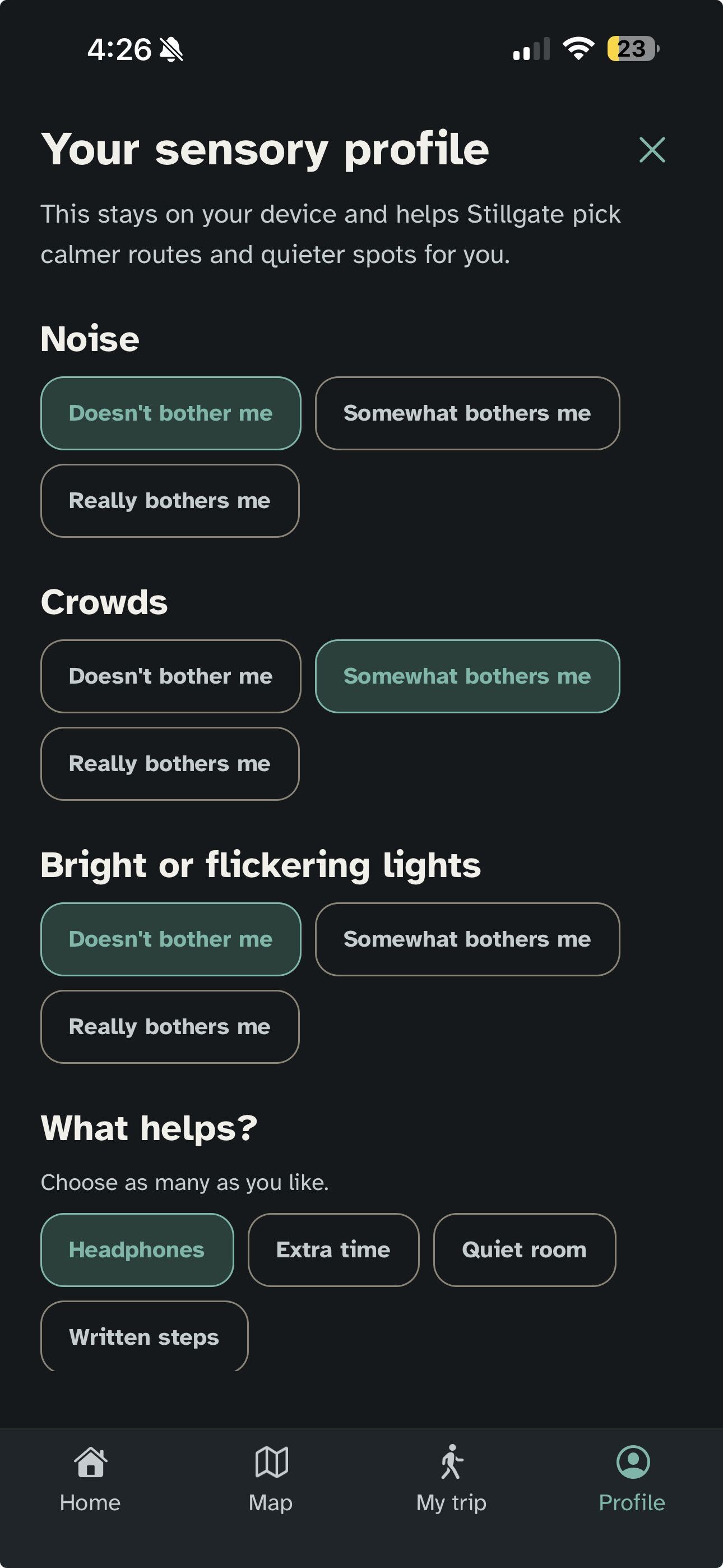
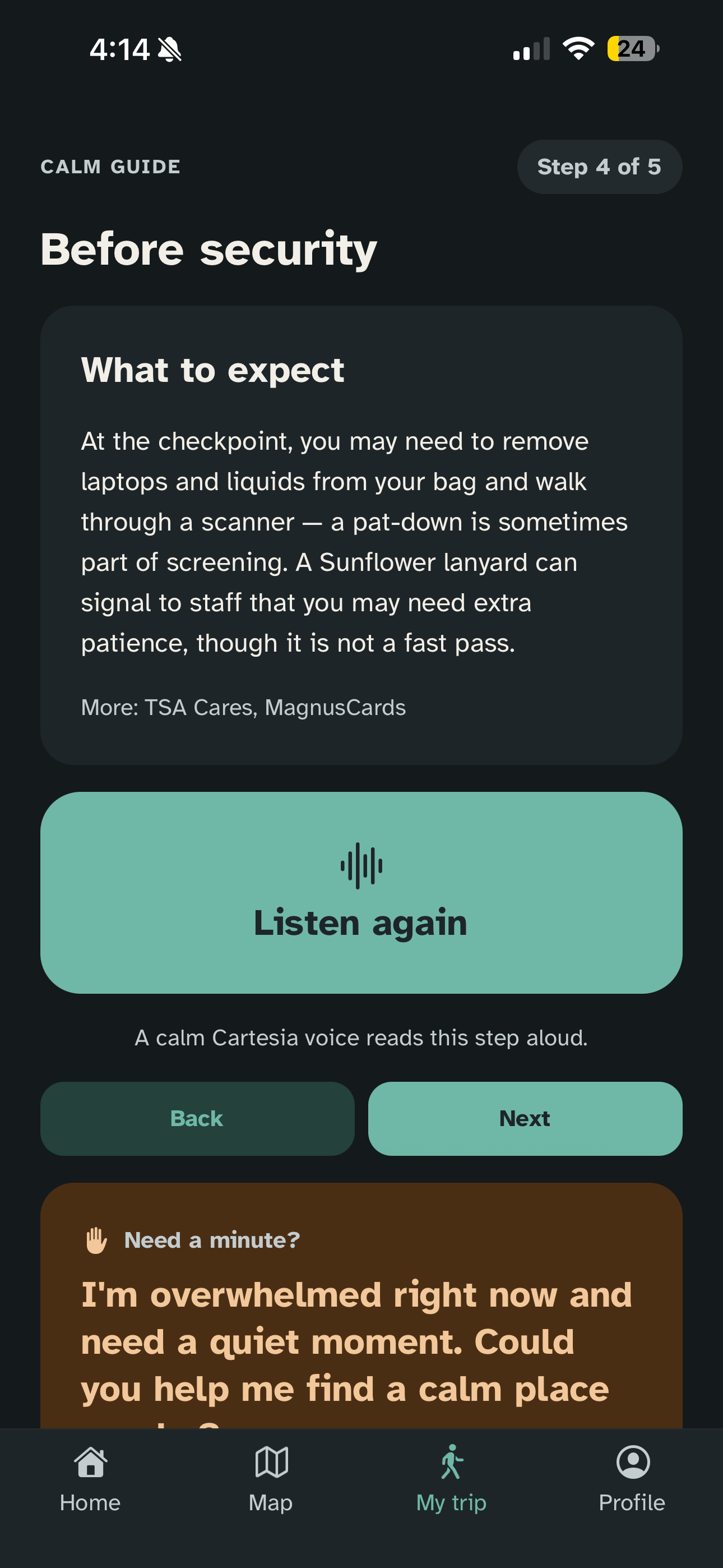
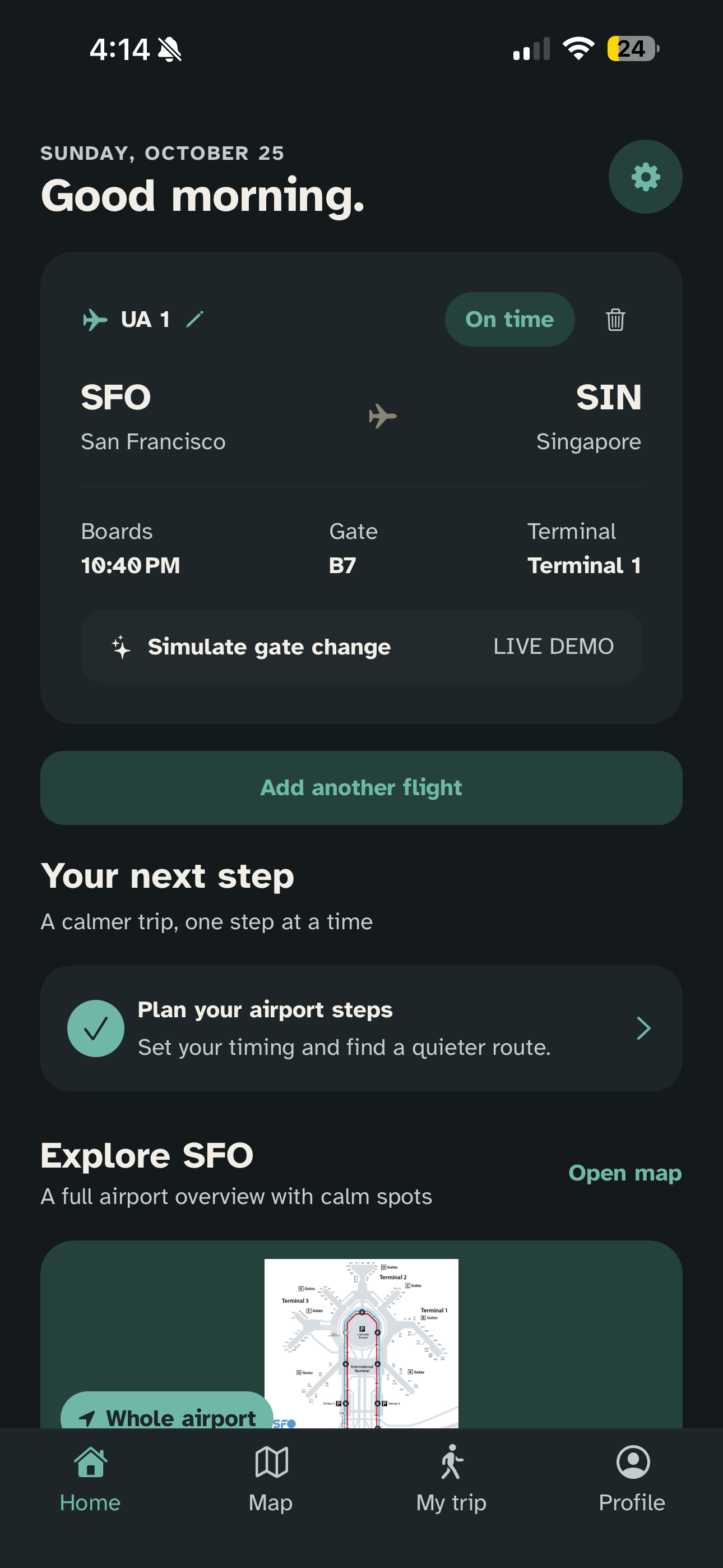
StillGate helps travelers prepare for a trip, explore airport information, and follow a step-by-step Calm Guide. Travelers can save preferences about noise, crowds, and lighting on their device. The guide uses trip and airport information to provide relevant steps, and Cartesia can turn those steps into spoken audio.
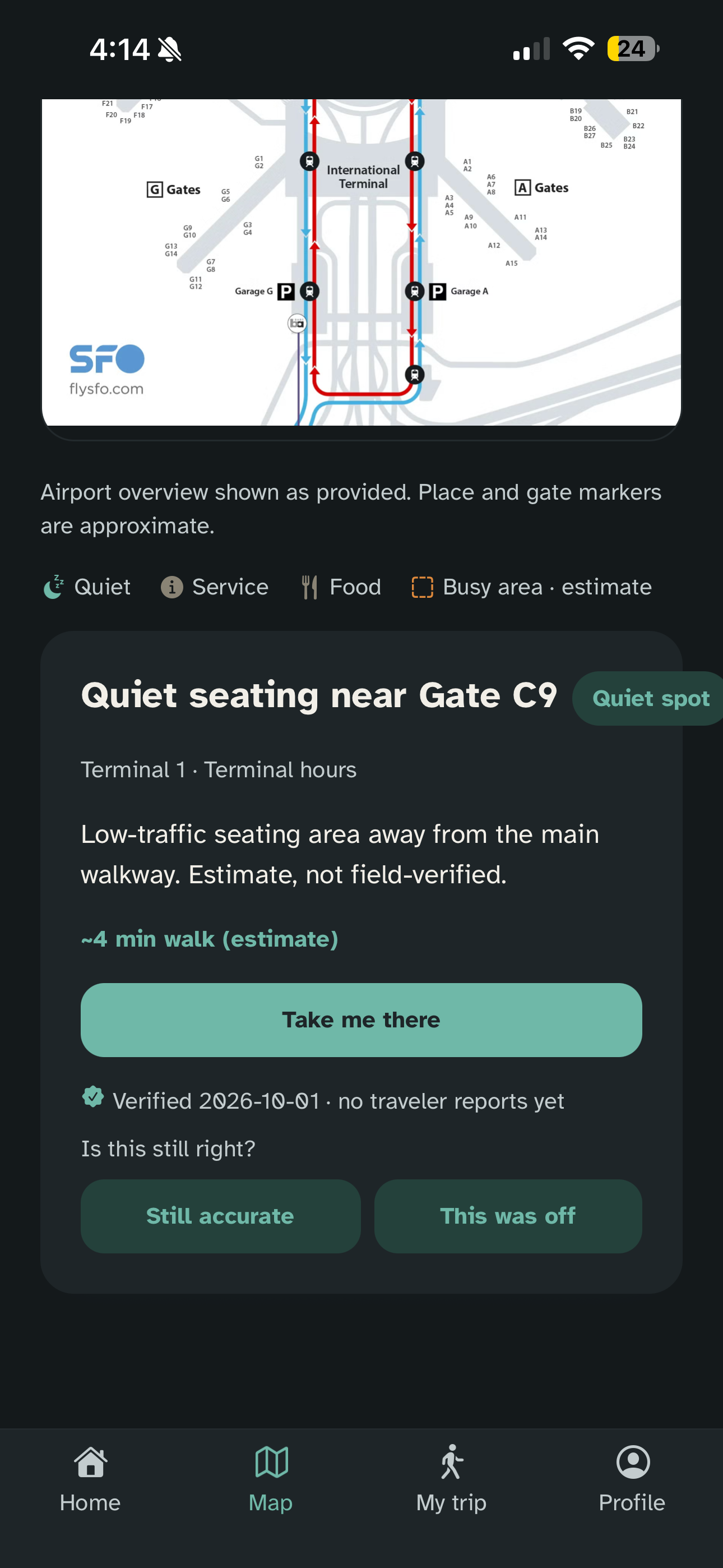
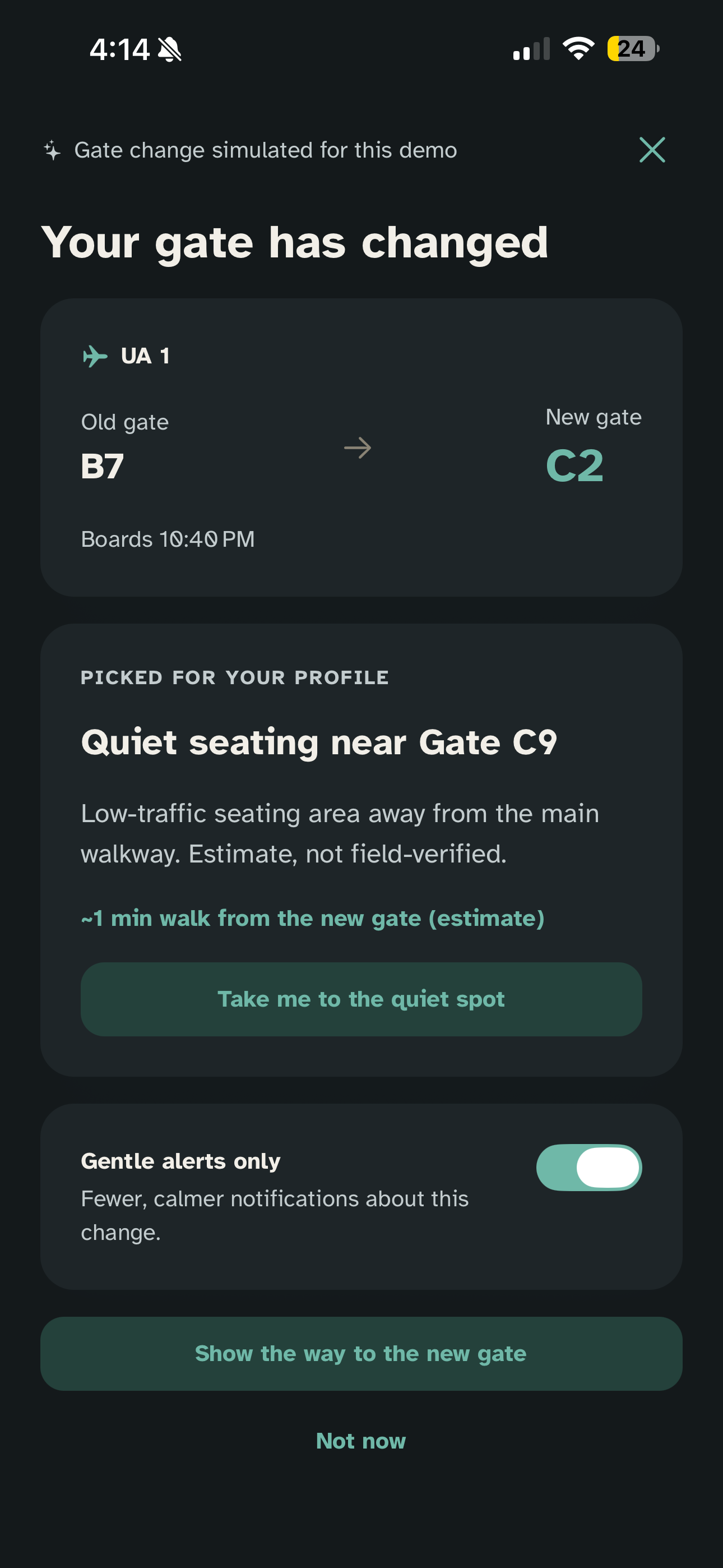
Our demo includes a clearly labeled simulated gate change and a suggestion for a quiet place near the new gate. It is a prototype, not an airline-operated service: the gate change is not a live alert, and some airport details and walking times are sample data or estimates.
How we built it
We built the mobile app with React Native, Expo, Expo Router, and TypeScript. Convex provides backend functions and storage for airport information, guide logic, and generated audio. The app uses expo-audio to play Cartesia narration.
The guide’s facts and recommendations come from app rules and data. Claude can help rephrase those steps in calmer language, with checks intended to preserve important details such as gates and numbers. For airport information, an Apify Actor collects content from configured airport webpages. New or changed information enters a review process; scraped data is not automatically treated as verified.
Challenges we ran into
Airport information can change, and inaccurate directions or room details could cause confusion. We worked to distinguish verified information from sample data and estimates, and to keep the gate-change simulation clearly labeled. We also set boundaries for AI: it can help with phrasing, but it should not invent airport facts or decide where someone should go. We had to continuously verify the SFO page and add real walk times for the demo gates.
Another challenge was bringing together several parts of the experience, traveler preferences, airport information, trip guidance, and voice, while keeping the app useful when a service or network connection is unavailable.
Accomplishments we’re proud of
We brought sensory preferences, airport information, step-by-step guidance, a simulated gate-change flow, and spoken narration together in one mobile prototype. We’re proud that the sensory profile stays on the traveler’s device and that the guide is designed to explain what it knows rather than present estimates as certainty.
What we learned
We learned that accessibility is not one-size-fits-all. Useful support should respond to an individual’s preferences, offer manageable steps, and make uncertainty visible. We also learned that AI is most helpful here when its role is limited and checked: it can make wording clearer, while the app’s data and rules remain responsible for the facts.
What’s next for StillGate
We want to verify airport information with official sources and neurodivergent travelers, improve coverage beyond the demo airports, and replace placeholder walking estimates with reliable data. We also want to keep testing the voice experience and explore dependable live flight updates. Our longer-term goal is to make calm, sensory-aware guidance available throughout a traveler’s journey, while protecting their privacy and being transparent about what the app knows.
Built With
- anthropic
- apify-actor
- asyncstorage
- cartesia
- convex
- crawlee
- expo-audio
- expo-router
- expo-sdk-58
- react-native
- typescript


Log in or sign up for Devpost to join the conversation.