Inspiration
What it does
How we built it
Challenges we ran into
Accomplishments that we're proud of
What we learned
What's next for Sticky Space Paws
Inspiration
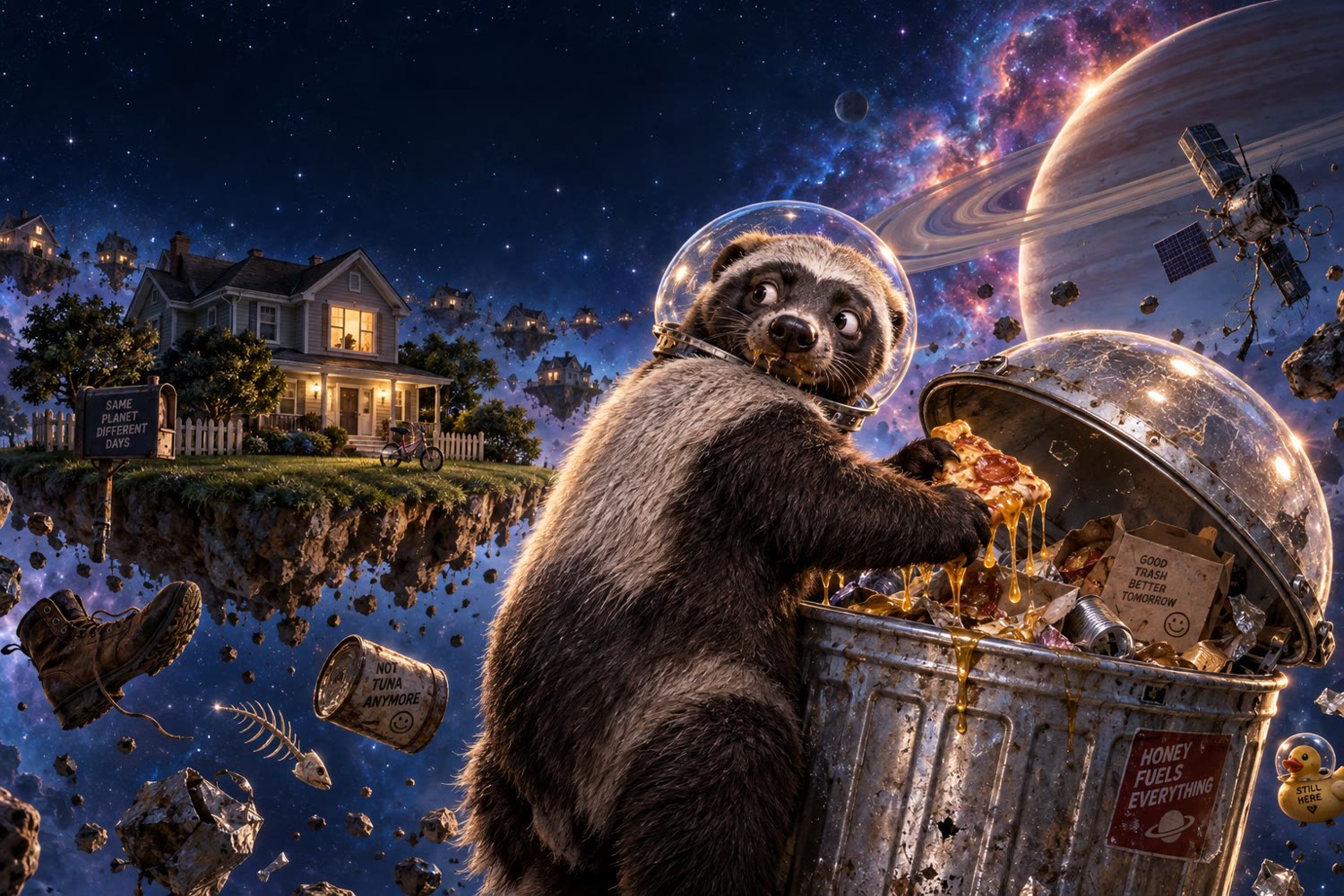
On the afternoon of October 6 I wanted to know if I could make a VR game in one sitting by directing an AI instead of typing the code. The idea was small: a wall with a hole comes at you, and you turn the thing in your hands so it fits. By the evening it had a reason to exist: you are a honey badger raiding the bins behind a diner at night, your paws are sticky with honey, and every piece a wall pushes over the side makes noise and wakes the neighbours.
What it is like to play
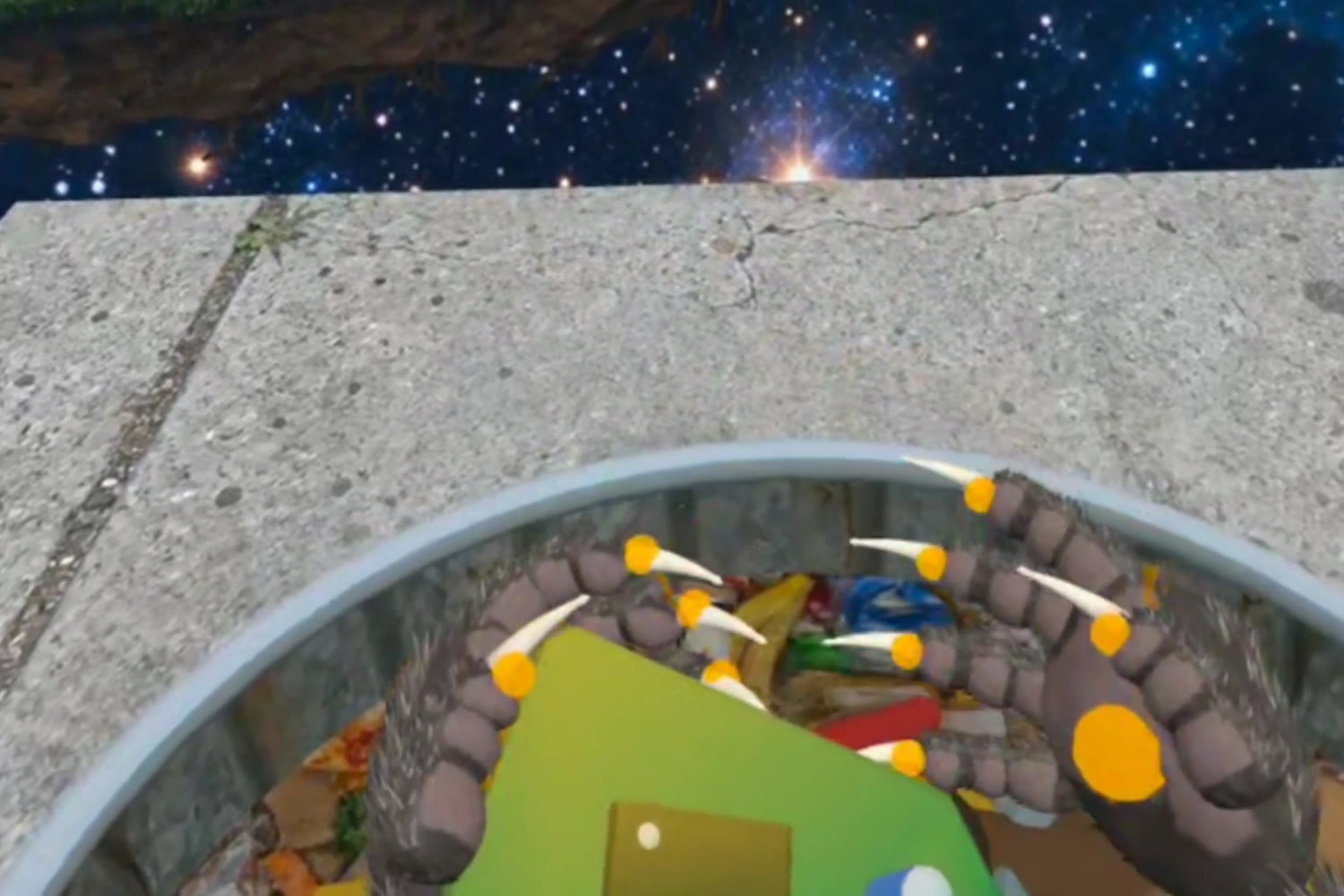
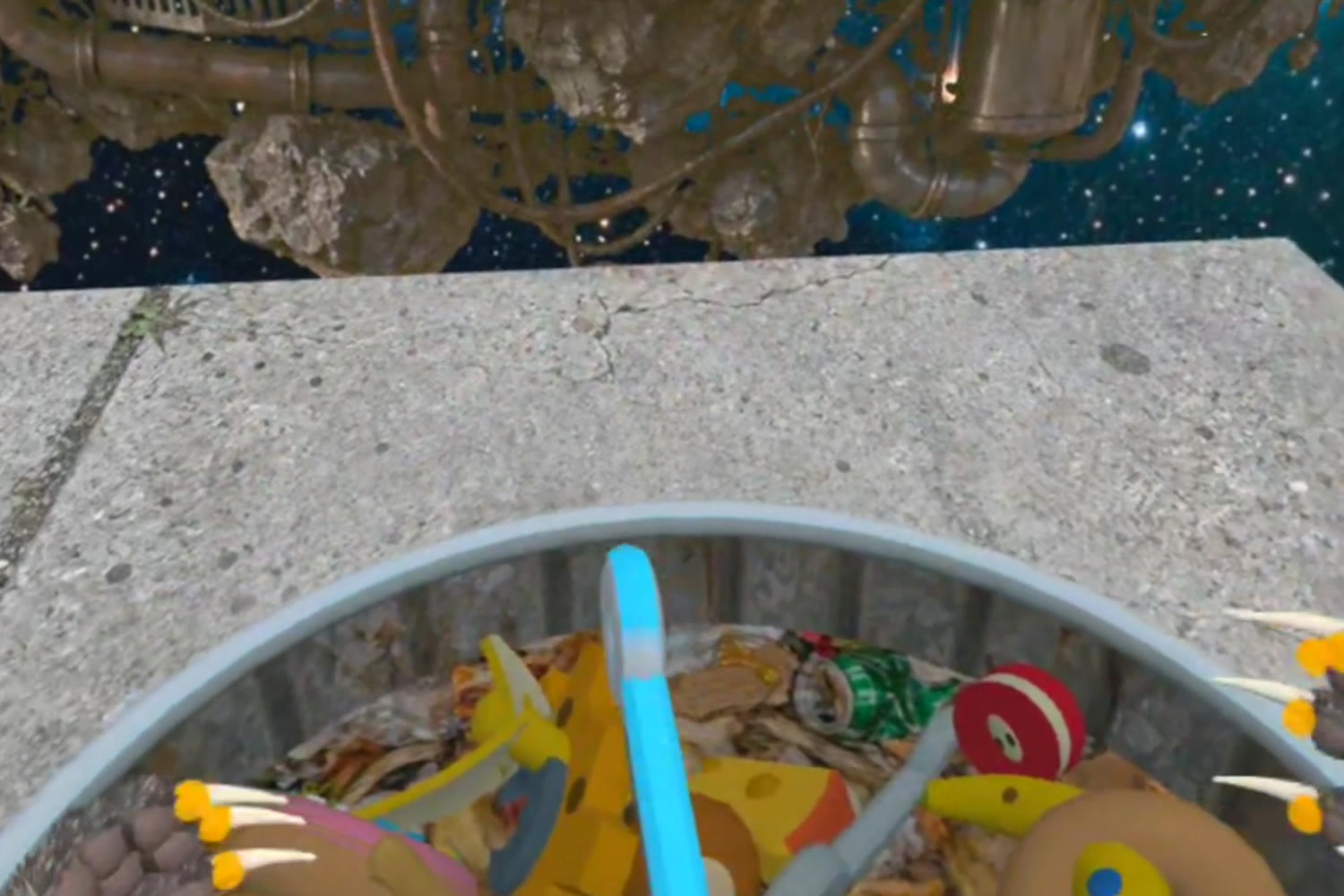
You learn to feel when it is already too late. The paws are physical: you pick a thing up carefully, hold it, turn it without it slipping, without gripping it at an angle your wrist cannot follow. If you are not done before the wall reaches the bin, you panic. You rotate, drop, punch and push it through the hole, and sometimes that works and sometimes it fails badly, and it always feels like your own fault. The controls are chaotic but honest physics, and that is the point: you feel like a badger panicking as the lights come on in the house.
How I built it
Three headset tests on the first day, each one changing the physics, because the first versions grabbed like a tool and not like a paw. The paw model was built in Blender from the command line. Eight bins, each with its own painted place and its own music, and each one adds a rule: labelled sides, walls from the sides, gravity, upside-down gravity, walls from everywhere, chopsticks only. Jokers bend the rule of each bin. Night Shift, Endless and Practice modes. Hit the house with junk and the whole place glitches like a broken hologram. Come back the next night and a new honey is waiting on your paws. It is a WebXR page on three.js on GitHub Pages: nothing to install, no account, no data collected, no network calls after loading. The music is mine, made with Suno on a paid plan; the paintings were made with OpenAI image models; sound effects are CC0; three.js is MIT. The code was written by an AI coding agent at my direction: about two hundred messages and six hours for the first playable version.
Timeline
Idea on October 6. Playable the same night. Public and free on October 8 at 03:05, with a signed store build the same night. First players from Reddit and TikTok within the day (262 views in the first hour on r/virtualreality; TikTok clips at about 2,200 and 400 views).
What's next
A fresh gameplay video, a frame-time guarantee through the fullest bins, UI kept inside a narrow field of view, and the Meta Horizon Store listing (target December 2026).
What is new since September 24
Everything. The project did not exist before October 6, 2026.

Log in or sign up for Devpost to join the conversation.