Inspiration
Subtle changes in how a person moves, such as slower or less accurate responses, can be an early sign that something needs attention. In senior-living and long-term-care settings, these changes are easy to miss between check-ins. We wanted a gentle, enjoyable way to notice them early.
What it does
Residents play a short, friendly game on a PS5 controller, following on-screen prompts with one or both thumbsticks. StickDrift records response time, accuracy and left/right differences, and compares each resident only to their own baseline. When something shifts, the care team gets a plain-language review card with the actual numbers. It flags a change worth checking and never diagnoses.
How we built it
- Browser game that reads the controller through the Gamepad API
- FastAPI backend storing sessions in Tiger Data
- Rule-based baseline logic that raises review cards
- React care-team dashboard with residents, trends and live sessions
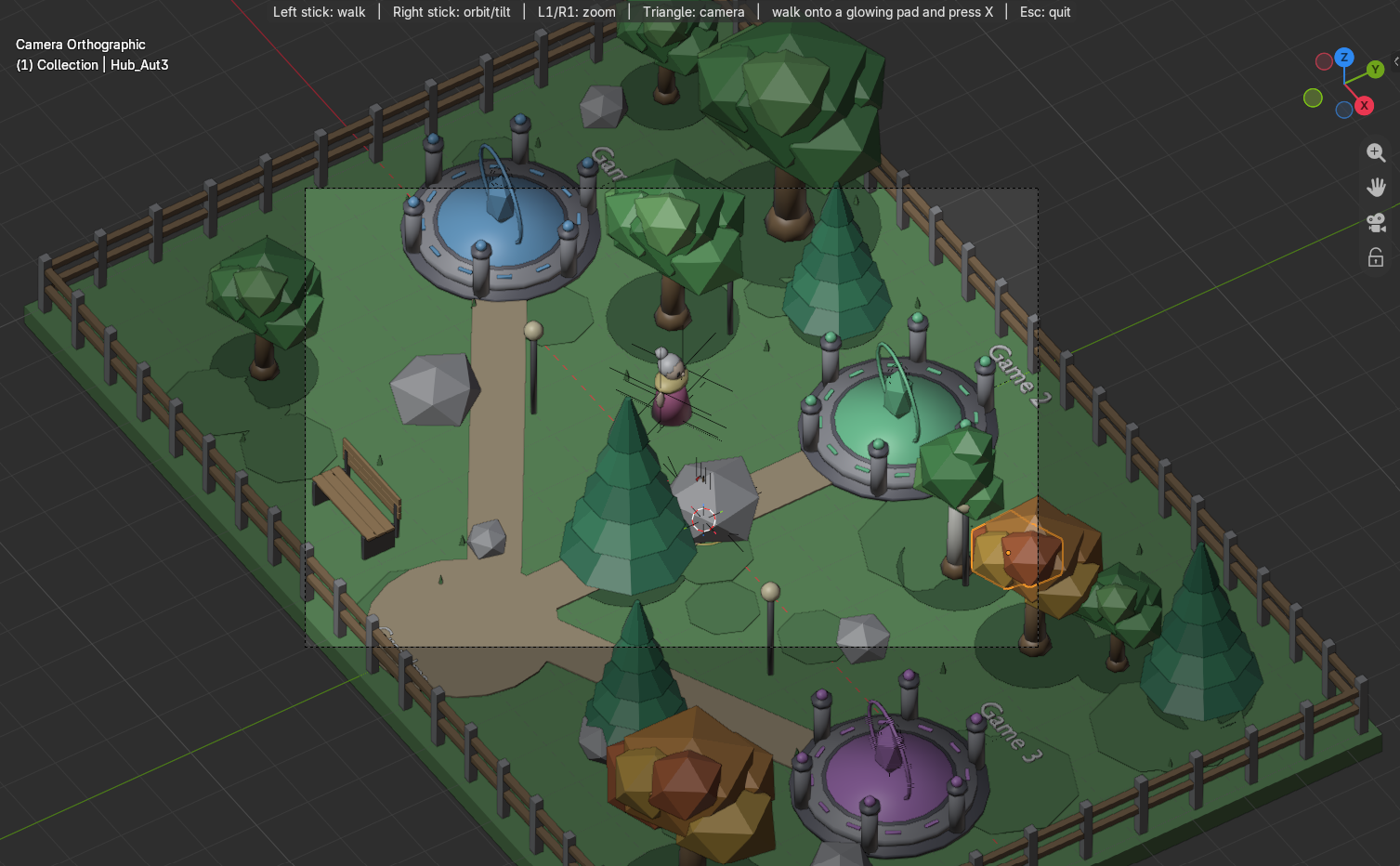
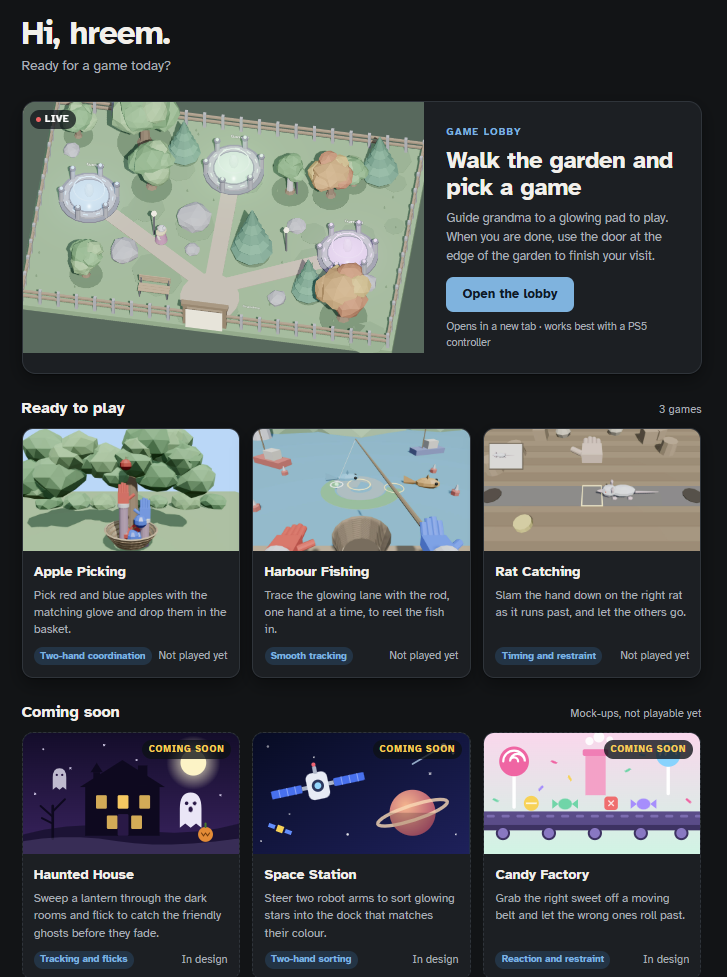
- 3D game hub as the lobby
Challenges we ran into
- Separating real change from controller noise and bad sessions
- Keeping timing consistent across browsers and displays
- Making the game feel welcoming rather than clinical
Accomplishments that we're proud of
- A complete path from controller input to care-team dashboard
- Personal baselines instead of population norms
- Careful wording that avoids medical claims
What we learned
Good data quality matters more than clever models. Design for older adults has to put clarity and comfort first.
What's next for StickDrift
- Real-world trials with care teams
- Clinical validation of thresholds
- More games and controller support
- Integration with existing care-team workflows

Log in or sign up for Devpost to join the conversation.