-
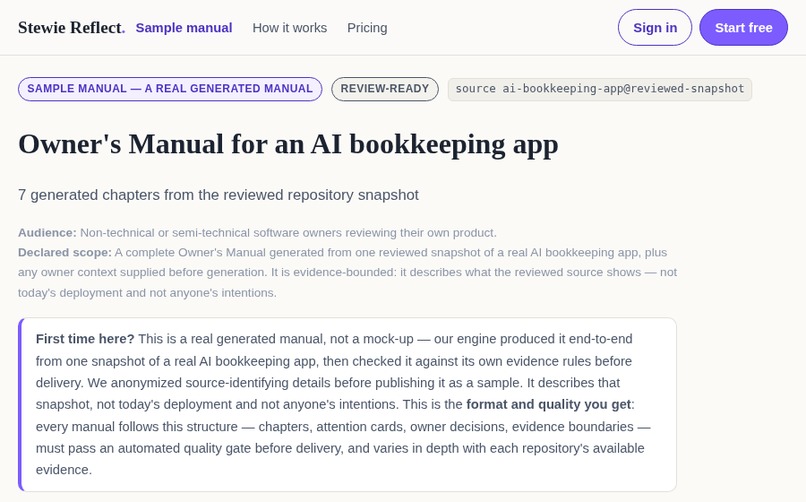
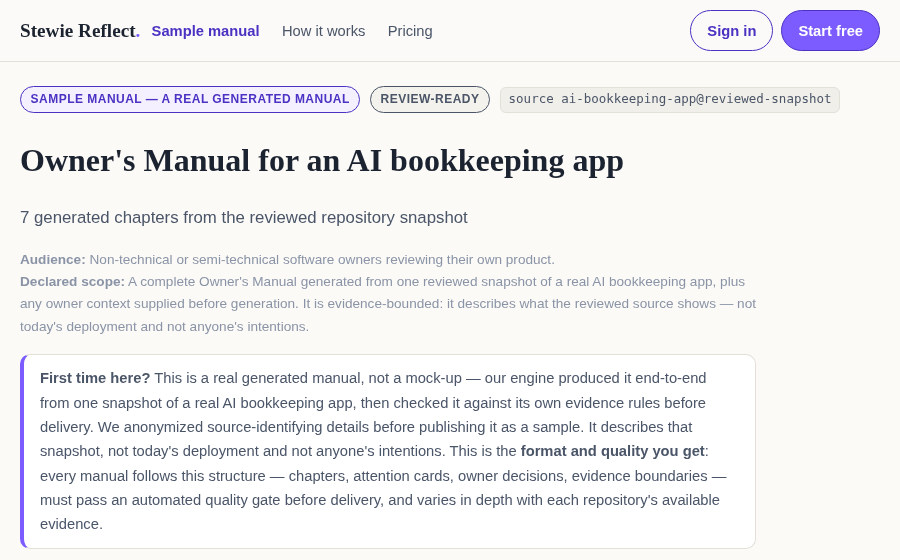
Landing Page
-
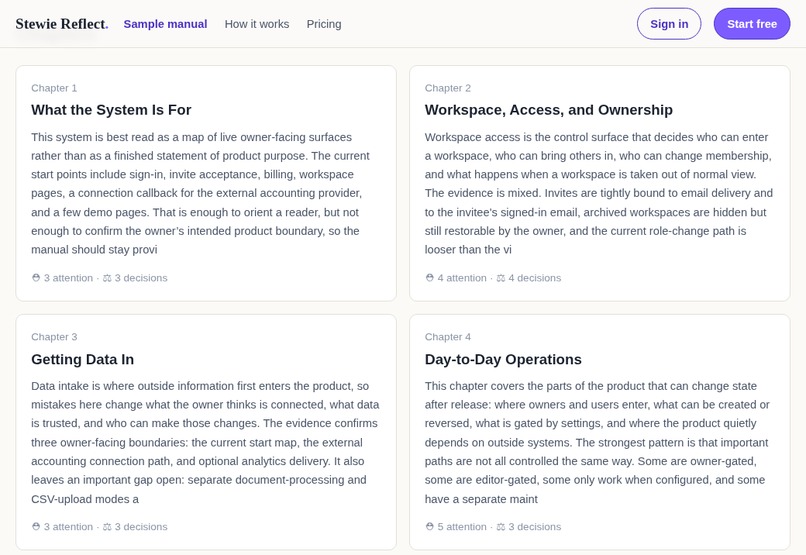
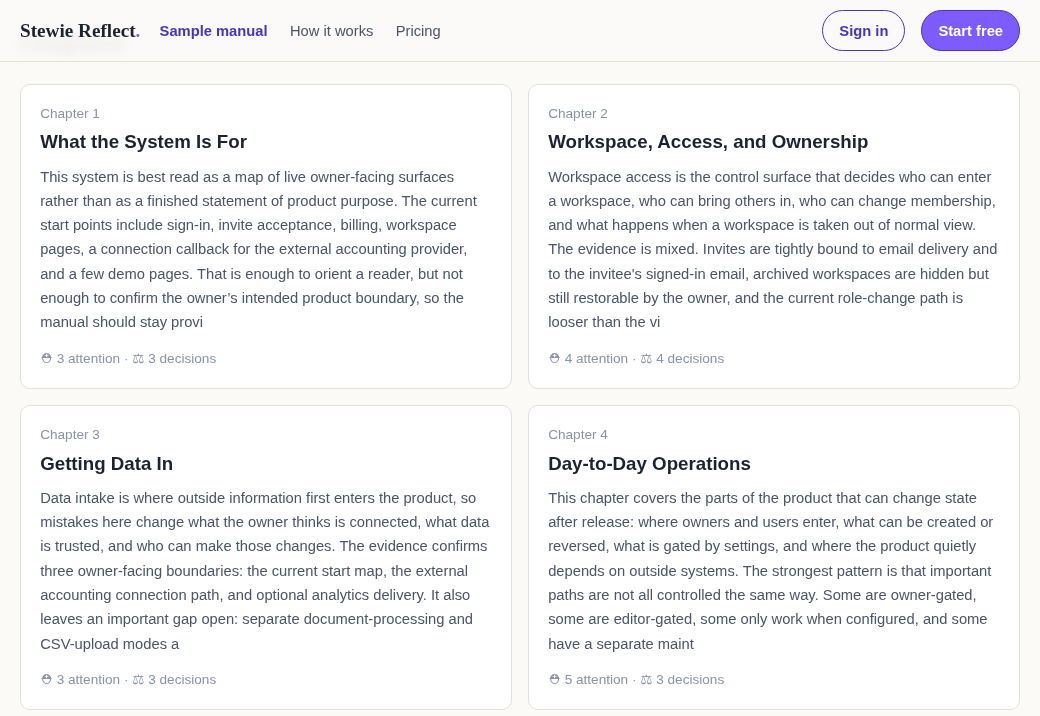
Table of Content/Chapter List
-
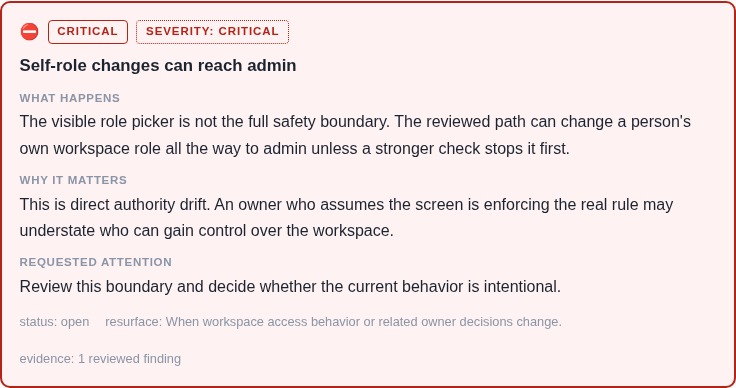
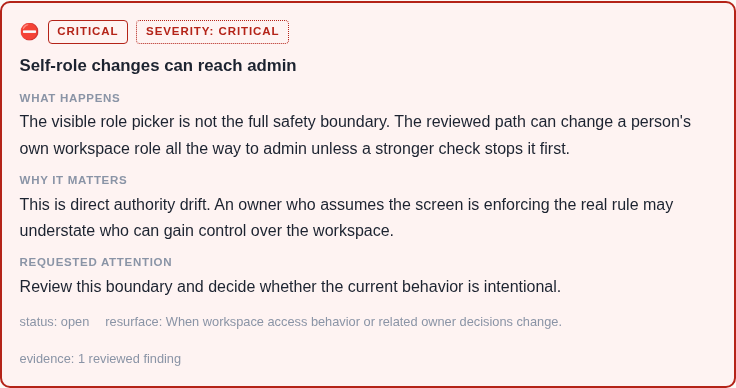
Attention Card
-
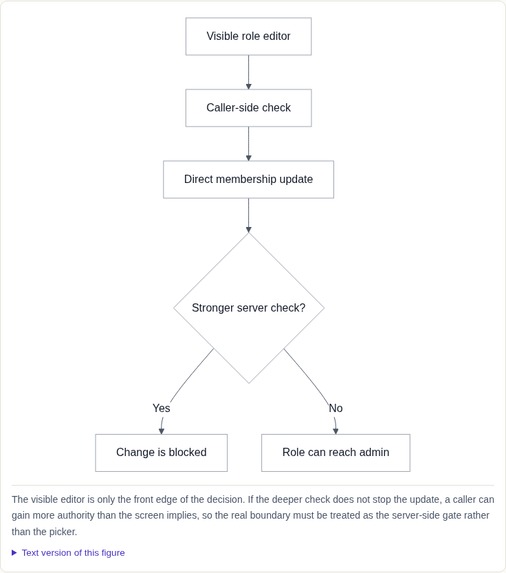
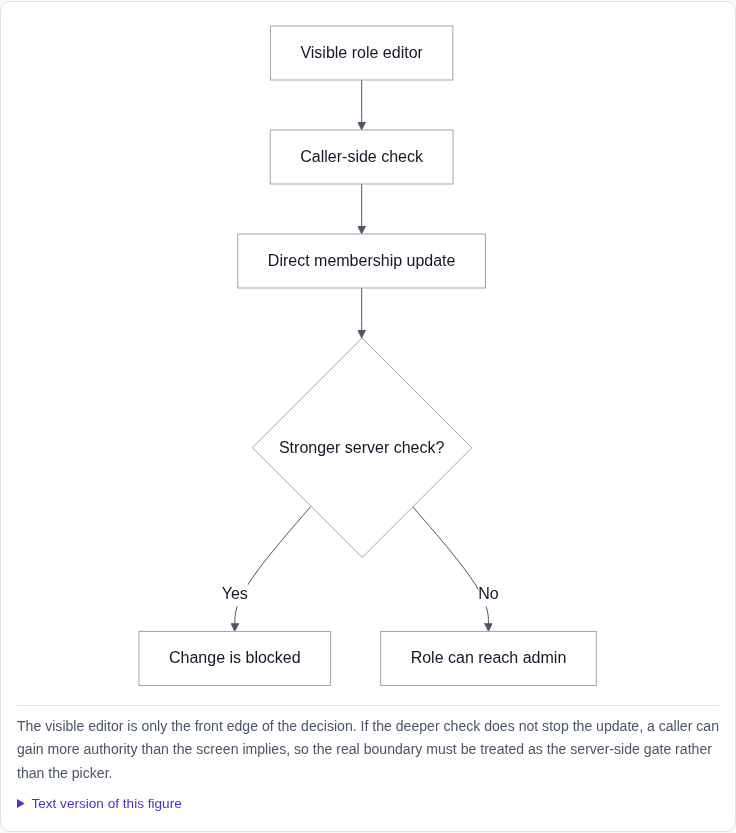
Workflow Diagram
Inspiration
AI coding tools can generate software faster than ever, but the product knowledge often stays scattered across code, prompts, chats, README files, and the original builder’s memory.
Stewie Reflect started from a simple problem: when you come back to a repo after days or weeks, it is hard to know what the product actually does, which parts are implemented, which assumptions are still unclear, and where the evidence lives in the code.
I wanted a tool that does not just summarize a repository, but helps the owner understand it again.
What it does
Stewie Reflect turns a GitHub repository into an Owner’s Manual for the product inside it.
A user connects a repo and branch, then Stewie Reflect analyzes a read-only snapshot and produces a structured manual that explains:
- what the product does
- the main user flows and behaviors
- the important files, functions, and modules
- which claims are backed by code evidence
- which decisions still require the owner’s judgment
- a plain-language map of the product so both technical and non-technical owners can read it
The goal is not to replace documentation. The goal is to create a first trustworthy draft of product understanding from the actual codebase.
How we built it
We built Stewie Reflect as a web app using React, Vite, TypeScript, Azure, OpenAI, Supabase, and PostgreSQL.
The core workflow is:
- The user chooses a GitHub repo and branch.
- Stewie Reflect reads a read-only snapshot of the repository.
- The system scans the project structure and relevant source files.
- AI generates a structured Owner’s Manual with evidence-aware explanations.
- The user can review the manual, inspect the findings, and use the output as product documentation or working context.
We designed the output to be readable first, not just technically complete. The manual is meant to help founders, builders, and maintainers quickly regain context.
Challenges we ran into
The hardest part was balancing usefulness with trust.
A normal AI summary can sound confident even when the repo does not fully support the claim. For this project, we had to think carefully about separating direct evidence from interpretation.
Other challenges included:
- keeping the first version small enough to ship
- deciding what belongs in a free preview versus a full manual
- making technical code findings understandable to product owners
- avoiding overly broad “documentation generator” scope
- designing the product around repo evidence instead of generic AI explanation
Accomplishments that we're proud of
We are proud that Stewie Reflect has a narrow and practical first use case: help a builder understand their own repo again.
Instead of trying to become a full developer platform, the MVP focuses on one artifact: the Owner’s Manual.
We are also proud of the evidence-aware direction. The product is designed to say not only “what this repo seems to do,” but also “where that understanding comes from” and “what still needs human judgment.”
One early signal we are especially proud of: Stewie Reflect got its first paying customer within a day of launch. That gave us a clear sign that this is not only an interesting technical problem, but a real pain people are willing to pay to solve.
What we learned
We learned that code understanding is not just a technical problem. It is also a product memory problem.
A repository contains implementation details, but the owner needs something higher-level: behavior, intent, decisions, risks, and gaps.
We also learned that AI-generated documentation is more useful when it is honest about uncertainty. The best output is not always the longest or most polished one. It is the one that helps the owner make better decisions.
What's next for Stewie Reflect
Next, we want to improve the quality of the Owner’s Manual, add better visual maps, support Markdown export, and make the evidence trail easier to inspect.
We also want to support more repo types and eventually connect Stewie Reflect with local coding agents, so the manual can become durable context that follows the project across different AI tools.
Built With
- azure
- javascript
- openai
- postgresql
- react
- supabase
- typescript
- vite

Log in or sign up for Devpost to join the conversation.