-
-

Profile Image
-
demo 1
-
demo 4
-
demo 3
-
demo 2

Inspiration
Generative AI is transforming coding, but it often creates unhealthy dependencies. Even top students risk losing skills when AI gives full answers. This fuels the misconception that coding is obsolete, when in reality it remains a critical, empowering skill.
What it does
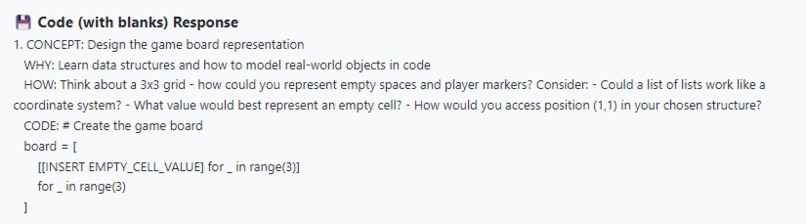
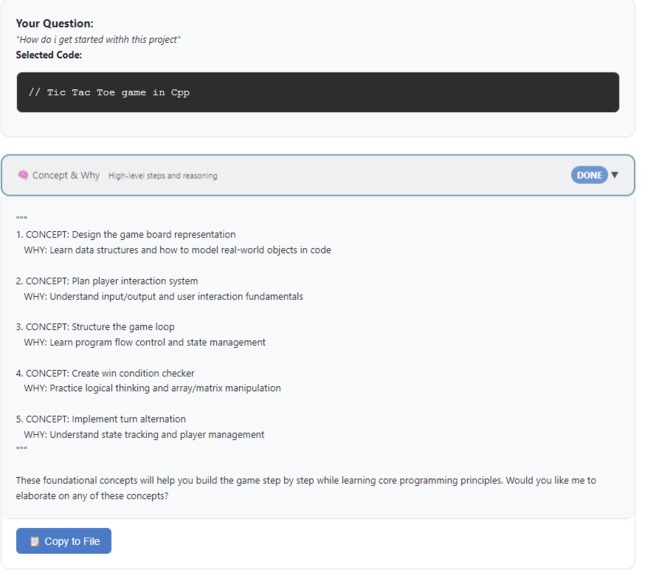
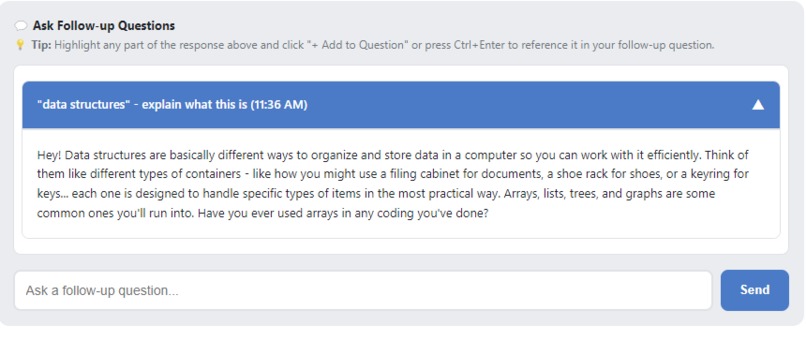
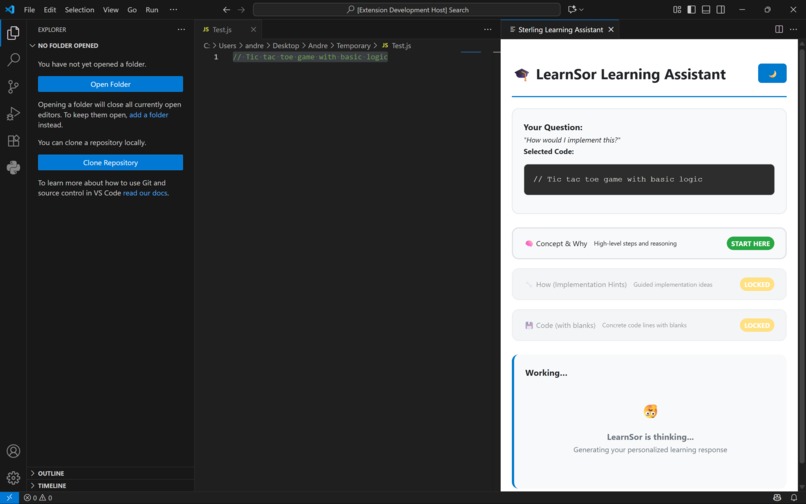
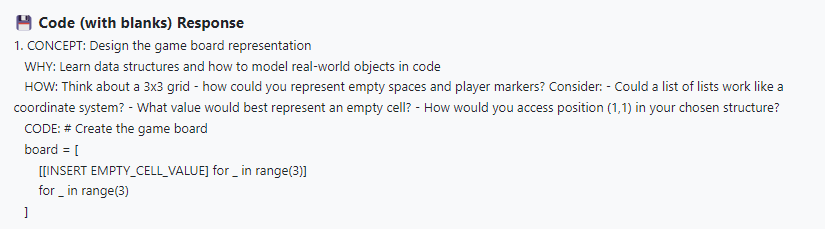
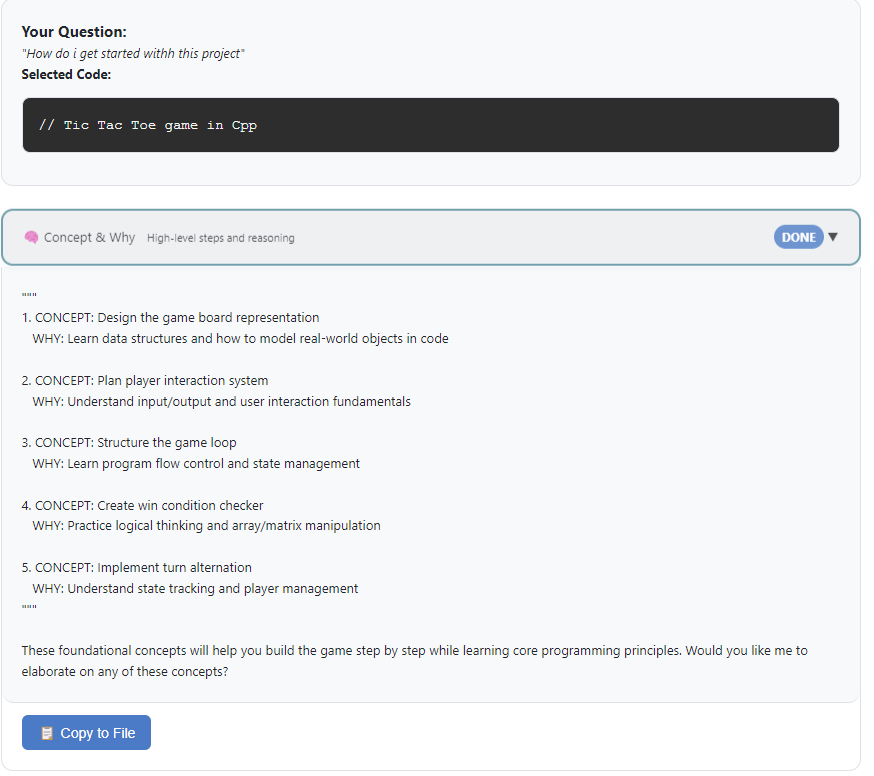
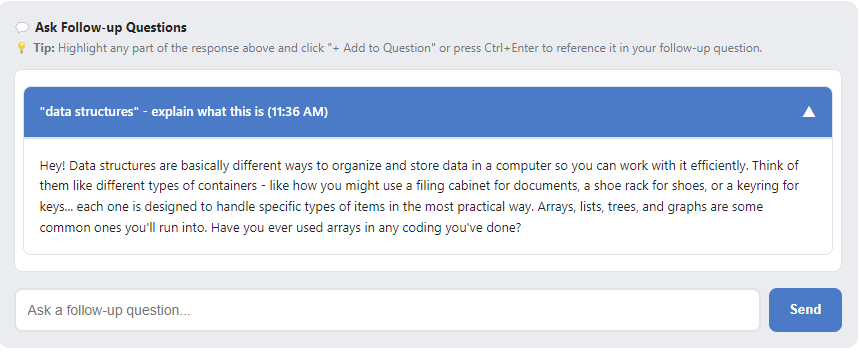
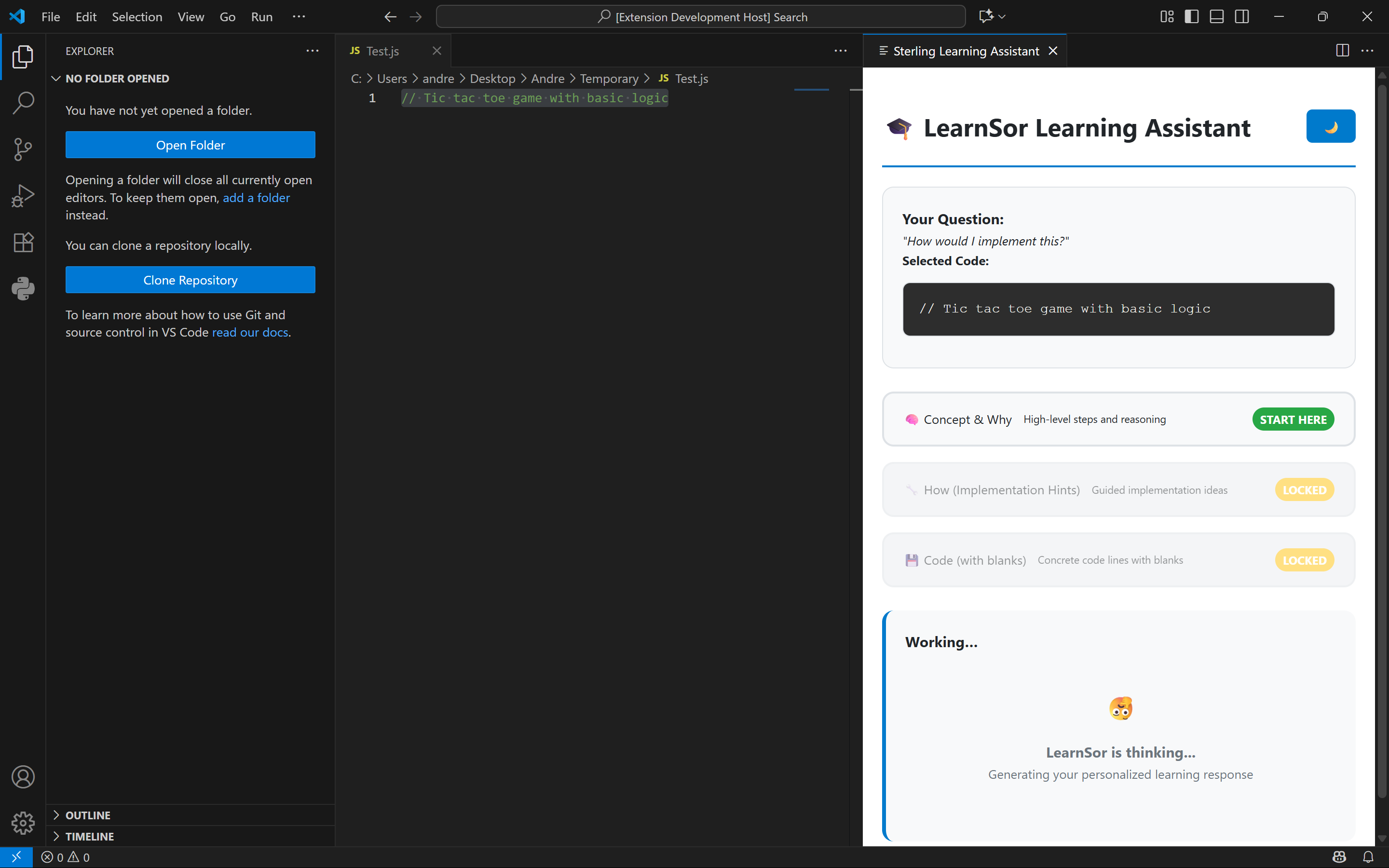
Our assistant teaches coding instead of replacing it. It starts with abstract hints, then breaks tasks into smaller steps, and only generates code as a last resort. This tiered approach keeps learners engaged in problem-solving while still offering support when needed.
How we built it
We designed a tiered hint system that progresses from high-level guidance, to step-by-step breakdowns, to fill-in-the-blank code snippets. The AI adapts to the programming language in use, summarizes project context, and safeguards accuracy with post-processing. We focused on having the AI have a high awareness of the user's context in order to generate the best response possible.
Challenges we ran into
We started without knowing Git very well so we had one member learn Git and he was able to help the rest of the team with Git during the project. We also had to carefully design prompts to minimize hallucinations and maintain language awareness. We mistakenly committed our .env file to GitHub, which exposed our API key in the repository’s history. This posed a security risk, so we rewrote the commit history to remove the sensitive data and added a .gitignore file to prevent the .env file from ever being tracked or uploaded again.
Accomplishments that we're proud of
We created a system that encourages learning, not shortcuts. The graded feedback mode, clean UI, and structured tiers of hints help beginners build confidence while supporting advanced coders to deepen their skills. We learned good industry practices like having a secret .env file, having a .gitignore file, making good commits, and working together with other people on a project concurrently.
What we learned
AI can either hinder or accelerate learning depending on how it’s used. Structuring it as a tutor, not a crutch, changes how people approach coding — shifting from passive code consumption to active problem-solving. We also learned to work with version control with Git and fix issues with people's codebases being out of sync.
What's next for LearnSor
We plan to expand language support, integrate with more popular editors like VS Code, and refine Grader Mode with automated test feedback as a Step 4. We also want to make changes to our tech stack. For example, we used JavaScript because it was easy to use, but I think TypeScript would be better suited for development if we move forward. We would also want to expand the generational AI to generate entire skeletons of projects to give them structured starting points. Overall, our long-term goal is to build a widely adopted AI-powered tutor that empowers the next generation of coders.
Built With
- anthropic
- claude
- css
- git
- html
- javascript
- python


Log in or sign up for Devpost to join the conversation.