-
-
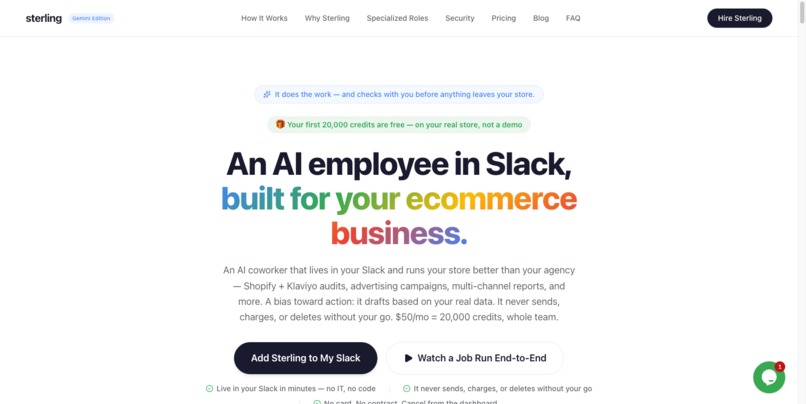
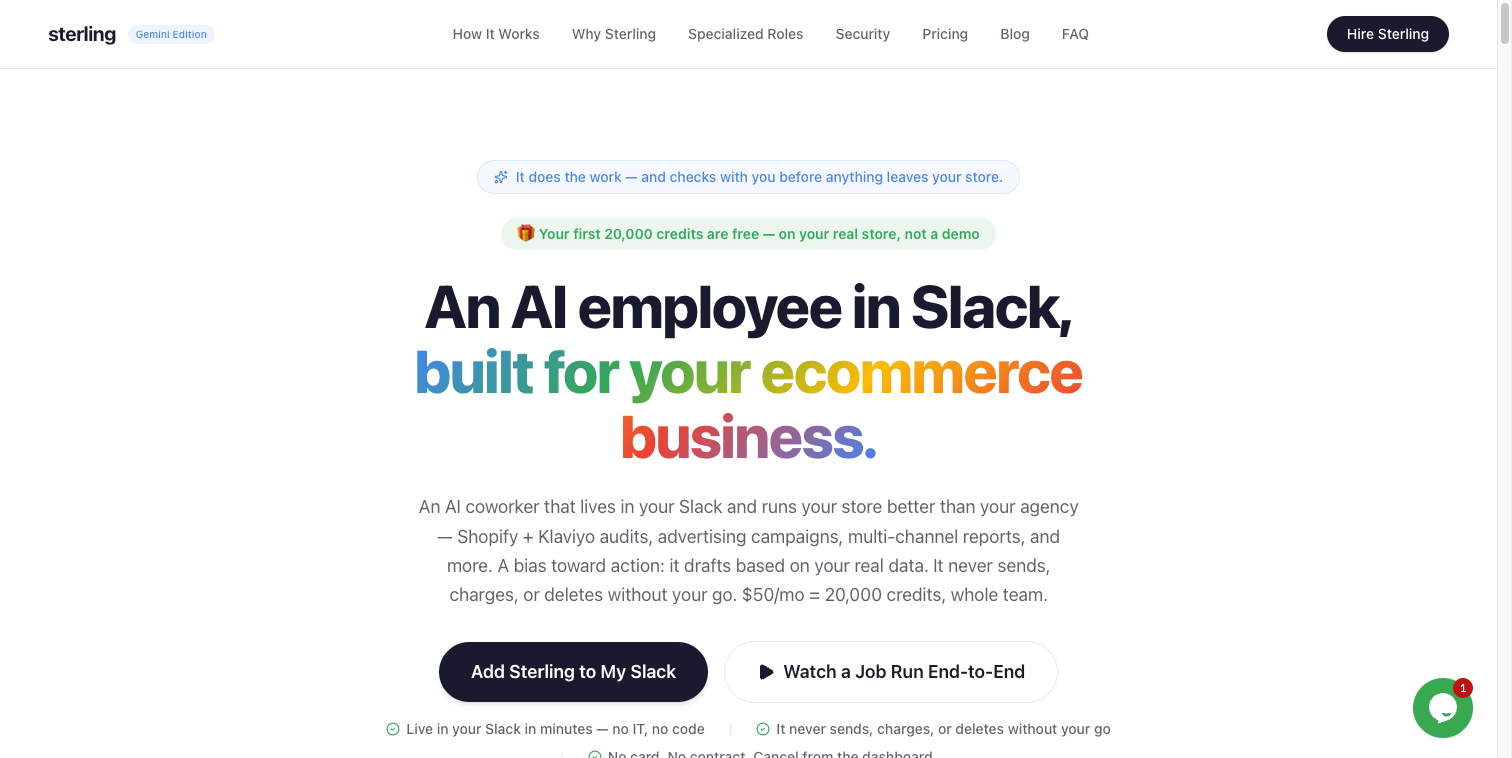
AI Employee built For Ecommerce
-
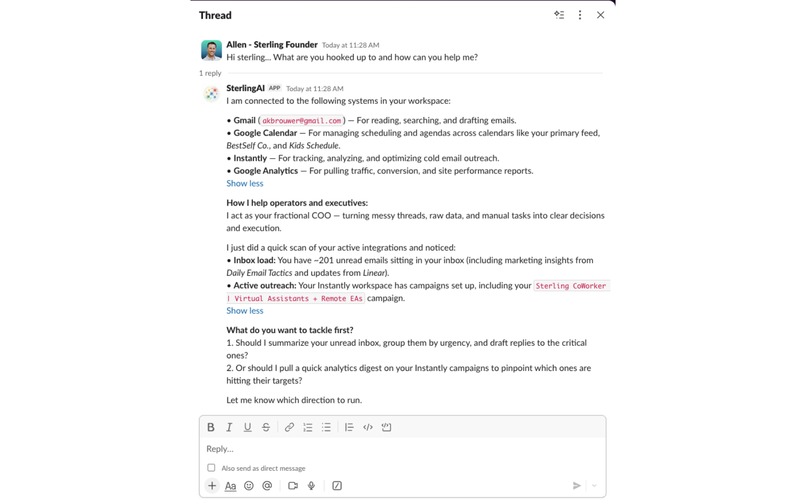
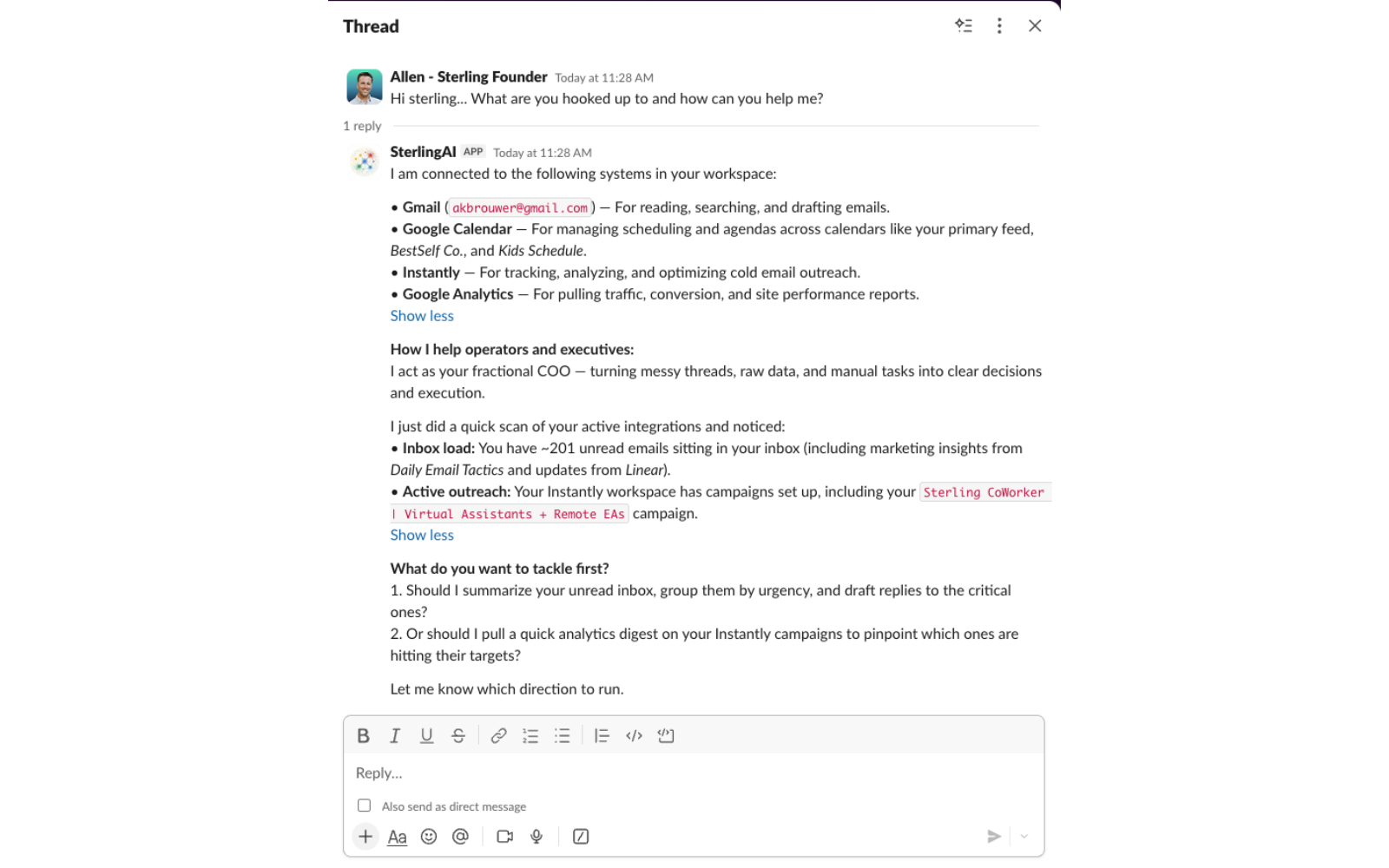
Communicating With Sterling CoWorker in Slack
-
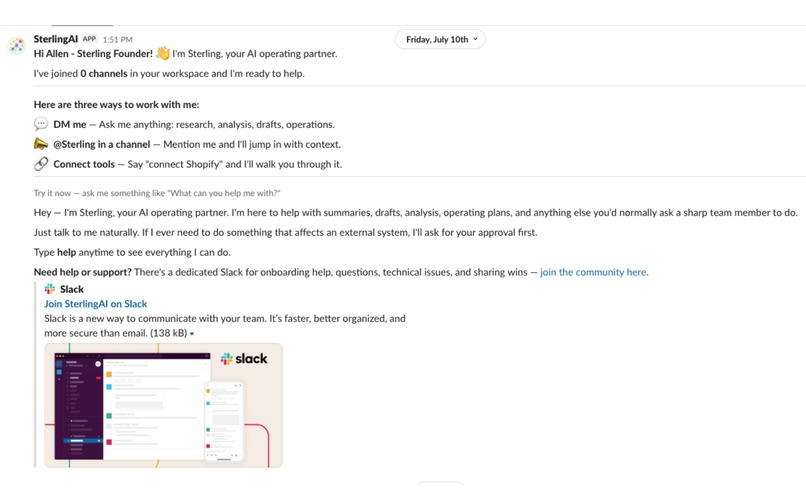
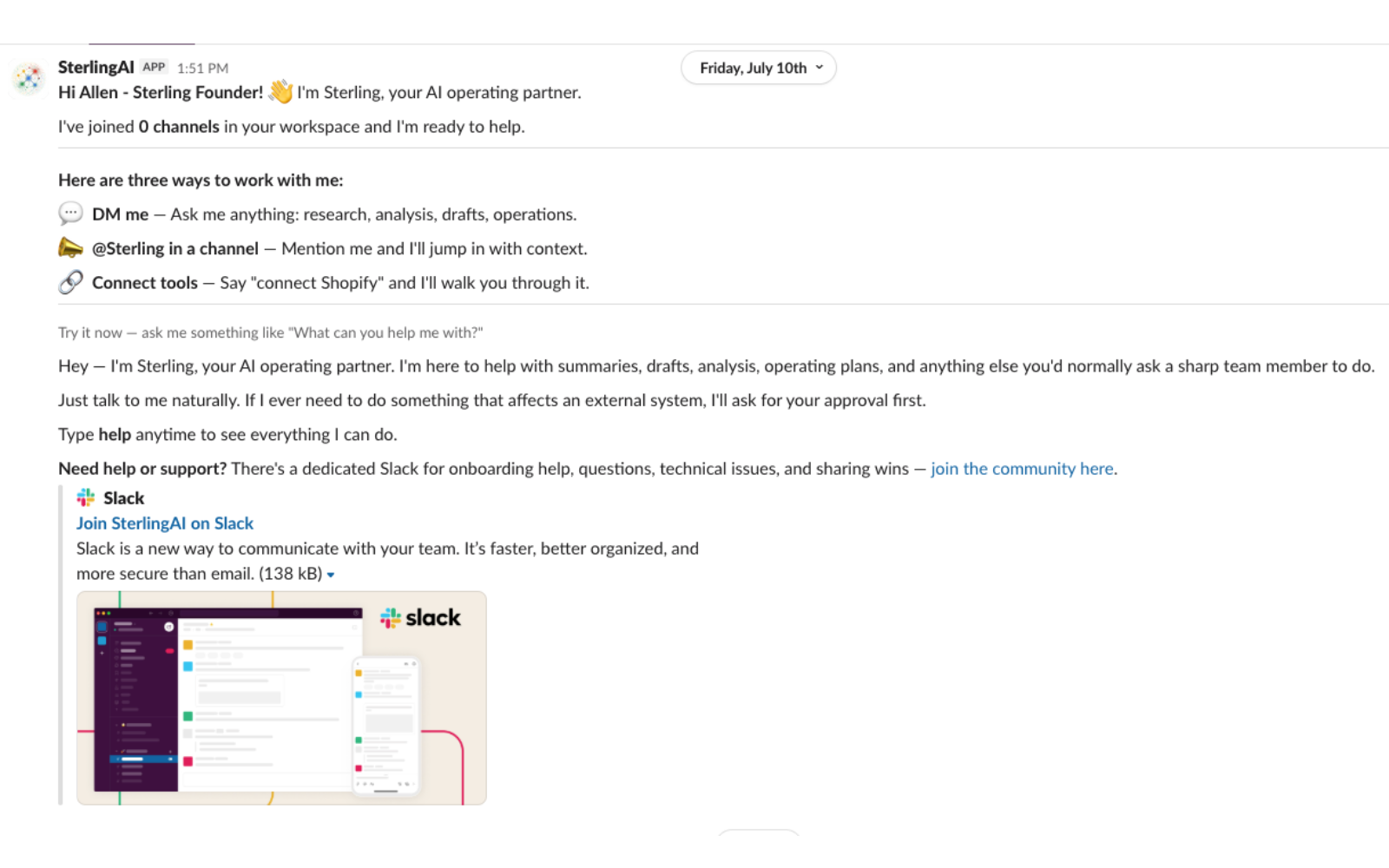
Sterling CoWorker - Opening Message
-
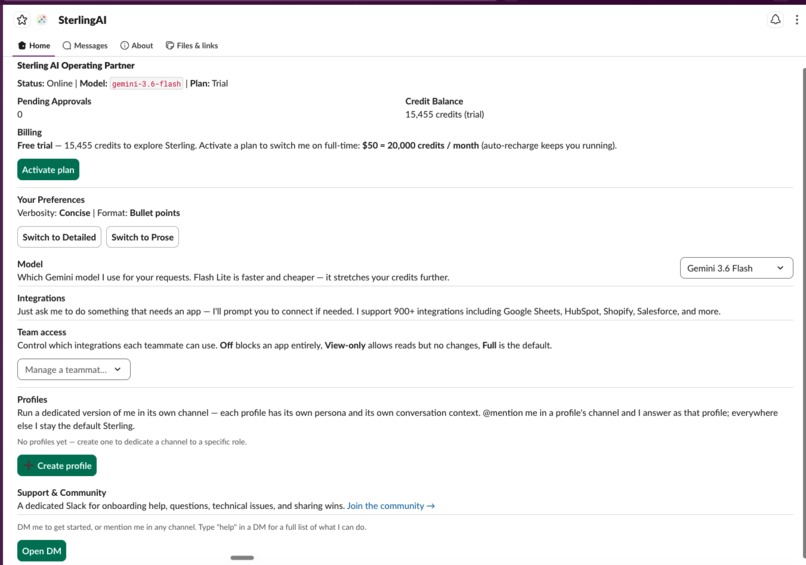
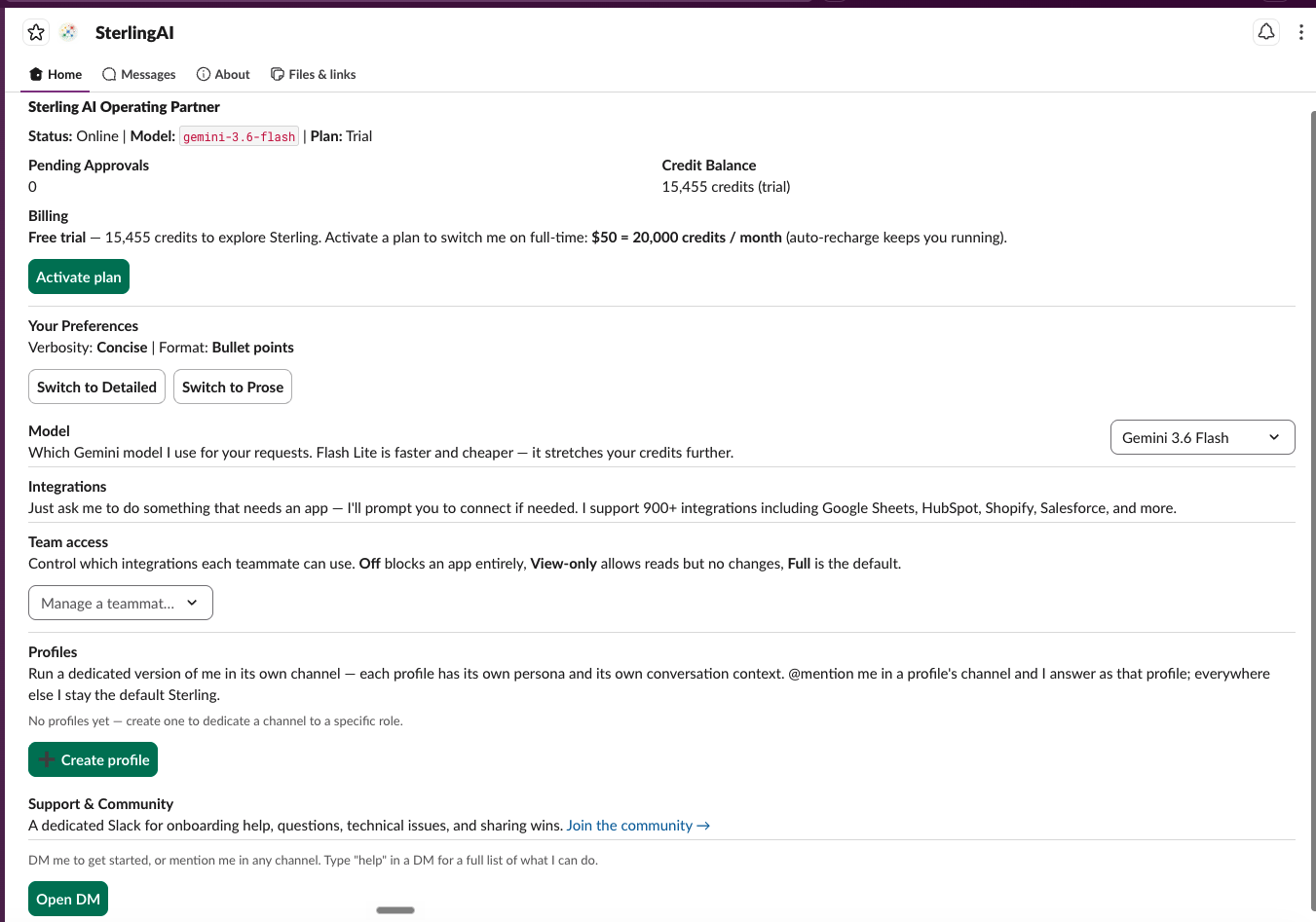
Sterling AI Gemini Powered Command Dashboard - Choose Model - Create Sub/Profiles -
-
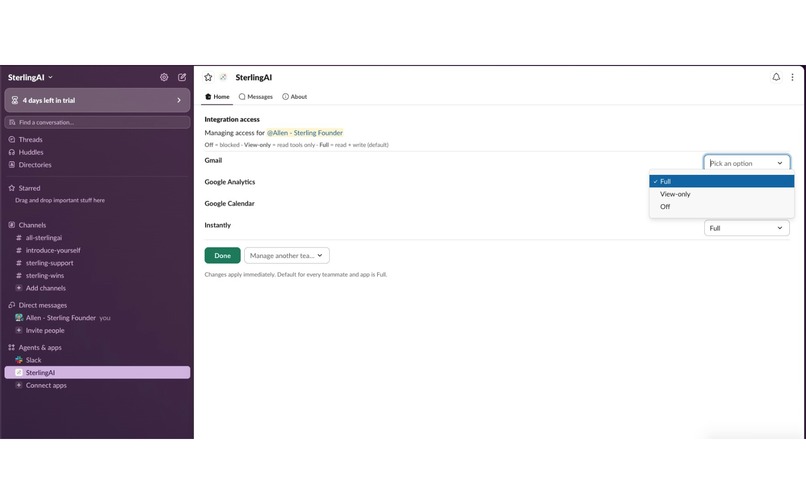
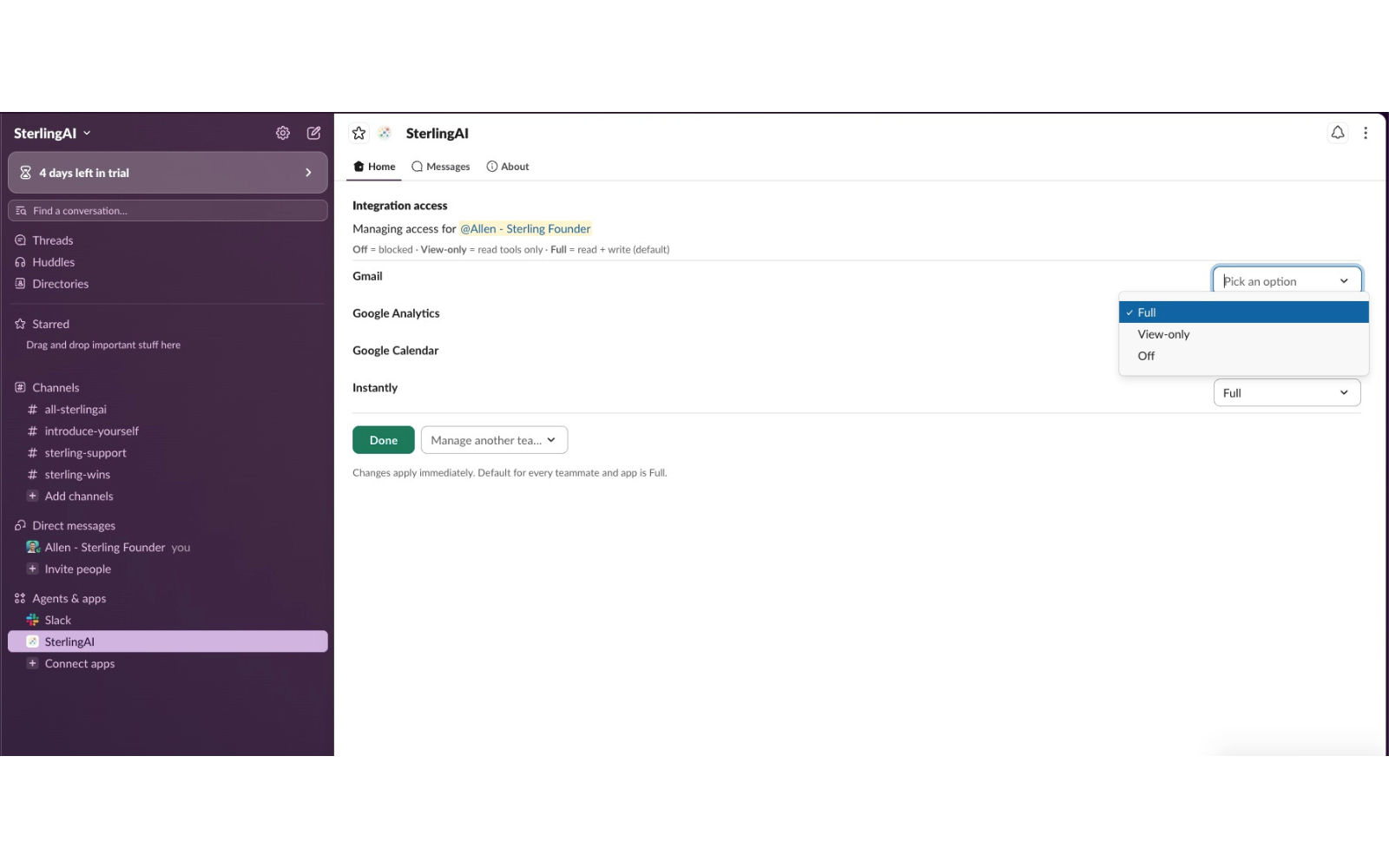
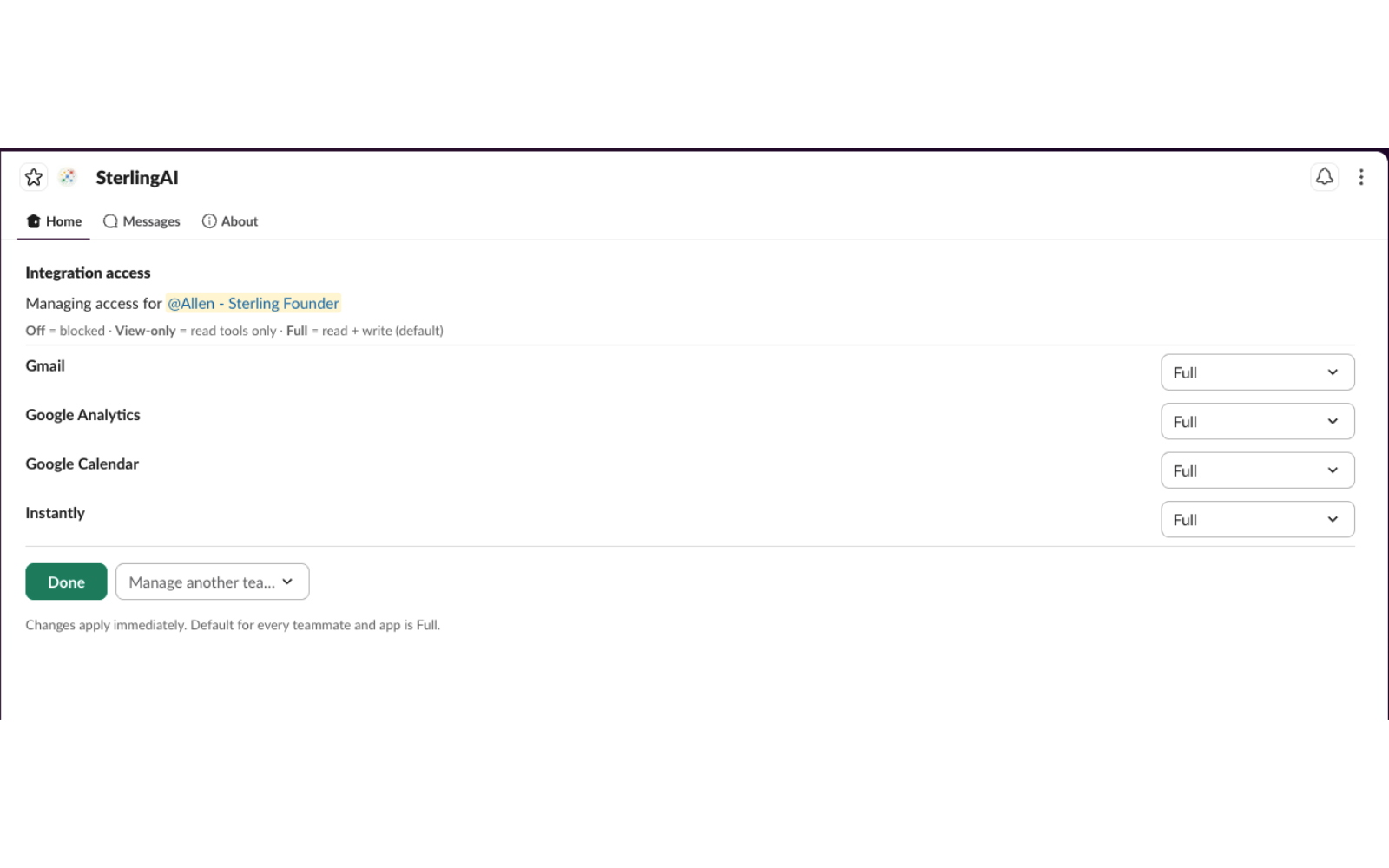
Give your team different access to different tools
-
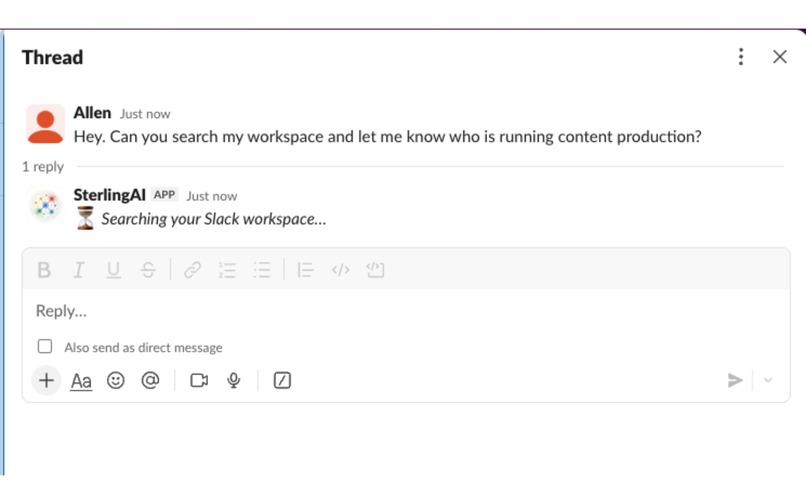
Sterling CoWorker - Gemini 3.6 thinking of the solution
-
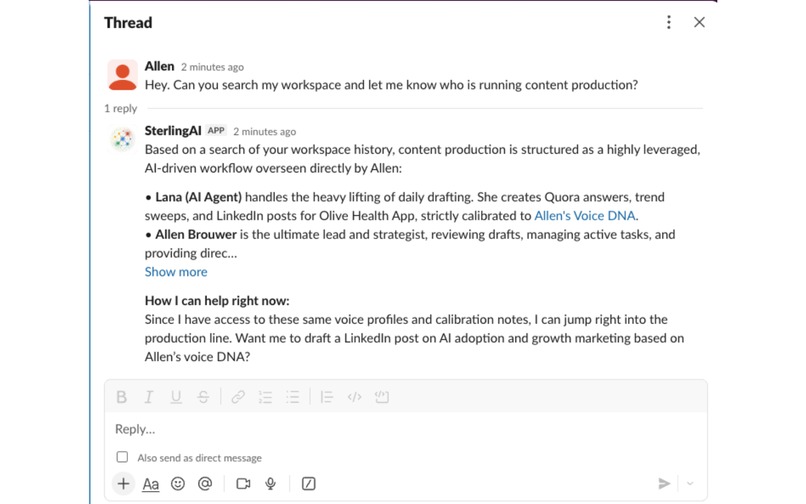
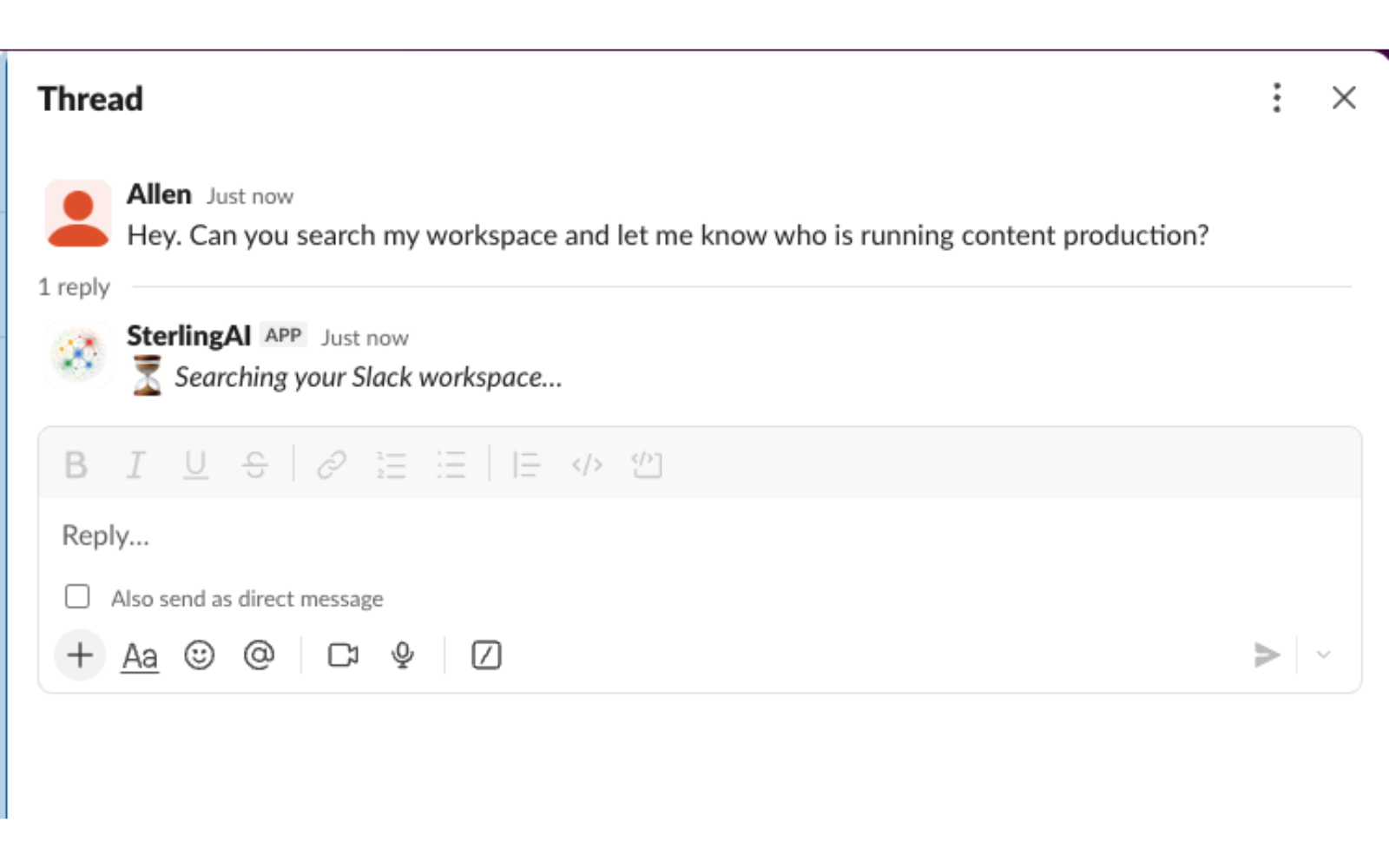
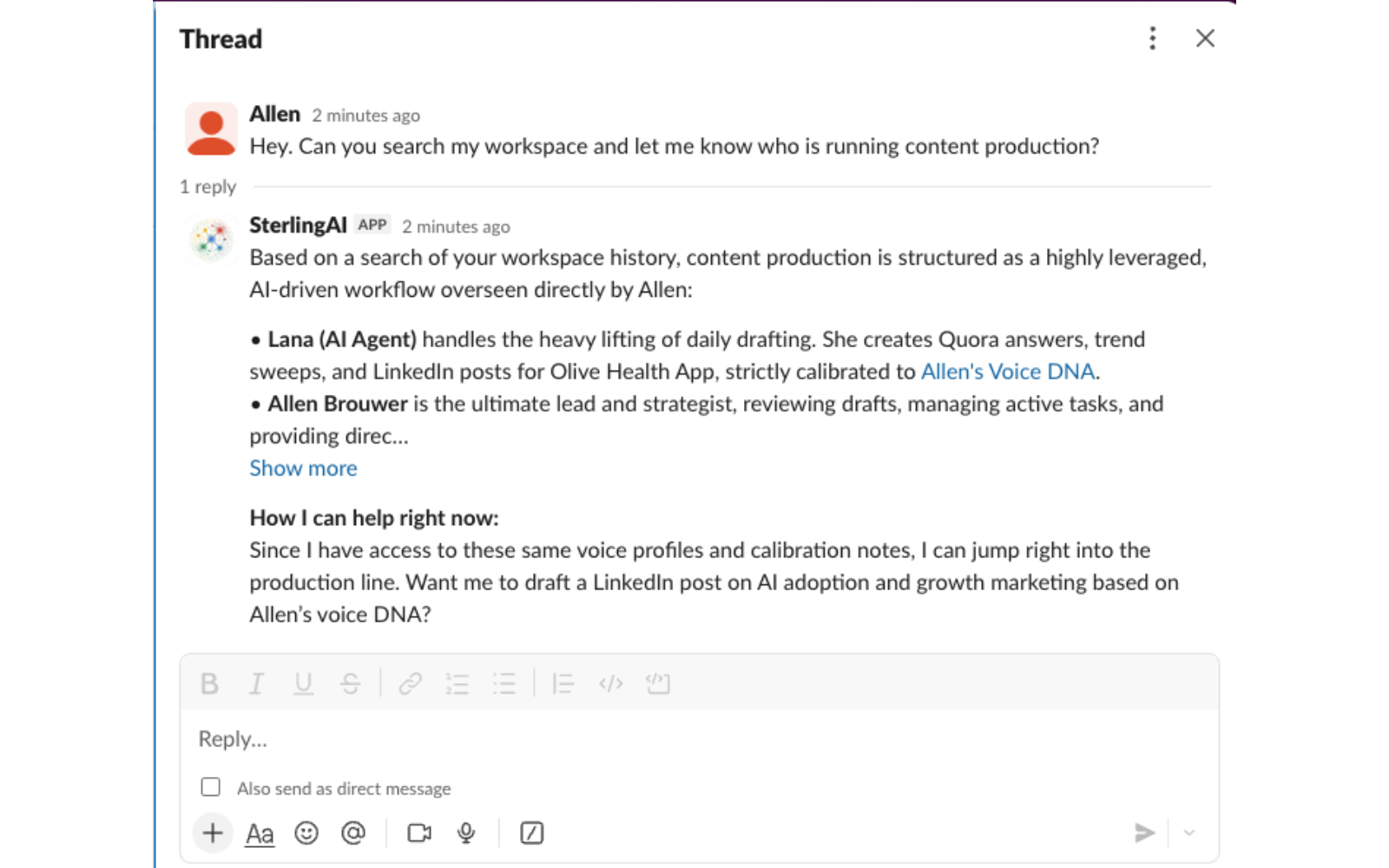
Gemini Powered internal Slack Search
-
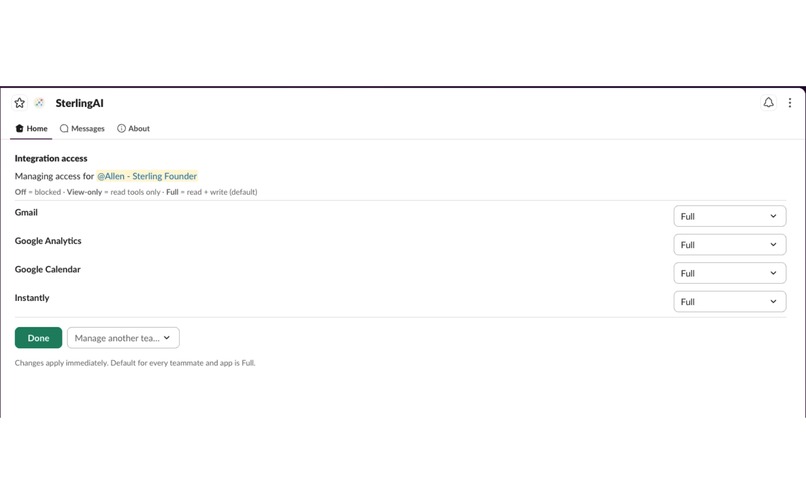
Sterling CoWorker
Inspiration
Sterling CoWorker began with a simple question: What if an ecommerce operator could run the business from one conversation instead of constantly switching between disconnected systems?
The first version was a reskinned Hermes interface connected to a Slack handler, with Gemini as the intelligence layer and a monthly recurring revenue model.
As we built it, we realized the real problem was much larger than creating another chatbot. Ecommerce operators have plenty of dashboards; what they lack is coordination. Their storefront, advertising, inventory, fulfillment, accounting, and customer-service systems each contain only part of the truth. The owner becomes the human integration layer.
A conversation with our friend Nathan Latka pushed us to reconsider the opportunity. We began asking what Sterling could become if it helped operate the business instead of only answering questions. That became the central pivot: Sterling evolved from a Slack-based Gemini assistant into an AI-native ERP built for ecommerce.
What it does
Sterling CoWorker brings signals from across an ecommerce business into one operating system. It uses Gemini to interpret those signals, coordinate specialized agents, and prepare recommended actions for the operator.
Sterling is designed to work across areas including:
- Storefronts and marketplaces
- Advertising performance
- Inventory and replenishment
- Orders and fulfillment
- Accounting and cash flow
- Customer experience
Sterling turns fragmented information into structured operating briefs, recommendations, and proposed actions.
Gemini provides the reasoning while Sterling supplies the operational controls. High-impact actions are presented for human review and approval. Exact-account permissions, durable records, audit trails, and authoritative read-back prevent a recommendation from silently becoming an irreversible action.
How we built it
We built the isolated Gemini version of Sterling using:
- Gemini API and the Google Gen AI SDK for reasoning, synthesis, and agent coordination
- Google Cloud Run for independently deployable services
- Firestore for durable operational state
- Cloud Tasks for asynchronous and retryable workflows
- Secret Manager for protected credentials
- Stripe for subscriptions and commercial onboarding
- Slack as the original conversational interface
- A first-party web application for the expanding Business OS and ERP experience
One important architectural decision was separating reasoning from execution. Gemini can prepare a recommendation, but a deterministic control layer decides whether it is permitted. Sensitive actions can require human approval, and completed actions can be verified against the authoritative external system.
We used Codex to trace the architecture, convert requirements into implementation plans, create and test integrations, debug failures, and preserve the isolation boundary between the protected hackathon project and the independently developed Gemini system.
You can watch the current Sterling CoWorker walkthrough to see the product journey in action.
Challenges we ran into
The hardest challenge was creating a system that could safely participate in real business operations.
Every platform has different identities, permissions, account structures, rate limits, and failure modes. Building a connector does not mean the correct merchant account has authorized it or that production actions should be enabled.
We also designed for Cloud Run's scale-to-zero environment. Approvals, tasks, checkpoints, and reconciliation records must survive restarts, retries, timeouts, and duplicate events.
Our direct-to-customer campaigns reached an audience efficiently, but attention did not automatically become adoption. The funnel, onboarding, offer, and attribution needed to become as deliberate as the product.
Accomplishments that we're proud of
We are proud that Sterling grew from a Slack experiment into an ecommerce operating system without abandoning the conversational experience that made the original concept useful.
We built an architecture where Gemini coordinates specialized agents while preserving human approval and deterministic execution boundaries, with product surfaces across commerce, advertising, inventory, fulfillment, finance, and customer experience.
We tested the market through a direct-to-customer campaign: 17 campaigns, 155 ad records, more than 30 image creatives, over 10 video files and edits, and two tracked AI UGC master videos.
Best Campaign produced $1.66 clicks and a 10% CTR
$$
$$
Our strongest visible creative generated 101,711 impressions at approximately a $1.99 CPM. The broader effort included $1,630 in eligible Meta spend and identified messages that earned attention efficiently.
Sterling currently has 13 public accounts. We are continuing to distinguish product interest from verified paid adoption as we improve onboarding and conversion measurement.
What we learned
The biggest lesson was that an AI-native ERP is not simply an ERP with a chat window.
For an AI system to become a dependable operational coworker, it needs:
- Context — a shared understanding of the business across systems.
- Authority boundaries — precise rules governing what it may recommend or execute.
- Durability — workflows that survive retries, restarts, and infrastructure changes.
- Accountability — approvals, audit records, and verification after actions occur.
We also learned that marketing reach and commercial validation are different things. Efficient CPMs showed that our creative could capture attention, but our outbound campaign—202 prospects, 572 step-level sends, one reply, and no attributed opportunities—showed that the funnel and offer still needed work.
Most importantly, we learned that ecommerce operators do not need generic AI. They need help producing business outcomes while remaining firmly in control.
What's next for Sterling CoWorker
Next, we are turning Sterling's technical foundation into a repeatable enterprise SaaS onboarding experience.
We are moving toward a $2,500 implementation and onboarding package, followed by a $299-per-month platform floor that can increase with operational scope, integrations, and usage.
We will continue expanding verified commerce integrations, improving the approval and audit experience, and making it easier for operators to move from insight to action. We are also rebuilding the acquisition funnel so that we can measure the complete journey from impression and click-through to account activation, implementation, and paid retention.
Sterling began as a Hermes reskin with a Slack handler and a Gemini brain. The goal now is much bigger: build the dependable AI operating system that ecommerce businesses can use to coordinate their entire company.
=============
Explain how your project uses AI to impact the world, specifically in the category you have chosen.
Sterling CoWorker gives small and midsize ecommerce businesses operational capabilities that normally require a larger team and an expensive enterprise software stack. Gemini interprets signals across commerce, advertising, inventory, fulfillment, finance, and customer experience, then coordinates specialized agents to prepare operating briefs, recommendations, and next actions. This helps small businesses identify problems earlier, make better-informed decisions, and spend less time manually reconciling disconnected systems. Consequential actions remain governed by identity, permissions, human approval, audit records, and authoritative read-back.
How do you measure impact?
Our theory of change is that small businesses become more competitive when operators can convert fragmented information into timely, governed action. We measure immediate outputs such as connected operating areas, agent briefs produced, recommendations prepared, approval turnaround time, tasks completed, exceptions detected, and hours of manual reconciliation avoided. We measure business outcomes through account activation, weekly active operators, recommendation acceptance, time from signal to decision, inventory and fulfillment exceptions resolved, advertising efficiency, customer retention, paid conversion, monthly recurring revenue, and customer-reported time savings. During the hackathon we also measured market reach and funnel performance. The next validation step is proving repeatable activation, paid retention, and measurable operating improvement across customer accounts.
Explain the underlying business model of your submission.
Sterling is a B2B enterprise SaaS product for ecommerce operators. We acquire customers through founder-led sales, direct outreach, paid social, product demonstrations, partnerships, and referrals. The current commercial model is a $2,500 implementation and onboarding package that configures the customer's operating environment, followed by a $299-per-month platform floor that can expand with integrations, usage, account complexity, and value delivered. Sterling creates value by reducing manual cross-system work, surfacing risks and opportunities earlier, and preparing governed actions. Retention is driven by recurring operational use, connected business context, durable workflows, and measurable time and decision-quality improvements.
How will you sustain business operations in the future?
We will sustain operations by keeping the core platform lean, using Google Cloud's usage-based infrastructure, and aligning customer revenue with the cost of implementation and ongoing AI usage. Implementation fees fund onboarding and integration work, while recurring subscriptions support hosting, model usage, maintenance, and product development. Near-term resources will prioritize dependable integrations, onboarding, customer success, security, and acquisition measurement. Key risks include long enterprise sales cycles, provider authorization changes, model and cloud costs, and weak funnel conversion. We address these through phased integrations, human approval for consequential actions, usage controls, durable auditability, and disciplined tracking from acquisition through paid retention.
Which AI tools have you leveraged while working on this project?
We used the Gemini API through the Google Gen AI SDK as Sterling's production reasoning and agent-coordination layer. Gemini interprets operating context, synthesizes information across domains, produces typed recommendations and artifacts, and prepares proposed actions. We used Codex during development to trace the architecture, translate requirements into implementation plans, implement and test provider-neutral agents and adapters, debug failures, strengthen permission and approval boundaries, and document the isolated Gemini deployment. We also used AI-assisted creative tools for image, video, and UGC campaign production. Codex and the creative tools support development and marketing; Gemini is the core runtime intelligence in the product.
Explain how your business model shared above is sustainable and viable.
The model is designed so customer revenue scales ahead of variable delivery cost. The $2,500 implementation fee funds configuration and onboarding, while the $299 monthly floor covers recurring platform access and can expand with scope and usage. Google Cloud's usage-based infrastructure limits fixed operating overhead, and approval-gated automation lets Sterling create leverage without requiring a large services team for every task. During the hackathon we reached 13 public accounts and tested demand through meta campaigns - with CPC = $1.66 and 10% CTR in one of our North America Campaigns. This proves efficient message reach, but not yet repeatable paid conversion. The next viability milestone is converting activated accounts into paying implementations, proving retention, and demonstrating that subscription gross margin remains positive after Cloud and Gemini usage. here are the ads we used: https://drive.google.com/drive/folders/1xLj-S-zbLUl-jP_zGj8rcx3w6UDbyVBb?usp=drive_link
Please explain how your business operates with AI.
Sterling is designed as an AI-native operating system rather than a traditional dashboard with a chatbot added. Gemini receives structured business context, coordinates specialized operating roles, identifies exceptions and opportunities, and produces briefs, recommendations, drafts, and proposed actions. Humans define goals, authorize accounts, set permissions, and approve consequential external actions. Deterministic services enforce identity, account selection, policy, idempotency, and audit requirements. This division lets AI perform high-volume synthesis and preparation while preserving human authority over high-impact execution.
Please explain the extent to which AI is live in production and executes key decisions.
Gemini is live in Sterling's isolated deployed product as the reasoning layer for operating briefs, cross-functional analysis, prioritization, and preparation of next actions. It decides which evidence is relevant, which specialized operating roles should contribute, how signals should be synthesized, and what recommendation or artifact should be prepared. High-impact external writes are deliberately not autonomous: Sterling pauses for authorized human approval, then deterministic services enforce the correct identity, account, permissions, and read-back. Provider connectors that have not completed exact-account authorization are not represented as production-ready. This approach makes AI operationally useful without giving probabilistic output unchecked authority over customer systems.
Please explain which product from Google Cloud you used during the hackathon and how.
Sterling uses Google Cloud Run to host the request-driven application and independently deployable services. Firestore stores durable workspace state, thread and operating context, approvals, and audit records. Cloud Tasks handles deferred and retryable work that must survive scale-to-zero instances. Secret Manager protects service and integration credentials. Cloud Build supports containerized deployment. The product calls Gemini through the Google Gen AI SDK, with observability and billing evidence collected from the associated Google Cloud environment.
Explain which LLMs are used and specifically how the Gemini API is used.
Gemini is the core production LLM used by Sterling. The application calls the Gemini API through the Google Gen AI SDK to interpret ecommerce operating context, coordinate domain-specific agents, synthesize evidence, generate typed recommendations and operating artifacts, and prepare actions for human review. Gemini output is passed through deterministic application controls before any consequential execution. No other LLM is relied upon for Sterling's core production decision path. Codex was used as a development tool, not as the product's runtime model.
Pre-existing business resources
Other than the knowledge from the founders' pre-existing e-commerce history, this product is brand new.
Revenue by Month
**May: $0, June: $0, July: $0, August: $0
Total Expenses
**$1,630 verified Meta advertising + final COGS + other creative/vendor/software marketing costs + R&D + G&A.
Built With
- claude
- codex
- next.js

Log in or sign up for Devpost to join the conversation.