-
-
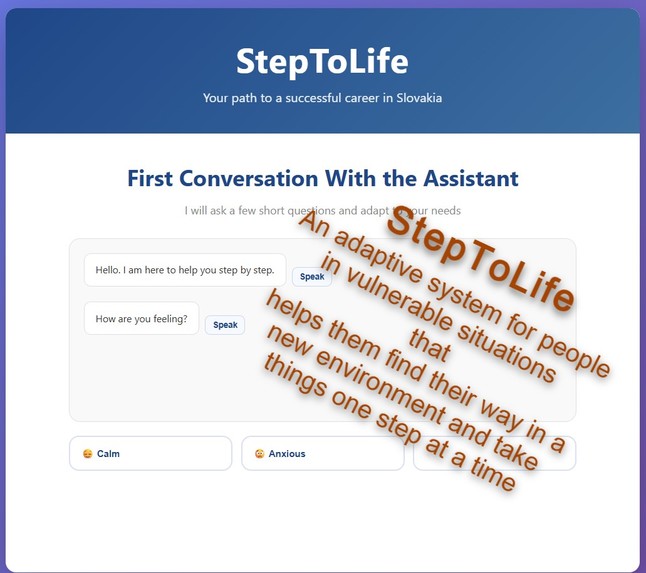
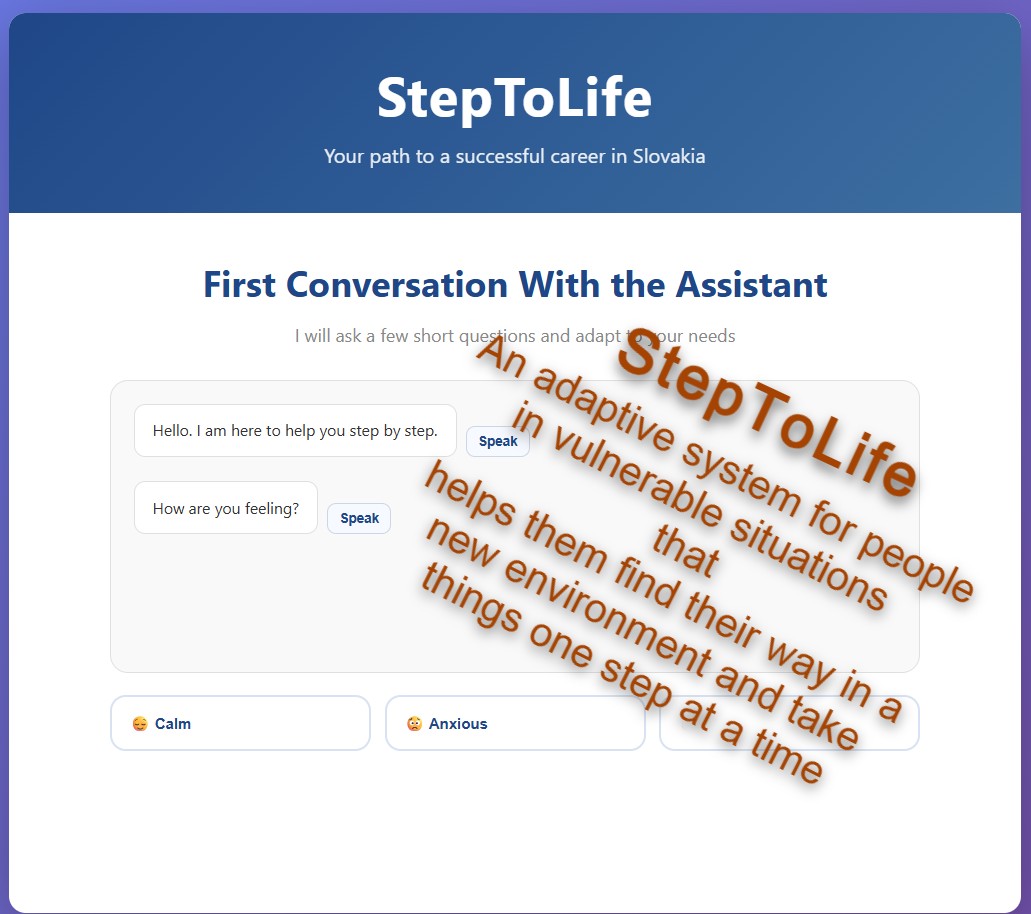
Welcome & Emotional Check-In
-
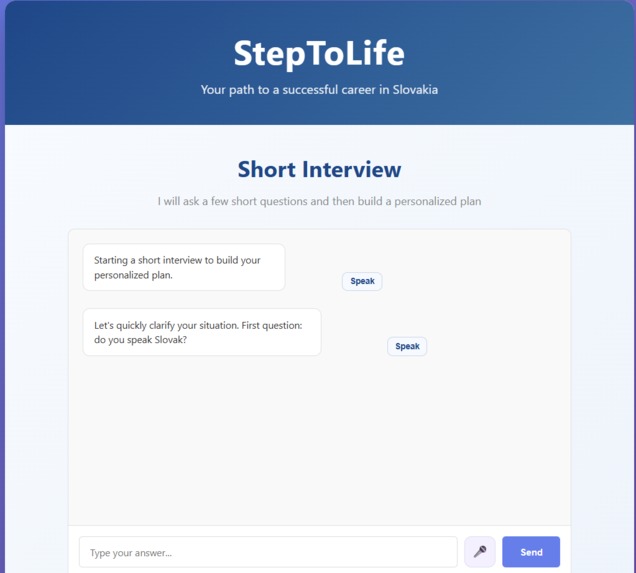
Real-Time Resume Support
-
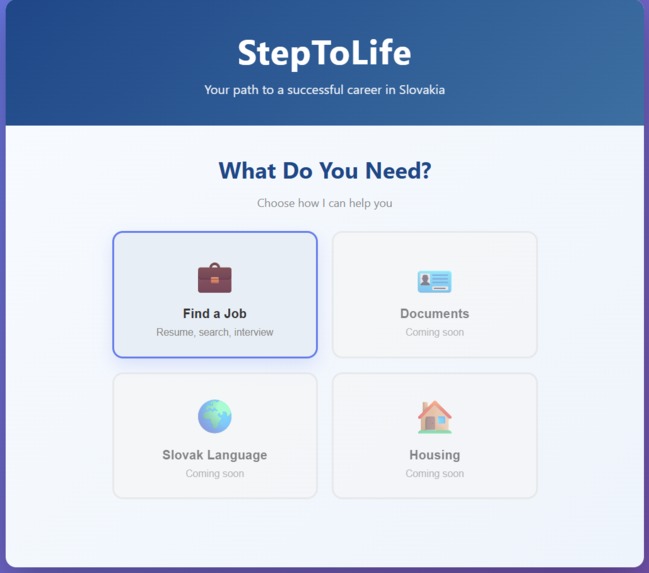
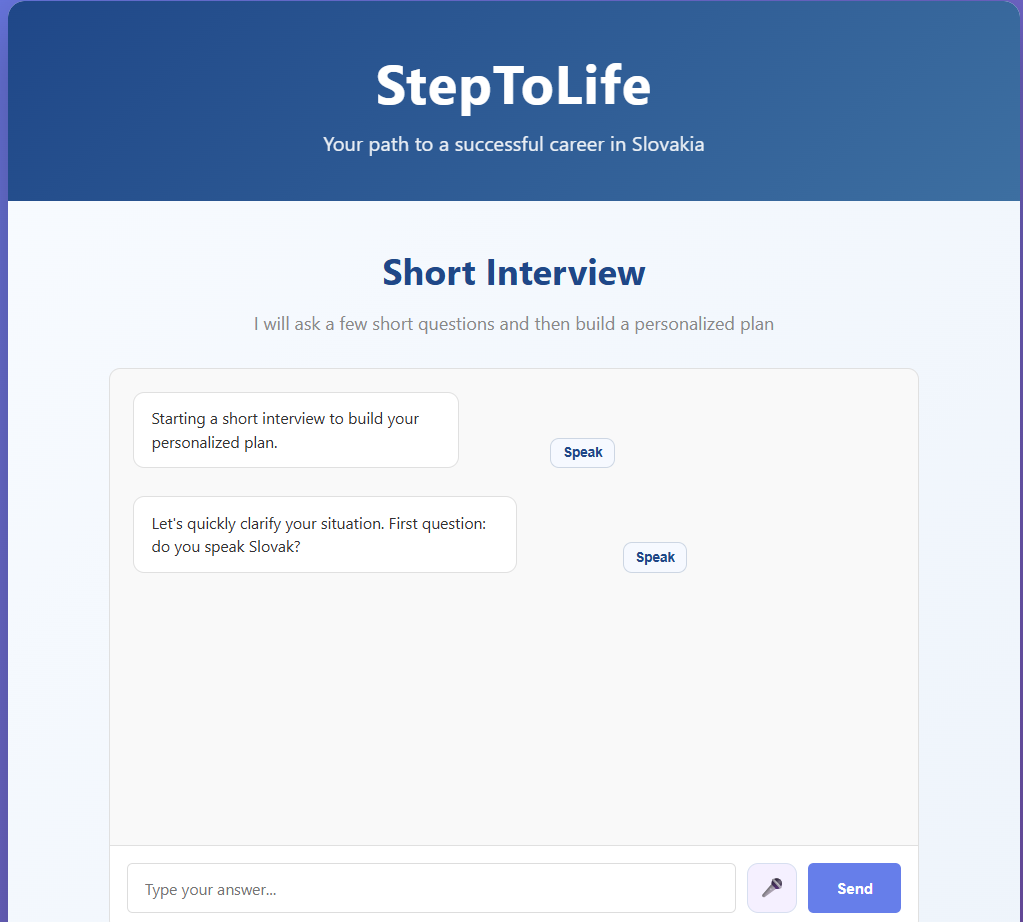
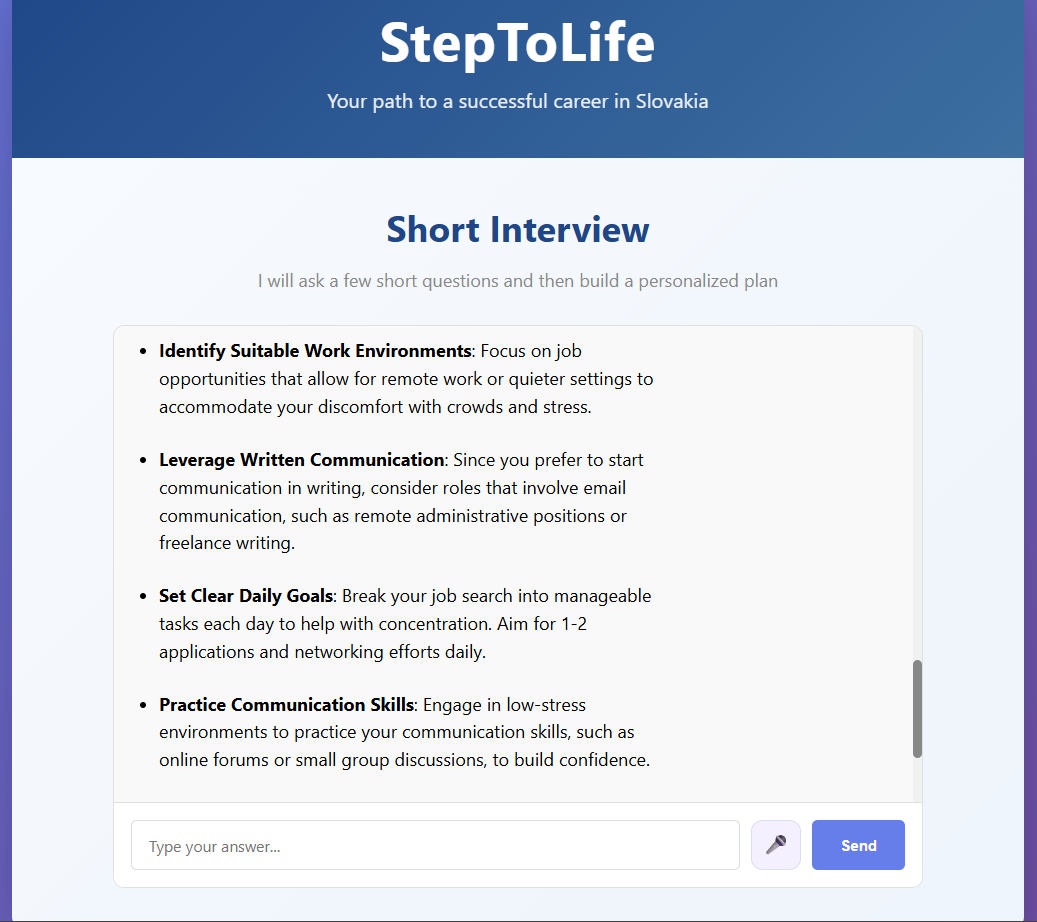
Personalized Route Creation
-
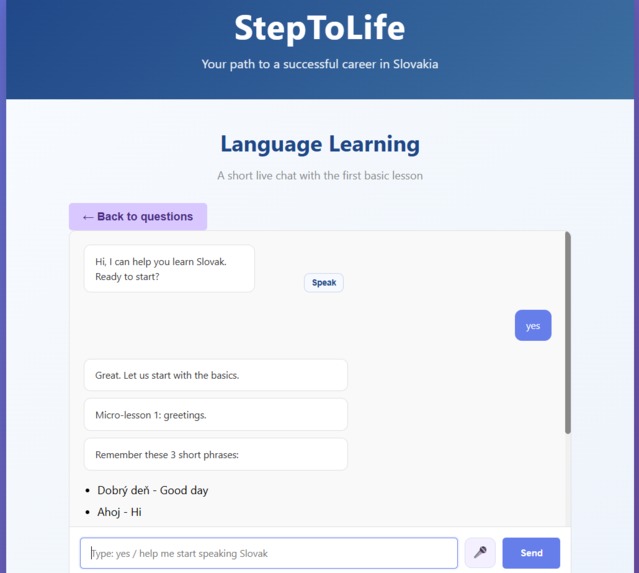
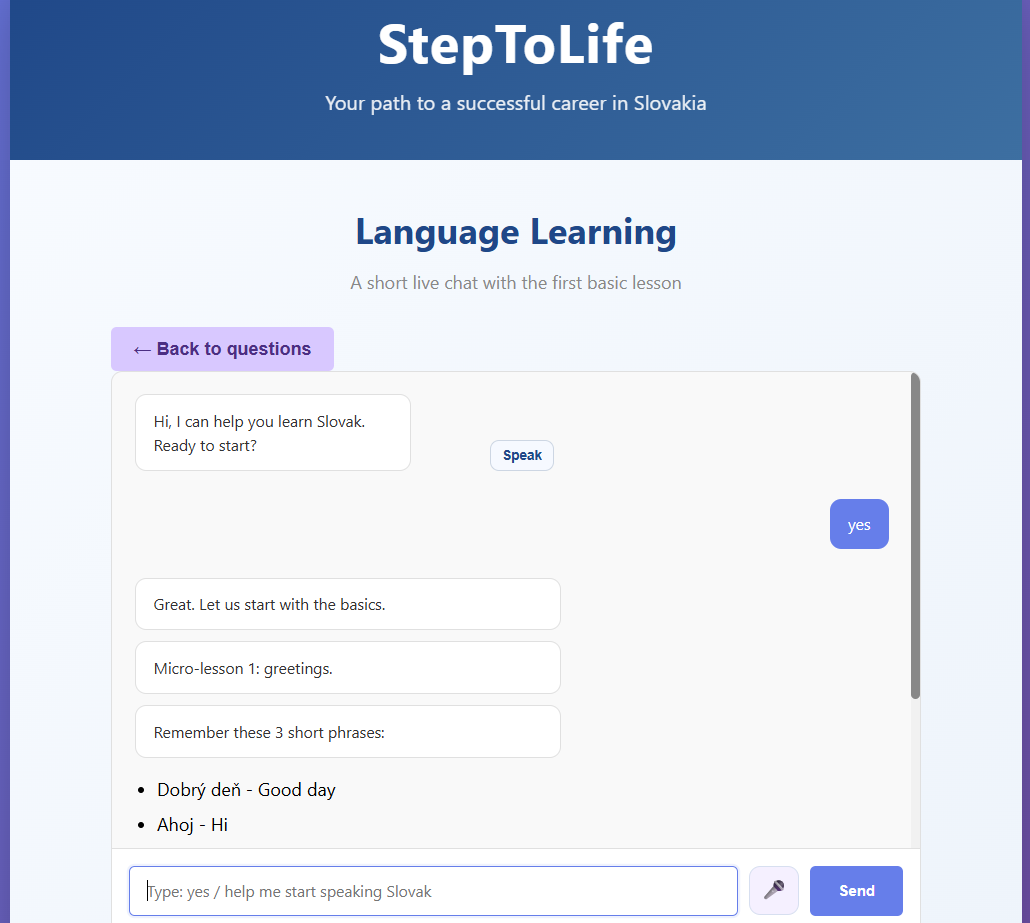
Beginner Language Coaching
-
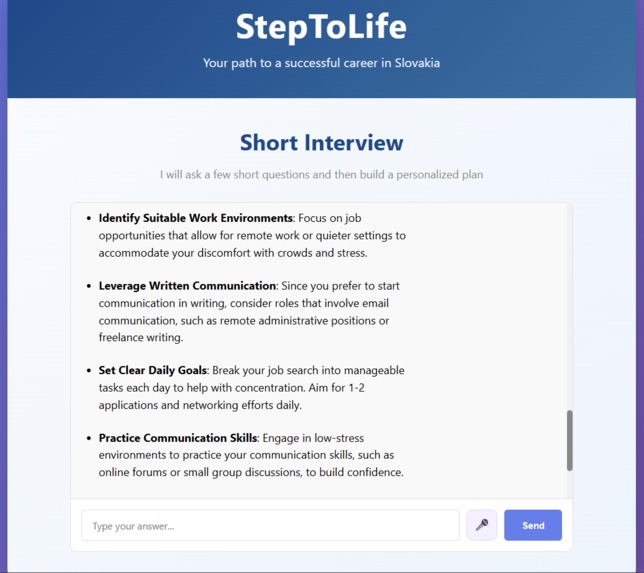
Real-Time Resume Support
Inspiration
People in vulnerable situations — including individuals with cognitive or psychological differences, as well as those living below the poverty line, migrants, or minorities — often cannot use available opportunities because they don’t know how to act.
Key insight: People don’t lack opportunities — they lack clear steps to act.
What it does
StepToLife is an adaptive system that guides people in vulnerable situations through real-life challenges using simple, step-by-step actions.
Instead of overwhelming users with information, it first adapts to their current state — simplifying the interface, reducing cognitive load, and adjusting communication style based on how comfortable they feel.
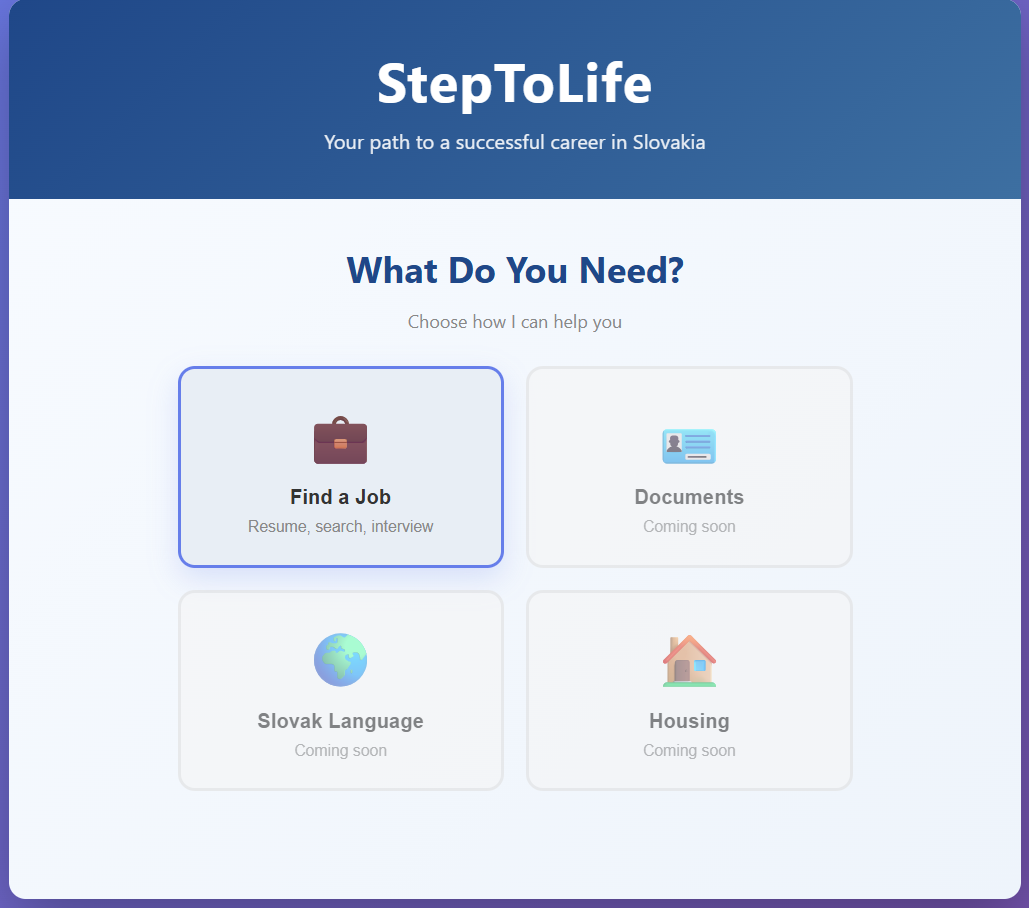
Once a user selects a goal (like finding a job), the system generates a personalized action plan. It breaks the process into small, clear steps and supports the user in real time — helping them prepare, navigate, communicate (with phrases and translation), and complete actions.
We don’t provide information — we guide users to action.
How we built it
We built StepToLife as a lightweight web application focused on one clear goal: guiding users from confusion to real-world action.
Tech stack
- Flask (Python) — backend logic, session handling, orchestration layer
- JavaScript + HTML/CSS — fast, accessible, mobile-friendly UI
Core architecture
Core innovation: Orchestrated AI agents working as one system
- Onboarding agent → understands user state and comfort level
- Planner agent → builds a step-by-step action plan
- Communication agent → generates phrases and supports interaction
- Guidance agent → provides real-time instructions
How it works (end-to-end)
- The onboarding agent detects user needs
- The planner agent creates a structured path
- The communication agent prepares interaction (phrases, language)
- The guidance agent supports real-time actions
Challenges we ran into
The biggest challenges were not technical — they were about designing for real human barriers.
1. Adapting without asking sensitive questions
We needed to understand the user’s state without directly asking about mental health.
We couldn’t ask:
- “Do you have anxiety?”
- “Do you have a disorder?”
Instead, we used comfort-based and behavioral questions to adapt the experience.
The system dynamically adjusts:
- color theme (calm vs standard)
- font size and readability
- amount of content on screen
This reduces cognitive load not only through content, but through the interface itself.
2. Orchestrating multiple AI agents
Instead of a single assistant, we used multiple agents.
The challenge was:
- keeping shared context
- avoiding contradictions
- creating one continuous experience
3. Simulating real-world support
Our concept relies on real-time guidance:
- navigation
- communication support
- translation
We had to simulate this in a simple but believable way.
4. Language and communication barriers
To support users like refugees, we needed:
- translation
- simple phrases
- clear and usable output
Biggest challenge: Reducing real-world barriers without increasing complexity.
Accomplishments that we're proud of
Impact: Turning passive users into active participants.
StepToLife has strong and scalable user potential. It can support a wide range of users — from people with cognitive challenges to migrants and low-income individuals.
Value for the user
The user:
- understands what to do
- handles real-life situations
- moves from problem to solution
Result:
- finds a job
- completes documents
- accesses help or housing
Value for the ecosystem
StepToLife connects people who were not acting with organizations that can help them.
Employers
- gain new candidates
- reach people who previously didn’t apply
Educational centers
- attract new participants
- engage hesitant users
Government and services
- receive real interactions
- gain better insights into needs
NGOs
- see real visits instead of passive traffic
- use resources more efficiently
What’s next for StepToLife
1. Real-world integration
- local NGOs and support centers
- job and employment services
- legal and social assistance
2. Smarter personalization
- better UI adaptation based on behavior
- improved step-by-step planning
- learning from user actions
3. Partnerships
- employers
- educational institutions
- NGOs and public services
4. Measuring impact
- tracking completed actions
- measuring real outcomes (jobs, services, support)
Final takeaway: StepToLife doesn’t just explain what to do — it helps people actually do it.
Built With
- api
- css
- flask
- html
- javascript
- orchestration
- python


Log in or sign up for Devpost to join the conversation.