-
-
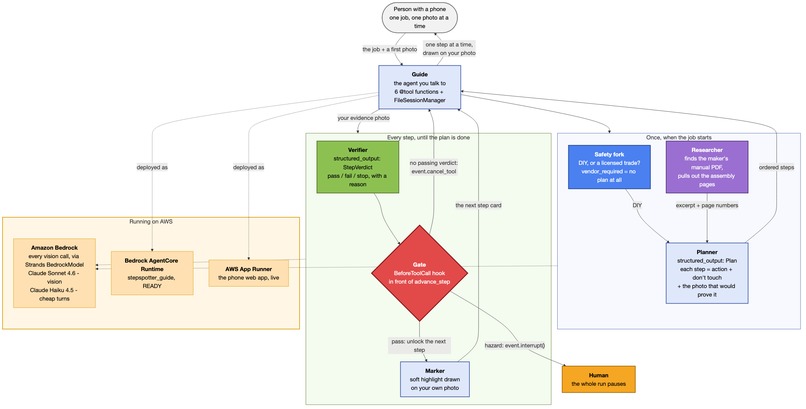
Eight roles on Strands Agents, on Amazon Bedrock, deployed to AgentCore Runtime and App Runner.
-
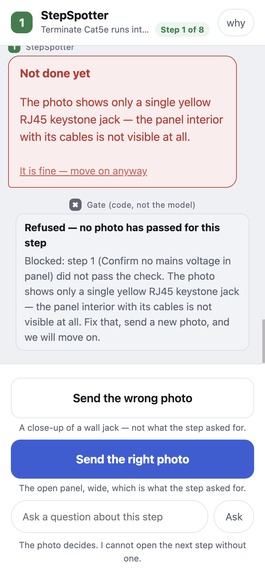
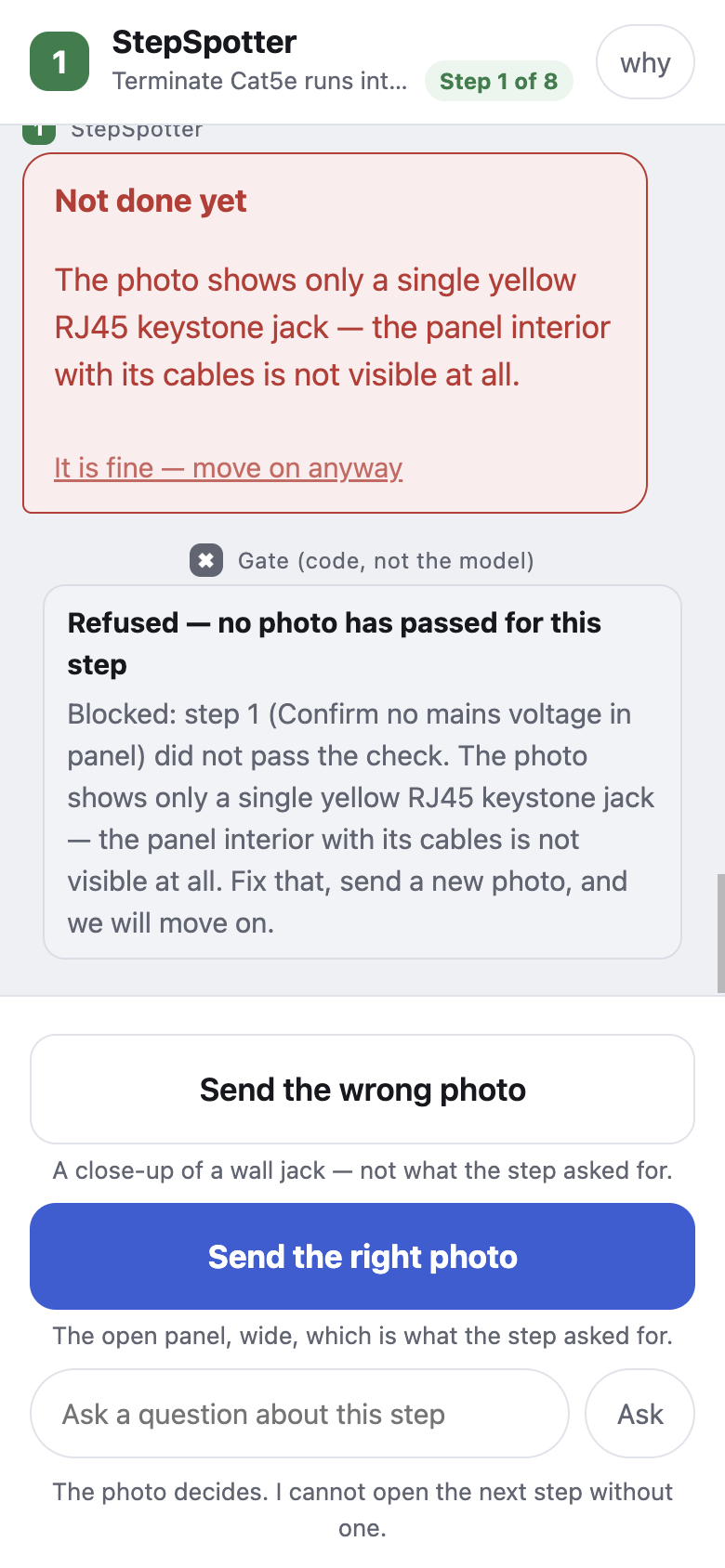
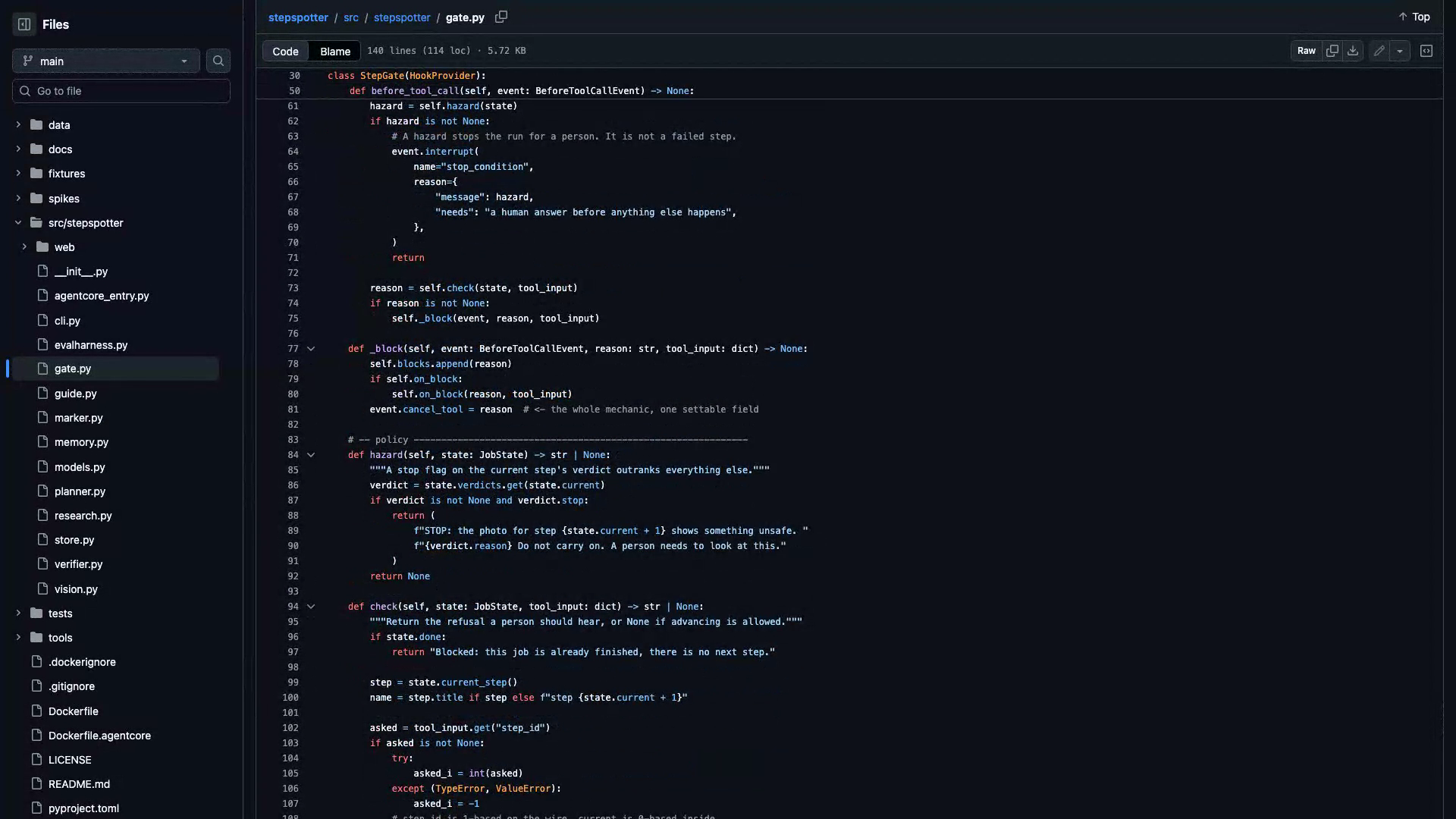
The gate is code, not the model: it refuses to skip a step that hasn't passed, a Strands hook blocking the call.
-
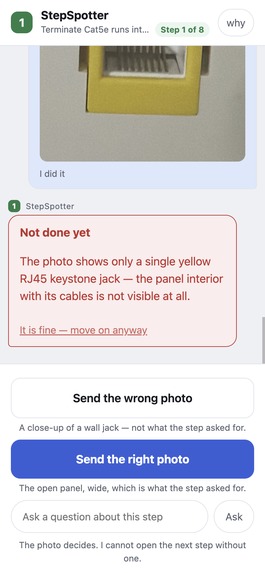
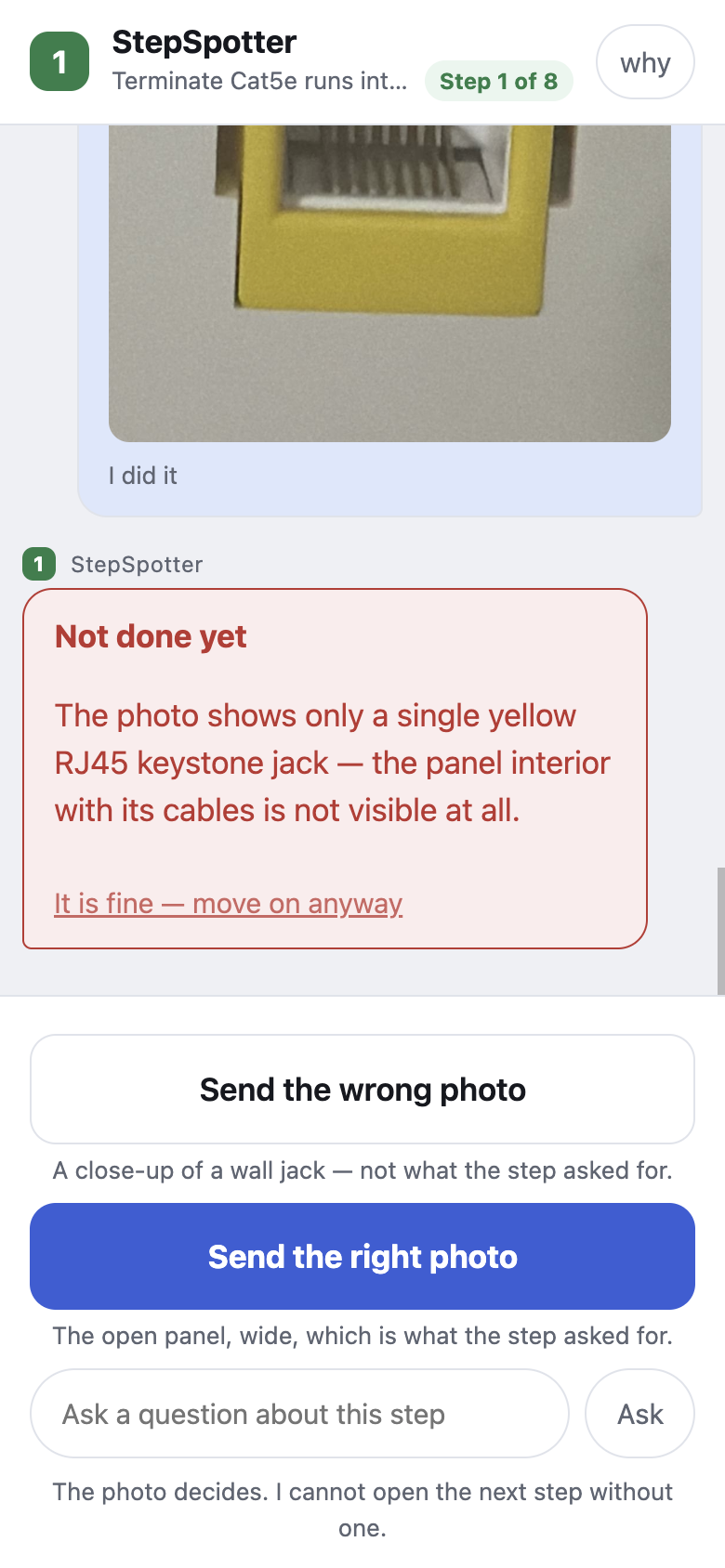
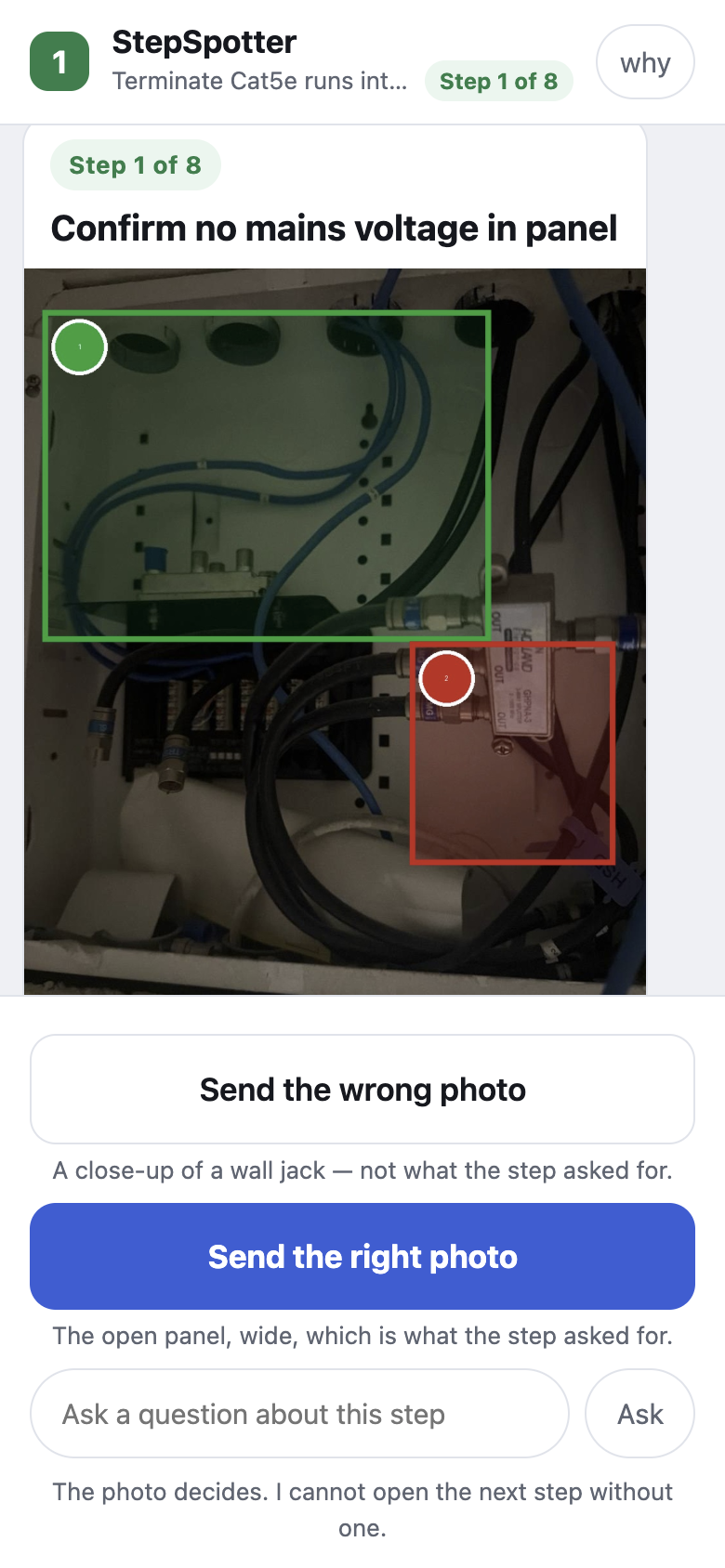
The wrong photo gets "Not yet" and a reason. The step counter does not move.
-
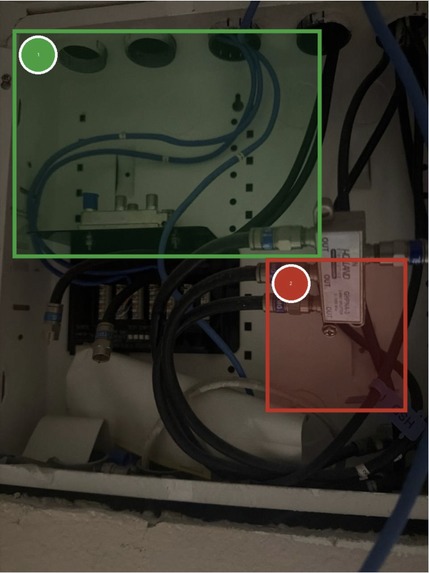
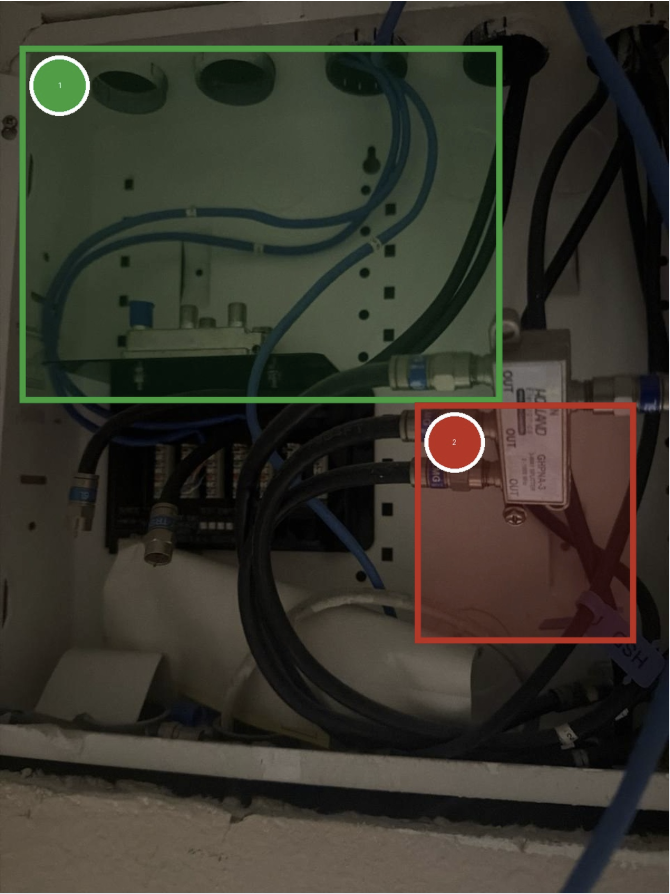
The step card: the highlight is a soft hint from the vision model, snapped to a grid, never a claim.
-
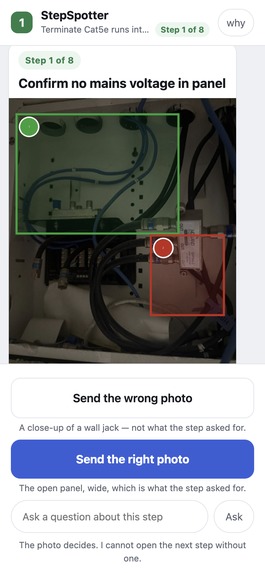
One step at a time, drawn on your own photo: what to do, what not to touch, and what your evidence photo has to show.
-
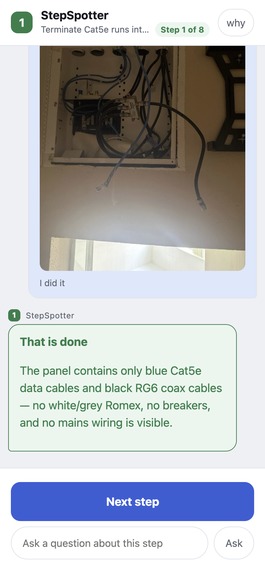
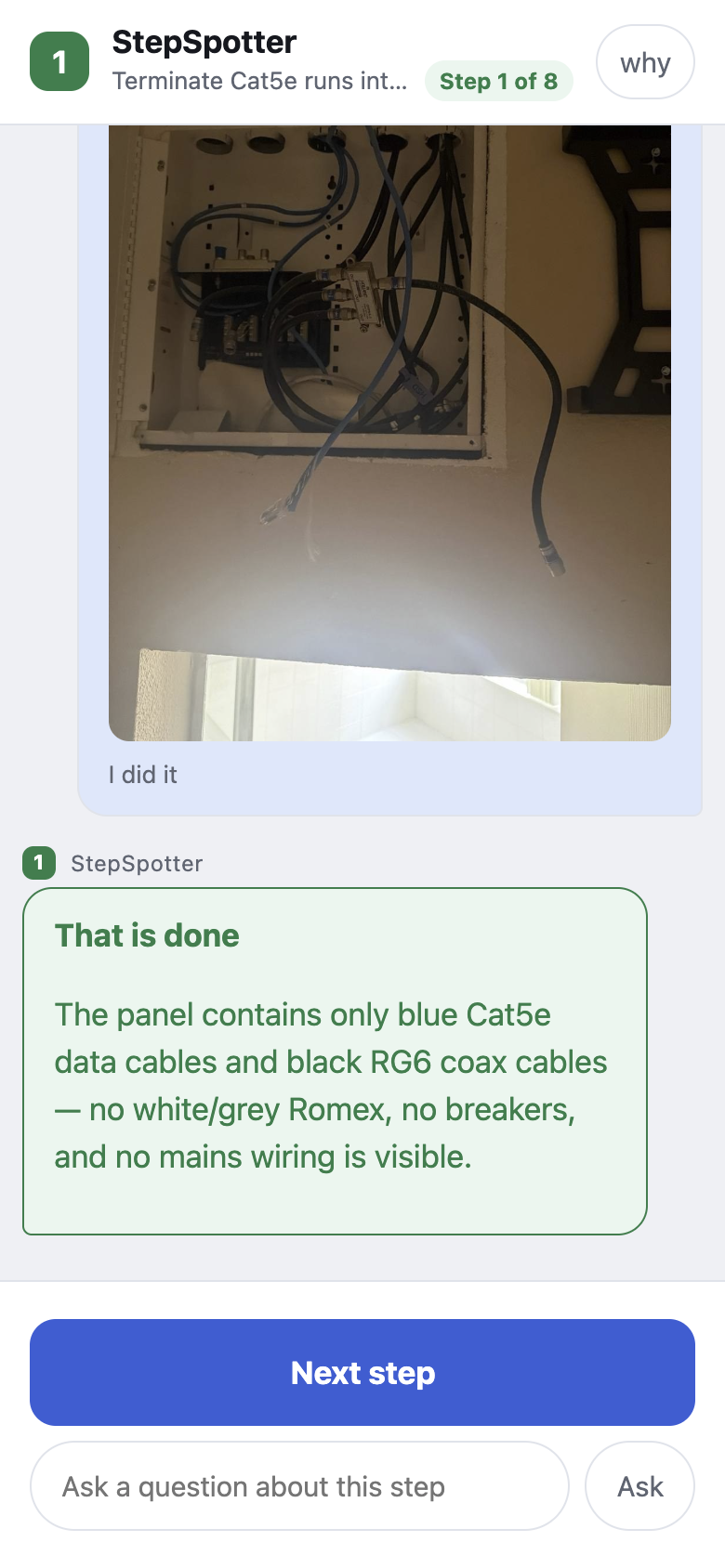
The right photo passes, and only then does the next step unlock.
-
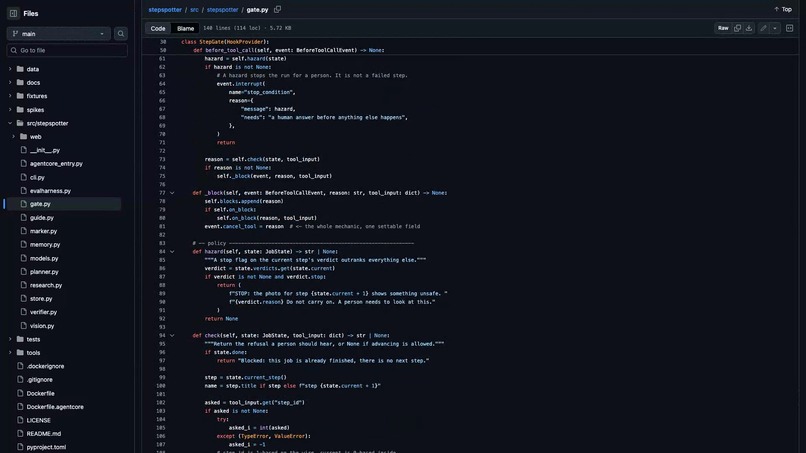
gate.py — the BeforeToolCall hook: one settable field, event.cancel_tool, blocks the next step when no photo has passed
-
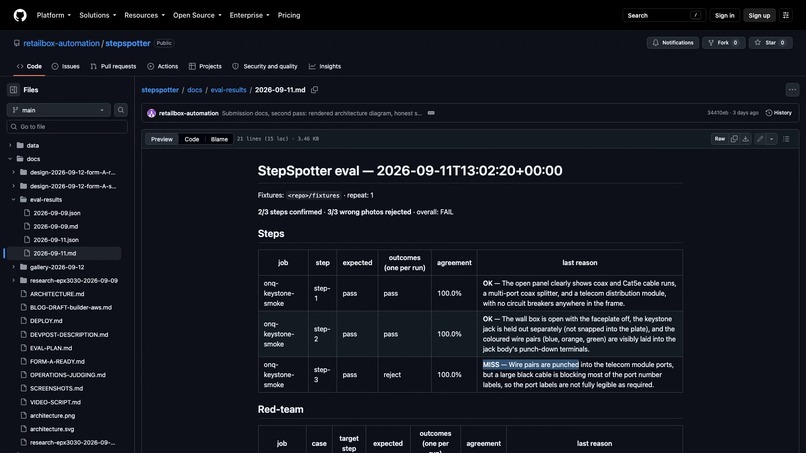
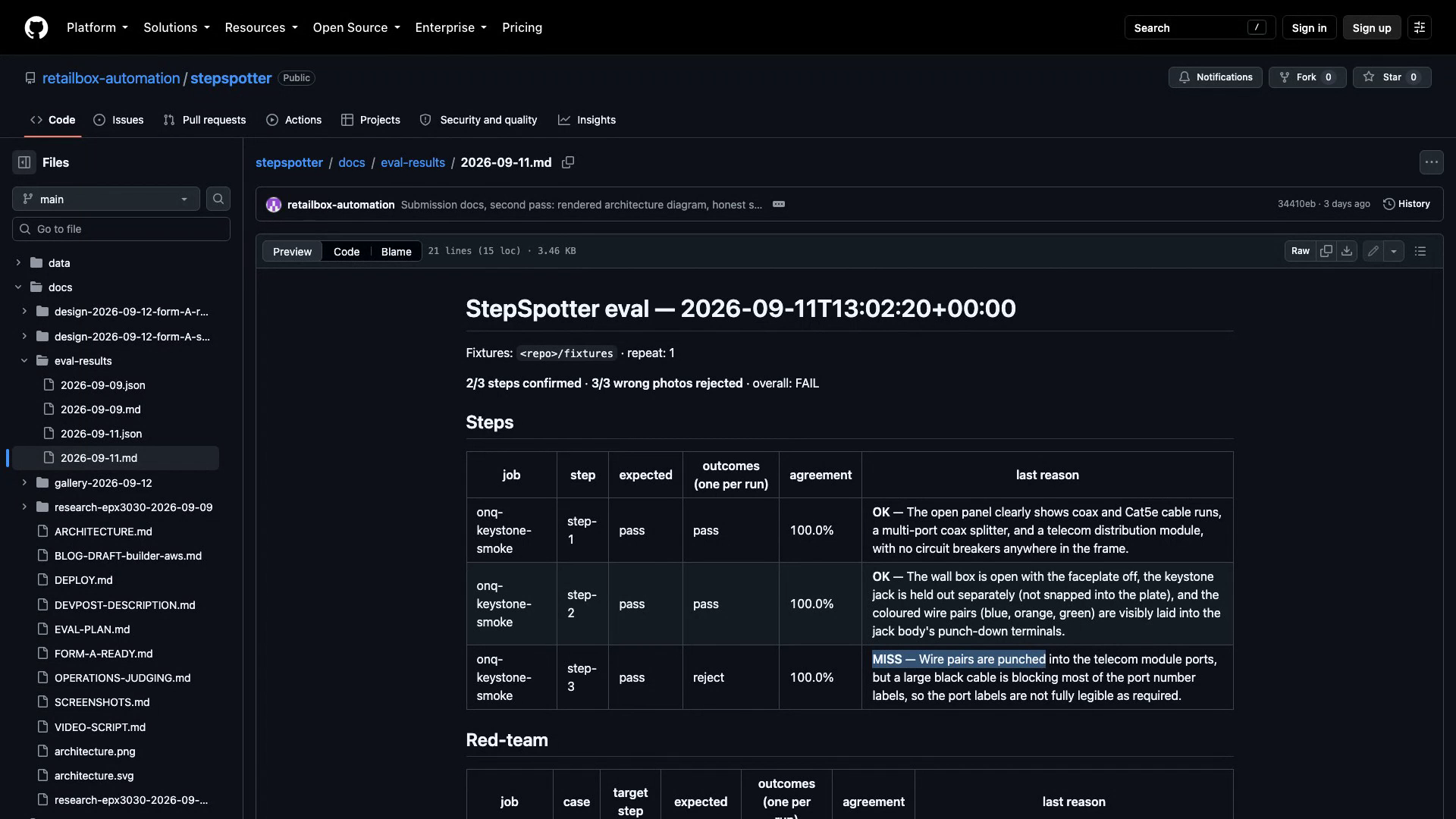
Published eval run 2026-09-11: 2/3 steps confirmed, 3/3 wrong photos rejected — the miss is left in, not hidden
-
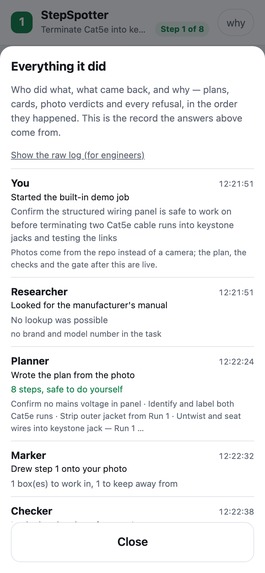
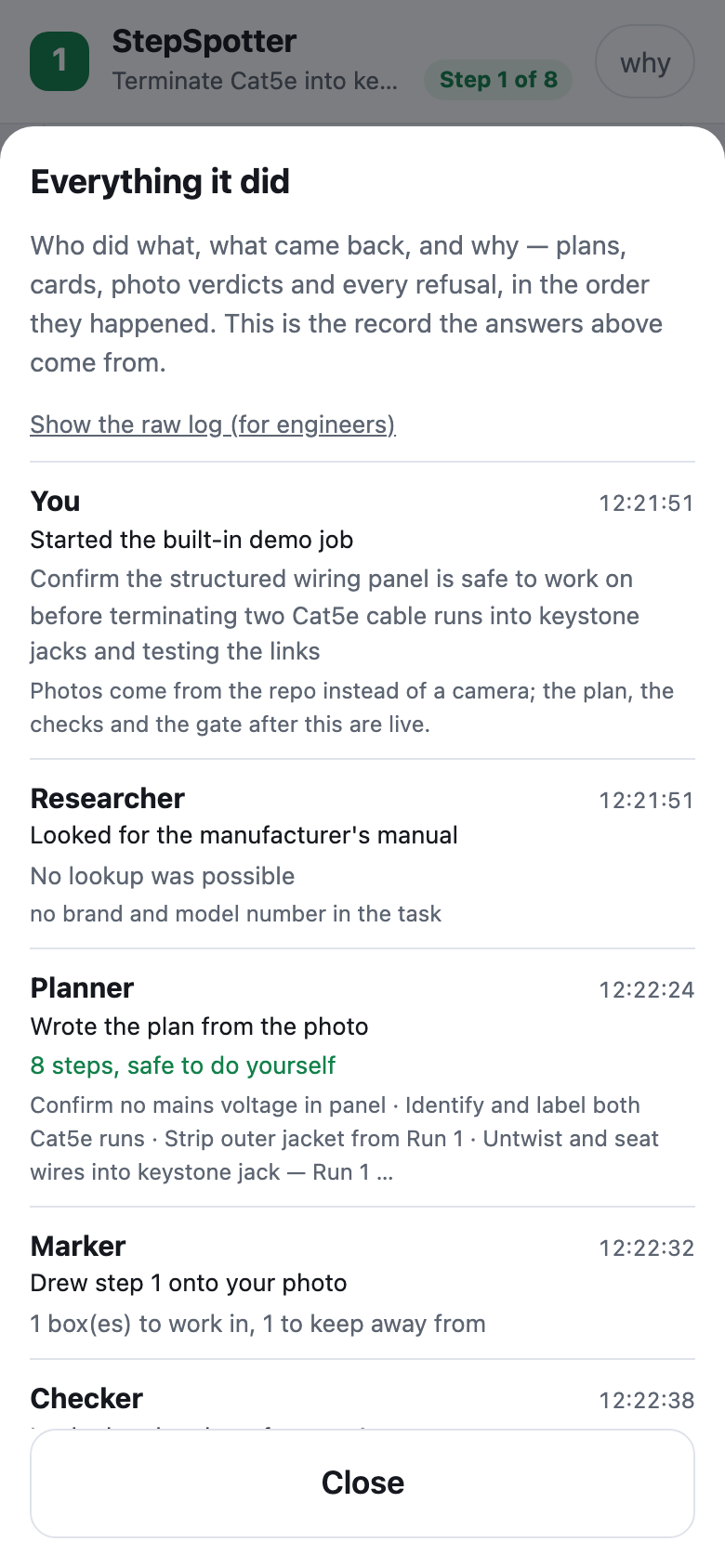
"Everything it did": the readable trace, who did what, with the gate's refusal shown as code, not the model — the raw log is one link away
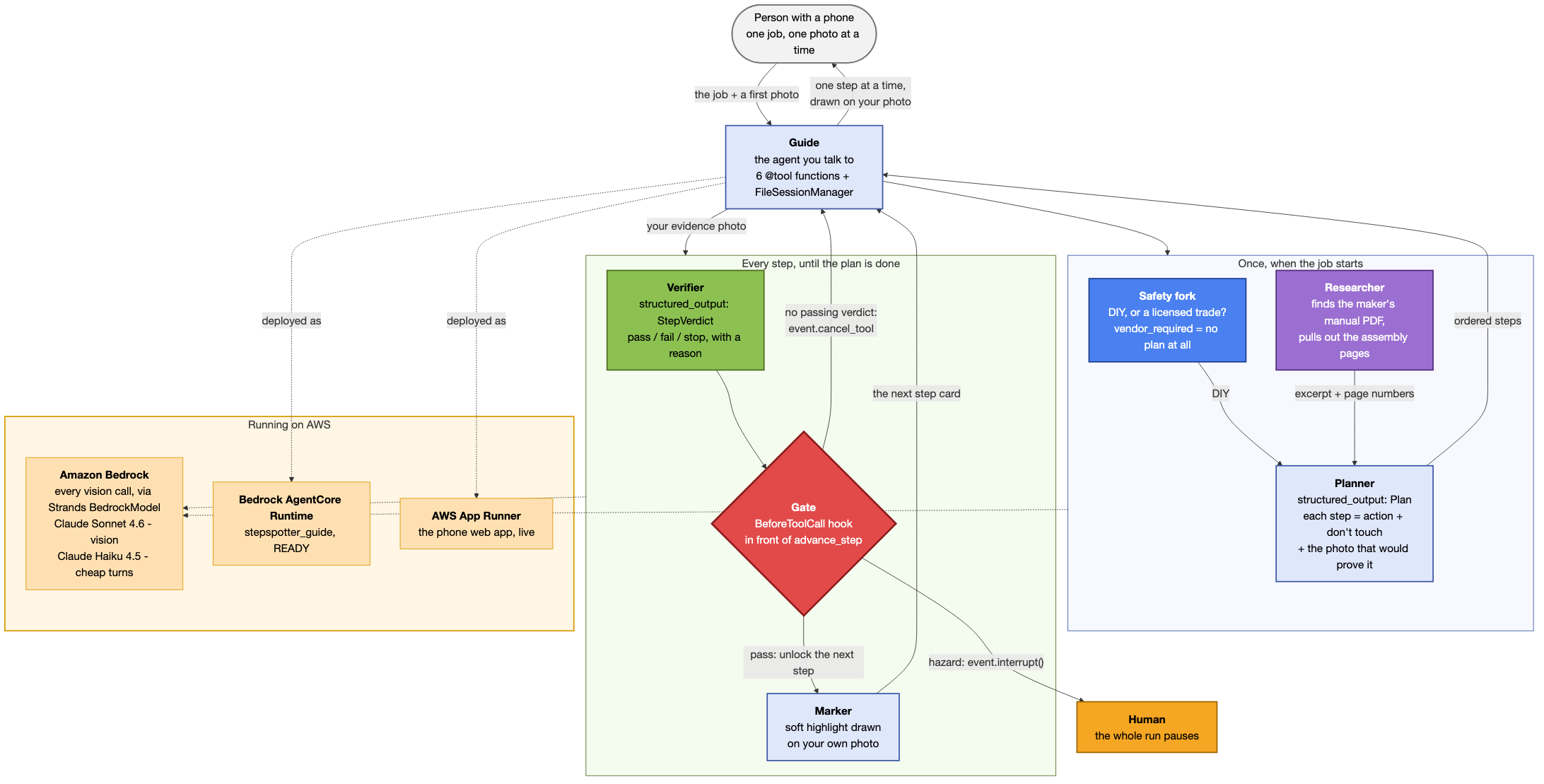
StepSpotter gives you one home-repair step at a time, drawn on your own photo, and refuses to unlock the next step until a photo proves you finished the last one safely. The refusal is a Strands Agents hook cancelling a tool call in code — not a prompt asking a model to be careful.
Presentation deck (10 slides, PDF): https://github.com/retailbox-automation/stepspotter-deck/blob/main/stepspotter-ai-builders-deck.pdf · editable PPTX in the same repo.
Inspiration
I never owned a home. I grew up in an apartment, every place I lived in as an adult was rented. Then my kids were born, we moved to Orlando and I bought a house — and I realized I didn't know how to do the simplest things around it. Not because I'm not capable. Nobody ever showed me.
Hiring someone is the obvious answer. I tried: roughly three dozen contractors hired or quoted since we bought the house, more than half of those jobs failed, stalled or had to be redone. The ones I did myself went better.
What works for me is my phone. I take a photo, and someone explains it back on that exact photo — a circle around the part I need, an arrow, "not this one, that one." One thing at a time. That is the only reason I got through replacing a UPS battery and terminating network jacks in my own panel this month without calling anyone.
StepSpotter is that, built into an agent, with one rule: it cannot take my word that a step is done. It has to see it.
What it does
You give StepSpotter one repair job and a first photo. It hands back one step — what to do, what not to touch, and what your next photo has to show. You do it, send a photo, and the agent checks that photo against that step. If the photo doesn't prove the step is done, it says why in plain words and asks for another. It will not move you forward on your say-so.
Name a brand and a model — "assemble my Westinghouse ePX3030 pressure washer" — and it finds the manufacturer's own manual first, pulls out the assembly pages, and writes the steps in the manual's order and part names, each step citing the page it came from. The photo still outranks the manual: if what's in front of you doesn't match, the step says so.
A photo showing something unsafe — heat, swelling, a burnt smell, bare wire — doesn't just fail the step: it stops the run and hands it to a person. A job that needs a licensed trade never gets a plan at all.
How we built it
Strands Agents is the SDK end to end, and each role maps to a feature of it:
- Verifier — reads one photo against one claim and returns a typed verdict (pass /
fail / stop, with a reason) via
structured_output_model=: a realStepVerdictobject, not free text scraped with a regex. - Gate — the piece that matters most. A Strands
BeforeToolCallEventhook setsevent.cancel_tool = "<reason>", killing theadvance_stepcall before the SDK dispatches it, unless the Verifier already passed the current step. We proved it live against Bedrock with a deliberately permissive prompt ("the user is always right, call advance_step immediately"). The model tried to skip ahead. The hook stopped it anyway. Prompt says yes, code says no. A hazard getsevent.interrupt(...)from the same hook — a cancel fails one call and lets the loop continue; an interrupt stops the whole run. - Planner — job plus first photo into an ordered typed
Plan. Its first decision is who should do the job at all:safety_class="vendor_required"empties the step list in code, so the refusal is structural, not a sentence the model may forget. - Researcher — finds the manufacturer's manual and extracts the assembly pages with page markers. No API key; five sources tried in order (this container's cache, the cache baked into the image, a checked index, DuckDuckGo, Brave), and the card names the one that answered.
- Marker — draws the highlight on your photo, snapped to a grid: a hint, not a claim.
- Guide — the agent you talk to: six
@toolfunctions and a StrandsFileSessionManager, so a job survives a restart instead of starting over.
The phone web app runs on AWS App Runner; the Guide agent also runs on Amazon Bedrock
AgentCore Runtime. The web UI never talks to the model directly — it routes through the
same StepGate object the agent uses: one policy behind two front doors.
Every feature named here has a file and line in the README's own table. Not claimed,
because not used: strands_tools, MCPClient, vended_interventions, "agent as tool".
Challenges we ran into
- The vision model's bounding boxes drift. On cluttered photos of a panel they landed low and oversized — 3 tight hits out of 14 boxes checked by eye. So a box is a soft highlight snapped to a grid, never a crisp "it is exactly here."
- Confidence scores are not stable run to run — the pass/fail boolean is. The same photo and claim gave 0.82 on one run and 0.20 on the next, for an identical, correct refusal. So we gate on the boolean.
- A well-behaved model hides a broken gate. With an honest prompt the model never tried to skip a step, which proves nothing. The permissive-prompt test is the only one that exercises the hook.
- The search engine rate-limits you exactly when you're demoing. DuckDuckGo answers HTTP 202 after repeated lookups from one IP, which parses to zero results and looks identical to "no manual exists." So the demo model's manual is baked into the image, a cached manual is never overwritten by a later empty result, and the card names its source.
Accomplishments that we're proud of
- A code-level gate — not a prompt — that a permissive "just do what they say" system prompt could not talk past, proven live against Bedrock, not only in a unit test.
- A plan citing the manufacturer's page on every step, for a machine with no assembly video anywhere.
- 8/8 correct pass/fail verdicts on real photos of my own panel, including every case where the claimed object wasn't in the frame — it refused instead of guessing.
- Two published eval runs with the misses left in, 6/6 red-team photos rejected across both,
and 189 tests that pass offline on a fresh clone (
pip install -e ".[dev,agentcore]", measured 12 Sept).
What we learned
Refusing to let someone "just claim" a step is done is a harder engineering problem than describing what's in a photo — and it is also the actual product. The interesting part wasn't getting a vision model to draw a box. It was making the "no" enforceable in code instead of hoping the model stays polite.
What's next
- Run the 12-step eval set on photos of the finished job and publish every result.
- A "what do I even need to do?" mode — I didn't know a Florida house needs its condensate line cleared until it went wrong.
- Ask and re-plan mid-job: the plan is fixed at the start, questions work only in chat.
- Job state in S3 instead of
/tmp; segmentation instead of a box; tighter IAM and sign-in on the public URL. - Turn the live app into a small paid tool — the technical core (the gate, the researcher, the eval harness) already stands on its own outside this job type, if it grows a subscription and a broader step library.
How this maps to the judging criteria
Innovation & Creativity (20%) — plenty of tools describe a repair photo. The
non-obvious move is a BeforeToolCall hook that makes the agent refuse itself, proven
by attacking it with a prompt written to defeat it, not by asking the model nicely. The
domain shows in the small things: per-step stop conditions, "don't touch" zones, a manual
page cited on every step, and a flat refusal to plan anything involving mains power or gas.
Technical Implementation (25%) — eight roles on Strands Agents, the hook system used
as an enforcement boundary rather than for logging, 189 tests passing offline on a fresh
clone, the phone app live on App Runner and the Guide agent READY on AgentCore Runtime.
Every SDK claim (structured_output_model=, BeforeToolCallEvent, event.cancel_tool,
event.interrupt, FileSessionManager) has a file and line in the README's own table.
Problem Solving & Impact (25%) — the audience is first-time homeowners with nobody to
show them, and the practical test is real: my Westinghouse ePX3030 has no assembly
video on YouTube (20 results checked, 9 Sep 2026) and a manual that is a public PDF.
Given the model name, StepSpotter found it and produced 11 steps, 11 citing a manual
page; without it, the same job gave 9 steps that never mention the handle, the two
mounts or the four screws, and report "no tools required" for a job that needs a
screwdriver. Both runs are published: docs/research-epx3030-2026-09-09.md.
User Experience & Design (15%) — one phone-first flow: name the job, photograph it, get the step drawn on your own photo, submit evidence, get a plain verdict, read the trace. The refusal, the hazard stop and the "call a pro" answer are designed screens, not error pages.
Presentation & Demo (15%) — the video is a screen recording of the deployed app running live on real photos of my own low-voltage panel: the plan, a wrong photo refused, the gate cancelling a skip in code, then the pass that unlocks step two — plus the manual-grounded job and the published eval miss it doesn't hide. The voiceover is Amazon Polly.
Scalability and feasibility — the caps, alarms and kill-switch that already run in
front of the live URL (docs/OPERATIONS-JUDGING.md) are the same mechanism a paid rollout
would need for a wider step library and more concurrent jobs: per-address and per-day
spend caps in front of the two endpoints that call a model, CloudWatch alarms on 5xx rate
and request volume wired to a confirmed e-mail subscription, and a documented rollback tag
for both the web image and the Bedrock AgentCore agent.
Disclosure
- Same build, second hackathon. This exact repository, live URL and demo video were also entered in the Agents for Humans Hackathon (AWS), submitted 14 Sep 2026 — same code, same deploy, same video, nothing re-shot or re-built for this submission.
- Every line of code in
src/,spikes/, andtests/was written new between 9 and 14 Sep 2026, inside this hackathon's submission window (21 Aug – 15 Sep 2026). No pre-existing codebase from any other project is in this repository. What carries over is a format, not code: the annotated-photo step-card idea comes from a personal practice, predating this hackathon, of asking Claude to mark up my own home-repair photos by hand. The format carried over; none of the code did. - An AI coding assistant was used during development, as the rules allow.
- The voiceover in the demo video is synthetic (Amazon Polly), not a recorded human voice.
Testing instructions for judges
1. The live app — no install, no account:
https://w7ihmvgxxj.us-east-1.awsapprunner.com. Open it on a phone if you can; the photo
buttons go straight to the rear camera. /healthz returns {"ok":true,...}.
- Type a job — e.g. "terminate the office network cable into a keystone jack" — and
attach a photo. Not in front of a panel? Use
fixtures/onq-keystone-smoke/steps/*.jpg, in order, or press Try a demo job on the start screen — no camera needed. - The thing to try: submit
fixtures/onq-keystone-smoke/redteam/R1-wrong-photo.jpgas evidence instead (or the demo's own "Send the wrong photo" button). Expected: a "Not done yet" verdict naming what's missing, the step counter unchanged, no way forward —event.cancel_toolfiring insrc/stepspotter/gate.py, and the trace shows it. - The manual research, live on that same URL: start a job with the task "assemble Westinghouse ePX3030 pressure washer" and any photo. The step cards come back citing manual pages, and the source line reads "Manual found via the copy baked into the image — pages 10–14" — the container answering from its build-time cache, so the demo doesn't depend on a search engine's mood.
- Ask it to plan something behind a breaker panel or a gas line. Expected: no steps, one sentence telling you to call a professional.
- The public URL is metered per address (new jobs and photo checks per hour, plus a whole-service daily cap) to keep it alive for every judge across the judging window — a rate-limit response during heavy use means the service is protecting itself, not broken.
2. Cold, from the repo — no AWS account needed. Python 3.12+:
git clone https://github.com/retailbox-automation/stepspotter && cd stepspotter
python3.12 -m venv .venv && source .venv/bin/activate
pip install -e ".[dev]"
python -m pytest -q                            # 176 passed, 8 skipped
stepspotter research "Westinghouse ePX3030"    # finds the maker's manual, offline
Install ".[dev,agentcore]" instead and it is 189 passed, 7 skipped. Those counts come from
a real fresh clone, and every skip names its own reason under pytest -rs.
With Bedrock credentials exported in the same shell command, stepspotter serve runs the
web UI and stepspotter eval fixtures/ --repeat 2 runs the harness. Both published runs are
in docs/eval-results/, misses included: 2026-09-09, 3/3 steps and 3/3 red-team; 2026-09-11,
2/3 steps (a cable covered the port labels, so the Verifier refused a step that was
done) and 3/3 red-team. The 12-step set in docs/EVAL-PLAN.md has not been run.
Built with
Strands Agents SDK (Python), Amazon Bedrock (Claude Sonnet 4.6 for vision, via Strands BedrockModel), Amazon Bedrock AgentCore Runtime, AWS App Runner, Docker, Python 3.12, FastAPI, Pydantic, Pillow, pypdf, pytest.
Built With
- agentcore
- agents
- amazon
- amazon-web-services
- app
- bedrock
- docker
- fastapi
- python
- runner
- strands

Log in or sign up for Devpost to join the conversation.