-
-
STEP
-

Title Slide
-
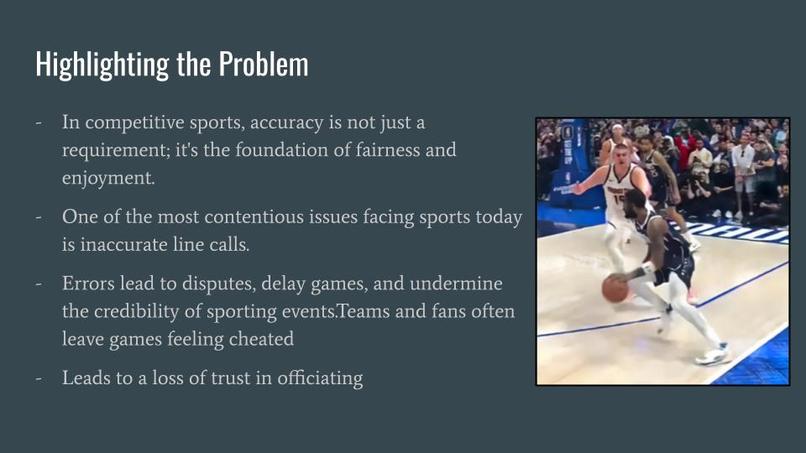
The Problem
-
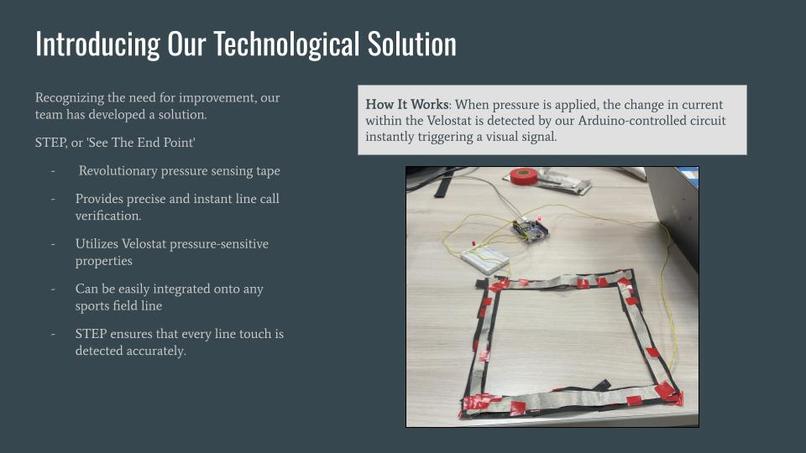
The Solution
-
Benefits
-
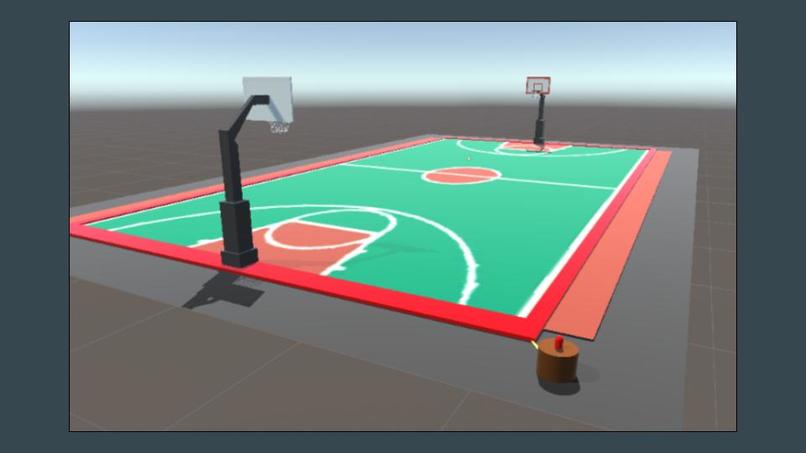
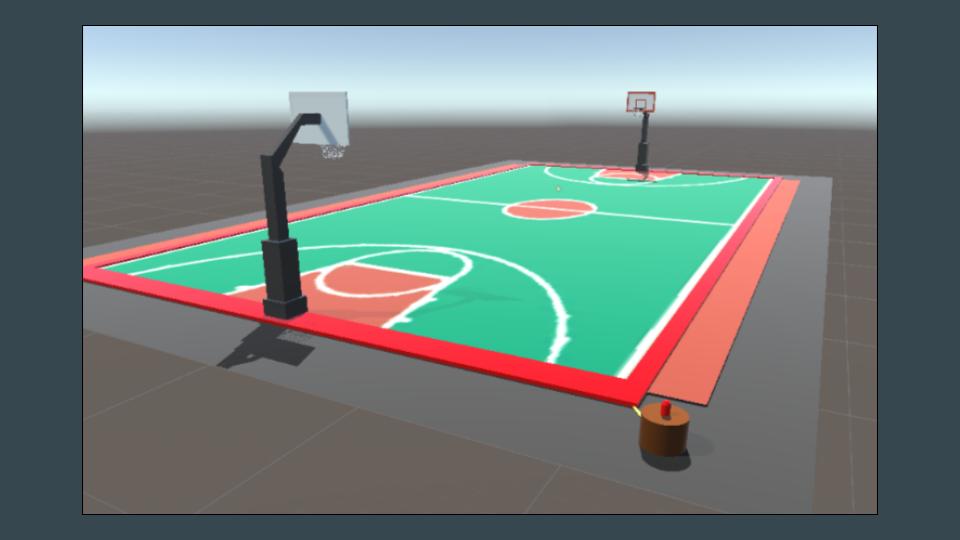
Full-scale 3D Model

Inspiration
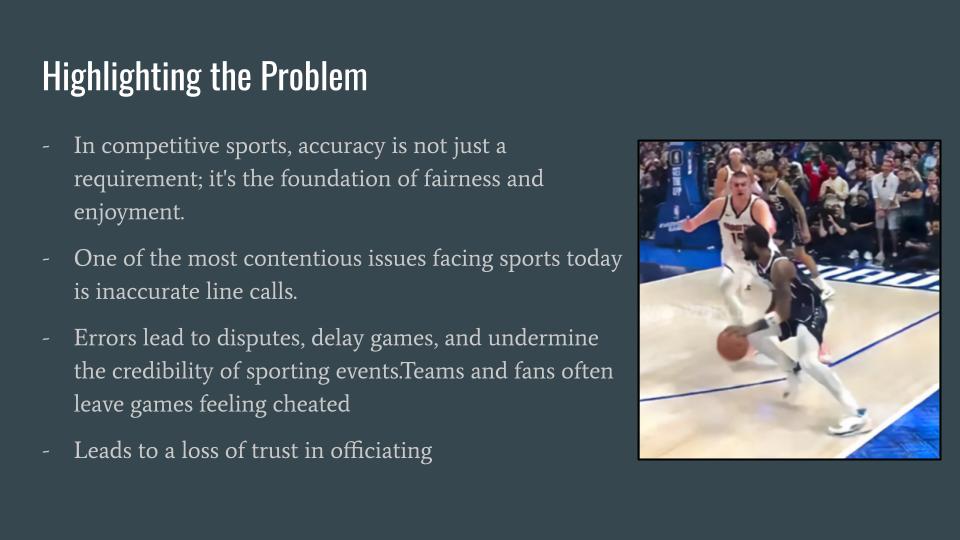
One of our members was playing pickleball when an argument broke out about whether the ball had touched the line. Suddenly the idea came to mind to build an invention that can accurately detect whether a ball had actually touched the line or not. The rest of the team was immediately on board with this with all of us being sports fans within pickleball, basketball, volleyball, etc. and referees having the reputation that they have nowadays.
What it does
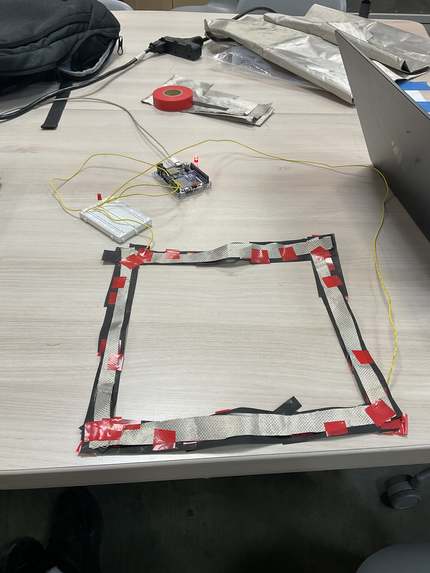
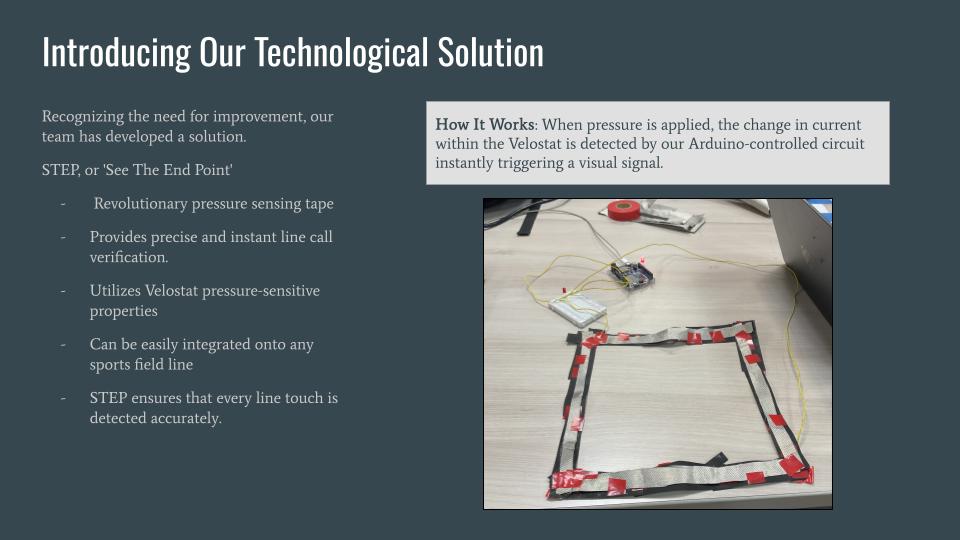
STEP, or 'See The End Point', is a revolutionary pressure sensing tape designed to provide precise and instant line call verification that can be easily integrated onto any sports field line. STEP ensures that every line touch is detected accurately. When pressure is applied, our invention instantly triggers a visual signal.
How we built it
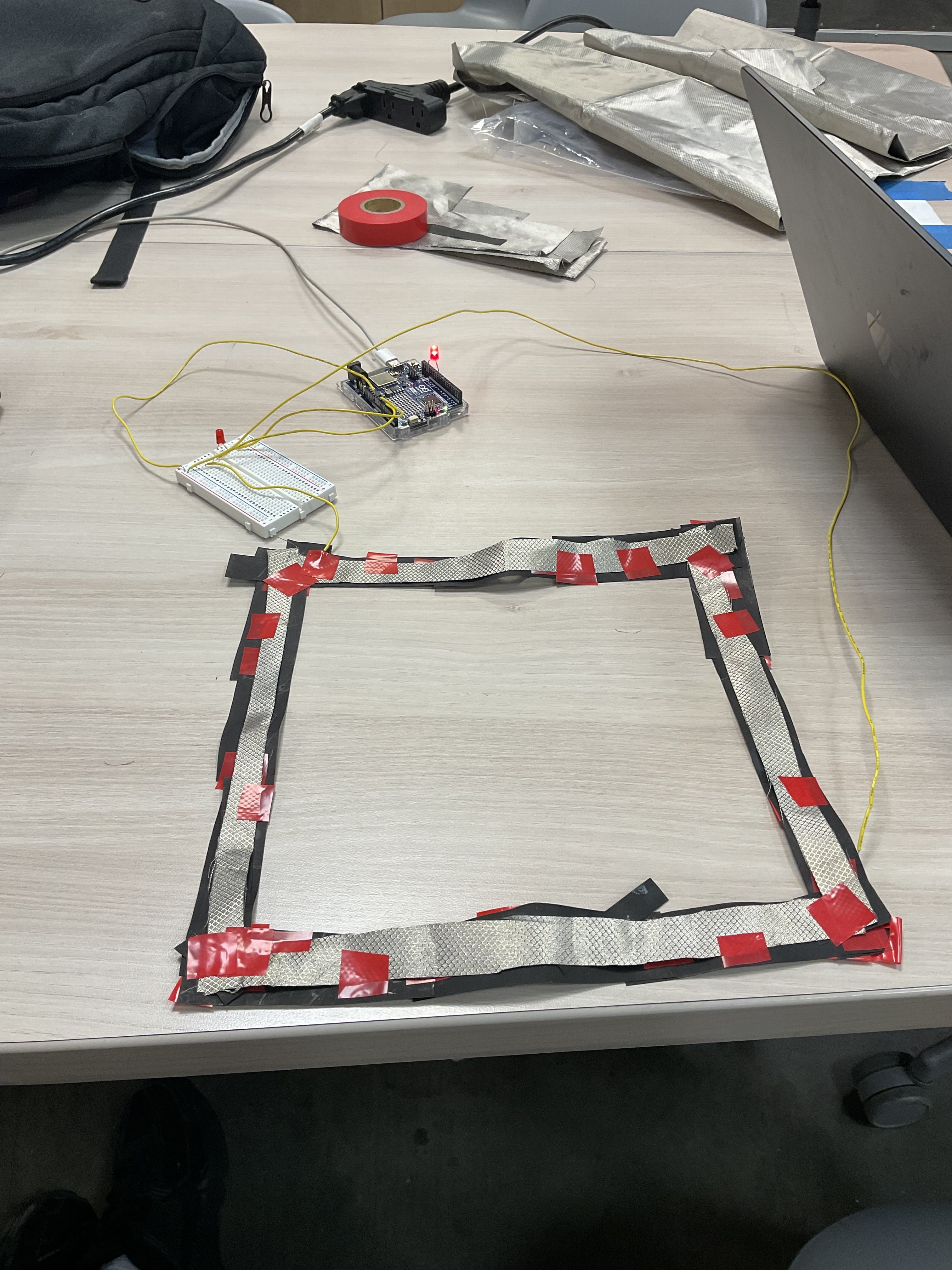
We built a pressure sensitive resistor using Velostat sandwiched by conductive tape, which is connected to an Arduino controlled circuit that sends voltage through the circuit and detects the current through it. When there is a large jump in current, we know something has touched the line, which immediately lights up an LED and logs it on the computer's terminal.
Challenges we ran into
Upon calculations we realized making a full scale model would be impossible with our budget so we had to settle with a prototype scale model. We also ran into the trouble that there would be too much fluctuation when the sensor is at rest and nothing was touching it, causing false positives. To address this, we had to fine-tune the sensitivity of our circuit and implement many techniques and changes to the sensor to ensure that only intentional touches were detected.
Accomplishments that we're proud of
We are proud of successfully creating a working prototype that demonstrates the core functionality of STEP. Despite our budget constraints, we managed to build a functional pressure-sensitive tape that accurately detects line touches. Additionally, we optimized the circuit to minimize false positives, improving the reliability of our system. Another achievement was the teamwork and problem-solving involved in refining the sensor's sensitivity while maintaining its responsiveness.
What we learned
Throughout this project, we gained valuable experience in working with pressure-sensitive materials, circuit design, and sensor calibration. We learned how to troubleshoot electrical noise and fluctuations to ensure accurate readings. Additionally, we gained insight into the challenges of scaling up hardware projects, particularly in terms of cost and manufacturing feasibility. The project also reinforced the importance of iterative prototyping and real-world testing to refine our design.
What's next for STEP: See The End Point
Looking forward, we aim to refine STEP by improving the accuracy and durability of the pressure-sensitive tape. One of our primary goals is to develop a cost-effective version that can be produced at a larger scale. We are also exploring the possibility of integrating wireless connectivity to send instant notifications to referees or players. Additionally, we want to test our prototype in real sports settings to gather feedback and improve its usability. Ultimately, we hope to bring STEP to market as an affordable and reliable tool for improving officiating accuracy in various sports.


Log in or sign up for Devpost to join the conversation.