-
-
Tagline1
-
Tagline2
-
Tagline3
-
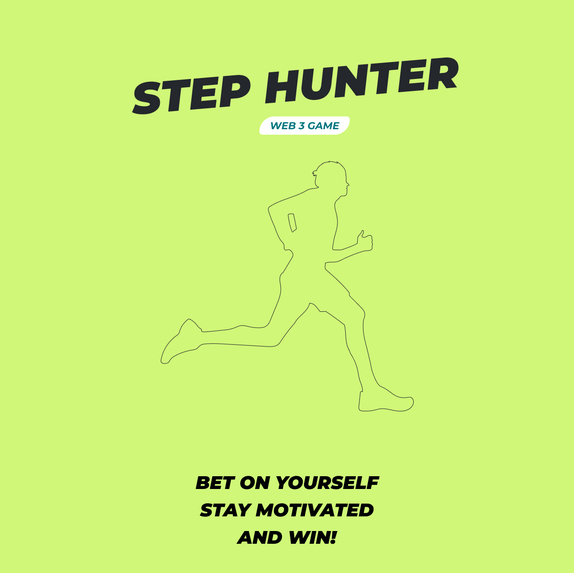
cover1
-
-
UX/UI1
-
UX/UI2
-
cover2
-

cover3

Inspiration
We gamify health care!
We were inspired by the need to overcome sedentary lifestyles and motivate people to adopt a more active way of living. With the rise of remote work during the COVID-19 pandemic, many people spend more time working from home, leading to reduced physical activity and a condition known as "hypodynamia," which has serious health consequences.
Individuals struggling with a sedentary lifestyle often find it challenging to stay motivated and consistent in achieving their fitness goals, even with awareness and the desire for change. Recognizing this, we focused on a fundamental and enjoyable physical activity: walking. By helping people take more steps daily, we aimed to address the lack of motivation and consistency experienced by many individuals, including the basic goal of reaching a minimum step count per day. Understanding that financial motivation is a powerful driving force, we integrated it into our step tracker to provide an extra incentive for users to stay active and achieve their goals.
Our goal was to develop an innovative solution that merges game mechanics and blockchain technology, empowering users to achieve their goals and maintain high motivation. We placed great importance on delivering a transparent and trustworthy platform. Blockchain technology provided the ideal foundation, ensuring that users could have full confidence that their financial bets would be returned to their account upon goal achievement. Combining these elements gave rise to our project - StepHunter, the ultimate tracker for reaching your step goals.
During the project development, our team worked remotely, with some members never having met in person. We were scattered across the globe, with team members in Paraguay, Thailand, and Indonesia. This meant we operated asynchronously, facing a 12-hour time difference and being physically separated by a staggering distance of 16,160.3 kilometers, which would equate to a travel time of approximately 29 hours and 15 minutes. Despite this challenge, we managed to establish effective communication and understanding. We conducted conference calls, left comments in Figma, interacted through Google Meet, Discord, and Telegram, and utilized Notion for collaboration and organization. It was a remarkable experience to connect and work together seamlessly, even with such vast geographical distances separating us.
What it does
Tagline: Bet on Yourself, Stay Motivated, and Win!
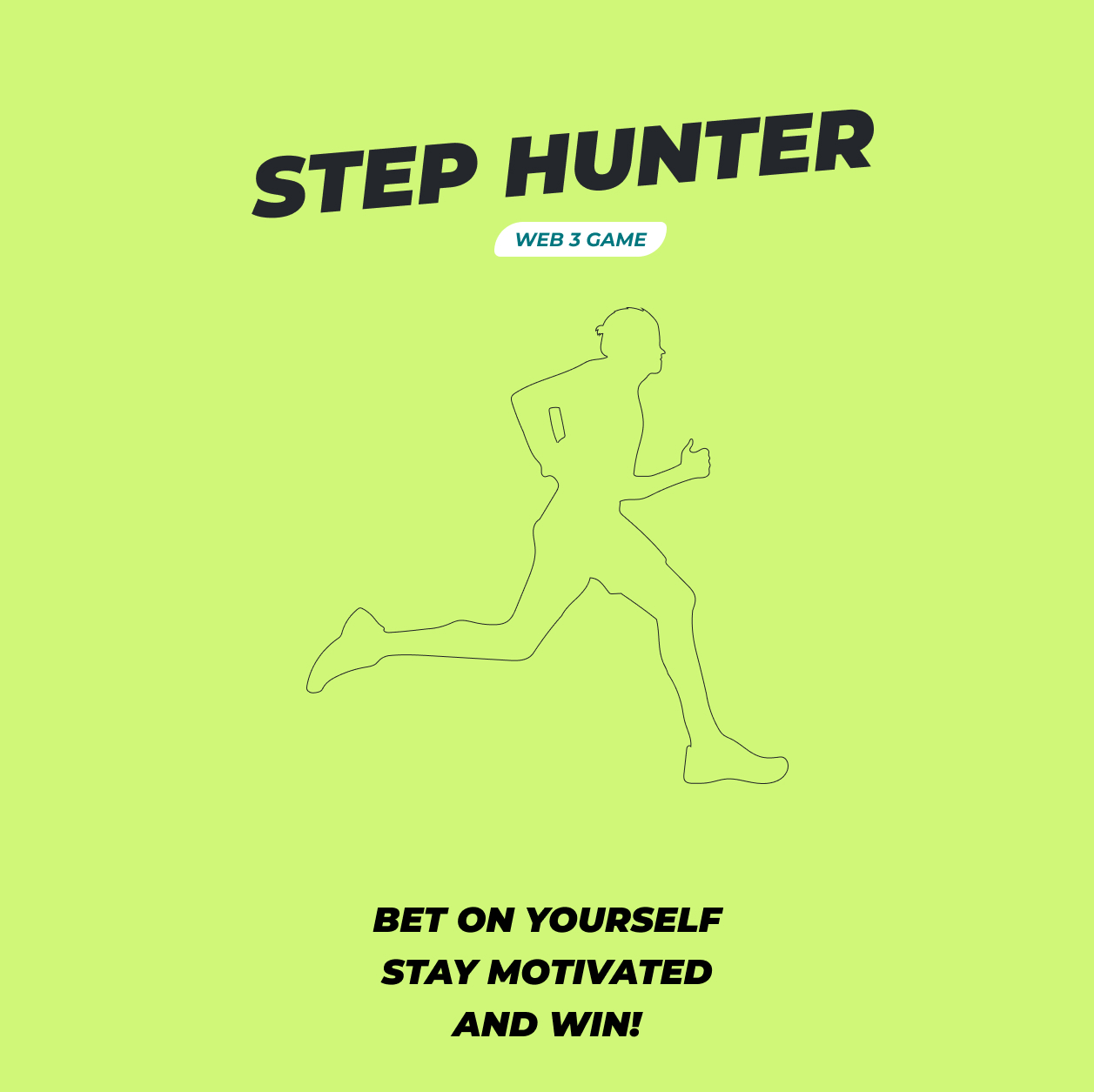
Step Hunter is a web3 lifestyle game powered by Chainlink and Polygon that helps people leading a sedentary lifestyle to maintain their physical activity in the real world. Users can place crypto bets on achieving personal goals such as minimum daily steps. This game motivates players to walk more! If users successfully reach their goals, they get their bets back, but if they fall short, they lose the wager.
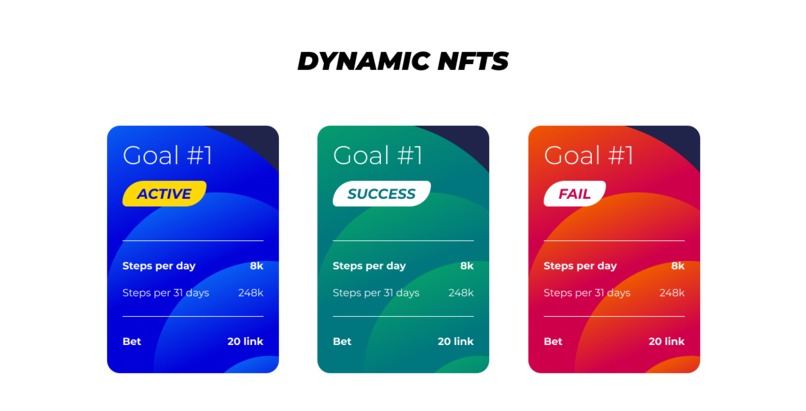
StepHunter ensures a secure and immersive experience with a transparent tracking system powered by open-source smart contracts, a Chainlink-based Oracle, dynamic NFTs, and seamless integration with the Google Fit step tracker and with Magic Link powerful SDK to simplify web3 wallets creation.
How we built it
Market Research (Product Manager):
- Competitor Analysis: Researched existing betting platforms and studied their features, functions, user experience, and design. Identified their strengths and weaknesses.
- Identified Target Audience: Decided to focus not only on crypto users but also on those who have never used blockchain products to significantly expand the potential user base of the application. This greatly influenced the technologies and user flow we built in the app. Essentially, we tried to hide the complex steps typical of blockchain products by packaging the app's design and features as a Web 2.0 product.
Definition of Functional Requirements (Developers):
- Compilation of Core Features: Identified the key features and capabilities to include in the betting app, such as user registration, bet display, payment systems, etc.
- Prioritization of Features: Determined which features are the most important for the application and focused on their development first.
Integration of Market Solutions (Developers):
- Trend Watching: Monitored Twitter, websites, and carefully studied the technical documentation of various blockchain companies offering infrastructure solutions and capabilities. Looked for innovative tools that could be implemented in our product.
- Sought Third-party APIs and SDKs: Explored existing market solutions, such as payment systems, analytics tools, or third-party services for integration with the application. Reviewed educational materials from Chainlink.
UX/UI Design Development (Designer):
- Concept Creation and Wireframing: Developed a design concept that reflects the needs of our target audience. Created user interface (UI) wireframes and determined the navigation and interactions within the app.
- Made revisions throughout the development process.
How we built it
- We chose the Polygon (Mumbai) chain for the development of our smart contracts.
- To facilitate user interaction with the blockchain, we integrated a solution from Magiclink to enable passwordless Web3 onboarding without requiring seed phrases.
- We used the Hardhat framework for developing and testing our smart contracts.
- For automating the logic of our smart contract we used Chainlink Automation infrastructure, specifically the routine to check goal attainment within each reporting period (day), we utilized Chainlink's Keeper Network.
- We used Chainlink Functions infrastructure to enable our smart contract to access off-chain data. This allows us to retrieve the daily step count from Google Fit.
User Flow
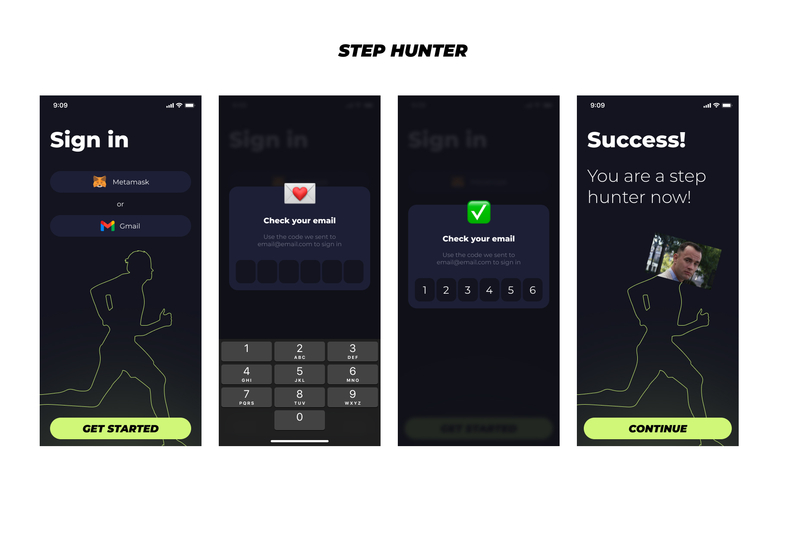
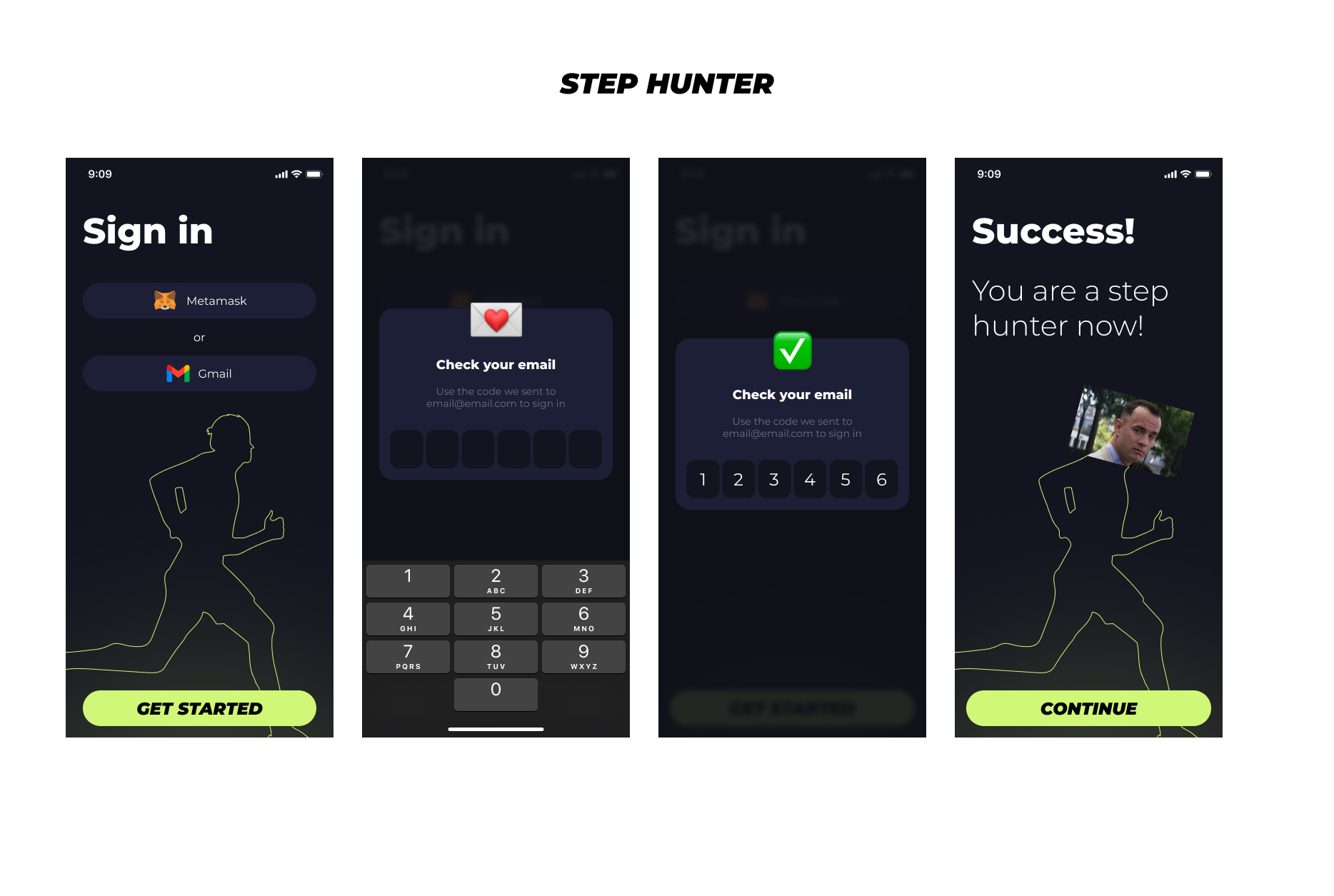
- A user logs into Step Hunter using their Google account, which in turn creates a crypto wallet for them via Magic Link's infrastructure.
- During the authentication process, the user gives Step Hunter permission to read their fitness data from the Google Fit app. This data will later be required when the https://github.com/StepsHunter/chainlink-spring-2023-hackathon/blob/main/blockchain/contracts/StepsHunter.sol queries it via Chainlink's External Adapter.
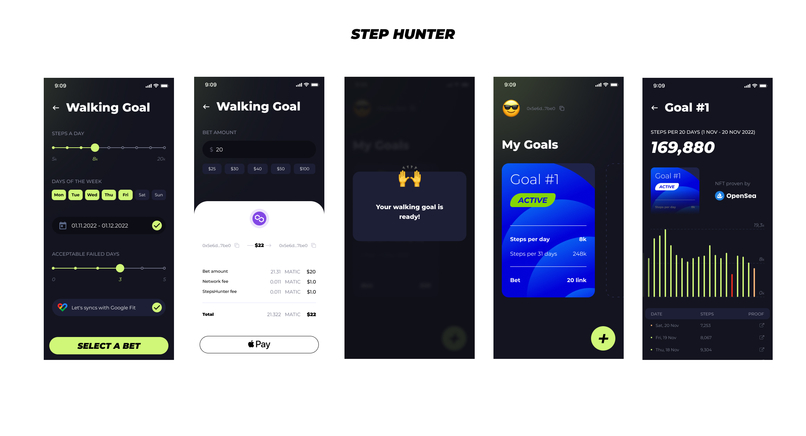
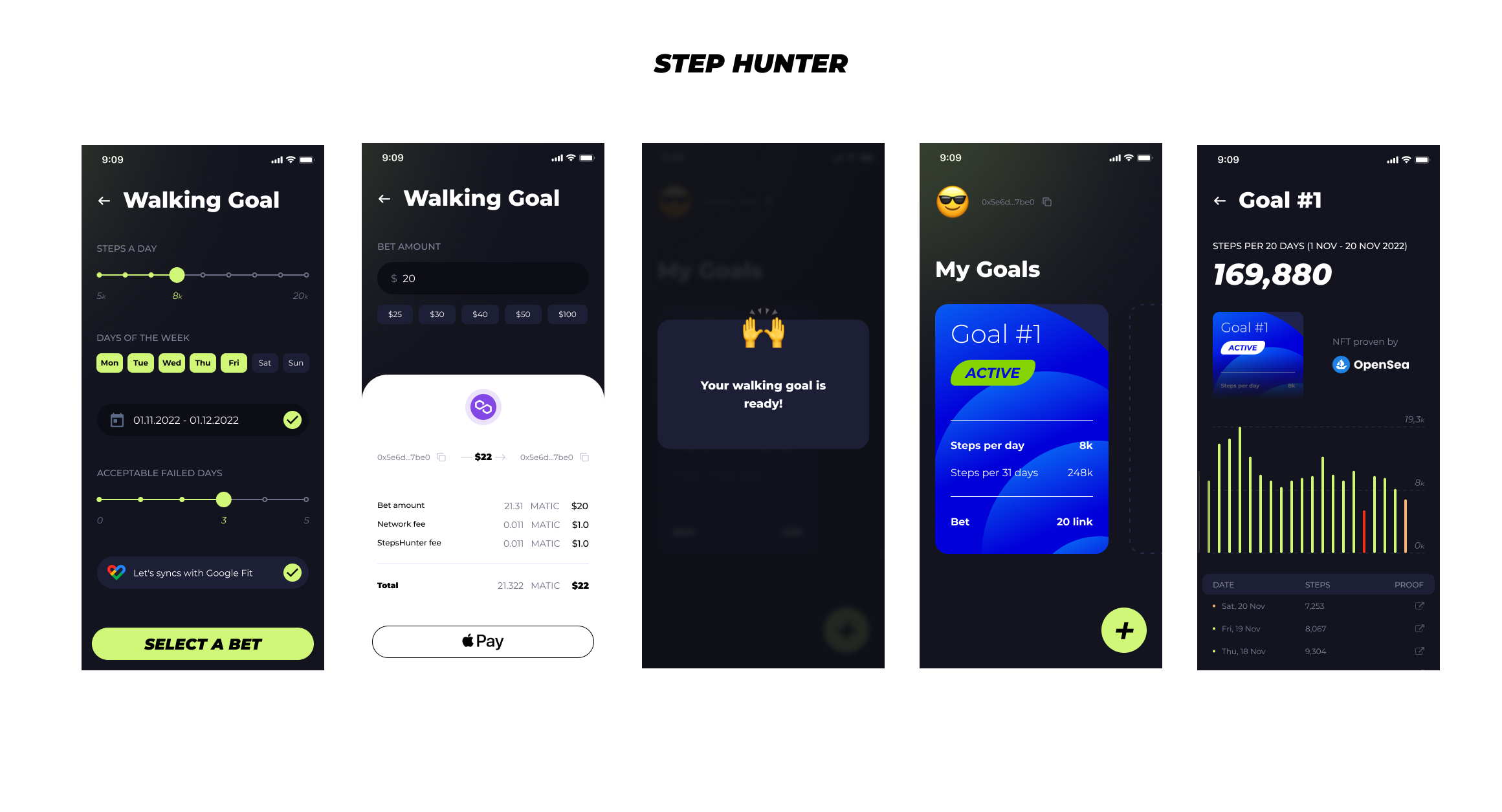
- The user sets a goal, signs the "create goal" transaction from their crypto wallet, and sends the transaction. A goal comprises several properties, such as:
- Status (Active, Failed, Successful)
- Start and end date
- Duration count in days
- Track records count in days
- Maximum allowed failed days
- Minimum daily step count
- Bet amount in Link tokens on the goal
- During the "create goal" transaction, several operations are performed on the main contract "Step Hunter Contract":
- The contract registers the new goal with an initial status of Active.
- The user's wallet is debited the amount of Link tokens equivalent to the sum of the goal's bet amount, the Step Hunter service fee, and the operational costs for Chainlink products Automation and Funcitons.
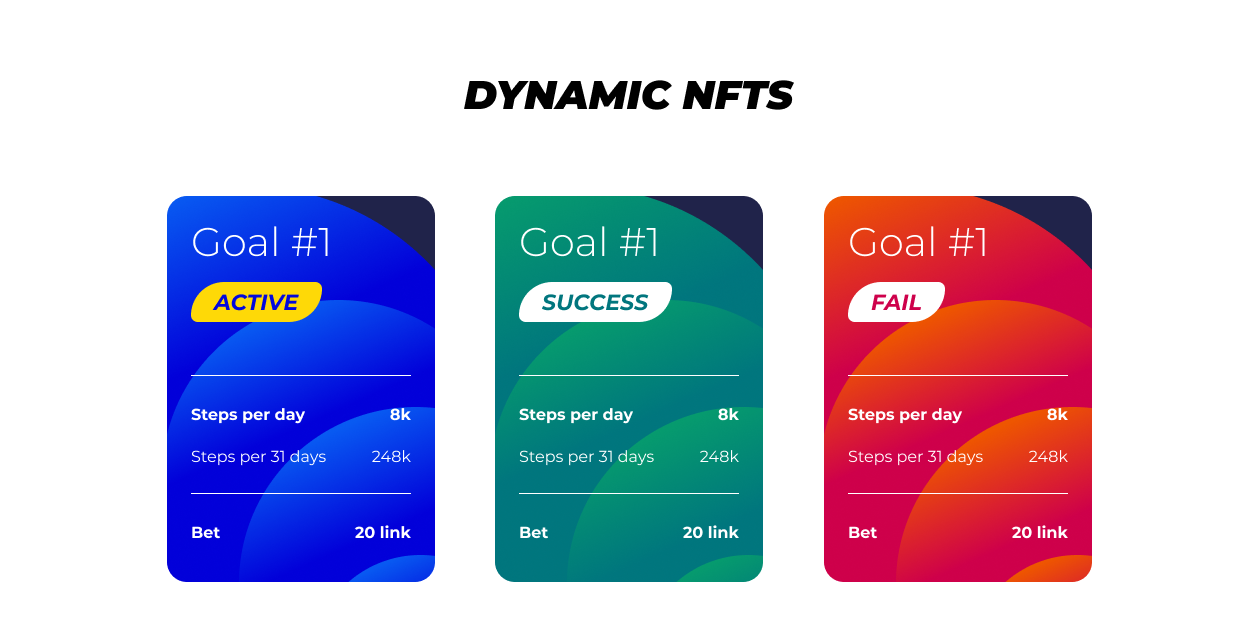
- A special dynamic Goal NFT associated with the goal is minted for the user via the https://github.com/StepsHunter/chainlink-spring-2023-hackathon/blob/main/blockchain/contracts/StepsHunterNft.sol. This NFT provides a transparent, verifiable, and visually appealing credential for the goal and its progress. The metadata for this NFT, which includes all properties of the goal, is updated every reporting period (day). This metadata, including all attributes and even the image, is generated fully on-chain and is always kept up-to-date.
- An associated Upkeep is registered for the newly created goal through Chainlink's Keeper Network using Chainlink Automation infrastructure. The role of this Upkeep is to verify whether the goal has been met in each reporting period and determine whether the goal has been fulfilled overall. Two "perform" operations are conducted each reporting period (day): one to request user's step count data from Google Fit via Chainlink's External Adapter, and a second operation to process this data and update the goal status (whether it's been achieved and the overall progress) for the reporting period.
- The combination of the main contract "Step Hunter Contract" and the created Upkeep automates the logic for verifying goal achievements fully on-chain, while the off-chain Step Hunter infrastructure responds to API requests for step statistics in each reporting period sent from the contract.
- Once the goal ends due to the expiration of the set period ("duration count in days") or premature failure due to exceeding the maximum number of failed days ("maximum allowed fails count in days"), the goal is concluded with either a Fail or Success status. If the goal ends with a Success status, the user's bet amount is returned. In case of a failure, the bet amount is transferred to the Step Hunter foundation wallet. Regardless of the outcome, the user retains the Goal NFT, which holds the goal's
Challenges we ran into
- Implementing dynamic NFTs with on-chain metadata was a difficult task due to the computational complexity and challenges in gas optimization. These problems arose because of the high computational requirements of the NFT generation and update process.
- Transactions fulfilled by operators were highly gas-consumptive, so we needed to ensure that the fulfillment logic within the contracts was simple and efficient to prevent excessive gas consumption.
- Integrating several products, especially from Chainlink such as their Automation and Functions, into a single contract was a complex task. There were hardly any ready-made examples of such integrations, and we had to figure out a lot of things on our own.
Accomplishments that we're proud of
- We're proud to have implemented almost all of the product's logic completely on-chain. The only tasks performed by the Step Hunter off-chain infrastructure are drawing the interface and providing the contract with user step data. Everything else is entirely decentralized, which aligns with our vision of a fully decentralized application.
- We successfully implemented a complex case of dynamic NFTs with metadata fully generated on-chain. To the best of our knowledge, such examples are scarce in open source information, making our achievement even more remarkable.
What we learned
- We delved deeply into the primary products offered by Chainlink and developed a solid understanding of their functionalities and potential applications.
- We learned how to build complex blockchain products within time constraints, which required efficient project management and a deep understanding of the technologies involved.
What's next for Step Hunter
- Launch Ver.2 on ProductHunt: Focus on finalizing and polishing all the functionality that was planned, completing the MVP ver1.1-ver 1.5 functionality, and then launching ver.2 on ProductHunt to provide users with an enhanced experience, get feedback from the market, get attention from the users of this platform, become the product of the day on ProductHunt!
- Enhance User Experience (UX): Continuously improve the user experience based on feedback and usability testing. Streamline the user interface, simplify navigation, and optimize the overall flow of the app to ensure a seamless and intuitive experience for users.
- Pitch to Investors for Funding: Prepare a compelling pitch deck and present the StepHunter project to potential investors. Highlight the unique value proposition, market potential, and growth opportunities. Seek funding to support the further development of the project.
- Allocate Resources for Marketing Campaign: Allocate the secured funding towards a comprehensive marketing campaign to raise awareness and drive user acquisition. Implement various marketing strategies, such as social media advertising, influencer partnerships, content marketing, and targeted digital campaigns.
- Create Viral Buzz on Social Media: Launch a social media campaign to generate a viral buzz and increase the popularity of the StepHunter app. Implement creative and engaging social media strategies, challenges, and user-generated content to encourage organic sharing and user growth.
- Partner with Wellness Brands and Bloggers: Establish partnerships and collaborations with wellness brands, fitness influencers, and bloggers to promote StepHunter. Leverage their influence and audience reach to create brand awareness, endorsements, and content collaborations that showcase the app's benefits and features.
- Develop and Engage Twitter Community: Build a strong presence on Twitter and actively engage with the StepHunter community. Share updates, motivational content, user success stories, and relevant industry news. Encourage discussions, respond to user feedback, and establish StepHunter as a go-to resource in the fitness and wellness community.
- Test Product Hypotheses with Early Adopters: Continuously test product hypotheses and gather user feedback from early adopters. Implement feedback loops to understand user needs, pain points, and suggestions for improvement. Iteratively enhance the product based on this feedback to ensure it meets user expectations.
- Expand User Base: Focus on user acquisition strategies to expand the StepHunter user base. Leverage partnerships, referral programs, and targeted marketing campaigns to reach a wider audience and attract new users to the platform.
- Continuous Product Development: Maintain a strong focus on product development and innovation. Regularly release updates and new features to keep users engaged and excited about the app.
By following these steps, Step Hunter can solidify its position in the market, attract a larger user base, secure additional funding, and continue to evolve as a leading platform for fitness betting and motivation.
Built With
- chainlink
- hardhat
- node.js
- solidity
- typescript

Log in or sign up for Devpost to join the conversation.