-
-
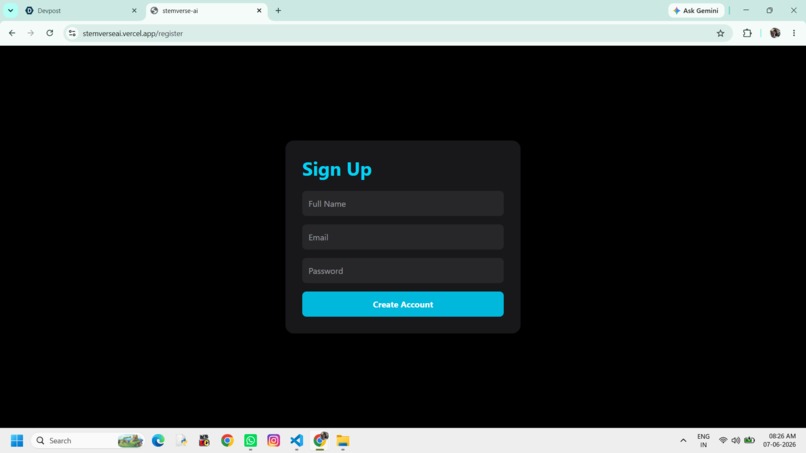
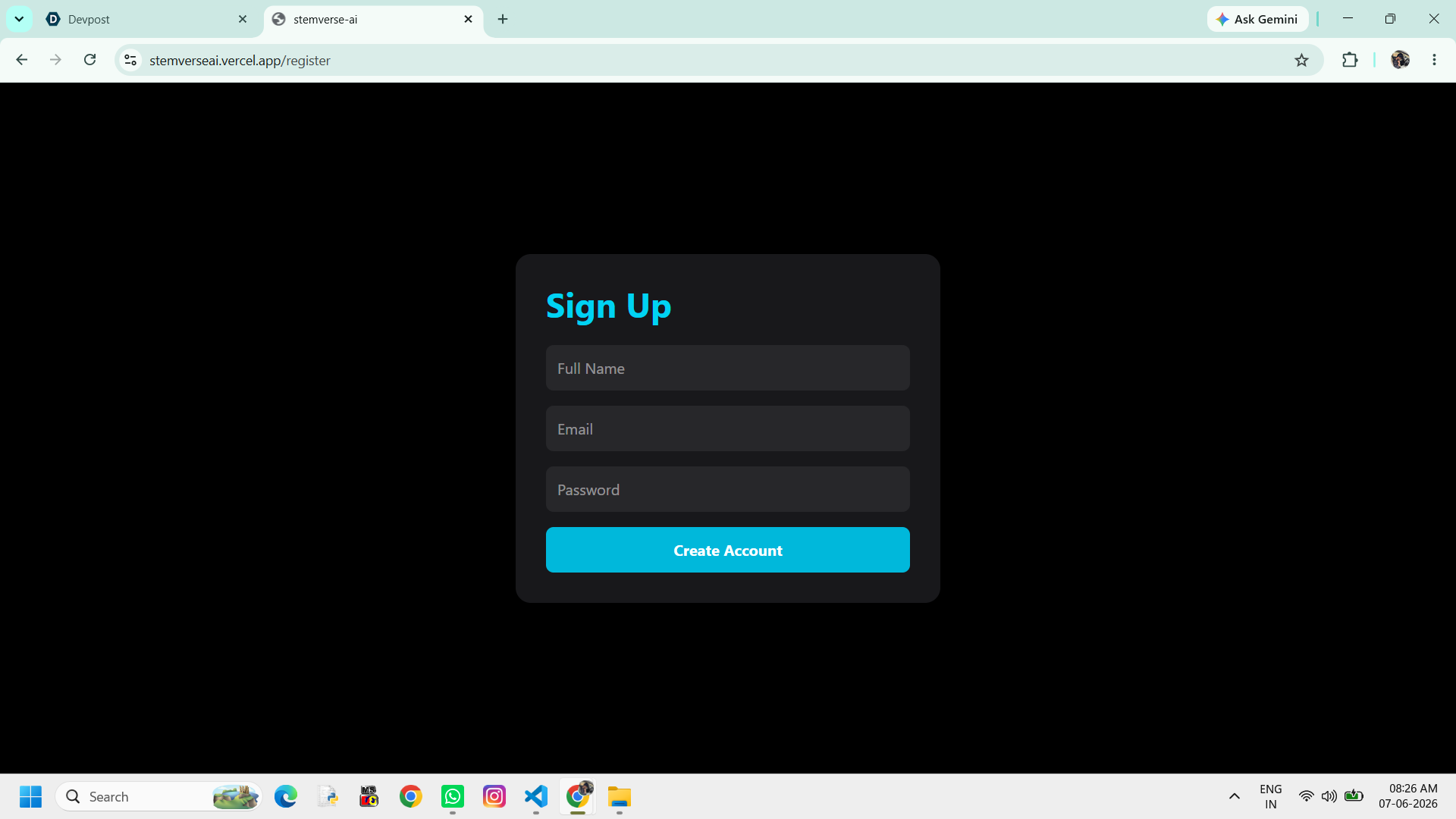
SIGNUP
-
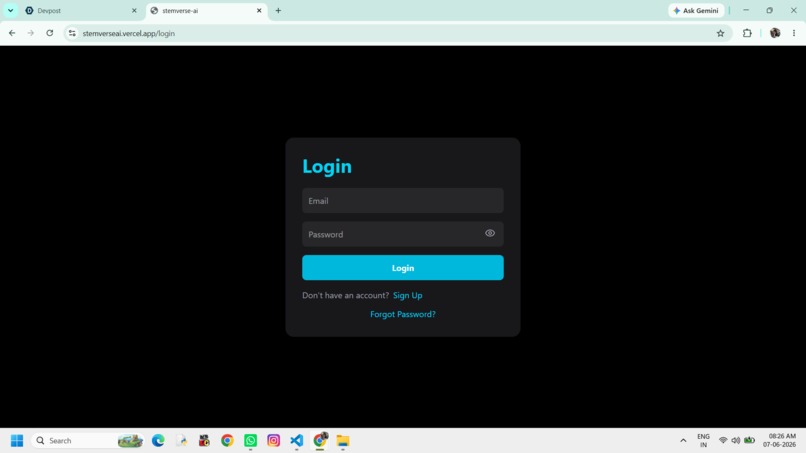
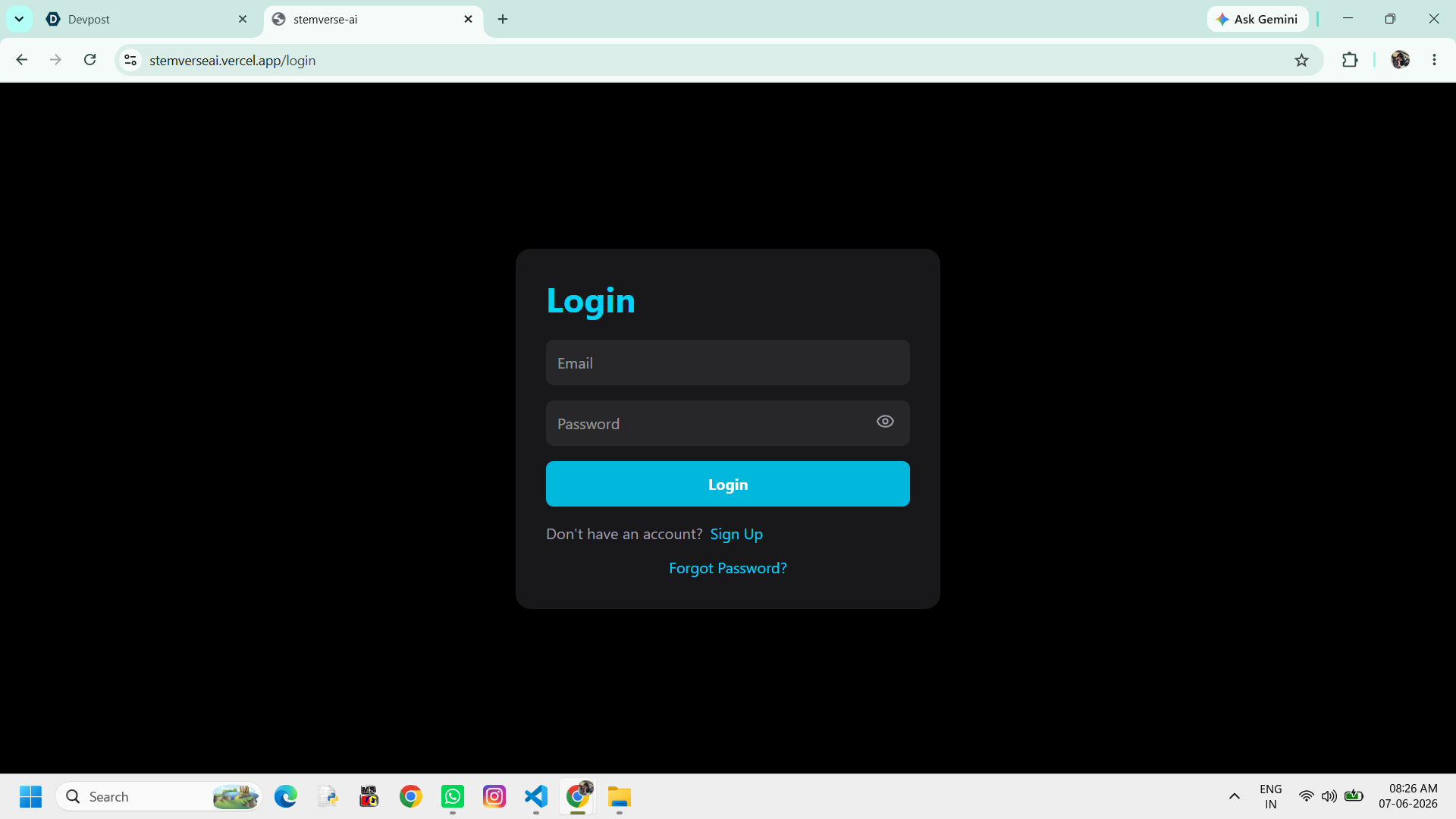
LOGIN
-
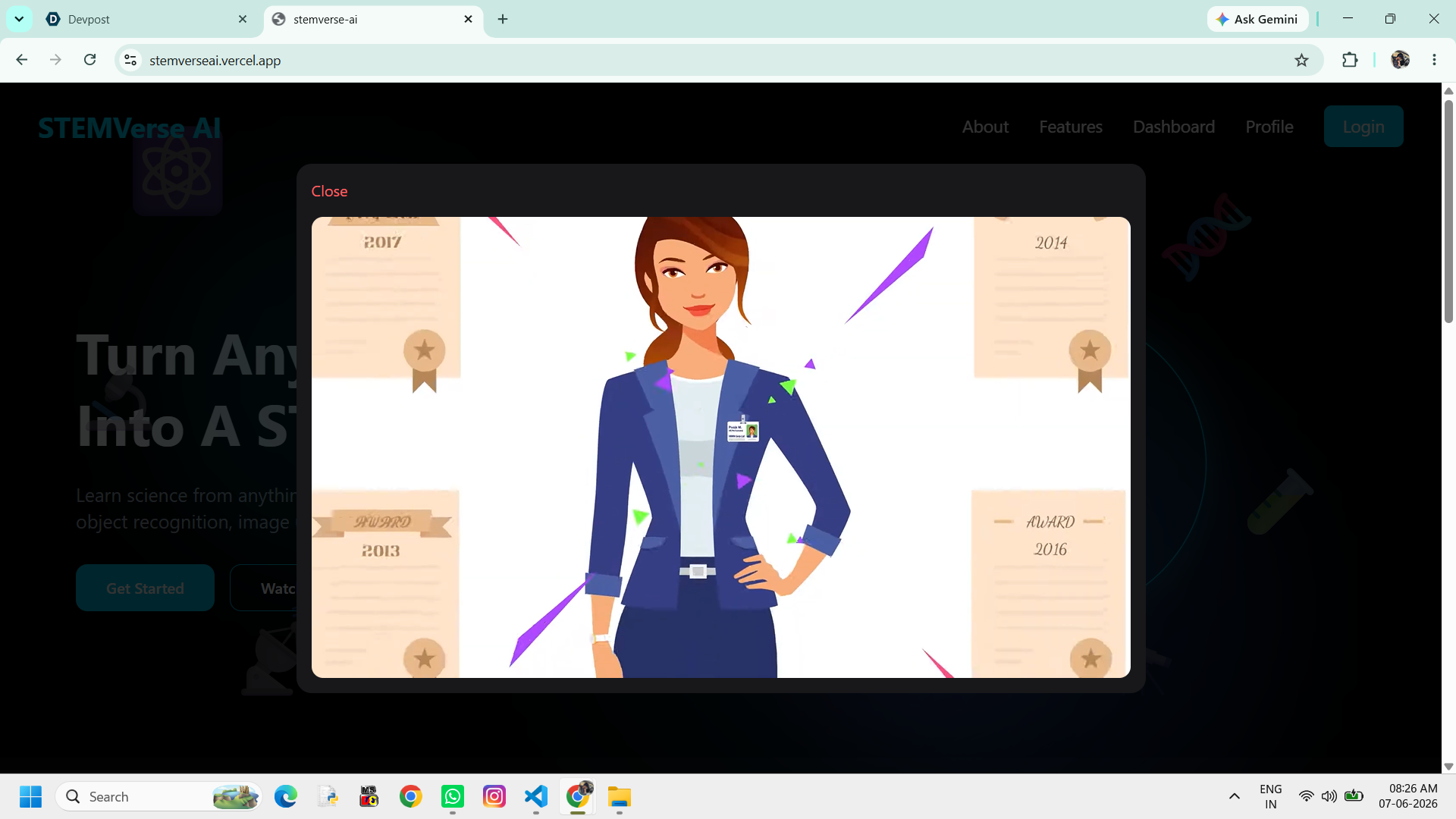
DEMO VIDEO
-
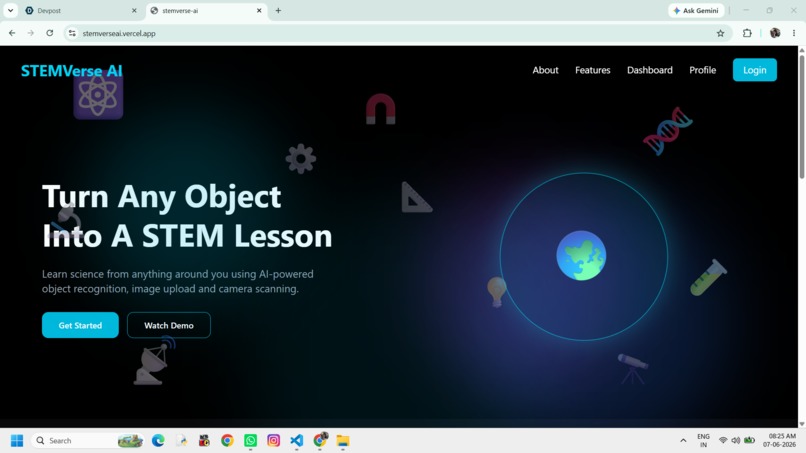
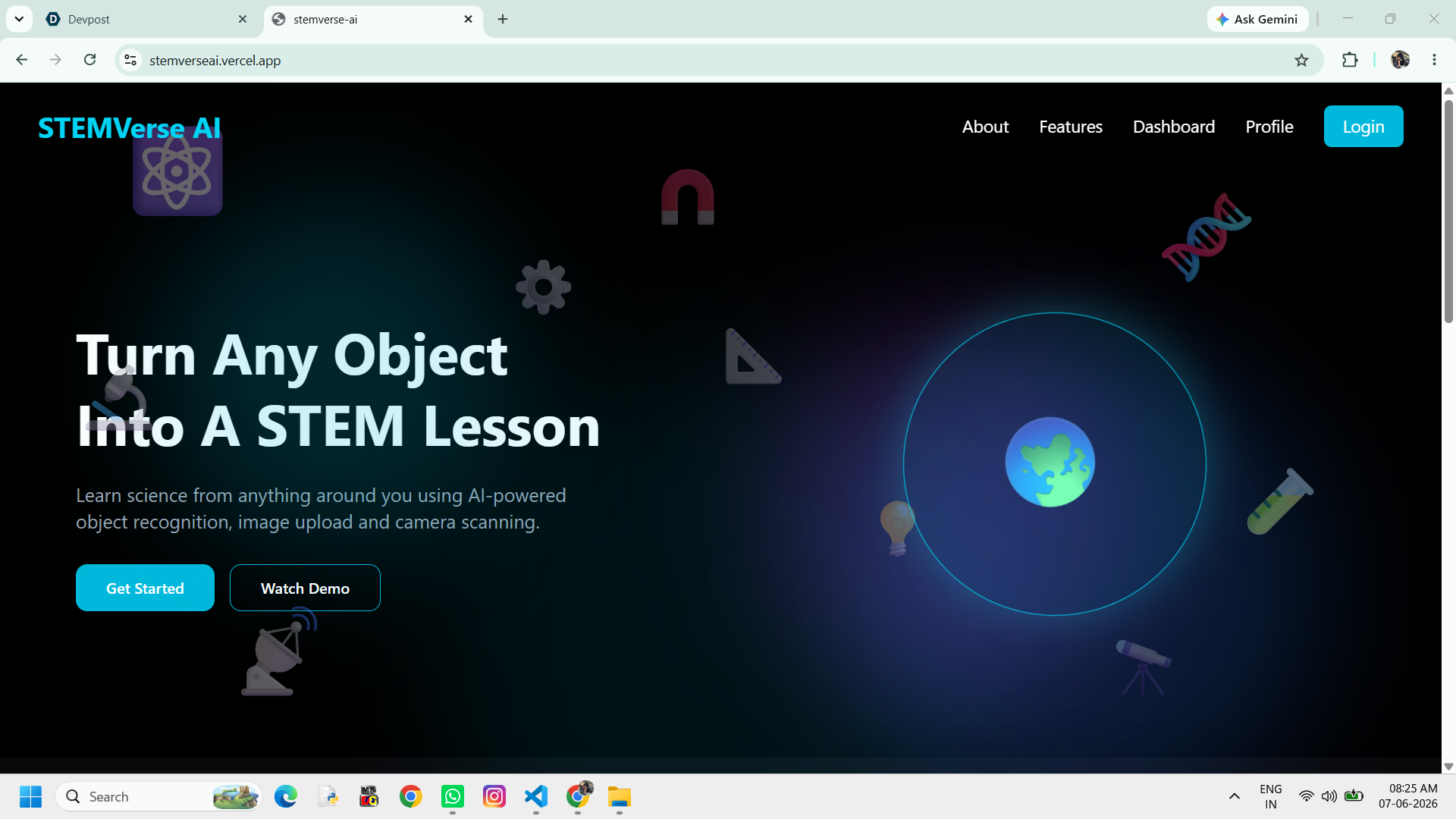
HOME PAGE
-
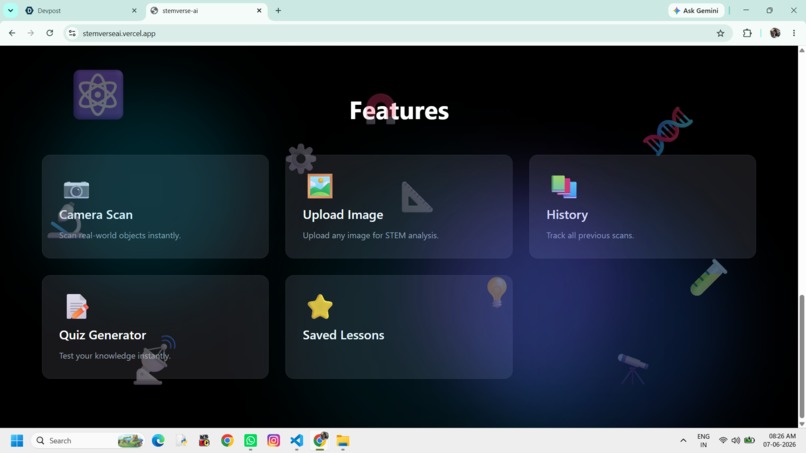
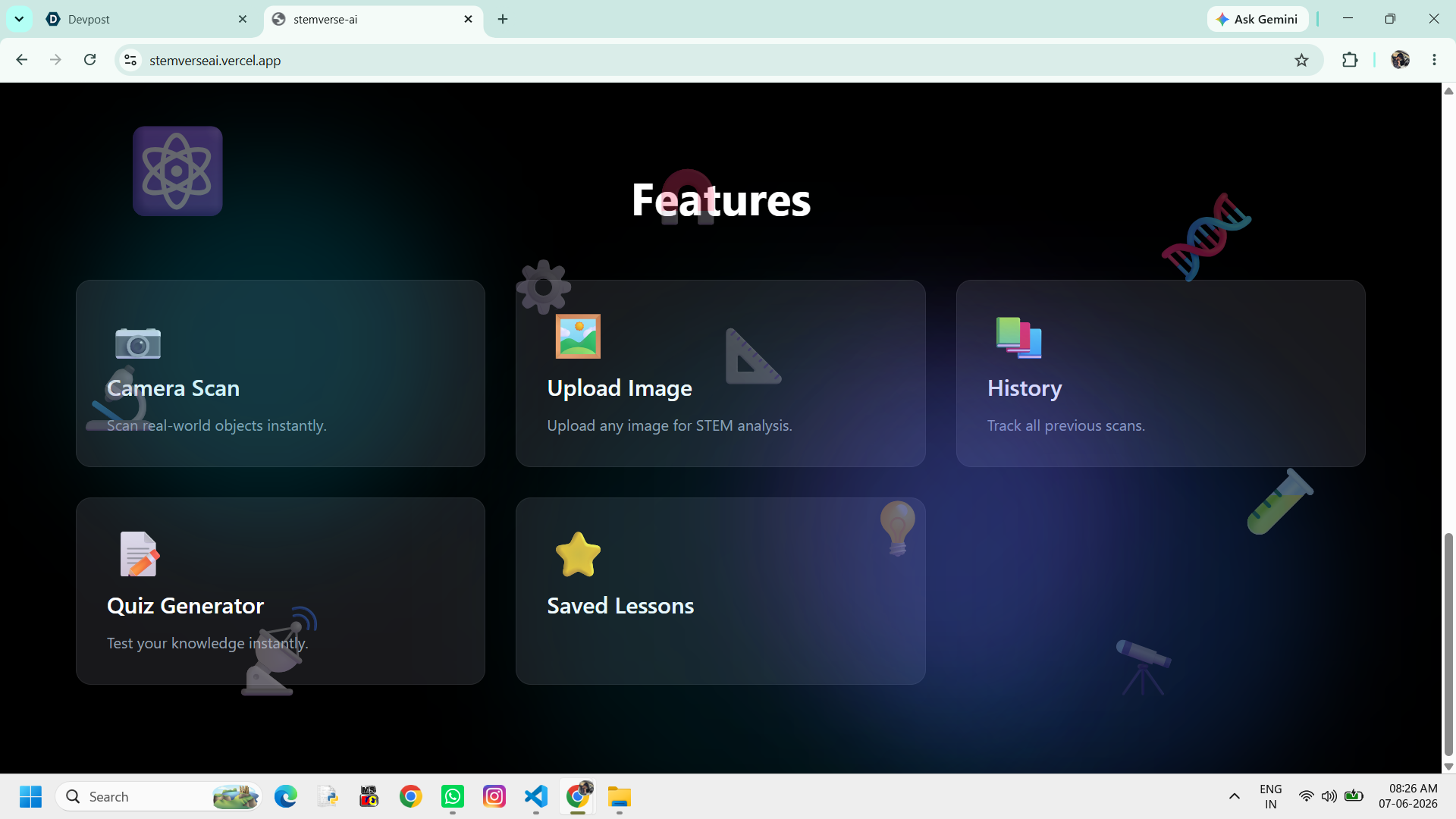
FEATURES
-
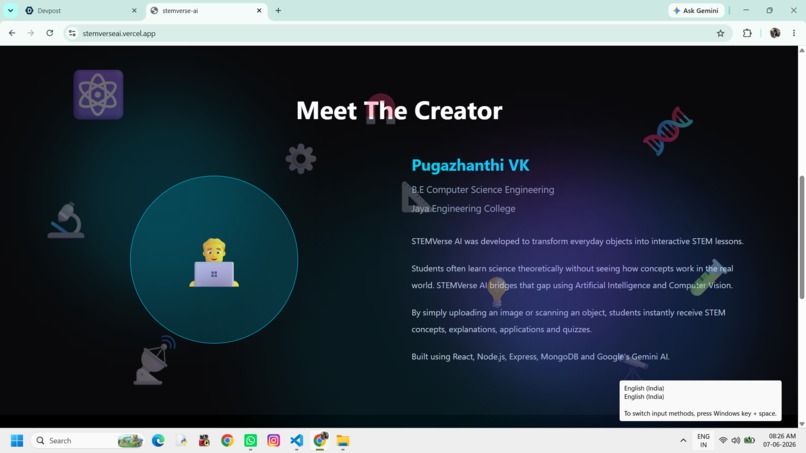
ABOUT
-
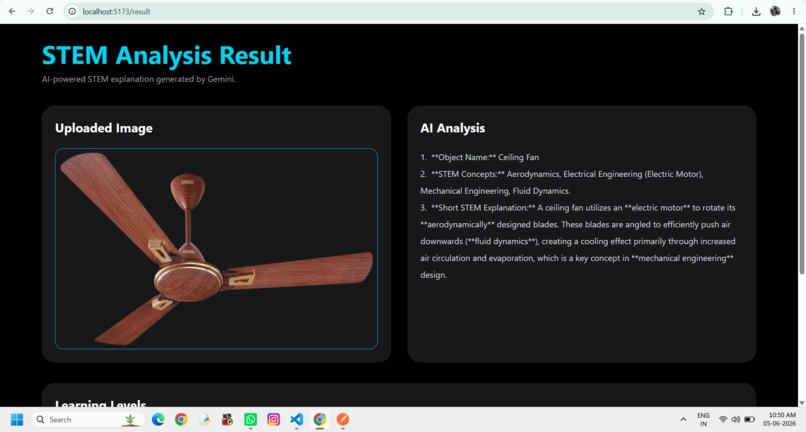
ANALYSIS
Inspiration
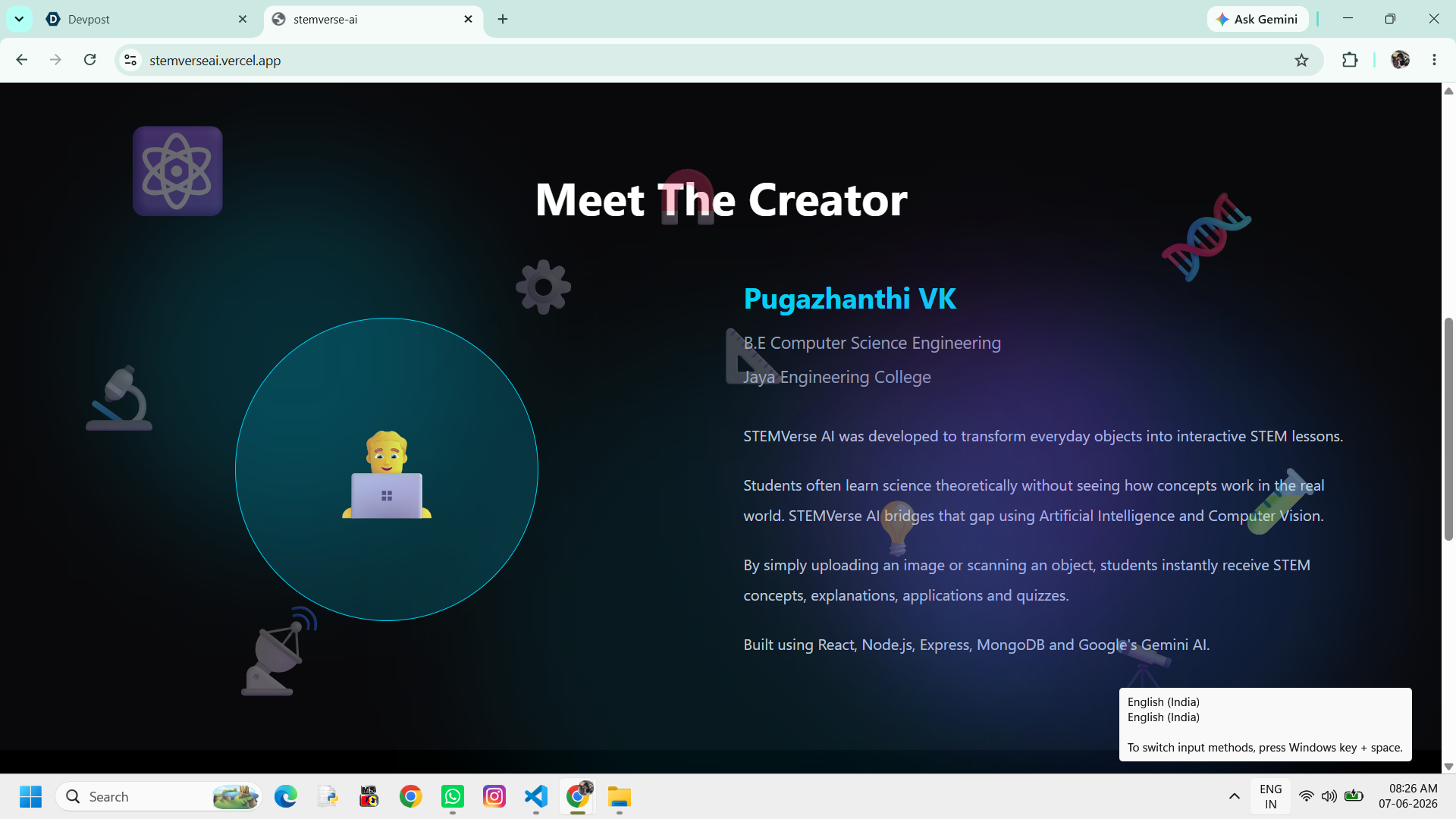
Learning science often feels disconnected from the real world. We wanted to create a platform that helps students understand STEM concepts by simply looking at the objects around them. The idea behind STEMVerse AI was to make science more interactive, visual, and engaging by combining AI with everyday learning experiences.
What it does
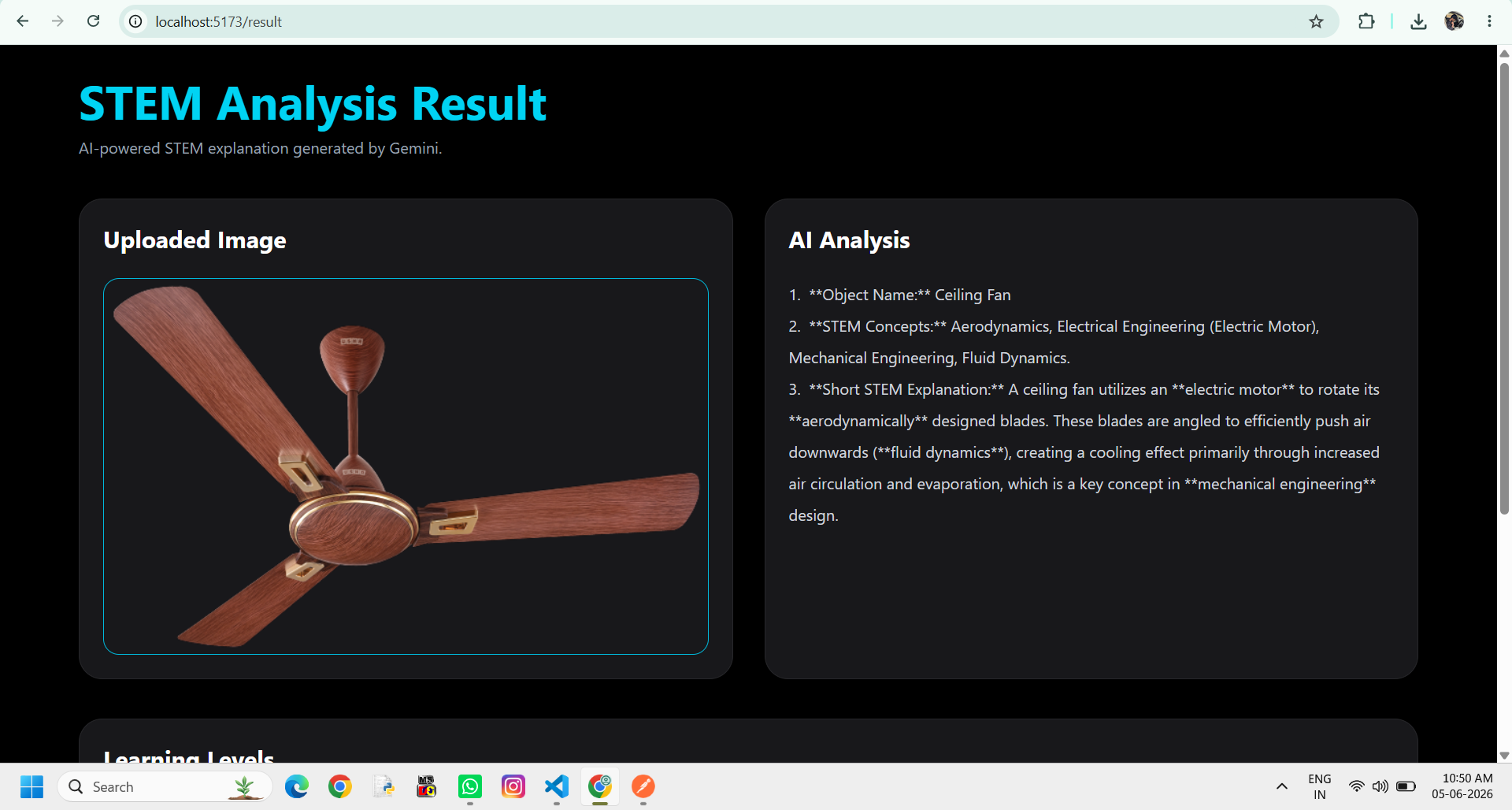
STEMVerse AI allows users to scan an object using their camera or upload an image and receive an AI-generated explanation of the STEM concepts behind it. The platform also provides user authentication, a personal dashboard, lesson history, and an intuitive interface that makes learning accessible and enjoyable. For example, a user can scan a fan, a magnet, or a light bulb and instantly learn the scientific principles, engineering concepts, and real-world applications related to that object.
How we built it
We built STEMVerse AI using:
- React.js and Vite for the frontend
- Node.js and Express.js for the backend
- MongoDB for storing user information and learning history
- Google Gemini AI for generating STEM explanations
- Tailwind CSS and Framer Motion for modern UI and animations
- Render and Vercel for deployment The application captures images from the camera or image uploads, sends them to the backend, and uses AI to generate meaningful STEM explanations for the user.
Challenges we ran into
One of the biggest challenges was integrating multiple technologies within a limited hackathon timeframe. We faced issues with authentication flows, protected routes, deployment errors, API integration, image processing, and responsive design. Deploying the application and configuring frontend-backend communication across different hosting platforms was also a significant challenge.
Accomplishments that we're proud of
We are proud that we successfully built a complete full-stack application from scratch within the hackathon period. Some achievements include:
- AI-powered object analysis
- Camera-based image capture
- User authentication system
- Learning history management
- Responsive and modern user interface
- Full-stack deployment Most importantly, we transformed a simple idea into a working educational platform that makes STEM learning more interactive.
What we learned
Through this project, we gained hands-on experience with:
- Full-stack web development
- AI integration using Gemini API
- Authentication and security concepts
- MongoDB database management
- Deployment and production hosting
- UI/UX design principles
- Team collaboration and problem-solving under time constraints We also learned how important it is to balance technical implementation with user experience.
What's next for STEMVerse AI ⭐
In the future, we plan to expand STEMVerse AI with:
- Real-time object recognition
- Interactive 3D STEM visualizations
- Personalized learning paths
- Multi-language support
- Voice-based explanations
- Quiz and assessment features
- Teacher and classroom dashboards
- Mobile application support Our vision is to create a platform where anyone can learn STEM concepts from the world around them with the help of AI.
Built With
- axios
- express.js
- framermotion
- googlegemini
- javascript
- jwtauthentication
- mongodb
- node.js
- nodemailer
- react.js
- tailwindcss
- vite


Log in or sign up for Devpost to join the conversation.