-
-
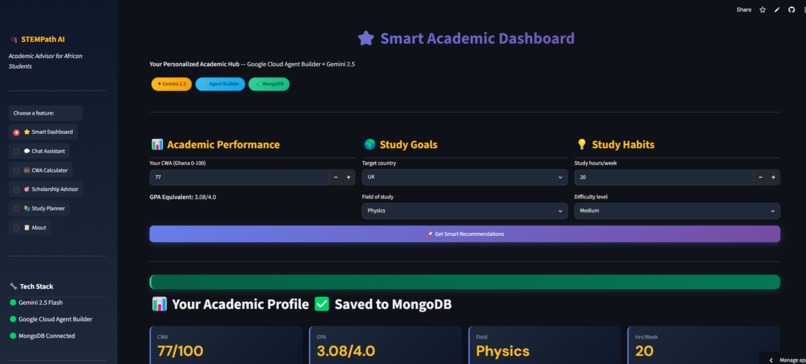
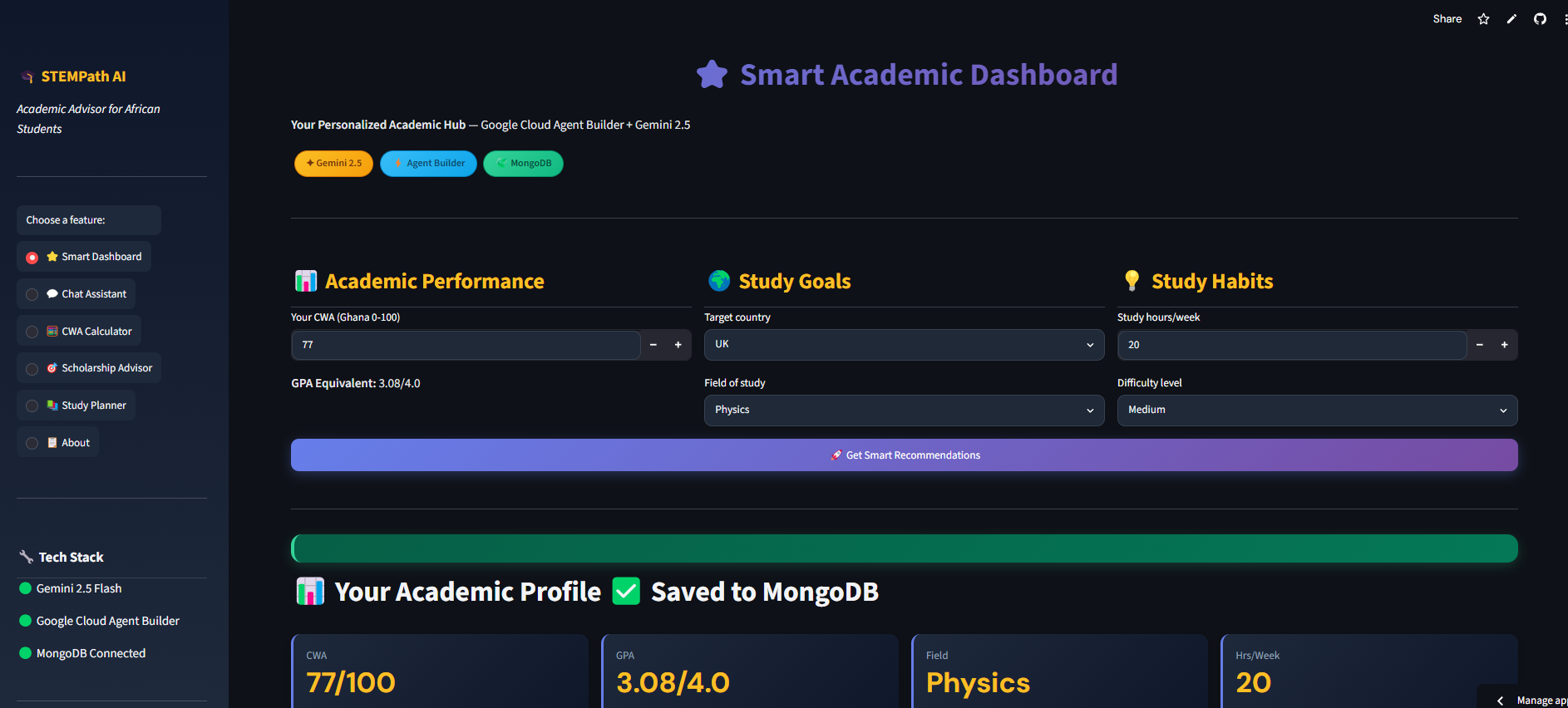
Smart_dashboard
-
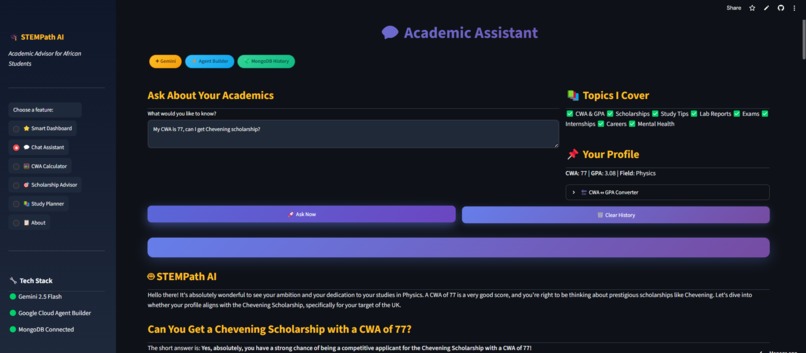
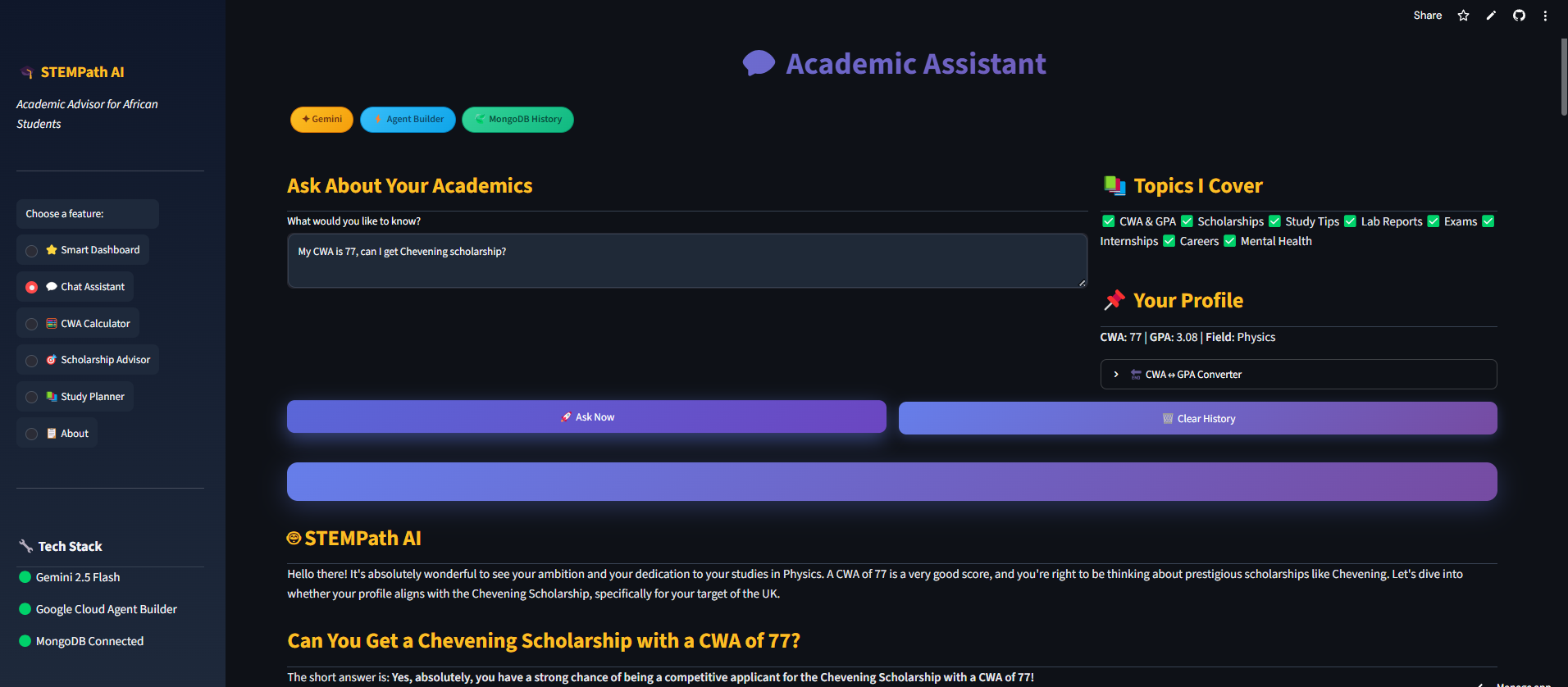
Academic assistant
-
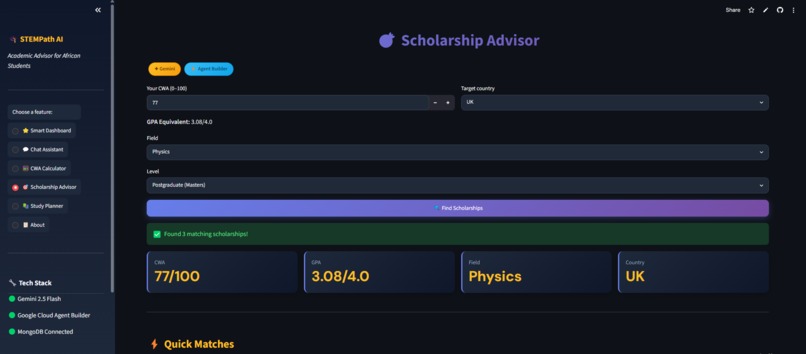
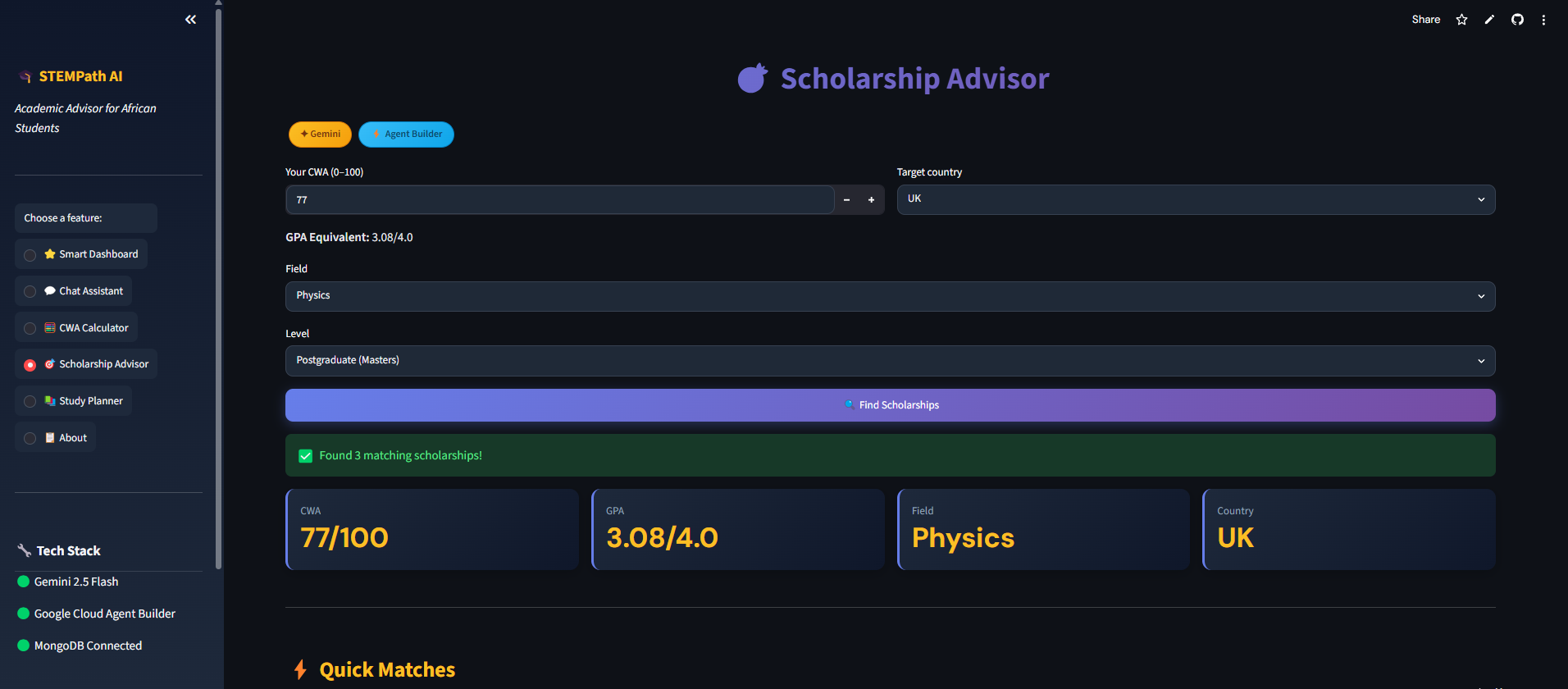
Scholarship advisor
-
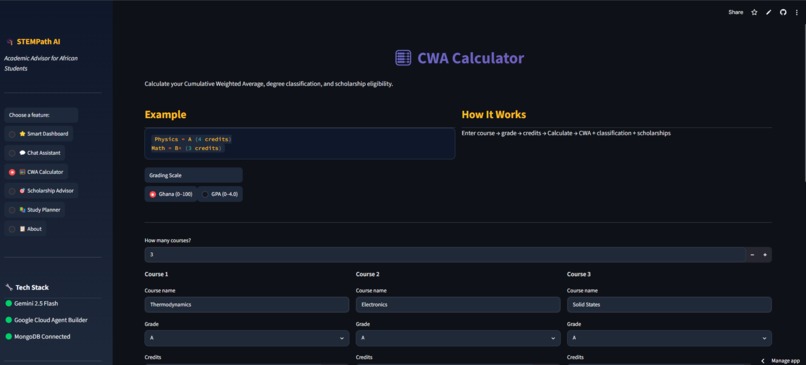
CWA calculator
-
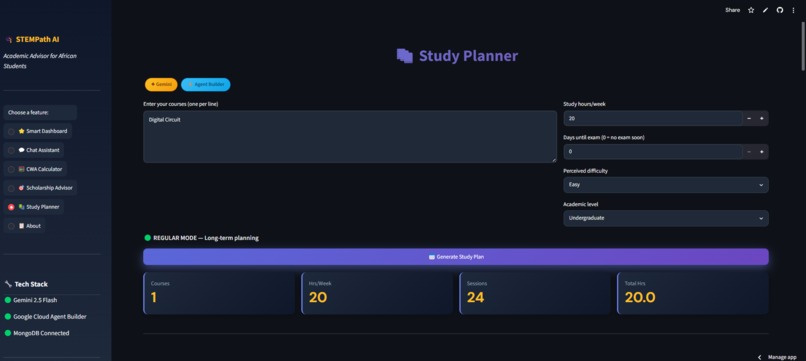
study planner
Inspiration
I am Richard Yeboah, an undergraduate student at KNUST (Kwame Nkrumah University of Science and Technology) in Ghana, and a beginner programmer still learning my craft.
Every day at KNUST, I watch my fellow students struggle with the same problems I face myself:
- We use the CWA grading system (0-100), but international universities use GPA (0-4.0) — most of us have no idea how to convert between them
- We hear about scholarships abroad but don't know which ones we qualify for
- We juggle multiple courses without any structured study plan
- When we have academic questions late at night, there's nobody to ask
I originally built a simple rule-based chatbot as a Python learning project to help with basic academic questions. When I discovered the Google Cloud Rapid Agent Hackathon, I realized my small learning project could become something much bigger — a real AI agent that could genuinely help millions of African students like me.
The inspiration is deeply personal. I'm not building this for a hypothetical user. I'm building it for myself, my classmates, and every African student who deserves better academic support but doesn't have access to it.
What it does
STEMPath AI is an intelligent academic advisor specifically designed for African university students. The agent uses Google Cloud Agent Builder to orchestrate Gemini 2.5 Flash with real tool calling, and persists user data using MongoDB Atlas (Partner MCP Track).
Five interactive features:
Smart Dashboard — Students enter their CWA, field, target country, and study hours. Agent Builder analyzes the profile and returns matching scholarships, study tips, career paths, and action items.
Chat Assistant — A conversation-aware academic assistant with hybrid intelligence. Rule-based for common questions (instant response), Gemini-powered for complex personalized advice. MongoDB stores conversation history across sessions.
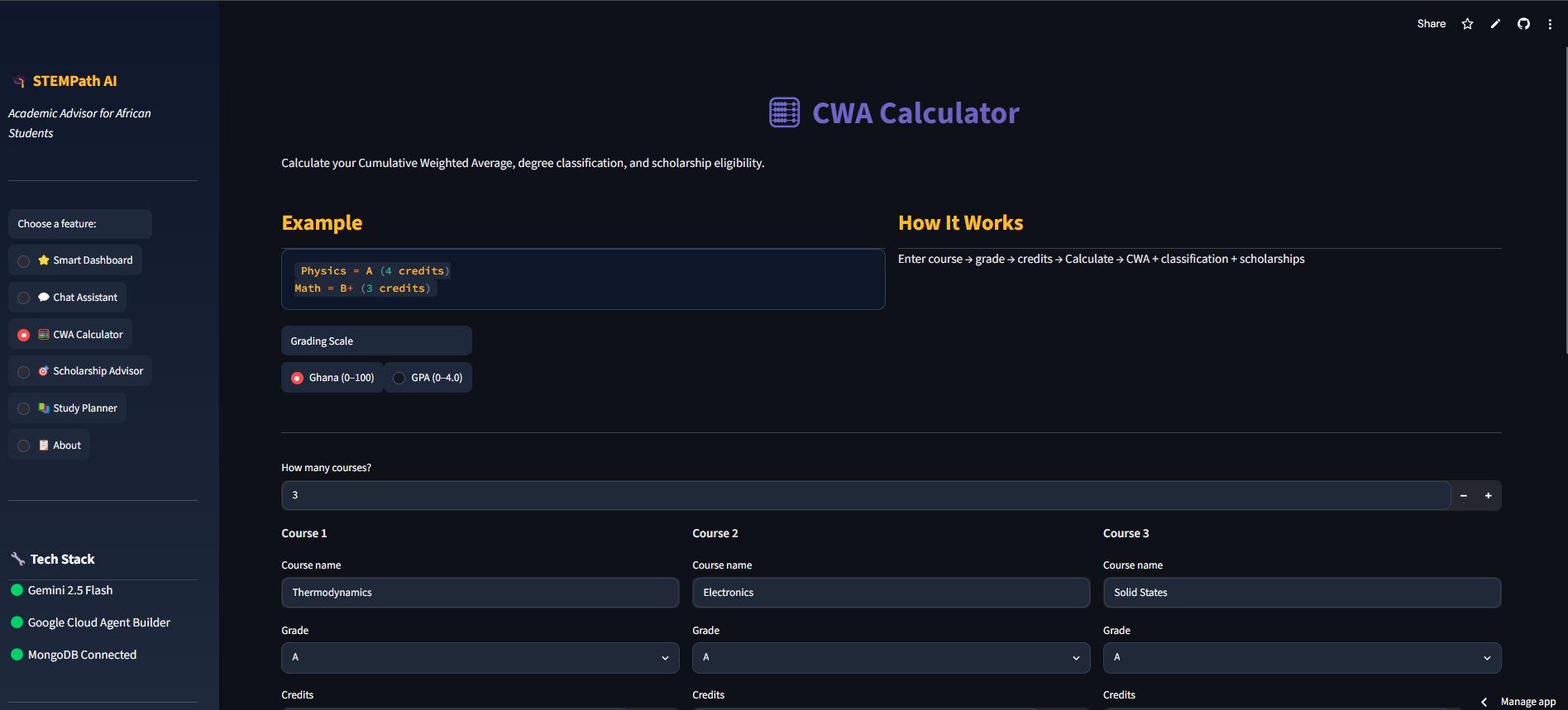
CWA Calculator — Supports both Ghana scale (0-100) and international GPA scale (0-4.0). Automatically determines degree classification, checks scholarship eligibility against five major programs, and provides "what-if" analysis showing what grades a student needs to reach a target CWA.
Scholarship Advisor — Combines fast rule-based matching from a curated database (MasterCard Foundation, Commonwealth, Chevening, DAAD, African Development Bank) with Gemini AI for personalized recommendations.
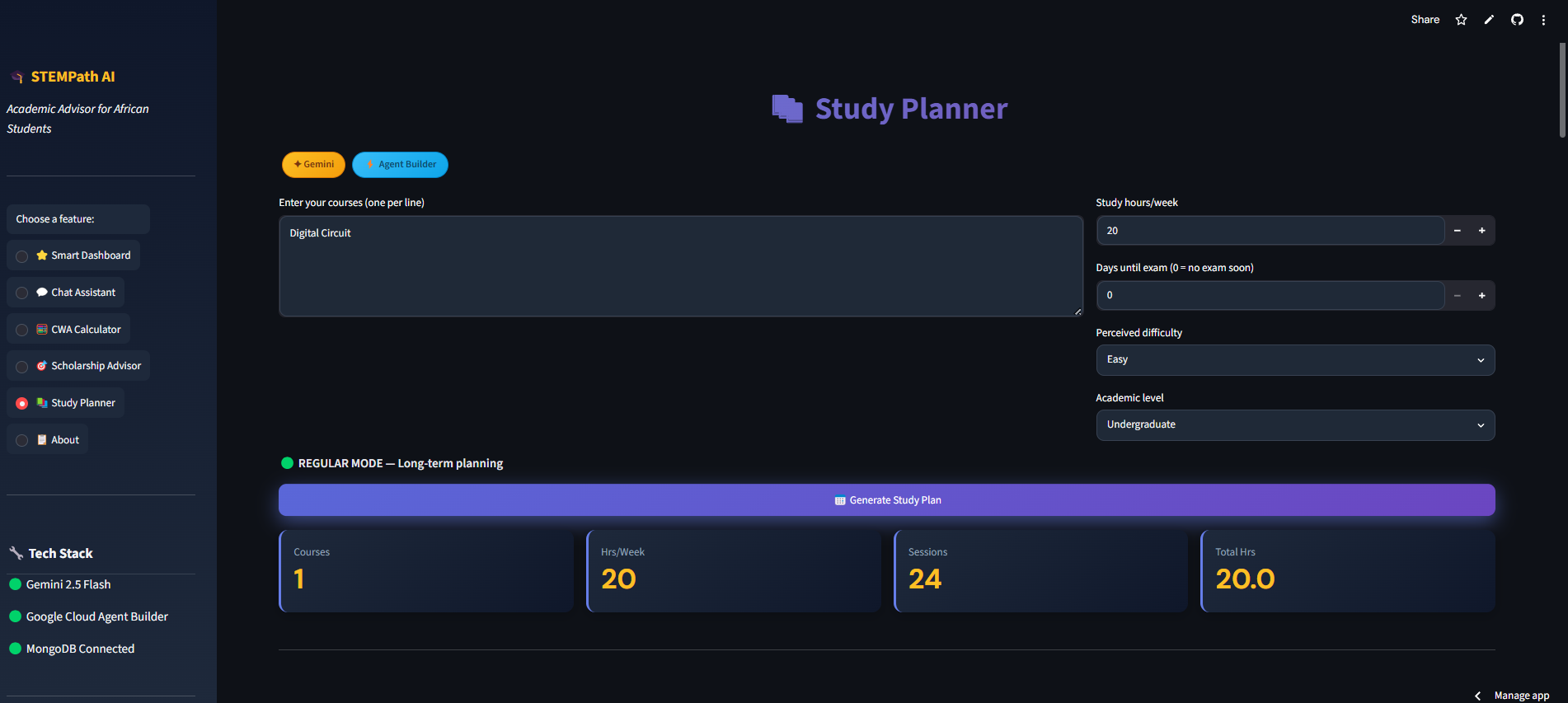
Study Planner — Generates AI-powered weekly study plans incorporating Pomodoro technique (50-minute study blocks with 10-minute breaks). Features four study modes based on exam urgency.
How we built it
Honest Disclosure: I'm a beginner programmer. I want to be completely transparent because honesty matters more to me than appearing more experienced than I am.
What I started with: A basic rule-based Python chatbot with a JSON intent classifier containing 20+ academic topic categories I wrote myself, simple keyword matching, and hard-coded responses.
What I built it into: A full AI agent application featuring Google Cloud Agent Builder integration with real tool calling, Gemini 2.5 Flash AI engine, MongoDB Atlas cloud database, five interactive features in a Streamlit UI, and production deployment.
How I bridged the gap: Converting my beginner project into production-ready code required programming concepts I hadn't learned yet — Google Cloud SDKs, function/tool calling, database integration, and production deployment patterns. I used AI tools (Claude, Gemini, ChatGPT) as coding partners to learn and implement these advanced concepts. This is exactly how modern beginners build in 2026.
My personal contributions:
- Original idea and product vision
- Problem identification from lived KNUST experience
- Complete rule-based chatbot foundation (20+ intent categories)
- Ghana-specific knowledge (CWA scale thresholds, classification, African scholarships)
- Feature design and architectural decisions
- All testing, debugging, and deployment
- Documentation
Where AI tools assisted:
- Google Cloud Agent Builder integration patterns
- Tool calling architecture
- MongoDB persistence code
- CSS styling and UI polish
- Production deployment configurations
Technology Stack (all invoked at runtime):
- Google Gemini 2.5 Flash →
gemini_agent.py→ask_gemini() - Google Cloud Agent Builder →
agent_builder.py→agent_invoke() - MongoDB Atlas (Partner MCP) →
app.py→mongo_save_profile()
Challenges we ran into
Learning Advanced Concepts as a Beginner: I had never used Google Cloud Agent Builder, implemented tool calling, or worked with MongoDB before this project. I used AI tools as learning partners — having them explain concepts while we wrote code together. Every new pattern I made sure to understand before moving forward.
MongoDB Atlas SSL Connection Issues: My initial MongoDB connection failed with SSL handshake errors on Windows. I troubleshot this systematically, learned about TLS certificate validation, and implemented a certifi-based fix that worked.
Ghana-Specific Education System: AI tools defaulted to Western education systems with GPA scales. I had to use my KNUST knowledge to correct the CWA scale implementation, adjust classification thresholds to match Ghana standards, and curate local scholarship data — things only an actual Ghanaian student would know to fix.
Response Token Limits: Gemini was cutting off responses mid-sentence. I learned about token limits and thinking_budget configuration, then increased max_output_tokens to 8192 to ensure complete responses.
UI Contrast and Accessibility: My first scholarship card design had white text on a white background — completely unreadable. I learned about CSS contrast ratios and redesigned the entire UI with proper dark theme styling and gold accents.
GitHub Push Protection: My first push attempt was blocked because my API key was in .env. I learned about .gitignore properly, configured it to protect secrets, and successfully pushed clean code.
Connecting Multiple Cloud Services: Integrating Streamlit, Gemini API, Google Cloud Agent Builder, and MongoDB Atlas as a beginner felt overwhelming. I broke it into small steps, learned each piece independently, then connected them one at a time.
Accomplishments that we're proud of
✅ Shipped a real working product as a beginner programmer
✅ Learned advanced concepts that were beyond my starting skill level — Agent Builder, tool calling, MongoDB Atlas, production deployment
✅ All three required technologies working at runtime — not just mentioned in documentation
✅ MongoDB Atlas integration running flawlessly in production with cloud persistence
✅ Africa-optimized with authentic perspective baked in — Ghana CWA scale, KNUST context, African scholarships
✅ Five complete features — not just an MVP, a full functional product
✅ Honest submission — transparent about my beginner status and AI-assisted development journey
✅ Production deployment — live and accessible at https://stempath-ai-qthuqdrunshnbhauwamwyj.streamlit.app/
✅ Beautiful UI — professional design with proper contrast and animations
✅ Built solo — every architectural decision, every Ghana-specific feature, every test was done by me alone
What I learned
This project taught me far more than just code. As a beginner programmer, I gained:
Technical Learning:
- AI as a coding partner is the future of modern development
- Agent Builder pattern — how real autonomous AI agents work with tool calling
- MongoDB persistence — the difference between toy projects and production apps
- Production deployment — going from localhost to a live URL
- System integration — connecting multiple cloud services into one product
- Git, GitHub, and proper secret management
- CSS, UI design, and accessibility principles
Personal Learning:
- The value of vision — knowing what to build matters more than knowing how
- Honest self-assessment — acknowledging what I know and don't know is a strength
- Persistence — debugging SSL errors, deployment issues, and integration problems
- Solo development discipline — breaking big problems into small steps
The Most Important Lesson: You don't need to be an expert to ship something meaningful. You need a real problem, a clear vision, and the willingness to learn with whatever tools are available. AI tools democratize software development — and beginners with real lived problems can now build solutions that previously required years of training.
What's next for STEMPath AI
I plan to keep developing STEMPath AI far beyond this hackathon:
Short-term (next 3 months):
- Continue learning Python, AI engineering, and cloud development
- Gather feedback from KNUST students and iterate
- Add more scholarships to the database (target: 50+ programs)
- Fix bugs and improve UX based on real user feedback
Medium-term (6-12 months):
- Expand to other Ghanaian universities — University of Ghana Legon, University of Cape Coast, UMAT
- Add support for Nigerian universities (UNILAG, OAU, UI, ABU)
- Build a mobile-friendly version
- Add multi-language support (Twi, French for francophone Africa)
Long-term (1+ years):
- Scale across Africa — Kenya, Uganda, Tanzania, Rwanda, South Africa
- Partner with universities for official integration
- Build relationships with scholarship foundations
- Add features for parents and academic advisors
- Develop an offline mode for areas with limited connectivity
- Possibly add Arabic support for North African students
- Create gamification and rewards for consistent study habits
My personal commitment: I built STEMPath AI because I needed it as a student. I will keep developing it as long as African students need it — which means for the long haul. This is more than a hackathon project. It's the beginning of my mission to make academic guidance accessible to every African student, regardless of their background or location.
If this project helps even one student get a scholarship they didn't know existed, or pass an exam they would have failed, then everything I learned in building it was worth it.
Built With
- agent
- ai
- chatbot
- google-cloud
- google-cloud-agent-builder
- google-gemini
- mongodb
- mongodb-atlas
- python
- streamlit


Log in or sign up for Devpost to join the conversation.